Wondering about stuff: something light

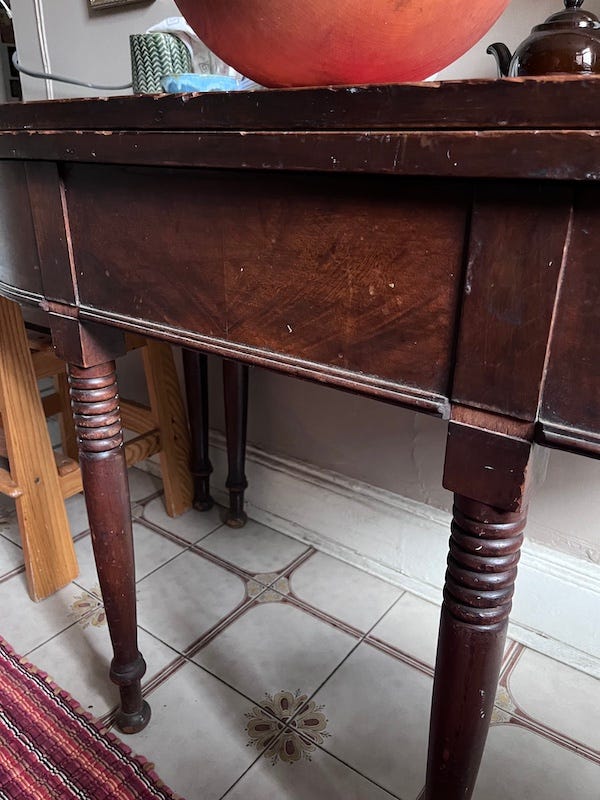
This morning I got to looking at my sideboard, a gateleg flip-top table, probably mahogany, maybe cherry, certainly hardwood; a fifth leg swings out. It was used in a barn as a sawhorse—you can see it it in marks all over it. I have this piece because it was in an apartment where I lived with a prickly roommate, whose previous roommate (a glorious human) got it from her mom’s thrift shop and told me I could have it. It’s at least 200 years old, full of damage (scotch staples held part of the top together till they fell off in the last move, and I put glued pencils in where pegs used to be underneath—it was an emergency fix when Rina from India was staying with me, and Mark and Steve and Flynn were coming over from New Jersey for a St. Patrick’s Day feast and I had to get us around some kind of table, and Rina said as I assessed, grabbled, and glued, “I am in awe of you right now”), not really practical, and surely not worth much money, but I love it. It’s the object I’d bring to Antiques Roadshow just to learn more about it.

When you watch Antiques Roadshow—and if you don’t, I recommend it, as it’s interesting, educational, curious, and also restful, so human and hopeful—do you look around your place and start wondering about things? What would you bring?

Antiques, a roadshow of the mind

This has been hanging over my mantle

I inherited this from my grandmother

These were in my mother’s attic

A man offered us a thousand for this set

This ring

This doll

These books

This sword

This poster

In a barn

This rug

In the garage

This

uniform

painting

embroidery

etching

lamp

vase

At a thrift store

Hopefully we can find out something more about it

Do you remember how much you paid for it?

The artist

The owner

Was born in 1888

Late 1920s

Late 1930s

Joined the militia at seventeen

The (pick a) war

The expedition

It’s a charming story

In the original box

We’ll obviously keep this

Bowl

Bracelet

Federal style table

Rookwood Pottery

It is Tiffany

A salesman’s sample

Tomb Trade Simulator

I’ve had it for about 30 years

The maker’s mark

At the folkart table

Not Tiffany

He was a coal miner turned photographer

She was a debutante turned painter

He was a mapmaker for the government

She was an itinerant artist at a time when

I heard they

Lived in France

Japan

Bali

Alaska

Massachusetts

Auction records are scarce

Look

glass

original frame

platinum gold copper

Great patina

The watch and the chain are like nothing I’ve seen

The sales receipt is incredibly complete

Intact

Like new

A diamond set in the center

It’s perfect

Not polished

A little wear which is to be expected

Something of this age

It’s unsigned

Not popular as it once was

Any idea of value?

For insurance purposes

And you hear the stories and the insurance appraisal

and you see the vintage episodes and hear the up or down sound effect

and sometimes you just want to step back and imagine it

As it once was

And the who had it

And the where it came from

That’s the value—

the pleasure of its company.

Here’s to Sunday.

Calling All Librarians (and Readers)

Hi, Friends—

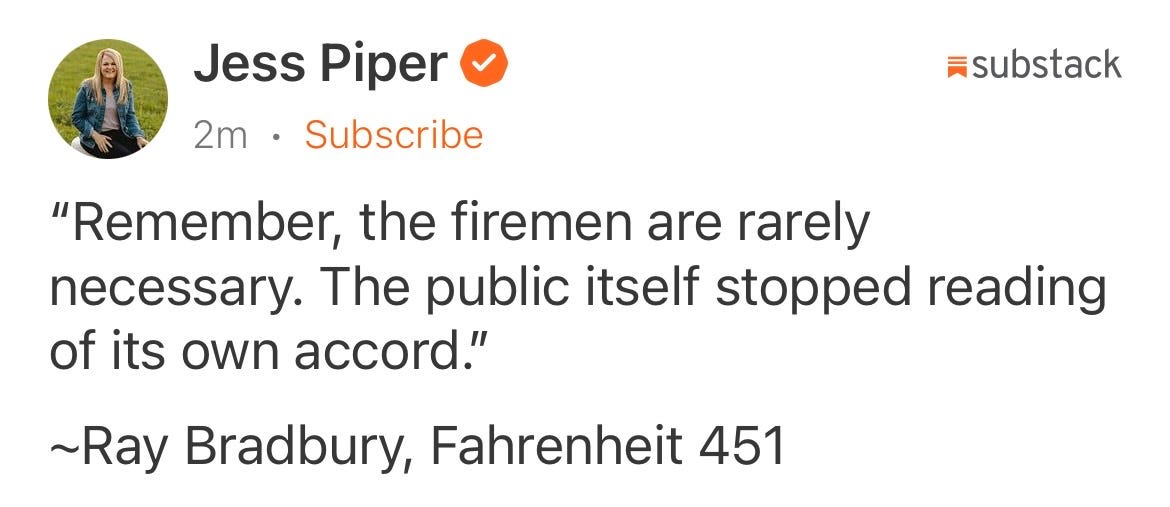
Not to be an alarmist in a country filled with every manner of horror, but I share an emergency call out here for my readers and book lovers. According to reporting from Aaron Parnas, AI companies are buying up as many antique and RARE BOOKS as they can find, as fast as they can find them, and once scanned, DESTROYING THEM.

I gather that this is so that AI can be used to scan historical and scientific texts of old in order that 1) they might be altered if it’s expedient; as well as 2) hidden at will.

It’s diseased. We live in lunatic times.

Please alert all your bookseller friends, put out the alert to every reader you know. We have to save our books.

We are at Brave New World level now.

I guess we also need some kind of plan for saving our own personal libraries. Share your ideas. We don’t have much time.

Meanwhile: We have tens of thousands of ICE thugs, police officers, and rogues going around killing indiscriminately and without consequences. We have concentration camps up everywhere. People are being arrested for SHOWING UP to meetings to protest data centers. Data centers are demonstrably drying up rivers and ground freshwater sources. It’s full on dystopia.

Don’t think just because we are, you know, keeping our doctor’s appointments and stocking up at the grocery store that our nation isn’t eroding all around us. I scream this with love.

And on August 3, Kentucky’s governor’s time expires to call a special election to replace Mitch McConnell, so no doubt Mitch’s death will be announced August 4. You heard it here first.

I am prepped for the onslaught of more flooding rains to fill my basement—can only hope for the best.

This is really hard—all of this. We have to figure this out. We have to.

Sending love,

Miss O’

Road Trips: A letter for the end of the world

I awoke this morning from a dream involving peacock feathers, in a kind of thrift shop where I see a bright green minidress on a dress form, adorned with giant peacock-style feathers at the bust. I’m supposed to be gathering up all the green and peacock-inspired pieces—tulle, shoes, costume jewelry—to create an ensemble, but somehow I keep leaving everything in this shop, which is mostly in some kind of garden behind a sort of little house-turned-shop, and I keep having to return and return, as we do in dreams, unable to finish anything, odd people intruding, cousins, all conservatives, one wearing a burgundy faux fur coat with white fur trim and a hood that I had in middle school as she reads the paper while standing in a dirt-floor vestibule and I explain that I am for abortion rights.

On waking, as I do upon each waking in the past decade, I wonder how long the planet has left; AI models say 19 years at the outset before humans are extinct. And I wonder how it is 2026 and we are as a species still bombing one another, and how all these so-called geniuses with all their resources are so super-excited to hasten the end of life on our glorious pale blue dot, why that dream of total annihilation, that ruthless use of power, is so alluring, our world’s end so inevitable for them. It’s hard to get up and start each day knowing how many horrible humans are out there among us abusing, killing, raping, starving, imprisoning all the really sweet people. You know.

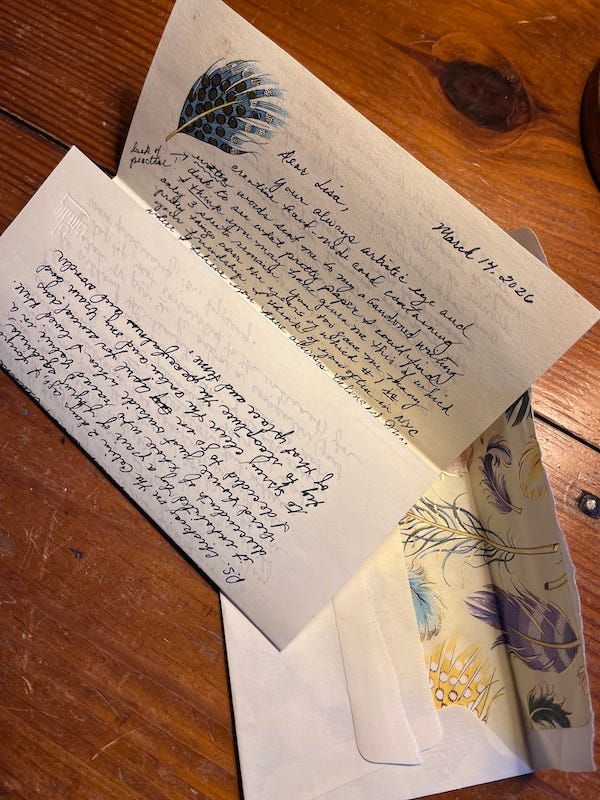
Yesterday I received the most beautiful thing in the mail: an actual handwritten letter from an old friend.

From the stationery (a homophone I learned to spell correctly, differentiating it from stationary, in 7th grade, and memorized because letters mattered so much to me) to the greeting to the P.S., the back-front sharing of life moments in ink in the present tense remains for me a treasure, even seeing a hand-addressed envelope in the hallway in front of the mail slot still brings a little rush of warmth.

One thing that troubled me was that this letter from Central Virginia was postmarked GREENSBORO, NC, and that postmark is ominous. Louis DeJoy, who inexplicably is still the postmaster general, has been working to ensure that local postal facilities are no longer processing mail, but gathering it up, shipping it on trucks to facilities hundreds of miles away for that postal stamp, causing delays of days and weeks. I realized that were my friend to mail in her November ballot, say, it would take over a week at best to reach the elections office in her very own town. And by then, it could be too late to be counted, since a new USPS policy states that the postmarked date no longer counts as the actual date for submission of any legal document, from tax returns to ballots. In addition, these delays mean that Americans may no longer receive time-sensitive legal notices on time, such as summonses for jury duty or traffic tickets, causing fines and even arrests.

More fodder for the private prison complex system of forced labor, I guess; more private property to seize and take from the rest of us. (The U.S. Postal Service, created by Benjamin Franklin so that Americans had a little government in their lives every day, now reflects exactly our government, doesn’t it, as in almost no governance at all. As my friend George reminds me, “We are all going to be inconvenienced to death.”)

All that from receiving a nice letter. Because nothing is nice anymore. Nothing can ever simply be anymore, that is, without deep discipline of the mind to take in the moment.

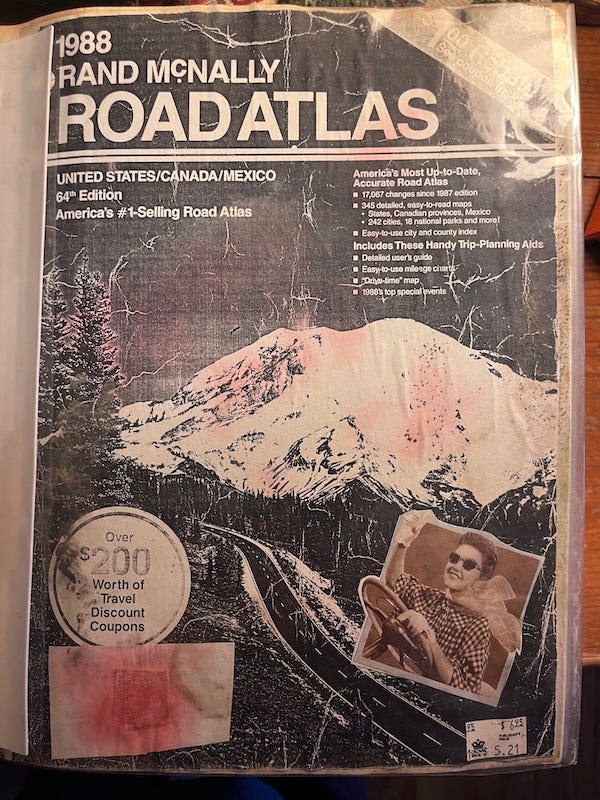
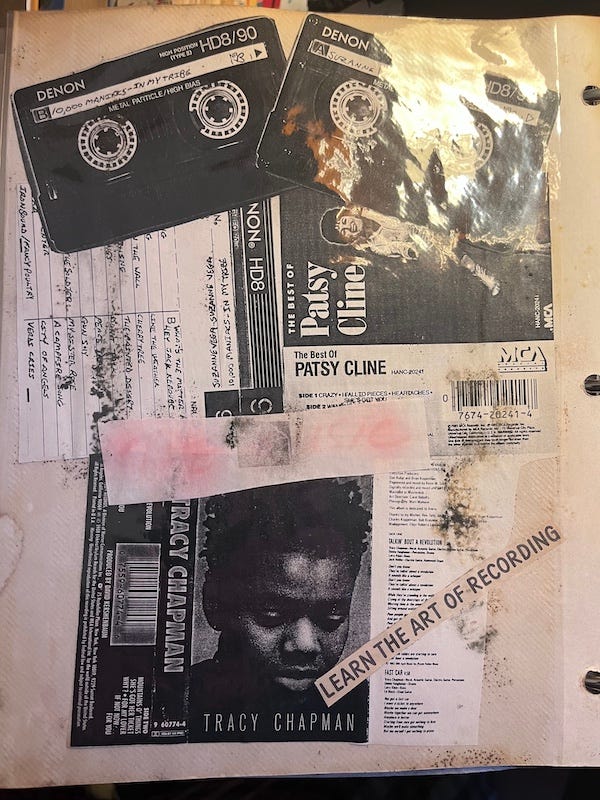
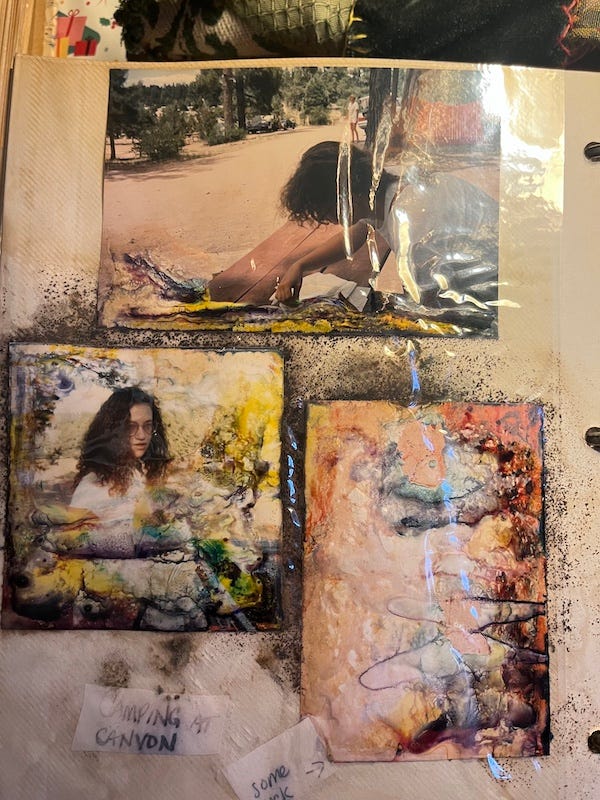
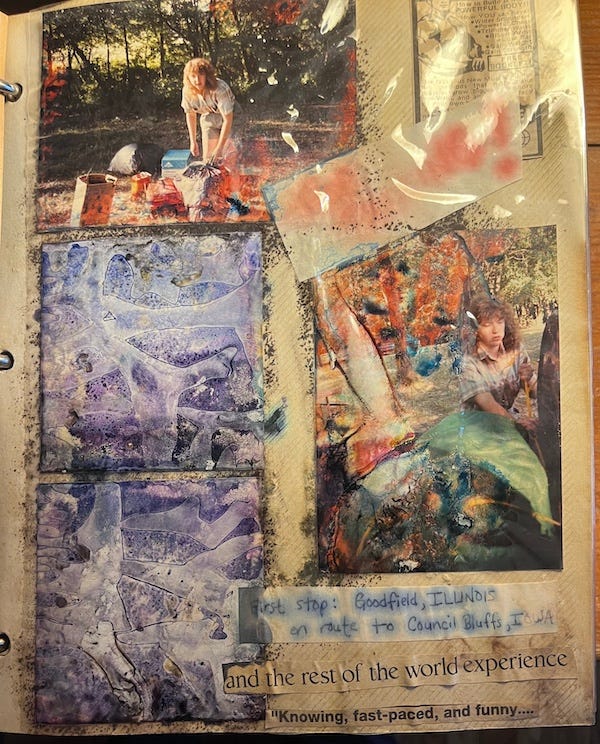
Last week an old college friend, D, came to visit with one of her grown daughters, whom I hadn’t seen since she was a toddler. Back in 1988, my friend accompanied me on a cross-country odyssey, back when you used paper maps and had no cell phones (and the sign on leaving Barstow, CA, for AZ said, “NOTHING FOR 150 MILES” and you drove onward); the entire month-long trip cost us $200, including 89¢/gallon gas for a Toyota truck that got 35 miles to the gallon; and $2.00/night camp grounds when we weren’t in the beds in the houses of relatives. Food was cheap—a full chicken dinner might be $4.95, and we could split it. On return, I made an album, photocopying the road atlas cover, the tapes, cutting out ad tag lines, headlines, and images from the local newspaper or magazines to comment on the photos.

The impetus for this trip was an invitation to the first O’Hara Family Reunion, in Nebraska; plans were thrown together; my mom, Lynne, bought me a KOA Campground Directory, which guided us to cheap accommodations. Also, I had just survived my first year of teaching, and it was my first summer off not working in any way since I was maybe 13. I don’t know how I was ever that brave. My brave friend D made it possible.

And in 2003, when I moved from Virginia to New York City, I accidentally took my box of curated collage-photo albums to my sister’s basement (instead of my parents’ house) to store, where she had a one-time-only flood that miraculously only destroyed that one cross-country trip album. (D, a practicing witch, said when I told her, “You’re welcome.”) Moldy and blurred to oblivion though it was, I didn’t have the heart to get rid of that album, but upon seeing the horror, D convinced me last week to do that—I snapped a few pages for memory first, and indeed, tossed the hunk of mildew and mold into a plastic bag and out to the trash.

I miss the intimacy of letters and albums. We live in a bizarro world of mass surveillance and public disclosure of our innermost worries and thoughts—but it’s not really new: any of us who worked in drugstores and photo-mats knows that workers kept copies of customers’ intimate pictures to share and discuss, so it’s not as if our camera photos were really private, though perhaps only our postal worker and roommates knew about our private mail from return addresses if not contents.

I remember mentioning once to a writer friend that I kept all the letters ever sent to me—I’ve told you this—and I mean all of them. I’m the keeper of the letters—and I saw her face cloud and shift to panic. What private things had she revealed to me? her face said. I’m sure nothing; I, on the other hand, was a font of confession, and ironically no one has saved letter one written by me. It’s too bad, really, as I wrote really good letters; but perhaps the confessions are best left to the landfill.

This weekend I may go into my closet and begin culling the dozens and dozens of shoeboxes filled with correspondence. On the other hand, given that we are going extinct in 19 years, I probably won’t.

And so, to start another morning at the edge of the end of the world, with love,

Miss O’

To My Sister Virginia

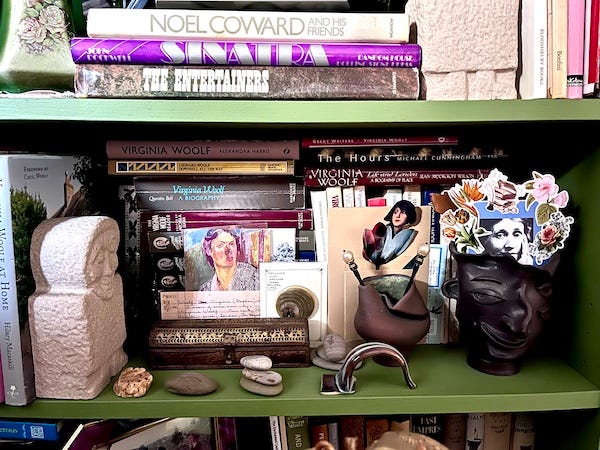
Woolf works to guide us

In the late years of her life, ca. 1936-1938, writer Virginia Woolf was experimenting with a text that combined the novel form with the essay form. The result was, in the end, two books, the novel The Years (which began its life as The Pargiters), and the essay Three Guineas. I’ve read many of Woolf’s novels half a dozen times each—Mrs. Dalloway, To the Lighthouse, the Waves, Orlando—I’ve even read Flush twice (the biography of Elizabeth Barrett Browning’s dog, and it’s hilarious). I’ve read Jacob’s Room three times, I think, but the first time was the best, and Between the Acts at least twice; and the essay A Room of One’s Own I think four times through—I just finished it again recently and I think I finally got it all. It only took me 40 years.

Curiously, I have read her first two novels, The Voyage Out and Night and Day only once—they aren’t that interesting, though I might change my mind. The same goes for the The Years (though, ironically and not surprisingly, as it was a straight family chronicle, it was Woolf’s best selling book). I’ve also read Three Guineas only once think—all of that at Oxford in 1992, when I studied Woolf as part of my master’s. Be impressed. (I’ve also read her short fiction, only “Kew Gardens” and “The Mark on the Wall” standing out in memory.)

I have a brilliant writer friend who thinks Woolf writes the worst fiction known to man. I could not disagree more. But this same writer does not disagree with me that Virginia Woolf had one of the finest minds of the 20th century, and I’d say any century. As I’ve probably told you, for me Virginia Woolf renders the world precisely the way I experience it. Do with that what you will.

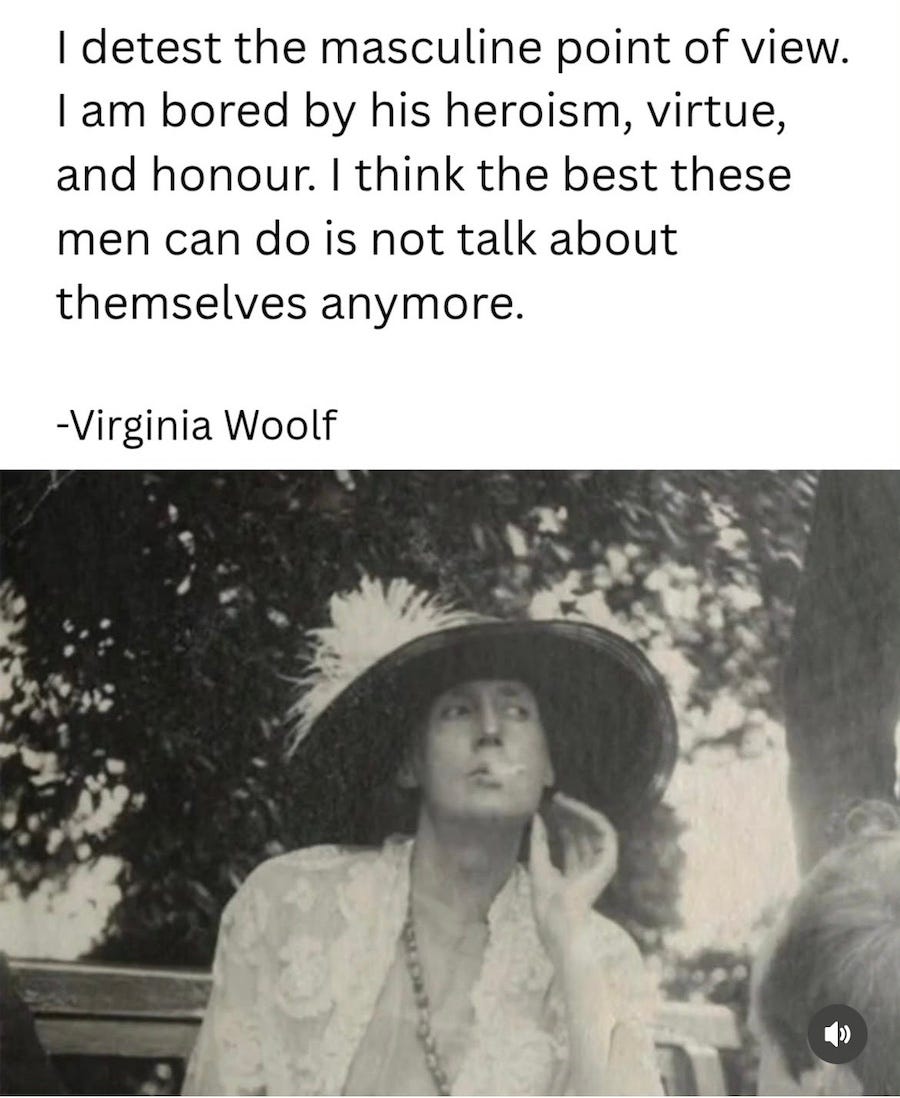
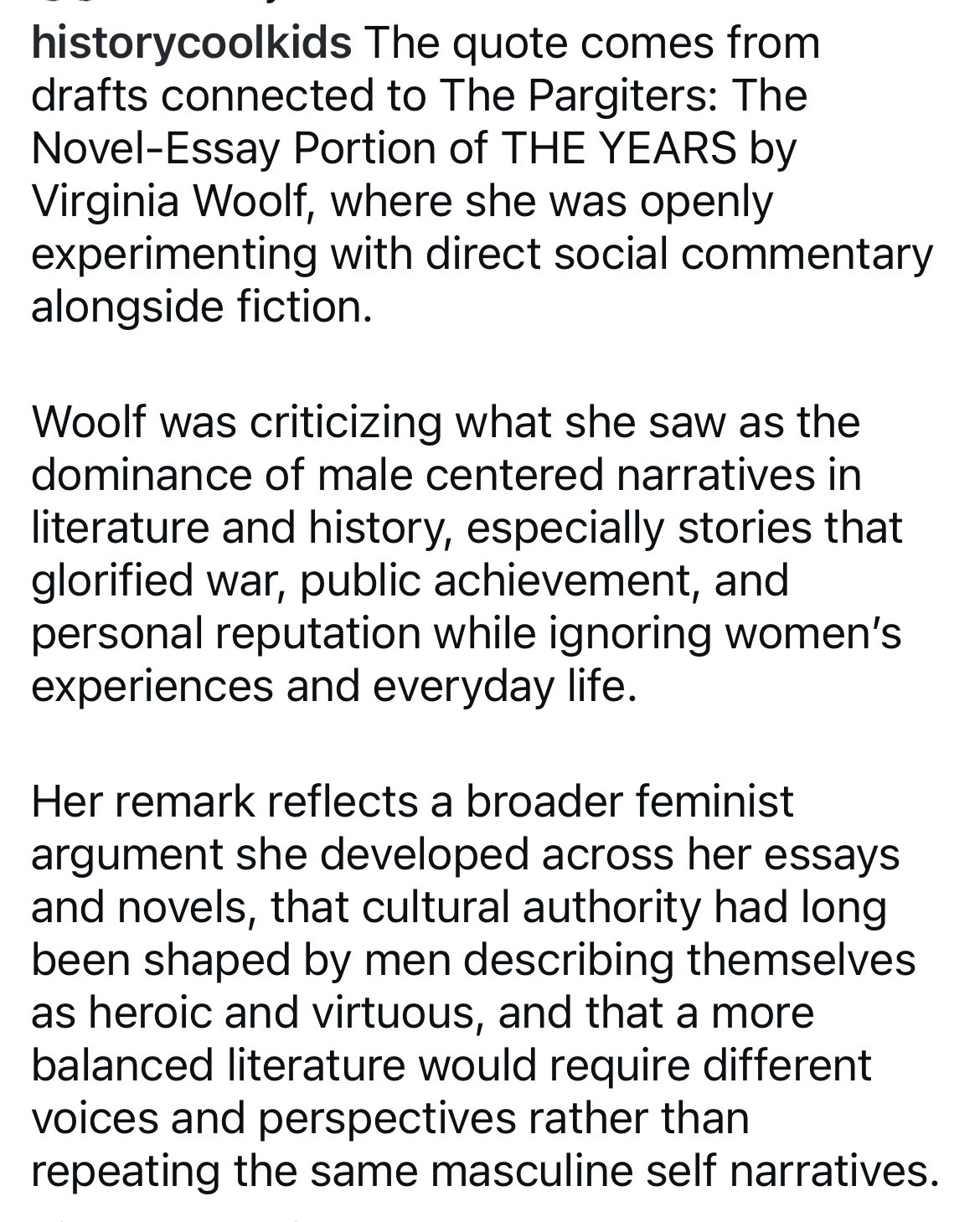
Today I ran across this post from HistoryCoolKids on Instagram, and it made me recall how important her pacifist essay Three Guineas (1938) is in the Woolf pantheon—that’s the essay the post refers to—and also how aware Woolf was that men are fucking everything up (this was around the beginning of the next great world war, England once again at the center):

The post text:

Teaching my Oxford class was tutor Jeri Johnson, herself a James Joyce scholar who for only that one summer taught both Joyce and Woolf (in separate courses); curious as to why she would be drawn to such polar opposite modernist writers, I did some research, in the time before Google, availing myself of the school library where I was teaching, and saw quickly that the writers were exact contemporaries, 1882-1941. How about that? (Note: if you want to blow away a professor, show up with a little tidbit like that and set the stage for your A.) I also learned that Woolf detested Joyce’s Ulysses, finding it vulgar (she’s not wrong, what with all the mentions of snot, for example, and masturbation); and the most important thing about Joyce’s book for me is that it inspired Woolf to write Mrs. Dalloway in answer: one day in a life in London, a woman’s life, in response to one day in the life of a man in Dublin. Both texts have richness, but Woolf’s is not designed to keep scholars arguing for a century, and that alone speaks to her quote up there.

When Jeri assigned Three Guineas to read, I entered class the next day filled with ideas, bookmarked pages, notes in the margins. The essay’s premise is that Woolf has been asked for three guineas (pounds) to give in donation, one guinea each per charity, and she’s deciding which cause deserves her money. In the course of essay, she arrives at the conclusion that her final guinea can never go to supporting men taking us to war. My four classmates (this being an Oxford-style tutorial affair), all women, declared the essay a failure and Woolf a “shrill” woman. I sat in silence. They went on about how “now was not the time to call for peace,” “Hitler on the rise,” etc. They were utterly dismissive, and all discussion was shut down. Jeri looked at me.

“Lisa,” she said, “you’ve been awfully quiet.” I looked up and stated, “I loved it.” Jeri started to smile, and thus encouraged, I went into my rapture: “This is a woman who knows she doesn’t have a lot of time…” and I began flipping to my bookmarks and reading my evidence. As I type this for you, I can feel myself in that little Oxford office, aged 26, sitting on the floor, speaking with a young woman’s ardor. No one else said anything. Class was over, Jeri assigned us something, and I was the last to file out. “Thank you,” she said, quietly. “You’re welcome,” I said, and left feeling that I’d found my own way and stood my ground intellectually for the first time in my academic life. That’s pretty cool.

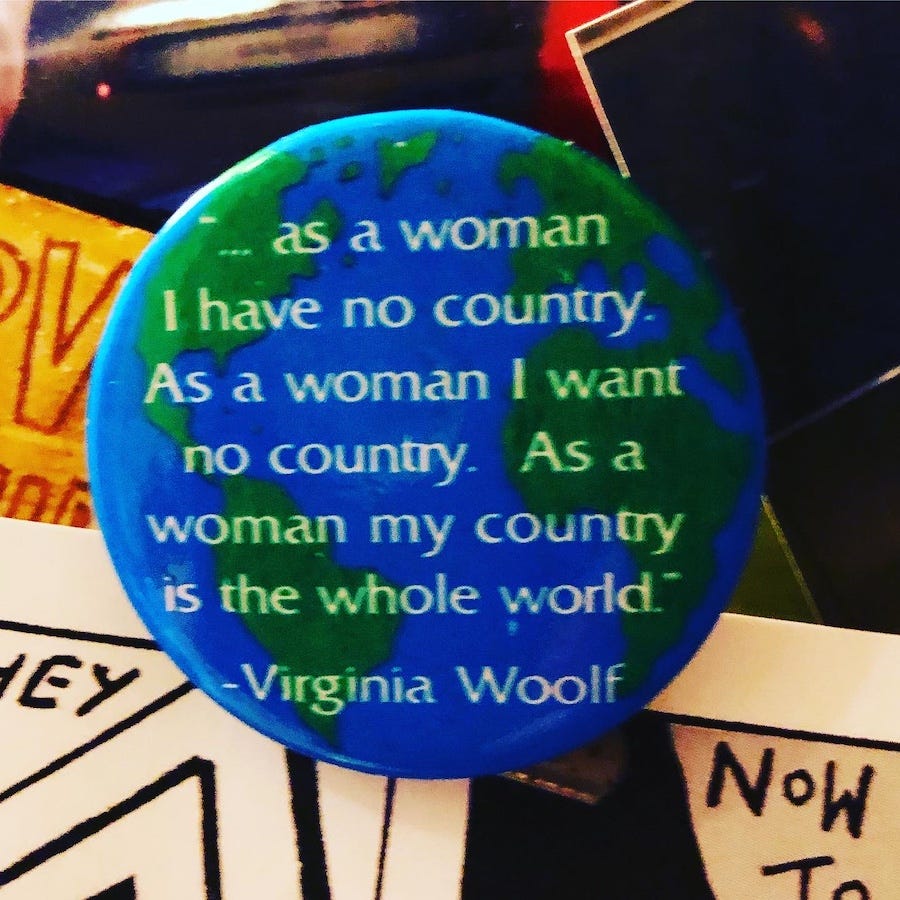
We are living in an age where the lies of men, the vulgarities of men, the warmongering and whore mongering and shit-peddling of men must finally end, or we all go down and forever.

Quote from Three Guineas, the button I wear to every protest.

This evening I’m embarking on a reread of both The Years and Three Guineas, because the mind of Woolf ca. 1936, when she began her work—seeing the writing on the wall in Germany—reminds me of myself and my female friends in 2026. Nearly a century on, men are still running and fucking up everything. I need fortification. We don’t have a lot of time.

Should you wish to start your own Woolf journey, as I think I’ve mentioned before, I recommend Mrs. Dalloway or Orlando—definitely not To the Lighthouse or The Waves; though I think they really are her masterpieces, it’s so hard to see why without a little primer. I speak from experience, take it or leave it.

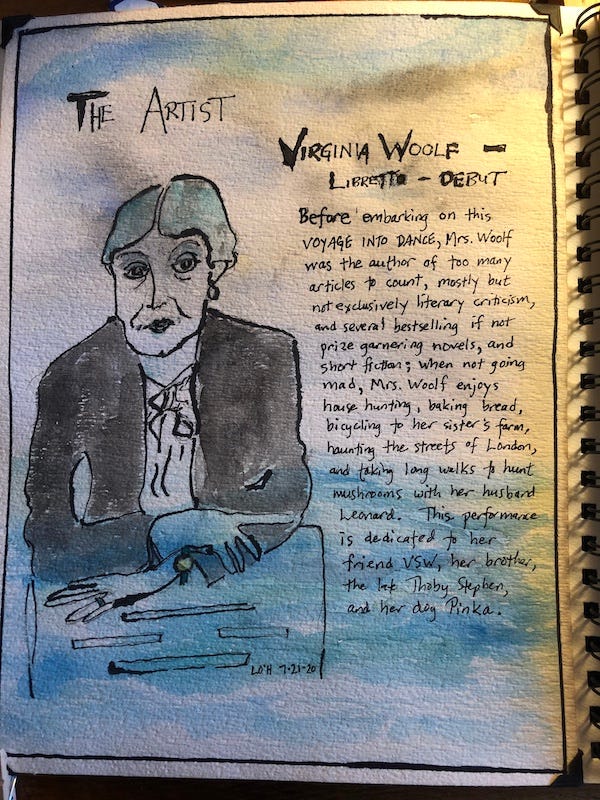
Woolf continues to inspire. The composer Max Richter and choreographer Wayne MacGregor created Woolf Works, which I saw on video during Covid from The Royal Ballet in Britain, and live in 2024 in New York. The only one of the three ballets that really works is based on Mrs. Dalloway, and I mention this because I’d love to see what women artists would do with the same material. You know. (I made this watercolor to show my friends who recommended the piece:)

Covid creation by LO’H, for those in the know. You come, too.

Sending you love and Woolf inspiration as antidote to all the maleness madness. Let me know how you get on.

David Huddle: An Appreciation

A letter of gratitude for my friend and writing teacher

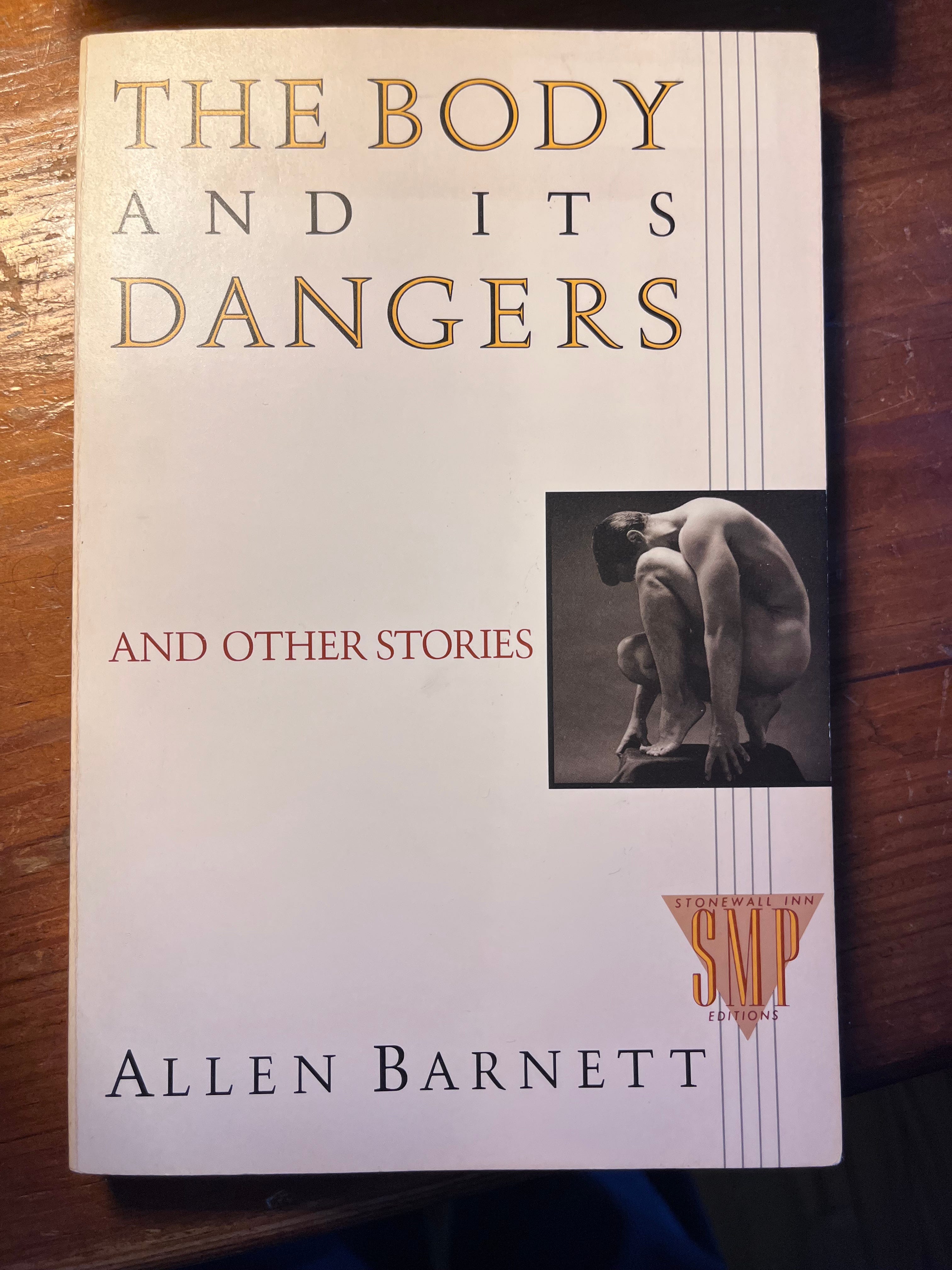
In July of 1991, writing professor David Huddle brought recently-published Allen Barnett to the campus of the Bread Loaf School of English, where I was a graduate student in my second summer. In 1990, Barnett’s debut collection of fiction, The Body and Its Dangers and Other Stories, was a critical smash; but a year later, Barnett was dying of complications from AIDS, a disease that features in his stories. David Huddle, a popular professor who taught the courses American Short Story and Fiction Writing, hosted an evening in the Burgess Meredith Theater on campus so that we all might hear Barnett read from his book.

The brown suit Allen Barnett wore, I remember, dwarfed his fragile body; as he took to the lectern, he said sincerely into the microphone, “I hope I don’t die while doing this.” He was not being histrionic; he would be dead in less than a month upon returning to New York City. I found the story he chose to read, “Snapshot,” devastating, and his reading was just beautiful. I still hear it in my mind. What struck me as much as Allen’s reading was the gravity, kindness, care, and sincere admiration that David showed in his introduction of Allen, his enthusiastically urging us to buy the book, and the way he showed Allen around the campus, that tender care at a time when AIDS freaked out many Americans.

The day following the reading, I found myself in Barn 5 (we literally had our classes in rooms annexed to a barn, and it was great), a basement area where there was a special seminar going on about literary theory, or something related. I’d sat in a desk in the back, the old-fashioned kind, ca. 1970, for the kids out there:

Professor Huddle and Mr. Barnett walked in, David guiding Allen’s elbow, and took desks right in front of mine. I leaned in, “Mr. Barnett, I want to tell you how much I loved your reading.” And David Huddle, a professor my grad school friend George had had for American Short Story in 1990, and now Jean had for Fiction Writing, whipped his head around and said, “Where did you get that accent?” A lifetime of living in Virginia even with parents from Iowa had given me some Southern.

“Yes,” Allen Barnett said, turning painfully, carefully to look at me, “where did you get your accent?”

“I’m from Virginia,” I explained.

David said, “I’m from Wythe County,” and I said I’d gone to Virginia Tech (also in Southwest Virginia), and taught in Appomattox. It was old home week. I know I said words, and heard some other words from Allen and David, but I was just astonished to be chatting with them, as if we all sort of knew each other.

That evening, I took up a yellow legal pad and I wrote a poem/letter to Allen Barnett, so clearly dying, to tell him what his story had meant to me, and even more than that, the fact that he took an interest in my accent of all things. Unwritten was, “and you are dying; how could you spend that kind of time on me?” I put the poem/letter in an envelope, with Allen’s name on it, and wrapped it in another note for David. “Mr. Huddle,” I wrote, explaining in some way or another that I wrote this letter to Mr. Barnett, and could he send it to him if he thought it was something to bother him with; and if not, just toss it.

The following Thursday evening was the weekly bonfire at Gilmore, a men’s dorm a half mile into the Green Mountains, one of the summer resort cabins that Joseph Battell willed to Middlebury back in 1920, causing the Battell-named “Bread Loaf Mountain” to become a century long (and counting) graduate English program for teachers as well as a famous Writer’s Conference. So on Thursdays, walking in the dark along the dirt road to Gilmore, you could hear the students and faculty gathering to pour a beer, sit outside, and stare into a fire (Vermont always has cool evenings) as a member of the faculty read a favorite story. It was sublime. That particular evening, still deeply sad about Allen’s fate, I sat by myself by the fire. Soon, David came over and knelt beside me. “I sent Allen your poem,” he said. I nodded. We held the space together for a few minutes, looking into the fire, and then David quietly got up and walked to greet others. I can’t remember if I learned from David when Allen died, two weeks later, but I don’t think I did.

But those few moments in a classroom and by the fire formed and sealed my mystical friendship with David Huddle forever. We never had long conversations, never spent long stretches of time together. One summer, he suggested that he, George, Jean, and I have pizza together, and thus began a tradition for us, once a summer for three or four summers, David would crank Steve Earle as he drove us into Middlebury down Rt 125 to Rt 7. I know he didn’t do that with anybody else, and we all knew not to tell anyone. It was our thing.

In the summer of ’93, my penultimate summer, I saw David at the annual summer cocktail party on the porch of Treman, a guest dorm with a kitchen that also served as an evening faculty hangout for The Eleven O’Clock Club, a legendary gathering of wits, to which I was never invited. The cocktail tradition was a rolling invitation list over the weeks, where one “dressed up,” and faculty and students could hobnob over alcohol. David, in his summer suit, walked over to me on the porch with his gin and tonic; I (a nondrinker at the time, I enjoyed a tonic water and lime, but who’s to know?) in my purple summer dress greeted him. He asked about my plans for my last summer. The rumor was John Fleming was coming up from Princeton one last time to teach Chaucer, and I needed that era of literature to graduate.

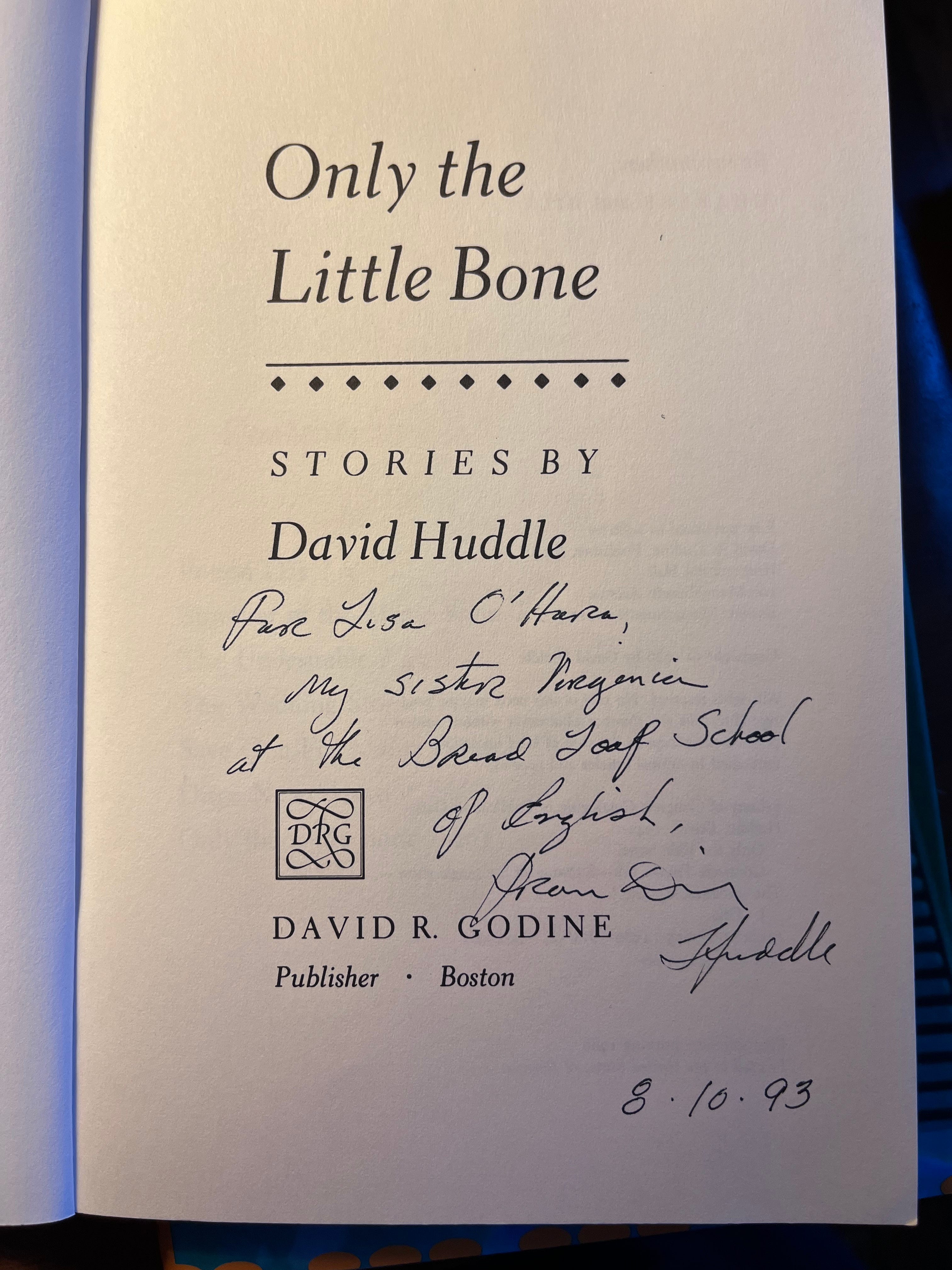
David asked, “Are you going to take my fiction workshop?” All these summers, it never even occurred to me to take a class with David. “Oh, no, David,” who always signed his most recent books for me, calling me “my sister Virginia” once. I explained that I wasn’t a writer but a drama director, George and Jean were the writers, that sort of thing. David looked tauntingly over his drink and said in his best kewpie doll voice, “Is the baby afwaid to take my workshop?” I glared at him. “Fuck you,” I said, “I’m taking your workshop.” He grinned. “Good,” he said, and sipped.

Bless that son of a bitch. Best decision I could have made. That last summer I took my two most challenging courses, challenging myself in ways I really hadn’t before, and David’s steady encouragement gave me the confidence to do it—that’s a longer story for another time.

My favorite greeting question of his, and I remember him once asking me this on his way to the tennis courts across from the library (not the best location), “How is your writing life?” David treated his students like fellow artists, and though I couldn’t be that, it helped me feel belonging.

David and I formally decided to have lunch together one day in the dining hall, and just as we’d sat down to talk, we were joined by another workshop student, a private school teacher (now the head of one of the most prestigious boys prep schools in the country) and a graduate of University of Virginia, like David. Tanned and dashing in his polo shirt, the fellow said, “May I join you?” and sat down without waiting for an answer. He immediately began schmoozing, complimenting David on a poetry reading he’d given with the likes of Donald Hall and others. David met my eye, which invisibly rolled, and I smiled; we shared this trap but it was David who was truly caught. My grin said, “You are on your own.” David’s gaze said, “I hate you.” Now that is love.

I believe that was the only time in four summers on the mountain that David Huddle and I ever tried to hang out, and it was not meant to be. David told George, Jean, and me that final summer, when they attended my graduation, that we would lose touch, as David said he never kept up with Bread Loafers. But he’d never reckoned with us. Over the years, I sent letters and cards to him, and he sent letters and poems in progress to me, to all three of us. Facebook later became the repository of greetings. George and Jean, who had married, remained in closer contact with David than I had, even visiting him in the hospital in Burlington as he was dying, complications of dementia. I knew something was wrong a few years ago when suddenly David left Facebook, where he had actively posted bird photos, shared poetry, including his own latest publications and readings, and boasted on his family. The onset must have been swift, is all I can say. Such a loss for his wife, daughters, and grandchildren, and a great loss too to his friends, readers, and fellow writers.

So I’m sharing this today because I finally found David’s obituary—he died in October; the obituary wasn’t published until November, and by then life happened and I didn’t search. George had let me know when he’d heard. I don’t know what made me think about David today, to decide I needed to write about him; coincidentally I got a brochure in the mail for the Bread Loaf Writer’s Conference just as I started typing this. Something in the air, I guess.

David’s poems, short stories, and novels are still in print. He’s one of those so-called “minor writers,” which is sort of ridiculous because his work is wonderful, and you realize these tiers, these hierarchies, are silly. What is better than David’s “ABC” from Story of a Million Years? What’s more moving and beautiful than Allen Barnett’s “Snapshot”? There’s so much wonder to find in the world, so many encounters that teach us about ourselves, that moor us in the most turbulent of times, you have to know it all counts big, however small or quiet.

Hoping you find any consolation you need for yourself today, that you might take a moment to think about the teachers in your life. Bless them.

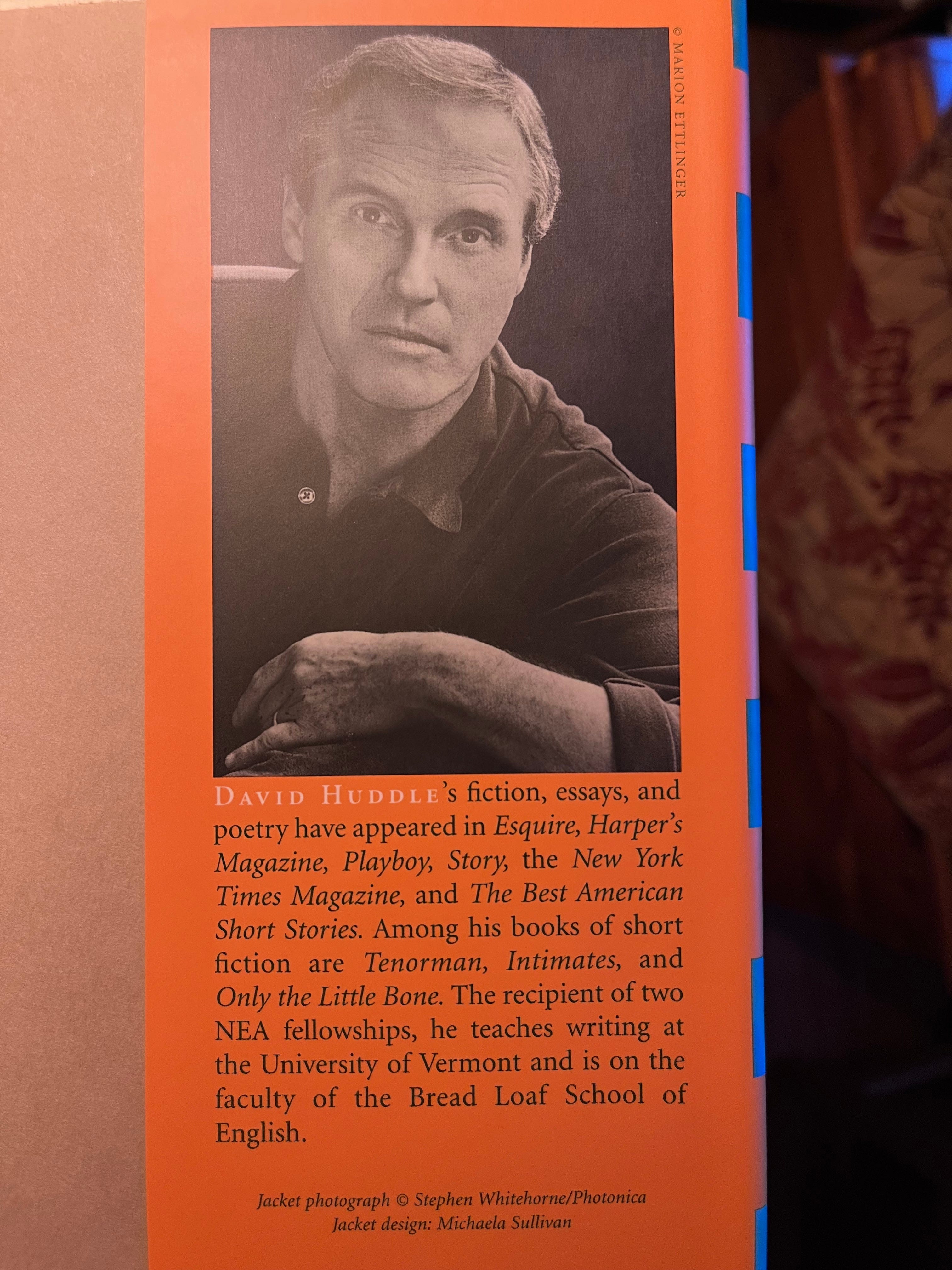
P.S. I loved to show friends this author photo. “Here’s why I took his workshop,” I’d say. David would have choked, catching my eye. I will always miss him.

Light Wood

Finding my way in the dark

This would have been 36, 37 years ago now, in the fall, the first year I moved out to Highway 644 in Appomattox, Virginia, the little yellow house—I told you this story—and my heat source was now a wood stove. My teaching colleague and neighbor Jeanne drove me and her trusty German shepherd Ton-Ton, struggling in her final year with hip dysplasia, in her truck just barely into the woods by Nixola Guill’s house, back just behind the old clapboard church that the historical society would later that year move to a “historic village.” It was just getting on dusk, and our plans had gotten waylaid by one thing and another, but the fact was Jeanne’s family was out of light wood, and I was going to need it too, if I wanted to get a fire going properly. This is the stuff sold as “Georgia flatwood” in cabiney catalogues, but what it is is old pine stumps, the pitch of which has turned into pure kerosene. Talk about a fire starter.

I don’t know who owned the land (and no doubt we were trespassing), but the forest was deciduous, changing over from pine to hardwood. As a result, the pine trees lost light, began dying, and the place had become loaded with pine stumps. Jeanne had noticed the abundance of them in one of her walks; it was getting on the time of year she had to put the dogs in blaze orange vests and wear one herself, early hunters out illegally, too, so our trespass was nothing, what with perfectly good lightwood just going to waste.

Jeanne pointed out the wide gully leading from deep in the woods to behind the church. “That was a road at one time,” she explained; walking in the woods with a biologist and native Virginian was always instructive. In fact, my four years living in that county could not have been a smaller life or a bigger education. I’ve written about it in places, but this is about wandering through woods at dusk. We’d walk, locate a stump, take a shovel, and dig; so old was the wood that it only took a little digging and some tugging to pull the stumps up. “Smell that,” Jeanne said. Oh, yes, there’s that kerosene smell. Jeanne’d brought along a couple of large burlap sacks to fill and that we did, dragging the sacks back to the truck, as Truman Capote might say, lugging the stumps like a kill.

By the time the dragging began, it was fully dark. You don’t think you can see in the dark, but you can. Because of the gully on our right, we knew which direction to walk in, and we also kept well to the left of the gully so we didn’t tumble in. It was cold now; supper sounded good. Do you know that feeling? And the tingle of wood smoke filled the air all around, all the stoves of the wide-apart neighbors commencing their roars. Lifting those sacks into the back of the truck, and Ton-Ton too, getting inside the cab, pulling out onto the road for the short drive to Jeanne’s driveway, I can’t tell you how alive I felt. Her husband would chop up a stump for me that evening to take back to my own stove down the road, where I’d go right after supper.

I get teary thinking about this, the exhilaration of that evening, one that felt like many hours but couldn’t have been more than one. A friend, woods, a dog, a truck, a purpose, and that dusky light, the promise of supper when the work is done. It’s all you need.

Back in my young teaching days in the late 1900s, people enjoyed their experiences without the press of photographic documentation. I miss those days.

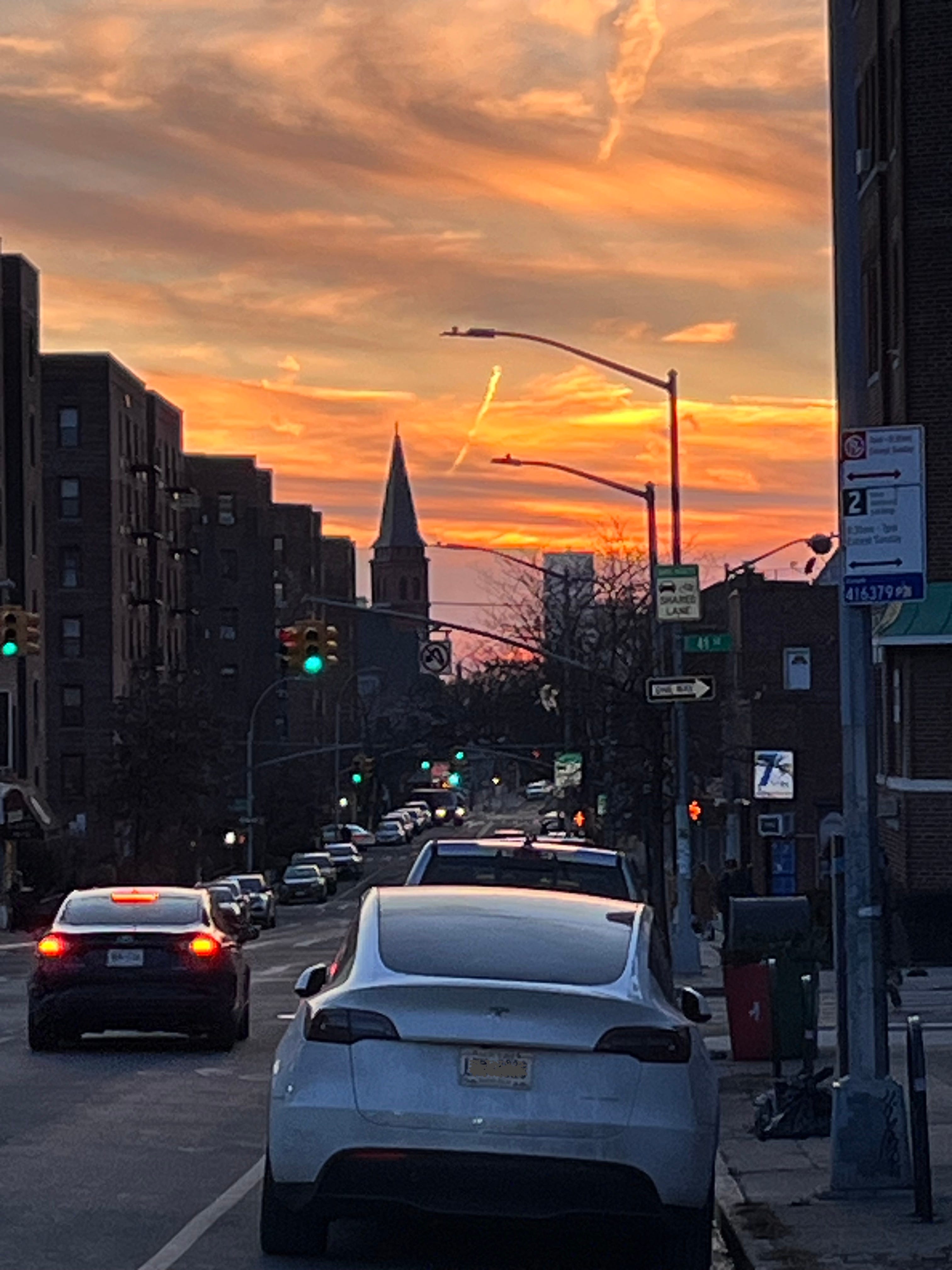
And walking around Queens this evening, that’s exactly where my sense memory went. And I thought I’d take you on a memory walk with me, in case you needed a reminder that there is not only a way into the woods, but also a way out, even in the dark, and if you pay attention and stay present, you’ll find it.

Sending love,

Miss O’

The View Beyond a Sky That Stops

Swearing to serve and protect

This New Year’s evening at 12:01 AM, newly elected New York City mayor Zohran Mamdani will be sworn into office by New York Attorney General Letitia James. I cannot recall the world watching a New York City mayoral election before, but then, America has not been engaged in a civil war since 1865, this time with a transparently corrupt U.S. president trying to break up the union, smashing it into pieces using a Bible as a cudgel.

Mayor-elect Mamdani will swear in on a holy Quran, and our treasured Under the Desk News correspondent V Spehar explains what you can say to your MAGA community as they freak out:

@underthedesknews

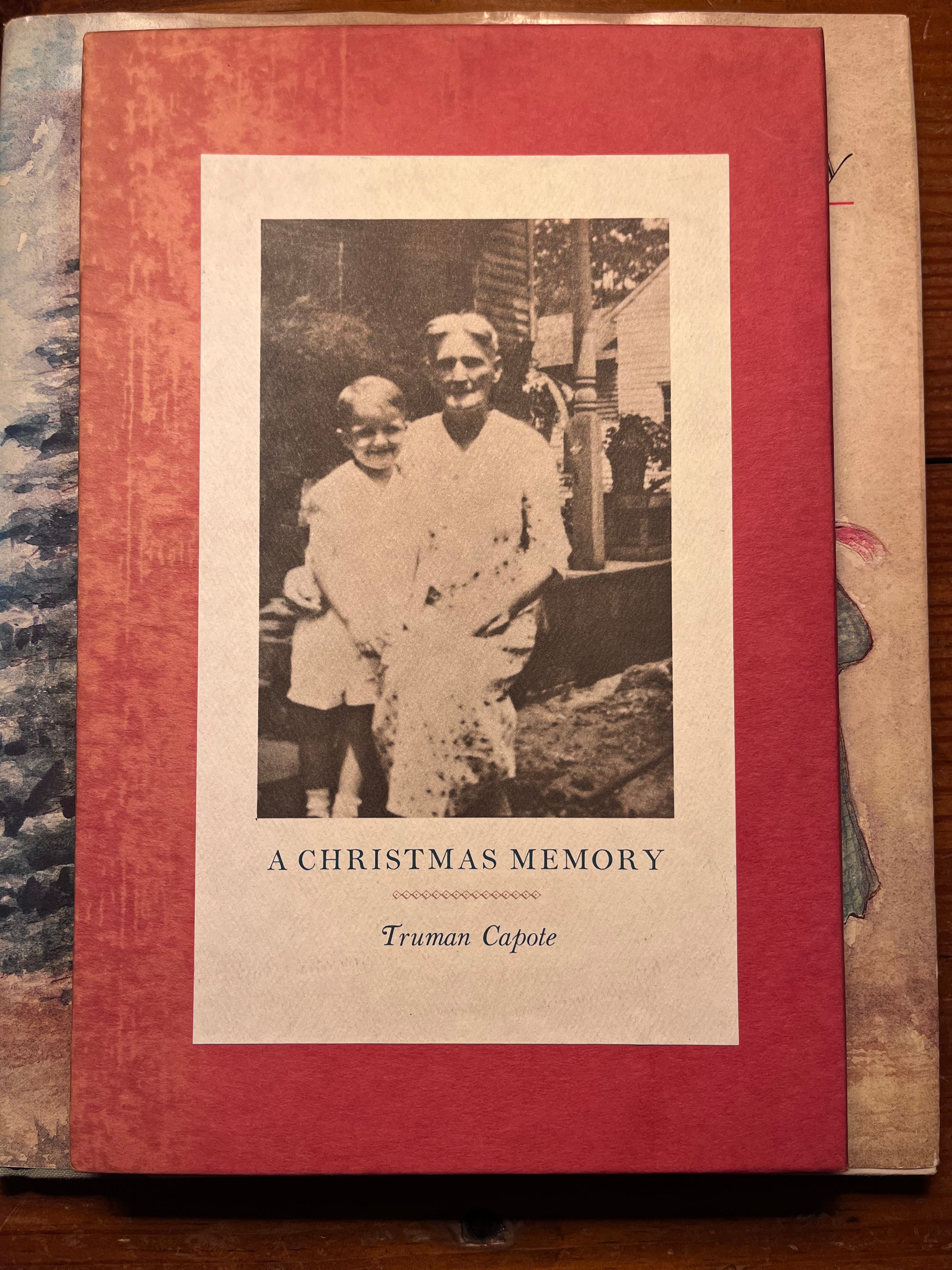
Following her list of all the various volumes politicians have chosen to swear in on, V asks us what we would swear in on, and there is no question that I would swear in on my boxed edition of Truman Capote’s personal story “A Christmas Memory.” I can’t imagine a more American story, centering on a young queer white boy in Alabama, abandoned by his divorced mother and being raised by evangelical relatives. The one true protection he has is his cousin, a much older woman, a bit balmy and childlike, who truly loves and cares for young Truman, known to her as Buddy.

The memory set around Christmas, from the baking of fruitcakes to the finding of a tree, couldn’t be more Hallmark on its surface, but far less shiny and much more emotionally complicated, particularly the details of abject poverty that most Americans would fail to understand today. Back then, and this was my parents’ time, being poor was nothing to be ashamed of (though what would be familiar is the forces of corporations doing everything possible to keep Americans as down as was possible and still get them into the factories and mines to work, but this isn’t part of the story).

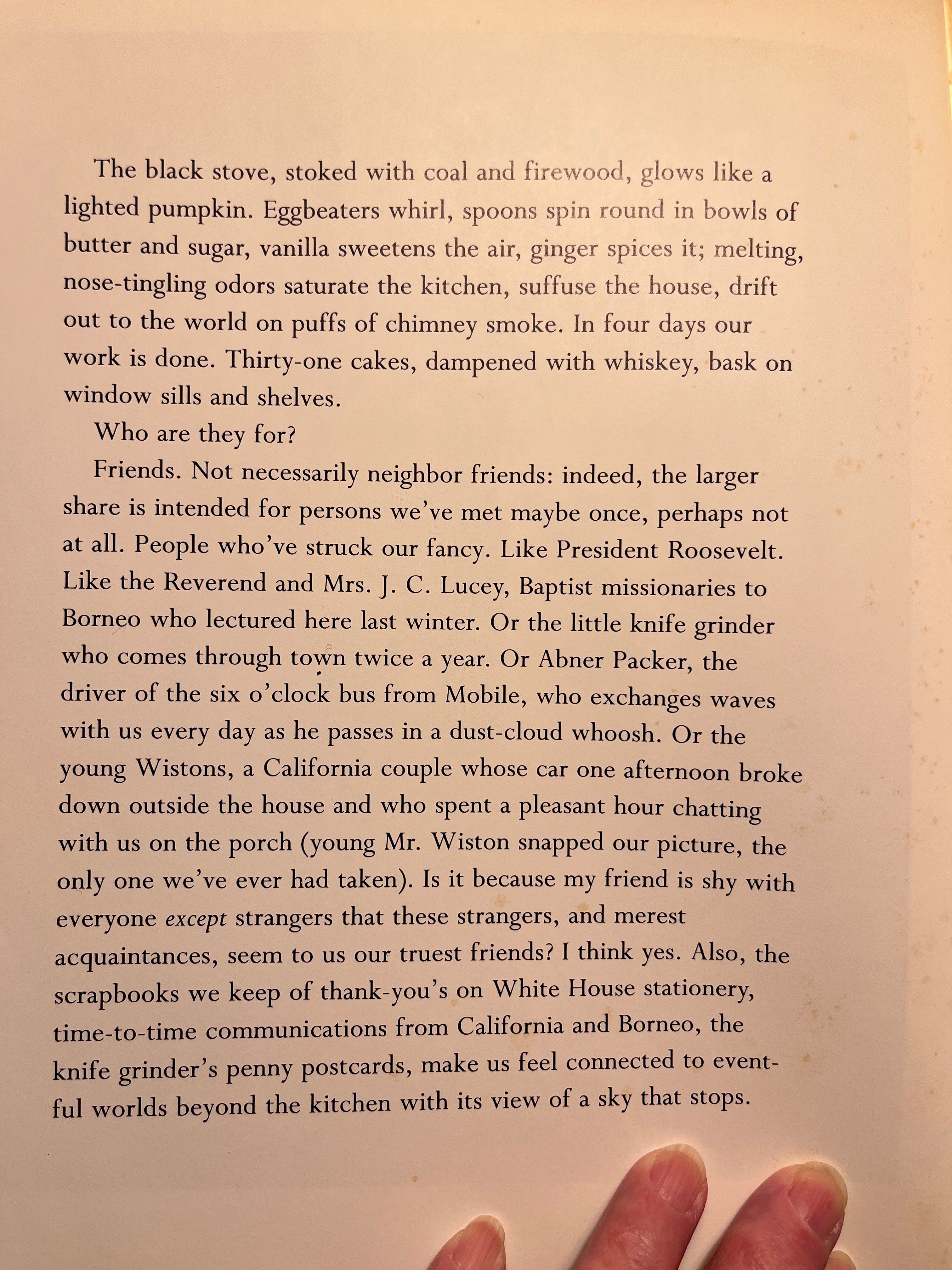
Below is a selection after the baking has commenced (with whiskey for the soaking obtained earlier in the story from Mr. Haha Jones, a Native American riverside cafe owner who sells moonshine illegally (this being Prohibition), Capote casually revealing more complexities and hypocrisies of life in the United States).

Strangers “seem to us our truest friends.” That, to me, is a kind of American ideal, born out of the hatred too many of us experience from those closest to us. Connections to distant places, gratitude to presidents and knife grinders and passers-through equally, Indian or Black or white—all the people of their lives, accepted and shown appreciation, despite the despotic rule of the Christian relatives they try to forget. And their little dog, Queenie, is unforgettable, too.

It’s a beautiful, human story, focused on love between friends. Every year for many Decembers, my friend Barry Hoff would stage “A Lovely Little Reading” of this story, complete with fruitcake he baked himself, for a gathering of friends on the third floor of the now closed Hourglass Tavern on W. 46th Street, shuttered by extortionist rent, something we are counting on Mayor Mamdani to address for the good of all of us.

I always took for granted the tradition of swearing on a book, a bible, though I never realized I could choose what book I wanted (I hope you watch V’s video). Were you to take office, what book would you swear on?

“The only photo we ever had taken”: Truman Capote was friends with Nell Harper Lee, a neighbor, who used him as model for Dill in her novel To Kill a Mockingbird, and helped Truman do his research for his classic true crime story In Cold Blood.

Sending out love and high hopes this New Year’s Eve, as I fittingly watch a Marx Brothers Marathon on TCM, the absurdity of which satire is all too contemporary,

Miss O’

Gratitude

(Even when you keep missing a beat)

How have you been? How was Thanksgiving? Mine was really nice, thanks, celebrating with friends (my age) who also lost their mom, two days before last Christmas. In honor of my mom, I made a version of Lynne’s homemade stuffing, and my dad and Jeff tried to make a version, too. Foods are touchstones. I hope you were able to make and enjoy some delicious touchstones, too, in the midst of feelings.

This year has been hard, hard, hard on far too many people on this earth and much of the world suffering is the hands of three white male power mongering thugs in their 70s (Trump, Putin, Netanyahu), and their minions, and I have this problem where I feel guilty even thinking about personal joy or grief amidst all the suffering. (As you know, I live alone for a reason.) And I’m struggling with myself, as we do. It’s funny to keep doing this at 61, but here we are.

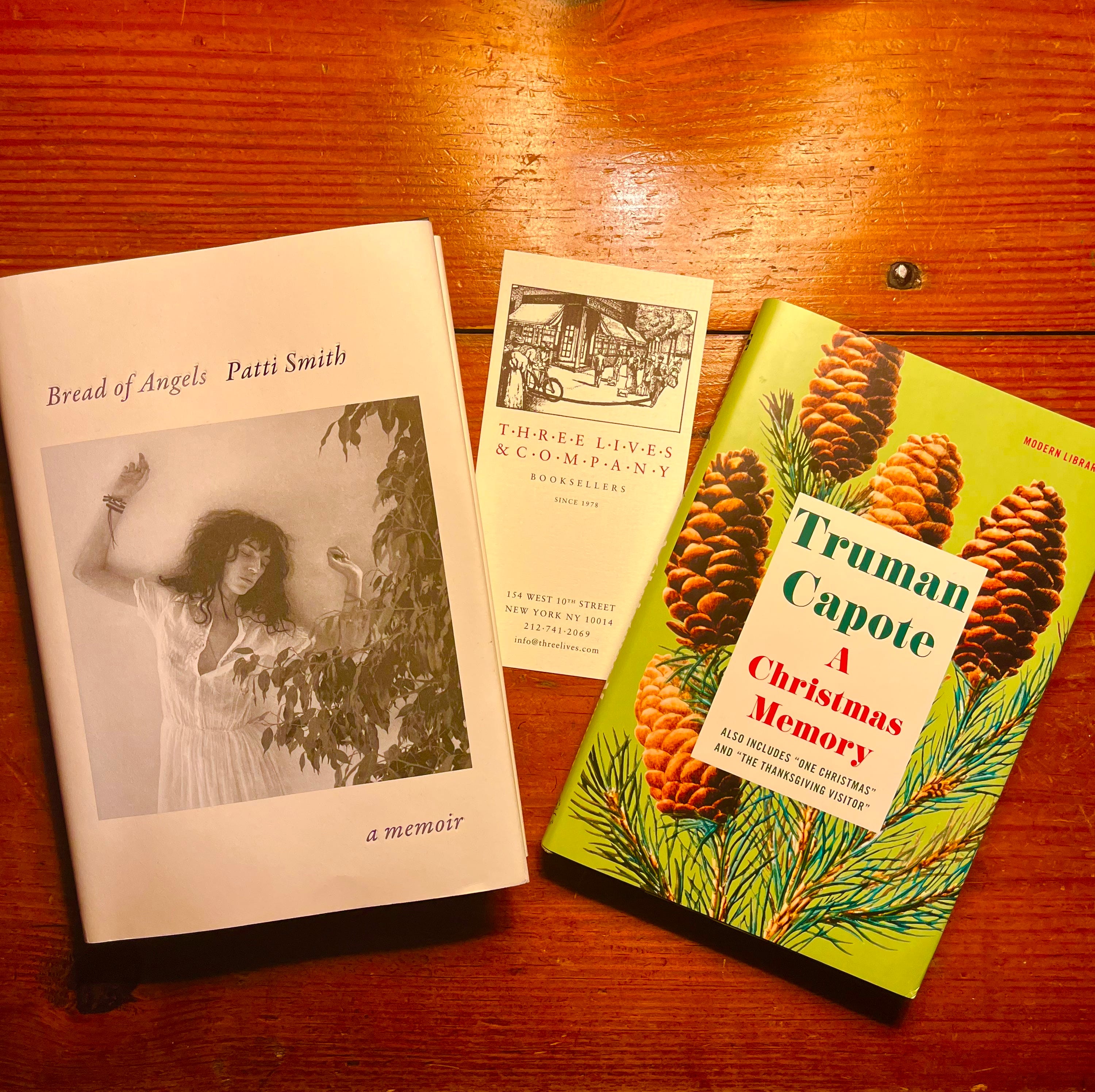
To calm myself and try to recover a sense of why I’m alive, on the Monday for part of my time before reflection week over Thanksgiving (see what we might call “The White Blog”), I spent a day bookstore haunting, walking from W. 10th Street in Greenwich Village over to E. 2nd Street and Avenue B in the East Village (Alphabet City). At my first stop, the Three Lives & Company Booksellers, a lovely small corner door shop, I found and bought Patti Smith’s latest memoir, as well as another copy of Truman Capote’s Christmas classic in case, as the store manager agreed, “In case you need a gift in the hopper.”

Book store people get you. The same woman who rang me up helped a man whose female partner brought him in to help him take up reading as a hobby. (I had to sit with that, like reading was a rarefied activity.) He liked war and history; I wanted to recommend the Capote, but I didn’t interfere. I recently read that in the United States, only around 14% of adults read for pleasure. That really hurts me. Even my dad, Bernie, who didn’t graduate from high school, read the newspaper every day. I told you this: My mom, Lynne, bought him Travels with Charlie, and he liked it, but The Godfather was the book that hooked him. And this lack of American reading reminded me of something back nearly thirty years ago, in summer, a cousin and his wife and four kids were visiting, staying in the upstairs rooms in my parents’ small house—this was back when I was still teaching in Virginia, and my brother Pat lived there too. My brother Jeff lived in an apartment then and took the day off, and we all gathered to take my relatives into D.C. for the day. While we waited for them to come downstairs, my mom sat in her chair, my dad in his, Pat on the loveseat, Jeff in the corner chair, I in a side chair, each of us with a section or pages of The Washington Post (back when it was a real newspaper). We read. My cousin came downstairs into the little living room and stood still. Gradually, we looked up, “Oh, hey, John,” and he stood staring. I asked, “What’s wrong?” And he said, “I’ve never seen anything like this.” What? “A family reading.” Though this was a weekday, we knew such times generally and all of my growing up as “Sunday.” (At Christmastime, we all listened together, “A Child’s Christmas in Wales.” That would’ve made his head explode.)

Patti’s memoir (I’m up to page 113, savoring it each night so as not to have it end) is essentially a beautiful love letter filled with gratitude to everyone who helped her become. And Patti (I feel I can call her that) has made videos on Substack, posted also on Instagram, and she talks about living in gratitude. I feel every word. In her latest (hyperlinked above) she talks about finishing her tour for the 50th Anniversary of Horses, which I told you I was lucky enough to see at the Beacon here in New York.

One of the first people to help Patti Smith find her voice in the early years after she came to New York at age 19 was the budding playwright and musician Sam Shepard. I remember reading Shepard’s plays in college, after he’d won the 1979 Pulitzer Prize for Drama for Buried Child. I realize now that he’d only been a real voice in the theater for ten years when I first read him—that’s wild to me. He seemed so old and established. But then, when I saw Patti Smith’s cover for the album Horses, I couldn’t have known she was only 28 to my 11. She was worlds away.

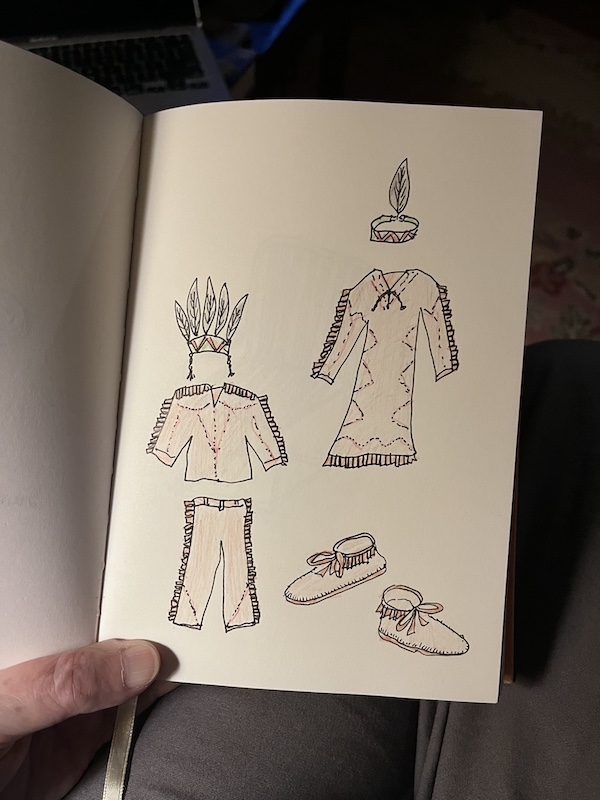
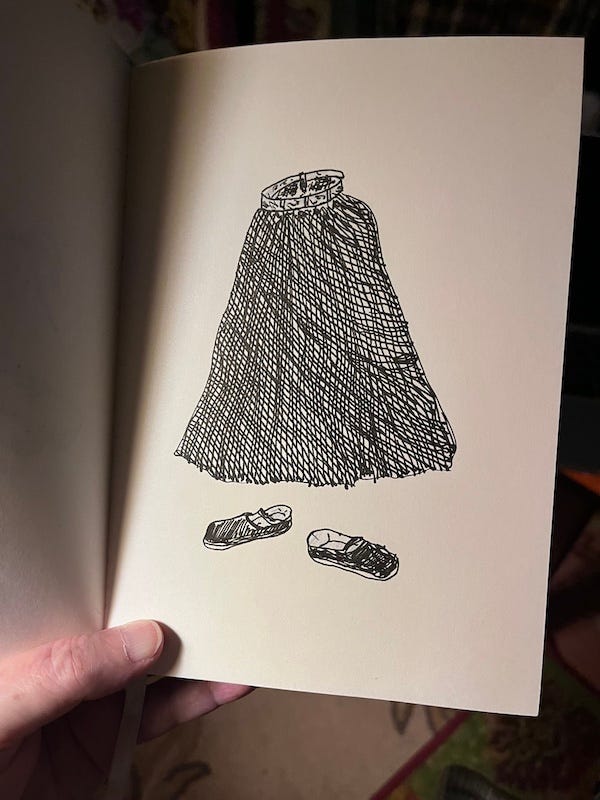
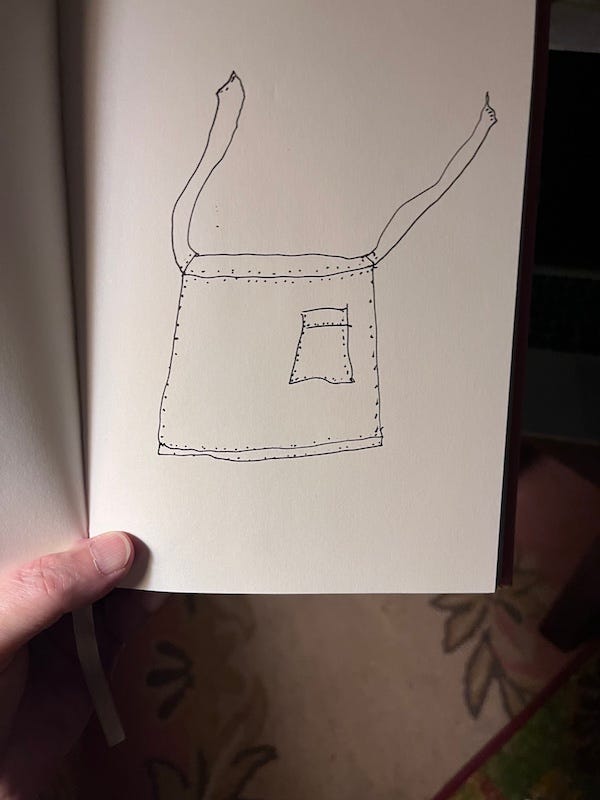
In truth, I didn’t discover or really attend to Patti Smith at all until reading her memoir Just Kids. I’d heard “Gloria,” and “Because the Night,” and of course I knew who she was, had seen Robert Mapplethorpe’s photos of her, but she scared me. Sam Shepard scared me too—I designed costumes for of his two one-acts, Cowboys #2 and Red Cross, when I was in college, ca. 1984, and his writing was out there. (I was part of an acting ensemble for Savage/Love, a play he wrote with Joseph Chaikin, but we never got to perform it.) Smith’s memoir/fantasia The Year of the Monkey in part chronicles her time nursing Shepard as he was dying of ALS, spending days typing up his final book as he dictated it from a wheelchair. (I told you about his observation, “Patti Lee, we are a Beckett play.”)

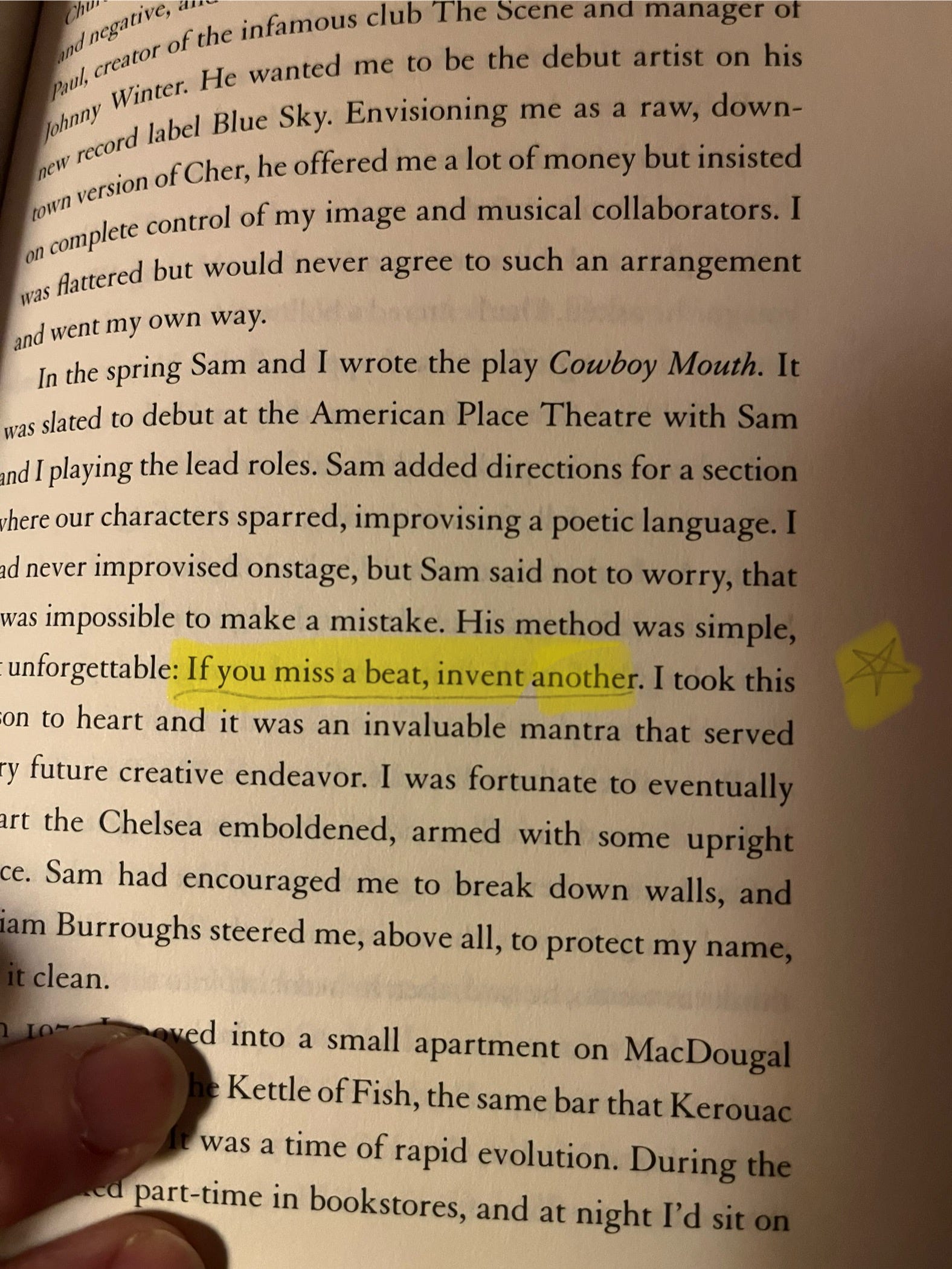
Sam Shepard’s advice that has served her a lifetime. We could all take a memo.

When I read of Patti’s childhood, I feel embraced by love, recalling my own best parts of childhood. She writes like no one I’ve read—she’s as idiosyncratic on the page as on vinyl, and it’s just wonderful.

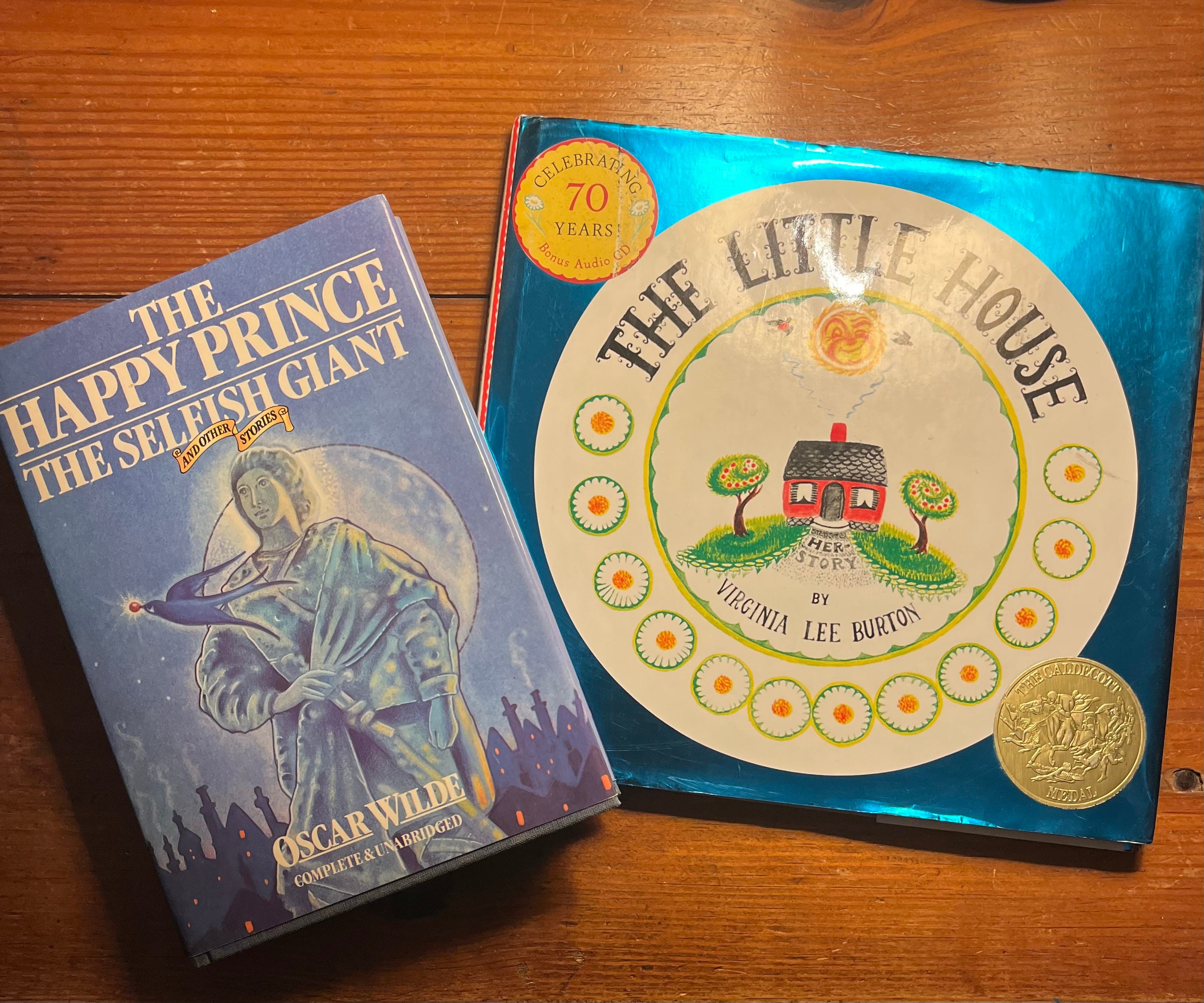
One of Smith’s childhood memories is of reading Oscar Wilde’s “fairy tale,” “The Selfish Giant.” When I became obsessed with Oscar Wilde at age 15, my mom gave me a collection of his stories for children, so I reread this particular tale the other night. I remember that I was turned off by the religious turn the tale took; but Smith spent part of her youth as a Jehovah’s Witness and took religion seriously, until she couldn’t anymore. By contrast, I grew up free from religion as a part of my life but still had questions about God. (Are You There, God? It’s Me, Margaret was a favorite book.) But I knew the feeling of that first book, that first story, the one that sparked the love of reading, the need to read more.

Patti Smith’s favorite story, “The Selfish Giant,” and mine, The Little House.. What’s yours?

I know, I feel, I see how important reading is—for so many reasons beyond the stuff you learn. I was thinking about my cousin’s surprise at seeing a family reading together; now I imagine it’s families scrolling on phones, and while that is not dissimilar, the act is different. Scrolling is not meditation, somehow, but something that distances people. (There’s data on this.) There’s a calmness that comes when engaging quietly with print text. Something in the tactile element and the way our brains have spent centuries adjusting to the act of reading, and even better, surrounded by some books that everyone can see on display—it’s a shared experience even when it’s solitary. It’s not about algorithms, is what I mean.

And Patti Smith is so different from me, reading her memoir reminds me that sharing the particulars of our lives can lead to universals, in that we see ourselves as human. But I can love that Patti and I share a love of something Wildean, even if mine is his whole creative life. And like me, Smith has touchstone artists—hers Diego Rivera and Arthur Rimbaud; mine Katharine Hepburn and Virginia Woolf. Their art gave us our own humanity, opened the gate, turned on a light, pick a metaphor.

It’s such a lousy time to be human right now—“lousy” is hardly the word—and yet I know I need to walk around grateful. By some miracle on Friday, for example, I found my way through to finishing a major project at work, could see my way to the end, I mean, and was so relieved, that as I took my afternoon walk I fairly floated. It’s such a human thing. Even Patti Smith makes the finishing of her tour—a 50th anniversary tour as a superstar—sound so human, and then she had a tooth seen to at the dentist, talked about moderating a talk back after the opening of the new Frankenstein and talking to Guillermo Del Toro like he’s a person, because he is, an artist like her, but a person. Creatives living their creative lives pausing at moments to scream, “Fuck Trump.” Like the rest of us.

We’re all doing our best, getting on with the work of our worlds. Loving our friends, our families, telling them that. Expressing gratitude for a good chair, a coat that keeps us warm, a hat that stays on in the wind. An orange. A book.

I’ll ruminate on all the horrors of our country again soon—I think I’m waiting for an idea of what we need to do, besides not quit. Remember was Sam said to Patti, “If you miss a beat, invent another.”

Sending love,

Miss O’

East 3rd Street, NYC, should you like to visit there.

A Life in the Theater

On character, tragic flaws, and hope

Nov 09, 2025

On November 9, 2010, 1st Lt. Robert M. Kelly, USMC, was killed in Afghanistan. Robert had been a student of mine at Gar-Field High School in Woodbridge, Virginia, along with his older brother, John, both of them the sons of Gen. John Kelly (Maj. Kelly, when I first knew him; I attended the ceremony when he became Col. Kelly). Both John and Robert were in the Drama Club, and very different kids, John doing technical theater (lighting), Robert hanging around until he scored a legendary turn as Juliet in The Complete Works of William Shakespeare Abridged (with a cast not of three but of thousands) his senior year, a performance that caused his father to laugh harder than I’d ever seen him do. Interestingly, son John (now a colonel in the USMC himself) was naturally funnier, but ironically it was Robert’s relative seriousness and deeply felt empathy that made him a great comic actor.

I got the news of Robert’s death 15 years ago through missed connections all day, brother John trying to reach me, my return calls back going to voicemail; I thought something might have happened to Alan, another former student and John’s best friend; finally I got hold of Alan while at a play lab at the Pythian on the Upper West Side, where cell reception as terrible and I had to go out to the street to reckon with the truth. I didn’t know Robert had even been deployed; apparently it was a sudden decision to send his unit over, and maybe only a week had passed since his arrival, an IED doing the job.

Robert’s funeral and burial at Arlington, just eleven years after his graduation, seven years after I’d left teaching and had moved to New York, was attended by well over a hundred people, many from Gar-Field, teachers, students, friends, parents, along with his family. Hard to process even now. I was reminded of all this yesterday when my friend and retired department chair Tom texted to remind me, thinking only ten years had gone by. (I knew it was longer because my cell phone had been a flip phone. Isn’t that a particularly millennial reason to remember a date?)

So tragedy is on the brain this morning.

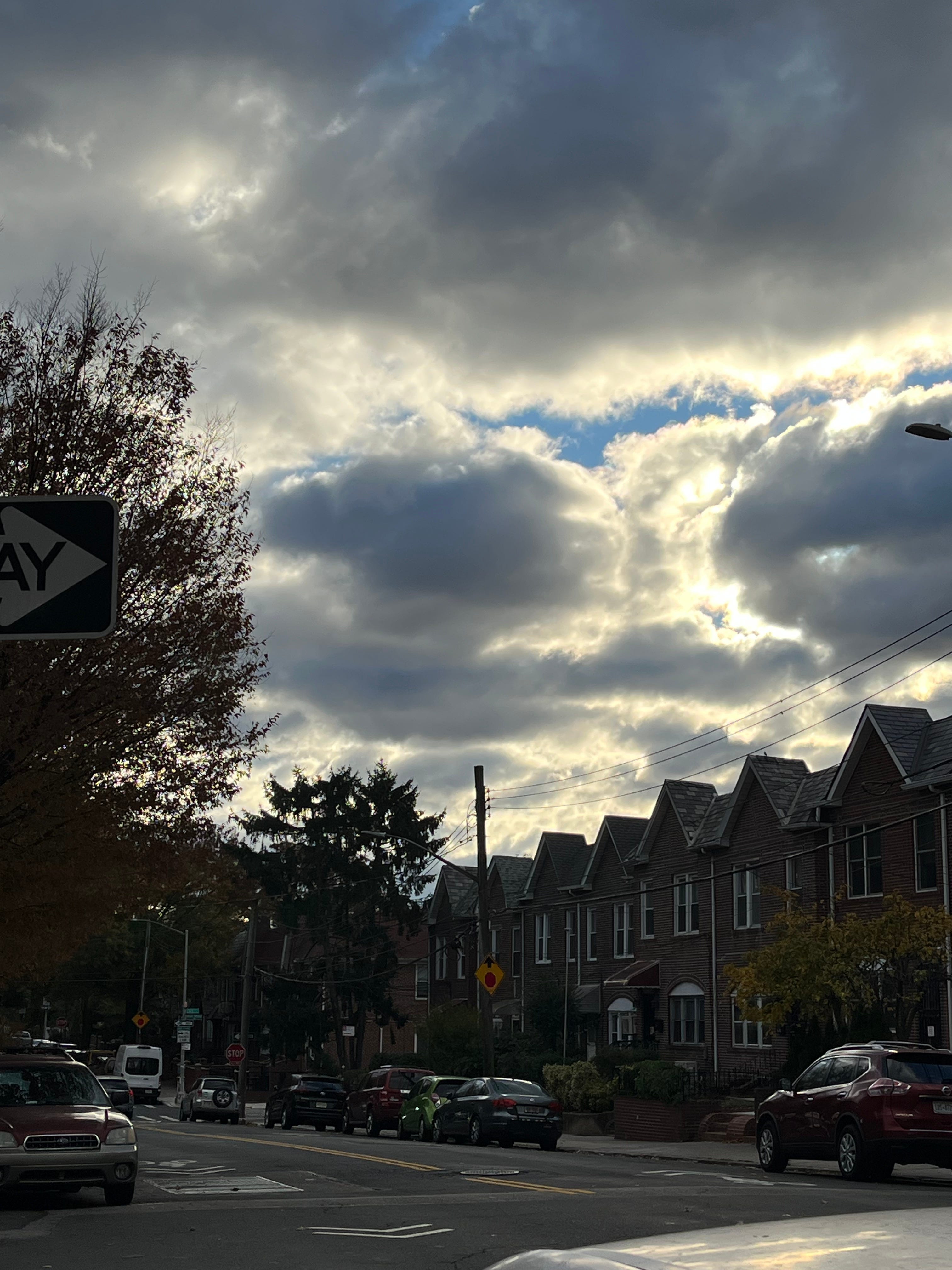
Biblical sky drama over Queens.

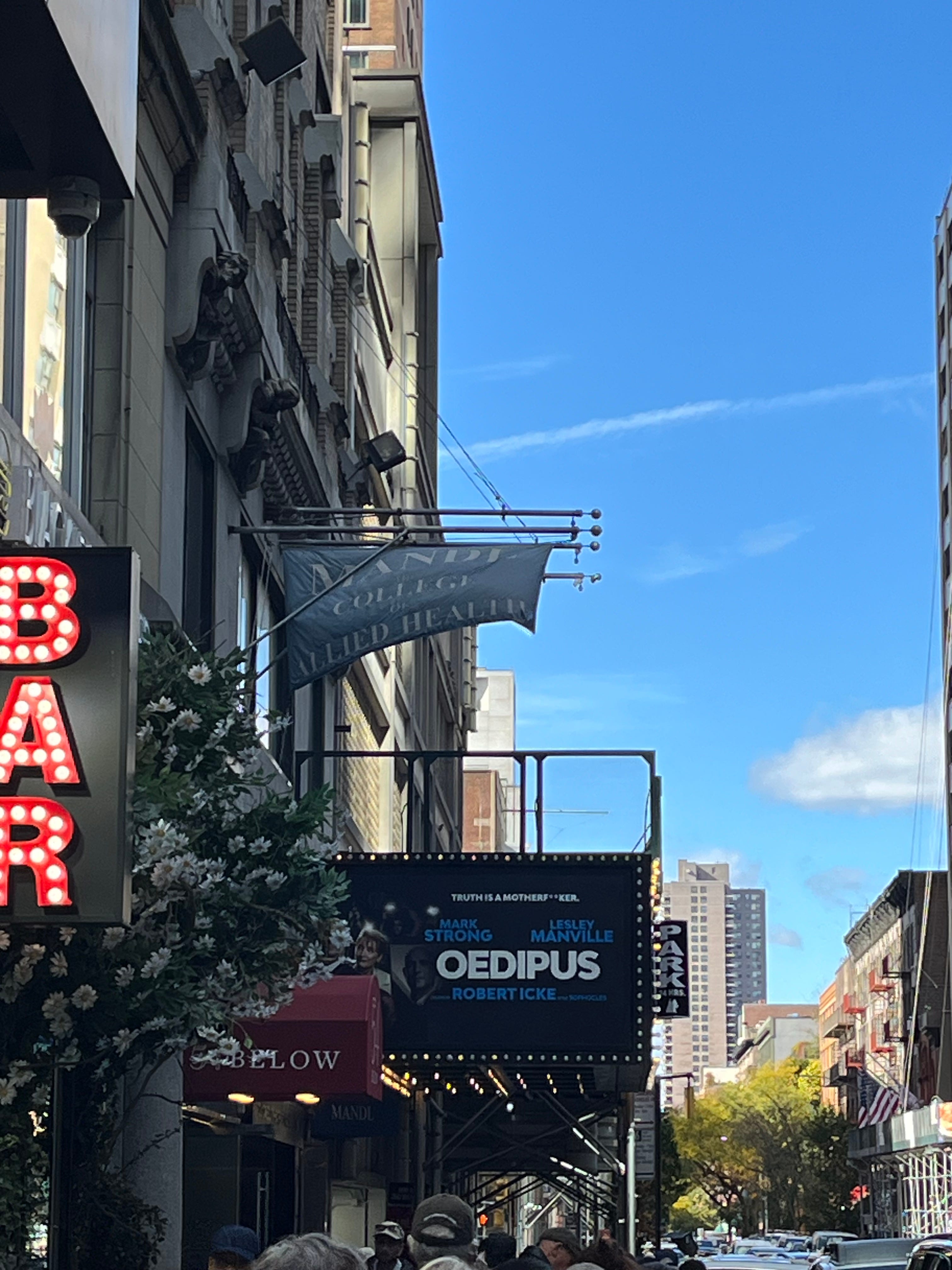
Last Saturday I went to see a West End-Broadway transfer production of Oedipus, a new adaptation and direction by Robert Icke (say Ike), with friends Frances and Jim, who got the tickets for us (or else I might have foolishly missed it). The lesson of Oedipus is, famously, “One always meets one’s fate in the path one takes to try to avoid it.” In the Greek version, the Oracle at Delphi prophesizes that the baby born to King Laius and Jocasta will one day kill his father and marry his mother; Jocasta then, to spare her son, orders her servant to kill the baby. Instead, the loving servant places the baby in the woods, where he is found by an older couple from the country who raise him as their own, no one the wiser. Until eighteen years go by…

In this update, Mark Strong plays Oedipus as a political candidate on the night of a highly consequential election (intimations of Trump v. Democracy), and all the action takes place during the two hours between polls closing and the announcement of the winner (a big clock on the stage counting down—Aristotle in Poetics says that any good drama should play out in no more nor less than two hours, and Icke takes on the challenge). In a filmed sequence as the show’s opening exposition, a confident, sexy Oedipus, standing outside what looks to be the British Parliament building, tells the press that he knows people question why he, a foreigner, should lead them, and he promises (without warning to anyone in his circle) to “release my birth certificate.” It brings up Obama, Mamdani, all the prejudices of our times, and if you know the story of Oedipus, it’s the perfect setup for an adaptation. (Icke must have shrieked and shaken with freakout when he thought of it—hoping no one else saw that obvious and genius connection up to now.)

Oedipus—handsome, smart, gifted, loving, and progressive—has one fatal flaw: hubris. He really believes he is in complete control, fully in possession of himself, knows who he is, knows who everyone is in his life. The next two hours unravel in the revelations we know from the Greek tragedy, all so believable and so timely, with Lesley Manville’s Jocasta ripping your heart out, her (updated for our more enlightened times, shades of Epstein) story of being raped by old Laius at 13, forced to give up the baby to die because he’s married; Laius later marrying her and leaving her a widow who later meets Oedipus, falls wildly in love, and marries him, giving him three children, she then in middle age. At the play’s opening, Oedipus is 52; Jocasta, we only later realize, is 65; their children are college age. In short order, despite a landslide victory, their children are about to lose everything, Jocasta her life, and the nation the promise of a brilliant leader. (The best part was sitting next to someone who didn’t know the story—lots of people don’t—and hearing the gasp.)

How does any brain process such a trauma? Frances and Jim and I staggered through the tourist minefield that is Times Square to the quiet of an Italian restaurant to process it, all of truly gutted, Aristotle’s catharsis manifest. In enduring tragedy, and in catharsis, we not only heal, we are cleansed.

A cleansing view, fall in Central Park.

This morning I watched a YouTube video sent by my friend Ryan last night of researcher and “No. 1 Brain Scientist” Jill Bolte Taylor in conversation with podcaster Steven Bartlett, talking about the “four characters” in our brain’s left and right hemispheres. As a result of a stroke at age 37 in 1996, Bolte Taylor’s Harvard-ladder academic career ended, and the next eight years were about recovering the functionality of her left hemisphere, the part of our brains that does numbers, controls language, helps us plan and think. During those eight years, she worked to use her right hemisphere to help her rebuild the cellular connections in the left, and the result was a huge new life focused on even deeper brain work while living on a boat and not in a lab, connected to nature and to the universe, using her whole brain. I highly recommend the video, which I watched at 4:30 this morning (because old), and her “four characters” of the brain put me in mind of not only all our society’s conflicts but also of all the characters necessary to have an effective drama:

1. Character One: Left side, thinking: the planner, analyzer, counter, linguist

2. Character Two: Left side, emotional: the grudge holder, trauma re-liver, pain protector

3. Character Three: Right side, emotional: the explorer, the curious one, the playful one

4. Character Four: Right side, thinking: the connector of experiences, keeper of wisdom

Just as a drama needs all these characters for conflict and resolution (my take), humans need all four in balance to be whole. I took loads of notes, and if you watch the video, you can too, but Bolte Taylor’s message of a society out of balance resonated most with me. Most of our lives seem to be spent lived only on the Left side, she says, holding grudges and reliving trauma as we strive for perfection and knock ourselves out to make money. It’s killing our brain cells, it’s killing us individually, and it’s killing the planet.

To wit: Sec. of Defense (he says “War” but it’s not official) Pete Hegseth announced this week that the United States is no longer a peace-seeking nation, but rather, our military preparation will be solely focused on wars. We know from Republican spokespeople, such as Russell Vought, JD Vance, and Elon Musk, that “empathy is weakness” (a negation of the brain’s right hemisphere) is a guiding principle for their politics. The Conservative Movement is totally, then, left-hemisphere in the brain, focused on self-interest, self-protection, generational trauma on a tape loop. It’s not sustainable, but it has to be gotten through and past, somehow.

What I think Conservatives fear most about education, about learning the truth about our history, is what the play Oedipus shows so shockingly: when you uncover the truth about yourself, you are destined for destruction. But what the audience learns is that no life is an honest life if it’s built on lies, when your armor is a birth certificate and the woman who raised you as your mother, and lied about it, thinks it’s “only paper.” And I’m struck by all these paradoxes—the fear we have of knowing the truth, and yet the impossibility of living an honest, full, happy life without it.

As your Miss O’ has long said, if your belief system cannot withstand challenges to the point that your response is to stifle and even kill to stop those challenges, you don’t have a belief system—you only have fear.

What Oedipus lacks is balance—for him, in his ignorance, life has been pretty great. He is empathetic but only intellectually. (I think this same hubris applies to a lot of America’s Liberals, if I’m honest.) Oedipus’s mistake, his hubris, was to be blindly fearless, blindly on the side of the common man (because he was raised by fine, working class parents) without knowing his own life’s truth—he was the product of rape by a lecherous pedophile of a king, and he married his own mother because of the coverup. At the end of the play, Oedipus blinds himself, and as the cult-prophet Teiresias tells him, when you learn, you will go blind; and when you are blind, you will see properly.

In a similar way, Jill Bolte Taylor’s stroke—the near-total collapse of the brain of a preeminent brain scientist—made her work expand into realms she could not have imagined during her eight years of recovery.

And this all got me thinking again:

We have to release the Epstein files. Virginia Giuffre’s death cannot be in vain.

We have to embrace our nation’s original sin, slavery, teach it properly, reckon with it, so our nation can progress in smarter, healthier ways.

We must demand the resignation of Pete Hegseth, and work to be a peaceable nation, so that there are no more 1st Lt. Robert Kellys dying on foreign soil; and you’ll pardon me for not grieving Dick Cheney.

This is a heavy lot for a Sunday morning.

I’m sitting here on this November day, in my kitchen rocker, worried again about whether or not I need a new refrigerator (thermostat being weird) and a new Mac (battery not fully charging), seeing it’s after 9 AM and I really need to dress and go out and about before it rains. And these mundanities of life require our attention, our presence, to live fully, ever balanced against all those huge mega truths.

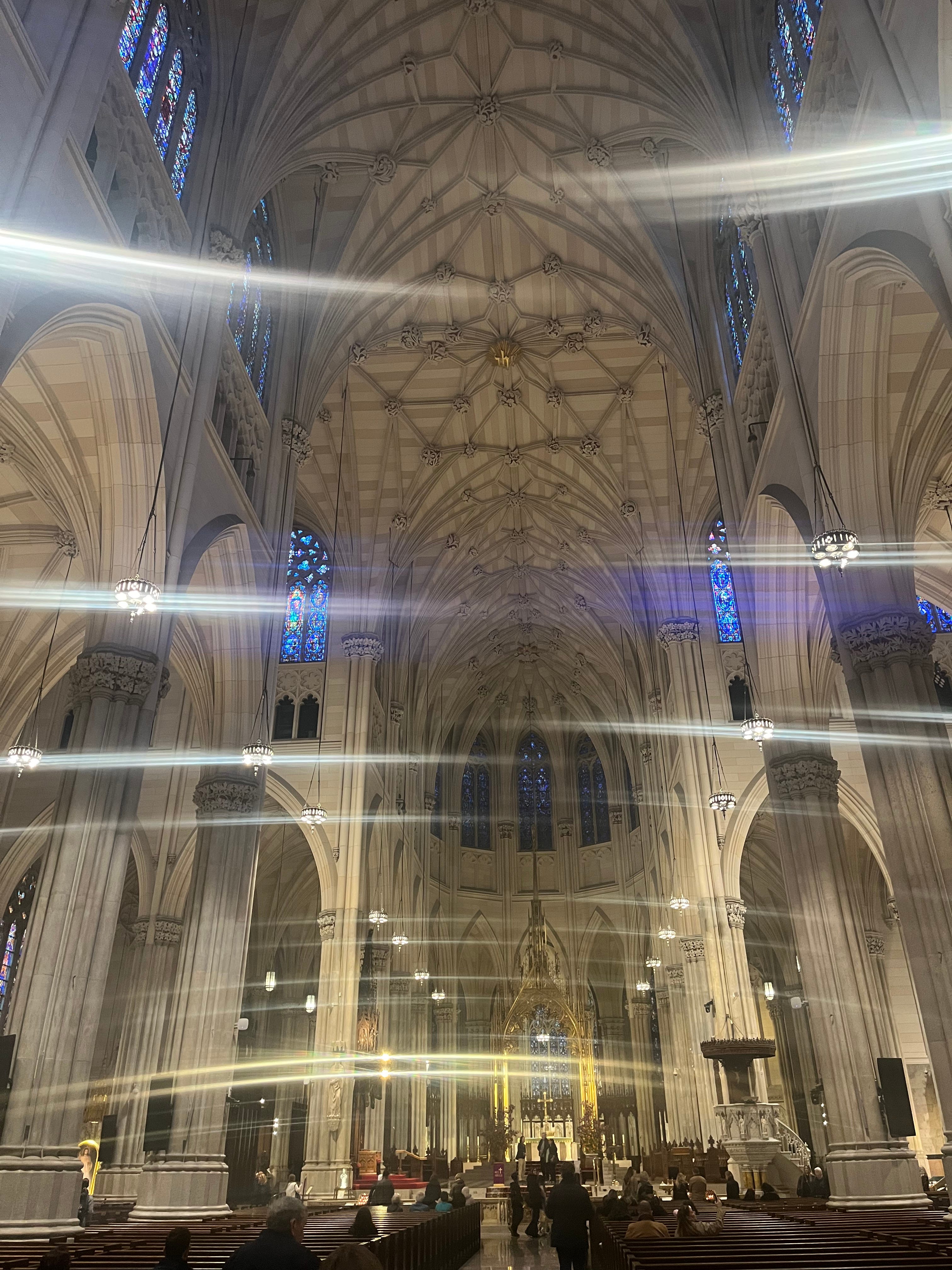
On my personal day on Friday, I found myself in Saint Patrick’s Cathedral on Fifth Avenue, lighting candles (one for my mom, one for my friend Richard’s mom, and a third for the ancestors), which I hope was not hypocritical from irreligious me. It was nice to sit and meditate in the midst of the most famous cathedral in the biggest city with the most consequential mayoral election perhaps ever, and be present to my mom and memory.

The next time I’m there, I’ll light a candle for Robert.

Sending love and balance,

Miss O’

The Art of Making Art

A millimeter matters

I just want to say that the luxury of owning a personal library is that not only do I feel cozy all the time, but I get to take evening tours and pick out volumes for bedtime reading. (Growing up, the O’Hara kids were about the only kids in the neighborhood with family bookcases, thanks to our mom, Lynne, having college textbooks, novels, and antique books to display and read.) Even now my number of volumes surprises some people, but I think, who wouldn’t want books around them? They are my closest friends. I saw an interview with Nora Ephron who said everyone asked of her family, “What are you doing with all these books?” (We live in a country like that now.) There’s no reason to finish a volume I peruse, or even read straight through. Sometimes I do that, but many times I just open a chapter and see what it says. If it’s not speaking to me, I flip around. Try another book. Like literary cocktails. It’s fun. This week I’ve been seriously rereading Finishing the Hat, Stephen Sondheim’s first volume of lyrics from his shows, 1953-1981, and so far I’m sticking with it.

When Stephen Sondheim died in 2021, I felt as if I’d lost a friend. Though I wasn’t sure how I felt about his work for a long time, you must know that the key to falling in love with a theater writer or composer is seeing the work, and in a splendid production. It really changes everything. He had three principles that guided his life’s work:

“God is in the details.”

“Less is more.”

“Content dictates form.”

I love that Stephen himself admittedly didn’t always follow them, but we give ourselves a little grace; nobody is perfect. And he himself had favorite lyrics that other people don’t seem to care for. He endured his share of flops and lousy reviews. And he just kept going. Thank god.

In an interesting coincidence, though sometimes I think it’s a bit more divine than that, these associative adventures, I’m also trolling PBS (while we have it) for documentaries and happened on two short ones. First, Marguerite: From the Bauhaus to Pond Farm about master potter Marguerite Wildenhain who, along with her husband, escaped the Nazis and made her way to California to teach pottery; and second, Finding Edna Lewis, about famed chef of 1950s Café Nicholas on E. 53rd St., cookbook author, and unsung mother of the farm-to-table movement, Edna Lewis.

And you might night think that Stephen Sondheim, Marguerite Wildenhain, and Edna Lewis couldn’t have much if anything in common, but you know what? God is in the details. Buckle up.

I’m not really going to recap all their work. But those rules up there apply.

“God is in the details.” Marguerite’s great contribution to many potters was, according to one student, “teaching us how to see.” For example, she’d have each potter make ten or twelve of the exact same pitcher or vase (since potters usually mass produce their work). The student would line them up on a board, and Marguerite of Pond Farm would walk and look and say, of maybe the third one, “This is good,” and of the eighth one, “This is good.” To the student they looked identical. Then she would point out a millimeter of difference in the rim, or the handle, the difference between being beautiful and merely serviceable (I think of the human face). God is in the details. It changed everything for students. (I’m obsessed by details when I direct a show, but not so much when I write, because I’m not an artist when I write.)

“Less is more.” Chef Edna Lewis grew up in Freetown, Virginia. In the Great Migration that took her to New York, she made a living cooking for artists, and word of her home cooking spread. She became an accidental star chef when she partnered (silently, as a Black woman) with two gay men to open Café Nicholas on E. 53rd Street, creating wonderful Southern cooking for writers like Truman Capote, Tennessee Williams, and Gore Vidal. Lewis believed that food should be seasonal and that the ingredients should speak for themselves. Nothing should be overly prepared, overly seasoned, or fancy. You might call it simple home cooking except that her dishes were both gorgeous and delicious, prepared by someone who knew what she was about.

“Content dictates form.” In the theater, the writing and the intent dictate whether something is a play or musical; or whether it’s theater at all. In pottery, the intended use of the vessel dictates the size and shape. In cooking, the ingredients at hand dictate the kind of meal it will be. I’ve been mulling that principle over, and not to get all metaphorical or analogous, but I have to go a little political here. Content (greedy, sociopathic, ignorant bastards) dictates (!) form (evil shit show).

Speaking for myself, I wish I had the talent to be a playwright or a novelist or a poet. I haven’t done theater in years because it’s a collaborative art (it’s not like I can walk around my apartment and “direct”), and collaborating is something I never have time to figure out. But for whatever reason, ever since I was a kid and started writing, I’ve felt I had an obligation to study news events, internalize them, and interpret them for everyone. I don’t enjoy it, necessarily, and will never make a living at it, but I can’t seem to help myself. When asked in high school by the “gifted and talented” program advisor, Mrs. Hubbard, why I kept a journal, I told her I saw myself as a chronicler of my time. She snorted disdain. Years later, when I related that anecdote to my first professor at the Bread Loaf School of English (a summer master’s program designed for teachers), Prof. Cazden snorted almost identically. It was uncanny.

Somewhere in our lives, no doubt, we’ve been made to feel less than. (Both teachers (graduates of Bryn Mawr and Radcliff, respectively) told me without apology, one overtly, the other hoping I’d take her meaning, that I just wasn’t smart enough to be there, whatever that meant. It’s not like I was stupid, exactly, but it’s annoying for brilliant educators like them, I guess, to be around the merely bright when there are geniuses to teach. You know how it is. My response was to say nothing, and my revenge was, I stayed and decided to belong. I really learned a lot. And it all worked out, because as it turns out, they were wrong. Never let them tell you not to dream.)

And so it is that, to this day, I keep feeling this pull to chronicle my times, though to what end I don’t know. I’m not smart enough to solve much—my teachers weren’t wrong about me not being a genius—but you can’t do nothing, in times like these. (Chuck Schumer, is this on?) I try to chronicle what I see and still hold on to the world I want to live in, the world I want us to build. First, obviously, it involves shipping all these the MAGA Nazis from their demented reality show, White House USA, to some tropical island where they live in golden mansions and go on staged hunts with all the guns of their wet dreams and watch all the porn they want without the Covenant Eyes app to pester them. And leave all of us sweet, normal people alone. And let us raise their children.

Until that blessed day, or until I get smarter, I read and write and dream. It’s what we do.

Once more, with feeling, something we can all learn from:

“God is in the details.”

“Less is more.”

“Content dictates form.”

~ The three guiding principles of genius Stephen Sondheim

Love or something like it,

Miss O’