Hum and Thrum

On inaudible loneliness

As a kid, I remember my mom’s ca. 1960 “portable” hi-fi playing music a lot. My parents sought out music, even my mom, Lynne, who was admittedly tone-deaf and limited to smooth voices, like Harry Belafonte’s. (She was horrified by Bob Dylan, Tom Waits, Janis Joplin. “Have you heard of Adele?” she once asked me and my brother Mike, disgust in her voice. Mike said, gently, “Hush, Mom. She’s a genius.” Lynne looked at me. “She is,” I explained.) She really hated “country” music, but my dad, Bernie, loved Eddie Arnold; they both like Johnny Cash and Tennessee Ernie Ford. We all loved Nat King Cole and Burl Ives. It’s hard to imagine now, I guess, a family sitting together in a play room on a rainy day, the parents with beers, and four kids aged 5 to 13, sitting and playing with blocks, listening to Irish and American folks songs sung by Big Daddy in Cat on a Hot Tin Roof, but we did, and we all remember it fondly. My brother Pat and I to this day, 50 years later, will every once in a while break out in “Mrs. McGrath, the sergeant said, do you want to make a soldier out of your son Ted?”
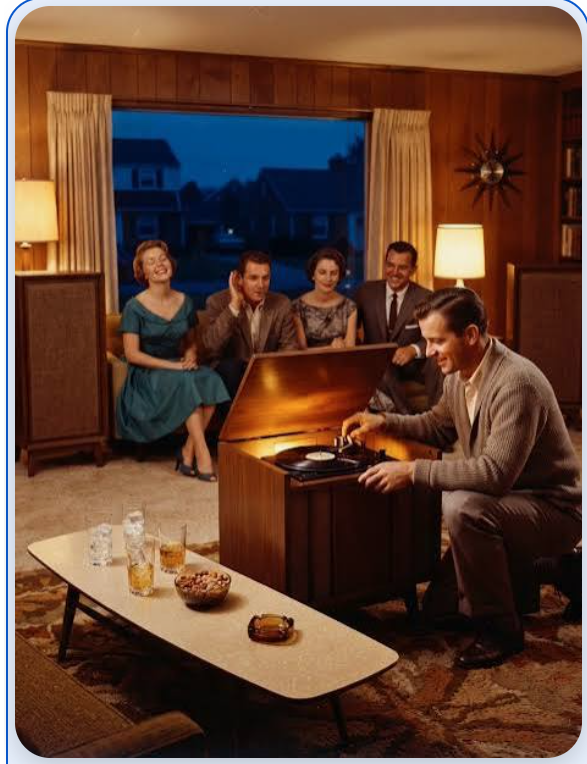
This internet photo is not quite it–my mom’s was more compact and was placed on a table–but it’s the general idea. All us kids learned how to work it.

Touchstones—the noises of growing up in the O’House, playing games, building forts, making cookies, and fighting, and there was always a soundtrack. I don’t turn on music enough. I’m listening to a shuffle of music as I type, and it’s nice.

Sitting out in my (now) dad’s yard the other week, in the swing he and my mom lived in for a few hours most days in her last years, watching clouds—and I have felt this for years—it’s been far too quiet. The chatter of birds notwithstanding, I’ve felt weird outside, something off. This past late September, during sunny and warm days, I realized what it was.
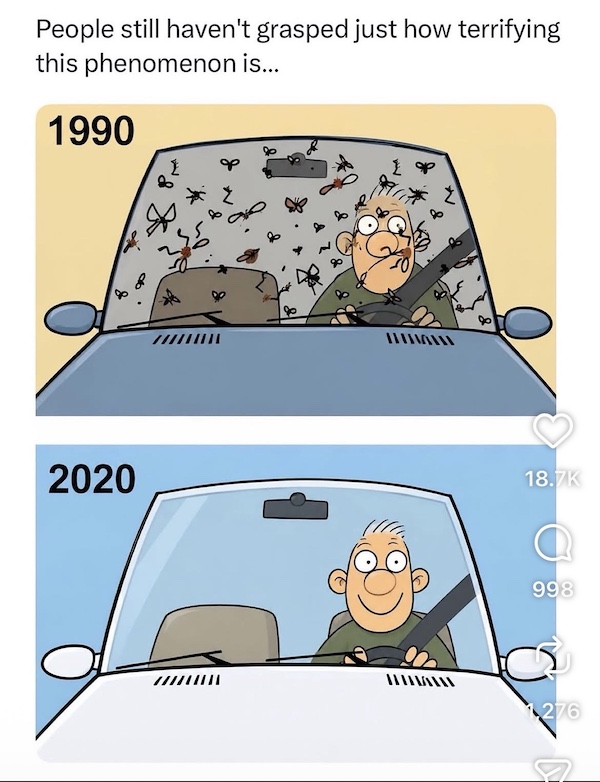
Back ca. 2012, I drove my mom’s truck to rural Central Virginia to see friends, as I did every summer, and realized for the first time since the 1980s I hadn’t had to stop at least twice at a filling station to scrape bugs off my windshield. I hadn’t had to scrape the windshield once after four hours driving through wilderness. Jesus. What have we done?

I am lonely for insects. Gnats, chiggers, crickets, grasshoppers, moths, butterflies, flies, mosquitoes—all the creatures of earth that vibrate, snack, annoy, announce their presence, and make being outside an athletic even in micro movements of swatting. I never thought I’d think of insects as a kind of hug. But they are. I miss them. The earth misses them.

This isn’t about aesthetics.

Music is another kind of hug, I think—and in this world of noise, where music might be a warm, nurturing thing, it seems to come off as another distraction. TVs, phones, screens of all kinds—sitting undistracted by visual stimulation, listening to music quietly or even present to it in the background while cooking or cleaning seems impossible to imagine for people, let alone sitting as a group of friends or a family, truly listening.

Music is not a luxury; it’s life.

My brother Jeff and I were talking about the reaction videos popular on YouTube now, where influencers pretend they are hearing a song for the first time, and stop it every five or six notes to comment, without listening; their individual facial expressions now are almost parodies of one another—the wide eyes, the closed eyes of supposed contemplation, the hands up-mouth open “wow.” These used to be fun, back before they became shows for sport and clicks. Jeff is like me, screaming at them when they hit stop without listening at all, and moving on to find another one. We’ve also noticed that they all seem to “react” to the exact same playlists out of millions of possible songs and thousands of artists: Karen Carpenter, “Superstar”; Jim Croce, “I’ve Got a Name”; Dolly Parton, “Jolene.” It’s silly now.

Do I sound grumpy? Yeah, well. It seems the loss of insects and the loss of shared songs (and high school dances, for that matter) are connected for me—something about a hug, a warmth of hum and thrum, vibrations of life—replaced with a silence that feels like solitary confinement.

So much to repair.

What sounds are you missing?

Sending love and good vibrations,

Miss O’
’Tis a Pity She’s a Whore

Because he is so deeply, irredeemably amoral and stupid

Hi, friend. Your Miss O’ awoke this morning, the first day since Saturday, October 3, on her own without an alarm and feeling not unwell. After ten days nursing a nasty respiratory infection, I found myself on waking thinking of a title, “Why the Sea Is Salt,” and another, “Snow White and Rose Red,” and visualizing a filmstrip called “Pandora,” accompanied by a cassette tape or record on which played a high “BEEP” when it was time to manually change the picture cell. (I was fortunate enough to be not only a student using such machines, but a teacher who used them even four or five years into my job.)

The titles, I realized, all came out of a foggy memory of fourth grade, the year I had a depressive young teacher named Miss Shelburn, whose unusual blond streak of hair and blotched skin meant, I realize now, that she had Vitiligo, a condition where the immune system causes lighter skin pigmentation to show up in patches. She spent most of her teaching time sitting at her desk, slightly slumped over. She liked that I read aloud with so much expression that I didn’t notice I said “lives” with a long i when it should have been “lives” with the short one, a mistake that made her snort, the only trace of a laugh in her I’d seen, more than worth a little personal embarrassment.

Miss Shelburn’s one day of true enthusiasm came the day she wheeled in a television set and turned on Princess Anne’s royal wedding live from England, and we watched it all day. (We watched a lot of television that year, Public Television, especially The Electric Company (starring Rita Moreno and Morgan Freeman) to help us learn the metric system, for all the good that did, but hey, Rita and Morgan!) Miss Shelburn was enchanted by this fairytale wedding.

That year of the stories, first, those myths and legends of salty seas and fairy tale castles and locked boxes, that came into my waking world this morning, and I’m not sure why.

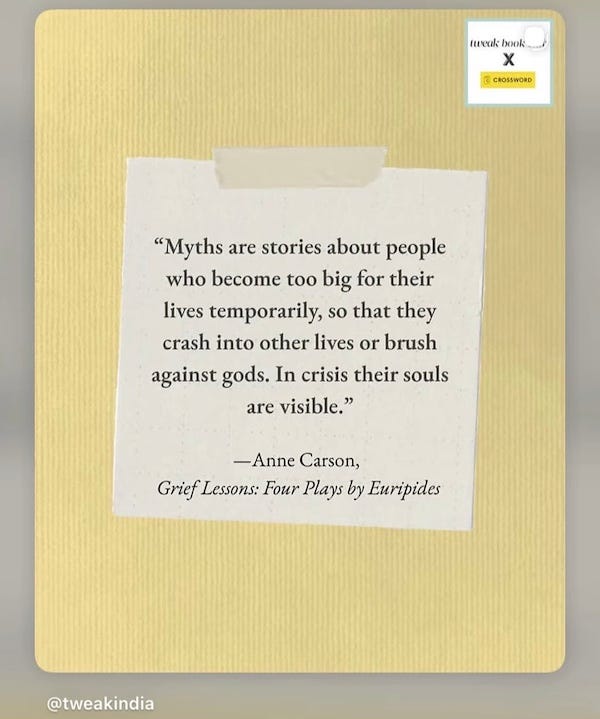
Anne Carson won the 2026 Nobel Prize for Literature. I’m still thinking about this quote. Have you ever felt too big for your life? I have. Temporarily. So I moved to New York City.

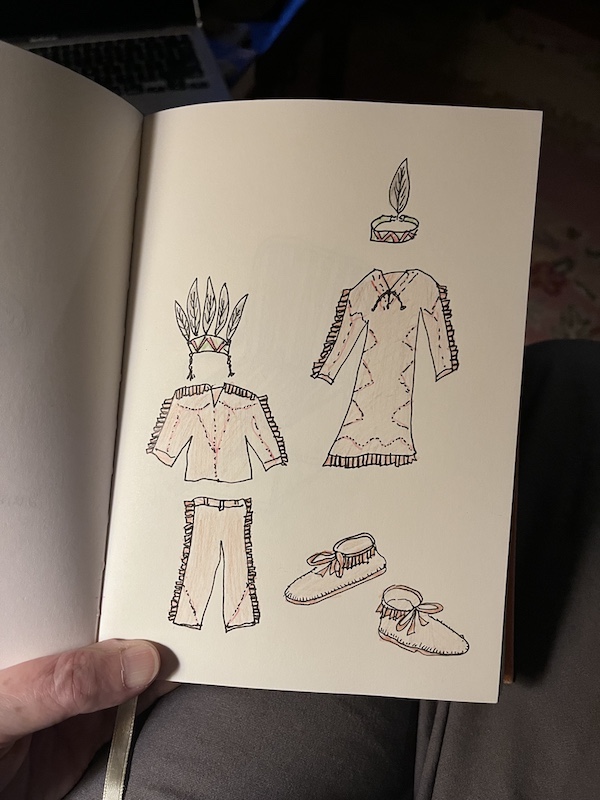
Fourth grade was also the year we learned American history, going so far as to spend a day out in the cold mist in “Pilgrim” clothes, and I think some “Indians,” in paper hats and no coats, roasting potatoes in a pit poor Mr. Westerberg, the custodian, had to dig. I mostly remember flying around on the blacktop looking out at bare gray trees and suburban houses, trying to imagine a log village and pretending this was fun.

One Thanksgiving my mom gave these costumes to me and my brother Pat. We went “hunting” in the backyard. Watching Westerns, Lynne taught us to root for the Indians.

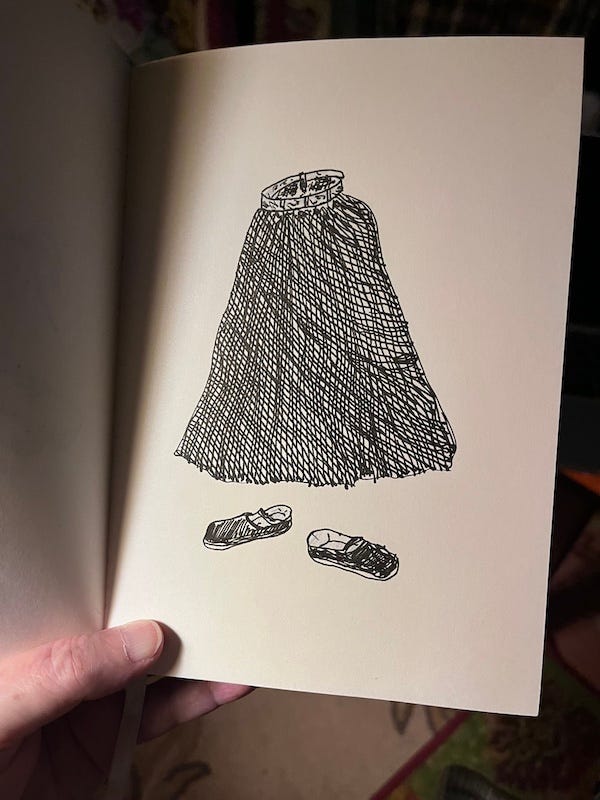
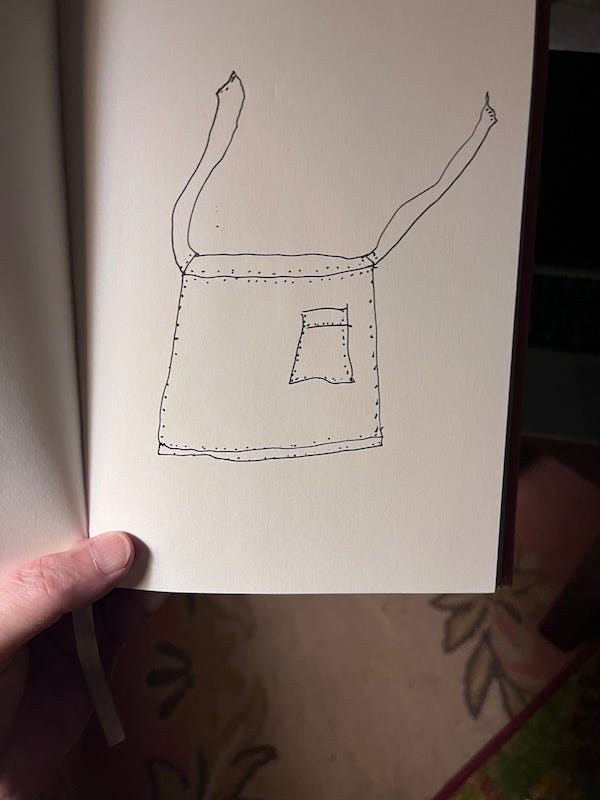
I still have the white Pilgrim apron my reluctant mom, Lynne, sewed for me by hand, which I wore over her 1950s tiny black and white check skirt, long then; a skirt I wore again, now knee-length, for the Junior Variety show in high school, and which we donated to the drama club along with several of her other skirts and dresses.

[We interrupt this letter to note that a search for the apron for a photo portrait was unsuccessful, because like a dope I moved it out of its drawer of 20 years when I reorganized some drawers this summer, but prayers to St. Anthony, the patron saint of lost objects, have been dispatched. -ed.]

The apron is a lot more gathered and nicer than this. As much as my mom hated sewing, she did a lot of it and all by hand, because the making mattered.

Fourth grade—for all the weirdness of Miss Shelburn, and my burgeoning hormones returning my hair to natural curl, and Billy Beard accidentally smearing India ink on my only white blouse (this being the time when art teachers let children use supplies like India ink), and learning about the happy slaves in the fields of our Southern plantations through the Ginn Reader (I wish I were kidding)—was the time when I think I discovered the real magic of fiction. The Scholastic Book Fair meant something better than candy. I could read whatever I wanted.

It was the 1970s, and all the girls and women, even teachers, wore miniskirts. My mom wore slacks. Both meant liberation.

We could all be having so much fun.

Women are human beings, living, sentient creatures who love to feel sensation and experience their bodies and think with their minds. We generate and incubate and give life. Without women, and their lifelong transformative sufferings, there is no being.

Unfortunately for the species, far too many men do not experience women as beings.

We are [checks notes] “whores.”

How is this still the American female narrative for American men?

I’m sick of it.

I’m sick of stupid.

I’m sick of men.

We are bored.

There is not a moment of my life I have regretted living and sleeping alone. Not a minute.

All this comes to me full force from SNL standups and rape allegations and once more, with feeling (no, really, this time we mean it), “no more frat parties until further notice” and promises to “investigate.” Until the coup, of course.

Was it those gym shorts? But wasn’t she a whore? Megyn said she was “beefy.”

How in the name of everything sacred in the universe is THIS where ostensibly sentient humans are? How is this the best we have to offer our creator? (How pathetic is it that a powerful man can only feel smart when represented by that sort of female?)

All that off my chest, it’s time for my nighttime antibiotics, inhaler, and Flonase, as I gratefully turn toward my very own bed in my very own home surrounded by collected things imbued with love and memory, a sacred place, free of collective human-made stupidity and frail-egoed men, and lift from my bedstand my reading glasses and a novel into which to sink, to sleep perchance to dream.

Americans, as if it’s not enough to have loved ones facing terrible illnesses and personal tragedies, we are daily perpetuating a hellscape for the nation, all of our own making. Bigotry and hatred and mass murder and rape cannot be The Story. We’ve done that to death. And it sucks. We have to write another story. Write your chapter. Have a reading. And Abolish ICE.

Sending love and reading among the evils (unleashed on us by men),

Miss O’

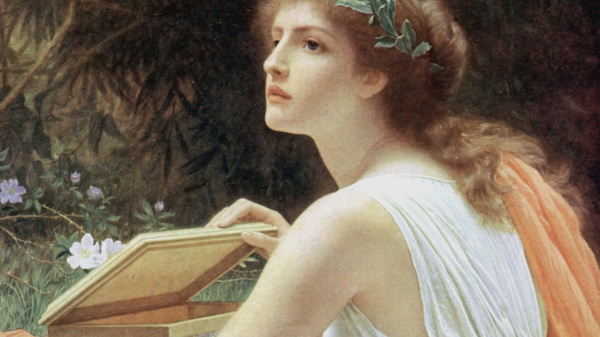
“Pandora. Pandora (the ‘all-gifted’) was the first mortal woman according to the Greek poet Hesiod. She was sent by Zeus as a gift to Epithemus. She brought a box (a jar in Hesiod’s original version) which, when opened, released all the world’s evils. Only Hope remained. After a Victorian painting (Photo by Ann Ronan Pictures/Print Collector/Getty Images)”