A Life in the Theater

On character, tragic flaws, and hope

Nov 09, 2025

On November 9, 2010, 1st Lt. Robert M. Kelly, USMC, was killed in Afghanistan. Robert had been a student of mine at Gar-Field High School in Woodbridge, Virginia, along with his older brother, John, both of them the sons of Gen. John Kelly (Maj. Kelly, when I first knew him; I attended the ceremony when he became Col. Kelly). Both John and Robert were in the Drama Club, and very different kids, John doing technical theater (lighting), Robert hanging around until he scored a legendary turn as Juliet in The Complete Works of William Shakespeare Abridged (with a cast not of three but of thousands) his senior year, a performance that caused his father to laugh harder than I’d ever seen him do. Interestingly, son John (now a colonel in the USMC himself) was naturally funnier, but ironically it was Robert’s relative seriousness and deeply felt empathy that made him a great comic actor.

I got the news of Robert’s death 15 years ago through missed connections all day, brother John trying to reach me, my return calls back going to voicemail; I thought something might have happened to Alan, another former student and John’s best friend; finally I got hold of Alan while at a play lab at the Pythian on the Upper West Side, where cell reception as terrible and I had to go out to the street to reckon with the truth. I didn’t know Robert had even been deployed; apparently it was a sudden decision to send his unit over, and maybe only a week had passed since his arrival, an IED doing the job.

Robert’s funeral and burial at Arlington, just eleven years after his graduation, seven years after I’d left teaching and had moved to New York, was attended by well over a hundred people, many from Gar-Field, teachers, students, friends, parents, along with his family. Hard to process even now. I was reminded of all this yesterday when my friend and retired department chair Tom texted to remind me, thinking only ten years had gone by. (I knew it was longer because my cell phone had been a flip phone. Isn’t that a particularly millennial reason to remember a date?)

So tragedy is on the brain this morning.

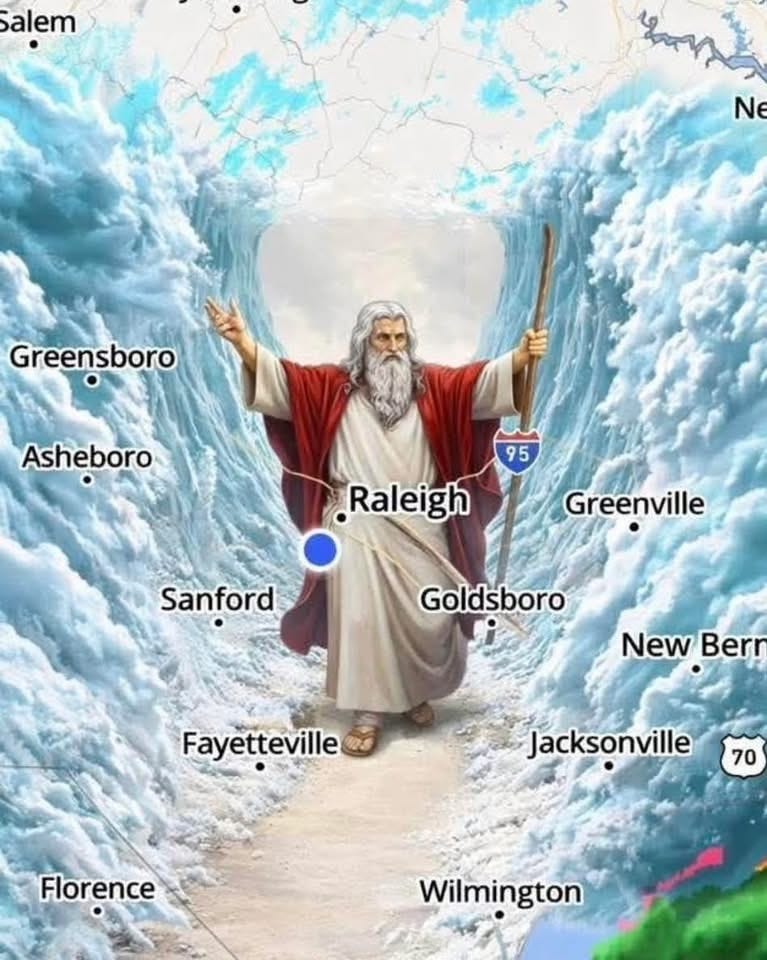
Biblical sky drama over Queens.

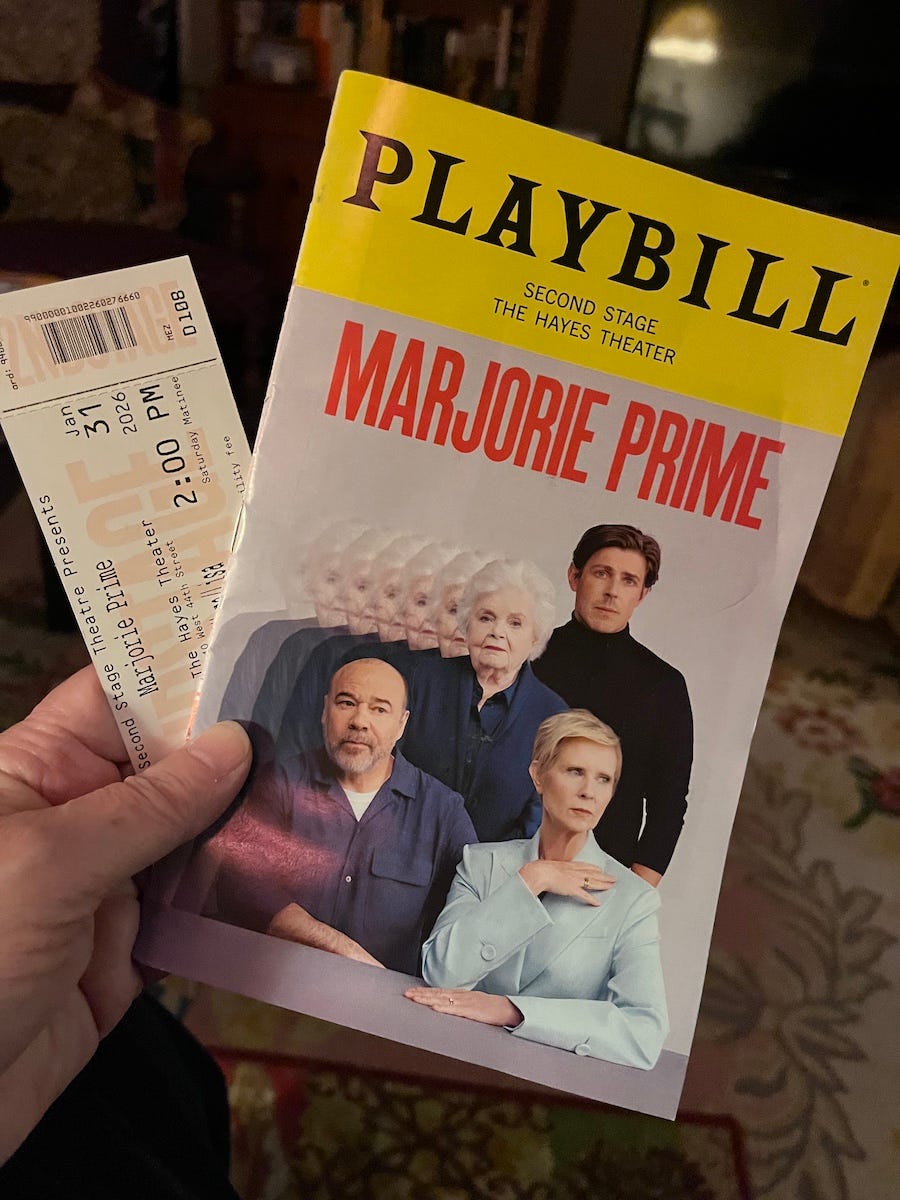
Last Saturday I went to see a West End-Broadway transfer production of Oedipus, a new adaptation and direction by Robert Icke (say Ike), with friends Frances and Jim, who got the tickets for us (or else I might have foolishly missed it). The lesson of Oedipus is, famously, “One always meets one’s fate in the path one takes to try to avoid it.” In the Greek version, the Oracle at Delphi prophesizes that the baby born to King Laius and Jocasta will one day kill his father and marry his mother; Jocasta then, to spare her son, orders her servant to kill the baby. Instead, the loving servant places the baby in the woods, where he is found by an older couple from the country who raise him as their own, no one the wiser. Until eighteen years go by…

In this update, Mark Strong plays Oedipus as a political candidate on the night of a highly consequential election (intimations of Trump v. Democracy), and all the action takes place during the two hours between polls closing and the announcement of the winner (a big clock on the stage counting down—Aristotle in Poetics says that any good drama should play out in no more nor less than two hours, and Icke takes on the challenge). In a filmed sequence as the show’s opening exposition, a confident, sexy Oedipus, standing outside what looks to be the British Parliament building, tells the press that he knows people question why he, a foreigner, should lead them, and he promises (without warning to anyone in his circle) to “release my birth certificate.” It brings up Obama, Mamdani, all the prejudices of our times, and if you know the story of Oedipus, it’s the perfect setup for an adaptation. (Icke must have shrieked and shaken with freakout when he thought of it—hoping no one else saw that obvious and genius connection up to now.)

Oedipus—handsome, smart, gifted, loving, and progressive—has one fatal flaw: hubris. He really believes he is in complete control, fully in possession of himself, knows who he is, knows who everyone is in his life. The next two hours unravel in the revelations we know from the Greek tragedy, all so believable and so timely, with Lesley Manville’s Jocasta ripping your heart out, her (updated for our more enlightened times, shades of Epstein) story of being raped by old Laius at 13, forced to give up the baby to die because he’s married; Laius later marrying her and leaving her a widow who later meets Oedipus, falls wildly in love, and marries him, giving him three children, she then in middle age. At the play’s opening, Oedipus is 52; Jocasta, we only later realize, is 65; their children are college age. In short order, despite a landslide victory, their children are about to lose everything, Jocasta her life, and the nation the promise of a brilliant leader. (The best part was sitting next to someone who didn’t know the story—lots of people don’t—and hearing the gasp.)

How does any brain process such a trauma? Frances and Jim and I staggered through the tourist minefield that is Times Square to the quiet of an Italian restaurant to process it, all of truly gutted, Aristotle’s catharsis manifest. In enduring tragedy, and in catharsis, we not only heal, we are cleansed.

A cleansing view, fall in Central Park.

This morning I watched a YouTube video sent by my friend Ryan last night of researcher and “No. 1 Brain Scientist” Jill Bolte Taylor in conversation with podcaster Steven Bartlett, talking about the “four characters” in our brain’s left and right hemispheres. As a result of a stroke at age 37 in 1996, Bolte Taylor’s Harvard-ladder academic career ended, and the next eight years were about recovering the functionality of her left hemisphere, the part of our brains that does numbers, controls language, helps us plan and think. During those eight years, she worked to use her right hemisphere to help her rebuild the cellular connections in the left, and the result was a huge new life focused on even deeper brain work while living on a boat and not in a lab, connected to nature and to the universe, using her whole brain. I highly recommend the video, which I watched at 4:30 this morning (because old), and her “four characters” of the brain put me in mind of not only all our society’s conflicts but also of all the characters necessary to have an effective drama:

1. Character One: Left side, thinking: the planner, analyzer, counter, linguist

2. Character Two: Left side, emotional: the grudge holder, trauma re-liver, pain protector

3. Character Three: Right side, emotional: the explorer, the curious one, the playful one

4. Character Four: Right side, thinking: the connector of experiences, keeper of wisdom

Just as a drama needs all these characters for conflict and resolution (my take), humans need all four in balance to be whole. I took loads of notes, and if you watch the video, you can too, but Bolte Taylor’s message of a society out of balance resonated most with me. Most of our lives seem to be spent lived only on the Left side, she says, holding grudges and reliving trauma as we strive for perfection and knock ourselves out to make money. It’s killing our brain cells, it’s killing us individually, and it’s killing the planet.

To wit: Sec. of Defense (he says “War” but it’s not official) Pete Hegseth announced this week that the United States is no longer a peace-seeking nation, but rather, our military preparation will be solely focused on wars. We know from Republican spokespeople, such as Russell Vought, JD Vance, and Elon Musk, that “empathy is weakness” (a negation of the brain’s right hemisphere) is a guiding principle for their politics. The Conservative Movement is totally, then, left-hemisphere in the brain, focused on self-interest, self-protection, generational trauma on a tape loop. It’s not sustainable, but it has to be gotten through and past, somehow.

What I think Conservatives fear most about education, about learning the truth about our history, is what the play Oedipus shows so shockingly: when you uncover the truth about yourself, you are destined for destruction. But what the audience learns is that no life is an honest life if it’s built on lies, when your armor is a birth certificate and the woman who raised you as your mother, and lied about it, thinks it’s “only paper.” And I’m struck by all these paradoxes—the fear we have of knowing the truth, and yet the impossibility of living an honest, full, happy life without it.

As your Miss O’ has long said, if your belief system cannot withstand challenges to the point that your response is to stifle and even kill to stop those challenges, you don’t have a belief system—you only have fear.

What Oedipus lacks is balance—for him, in his ignorance, life has been pretty great. He is empathetic but only intellectually. (I think this same hubris applies to a lot of America’s Liberals, if I’m honest.) Oedipus’s mistake, his hubris, was to be blindly fearless, blindly on the side of the common man (because he was raised by fine, working class parents) without knowing his own life’s truth—he was the product of rape by a lecherous pedophile of a king, and he married his own mother because of the coverup. At the end of the play, Oedipus blinds himself, and as the cult-prophet Teiresias tells him, when you learn, you will go blind; and when you are blind, you will see properly.

In a similar way, Jill Bolte Taylor’s stroke—the near-total collapse of the brain of a preeminent brain scientist—made her work expand into realms she could not have imagined during her eight years of recovery.

And this all got me thinking again:

We have to release the Epstein files. Virginia Giuffre’s death cannot be in vain.

We have to embrace our nation’s original sin, slavery, teach it properly, reckon with it, so our nation can progress in smarter, healthier ways.

We must demand the resignation of Pete Hegseth, and work to be a peaceable nation, so that there are no more 1st Lt. Robert Kellys dying on foreign soil; and you’ll pardon me for not grieving Dick Cheney.

This is a heavy lot for a Sunday morning.

I’m sitting here on this November day, in my kitchen rocker, worried again about whether or not I need a new refrigerator (thermostat being weird) and a new Mac (battery not fully charging), seeing it’s after 9 AM and I really need to dress and go out and about before it rains. And these mundanities of life require our attention, our presence, to live fully, ever balanced against all those huge mega truths.

On my personal day on Friday, I found myself in Saint Patrick’s Cathedral on Fifth Avenue, lighting candles (one for my mom, one for my friend Richard’s mom, and a third for the ancestors), which I hope was not hypocritical from irreligious me. It was nice to sit and meditate in the midst of the most famous cathedral in the biggest city with the most consequential mayoral election perhaps ever, and be present to my mom and memory.

The next time I’m there, I’ll light a candle for Robert.

Sending love and balance,

Miss O’

How to Say Grace

“You pollute the air.”

~ the blind Hamm after blowing his whistle, greeting the entrance of his servant, Clov, Endgame by Samuel Beckett

The characters in Beckett’s Endgame, which I saw Saturday at Irish Arts Center here in New York, presented by Druid, a theater company based in Ireland, are in an apocalyptic waiting game in some kind of shelter, starving, without painkillers, waiting for death. Hamm’s blindness and lameness keep him confined to a lounge chair, while his parents, Nagg and Nell, are confined to separate rusty garbage cans, waiting for death like their son.

It’s a funny play, and compelling, and of course, sadly, perfectly appropriate for the American moment. I look at Trump of the shit-filled diapers, bloated and slurring, demented and wobbly, barking orders to tear down the East Wing and kill fisherman at sea and send $40 billion of our taxpayer dollars to bail out Argentina even as he bars the release of any of the $6 billion in reserve for SNAP in case of government shutdown and oversees the tripling of our health insurance premiums, causing millions to lose coverage. His spending so much waste, the Republicans so much garbage.

“You pollute the air,” says Trump of our nation’s workers and immigrants and women, as he orders the dumping of toxic East Wing waste onto a public park golf course outside D.C., to prevent regular people from golfing, and distracts from the Epstein files, so shocked was he that his best friend of 15 years, Jeffrey Epstein, kept files on his best friend Donald J. Trump.

SNAP benefits are set to expire November 1, and without a deal from the Republicans, all working Americans will struggle to afford not only food but also any health insurance at all. To provide help for this coming starvation and health apocalypse, your Miss O’ wants to encourage you to donate to your local food pantries, if you can, whatever you can afford. Here in New York City, where I can only hope Mamdani wins the mayoral race, I gave a bunch more bucks to the following organizations. You can check your local areas for similar opportunities, if you want. The worst thing you can do is nothing.

  • City Harvest
  • City Meals on Wheels
  • Bowery Mission
  • God’s Love We Deliver
  • Sunnyside Community Center

While visiting my dad in Virginia a couple of weeks ago for the first time since my mom, Lynne, died, I gathered up all her clothes, shoes, and accessories in the closets and drawers, and Bernie (who was so sad looking at them) and I donated them. We do what we can, whatever our griefs.

I haven’t published on WordPress for some time—I haven’t been of a mind to play the role of teacher, each day being the next level of crazy in America. I’m sickened and lost most of the time. It’s hard to imagine Thanksgiving and Christmas, let alone my favorite, Halloween, what with ICE agents throwing teargas at children in a Halloween parade in Chicago. How is any of this happening? It appears that the Washington Post is this close to shuttering its print division, hastened along by owner Bezos, the slogan “Democracy dies in darkness” turning out to be a promise. After 60+ years as a subscriber, my dad sees his morning paper razor thin, formerly robust Metro, Sports, and Style sections combined into one slender one, few ads; his delivery lady has gone from dozens of deliveries, to ten, to two in our entire neighborhood since Bezos took over the paper. This seems to be intentional: Bezos’s lost 75,000 digital subscribers, too. It’s just a matter of time now, the owner ready to light his big cigar with the last of the masthead as he boards his newest yacht.

The billionaires are the 1% that are bringing our country, our world, down. Full stop. Blackout the system, give to your food banks, save all your pennies, tighten the belts, hunker down. It’s gonna be a long, hard winter.

But you know what? We can do this. Bernie and Lynne were born into the Great Depression. We always cut our toothpaste tubes in half to scrape the last of the paste onto brushes, had leftover night on Fridays, lived on peanut butter and jelly when we had to. You can do it too. And you can have laughs and play cards and read books rather than use power on devices. And say grace. The real kind.

Love your neighbors through this crazy Republican endgame.

And vote while you still can.

Bucking the System: Revisiting an older post for newly horrific times

Two men were lynched, or at any rate found hanging from trees, in Mississippi yesterday, but given different treatment by the police and media. I became so sick when I read about Trey Reed, that sweet face, I physically cried out, convulsed, as the weight of the report erupted in me. I’ve seen several posts on it, and nothing on national news. The police quickly determined that a Black man lynched from a tree branch involved “no foul play,” as only cracker ass police right out of In the Heat of the Night can.

Today on Substack, Rashid spoke for me.

Here’s another hanging death, this of a white man, given very different treatment.

I also read that President Trump is forcing the removal of all photographic evidence of the torture of the enslaved to be removed from America’s museums, due its violent content. Again, I felt deeply sick. In 2016 for Black History Month, in light of candidate Trump’s transparent racism, I wrote a piece on WordPress, and repeat it here, slightly edited:

In honor of Black History Month, one of my former students posted a social media essay on “buck breaking.” I had never heard of that. Here is research I found, oral histories of former slaves recorded at the time of the WPA in 1937. The pieces require real concentration, as the chronicler honored the dialect of each speaker, but the stories are horrifying and make for utterly necessary reading.

On Slaveholders’ Sexual Abuse of Slaves Selections from 19th- & 20th-century Slave Narratives

AMERICA: As Miss O’ used to point out to the white students who would ask (and ask and ask and ask) why 1) blacks just don’t “get over it”; and 2) why we don’t have a WHITE History Month—I could only point out that we had 350 years of slavery, and (today) only 50 years of civil rights; the Voting Rights Act and the Civil Rights Act were passed in MY lifetime. But I didn’t know the half of it: THIS is the history of slavery that needs to be taught in every high school.

For your further edification, in case you missed it in your history classes, I am including photos and engravings I found on Google Images which further show the history of abuses chronicled at the time of slavery.

  1. This was the photo which appeared in a newspaper to galvanize the Abolitionist Movement in this country:
1095374

Prior to the publication of this story, most Americans at the time of the Civil War had no notion of the cruelties. These weren’t even the beginning of them–the accounts of sodomy (a white slave owner in front of his male slave’s family, to “break” his spirit) and rape, to say nothing of a white master standing over an unwilling “buck” and female slave to “breed” them. How does one recover from 7 or 8 or 9 GENERATIONS of this treatment in this country? HOW?

Scouraged-Back-Engraving-on-Paper-Harpers-Weekly-1863

2. Slaveowners “broke” “bucks” in any number of ways—torturing strong black men into “complying” with the “system”.

buck-breaking

Did that look familiar? It should. Here is Eric Garner:

eric-garner-police-brutality-ramsey-orta

3. And white slave owners forced other slaves to do the breaking for them:

3750214_orig

A (now ex) friend of Miss O’s maintains to this day: “Lisa, slaves were lucky. How would they give up that way of life? They were nothing, and we took care of them.” And Miss O’ throws up a little in her mouth. Too many Southern whites (and other whites) feel this way—they dehumanize blacks and know nothing of the true history of slavery. Even in colleges and universities–particularly Southern ones–professors preach the old story of “states’ rights”, stating that the real cause of the Civil War was about state autonomy, though the South surely couldn’t have cared less about the North’s rights to house free men and women who made it North.

4. The above reasoning for the war’s cause is, frankly, BULLSHIT. The war was about slavery—the human rights abuses and the economic stranglehold the South held because of “free labor,” in the form of slaves. I hope that American schools today are teaching this, or will change if they have not already—to teach the truth of this horrifying practice of slavery as it really was, and then to acknowledge the PTSD suffered for generations. The police forces need this education, as do our politicians. ALL of us need this education, as ugly as it is—and at its ugliest.

afr-cof02s

Black History Month—and if for even a fleeting second you thought, “Why isn’t there a WHITE History Month, you need to read this piece more than anyone else. And also the ones I’m linking to below.)

Here’s a current piece that reflects the legacy of slavery, for as you ought to know, 42% of Black men are incarcerated, many for life. Read and contemplate, from The Guardian:

Albert Woodfox released from jail after 43 years in solitary confinement

From the article:

“Woodfox, who was kept in solitary following the 1972 murder of a prison guard for which he has always professed his innocence, marked his 69th birthday on Friday by being released from West Feliciana parish detention center. It was a bittersweet birthday present: the prisoner finally escaped a form of captivity that has widely been denounced as torture, and that has deprived him of all meaningful human contact for more than four decades.”

It’s worth noting:

“His murder conviction was twice overturned – once in 1992 on grounds that he had received ineffective defense representation, and again in 2008 because of racial discrimination in setting up the grand jury that indicted him. Last year, Louisiana announced it would put him through a third trial despite the fact that all the key witnesses to the killing have since died. Woodfox’s lawyers argued the lack of witnesses would render such a retrial a legal mockery.”

That’s right: TWICE overturned. Because white-owned and operated prisons don’t give two shits about justice, fairness, or following the law when it comes to Blacks. They don’t traditionally see Blacks as people. I say that with love, though Whites make it really hard.

So if you are a White person reading this, and especially if you count yourself among the White people who have been outraged by the very existence of #blacklivesmatter; or are incensed that Black people are upset about the murders of other black people at the hands of cops, just because they wouldn’t “comply”; or who agree that the police should never indicted (unless the cop is Asian) for such murders; and who cannot understand why Black people don’t get that Trayvon Martin was killed rightly for being male, black, young, and wearing a hoodie; and who think that Tamir Rice deserved to get shot dead for playing in a park with a BB gun, without warning, and in an open-carry state; and who found yourselves baffled or “turned off” by the brilliant Kendrick Lamar’s shattering performance at the Grammys–read every single thing I shared in this little post.

And then:

Watch Kendrick Lamar Own the Grammys With a Stellar Performance Honoring Trayvon Martin

Again. And again. And again. Until you are sobbing like the ignorant White person you have been all these years.

AND CHANGE THIS.

Miss O’s friend Sylvia saw a sign on a college campus: “Yes, all lives matter – so if your black brother feels his doesn’t, help him carry his sign.” This is your Miss O’ saying, “Make an effort.” For America.

Here’s to Black History Month.

Do i lose my job now for quoting Kirk’s political violence?

P.S.

With all this in mind, the contributions of Black artists to American and world culture are all the more extraordinary. For Black History Month, I would also like to honor poet Nikki Giovanni. Back in the summer 1987, just after my extra year at Virginia Tech for student teaching and education classes, and before becoming a teacher, I was recruited to do a couple of stand-up comedy routines to introduce sessions at a national Women’s Symposium held on the campus. Ms. Giovanni was the featured poet. I didn’t care much for poetry—maybe because I was limited, but I rarely understood a poem without help—but I decided to go. I sat in front of Nikki Giovanni, who directed her poems to three people, mainly: all the black woman poems were delivered to a young black woman behind me; the black man poems to a young black man to my right; and all the creative/lonely woman poems were directed to me, my eyes. She read “Cotton Candy on a Rainy Day” to my face, and she opened something in me–she opened all poetry for me. And that fall (I think it was), she began teaching at Virginia Tech, and is still there today. (Her poem in honor of the massacre, delivered to a stadium, helped heal the campus.) Thank you, Nikki Giovanni.

“Grouchy Resilience”

A week off with art and the city, with photos

It takes a while to come down from the ledge, to decompress, when taking a vacation. All I had to decompress from, in my immediate life, was dealing with some personal grief, healing a hand from surgery, and unfeeling a job with lots of confusions in the odds and ends of finishing a project. It’s an embarrassment of riches, my little life. Somehow I feel I should do a roll call of global suffering to rationalize my own breaks in this life, but I’ll spare you that guilt.

Monday, Labor Day, I hung out in the neighborhood. Walked about. Hey, the mural’s back.

Tuesday, I headed to Central Park and the Metropolitan Museum via the N Train to 5th Avenue/59th Street. Here, I am going to complain. One cannot walk two yards, from the Plaza Hotel, to the lake; from the Sheep’s Meadow to the Literary Walk and Bethesda Fountain, without 1) choppers overhead; 2) food carts of overpriced water; 3) vendors of every imaginable item of tourist shit blocking the view of the American elms; and 4) bad saxophones/pan pipes. Assaults to the senses all, so all you can do is look up.

While at the Met, I visited a couple of favorite pieces. First, the El Anatsui:

Then Paxton’s tea girls:

Grateful but still feeling edgy, on Wednesday I thought maybe I what I needed was water; the Rockaways were a couple hours away, but hey, the East River is down the road:

Close. But not feeling shiny yet.

Thursday, I rested.

Friday, I joined my friend Cathy to meet a former colleague in the city for lunch, and it was reviving. As I was only a block from MoMA, after lunch I parted from my friends and headed in.

Bingo.

The cap on the beat:

Perfect. Breezy, calm, cool.

When you can’t have it all, settle for grouchy resilience. And quiet marble.

Sending love, renewed, from New York City,

Miss O’

What Would You Like for Crunch?

A few reflections on my mom, Lynne

Lynne died almost two months ago, on June 5. The other day I had an email from my friend Anna, who told me she thinks of my mom when she’s looking for something crunchy to go with her meal. When Lynne packed a little lunch for me to take on the train, a gesture she stopped doing in the five or six years before she died (not through lack of love but lack of energy), she’d ask, “What would you like for crunch?” (It usually came down to carrots or Cheez-Its or chips.) My mom was a strikingly picky eater, something I didn’t think much about, but noticed more than I was consciously aware of. In her last couple of years, down to 80 pounds and not out of bed too often, I’d see my dad, Bernie, running up and down the stairs from the bedroom, reheating her plates of small meals in the microwave—if the temperature was too cold, she’d stop eating, and desperate for his wife to eat, Bernie would warm it up. My brother Jeff is the same way—the food has to be the right temperature or he doesn’t want it.

By contrast, Bernie eats his spinach right of the can he just opened; I eat leftover Chinese chicken and broccoli out of the container from the fridge. Hot, cold, lukewarm (sidebar: I just realized I have no idea where lukewarm came from, so you’re welcome), it’s food. That said, both my dad and I have to have our coffee steaming hot or we don’t want it.

But one thing we O’s all agree on is that each meal should have a contrast of textures—something with a good chew, something soft, something with crunch. A little salt, a little sweet. I imagine that any human would agree on that—it’s something that makes grilled chicken nachos (topped with melted cheese, black beans, guacamole, salsa, and sour cream) a perfect dish (and luckily I enjoy them even as they get a bit soggy and cool over a long visit with friends).

And really, in a world of so few universals, you’d think we could agree that one of life’s great pleasures and purposes is to have the food we love, the way we want it, when we need it. After clean air and fresh water, and right before safe shelter, fine nourishing food of appropriate temperature and texture and taste is right up there. I find it sickening that anyone could deliberately starve any creature. I can’t stop thinking about this, and Lynne would feel it, too.

For whatever pleasures or pickinesses Lynne experienced in eating or not eating, she saw as one of her prime duties the feeding of her young. “So you have a ham sandwich on whole wheat and a Clementine,” she’d say, putting the Glad bag and napkin into the paper sack. “What do you want for crunch?”

I love that this stuck with Anna. Lynne seems to stay with people, and mostly through my stories. I’m glad I tell stories.

My friend Colleen sent me a card a few weeks back, offering condolences for the death of my mom, and remarked in the card that when I talked of her and told stories, I spoke of her as “Lynne,” never as “Mom” or “my mother,” and Colleen wondered why that was. Talking to my dad recently, I relayed this observation and said, “I always saw Mom as a person first, and my mother only incidentally.” He thought that made sense. I see Bernie the same way, a person first. They both made it clear from the beginning of all their kids’ lives that their marriage came first. “You kids can go to hell,” my dad said more than once during various moments of his children’s sometimes troubled adolescences, “all I need is your mother.” And it was true.

Back in 2022, my dad had surgery for the first time at age 88 to remove a mass (non-cancerous as it turned out) in his colon. This would turn out to the be the last year that Lynne was really mobile, and even then it was limited. Here’s from my sketchbook of that time:

I told you this I’m sure, but before I took the train down to Virginia from New York the week of the surgery, Lynne asked, “Why are you coming?” My brother Jeff lives with them, but he works a labor job, and as an editor I can work from anywhere. She still didn’t see the point. I knew that after a major operation that there was no way Bernie could lift, open, or otherwise help with anything, and that my mom was too weak to turn doorknobs. (I’m not kidding: years ago my father (who is a neat freak, so this was hard for him, I know) started leaving all the closet doors ajar, and even made the toilet paper hang long so it would be easy for his wife to reach; it wasn’t until after Lynne died that I realized why all that was.) And if you are waiting for your parents to realize they need you, that is not happening. So you go. A few days after my arrival, Lynne looked at me hard and said, “How did you know?”

During his recovery, in Bernie’s unstoppable neat freak rush (he is famous in the family for breaking and chipping every plate, glass, cup, mug, ornament, you name it, that he touches), he broke a precious object. Poor Lynne had a vase she was really fond of, at least 50 years old, and one morning I came downstairs to hear Lynne yelling, “How on earth did you break that?” And Bernie is yelling, “Well I had to pull the shade down,” and she’s yelling, “Why? There are curtains there, and I really loved that little vase.” It had been nearly 60 years of suffering the sloppiness, and yet all the love, you know?

So I went online, and I searched. And it took some time, but I found it. The exact same vase. I gave it to them for their 59th wedding anniversary. Neither of them even noticed its return. Ha, ha.

The best reason for Google.

Bernie and Lynne. I knew people growing up—good buddies and neighbors—who would say that their mom or their dad was their “best friend.” I found that creepy. Once when I was in middle school, or maybe early high school, Lynne said to me out of the blue, “You don’t care that we aren’t friends, do you?” I didn’t hesitate in saying, “No,” because Lynne raised her kids to be independent creatures, even as she fed and bathed us and took us to the dentist twice a year. It worked for the O’s.

At a reunion of my dad’s side of the family out in Iowa and Nebraska nearly 30 years ago, my youngest brother Mike told a girl cousin (one of 37 living) that we weren’t really raised with hugs. She asked, “How do you raise kids without hugs and kisses?” When we got to our Uncle Al’s farm, five of her six children walking toward our cousin’s Aunt Lynne, who walked purposefully to greet us with a wave and a back pat, Mike said, “We don’t hug, do we Lynne,” and our mom declared in perfect time, “No we don’t.” Our cousin gaped.

Hugs and kisses are nice, but some of the most screwed up people I’ve known in my life had all of that and a mom or dad for a best friend. You know. Every family is different, the needs are different, no one does it perfectly. The hot and cold, the bitter and sweet, the soft and the crunchy—I’m grateful for the textures Lynne brought to our lives, for the nourishment she gave, for the smarts she had. We may not have been smothered in kisses, but because of her, the O’Hara kids know injustice when we see it, and we are not afraid to call it out.

Crunch.

Sending love,

Miss O’

Erasure Augmentation Fragmentation

Fragmentation Erasure Augmentation

I learned

in channel flipping

David Bowie assembled phrases and words

on strips of paper

cut from texts or written out

by hand

strips

arranged

at random

his listeners

called them lyrics

Bowie called it fragmentation

performed it to music

we danced

Katrinka Moore’s Thief

assemblage

poetry

taken from texts

through the process of erasure

makes meaning

different

same

fragmentation

makes you resee

text inside text in potential

and you find yourself

trying it out too


Earthquakes lightning strikes volcanic eruptions

flash floods and flash mobs

instead of FEMA

overrun by

concentration camp

guards worth more than teachers

pledge allegiance

pedophiles more revered

than field workers


In fragmentation

our country

our short attention spans

short circuited by shock

no common culture

no common causes

only

my tower of Babel


Our task

to augment with words

fill join complete connect

the empty spaces

make beautiful meaning

uncovering in the erasure

what was erased

only better


It’s not stealing

if the words and spaces move you

if the word spaces make you cry

if the words spaces open

the possible

Miss O’s Fragmentation Booklet, with apologies and gratitude to Anton Chekhov

Artists

anticipate

are attuned to

act out

splintering fracturing factioning

the fragmenting

all our children will know

of this life

this world

is hate heat hardship

or is it

cut a strip

erase

augment

give it a good beat

hold it out to me

let’s dance

In memoriam, Andrea Gibson, 1975-2025.

Some Art Belongs in the Kitchen

Art as Independence Day

I started this missive sitting in my Queens living room, hours after the Big Beautiful Bill passed the House, again, and for all time; windows open, ceiling fan going, storms on and off, listening to The Land of Hope and Dreams Tour, Bruce Springsteen live in Manchester, May 14, 2025. God I love this artist, wobbly voice and all—all the artistry is fully there, the heart, the defiance of authoritarianism, the humor, the joy. Bruce is all that is good in America, or was, or can be. Can you imagine anyone—any sentient working American human choosing to throw their lot in with a monster like that whiny nepo baby Trump poser president over a true American like Springsteen, son of working class Irish and Italians, creator of some of the greatest songs of the 20th and 21st centuries, who is living out a true and mythic American Dream—rock star—through his own talent and hard work? I really can’t.

And here we are.

I know I’ve written about this before, about the importance, culturally in America, of The Ed Sullivan Show. From the 1950s to the 1970s, Ed presented an hour-long weekly variety show that had it all—the ridiculous magic tricks and comedy of low vaudeville to Broadway musical moments, opera, and popular music all the way to the Rolling Stones; the performers were whites, Blacks, Hispanics, young and old, men and women, everyone. It was a total melting pot of America, and it was in all the living rooms of anyone who could afford to own a television set and all their visiting friends who couldn’t. Common culture. Sure, there was the KKK and horrific shit all around, but no one really looked down on or was suspicious of anyone for loving both Johnny Cash and Leonard Bernstein. There was room and respect for both.

And no one, or few, back in the day, really didn’t want their kids to get an education. Thanks to public education, I read, the literacy rate was 80% by 1875. And that is an extraordinary achievement. All that advancement, one we have taken for granted, now could rapidly change.

Look, I know there are snobs all around, hurting others’ feelings, from Meryl Streep’s dissing wrestling on an awards broadcast to Donald Trump’s hatred of anything culinary beyond fast food. But the thing is, the free radio and the free television allowed equal access to all the art, so-called high and low—regardless of where you came from, you were allowed to discover and enjoy cartoons and classic films, sitcoms and crime dramas, bluegrass and jazz and opera. Whatever. Libraries made books free to read. Schools had kids do art shows. Everybody could go.

The shame of “high art,” as it’s often framed (as it were), from painting to classical music, is that all the plush carpet and crystal seems designed to make viewers and audiences either of it or not of it. The maestro Leonard Bernstein, a Jewish bisexual composer and conductor and communist, wanted to open up all that classical music to everyone, and did so with his New York Philharmonic family and children’s concerts, radio broadcasts, and a television variety show, too.

Sure, some music feels right in symphony halls, some on back porches; some art is best encountered while in the care of a museum, and some art fits just right on the wall of a bar. I want to live in a country where all of that is okay with everyone, and everyone enjoys access.

A few years ago, I bought some art by my talented friend Jodi Chamberlain. One thing she suggested about her current work, and which I passed on to my friends for whom I’d bought her pieces as gifts, “My art does really well in kitchens.”

And it really does. It’s a very cool thing to recognize about one’s work. You might think all art belongs in a curated living room, but really a kitchen is a totally wonderful place to have art. It’s underrated as a location.

Julia Child by Jodi Chamberlain, ca. 2022, collage, ink, color on paper.
My friend Richard with his new art, perfect for dishwashing contemplation.

The arts are and ever were the great civilizers, with civilization coming from the Latin root, “civilis,” meaning “relating to a citizen,” and also, “courteous.” Hence, civilized. There’s a thought. At some point not long ago, the National Endowment for the Arts became a Republican cudgel, the arts being blamed for all of the problems of a world that included (gasp) everyone. Sesame Street was radical in teaching all children letters and numbers, Mister Rogers too kind and loving. You know, un-American. Unlike blood sucking billionaires, who paradoxically fund a lot of the arts, so there’s that.

Back in October of 2020, when Trump (whose idiocy had killed some one million citizens during Covid) was running for re-election, Bruce Springsteen read Elayne Griffin Baker’s poem on his radio show, the poem that begins, There’s no art in this White House, and his reading is as important as Baker’s words:

There’s no art in this White House.

There’s no literature, no poetry, no music.

There are no pets in this White House, no loyal man’s best friend, no Socks the family cat, no kids’ science fairs.

No time when the president takes off his blue suit red tie uniform and becomes human, except when he puts on his white shirt and khaki pants uniform and hides from the American people to play golf.

There are no images of the First Family enjoying themselves together in a moment of relaxation.

No Obamas on the beach in Hawaii moments, or Bushes fishing in Kennebunkport.

No Reagans on horseback, no Kennedys playing touch football on the Cape.

Where’d that country go?

Where did all the fun, the joy and the expression of love and happiness go?

We used to be the country that did the Ice Bucket Challenge and raised millions for charity.

We used to have a President that calmed and soothed the nation instead dividing it, and a First Lady who planted a garden instead of ripping one out.

We are rudderless and joyless.

We have lost the cultural aspects of society that make America great.

We have lost our mojo, our fun, our happiness, our cheering on of others.

The shared experience of humanity that makes it all worth it.

The challenges and the triumphs that we shared and celebrated.

The unique can-do spirit that America has always been known for.

We are lost.

We have lost so much in so short a time.

– Elayne Griffin Baker

Art is where it starts, where life starts, where civility starts: without a love of the arts, there is no love of humanity. Without an appreciation of human craftsmanship, there’s no respect for any human endeavor beyond destruction. Wrecking balls are easy—the toys of little boys.

And once again, in 2025, we are lost; not only lost, utterly unmoored and alone out at sea, morally, ethically, practically. It’s horrible.

Bruce Springsteen is my favorite kind of artist because his music can reach anyone; he can play dive clubs, massive stadiums, and Broadway with equal facility. All the great artists can do this. And great artists want all the audiences, every cross section, to join in. In Putting It Together, James Lapine’s memoir of the creation of the Broadway musical Sunday in the Park with George, one of the actors recalled seeing Johnny Cash in the front row of one of the previews, and they all were excited and also worried he’d leave after intermission—and so happy when he didn’t! I love that. Thinking of that musical—one of everyone’s favorite movie scenes is the Art Institute of Chicago montage of Ferris Bueller’s Day Off, featuring the pointillist painting on which Sunday in the Park is based. Art, as director John Hughes knew, really is for everyone; in an interview, Hughes called that museum his “refuge” as a kid.

You know who doesn’t want everyone to engage with art? The autocrats, the controllers, the fascist creeps. They will do anything they can to prevent you, the people, from knowing about, engaging with, or being moved by art. Because they are afraid of it. Books, drag shows, finger painting, Broadway. The autocrats are terrified of art, I think, because they might have a feeling they cannot name or control, and there won’t be a starving refugee nearby to take it out on when they do.

I have this fantasy of rounding up all the MAGA leaders and the Heritage Foundation cultists and the architects of “America First” redux, putting them all in Depend diapers, tying them to lounge chairs, muzzling their mouths, and forcing them to watch and listen to loads of cultural things that would both expand and nourish their souls, like all day and all night. Bruce Springsteen live, obviously; David Bowie singing “Fame” on Soul Train; Matthew Bourne’s Swan Lake; Yo-Yo Ma playing Bach; maybe the documentary Toni Morrison: The Pieces I Am, the classic film Casablanca, James Baldwin on Dick Cavett; so many singers and musicians, surely Nina Simone; Hamilton. There is just SO MUCH joy to be had. I might open with Mister Rogers talking to them all from his old shows, telling them about love, to look for the helpers. Close with Johnny Cash’s video “Hurt.” On a loop until their hearts explode.

Their empire of dirt, indeed.

I just watched again the American Masters episode on Janis Ian, whose song “Society’s Child,” written at age 13 about an interracial relationship ca. 1962, was a revelation to me. Ian toured Apartheid South Africa in the late ’80s with an integrated band and demanding integrated audiences and hotels—and she got them. Though punished for two years by the United Nations, she said she didn’t believe in cultural boycotts because who knows whose heart might be changed by the music. Apartheid ended in 1994, and who’s to say her art didn’t help that along?

Too many in America fear information as well as art. It’s important to remember that art is not about information, it’s about wonder, about contemplation, reflection. Mister Rogers talks about that. All the noise of this world. There’s such meanness, too. Art can be such a restorative. Why can’t people focus on all that beauty and wonder and just leave poor immigrants alone? Because we know, don’t we, that if these malcontents and malicious assholes had art in their lives, they might be less afraid of learning all kinds of things, and they’d be more peaceful, maybe. All I know is that all my circles of friends and family love cultural things, and we are fun and kind people who never ever think of new ways to kill and cage “other” people. Go, us.

So on this Independence Day, perhaps our last, I’m going to meditate on a way of life that makes me happy, filled with art and music and funny people. Art takes you outside yourself as a way of going back inside yourself, only deeper, and you come out again, only different, better. And then you do it again.

Art by Jodi Chamberlain, ca. 2022, Covid times tourists, NYC

Remind your friends, art is everywhere, at all kinds of prices, and you can put your art finds anywhere you want. Go get some art. Move it around. Try out all the rooms.

Miss O’s kitchen, with assorted art.

Maybe start in the kitchen.

Love,

Miss O’

Past to Present

Revisiting Life on The Miss O’ Show

Back when I was a high school English teacher, and a kid would say the craziest thing, I used to joke, “Someday, when I do my one-woman show, The Miss O’ Show, I will share this moment.” When blogs became a thing, I came late to the game on Blogger in 2011 with The Miss O’ Show, where I used the space mostly to write about teaching and creating curriculum, but it veered into political lectures and observations. I lost my way, and I stopped. Around that time, I found WordPress, and thought I’d start fresh with The Miss O’ Show (Teacher Edition). When I lost my way there, too (because what was I teaching?), I moved over to Substack (duplicating posts) with The Miss O’ Show: Reading Glasses. I’m still not sure what is what or what for. This morning when I searched “The Miss O’ Show,” the first thing that came up was a skin care guru named Olivia, no apostrophe, whose videos are called The Miss O Show. Well, darn.

It seems it’s time to give up my handle, but since I own the domain name missoshow for those blogs on Blogger, WordPress, and Substack, I may as well keep them, understanding that with AI, what we know as writing (like reading in the age of audio books) may be destined to become old school, not unlike the shift from cave paintings to papyrus, from scrolls to bound books. Only this time, humans have created artificially intelligent communication and search technology that requires the sacrifice of all our potable water to cool the engines, causing humanity (and indeed life itself) to die off possibly as early as 2027. (When asked about this in an interview, fascist and Palantir Technologies founder Peter Thiel merely mumbled something to the effect of, “So?” God we’re dumb.)

Nature will out, and it’s reassuring. Queens.

Looking at our increasing human lust for self-immolation, tied now inextricably to the way Thiel’s tech eats all our words online in order to cause the end of earth through endless iterations of regurgitation, not unlike the end of Mr. Creosote in Monty Python’s The Meaning of Life, the act of writing feels increasingly weird. On my way to Joe’s Pub in the East Village the other evening, I went into the Strand Bookstore on Broadway, as one does, and was overwhelmed as usual by all the volumes I’ll never read, classic and contemporary, on every subject you can imagine, enveloped wall to wall by self-referential merch. What are humans even doing? We’ve never known so much, and absorbed less; or should I say, lived less? Or should I just shut up? Should all of us?

And then I reread Whitman:

This poem always comes to mind when I get nauseated by the too-muchness of it all, all the data and breaking news; all the self-care videos and nonstop commercials; all the words.

In Union Square, before heading to the Strand, I found one of my favorite artists, Akassa, two of whose works I own, just to say hello. It was Thursday, and I remembered it was his Union Square day. He remembered me, and smiled, and there he was with even more beautiful work, and the first thing I said when he asked how I was was, “My Mom died June 5,” and he was so sympathetic I got teary. I tell most everyone that, not because I want sympathy so much as connection, to bring us to the real, the now, the human, the living, the alive. And we shared that. And leaving the Strand, walking into the first cool air in a week in New York City and my first time walking New York for itself since coming back June 11, I became present to an overcast dusk that reminded me of London, a man walking toward me, feeling for something in his pocket, then turning abruptly around, crossing the street to go back, I think, to Wegman’s in Astor Place. I found myself hoping he found it, whatever it was. Something about the way he searched, realized, and turned was recognizable and immediate, if you know what I mean. I miss observing like this.

I was early to Joe’s Pub, so after picking up my ticket I headed around the corner on E. 4th Street to the pub Swift, where I haven’t been since at least before Covid. The last time I was there was an early summer afternoon, where I read Patti Smith’s M Train while sneaking Lower East Side deli knish out of a paper sack as I sipped a Smithwick’s (which they no longer serve, I see). (Sidebar: Outside my window just now I heard a little girl say, “Why?” and her daddy reply, “Because people don’t usually order pizza at eight in the morning, babe,” and I found myself thinking, “But we eat it cold out of the fridge then, so that little girl is not wrong, is she?” My upstairs neighbor, Debbie, just went out to roll the compost bin around to the other side of our building, her self-selected Saturday chore to help the co-op, while I remain in a bed I’ve been in since last evening at 6 PM, because lately bed is the only place I want to be. But life goes.)

So back to Swift, I watched the bartenders working hard at pouring the draft pints of Guinness; I looked at the barstools filled with white bruhs in blue button-down shirts or similar, not one conversation worth eavesdropping on, finished up and left. Outside, I see I missed a sudden downpour. At the Public, I used the restroom, passing a very tall young woman at the mirror, brushing and brushing some kind of foundation powder into her face, and she was still at it after I flushed and washed my hands and dried my hands and went out the door. What is that about? I wonder. It’s funny being in my sixties, a plump old broad no one looks at anymore if they ever did, and they never did, and no amount of foundation powder was going to give them a better view, it’s all so surface and silly. Inside Joe’s Pub, still quite early, I ordered my drinks from my server, Izzy, a slender young man with a friendly face and joyful afro. “Izzy, I’m a cheap date,” I said, showing my Supporter ticket (giving me 15% off). “My mom died a few weeks ago, and this is my first night out since.” Izzy expressed condolences to my weepy eyes and said, “You are in for a good night! Is this your first time seeing…” and I said, “I’d only come out for Justin Vivian Bond—I see all of Mx. Viv’s shows.” I ordered my two-drink minimum, tonight a bourbon cocktail and a club soda, and on return, Izzy brought me also a glass of prosecco, “on me.” And I got weepy again; Izzy checked on me during the evening, and I was so grateful for that kindness. (And of course my tip paid for the drink.)

Sipping and sitting at a Joe’s Pub couch table with four other people, strangers to me, all so nice, a lesbian couple, a gay man and his trans woman friend, I felt as contented as I had in ages. The band came out, Viv entered through the house, singing joy as if to say, fuck the fucking fuckers. There really is nothing like music; the longer I live the surer I am that aside from the glories of the natural world, the only other thing that really matters is making and listening and dancing to music. I believe that it’s the only human-made creation that will live on; the only true human meaning there is to make in this life comes in musical form.

Justin Vivian Bond and band with their final installment of The Well of Loneliness (Tribute to Lesbian Songwriters) Series, “Well, Well, Well.” Joe’s Pub, NYC, June 26, 2025

Music is our one human universal. My youngest nephew, James, is four, and as we O’ siblings spent the week attending to our dying mother, Mike related how James won’t let him play recorded songs when they are outside, explaining, “I want to listen to bird music.” I used to hold infant James up to the O’ kitchen window to watch the birds at the feeder, and still one of his favorite things to do at Grandma and Grandpa’s house is to help Grandpa feed the birds, scooping seed into the feeders and watching his grandpa hang the feeders back up so the birds will return. The week my mom, James’s beloved grandma, died, the backyard was filled with young cardinals, the cardinal being the spiritual bird, the sign of a loved one who has died. It was comforting. Sitting outside the Monday after Lynne died, her grandson Cullen visiting us, a female cardinal kept joining the circle. Hi, Mom.

The last video I showed my mom before she began the long fade out under hospice care was one of James saying, “Hi, Grandma! I love you! It’s James!” Lying in bed next to my mom, I held the phone up so she could watch, and she put out her hand to interact with it, touching James with her finger and saying, “You’re so cute, you little squirt,” and smiling. I told Mike about it. When I asked Mike what he was going to tell James about his grandma’s death, he told me this: The week after Lynne died, Mike said to James, “You little squirt,” and James said, “That’s what Grandma called me before she went to live with the angels,” so that’s how Mike had told him, “but,” James added, “we’ll always be connected.” Mike and his wife had read a book to James that explained we are always connected to those we love by an invisible string, and the little squirt took it to heart.

James’s response to the death of his grandma reminds me that words, stories, books, that writing itself really matters if one is to live fully as a human being. That listening and talking and reading and writing will always matter as long as there are sentient humans to take it in. Bird music and human music are music, and we need them both at different times. It’s the human made, the human felt, the human heard and seen that lifts us. The making, the doing, the experiencing. Death, after all, is not artificial.

Miss O’ is trying to figure out how to return to words, and which blog gets which arrangement of them and to what end in this crazy end of times. In the meantime, I sleep all I can and try to replenish, or something, grateful for all the long conversations I’ve had on the phone lately (especially with my friend Cindy, who needs to write her life story, or I will), and the joy of a well-tended playlist.

Sending love and the music you need,

Miss O’

Muses of Madness

Art Spiegelman, Mad Magazine, and my childhood

It’s a pretty wacky Sunday in America in May of 2025. I’m fidgity. Any piece of music I turn on only irritates me—everything sounds too bland, not vital enough, not insistent enough, not loud enough. I feel like I’m turning into a punk teenager at age 60. Even punk feels passe. I’m looking for a revolution.

I turned again to the PBS American Masters episode Art Spiegelman: Disaster Is My Muse, in which the Maus creator talks about EC (short for Educational Comics, later rebranded as Entertaining Comics), which published not only Mad Magazine but also horror comics like Tales from the Crypt, science fiction by Ray Bradbury, and pulp comics. Spiegelman realized that the horror comics were often by Jewish artists, and that this art was a way of responding to the Holocaust, a Holocaust that no one outside of the Jewish community knew about until the televised Adolf Eichmann trials in 1961. Spiegelman remarks that the key message of EC comics was, “Kid, the adults are lying to you.” This work gave Spiegelman the inspiration to write his classic Maus, using comics to relate the Holocaust experiences of his father. Access to EC and the way it reframed the world, Spiegelman concludes, most likely led directly to students his age protesting against the Vietnam War.

If you are wondering why Trump and his White Christian Nationalist MAGA want to end PBS and all art generally, look no further.

Now, I’m a radical sort of person, but a less assuming, duller radical you won’t find than Miss O’. It’s sad how boring we’ve all become in the white world. Still, the Spiegelman documentary got me thinking about the influences on my own thinking as a child of the 1970s. I’ve told you this. Born in 1964, I remember watching All in the Family when it debuted in 1971, Rowan and Martin’s Laugh-In in the late 1960s to early 70s, as well as the CBS news with Walter Cronkite every night and The Brady Bunch on Fridays. My family talked about every subject raised on these shows, including the “insipidity” of said Bunch, over dinner or between commercials. In addition to being the only kids in the neighborhood with bookcases, the O’Kids were, should they choose to be, informed. I chose to be, as best I could. And talk about a gamut of subject matter to assimilate—seriously, the 1970s was a great time for me to be a kid, though that wasn’t the case for plenty of other kids. That’s something I learned as I grew. As we do.

And I know I told you this story, how around 1976 or ’77, when I was eleven or twelve, and my tipsy parents would go up to bed on Saturday nights, I was allowed to stay up and watch The Carol Burnett Show by myself. I preferred to watch it with my parents, since they knew all the movie references and explained that the sketch “Funt and Mundane” was a parody of the Broadway legendary couple Lunt and Fontanne, stuff like that, but they gave me great tools to ask questions.

Around that time older boys in the neighborhood, the ones who turned me on to Mad Magazine, told me about other shows, late night fare, daring shows like Monty Python’s Flying Circus on Channel 5 at 11:00 PM; soon I discovered SCTV on my own on Channel 26 (PBS) at 11:30, adjusting the rabbit ears on the set; and then at midnight, I’d physically change the channel to 4 over to NBC’s Saturday Night Live in time for Weekend Update. At 1:00 AM, when many stations went to a test pattern, I’d go to bed. I had a good a thing going until my mom, Lynne, wandered downstairs one night to find me in the dark watching Monty Python. I felt like a criminal. My heart raced.

Lynne, taking over the yellow plaid lounge chair, lit a Salem from her ever-present pack and flicked the top back on her lighter (I can still smell the aromas of menthol and singed lighter fluid). “What are you watching?” she asked. I stammered out the title, trying to shrink on the herculon-upholstered loveseat in the plastic-paneled living room, staring hard at the black and white TV screen. “It’s from England,” I explained. The running sketch of this particular episode was called “Dennis Moore,” about an 18th century bandit who steals lupins from rich people in horse-drawn coaches. The theme song, my mother noted, was from the 1950s TV show, Robin Hood. Oh. By the end, Dennis Moore has taken all that the rich have and given it all to the poor, so the theme song changes from “he steals from rich, and gives to poor, Dennis Moore” to “he steals from the poor, and gives to the rich, stupid bitch.” When I heard “bitch” I thought, “OH NO, this is it, I am in so much trouble,” but Lynne was roaring. “What a brilliant satire of the British tax system,” she said, stubbing out her third or fourth cigarette. “You can watch this show whenever you want.” And she went back upstairs to bed.

And that was it. As a child, as you can see, I didn’t have much to rebel against. My only oppression was the constant fights over my looks—I didn’t have any, and let’s face it, few women do and we look just fine, and my mother was a great beauty. For all her feminism, my mom still fell into that trap of cosmetics and clothes make the woman, thinness is more important than intelligence, “you could be pretty if you tried.” I suffered emotionally over all this nonsense for far too many decades, until my early 30s, when thanks to my therapist I made peace with this particular impasse. I learned that the real sufferer was not me, but my mom. The 1950s did a number on too many women for too many years, oppressing them by making them insecure over their face, hair, nails, weight; but I am beyond fortunate that the artificial beauty thing was the only part of female silliness my mom bought into. Hence, Monty Python and an allowance to buy Mad Magazine.

Sidebar: I told you this story too, probably, how at 32 I lost my natural bloom. I realized this when female students started approaching me, “Miss O’Hara, can we give you a makeover?” When it reached the point of borderline harassment, I mentioned it to my mother (no longer a smoker, but you can picture the cigarette), who said in her sharp, firm voice, “I know you don’t want to hear this, but if you’d wear a little mascara and lipstick, they’d leave you alone.” I thought about it. To press the point, Lynne pointed out and really quite sagely, “Honey, you don’t wear makeup so people notice you, you wear it so they don’t.” Yes, that made total sense.

Oddly enough, I’d created a similar but differently angled line even in my late twenties. I was reminded of it this week when a friend visiting Virginia ran into one of my former students. She recalled the line I gave her when she’d asked why I don’t wear makeup. I said, “I’d rather stun them when I wear it than shock them when I don’t.” Lynne and I were both right. But I learned to keep lipstick in my pocket to refresh between classes (and I do that to this day), and sure enough, the kids never bothered me about my face again. (My hair is another story.)

That dark, twisted humor I loved—a humor that meant I gravitated more to boys than girls for friendship—drew me to a Topps bubblegum series called Wacky Packs, which my brother Pat also collected. I was obsessed with them, as the kids would say.

In the Spiegelman American Masters documentary, I learnedthat Art Spiegelman, who worked for Topps, created Wacky Packs! Wacky Packs was his art, his jokes. What a discovery! I figured I’d ruined my original Barbie and Francie suitcase by plastering the back of the suitcase with those stickers, but I now see it’s even better—and absolutely me, the girl who loved All in the Family and The Brady Bunch, Monty Python and Carol Burnett, Mad Magazine comics and Barbie.

We are, unbelievably, once again living in Holocaust-level dark times, this time in the United States, with Trump openly setting the timer on 250 years of American independence, and on Constitutional Democracy, to end on July 4, 2026, when DOGE expires, and when the 250th anniversary celebration committee expires; and the countdown clock will presumably be reset to 000 to mark the Trump takeover of America. Trump openly denies adherence to the Constitution, flaunts his freedom from the constraints of law, even spreads his lunatic desire to be Pope as well as president. This insanity is beyond the bounds even of The Onion, the inheritor of all the “Kid, the adults are lying to you” Spiegelman-era art.

Addendum to my last post’s prescient Onion headline.

And without artists like Art Spiegelman and the Monty Python troupe and Mad Magazine and Norman Lear, and contemporary creators like the Onion staff and Alison Bechdel, without that satire, that bite, these swipes at the sources of our dysfunction and the most horrific of status quos, I couldn’t survive. No one with sense and decency could.

I hope you are finding your solace on this Sunday, the art that soothes even as it steadies, energizes, and ignites you.

Sending love,

Miss O’

A Vision’s Just a Vision if It’s Only in Your Head

The state of the art of putting us (back) together

It’s Sunday in America, a new, greater America, where already thanks to tariffs, grocery and drugstore shelves are going bare, especially of paper products, because most of our wood for paper comes from (check notes) Canada. So. Fucking. Great. When I’m not freaking out about the country, I focus my mind on art. Then I remember that Trump, who is clearly not really running the country, decided to spend his valuable time to get “elected” by the “board” to head the Kennedy Center, which just two days ago quietly cancelled all LGBTQ+ Pride events for 2025. But because this is Trump, his own big Kennedy Center celebration of his First 100 Days sees him ousted from that same Kennedy Center for “contract violations.” You can make this up.

But really, this shit show is serious. In an interview on Democracy Now, Maria Ressa (6-minute mark), recipient of the Nobel Peace Prize, draws disturbingly urgent parallels between the behavior of the Trump and his administration and former president of the Philippines Rodrigo Duterte, now in the custody of the International Criminal Court (ICC). Trump only learns from the best people. Ressa concludes that if Trump and his FBI and his ICE aren’t reined in by summer, our democracy will be obliterated and most likely for good. She’s just following history.

And the more I read and listen, the more correct I feel I was back in 2020 when I told all the liberals, who are as addicted to Trump as the MAGA who drink his blood, that they/we need to ignore the Big (Burger) King and target the minions who do his bidding, target the structures, and more than that, message the alternatives in actionable, relatable ways, not from On High. For however well-meaning AOC and Bernie are in their Farewell to Democracy tours, and Cory Booker for his stand-ins and sit-ins, they have no actual strategy for saving the country; they do not think like generals, and we need generals right now.

I read about a recent viral Facebook post claiming that Liz Cheney penned a letter saying, “Dear Democratic Party, I need more from you. You keep sending emails begging for $15, while we’re watching fascism consolidate power in real time.” According to Snopes and PolitiFact, there’s no evidence that Cheney wrote it, but you can tell that the average Democrat who probably did is trying hard to get our party’s attention, because Democratic Leaders are so sure they don’t need We, the People, for advice, only cash.

I’ve been trying to understand the Democratic Leadership’s “vamp until ready” stasis. In the theater, the orchestra pit plays music over, and over, or “vamp,” at moments of a show, to cover a set change. In the case of the U.S., there’s a regime change, or a shift from a presidency to a regime, and if this were a show, it would be as if instead of playing bars of music on repeat, the orchestra itself was replacing instruments with jack hammers and table saws.

I mentioned in my last missive that I’ve been rereading Sondheim’s lyric memoirs, and the other night I came across this, and it made me think of the floundering Democrats:

“The point of a tryout is to fix a show, and by the end of the Chicago run, we should have been making changes in the scenes and the songs and the staging. But we couldn’t, because the day after the show opened, Hal [Prince, director] had to go to Germany to receive an award and then leave for vacation. Not that he thought the show was in perfect shape when he left; he simply felt that whatever changes we wanted to make could be accomplished on paper and put into practice later when we went back into rehearsal for the Washington engagement….

“It was a serious miscalculation. We were all experienced enough to know that the time to fix a show is when it’s still raw, before it has started to become slick and rigid, when no one, neither the creators nor the performers, not to mention the audience is satisfied. Without constant attention while a show is taking shape, it doesn’t need many performances before it becomes so efficient that what’s bad becomes acceptable.”

— Stephen Sondheim on the making of the show Bounce, 2003 (from Look, I Made a Hat, 2011, p. 270)

Kids, I think to myself, we don’t have a lot of time to fix this democracy. We have to attack now, while it’s all still raw, while the chaos is still real and awful. Do not relent. Call and email your representatives, keep talking to friends. I long for leadership, but it’s not forthcoming.

As we watch our prices rise and shelves empty because shipments cease, as more and more all of us can only focus on basic survival, the energy for revolution will wane—I think that’s what the MAGA Men and their little MAGA Barbies are banking on—and it can’t. We still have to do that work inside ourselves and push it out.

This week, I happened on an episode of Craft in America on Public Television (soon to be RIP unless we stop it, somehow), in which I saw a quilt artist—that’s right, the photo below is of a quilt. The quilt was based on a photograph of a Nicaraguan garment worker in a sweat shop.

Portrait of a Textile Worker, Quilt by Teresa Agnew

On artist Teresa Agnew, from Craft in America:

“Terese Agnew’s work has evolved from sculpture to densely embroidered quilts by a process she calls drawing with thread. Her themes are environmental and social. Her most notable quilt to date is the Portrait of a Textile Worker, constructed of thousands of clothing labels stitched together, contributed by hundreds of sympathetic individuals, labor organizations, Junior League members, students, retired and unemployed workers, friends, family and acquaintances worldwide. The resulting image is about the exploitation and abuse of laborers, the by-products of globalization and the insatiable American appetite for goods.”

The quilt was created using solely garment labels. Zoom in.

I learned that Agnew found her P.O. box filled day after day with volunteer labels, mostly from people she didn’t know, all women, all who believed in her vision for this piece, her purpose, her message, and in this art form. All these people came together, and Agnew didn’t even know how they learned she was working on the piece.

I think of that artist, and I think of Sondheim, on the road with three iterations of a show that started as Wise Guys, and become Bounce, a decade later finished as Road Show, bit by bit, putting it together, as it were, because it was something he and his collaborators believed in.

If so many people can work that hard to make art that matters, can’t we call work together to demand a nation, a planet, we all want to live on? As Sondheim says,

A vision’s just a vision if it’s only in your head.

If no one gets to see it, it’s as good as dead.

America, your Miss O’ is looking at all of us and thinking, “We need a do-over, a rethink.” Fast. We overproduce all the wrong stuff, overconsume the wrong stuff, overwork in the wrong ways, overpay for the most basic things, like healthcare and rent, and overthink everything about the past instead of overthinking for the present and the future. We need to take all these scattered feelings and thoughts and make, build a national living quilt from all the tattered bit and leftovers, craft it for warmth and strength and beauty for generations and generations.

How many metaphors can you handle this Sunday?

It’s still spring, we are still alive. More to do. Let’s do it.

Sending love to all,

Miss O’