In Recovery: On social media and addiction

In 2009, a dear friend of mine died unexpectedly. Her teenage sons asked Miss O’ to please please please get on Facebook so we could keep up; two longtime friends from grad school, a couple, had been pestering me about joining it since it launched ca. 2004, even though I saw them on a fairly regular basis. Finally, five years later, I joined, but I didn’t feel good about it.

I do not truck, as they say, in regret. (A dear writer friend told me that Miss O’s greatest flaw—I told you this—is that I have “too great a capacity to enjoy”; hers is unending regret, from deeds in the past to the restaurant she should have gone to as you are ordering appetizers in this one; her flaw is tougher for her than mine is for me, though I have been working on dialing back my big energy.)

But on reflection, since I left Facebook after Donald Trump’s “election” in 2024, I have fallen into depression, the sole cause of which I assumed was the daily erosion of democracy, institutions, and rule of law; and the transparent coup d’etat ignored by Congress; along with the death of my mom. And all that would be enough.

This morning, waking as I do now at 2:00 AM at least once of week, I began thinking about social media and its effects, realizing that I’ve spent a year and a half “coming down” from Facebook, with delirium tremors manifesting in doom scrolling my phone for “news.” And that led me to recall that growing up, we got news in two waves: the morning paper and the 6 o’clock news. It was the bookend of a day; you might also get a weekly magazine, or a twice-weekly local paper, too, but on a daily basis, assassinations and earthquakes notwithstanding, and a news break at noon on a local channel, the events of the nation and the world didn’t figure into our moment-to-moment lives. You simply lived, and that was hard enough.

With Facebook, I found myself checking in all the time—the site doing to me what it was designed to do; I never had the app on my phone, fortunately, but then Instagram was born—a cheerful place for photos until that, too, became all news all the time. I no longer post on Instagram, instead using it to amplify activist content that oligarch-owned television news and newspapers no longer touch or actively suppress. I’m miserable all the time, just as I was with Facebook, which I should have quit—and here’s where the regret kicks in—after Obama’s second inauguration in January of 2013. In 2012, I self-published my little eBook, Easier to Live Here: Miss O’ in New York City, a compilation of my daily posts, the ones limited to 140 characters, as requested by my friend Becca. That was a fun collaboration with my designer Magda (whose course in making eBooks caused her to ask me if I had material) and illustrator Lisa. And I could have said, “Cheers, friends,” and been free.

Still, good connections came out of it; the price was the loss of many deep friendships. No one had time for that anymore—skimming and scanning, dipping in and out, that’s all we could do, what with 700 friends, 3,000 or 4,000 even for some people I knew. I can’t tell you how often a version of, “How are you?” to a friend was met with, “Don’t you read my Facebook?” I couldn’t do that for 700 people every day, can you? Maybe it’s me.
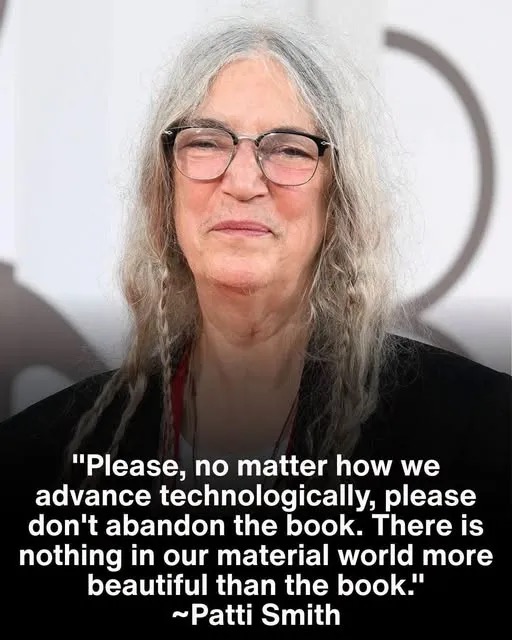
What she said. I’ve had to learn to focus on books again.

There’s something more, though: as the nation shifted full-throttle is a race toward fascism, white supremacists led by Trump revving like monster trucks in their rage over a successful Black president, my engagement with social media became less about storytelling and more about soapboxing. I didn’t like who I was becoming, and who I became. And with the reboot of the whole shitshow, I knew my rants and raves and facts and arguments were less than useless: they were obnoxious. America was not mine to fix. It was arrogant and idiotic of me to think otherwise.

Via today’s TikTok (which app I do not have) and Instagram, I’ve found an array of genuinely informed and connected media people known as “influencers,” each with a special lens, and many are confident and caring and informed and wonderful without being arrogant or idiotic or obnoxious. Social media is not my medium, creatively. I’m still not sure what is.

Meanwhile, I’d like to think that a year and a half later, I’m nearly on the other side of that 15-year cycle of addiction; the next phase is to get off Instagram, but unfortunately, that’s where I get most of my news. Substack, where I publish this, has long been rumored to be a fascist platform, pretending to support independent thought so that dissenters will be easy for the regime to target and jail, because that’s here now. I remember my youngest brother’s friend Joe, whose father got out of communist Hungary, the USSR, intoning in a thick accent in imitation: “Trust no one, Joe, not even your best friend,” and you’d laugh. It’s not funny anymore.

I don’t truck in nostalgia, either, because my good times came alongside other people’s horrors, but I do miss not being in “breaking news” moments ad nauseam, miss feeling that smart, responsible people were running things, miss having the energy and imagination and drive of a creative life, barefoot and on swing sets, too, while I’m dreaming.
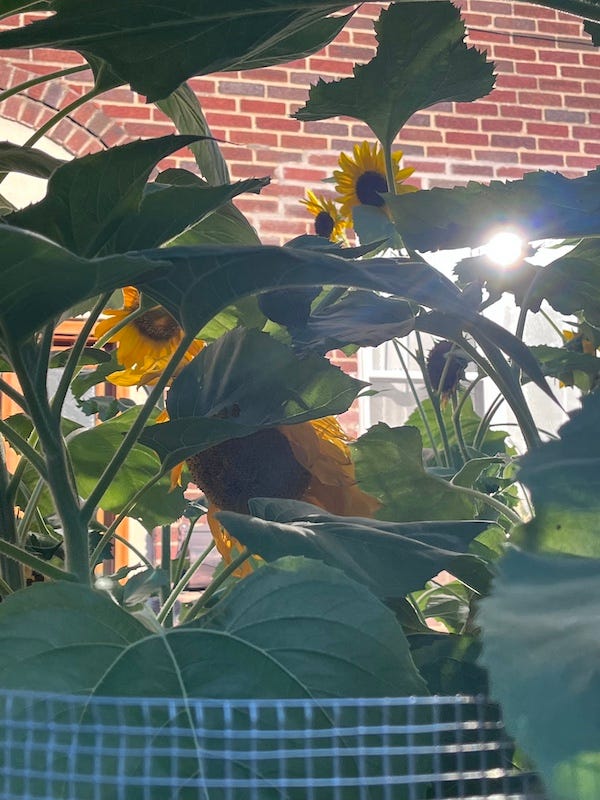
Sunflower surprise, Queens. No reason.

The sun’s up now.

So, how are you?

Sending love,

Miss O’
Waking in First Light

While the Frozen Left lets democracy slip away, a little talk in the heat of late spring

This morning, as I do at least two mornings a week, I awoke around 3 AM. I was sleeping in my own bed, in a room with a working lamp and fan, surrounded by two dressers, a stack of books, and art objects either gifted to me or purchased with money earned from work. I was able to get up on my own two legs and walk to a working indoor toilet, use it, and pad into my very own kitchen, take out my coffee maker, scoop local artisanal coffee into the filter, extract potable water from my own faucet and pour it into the drip coffeemaker on my own kitchen counter. Flip a switch, listen to the drip, pull down a mug.

These are no small things. Taken together, you realize, “In America, we live like kings.”

I saw a video the other day, though I didn’t save it and don’t know who said it, that in the 21st century, Americans, and indeed many, many people, live like kings for the just the situation and services I noted. And no one is happy.

And though the Big “Haves” as well as too many “haves in denial” are never satisfied, more of us could be living like kings if it weren’t for about 2,000 rich people (nearly all white men) who can’t bear the thought of you having anything, let alone Blacks having so much as a vote, or Hispanics and Muslims sending their children to school. These same oligarchs hate Jews even as they fund Israel’s genocide against Palestinians. To prevent you and me and anyone brown from having a goddamned thing, they will bomb every nation and even blow up the planet. This isn’t even hyperbole. When I read yesterday that Trump’s DOJ, now his personal police force, awarded $1.7 billion to the January 6 insurrectionists—shown in the Mueller Report to be crisis actors (the Republican term) transported to D.C. and housed in hotels paid for by a Trump SuperPAC—I realized how idiotic Democrats have been to “trust the system.” We also know those feces-smearing cop-killers will never see a dime; all the money will go into a Trump trust or some such. But it’s our money. Our money.

I don’t even know how to feel mad anymore. I read that we the sentient have what is called Compassion Fatigue, and Outrage Exhaustion, pick a syndrome borne out of this Theatre of the Absurd that celebrates and normalizes those who engage in pedophilia and rape and grift, gets incensed by the idea of universal healthcare, and chooses unchecked guns over school safety, book bans over public education.

[At 5:29 AM, my peace in typing this on my little porch was interrupted by a big truck’s deafening engine in idle somewhere nearby, for maybe ten minutes, and I thought, “Of course.” It’s the perfect metaphor for America.]

This past weekend, one of my former students, ca. 1997-98, was in town for a wedding in Brooklyn and was determined to visit me, even after multiple delays, changing hotels, and helping return tuxedos. My strongest memory of this student is the first week of school in my tenth grade Humanities class, when I had the kids introduce themselves to the class using a question they hated being asked. His question was, “Are you mixed?” and his answer was, “I am a beautiful mulatto.” I recounted this to him when I saw him, finally, late Sunday evening. He lives out West now with his wife and son, and his best friend came along to Queens with him—in fact, this kid said his main reason for accompanying his bff to this wedding was a chance to see me—and apologize.

In fact, his first words coming down the stairs from the el train and seeing me were, “I love you!” And over the course of tequila shots and beer at my favorite bar, he explained what a troubled teen he had been, and he said something I’d never heard: “You held me with different hands than anyone else,” and those hands were full of “culture.” He felt cared for in a way that was new.

This exchange—the great conversation in general—reminds me how vital education is for mind and spirit, for sustenance in a dry-as-bones corporate world. Of my former profession, I told him that I would love to teach again—all I ever wanted to be was a teacher and learner—but not the way education is now. “I’d like to sit on some steps, like Socrates,” I said, and his friend said, “And philosophize!” Yes. Talk, think, observe. Make learning fun and human again.

I want to say that I gave this kid every out, texting, “It’s okay if you can’t come out here,” and “I’m too tired to get out to you,” and in truth I was really tired, being old now and feeling it at 7 PM on a Sunday; but he was determined, so I did it. My point here: always make an effort.

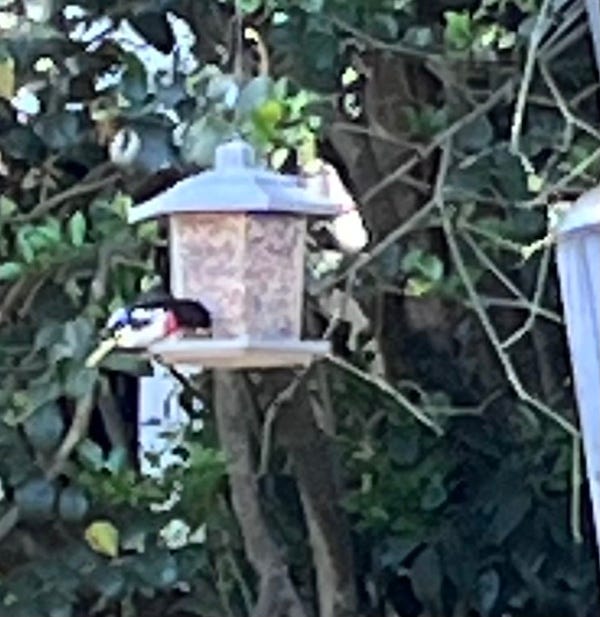
We can be surprised by visits, and we need to let visitors in. While I was home in Virginia the other week, my dad, Bernie, brother Jeff , and I were sitting outside on the little pea gravel patio, staring at sky and trees and the bird sanctuary that has formed around Bernie’s feeders, after a few hours of long-needed yard work. Suddenly a bird we’d never seen alighted on the feeder, wild black and white striped wings, a red breast, a golden beak. He was a vision. (I say “he” because any bird of colorful plumage is a male—to attract mates and distract predators from the nest, they say.) We all went crazy trying to identify it, commenting on the markings, watching the movements. Wow.

Google Lens identified the bird as an adult male Rose-breasted Grosbeak, and indeed the female is a simpler golden brown color. It turns out the bird should be in the mountains on his migration, some 50 miles west, but he stopped over for a meal.

https://www.allaboutbirds.org/guide/Rose-breasted_Grosbeak/id

This sighting got me thinking about female beauty. I remember by mom, Lynne, saying to me when I balked at wearing lipstick and mascara the year I’d lost my natural bloom and students wanted to give me a makeover, feeling as if it would call unnecessary attention to myself: “Honey, you don’t wear makeup so they notice you; you wear it so they don’t.” She was right.

“Beauty is invisibility,” I read on a post the other day, where men write in the radical female content creator’s comments, “You are so beautiful” in response to a video on social justice for women. I’ve had men do that to me—compliment my hair in mid-sentence. I’m not heard, not seen. So many ways for men to miss out through misogyny.

Years ago, my best friend at the time, a man, asked me what I wanted in a relationship. “Great conversations,” I said, and he snorted, “Yeah, you’re gonna be alone.” And I am. He was absolutely right. I cannot have great conversations with most men, or I can but only to a point, and right when I’m reaching a new understanding, or sharing one, or moving them so they might figure something out, they crack a joke. Every. Time. I’m sorry about that.

And so it was a delight to have a great and serious and also fun conversation with a former male student. Curiously, it’s not the drama students who seek me out to visit after many years so much as it is the language arts kids, like this student. While the intensity of a weeks-long rehearsal process in the drama club creates fast friends, perhaps it’s the 9-month incubation of a high school English class that births the real relationships.

We cannot have it all—in friends, in citizens, in a nation—but if we look around for a minute and make space for visitors, we already have more than we realize. Now, how to get people in power to see this, to want this for all of us? As theater legend Joseph Chaikin said, “I want to change my life and everyone else’s. I don’t know how to do it. And if not the life, then the day, the evening, the hour, the minute.” Chaikin also came to realize that change doesn’t happen “en masse,” but rather “one by one by one.” One conversation at a time, one tough year at a time.

Most every morning, I wake too early and in a panic about the planet, our country, and the next pandemic borne of idiots. Today, I enjoyed a little light. Hope you found some light, too.

Love, somehow,

Miss O’

Sunrise. Queens

For That Little Bit of Food

On the mess it takes to make

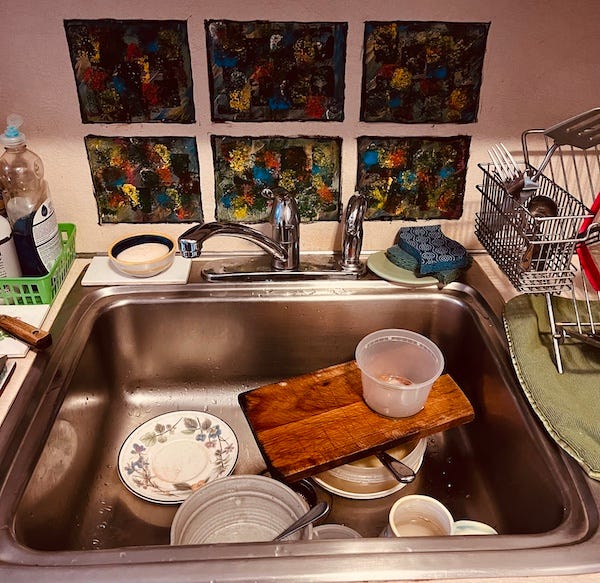
Years ago, my super (and friend) was at my apartment to make a repair, and he noticed my sink filled with dishes—I’d made a pasta salad, involving boiling and draining pasta, cutting vegetables (scallions, tomatoes, etc.), adding feta, and so on. Assorted pots, a colander, and cutting boards were piled in the sink, along with knives, forks, spoons.

On seeing the finished product, a medium sized pottery bowl with a nice few portions of pasta salad under plastic wrap heading into the fridge, he clucked his tongue. “All that mess for such a little bit of food.” Well, yes. Had this handy man never watched his wife or grown daughters cook or clean up?

But that moment stayed with me—sort of embarrassed me, the way he thought, “for that little bit of food.” Why had I felt embarrassed? I mean, I’d watched him pour out a half dozen tools, rags, and plumber’s sealing tape onto the floor to fix a leak, and it would never occur to me to say, “All that mess for such a tiny little leak.” Let’s face it: most things worth doing require making a mess. It’s the tragedy, and joy, of being human. Life is not gossamer; no amount of meditation and austerity changes the reality that, to start, 1) humans must eat and drink; and 2) humans must evacuate waste. Planting, growing, cooking, and plumbing of all kinds: life’s basics don’t do themselves.

I thought of this again this morning: I’d walked over to LabCorp to get bloodwork done after 12 hours of fasting, so on my way home, I stopped by The Sconery for a (savory) scone treat. At home, I got out my little coffee maker, scooped out coffee into the reusable filter, poured in water, and let it perk; I poured some half and half into a small cream pitcher (to better control the amount used); I made a quick one-egg omelet with the last half of a cheese slice, to eat on the cracked pepper scone.

Following this little repast, a simple breakfast feeding just me (and I didn’t even have to make the scone), I had the following dishes in the sink:

  • Little bowl for scrambling the egg
  • Fork for the beating the egg
  • Small cast iron skillet for cooking the egg
  • Table knife to cut butter for the skillet
  • Coffee scoop
  • Small cream pitcher
  • Spoon for stirring
  • Plate
  • Coffee pot
  • Reusable filter and insert
  • Coffee mug
  • Water glass for taking my morning meds

All those dishes for a little bit of food, a cup of coffee, and a pill. That’s how it is.

And this was lunch.

Anyone who does projects knows this—to sew anything, say, I have to set up the sewing machine, get out the fabric scissors, the thread and bobbin, the seam ripper (always), all the stuff; whether this is making curtains or sewing a tiny seam split in a pair of pants, it’s the same drill. If you make collages or draw or paint or whatever, you have to get out all the stuff. Even to make a small card for a friend, or a bookmark, it’s all that mess to clean up and put away for a little bit of creative output. Even a bookshelf, when hung up, looks like “of course,” no one thinking about the sawdust.

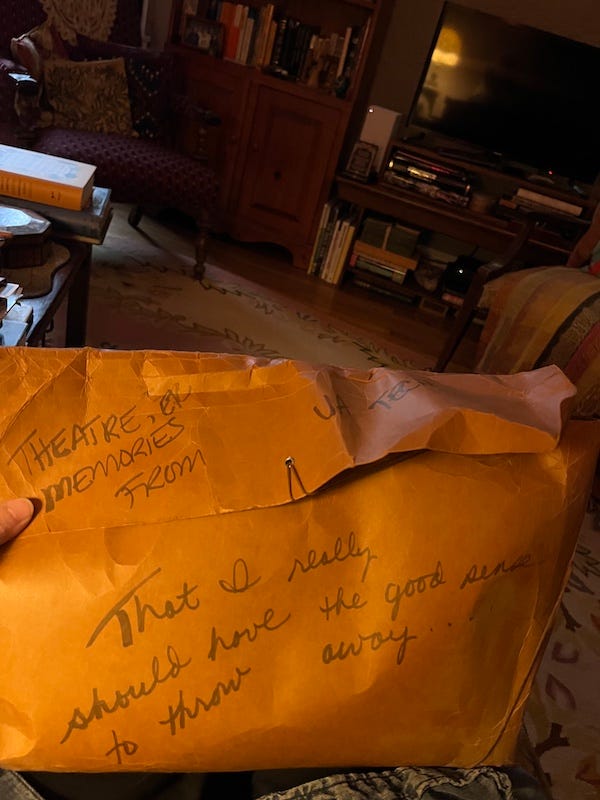
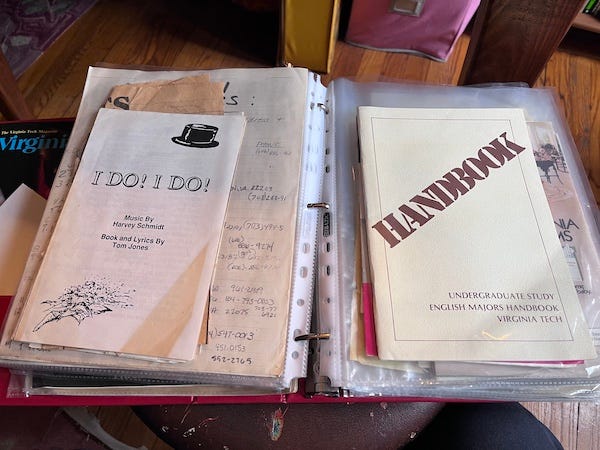
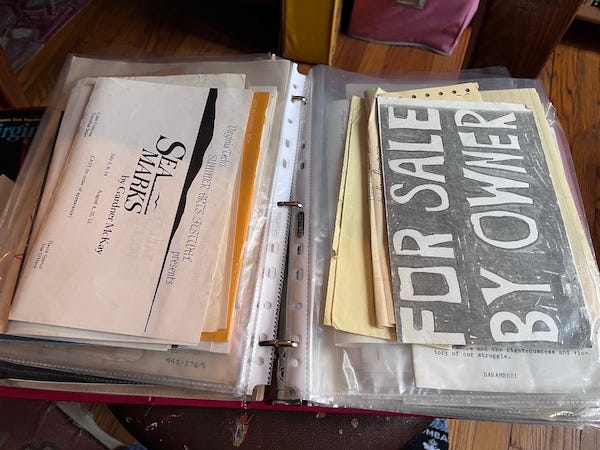
Last weekend, my best college buddy Richard came over with his two teenagers, who, after lunch, napped in various spots in the apartment while he and I went through a big envelope of theater memorabilia from our college days. I was cleaning out a closet last weekend when I happened on it, and thought, I need to make some kind of scrapbook or toss it. Being a BA theater major was, as I’ve said many times, the luckiest thing I could have been. (I distinguish this from a BFA—a bachelor of fine arts—which is narrow in focus, an actor never learning set design, for example; in our liberal arts program we did it all.) You learn all the theater trades, practice on many shows, from black box to main stage, and figure out what you like about it and what you are good at. It was awesome. Though you sure get tired doing all you do.

Theatre Arts-University Theatre is now The School of Performing Arts at Virginia Tech. I recommend it.

This sorting made us tired, too, program after program, script after script, party notices, “Break a leg!” cards, SETC (Southeastern Theater Conference) badges. “I was on the makeup crew for She Stoops to Conquer?” Richard asked, thumbing over the names in one program. “I did wardrobe for this?” I said, handing Richard a program for a show in which he got “special thanks.” We’d never heard of it, to see our reactions, let alone recalled working on it. And yet there our names were. Other times the programs brought back loads of memories, “Oh my god, remember that turntable that didn’t turn, and we all had to push it from backstage, in costume,” “…and the tech director got fired for buying cheap casters?” but most of them were fond memories. From hauling boards in from the truck to building stud walls and constructing flats; to measuring actors, to fabric shopping and cutting cloth from patterns; to putting makeup on faces and taking it off with cold cream afterward. “How did we do all that?” “And classes, and parties…?” To say nothing of hydrating.

I suppose one way of looking at it is, “All that mess for such a little bit of show.” But that’s never the whole story.

Ca. 1982-86; I just realized I graduated 40 years ago. [Insert popping eyes.]

I watched YouTube videos about photographers this week—I got on a Richard Avedon kick, thence to Henri Cartier-Bresson, Chuck Close, Mary Ellen Mark, always learning—and one commentator brought up how much paper and how many dark room supplies went into producing each large-scale photo that landed on museum walls. (So much mess for such a little bit of beauty? Yes.)

In further video travels, I watched Lucy Worsley Investigates: The American Revolution on PBS, and I admit that I thought, in passing, about the war, “All that mess for such a (little bit of?) new world order.” And really—when any act is all about money and power—it is a lot of mess, and for, too often, such a lot of nothing but destruction and misery. Worsley finds, for example (seeking the British view), that if King George III hadn’t had a huge 7 Years’ War debt to pay off, he wouldn’t have signed the Stamp Act, and if he’d listened to the colonists’ reasonable complaints about taxation without representation, they wouldn’t have revolted, and Britain’s Empire wouldn’t have fallen, and who knows? Still a mess, no doubt, and the mess continues amid the stabs at progress, and no use looking back.

The latest world order upset is Trump’s unstable, treacherous presidency, his support of Israel, and his attack on Iran—all that mess to distract from such a little bit, oh, wait, an ungodly amount of pedophilia and bribery and corruption.

Money and power, power and depravity. I’ve been reading a few articles during my doom scrolling hiatus, and the more investigating people do into Epstein (to take one example)—and loads of terrific independent journalists are doing just that, unrelentingly—the more horrible and seemingly unstoppable these diseased forces seemed to be; but they are stoppable. This is changeable.

But my god the mess in their wake. Their mess is vast and awful, but we gotta clean it up so we can start fresh. Again. Like doing the dishes. Like a set strike.

And how much better would we all be if our messy work were for creative, useful, and community purposes (with women to guide it)? So much better.

Sending love, all the detritus now in plastic sleeves in a tidy (ahem) binder,

Miss O’

Summer Arts Festival, 1985; Final Directing project 1986. How did l learn all those lines? And pass my classes? And have fun? And feed myself? It can be done. Also, I hope you are charmed by the handcrafted nature of that college program. I made it.

“Grouchy Resilience”

A week off with art and the city, with photos

It takes a while to come down from the ledge, to decompress, when taking a vacation. All I had to decompress from, in my immediate life, was dealing with some personal grief, healing a hand from surgery, and unfeeling a job with lots of confusions in the odds and ends of finishing a project. It’s an embarrassment of riches, my little life. Somehow I feel I should do a roll call of global suffering to rationalize my own breaks in this life, but I’ll spare you that guilt.

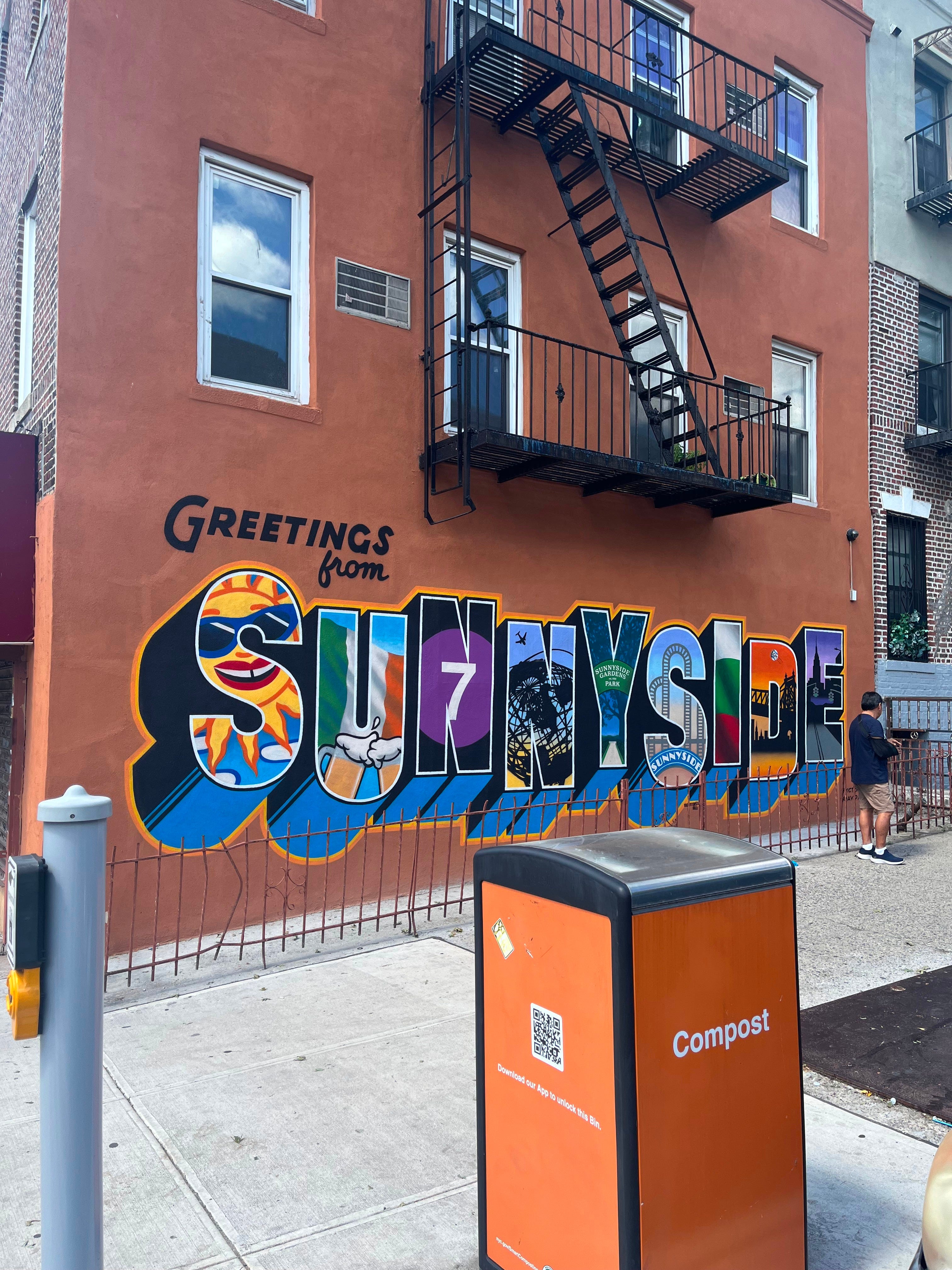
Monday, Labor Day, I hung out in the neighborhood. Walked about. Hey, the mural’s back.

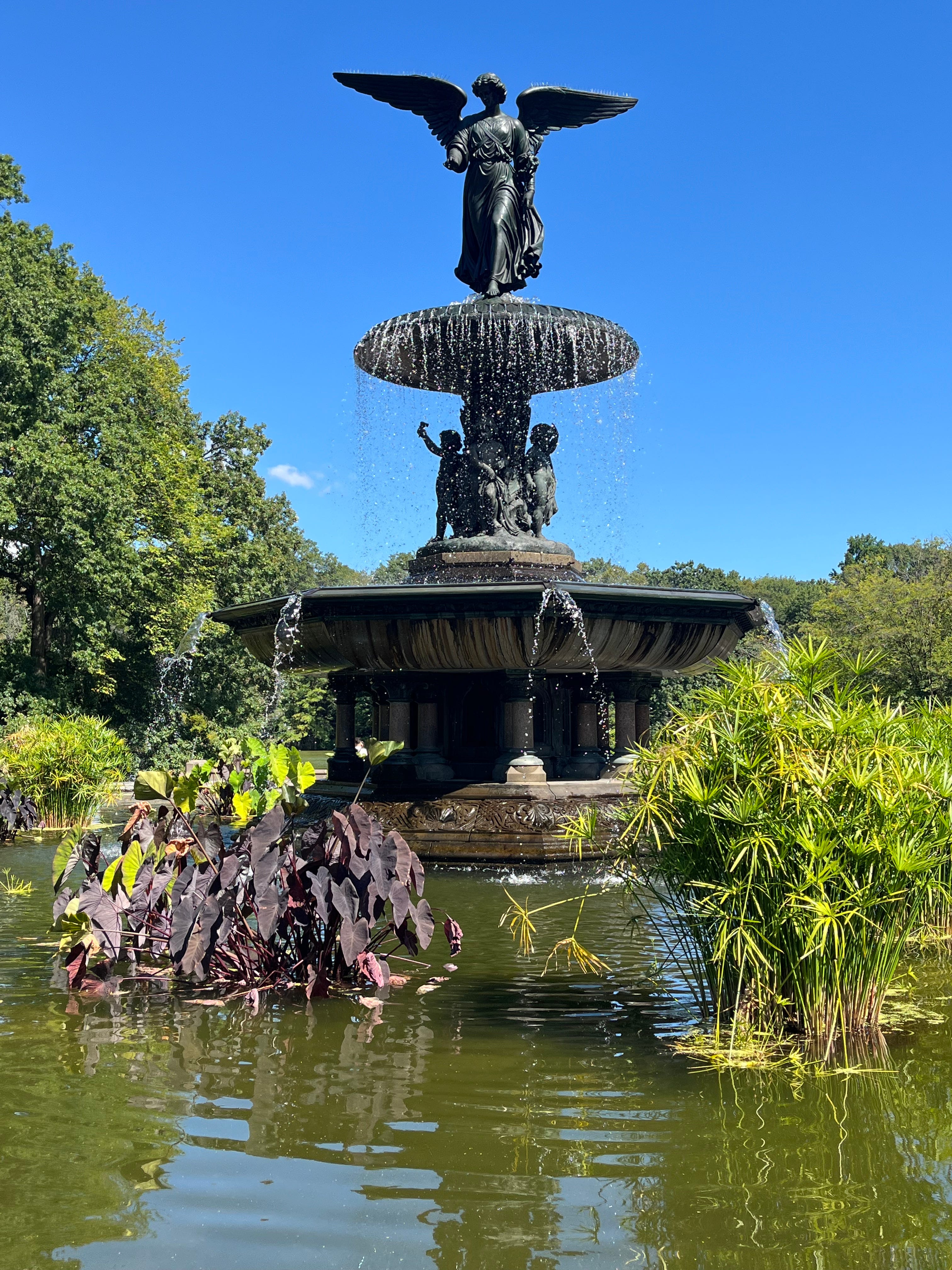
Tuesday, I headed to Central Park and the Metropolitan Museum via the N Train to 5th Avenue/59th Street. Here, I am going to complain. One cannot walk two yards, from the Plaza Hotel, to the lake; from the Sheep’s Meadow to the Literary Walk and Bethesda Fountain, without 1) choppers overhead; 2) food carts of overpriced water; 3) vendors of every imaginable item of tourist shit blocking the view of the American elms; and 4) bad saxophones/pan pipes. Assaults to the senses all, so all you can do is look up.

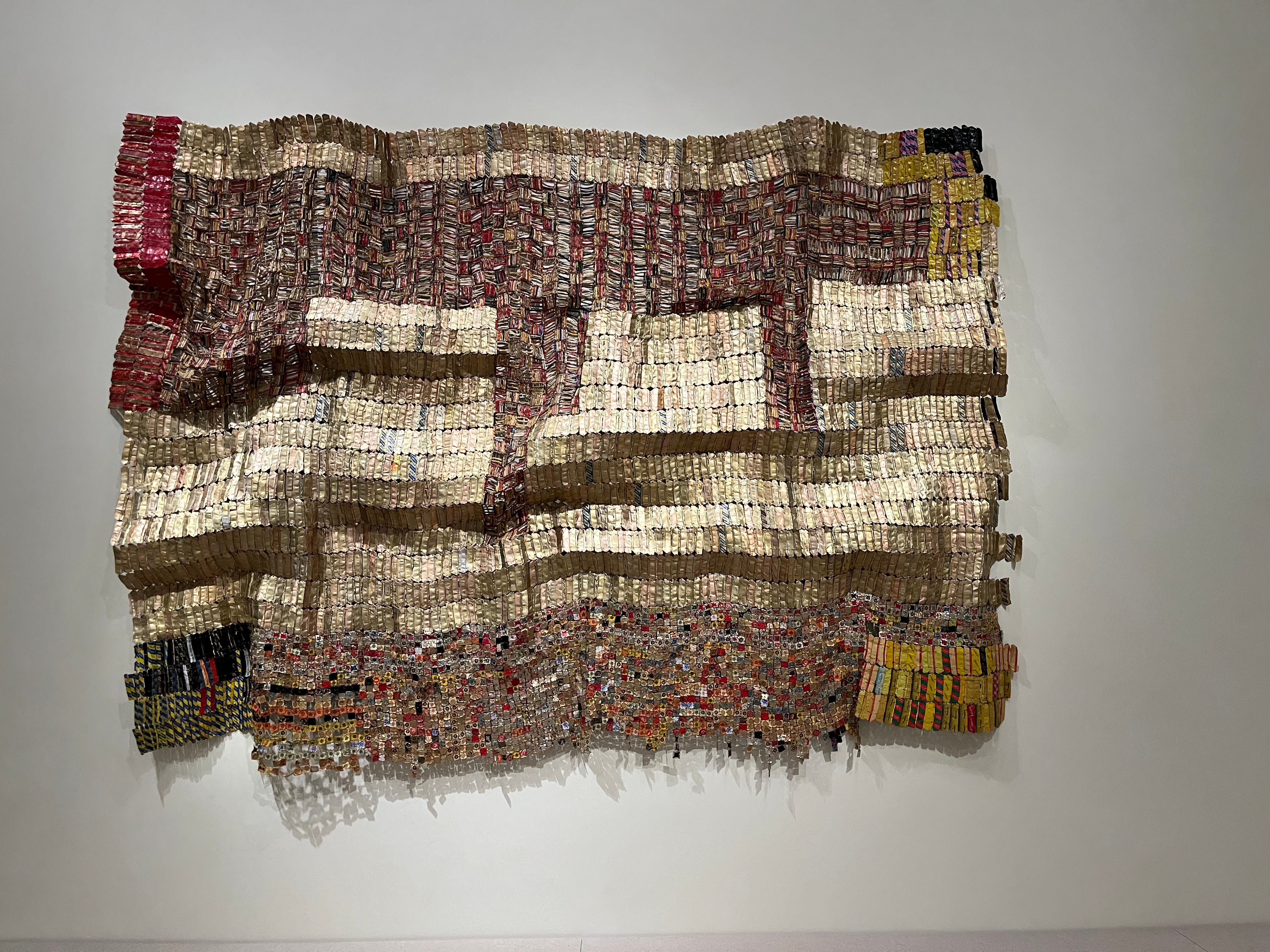
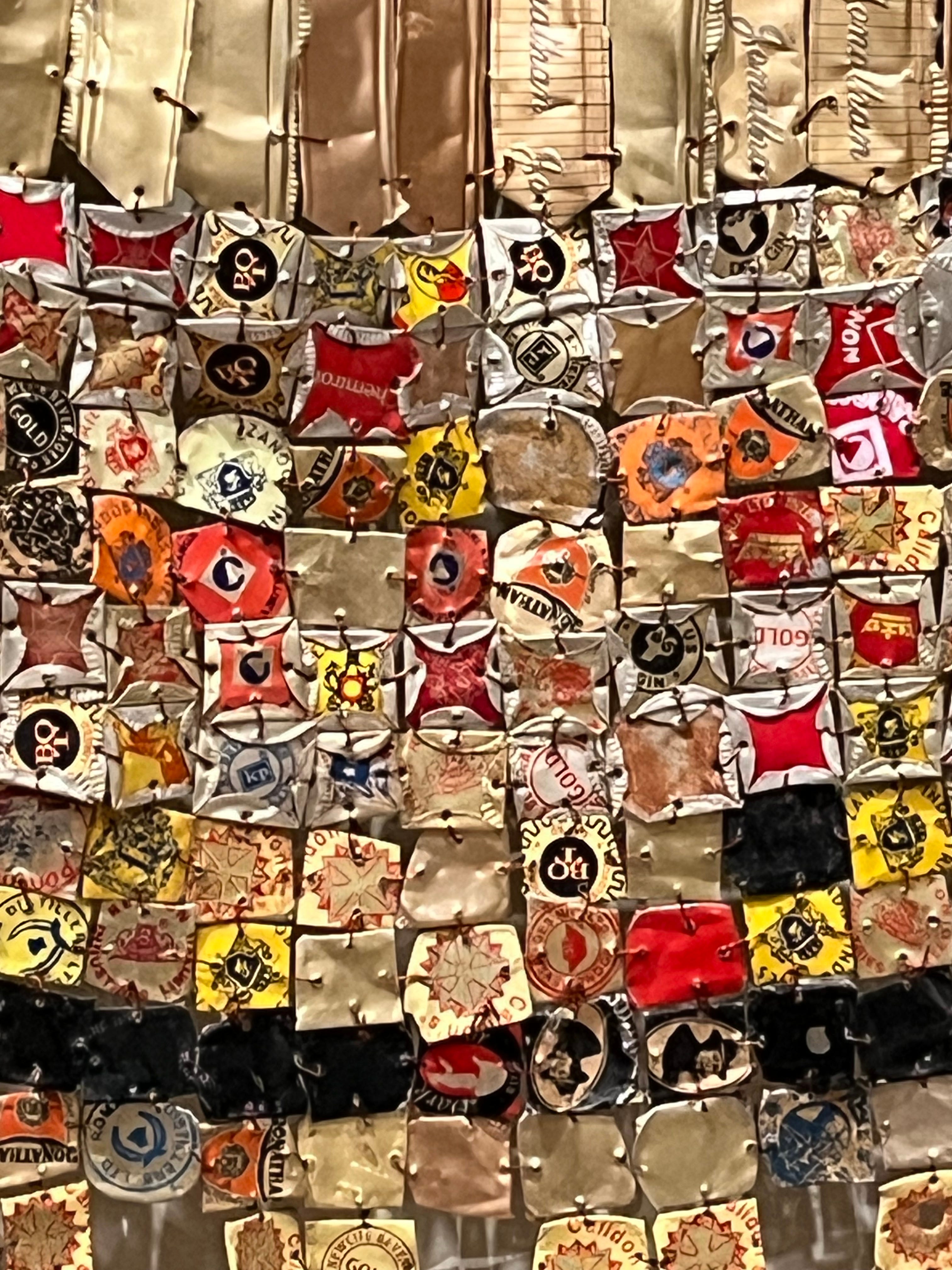
While at the Met, I visited a couple of favorite pieces. First, the El Anatsui:

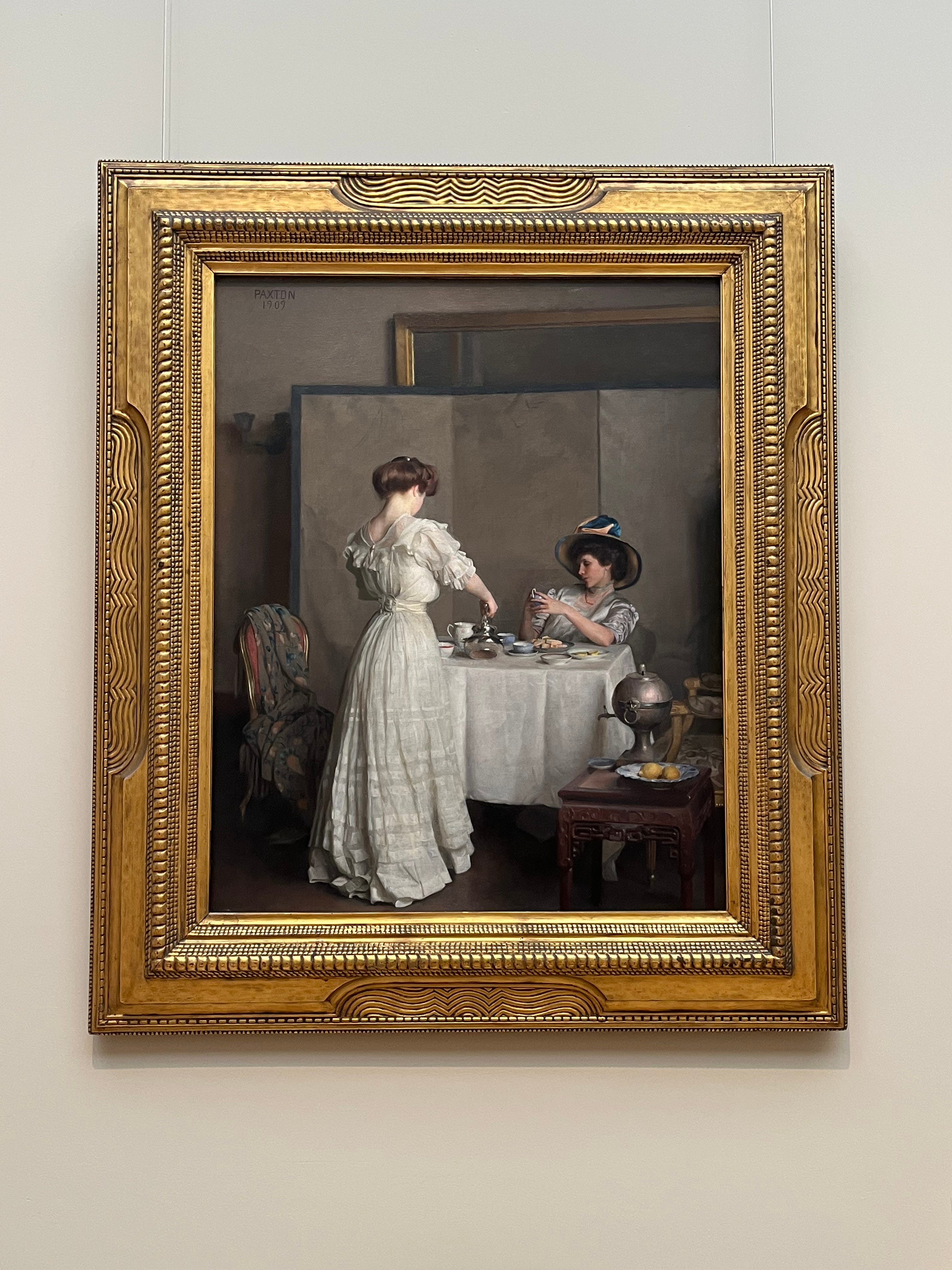
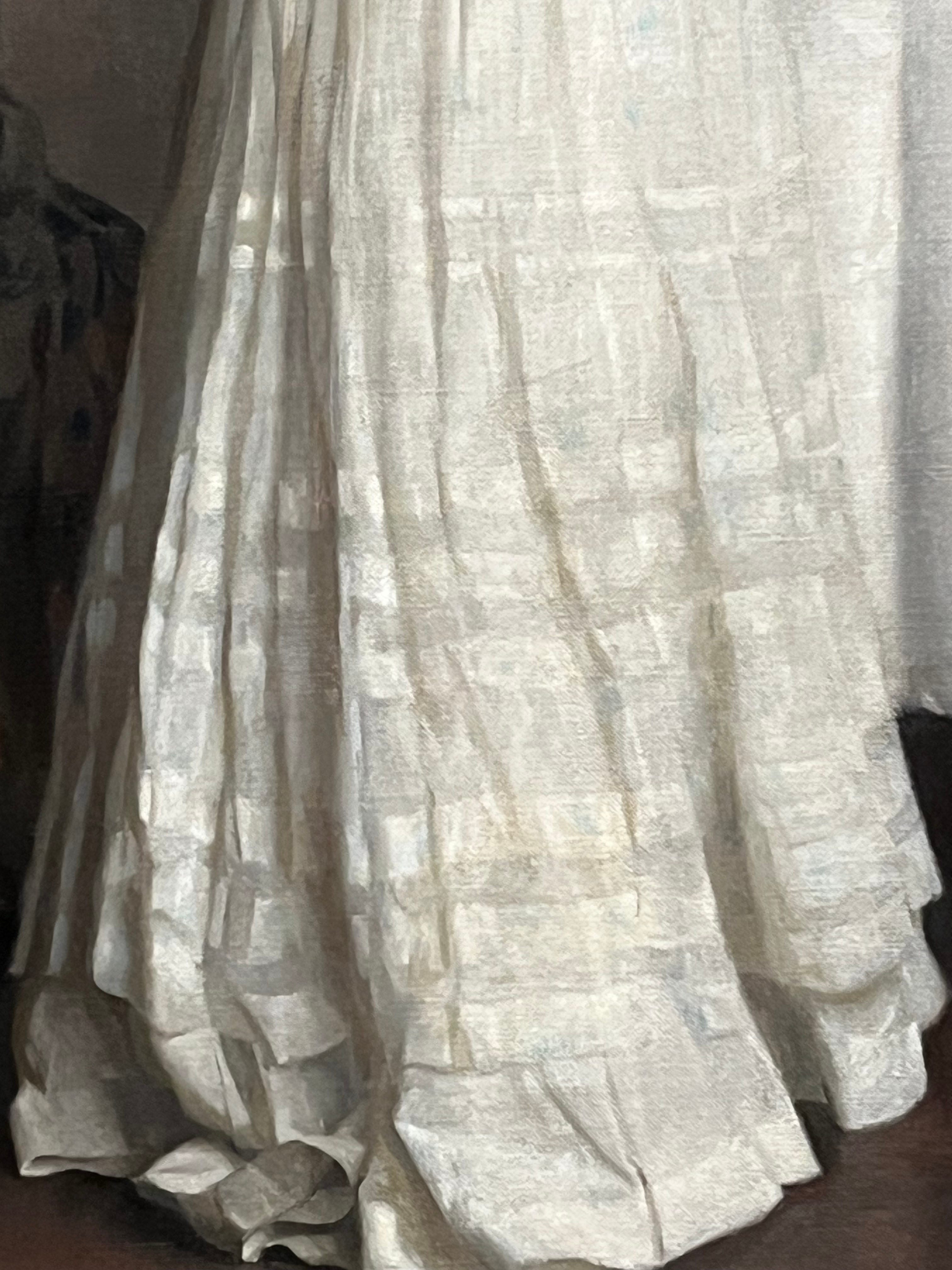
Then Paxton’s tea girls:

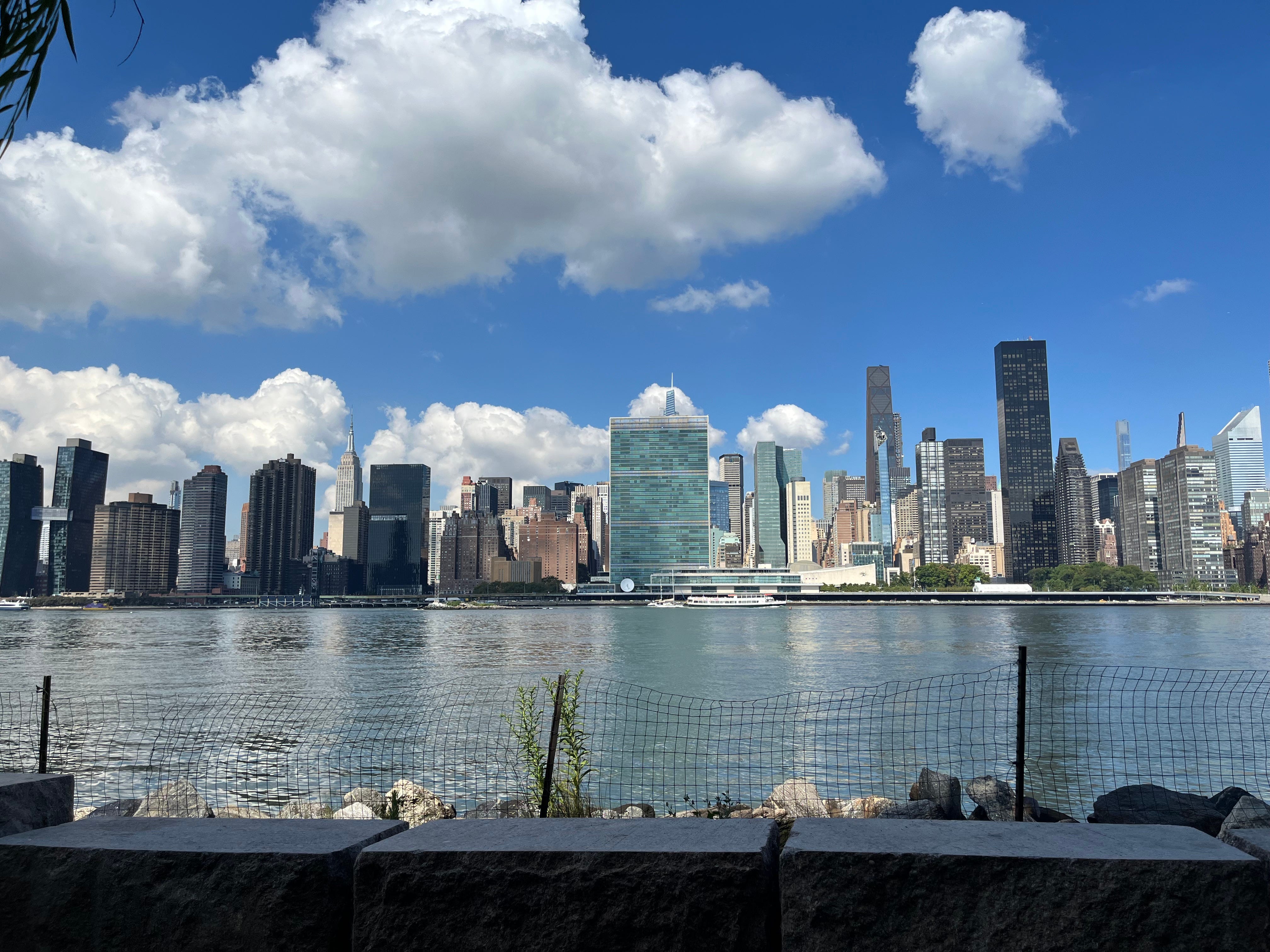
Grateful but still feeling edgy, on Wednesday I thought maybe I what I needed was water; the Rockaways were a couple hours away, but hey, the East River is down the road:

Close. But not feeling shiny yet.

Thursday, I rested.

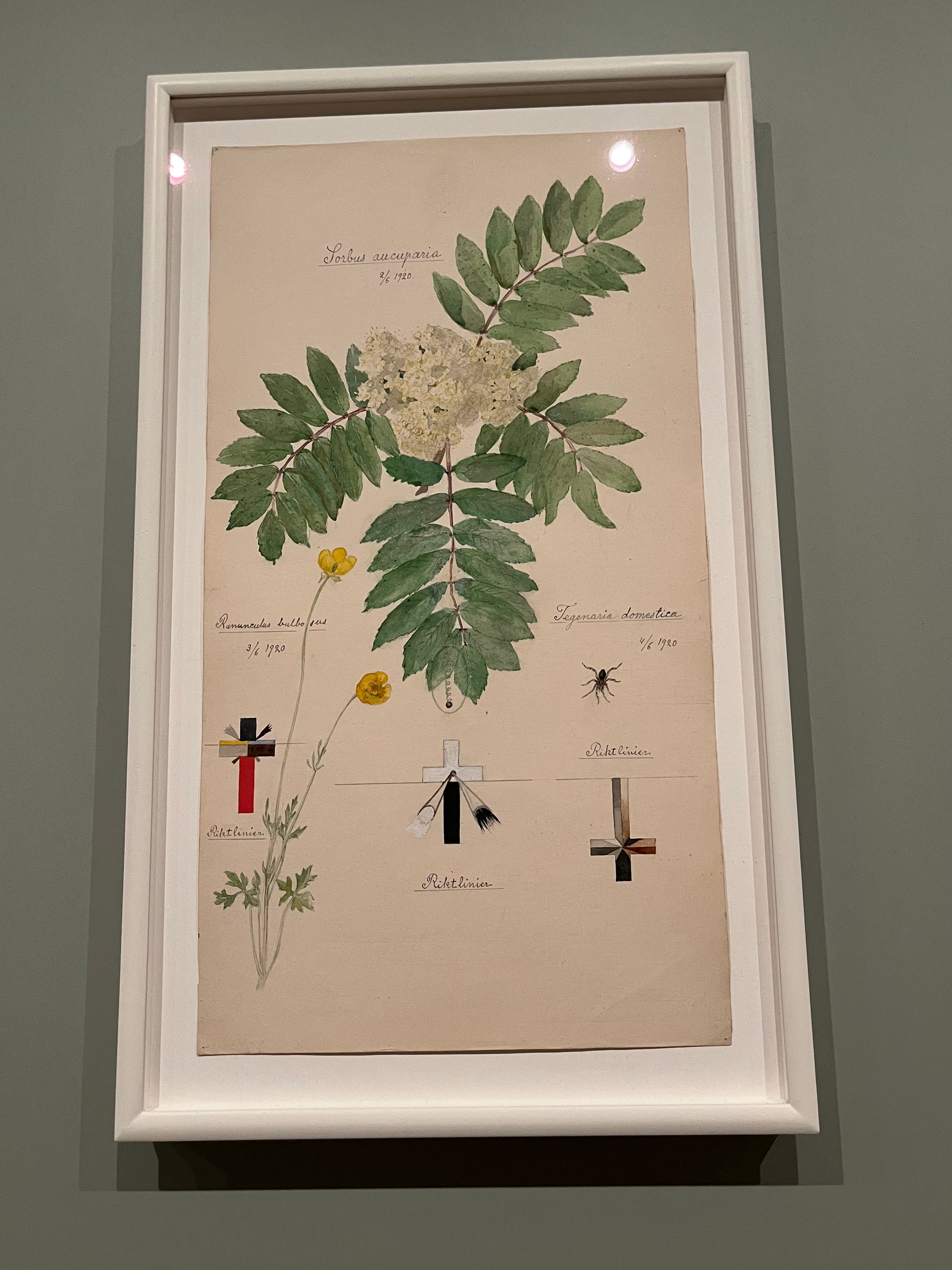
Friday, I joined my friend Cathy to meet a former colleague in the city for lunch, and it was reviving. As I was only a block from MoMA, after lunch I parted from my friends and headed in.

Bingo.

The cap on the beat:

Perfect. Breezy, calm, cool.

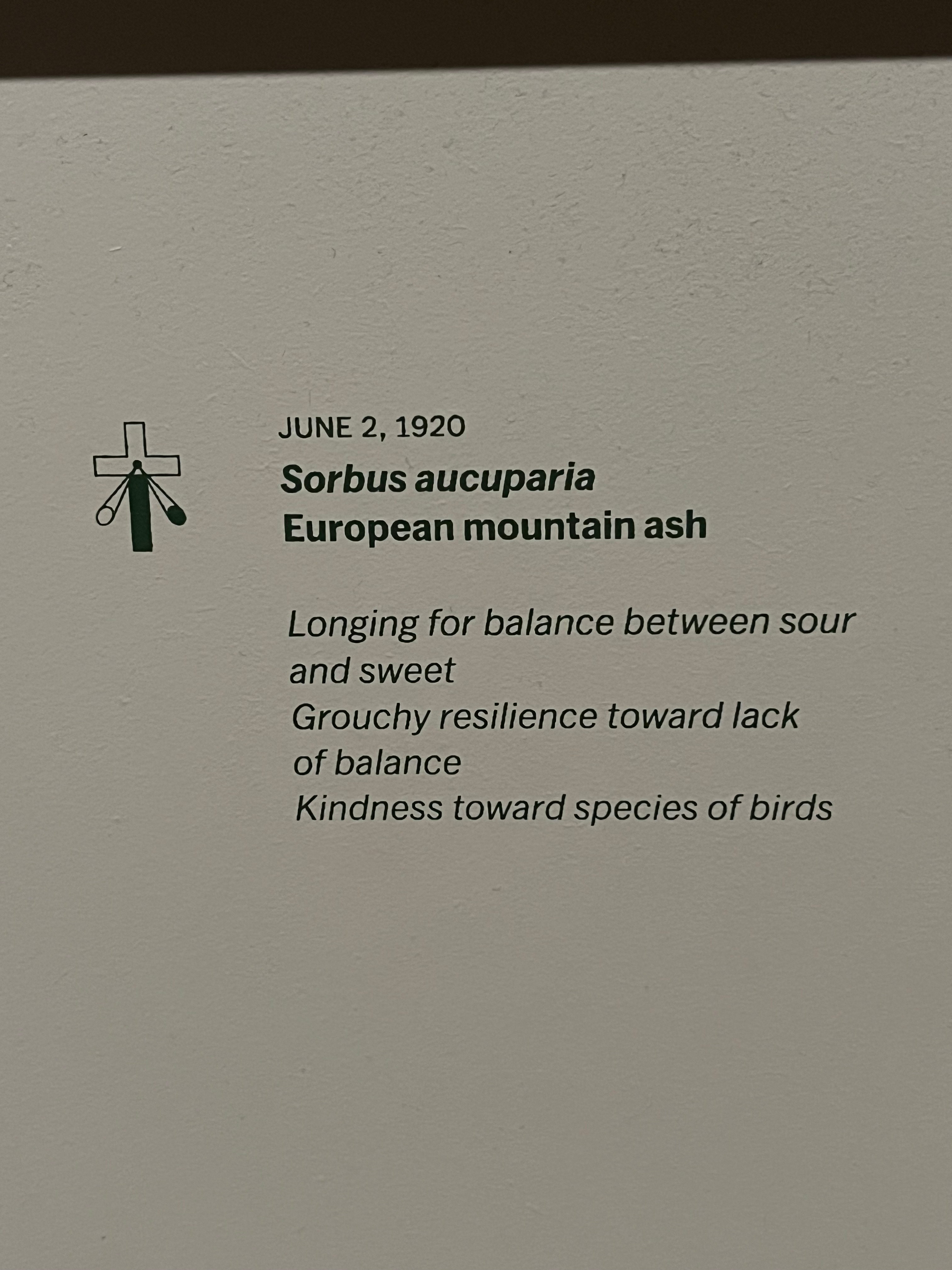
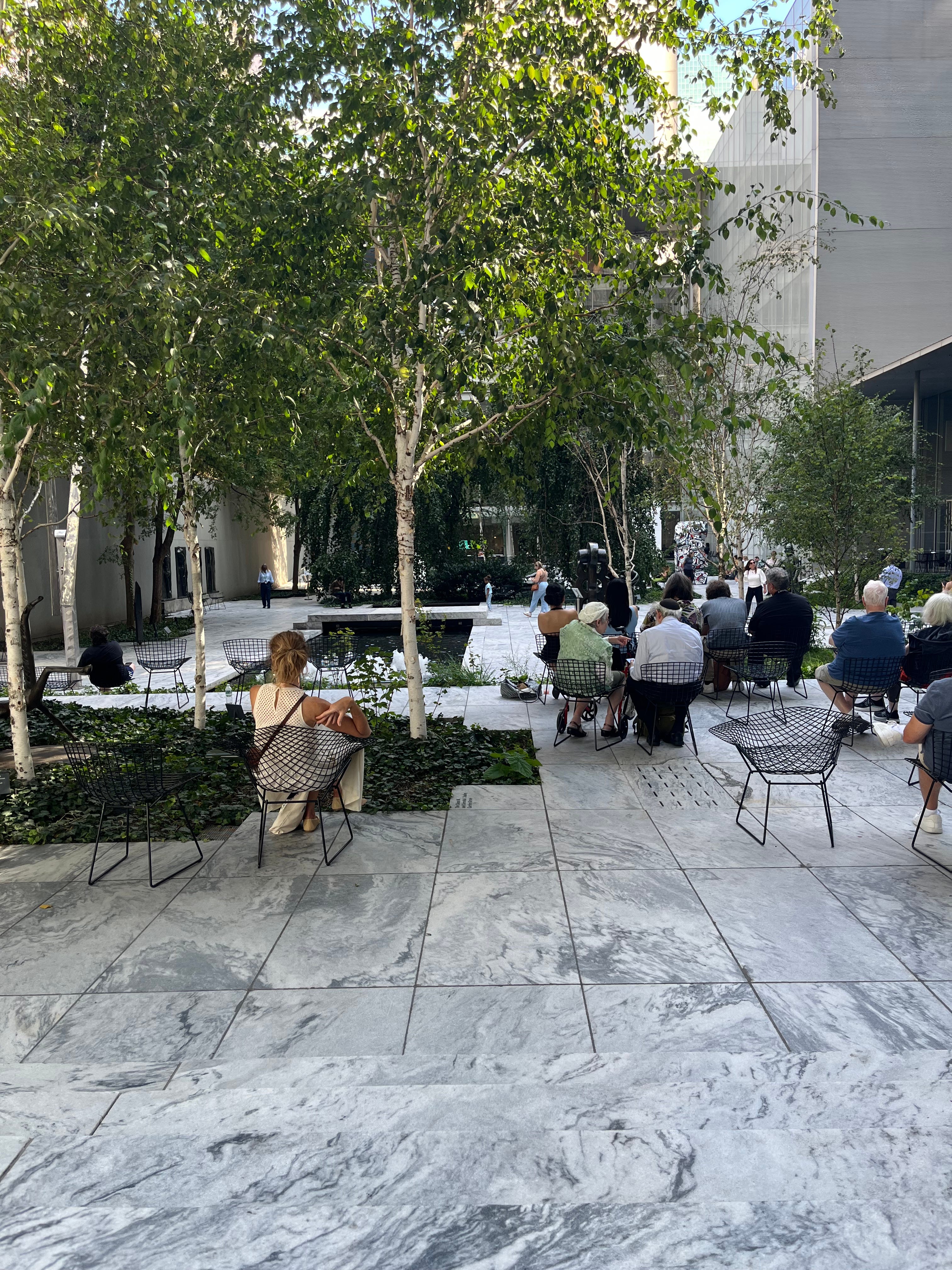
When you can’t have it all, settle for grouchy resilience. And quiet marble.

Sending love, renewed, from New York City,

Miss O’

What’s Not Lost in Translation

Moments in my chaotic New York City week

So all the ick news first, aside from all the Musk-Trump criminal dismantling of every living institution in America so that it’s close to unrecognizable (taking over the Kennedy Center? The National Archivesclosing what Department?), I learned at work this week that the two editors I supervise applied for a transfer to another (lately resurrected) department where they’d previously worked because they can do what they are best at there (I choose to believe it’s not about me) and got it, and that I will have to finish a huge project probably alone, the timing being what it is; then, at my ophthalmologist’s office for a checkup, I learned that not only am I at the beginning (and still reversible) stages of diabetic retinopathy, but also that I owe an outstanding balance of nearly $500 (of deductible-meeting crap) from visits over the past four years because their billing department never sent me the bills; and then I learned from my CPA that my company inexplicably failed to take out the correct amount of tax (and all week I’ve tried to correct it for this year, but the system doesn’t work, and we no longer have humans working in HR (take that in) and I am screaming into screens) and so instead of getting a refund, I in fact owe some $1,500; and the tendinitis in my write-hand (punny ha ha) wrist is so bad still after three months, medicines, and PT, that I would have to spring for a cortisone shot (sweet, sweet relief after the injection site pain and, obviously, the bill). Poor fucking me.

Thank you, internet.

But one day this week—I think it was the eye appointment day, Wednesday, when I returned home with dilated eyes and shock at hemorrhaging money—on the way into the city, a Black female conductor announced at every stop (because the N-W-R-Q lines still do not have recorded voices to announce stops, and I love that) something to this effect: “Ladies and gentlemen, let the passengers off first, let’s help each other out, everybody, let the people off first before you try to get on. Move into the middle, people, help everyone out, we’re all together here.” Love her heart. On the way back to Queens that same day, a Black male conductor did much the same, adding on occasion, “It’s not about the price of groceries, everybody, just help each other out here and move all the way into the car.” This same conductor also used the intercom to explain the location of every staircase, connection, and elevator at every single stop. A total doll.

And if you are like me, you can’t help but look up and down the train car, men, women, children, every color and shape and gender and age and religion and background and profession, staring into phones, or not; bundled up, world weary, and it hits you all over again that the reason “white middle America” is afraid of brown and black shadows is because they literally have no idea how New York works. It’s not perfect, never that, but it works. Look at us. Us. Right here in this train car, crowded, or not, for miles of stops along our way. Not yelling at or killing each other. All of us just being.

Also in my travels, I found myself thinking about a poet friend who lives in a rural area, who years ago, when I mentioned how much I loved the movie Lost in Translation could only grunt in disgust. When I asked why, she said of the lead characters, “All they did was squander an opportunity to see Japan.” I had to think for a second, because I was remembering the filming of Bill Murray’s whisky commercial, the Tokyo karaoke bar, the hotel bar nights, Scarlett Johannson’s quiet excursion to a Japanese garden and learning flower arranging, and of course the hilarious trip to the ER so Bill Murray can get Scarlett’s broken toe seen to—all these relationships and stories they will have to tell about, or not, when they return home. What did my friend mean, “squandered”? I started thinking. I guess another view is they didn’t really do all that much…and then it hit me. I said, not at all angry, but with a sense of discovery, “You’ve never traveled outside the country, have you?” She looked at me suspiciously, and slowly shook her head, as if her response to a movie shouldn’t depend on having had the experience. More to the point, though, she had almost never, within or out of the country, traveled alone. And there it is.

What was lost in translation for her in watching Lost in Translation is the feeling of sudden paralysis brought on by the jetlag stupor you feel combined with being quickly overstimulated in a new place while on no sleep, while being both excited by the prospects and daunted by selecting the best thing to do right now. The one universal is a bed (never one you can check into before 3:00 PM) and a bar or cafe, and heading to either one can give you a chance to sort of recover your wits (if you know how to manage the currency), but when you are alone with no one to bounce ideas off of, being in a new city, whatever the language, can be pretty isolating. One time, visiting London, I spent nearly one entire first day just sitting alone on a bench in Tavistock Square, where Virginia and Leonard Woolf had lived (in a no longer existing building, bombed out in WWII), underdressed (a cold day for summer) and disoriented, and in those days, a teetotaler. I could barely make myself try to find a place to have tea. If I did eat or have tea, I don’t remember. I remember a white-gray sky, damp chill air, and just watching people against green trees and grass and gray buildings.

Did I squander my first day in London? Not at all. Oddly, that first day of “doing nothing” is still the one I remember most vividly and fondly, whatever the discomfort and confusion. I was there, in the heart of London, on my own, unremarkable, on an ordinary day. Not bad.

As a result of my many NYC train treks this week, it also dawned on me that perhaps the reason I needed to leave Facebook, finally, was that my life in New York can be one of overstimulation even on the dullest days, and that Facebook had become more overstimulation, not sure which way to look, who I’m forgetting to check in on, that sort of thing. Maybe I’m just not wired for all that anymore. I know that many people can simply sit on a virtual Facebook bench and do nothing, or idly and dispassionately watch the goings on, not unlike I did in Tavistock Square or Scarlett and Bill did in Tokyo. You do you, as the kids say. However we engage, or don’t, we are all in it together, so move to the middle of car and let everybody onto the train. And remember to give people their space (remarkably, New Yorkers do know how to give you yours, even by a fraction of an inch, and if only the whole country could cotton on, that would be great). After all, everyone here with you is simultaneously present in a pubic place and also living a very private drama of their own.

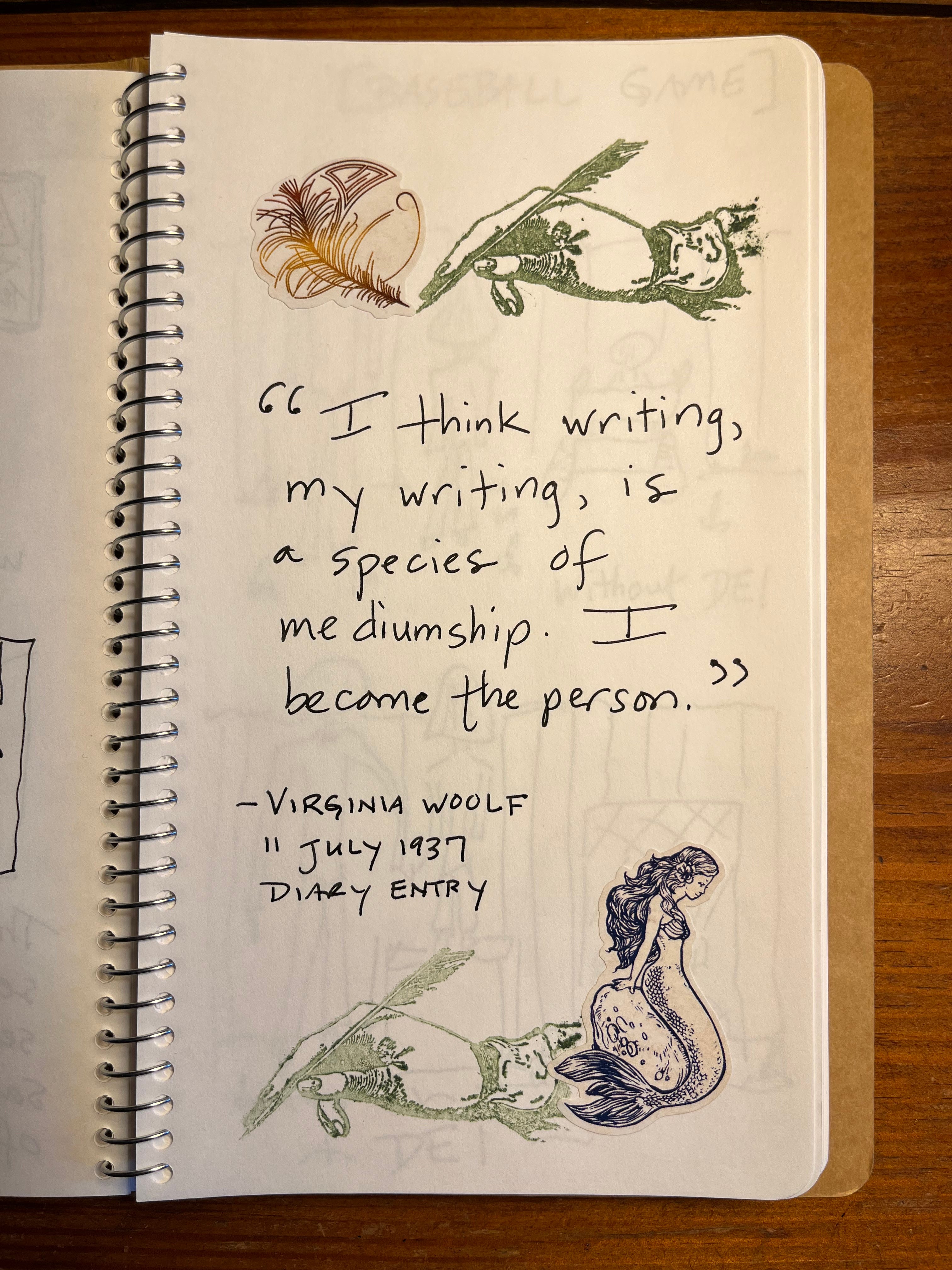
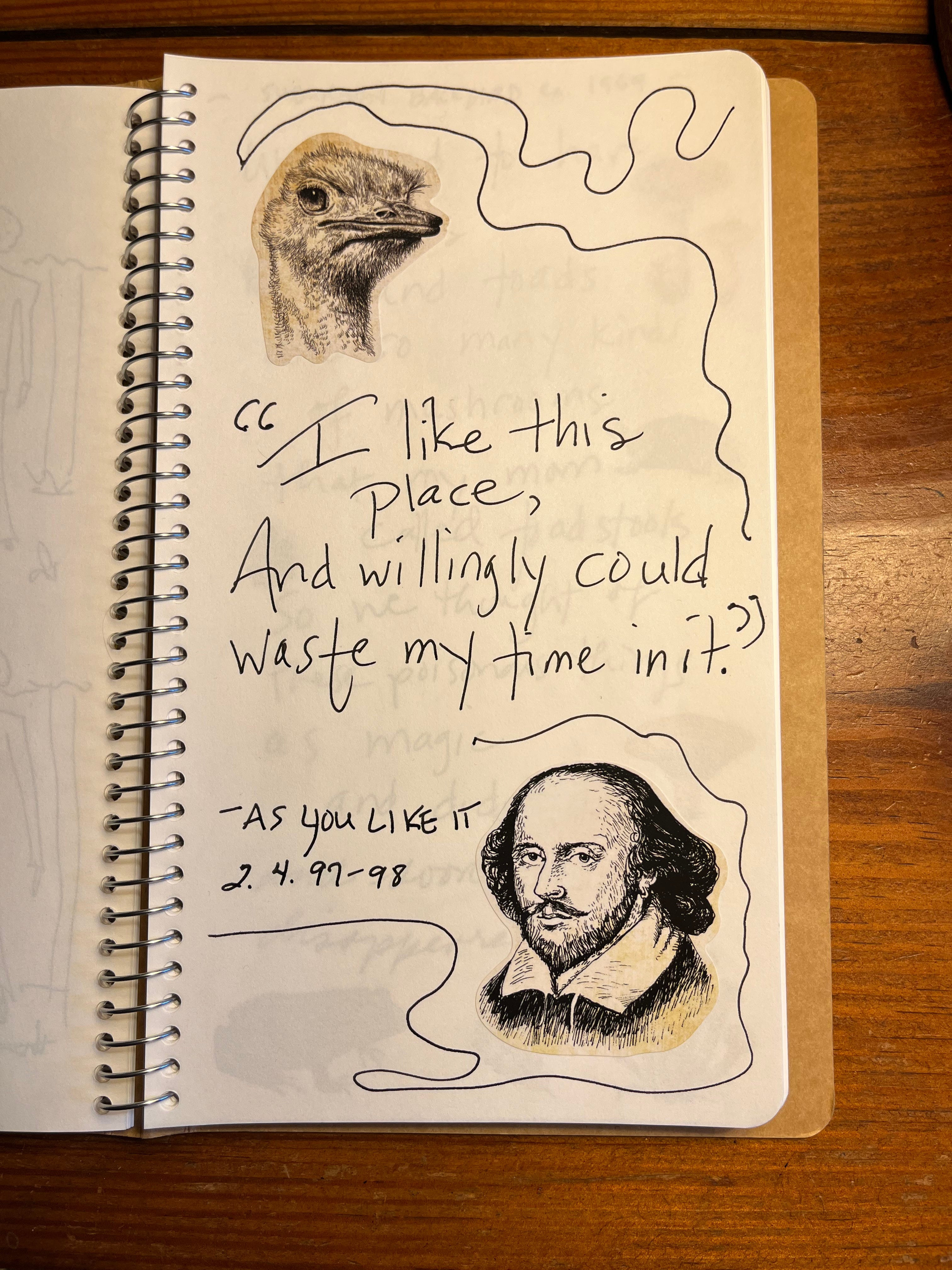
One of Miss O’s many, many notebooks.

All of this is just to say, dear friend, given all that you are going through in your personal life and against whatever landscape this letter finds you, I know that you may merely glance at or dip into this post, and I completely understand. Thanks for reading at all, and whatever you do, don’t strain yourself. Enjoy your Sunday. Let me hear from you when you get a chance.

It’s been a long three weeks. Encouragement!

I keep humming, all the time lately, “It’s You I Like.” Like a mantra.

Love,

Miss O’

P.S. A few weeks ago I published part of a play I’ve been working on, but I don’t know if WordPress is the best outlet for me. Thanks to all who read it, in any case!

Caution Tape

Thinking about how things land where they do

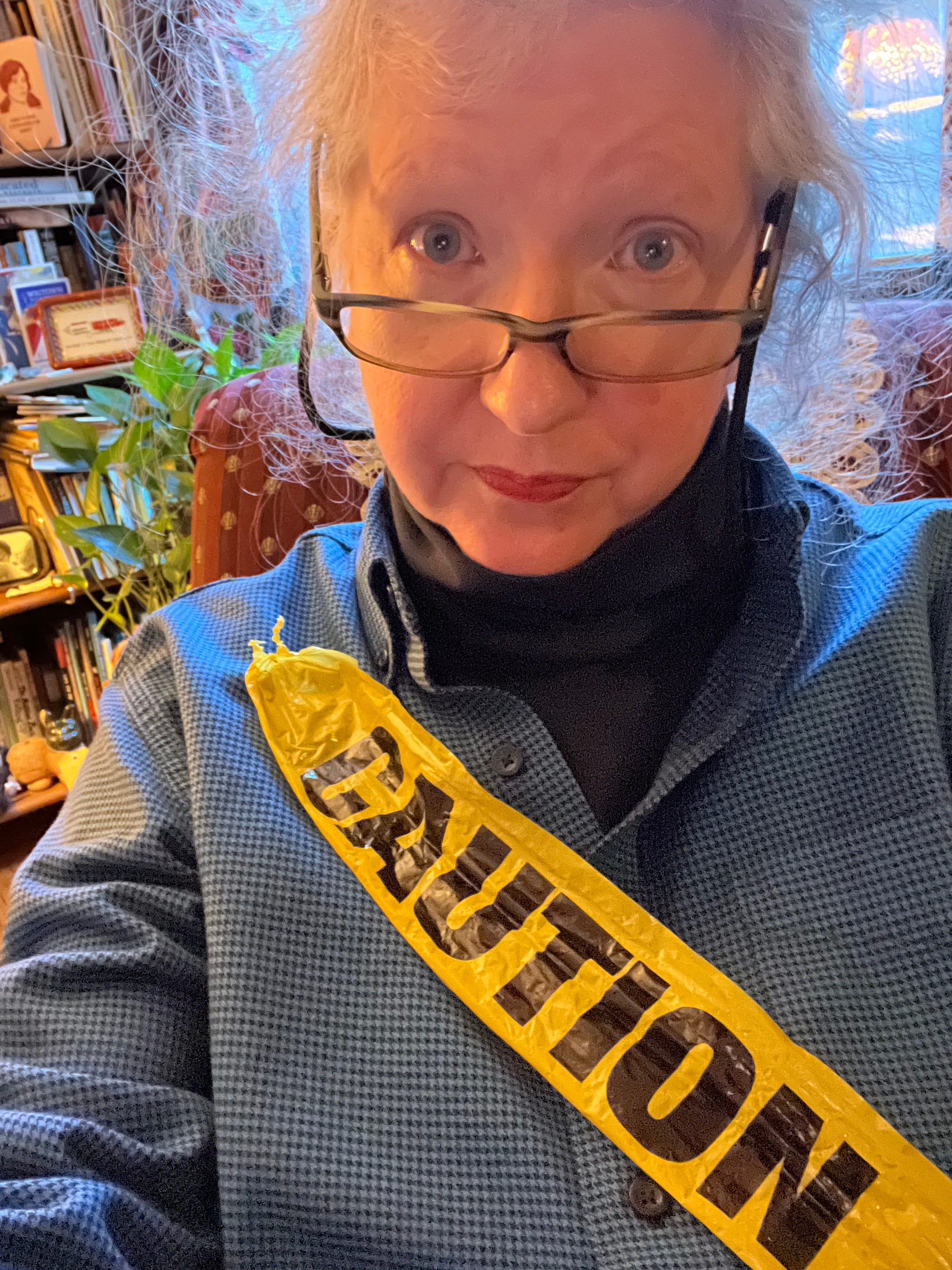
Years ago, my friend MB was invited to a costume dance but had no idea what to wear. A few days before the event, he got inspiration from a construction zone in his Manhattan neighborhood. Late one night, he crept out onto the street and tore down a big length of “Caution” tape along the sidewalk, his heart beating like mad as he raced back into his building, terrified he would be caught (he had no idea where one bought Caution tape or he would have). The next day he went to a thrift store and found a short pink dress and a blonde wig. Before the dance, he put on the wig, applied lipstick with a trowel, arranged the Caution tape over his dress like a Miss America sash, and voila: Streetwalker Barbie!

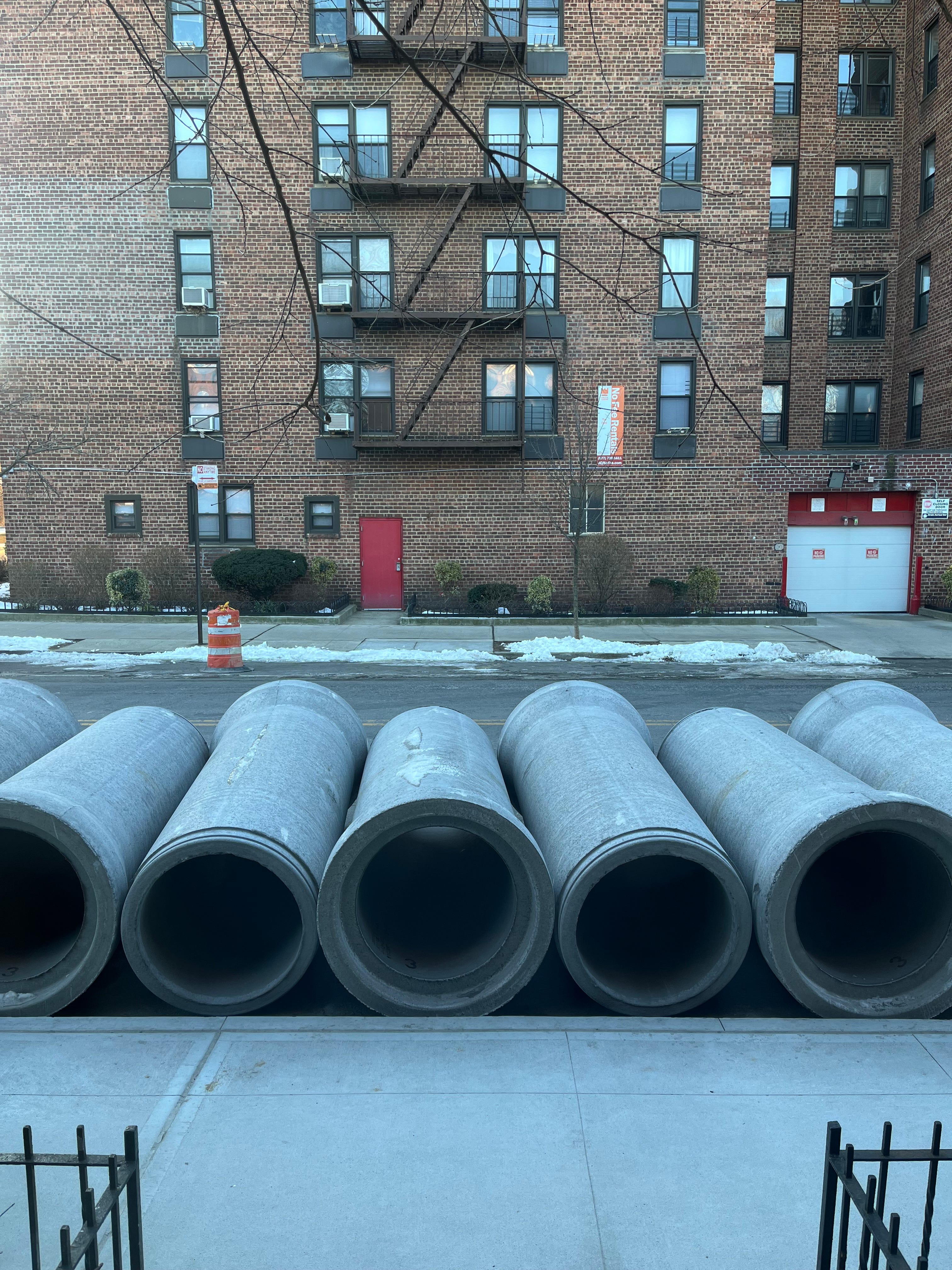
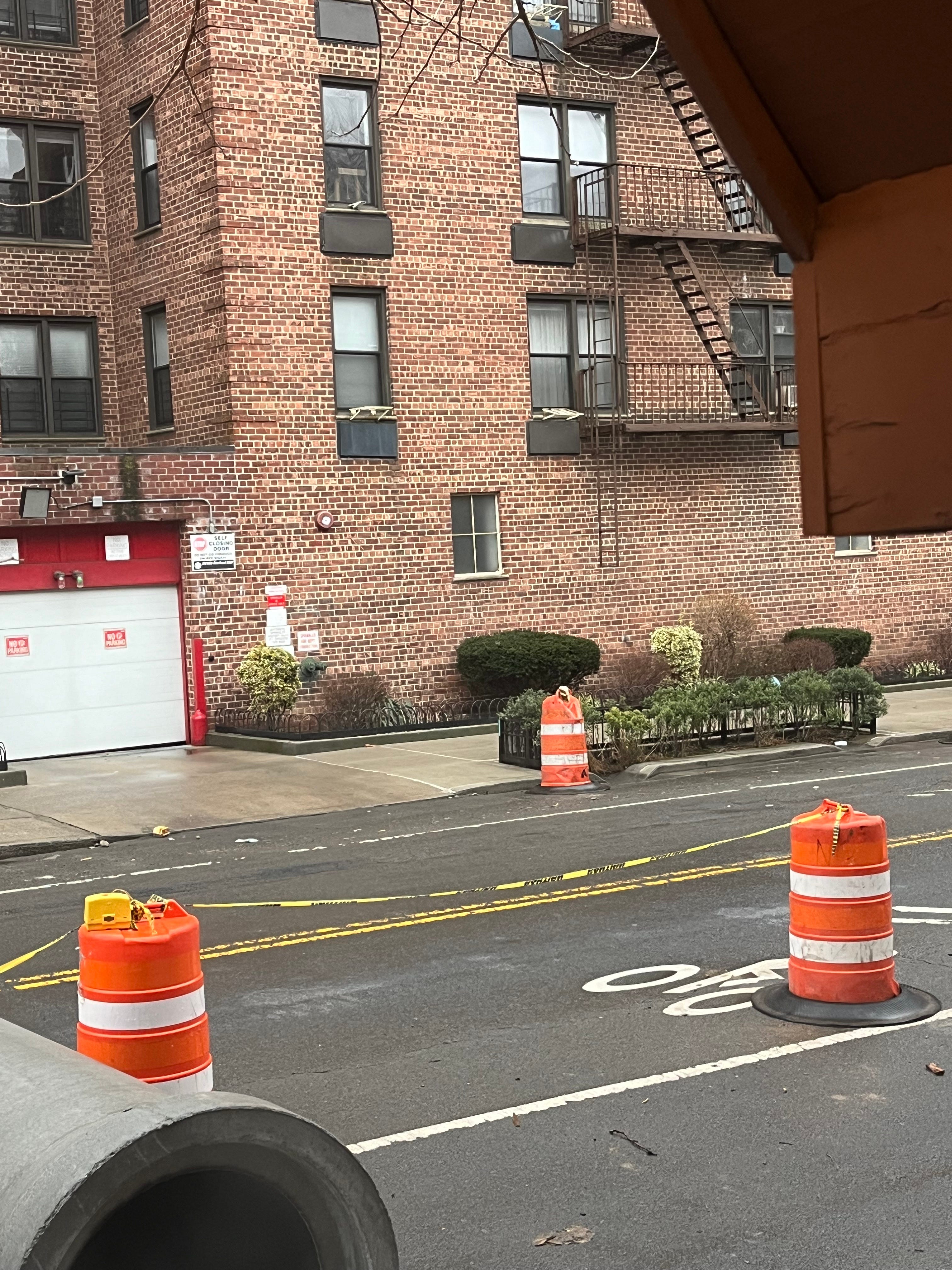
I’d love to be that inspired by the detritus of Caution tape outside my apartment building over the past two weeks. The city is completing “emergency repairs” (the notice taped to door said) of the sewer along part of our building past the elementary school. The yellow tape and tall orange barrels prevent parking for now (who put it all there?), the street organized to prepare to dig up a city block to replace perhaps a dozen or more giant concrete barrel-tubes, whatever they are called (how did they get there?), taking up those parking spaces-in-waiting, and I had to wonder, “Emergency repair?” Yikes. But this work is meaningful work. Look at all that equipment, crew, the purpose: I understand the kind of impact this work has. Results you can see, work you can use.

There’s something magical about construction like this, isn’t there? Photo by LO’H, Queens.
Sometimes, it’s needed. Photo by LO’H, Queens.

This morning early, I emptied out the corner cabinet in my small apartment kitchen to disgorge it of plastic storage containers. Call it an emergency repair. I don’t know why I live like this, saving every single plastic container that once held takeout shrimp and broccoli from Ten Full around the corner, but I do. I stuff them in, harder and harder, until one late winter morning, usually during Lent, I can’t take it anymore and I go in for the big clean-up and reorganizing. I hate being this all-or-nothing-at-all person. I would like to be a flowingly tidy person, who effortlessly tidies as she goes.

I look at just the surfaces of my place and see 1) a financial packet (I really mean to make that phone call, so it’s on my desk in the living room); a notice from Con Ed (since I have to make sure I schedule the natural gas detector installation, this is taped to the back of my front door); 3) a request for a proxy vote from another financial institution that holds the keys to my retirement (and since I’m not sure what to do, it’s on the kitchen sideboard to think on). Do you place things like this? And why? And for how long? How do these locations gain meaning?

I don’t know about you, but I also tend to be a person who creates in bursts, writing or drawing or making collages daily, for a week or three. And then I seem to crash; my creativity may lie fallow for months at a time. This manic-depressive quality is what drew me to theater, I think, beginning back in middle school, because after you’d rehearsed a show every day for eight or ten weeks, performed it three or four times, and stayed after school the next week (or in college, all night after the final performance) to strike the set, you were done! (The appearance of the final ghost light, literally and figuratively, remains one of the most satisfying feelings I know.) You then spent the next month catching up on all the stuff you’d neglected, like housework, paperwork, grocery shopping, or, when aged 12, cleaning your room and finishing those two big school projects. And after all that, you could dream again.

What has to happen to make this repair an emergency repair? What makes that place the place to put something? What causes inspiration to strike just then?

O park of wondrous flowing green
And more than passing fair,
We wonder if you would mind if we
Walk barefoot through your hair.

~ by Lois Oberdin, a great friend of my mom’s when they were about 16; this poem created and recited in situ while crossing Bayliss Park, Council Bluffs, Iowa, ca. 1950.

I share that poem up there, by my mom’s friend Lois, because when all else fails or seems merely duty-bound and cold, poetry cares (as Naomi Shihab Nye says). Poets feel. Of the poem’s creation, my mom said of Lois, “She’d do things like that all the time.” Mom then told me that her friend, around the age of 18 or 19, was institutionalized for schizophrenia; my mom never saw her again. When I learned that (I was maybe twelve), I made it a point to memorize Lois’s impromptu poem, and I am glad I did, because this beautiful, unusual girl never had a chance to live a full, creative life or grow up to loathe a corporate job, or make her home and papers disorganized, or stare from her stoop at Caution tape along her street. It’s terrible to think about. But we have a poem, at least one poem, a creative act to recall, to celebrate Lois.

And when you stop to think about it—all of us, our habits, our anxieties, our personalities; all the messes in our houses, in our heads, under our streets— maybe everything and everyone should come equipped with a roll of Caution tape, you know? Just throw on a Caution sash as a warning of our own emergency repairs.

You’ve been warned. And yes, that is a Chia Pet on my shelf.

Always a work in progress,

Miss O’