Waxing a little philosophical in the heat
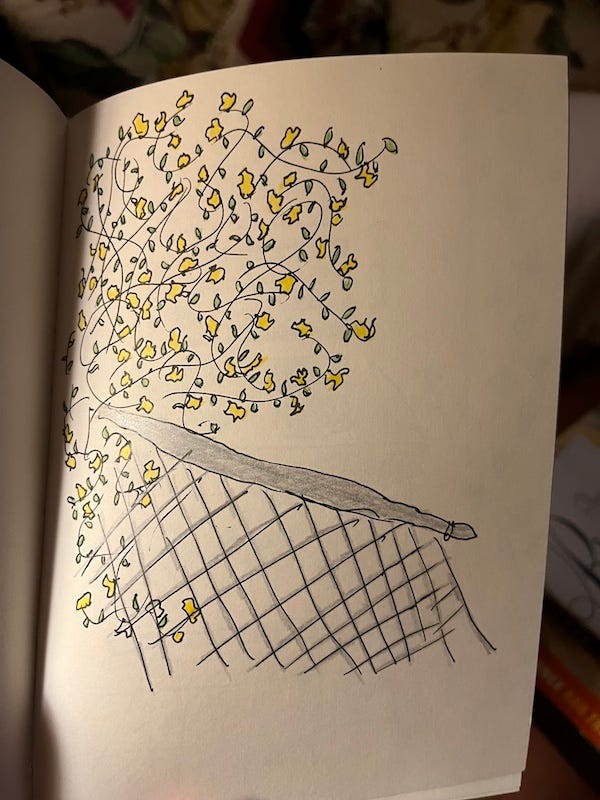
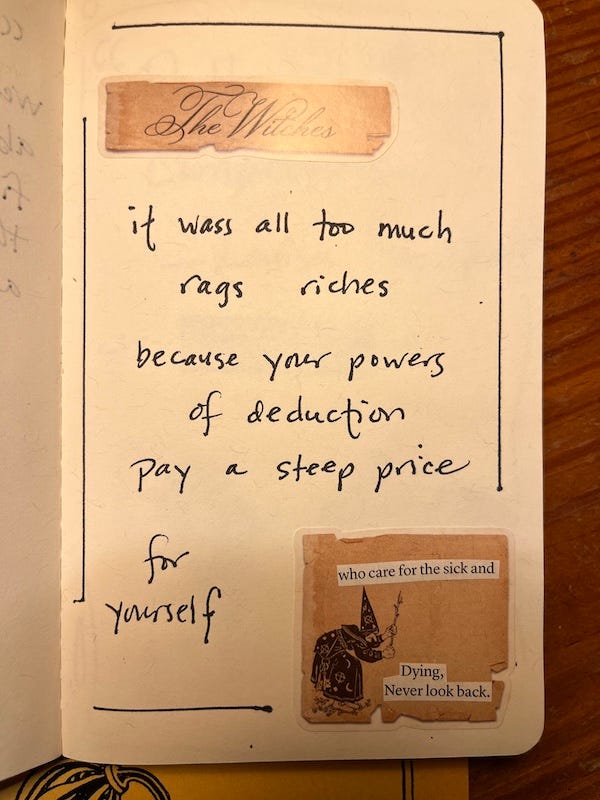
This morning being cool-ish and tolerable after last night’s storms over New York City, I walked to the farmer’s market early, picked up a few things at the grocery store, came home and make hummus and tabouli with the fruits of my purchases, and sat down at the ol’ desk to do a little art—the past few months, I’ve taken to making bookmarks using Kleenex box pull tabs as a base. It takes a while to gather materials, so no rush. Did I tell you this already?
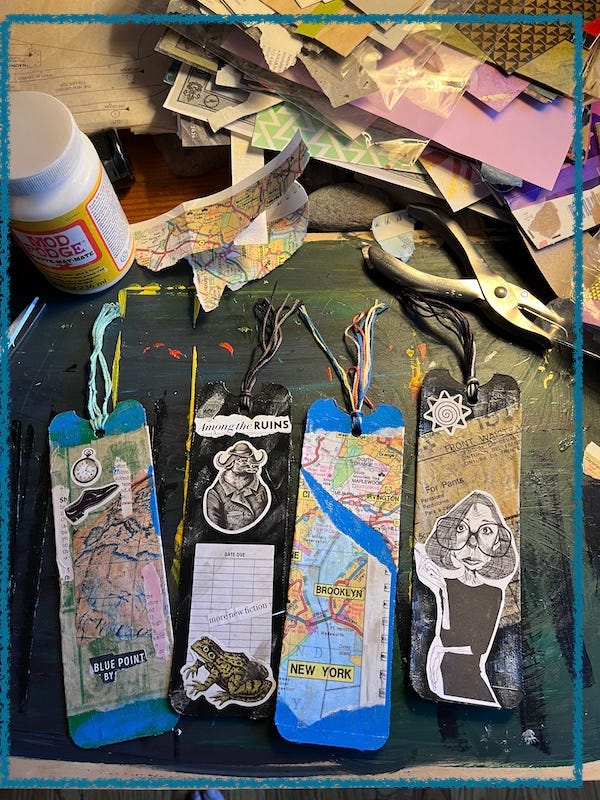
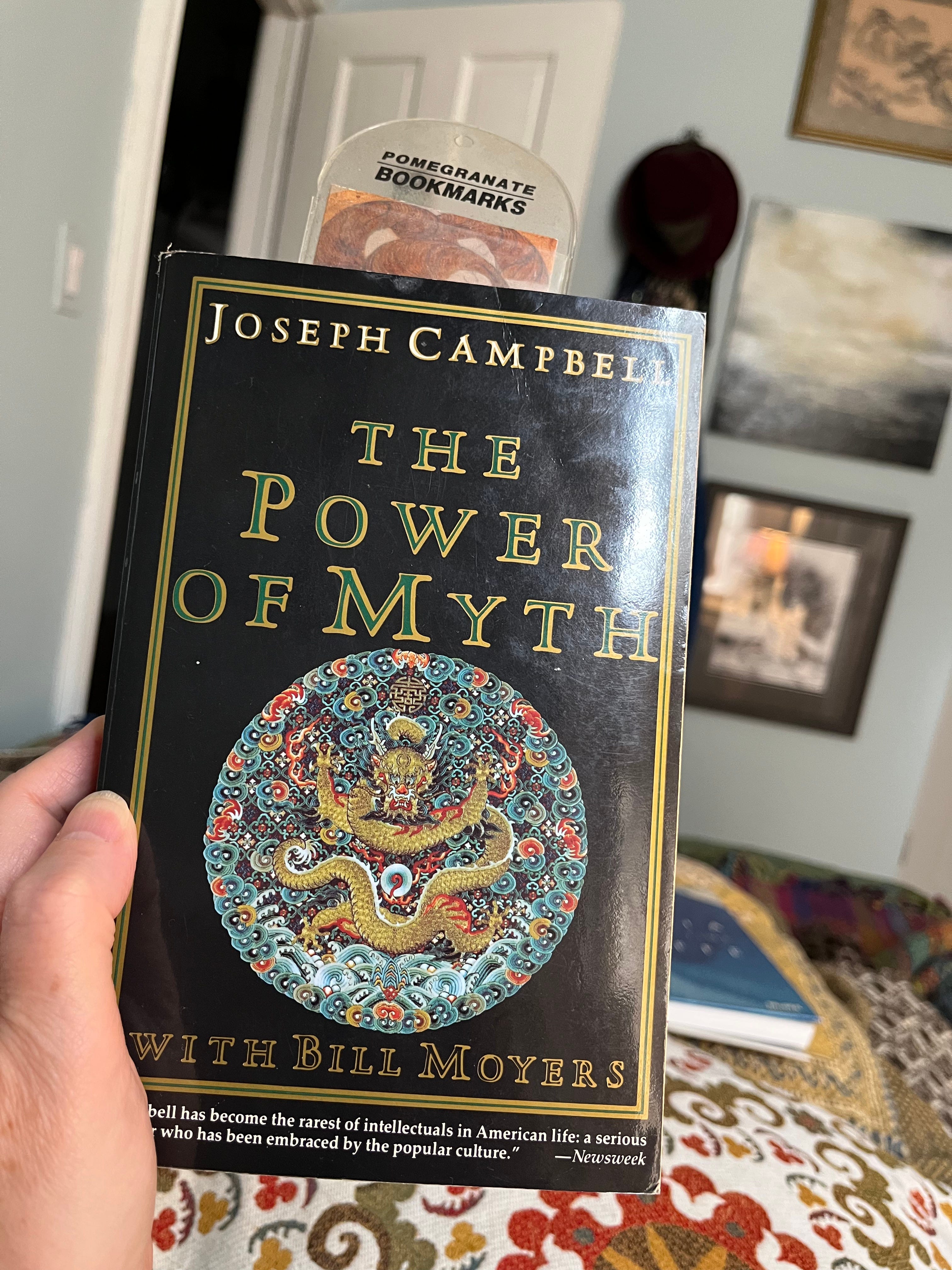
While working on those last two up there, I turned on PBS, where I found a rebroadcast of Bill Moyers’s wonderful 1988 series, The Power of Myth, with Joseph Campbell. I came in where Campbell is explaining that the desire of our lives is not meaning, or shouldn’t be, but rather “the experience of being alive,” and that this is the source of myth, “that which cannot be named”—“some call it God.”
I’ve been thinking a lot about something a content creator (there’s a weird title) said recently, that humans have a need to make, to create, and not merely to consume—we need to feel alive—and this connects to Joseph Campbell, too. (I think this is why, for example, we march when we feel helpless after consuming all that independent news content—and why we build cathedrals and temples and even office buildings, when we aren’t crafting little bookmarks—we have to make to feel alive.)
Campbell talked, too, about our Western trap of living in dichotomies:
Good and evil
Male and female
Being and nonbeing
Right and wrong
Dead and alive
Knowledge and ignorance
To which one might add…
Republicans and Democrats
Patriots and Fascists
The Old Man and The Sea
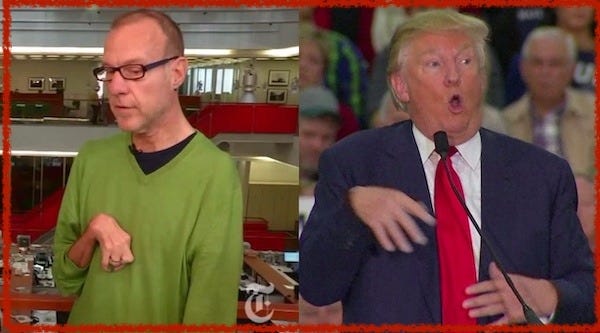
I told you about that fallen urinal divider at Bread Loaf, the Writer’s Conference and School of English in Vermont—some literary type started a trend that others followed, with a situation that looked something like this:
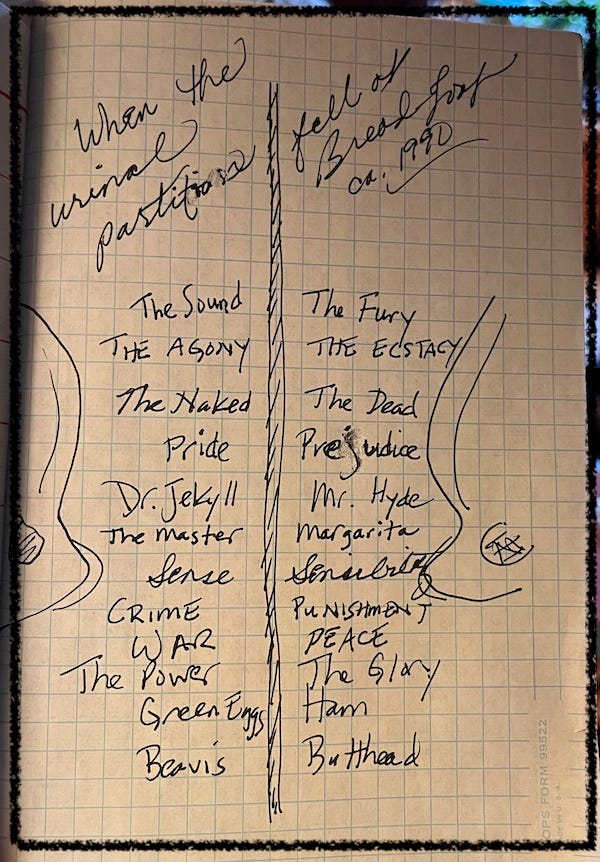
Dualities—we love them in our literary titles as much as in our myths.
Man, Campbell points out, is “in the field of time”—good and evil are temporal (and some of us would like to move our awful times along already, but it doesn’t work that way), but our mythology is rooted in this duality—it’s ethical at its base, sin and atonement, right and wrong (the word versus apparently lives in our marrow); it all begins with us humans as creatures: god and man start out the same; man and woman eat of the tree of knowledge; god becomes God, and man and nature then become opposed, man and woman are opposed, God is against man—all this against-ness; we are not in accord: we fight with nature, we fight amongst ourselves (Christianity, Judaism, and Islam)—all of ourselves is corrupt; nature is corrupt—this myth of opposition has determined all of our Western civilization. (There is something to sit with.)
This oppositional view of being alive on earth, Campbell notes, is counter to all the Eastern religions (Hinduism, Buddhism), as well as to Native American religions, to take only a few examples. In Japan, for instance, there’s no idea of “a fall of man”—natural impulses are not to be defeated or fought but only acknowledged (at best) or sublimated (when hurtful or not useful).
We have only to look around America in 2026 to see where opposition as a lifestyle has gotten us. That’s all I could think as I tore up a map, opened the Mod Podge, took a paint brush, and started one more bookmark collage.
This life in the West, Campbell says, “is an opera”—we all choose the roles we play in it; and that this life is, in reality, our eternity; if you don’t get it here—“it” being whatever experience you will have as a being—you won’t get it anywhere; this life is a poem, our acts and adventures; a poem connotes something transcendent.
We have to acknowledge that this life is our only shot. Then what would mankind do? Imagine.
As Moyers questioned the validity of faith, Campbell insisted that every mythology and every religion is true—but don’t let it “get stuck in the metaphor”: Jesus didn’t physically ascend to heaven, he went into the heart, and to read that story in any other way is to get stuck in prose instead of transcending through poetry, Campbell says, getting caught in “denotation instead of connotation”—poetry gets past the concept of “reality”—it’s about connection.
And in the United States, we Americans have lost our connection, our mythology, and so, our moorings. I think this is why The Odyssey (which I still haven’t seen, but my classicist brother, Mike, went today and called it “good stuff”) is currently capturing the national imagination. We’re starving for a solid mythology.
Campbell, a true teacher and lover of learning and travel and discovery, says we are all manifestations of Buddha consciousness—the Gospel of Thomas (deliberately excised from the original Bible) says this, too— that we find the Jesus inside ourselves; heaven and hell are within ourselves; and the Upanishads said this in India, centuries ago—there are energies within us, in conflict with one another—brain wants one thing, heart another, intestines demanding attention. There are oppositions enough inside each human without adding oppositions to one another and to the earth.
At one point, Moyers talked about how Conservatives (and this was filmed during the end of Reagan’s presidency, remember) were demanding a return to old time religion, “a fixed star,” Moyers calls it; but times have changed—science and medicine changed the myths, and the moral order, Campbell says, must catch up with the moral necessities. There is no going back. What I heard is that we can’t let go, let God, but instead we have to look at the actual crisis of the climate that we humans are creating, for example, and solve for that. We live on a big planet now, and we can’t pretend we don’t: for most of human existence, most human centers around the world were unknown to one another—the Egyptians didn’t know about Aztecs—so of course, the more we learn, the more we affect one another, the more we change. We have to change.
The three religions—Judaism, Christianity, and Islam—fight because they “won’t give up the metaphor” and accept the need to find the truth, and to separate that metaphor from what Campbell calls “the temporal inflection,” our reality. Campbell notes that new metaphors are needed—Star Wars, for example, (kin to The Odyssey before it, with the focus on the father and the son, the hero’s quest and a people’s future) addresses the big question, Is the machine going to crush humanity or serve humanity? Darth Vader, more machine than man, is playing a state role, Campbell says, not a human role—when unmasked by his son, he is revealed to be a worm, really, unformed, malformed, no longer recognizable or powerful. We need metaphors to access truth—not to cling to a metaphor (Vader as machine of the state) for its own sake.
So I think we have to ask, today: Are corporations serving us, or are we serving them?
Machines are our new mythology, and there’s no turning back. Campbell and Moyers talk about President Eisenhower visiting a room-sized early computer. Eisenhower asked the computer, “Is there a God?” After a few minutes of lots of noise and beeping, a slip of paper printed out: “Now there is.”
The creation of computers, Campbell acknowledges, is astonishing, but there is “a determined code,” one we make. He finds a metaphor here: each religion is a kind of software—but a lot of codes won’t talk to each other. We have to talk to each other.
Our new mythology, whatever it is, has to incorporate the machine—not act the other way around, where the machine incorporates us. But as Campbell points out, while the world is changing too fast to have myths, still we can’t survive without them. This leaves all the work to the individual. And the artist.
Above all, myths serve “a pedagogical function”—they teach each of us how to live a life as a human. Watching this show again, I (a former teacher) was reminded how desperately we need teachers. At The Butcher Block this morning, I saw a New York Post headline that infuriated me—telling the Teacher’s Union that they had no business asking for raises when the kids can’t “reed.” And I was telling my friendly cashier what I did for a living and why headlines like that enrage me—that the problem is the goddamned technology forced on all of us by Big Tech, that all the studies show kids learn best with print books, pen, and paper; reading on screen affords almost zero comprehension—but Zuckerberg forbid we listen to actual reading experts.
We have a whole culture that attacks the educated, attacks the experts—Dr. Fauci is but the latest and most absurd example (the grandstanding Sen. Rand Paul (R-KY) not bothering to show up for the “contempt of Congress” vote he forced, his big show of knowing stupidity being over). Interestingly, we know this sort of thing happens because the ignorant are not only not curious, they are terrified of what they don’t know. Yet I have to point out, these same folks ironically embrace a fairy story in a book from 2,000 years ago, set in a totally different landscape and time, featuring no real technology beyond basic tools, ink and parchment, and the wheel, and call it reality. They say they hate being told what to do (wear a mask, distance socially), while demanding all of us follow their Ten Commandments, even as they all defy the very Commandments they say they revere—comfortable with molesting children, abusing wives, committing adultery, being greedy; to say nothing of the stuff in the red letters, like throwing those stones. How does anyone keep up with this?
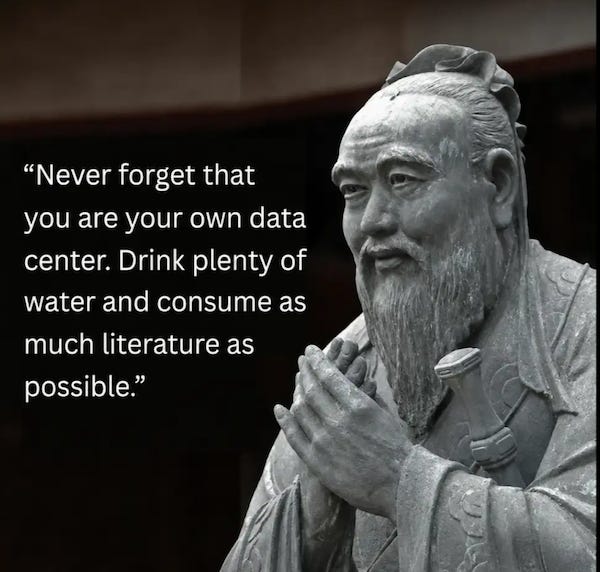
I really like how Monte Mader explains about the myth that AI, that there really is no such thing as “artificial intelligence,” but only “human made intelligence,” fed into machines of human design (for corporate profit). As you saw if you watched the video, that is what true desecration looks like—the rape of our sources of knowledge, spine by spine, and tossed and lost forever like so much trash by Big Tech. And to what end?
Mythology—its creation and keeping—now is the job of artists—Campbell points out writers such as Joyce and Mann, artists such as Klee and Picasso, not a woman or non-European named, or anyone more recent than early 20th century, but you see the idea. And I was telling my dad, Bernie, only this very morning that I was thinking about how grateful I was that he and my mom Lynne were always creating—whether it was growing spring vegetable seedlings collected in containers set on a card table in the little upstairs living room at the bay window; or going to the nursery to buy shrubs for the yard; or building our toy boxes out of orange crates from his job at Safeway; or Mom making decoupage plaques and footstools for household art, and creating our Halloween costumes by hand; or even their cooking our meals from scratch, and me baking cookies—we were surrounded by making, always. And out of our making, we O’s became.
Keep making and telling your stories, Americans. Make us US.
Sending love among the ruins,
Miss O’