Gratitude

(Even when you keep missing a beat)

How have you been? How was Thanksgiving? Mine was really nice, thanks, celebrating with friends (my age) who also lost their mom, two days before last Christmas. In honor of my mom, I made a version of Lynne’s homemade stuffing, and my dad and Jeff tried to make a version, too. Foods are touchstones. I hope you were able to make and enjoy some delicious touchstones, too, in the midst of feelings.

This year has been hard, hard, hard on far too many people on this earth and much of the world suffering is the hands of three white male power mongering thugs in their 70s (Trump, Putin, Netanyahu), and their minions, and I have this problem where I feel guilty even thinking about personal joy or grief amidst all the suffering. (As you know, I live alone for a reason.) And I’m struggling with myself, as we do. It’s funny to keep doing this at 61, but here we are.

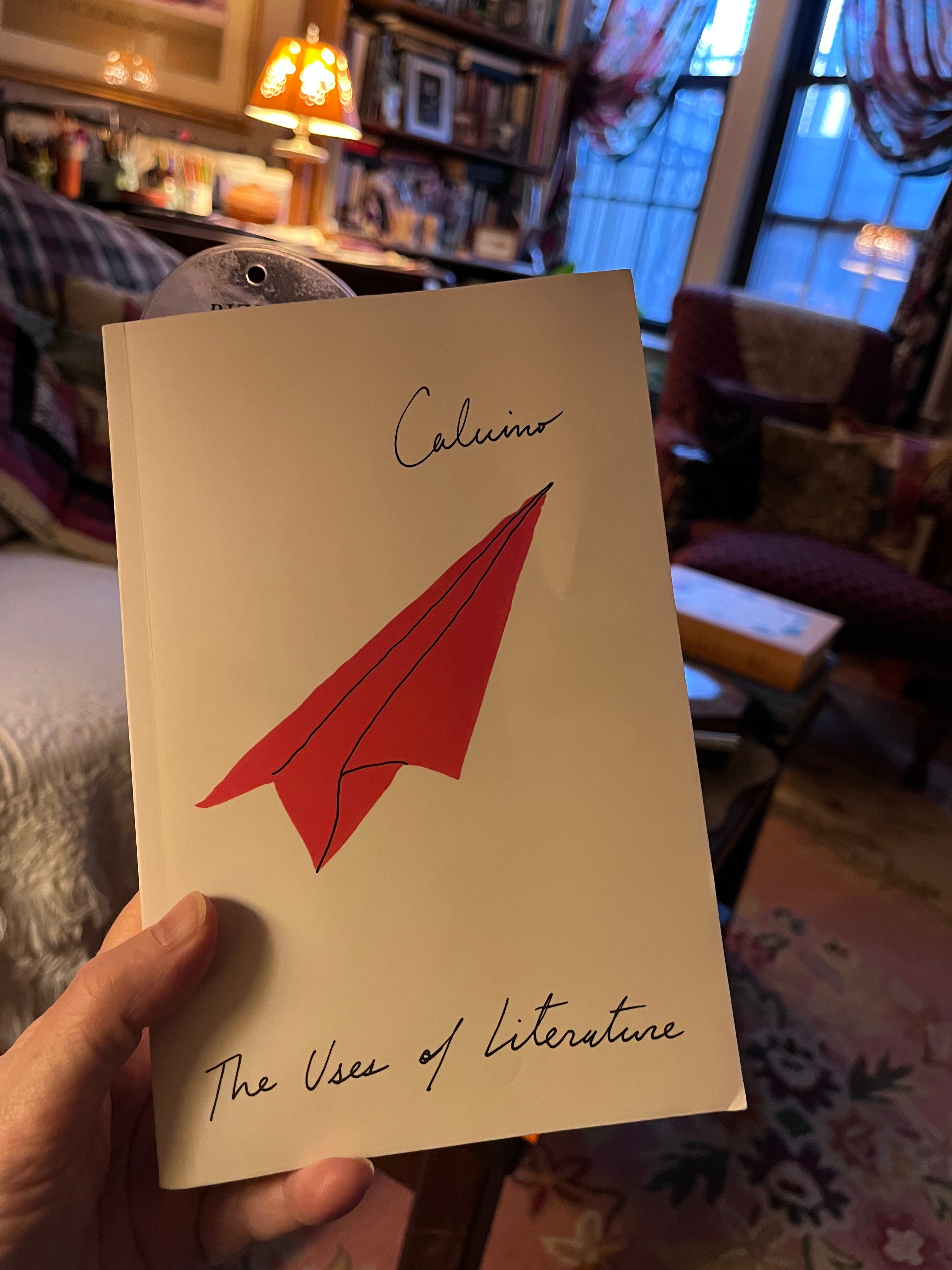
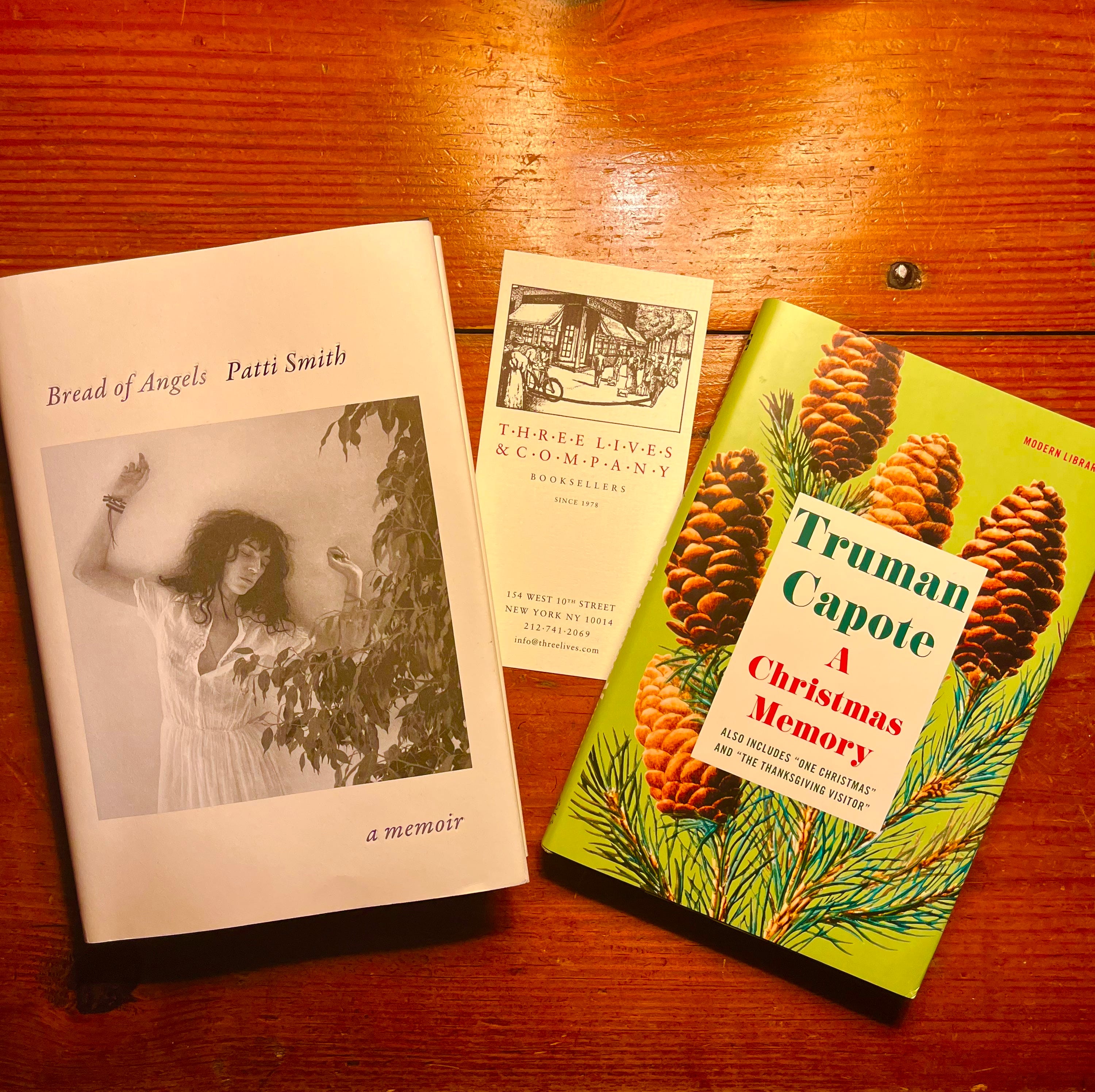
To calm myself and try to recover a sense of why I’m alive, on the Monday for part of my time before reflection week over Thanksgiving (see what we might call “The White Blog”), I spent a day bookstore haunting, walking from W. 10th Street in Greenwich Village over to E. 2nd Street and Avenue B in the East Village (Alphabet City). At my first stop, the Three Lives & Company Booksellers, a lovely small corner door shop, I found and bought Patti Smith’s latest memoir, as well as another copy of Truman Capote’s Christmas classic in case, as the store manager agreed, “In case you need a gift in the hopper.”

Book store people get you. The same woman who rang me up helped a man whose female partner brought him in to help him take up reading as a hobby. (I had to sit with that, like reading was a rarefied activity.) He liked war and history; I wanted to recommend the Capote, but I didn’t interfere. I recently read that in the United States, only around 14% of adults read for pleasure. That really hurts me. Even my dad, Bernie, who didn’t graduate from high school, read the newspaper every day. I told you this: My mom, Lynne, bought him Travels with Charlie, and he liked it, but The Godfather was the book that hooked him. And this lack of American reading reminded me of something back nearly thirty years ago, in summer, a cousin and his wife and four kids were visiting, staying in the upstairs rooms in my parents’ small house—this was back when I was still teaching in Virginia, and my brother Pat lived there too. My brother Jeff lived in an apartment then and took the day off, and we all gathered to take my relatives into D.C. for the day. While we waited for them to come downstairs, my mom sat in her chair, my dad in his, Pat on the loveseat, Jeff in the corner chair, I in a side chair, each of us with a section or pages of The Washington Post (back when it was a real newspaper). We read. My cousin came downstairs into the little living room and stood still. Gradually, we looked up, “Oh, hey, John,” and he stood staring. I asked, “What’s wrong?” And he said, “I’ve never seen anything like this.” What? “A family reading.” Though this was a weekday, we knew such times generally and all of my growing up as “Sunday.” (At Christmastime, we all listened together, “A Child’s Christmas in Wales.” That would’ve made his head explode.)

Patti’s memoir (I’m up to page 113, savoring it each night so as not to have it end) is essentially a beautiful love letter filled with gratitude to everyone who helped her become. And Patti (I feel I can call her that) has made videos on Substack, posted also on Instagram, and she talks about living in gratitude. I feel every word. In her latest (hyperlinked above) she talks about finishing her tour for the 50th Anniversary of Horses, which I told you I was lucky enough to see at the Beacon here in New York.

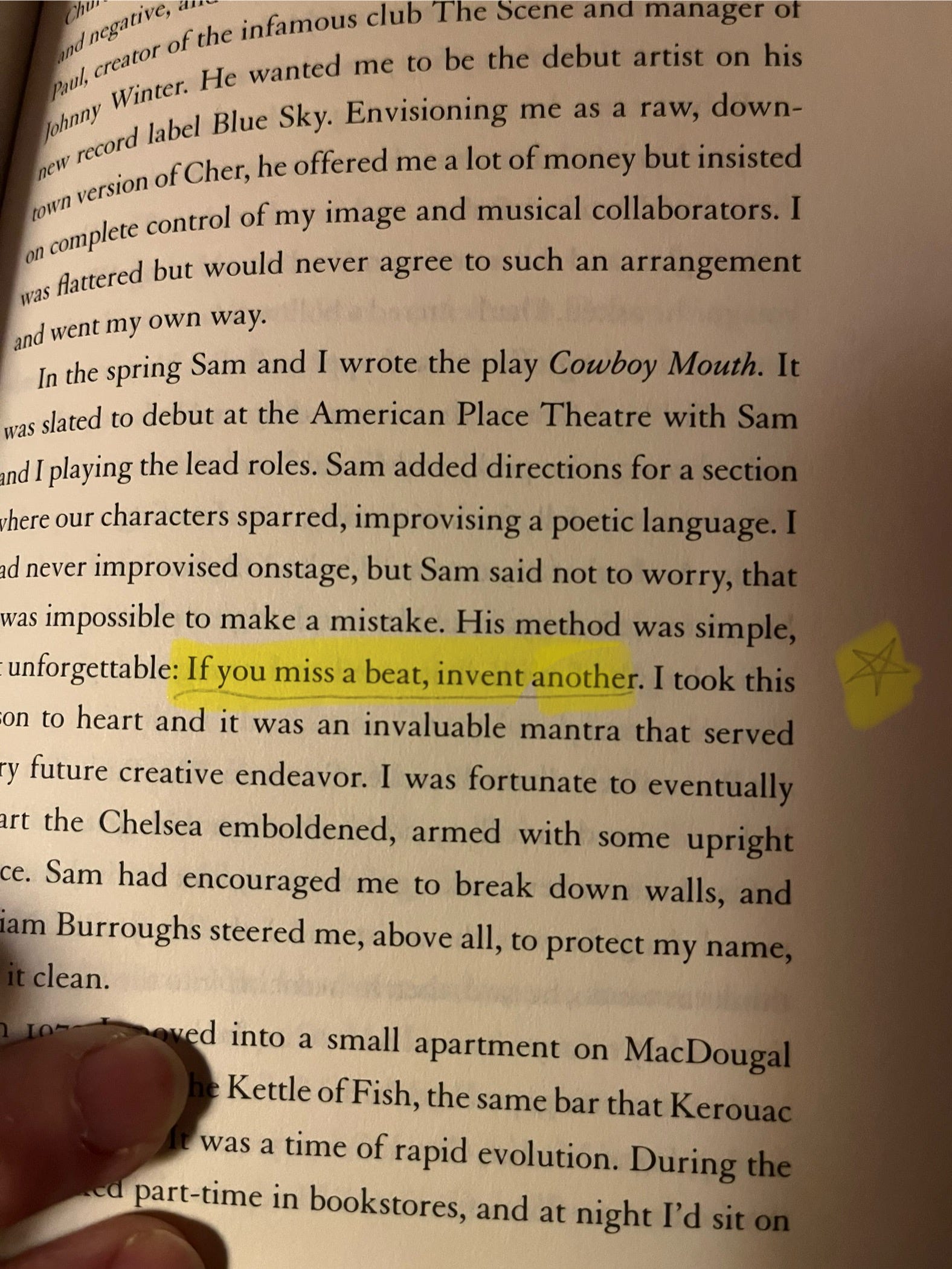
One of the first people to help Patti Smith find her voice in the early years after she came to New York at age 19 was the budding playwright and musician Sam Shepard. I remember reading Shepard’s plays in college, after he’d won the 1979 Pulitzer Prize for Drama for Buried Child. I realize now that he’d only been a real voice in the theater for ten years when I first read him—that’s wild to me. He seemed so old and established. But then, when I saw Patti Smith’s cover for the album Horses, I couldn’t have known she was only 28 to my 11. She was worlds away.

In truth, I didn’t discover or really attend to Patti Smith at all until reading her memoir Just Kids. I’d heard “Gloria,” and “Because the Night,” and of course I knew who she was, had seen Robert Mapplethorpe’s photos of her, but she scared me. Sam Shepard scared me too—I designed costumes for of his two one-acts, Cowboys #2 and Red Cross, when I was in college, ca. 1984, and his writing was out there. (I was part of an acting ensemble for Savage/Love, a play he wrote with Joseph Chaikin, but we never got to perform it.) Smith’s memoir/fantasia The Year of the Monkey in part chronicles her time nursing Shepard as he was dying of ALS, spending days typing up his final book as he dictated it from a wheelchair. (I told you about his observation, “Patti Lee, we are a Beckett play.”)

Sam Shepard’s advice that has served her a lifetime. We could all take a memo.

When I read of Patti’s childhood, I feel embraced by love, recalling my own best parts of childhood. She writes like no one I’ve read—she’s as idiosyncratic on the page as on vinyl, and it’s just wonderful.

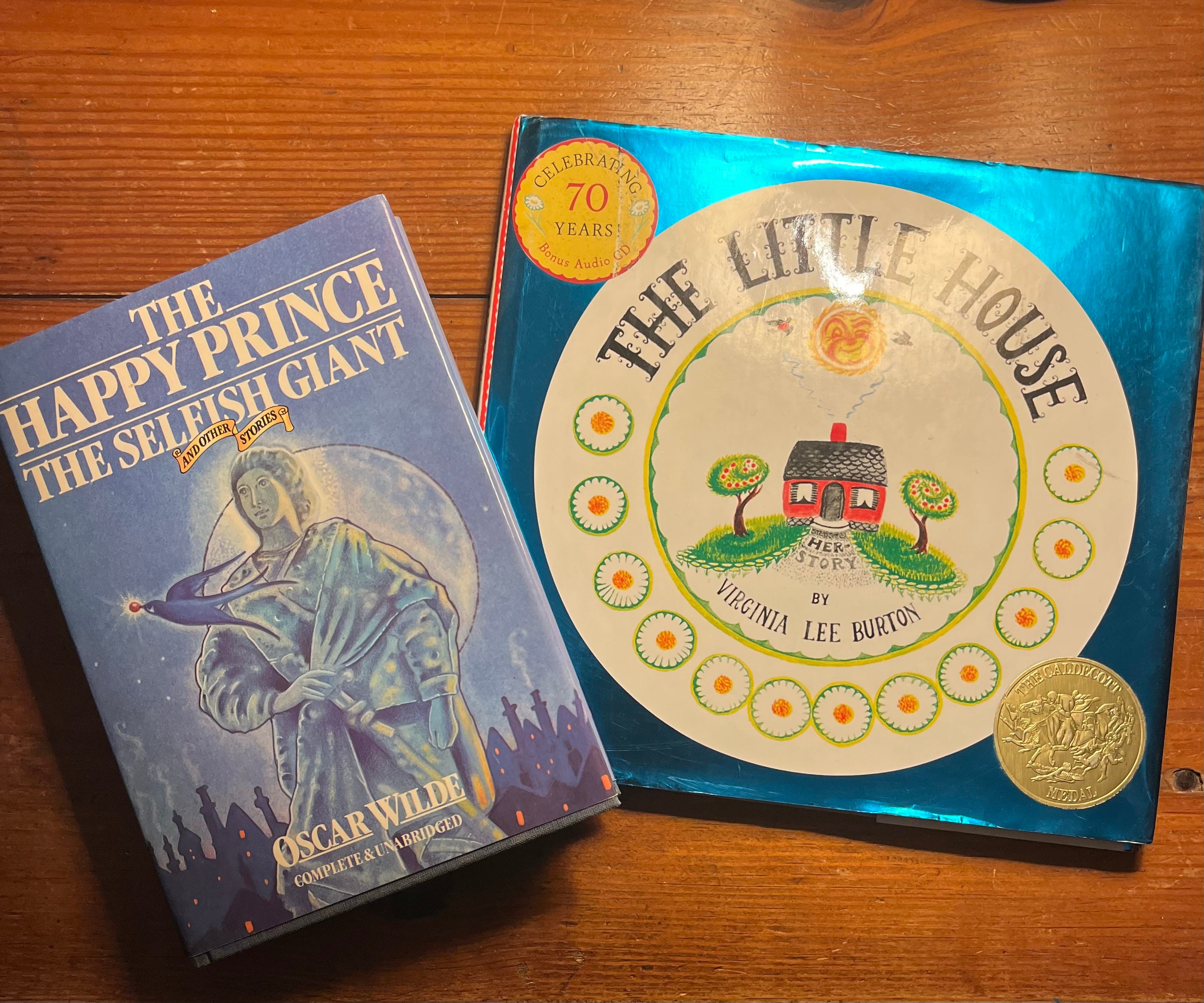
One of Smith’s childhood memories is of reading Oscar Wilde’s “fairy tale,” “The Selfish Giant.” When I became obsessed with Oscar Wilde at age 15, my mom gave me a collection of his stories for children, so I reread this particular tale the other night. I remember that I was turned off by the religious turn the tale took; but Smith spent part of her youth as a Jehovah’s Witness and took religion seriously, until she couldn’t anymore. By contrast, I grew up free from religion as a part of my life but still had questions about God. (Are You There, God? It’s Me, Margaret was a favorite book.) But I knew the feeling of that first book, that first story, the one that sparked the love of reading, the need to read more.

Patti Smith’s favorite story, “The Selfish Giant,” and mine, The Little House.. What’s yours?

I know, I feel, I see how important reading is—for so many reasons beyond the stuff you learn. I was thinking about my cousin’s surprise at seeing a family reading together; now I imagine it’s families scrolling on phones, and while that is not dissimilar, the act is different. Scrolling is not meditation, somehow, but something that distances people. (There’s data on this.) There’s a calmness that comes when engaging quietly with print text. Something in the tactile element and the way our brains have spent centuries adjusting to the act of reading, and even better, surrounded by some books that everyone can see on display—it’s a shared experience even when it’s solitary. It’s not about algorithms, is what I mean.

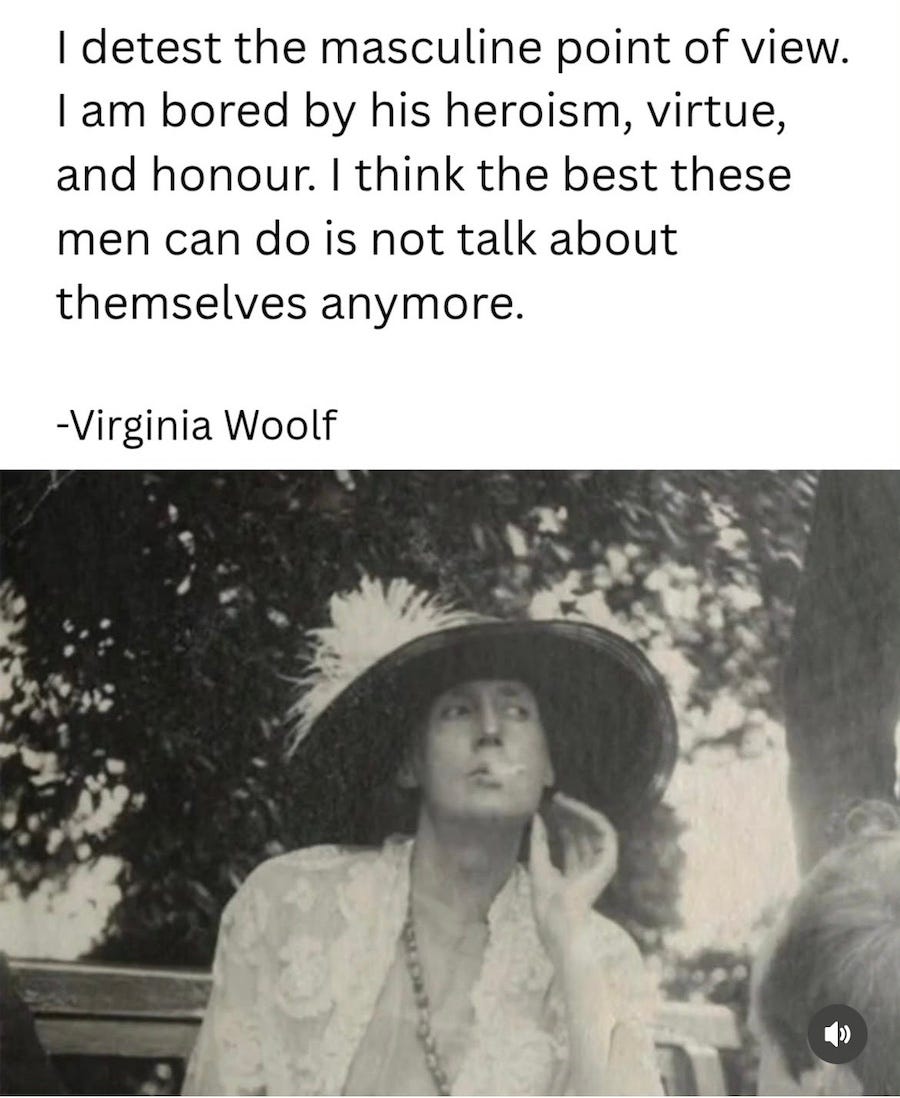
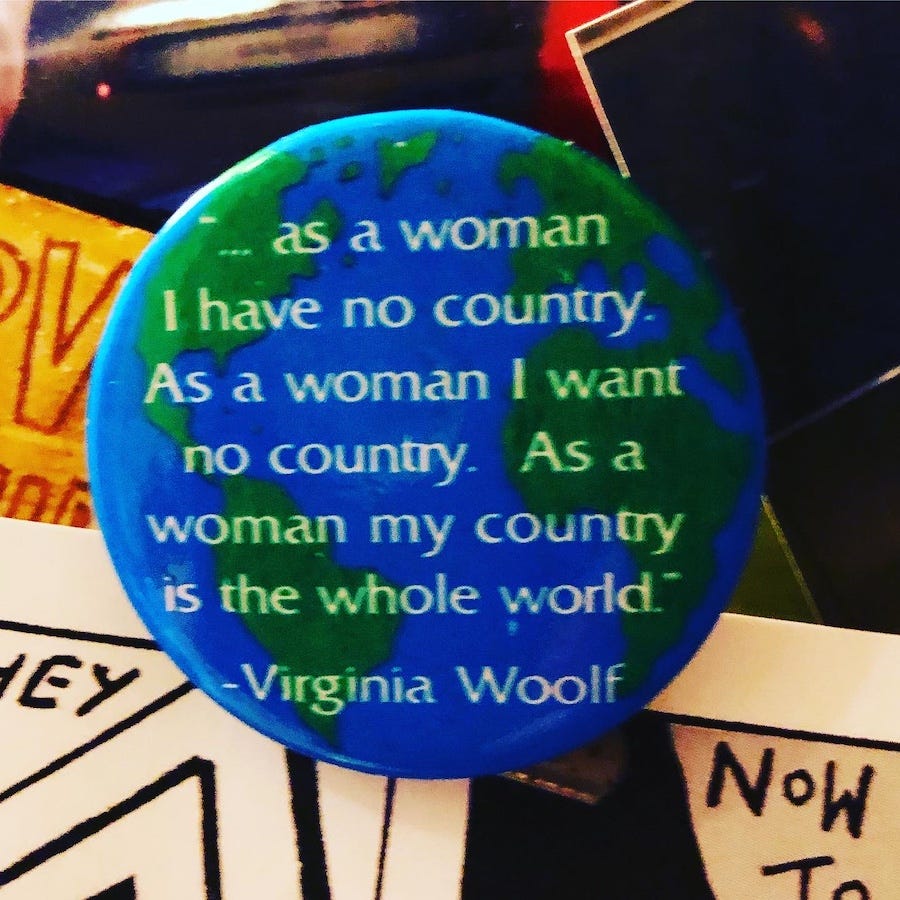
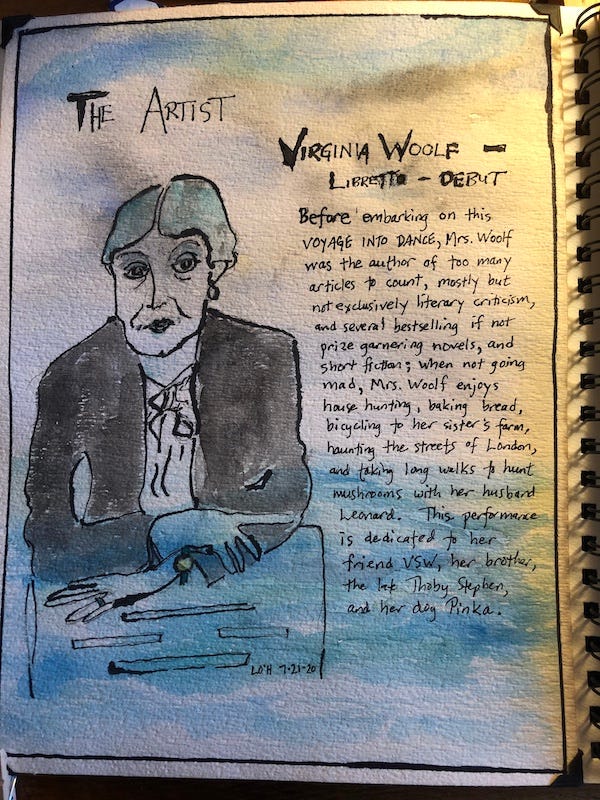
And Patti Smith is so different from me, reading her memoir reminds me that sharing the particulars of our lives can lead to universals, in that we see ourselves as human. But I can love that Patti and I share a love of something Wildean, even if mine is his whole creative life. And like me, Smith has touchstone artists—hers Diego Rivera and Arthur Rimbaud; mine Katharine Hepburn and Virginia Woolf. Their art gave us our own humanity, opened the gate, turned on a light, pick a metaphor.

It’s such a lousy time to be human right now—“lousy” is hardly the word—and yet I know I need to walk around grateful. By some miracle on Friday, for example, I found my way through to finishing a major project at work, could see my way to the end, I mean, and was so relieved, that as I took my afternoon walk I fairly floated. It’s such a human thing. Even Patti Smith makes the finishing of her tour—a 50th anniversary tour as a superstar—sound so human, and then she had a tooth seen to at the dentist, talked about moderating a talk back after the opening of the new Frankenstein and talking to Guillermo Del Toro like he’s a person, because he is, an artist like her, but a person. Creatives living their creative lives pausing at moments to scream, “Fuck Trump.” Like the rest of us.

We’re all doing our best, getting on with the work of our worlds. Loving our friends, our families, telling them that. Expressing gratitude for a good chair, a coat that keeps us warm, a hat that stays on in the wind. An orange. A book.

I’ll ruminate on all the horrors of our country again soon—I think I’m waiting for an idea of what we need to do, besides not quit. Remember was Sam said to Patti, “If you miss a beat, invent another.”

Sending love,

Miss O’

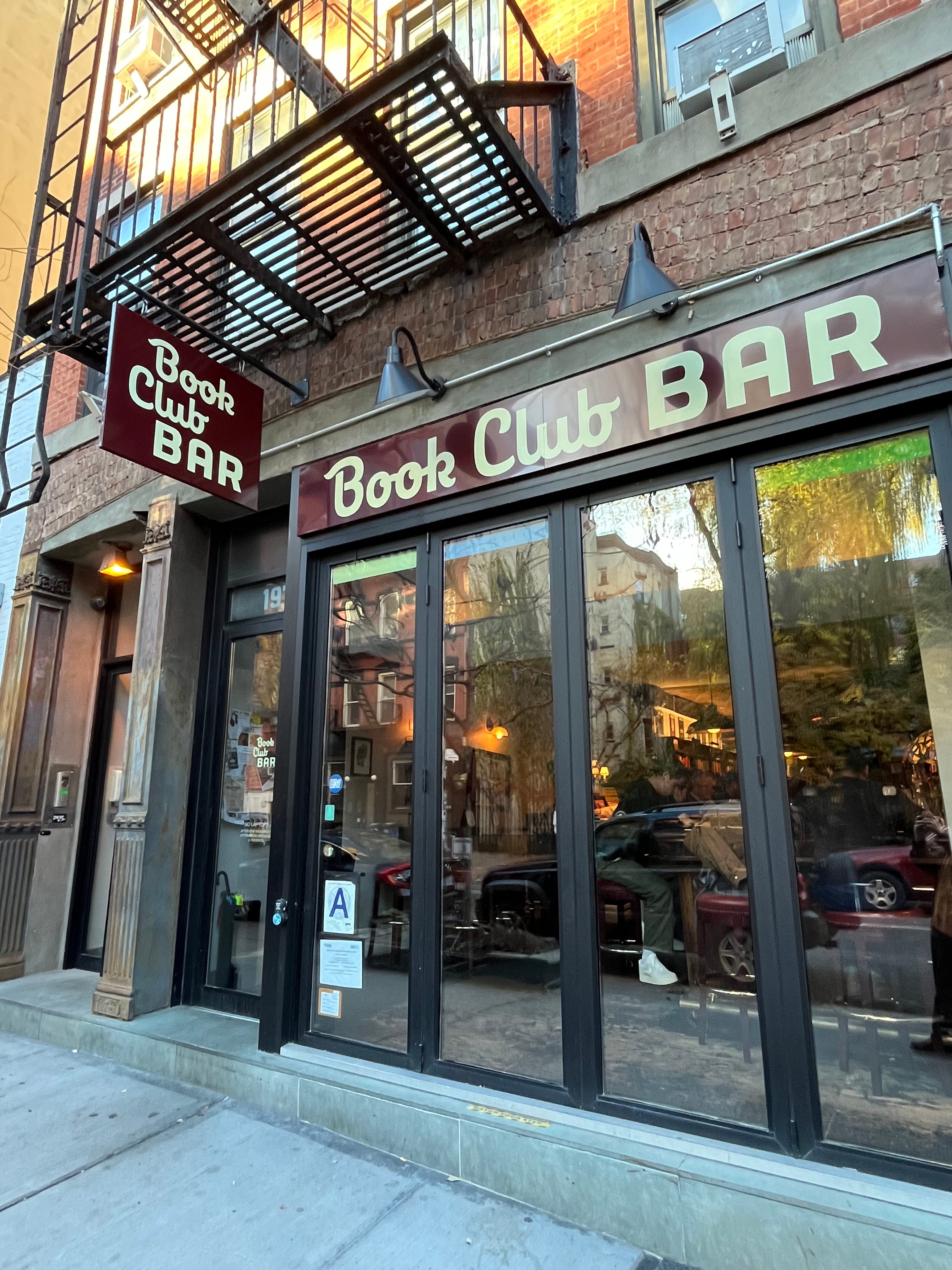
East 3rd Street, NYC, should you like to visit there.

The Art of Making Art

A millimeter matters

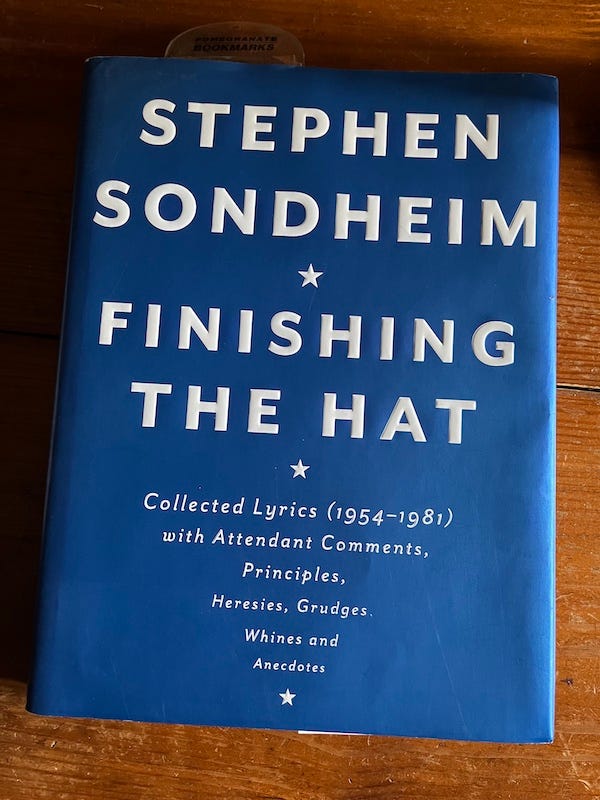
I just want to say that the luxury of owning a personal library is that not only do I feel cozy all the time, but I get to take evening tours and pick out volumes for bedtime reading. (Growing up, the O’Hara kids were about the only kids in the neighborhood with family bookcases, thanks to our mom, Lynne, having college textbooks, novels, and antique books to display and read.) Even now my number of volumes surprises some people, but I think, who wouldn’t want books around them? They are my closest friends. I saw an interview with Nora Ephron who said everyone asked of her family, “What are you doing with all these books?” (We live in a country like that now.) There’s no reason to finish a volume I peruse, or even read straight through. Sometimes I do that, but many times I just open a chapter and see what it says. If it’s not speaking to me, I flip around. Try another book. Like literary cocktails. It’s fun. This week I’ve been seriously rereading Finishing the Hat, Stephen Sondheim’s first volume of lyrics from his shows, 1953-1981, and so far I’m sticking with it.

When Stephen Sondheim died in 2021, I felt as if I’d lost a friend. Though I wasn’t sure how I felt about his work for a long time, you must know that the key to falling in love with a theater writer or composer is seeing the work, and in a splendid production. It really changes everything. He had three principles that guided his life’s work:

“God is in the details.”

“Less is more.”

“Content dictates form.”

I love that Stephen himself admittedly didn’t always follow them, but we give ourselves a little grace; nobody is perfect. And he himself had favorite lyrics that other people don’t seem to care for. He endured his share of flops and lousy reviews. And he just kept going. Thank god.

In an interesting coincidence, though sometimes I think it’s a bit more divine than that, these associative adventures, I’m also trolling PBS (while we have it) for documentaries and happened on two short ones. First, Marguerite: From the Bauhaus to Pond Farm about master potter Marguerite Wildenhain who, along with her husband, escaped the Nazis and made her way to California to teach pottery; and second, Finding Edna Lewis, about famed chef of 1950s Café Nicholas on E. 53rd St., cookbook author, and unsung mother of the farm-to-table movement, Edna Lewis.

And you might night think that Stephen Sondheim, Marguerite Wildenhain, and Edna Lewis couldn’t have much if anything in common, but you know what? God is in the details. Buckle up.

I’m not really going to recap all their work. But those rules up there apply.

“God is in the details.” Marguerite’s great contribution to many potters was, according to one student, “teaching us how to see.” For example, she’d have each potter make ten or twelve of the exact same pitcher or vase (since potters usually mass produce their work). The student would line them up on a board, and Marguerite of Pond Farm would walk and look and say, of maybe the third one, “This is good,” and of the eighth one, “This is good.” To the student they looked identical. Then she would point out a millimeter of difference in the rim, or the handle, the difference between being beautiful and merely serviceable (I think of the human face). God is in the details. It changed everything for students. (I’m obsessed by details when I direct a show, but not so much when I write, because I’m not an artist when I write.)

“Less is more.” Chef Edna Lewis grew up in Freetown, Virginia. In the Great Migration that took her to New York, she made a living cooking for artists, and word of her home cooking spread. She became an accidental star chef when she partnered (silently, as a Black woman) with two gay men to open Café Nicholas on E. 53rd Street, creating wonderful Southern cooking for writers like Truman Capote, Tennessee Williams, and Gore Vidal. Lewis believed that food should be seasonal and that the ingredients should speak for themselves. Nothing should be overly prepared, overly seasoned, or fancy. You might call it simple home cooking except that her dishes were both gorgeous and delicious, prepared by someone who knew what she was about.

“Content dictates form.” In the theater, the writing and the intent dictate whether something is a play or musical; or whether it’s theater at all. In pottery, the intended use of the vessel dictates the size and shape. In cooking, the ingredients at hand dictate the kind of meal it will be. I’ve been mulling that principle over, and not to get all metaphorical or analogous, but I have to go a little political here. Content (greedy, sociopathic, ignorant bastards) dictates (!) form (evil shit show).

Speaking for myself, I wish I had the talent to be a playwright or a novelist or a poet. I haven’t done theater in years because it’s a collaborative art (it’s not like I can walk around my apartment and “direct”), and collaborating is something I never have time to figure out. But for whatever reason, ever since I was a kid and started writing, I’ve felt I had an obligation to study news events, internalize them, and interpret them for everyone. I don’t enjoy it, necessarily, and will never make a living at it, but I can’t seem to help myself. When asked in high school by the “gifted and talented” program advisor, Mrs. Hubbard, why I kept a journal, I told her I saw myself as a chronicler of my time. She snorted disdain. Years later, when I related that anecdote to my first professor at the Bread Loaf School of English (a summer master’s program designed for teachers), Prof. Cazden snorted almost identically. It was uncanny.

Somewhere in our lives, no doubt, we’ve been made to feel less than. (Both teachers (graduates of Bryn Mawr and Radcliff, respectively) told me without apology, one overtly, the other hoping I’d take her meaning, that I just wasn’t smart enough to be there, whatever that meant. It’s not like I was stupid, exactly, but it’s annoying for brilliant educators like them, I guess, to be around the merely bright when there are geniuses to teach. You know how it is. My response was to say nothing, and my revenge was, I stayed and decided to belong. I really learned a lot. And it all worked out, because as it turns out, they were wrong. Never let them tell you not to dream.)

And so it is that, to this day, I keep feeling this pull to chronicle my times, though to what end I don’t know. I’m not smart enough to solve much—my teachers weren’t wrong about me not being a genius—but you can’t do nothing, in times like these. (Chuck Schumer, is this on?) I try to chronicle what I see and still hold on to the world I want to live in, the world I want us to build. First, obviously, it involves shipping all these the MAGA Nazis from their demented reality show, White House USA, to some tropical island where they live in golden mansions and go on staged hunts with all the guns of their wet dreams and watch all the porn they want without the Covenant Eyes app to pester them. And leave all of us sweet, normal people alone. And let us raise their children.

Until that blessed day, or until I get smarter, I read and write and dream. It’s what we do.

Once more, with feeling, something we can all learn from:

“God is in the details.”

“Less is more.”

“Content dictates form.”

~ The three guiding principles of genius Stephen Sondheim

Love or something like it,

Miss O’

Last-Minute Saves: Completing the Assignment

On Friday at work, on a Zoom call with the “team” and managers and the director of the division and a program “author” who is guiding our work, there was a pause after 40 minutes of presentation and feedback from the author to ask questions. I asked a good question, one I really wanted the answer to. The author relished answering it. I asked clarifying questions, and he answered those. It was hard to read my director’s face, but I know the team was glad of the questions, given the “Directly to you” notes on the Chat feature of Zoom, “Great question,” “I’m so glad you asked that,” etc.

When I left the meeting, I said to myself, “Well, Lisa, once again you may have saved your job.” What I asked—after months of keeping my head down and being quiet as we embarked on this new project—and how the author answered, may well indeed have provided a breakthrough for what will make the next version of the product really special and useful for teachers and students.

My whole life, I reflected this afternoon, has been a series of last-minute saves.

When I was a Christmas tree shearer one summer in the Blue Ridge Mountains, for example, I was having a hard time keeping up, and my rows, though sheared well enough, took me twice as long as others on the crew to complete. After several days of this that first week, I determined to keep pace with a woman next to me, because she was a good shearer and very fast. And keep pace I did. I learned the next day that one of our other crew members had been fired for slow work and because “his trees weren’t good enough.” The crew chief, Sharon, I’m sure would have fired me too, and it would have killed my spirit. Something inside me saved me from this fate.

In a writing workshop in my senior summer of graduate school, after a mediocre first attempt at a short story, and a second attempt that my professor felt was as good as it would get and not in need of a workshop, I wondered if I’d ever write a third and final piece worthy of the work everyone else was doing. I was certainly vocal—participating, challenging, encouraging—and if I’m going to talk that much about how I receive writing, surely I should write something worth reading. And one evening in my dorm room overlooking the lawns at sunset just after supper, I found myself writing in a blaze, a fictional account of my great grandmother’s life in Iowa. It all came in one night, with a crucial misspelling my professor mentioned in the dining hall at breakfast after he’d read the story prior to the day’s workshop. I raced to the computer lab and did the ol’ Control/Find, and I could tell he was pleased by my passion. A student in the workshop gave me a bottle of wine before class, “For the best story of the summer.” How did this happen?

I had a similar save in my second summer of graduate school at the Oxford campus. I was studying Virginia Woolf with an eminent Exeter College scholar who also taught James Joyce. After reading a collection of short fiction, Jacob’s Room, and Mrs. Dalloway, I had to produce my first paper. What would I write about? I decided it had to be Mrs. Dalloway, but what about it? I had no idea. I just couldn’t think. That evening, my friend Anna, who was taking a different course focus that summer, came by my room to see if I still wanted to go to the cinemas and see Howards End, just released, starring Emma Thompson, Anthony Hopkins, and Helena Bonham Carter. I told her my dilemma. “When is it due?” she asked. “Tomorrow,” I said. I sighed. “Let’s just go to the movies.” She was stunned. “No, really,” I said, gathering my things, getting my keys, “because I’m not going to figure it out just sitting here.”

We went to an 8 PM showing, I’m sure, because dinner in Hall was at 6 PM. And it was there, at Howards End, that the key to Mrs. Dalloway unlocked: Emma Thompson and her now husband Anthony Hopkins have learned that Emma’s sister Helena Bonham Carter is pregnant out of wedlock. In the garden, Emma is seated as Anthony paces, determining what is best to do. Emma keeps trying to get up, to go to her sister, to try to take action based on her own conscience. To stop her, to take control, the paternal hands of Anthony Hopkins press and press on his wife’s shoulders to keep her seated, to keep her in the garden.

And my mind exploded: there is a scene in Mrs. Dalloway that had puzzled me as to why it was there at all, which is a luncheon to which a certain Lady Bruton has invited Richard Dalloway, Clarissa’s husband, and a doctor (who is treating Clarissa’s nerves). Lady Bruton has a letter she wants to write to the London Times, and her point of view on the issue is liberal, one might say, and feminist. Yet by the end of lunch, the two men have explained to her what she really means, “Oh, do I?” she says, which is the opposite of her original point, and they write the letter for her. Those paternal hands pressing her feminist shoulders to keep her in the chair in the garden. I was saved.

You might look at these saves and think, it’s just a job, or just a class, or just a paper—it’s easy to diminish the experiences, I guess, but that’s not fair to anyone living this life. This is about that thing inside us, the thing that knows and opens and doesn’t fear, that does the work but also lets go to allow the “thing” to come, to be.

It was this that I witnessed in the person of Vice President Kamala Harris at the Presidential Debate on Tuesday night, September 12, 2024. She found the “thing” to rattle the motherfucker Donald Trump: the small size and demonstrable boredom attending his rallies. And from that moment on he was toast.

Lost because of that moment and its aftermath of verbal carnage, lost on the American press, as usual, was Harris’s masterful grasp of complex policy issues, foreign and domestic, none with easy solutions but with clear and important ideas to address and solve problems. After nine years, on the other hand, a clearly demented Trump revealed that as to replacing Obamacare, he has “concepts of a plan.” (As veteran retired high school teacher Tim Walz recounted this at a rally in Grand Rapids, Michigan, “My students had better excuses than that for not doing the work.”) Harris laughed.

Kamala Harris, Tim Walz, and I are all the same age. Born in 1964, we are the last year of the Baby Boom, the year before Gen X. As a result, we were both the responsible adults in the room even as children and also the last feral children out playing till dark all summer long; and, in addition, we get all the Monty Python jokes. I feel this in them, the kinship of that cross-section, people who do the work of the grownups but are loose enough to allow the realness to be and with humor. It’s helped sustain Harris and Walz in their brilliant and varied careers, I have no doubt. It’s done the same for me in my less brilliant but no less varied careers, too. Being adult and being real and being funny: it’s saved us.

With Harris and Walz and that generational realness, we have a chance to save this country. We can save it. Let’s save it.

Love,

Miss O’

Miss O’ recognizes, nay, feels, all these teacher faces. Credit to @AnandWrites