On What Occasion Do You Lie?

Telling truths on Presidents Day

“I cannot tell a lie.”

~ George Washington, First American President

Ironically, this famous quote is itself a lie (how American), but more on that later.

The magazine Vanity Fair (to which I no longer subscribe) includes, as the last page of each issue, The Proust Questionnaire, a set of questions originally asked and answered by novelist Marcel Proust and now used to learn more about the globe’s favorite obsession, celebrities. The questionnaire has some interesting questions, and some shallow ones, but the answers can be revealing. I’m often struck, for example, by the way powerful men, even decent ones like George Clooney, answer #12: What is the quality you most like in a man? “Loyalty.” As a woman I read this as, Truth telling is a deal breaker. As for #13, What is the quality you most like in woman? men generally respond, “Patience” or some other subservient thing. It’s interesting, if limited.

Interesting, If Limited could be the title of my memoir.

Walking around the neighborhood, I found myself thinking of Question #9, which is, On what occasion do you lie? Often the celebrity of the month who has chosen this particular question among the many, will respond, “To spare someone’s feelings.” Fair enough.

But speaking as a fairly honest person who has lied on numerous occasions while also valuing truth, I wondered if any of the situations in which I lied had something in common. I’d like to say something pithy, see, when it’s time for my Vanity Fair moment, so let me note just a few examples, categorize them, and see if I can find the common ground.

1. Once in second grade, Mrs. Angle—I’ve told you this story—asked us after nap time with our heads down on our desks if anyone had a dream they’d like to share. I raised my little hand and got up in front of the class and, making it all up (obviously) to entertain my friends, described how we all went to Egypt to see the tomb of Tutankhamen. I pointed, “Juanita was there,” and again, “Ingrid was there,” and Mrs. Angle snapped, “You’re lying. Sit down.”

2. On a high school field trip during my sophomore year, to take the singers and pit orchestra to a neighboring high school to perform scenes from South Pacific as a promotion for our production, our sponsors, Mrs. Combs and Mr. Carnohan, realized they’d forgotten to send home permission slips with us kids. Only when the bus driver asked if they had them did they realize. I stepped up quickly, “Give me ten minutes.” I had everyone write out a permission slip on paper we all collected from someone’s notebook, and I signed each slip in chameleon-like handwriting. Mrs. Combs looked stunned, but she took my pile and off we went.

3. When I’m late for something, like work, I have blamed the subway (and have been caught out by a colleague and supervisor on the same line) because I’d rather not say, “I have IBS and had to run back home halfway to the stop because I needed to shit again.” (Finally, I just told the truth. No one asked after that.)

4. I once helped make a company-wide Answer Key set, compiled for the whole floor of my 2 Penn Plaza office, when this one president took over and, to prove his power, spent easily $100K to create something like 30 separate “learning modules” complete with “tests” on corporate “life” and business, modules that included short films, voice overs, and reading material on slide presentations, and if you didn’t get all the answers correct on each test, you had to start over, the whole module. We had massive publishing deadlines at the time, our nerves hanging by a thread. To what end are we doing this? But your job was on the line. A few of us—no doubt my idea—began printing out all our 100% test answer sheets which we labeled by module, punched holes, and stuck them in an unmarked three-ring binder. and set it on a file cabinet in our pod We didn’t even hide it. Eventually even our supervisors, to say nothing of executives and vice presidents, began ambling and ultimately marching over our pod to get the book, because 1) these tests were useless to our work; 2) the president was doing it to be a dick; 3) he would be out on his ass soon enough (they always are) once he was eligible for that golden parachute—we endured a period of a few years in which a succession of dicks who were pushed out of one company division and over to ours until they could retire. It was not fun. And yet, our important work—work that corporate didn’t in the least understand—somehow went on, great as usual. Hmmm. Who’s the parasite, Elon? (And how do I really feel?)

5. When the famous Westway Diner on 9th Avenue was taken over by new management maybe six or eight years ago—all the old-school career waiters replaced, the desk staff and chefs gone, the classic booths and tiles plowed under for white and gray blah—I happened in to check it out, and in addition to the place being bereft of atmosphere, the food sucked. “How did you like it?” the aggressive manager asked me about inedible spinach pie, which was a block of bone dry phyllo with almost no filling. “Mmmm,” I said, not wanting the poor new chef to get canned. Let someone else tell them; consider this a funeral donation. (It’s since recovered.)

What do all these occasions have in common? Well, they are lies of convenience, I guess, trying to smooth something over, or using deceit to help out friends or struggling folks; on reflection, I tell few lies just to save my ass. That’s how I was brought up. But I’m not stupid enough to believe that always being honest is smart. As my friend’s Montenegrin immigrant father used to say, “Honest and stupid are two brothers.”

I’ll tell you what the lies don’t have in common: No lives are in the balance for the telling of them. While I don’t condone lying or deceit as a lifestyle, sometimes lies save lives, and you have to keep your hand in. Ask the enslaved; ask women being beaten by abusive husbands; ask Tina Turner running away from Ike. Ask Jews during the Holocaust. Ask the French Resistance. And as we are entering a different era now, hearkening back to those dark times, we all may need to reset our moral compasses. We are back to Nazi Germany, friends, and “truth” for them, ain’t truth for us.

Thinking about coded language and other “lies,” and this being Presidents Day, I recalled a Chaucer class I took in graduate school 30 years ago, and my professor, John Fleming of Princeton, wanted to teach the class about Medieval iconography—you know, the images in all those beautifully illuminated manuscripts with the stories in calligraphy and the illustrations in gold leaf and lapis blue. Those illustrations, we learned, were included not only for their beauty but to guide the illiterate, because unless you were nobility or clergy, you didn’t read. So, what did the images mean? You see a lion, a rose, stuff like that. How would anyone get a whole story from a picture?

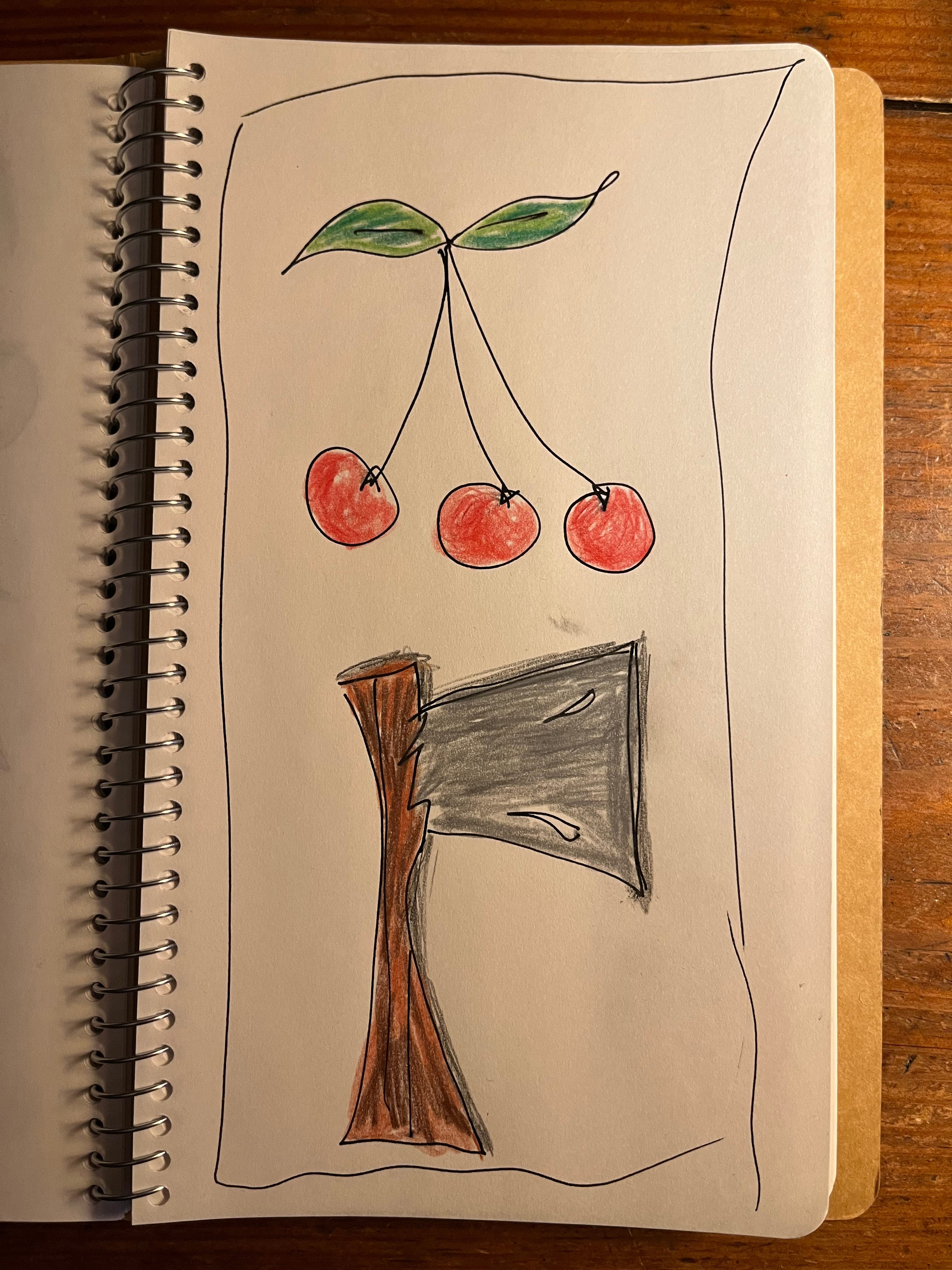
To demonstrate, Prof. Fleming drew these images in simple lines on the chalkboard:

“What is this story?” Fleming asked. My classmates, attending the Bread Loaf School of English from all over the country and the world, sat dumbfounded. I couldn’t believe it. See, I talked a lot, and I was practicing restraint, but finally I raised my hand.

“It’s George Washington and the cherry tree. I cannot tell a lie, Father, I chopped down that cherry tree.”

The class turned to me and looked at me like I had two heads. Fleming barked a happy laugh.

I explained to the still-lost class that I grew up in Virginia, up the highway from Parson Weems’s house, Weems being the man who wrote the fable about wee George, and a few miles down from Mount Vernon.

Fleming then went on to explain that this is a perfect example of how and why iconography—the use of simple symbolic images to represent a whole story—works in places that share a common culture.

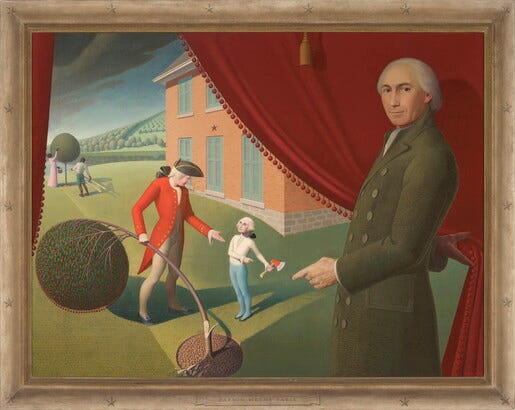
To learn more this Presidents Day about this fable, you can check out the Carter Museum and learn about Grant Wood’s portrait, pulling back the curtain on the myth. In 1800, Weems published The Life of Washington, which is well-known as the source for many myths about the first president. Written just a year after Washington’s death, it includes the story of six-year-old George admitting to chopping down a cherry tree and another about Washington praying at Valley Forge.

Who chopped down that cherry tree? asks George’s father, according to Parson Weems, who wrote, “Young George bravely said, ‘I cannot tell a lie… I did cut it with my hatchet.’ Washington’s father embraced him and declared that his son’s honesty was worth more than a thousand trees.”

Why create this myth about an already mythological figure, even by 1800? I guess to impress upon America’s youth the importance of honesty. But what to do when you learn the story is in fact made up?

Growing up as I say, along the Richmond Highway between the home of Parson Weems and Washington’s home of Mount Vernon, I learned this fable in elementary school, but I never learned about Washington, the enslaver. Not in high school, not in college. I remember a California friend visiting Mount Vernon with me and saying, “I thought this was just a myth,” meaning the whole plantation, the first American president, all of it. And it’s easy to see how anyone not from the historical grounds of colonial America might feel that way, or wouldn’t be shocked to see a slave auction block landmarked in Fredericksburg or Williamsburg, given the American tendency to mythologize the successes and sweep the ugly truths under our antique hooked rugs.

And really, the more we keep digging, and the more lenses we train on our history, the more truths we uncover, the more lies we reveal—the more interesting and complex and real our history becomes. It’s discomfiting, sure, horrifying at times, but isn’t it exciting, too? Isn’t truth worth seeking? How else to make this nation truly free?

This is where we turn to our artists.

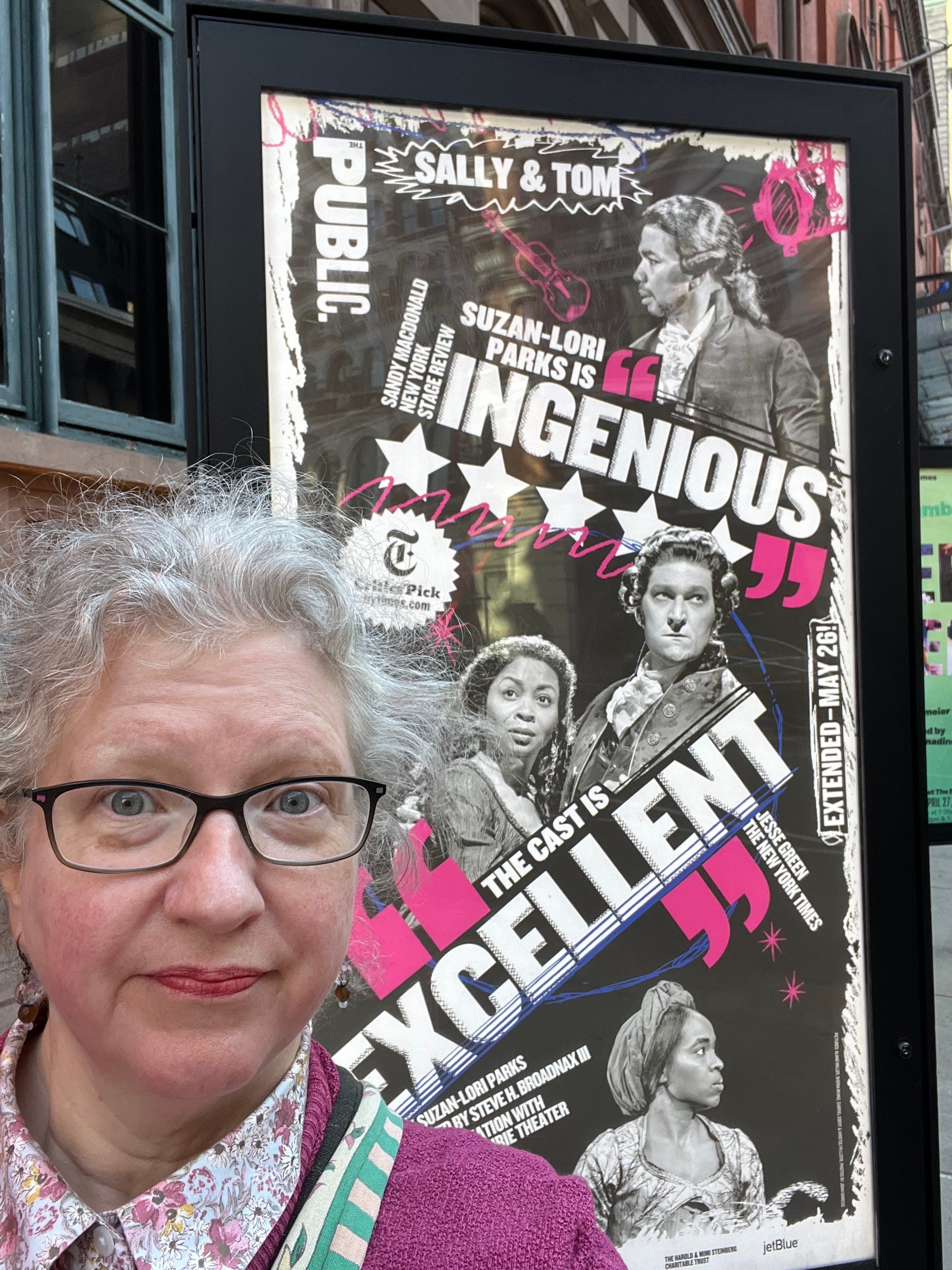
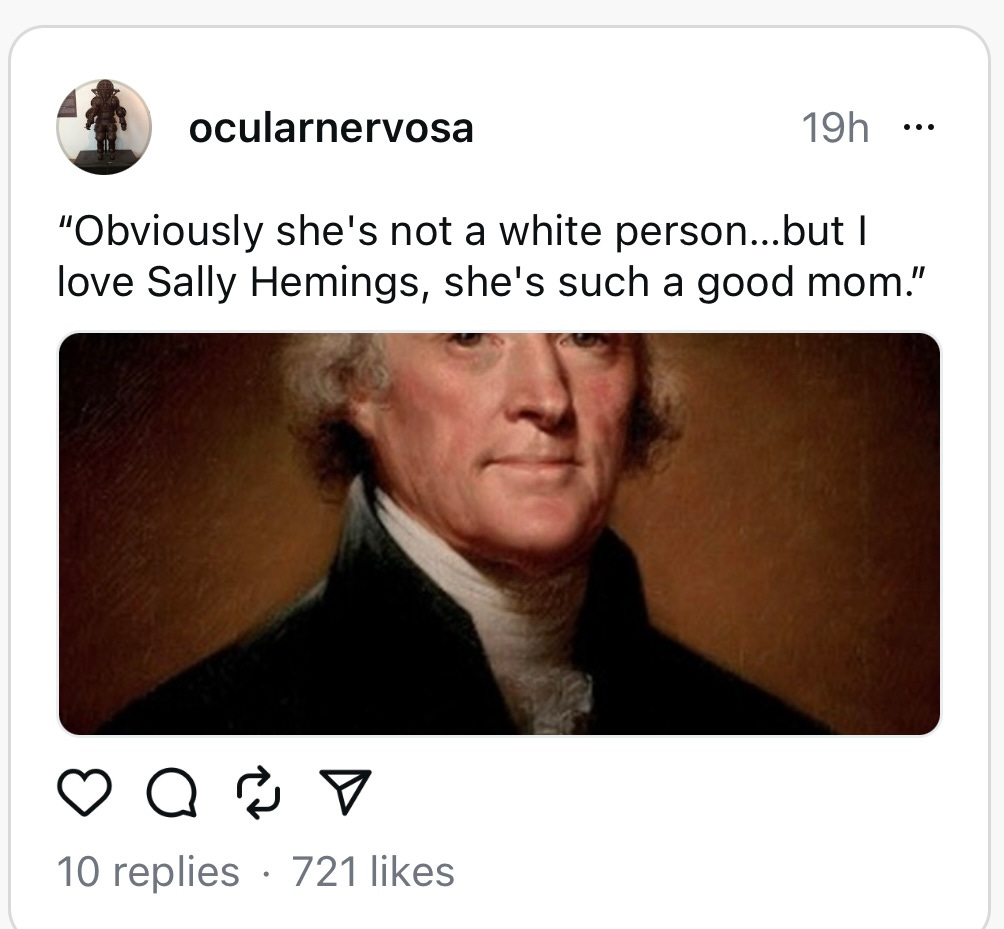
To explore perhaps America’s greatest “Lives of the Presidents” cover-ups, the relationship between Thomas Jefferson and his enslaved “mistress” Sally Hemings, Pulitzer Prize-winning playwright Suzan-Lori Parks premiered her play Sally and Tom at The Public Theater last year. The premise of the play is a community theater putting on a play about these historical figures while the leads are in a relationship. I loved the show, and I was fortunate enough to be there on a talk-back night. In attendance that night were several of the descendants of Thomas Jefferson and Sally Hemings and their families, as verified by DNA. I couldn’t believe I was having this chance to witness history. To watch as these family members meet one another after the show (many were sitting in the row in front of me) and walk up onto the stage—the set’s back wall covered in all of their names in the final reveal—to take photos with their phones, made me weep. (I think it would be a fascinating way to end the actual play.) It was wondrous, too seeing truth all up there like that. The theater was filled with love in the midst of revelations. That’s what art does.

Miss O’ outside The Public Theater, April, 2024.

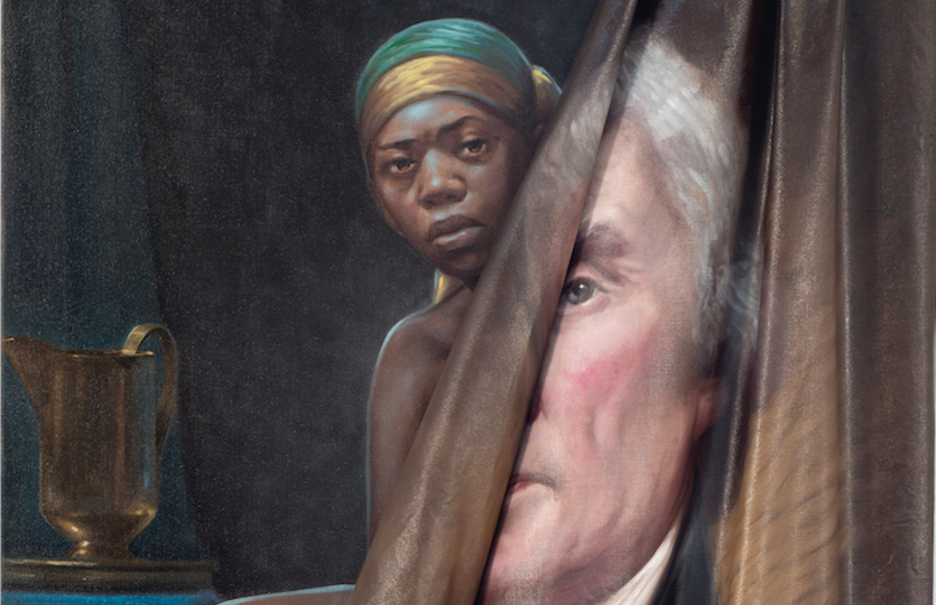
And I think also of that incredible painting by Titus Kaphar, “The Myth of Benevolence,” offering another way that art can reveal a deep truth in a way no historical record ever can, exposing long-hidden damage and forcing us to confront it. (Click on the link to see the entire painting and learn its story.)

A whole story from a picture. American iconography.

Detail, Titus Kaphar, “Behind the Myth of Benevolence” https://www.culturetype.com/2018/03/28/titus-kaphar-and-ken-gonzales-day-explore-unseen-narratives-in-historic-portraiture-in-new-national-portrait-gallery-exhibition/

On what occasion do you lie? I look at the American story, then and now, and it’s seeded with lies and corruption, so many lies, you have to wonder, Can it ever come clean? How do we answer for it? These are the questions we all should ask and answer now. If we don’t, whom do we think we’re protecting?

On what occasion do you lie? Ask Gil Scott Heron, famous for saying “the revolution will not be televised,” meaning it happens inside us, speaks volumes about the impact of lies in the linked poem; and Kendrick Lamar, whose brilliantly coded and performed all-Black Superbowl Halftime Show blew me away. The enslaved lived in world of code. They had to lie about learning to read, for godsakes. Pretend to go along, to get along.

On what occasion do you lie? Ask women who have been sexually assaulted and been made to keep quiet or lose their careers. Ask the men who keep pretending nothing happened. Ask Sally Hemings.

On what occasion do you lie? There are real reasons to lie, moral, ethical reasons. To protect the ones we love. To save our neighbors. We are having to think hard about that now.

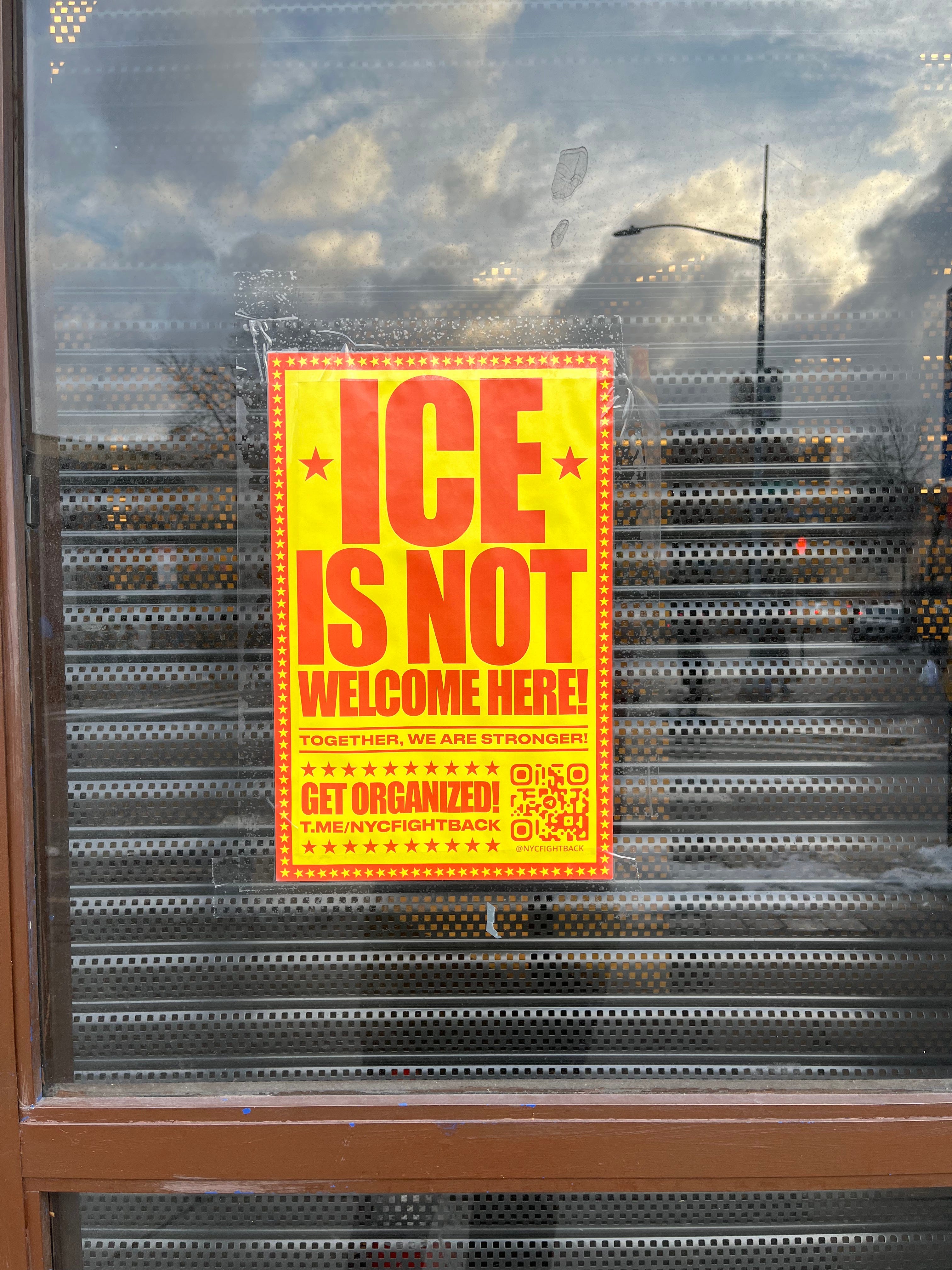
Republican lawmakers (that’s rich) want AOC arrested for teaching Americans and immigrants their rights. Photo by Miss O’ in her Queens neighborhood.

Because let’s face it: here in the United States, we are in a crisis of government amorality. We have a lying Republican party (no more rule of law); a lying president (pick a campaign promise, and yes, Project 2025 was the plan all along); a lying vice president (his autobiography exposed as a sham); a lying Supreme Court (see Roe v. Wade, which all declared, under oath, “settled law”); and liars heading every cabinet position (no, trans people are not the cause of America’s problems; and Putin is not America’s friend, Tulsi). We have liars in the Department of Justice and Homeland Security (immigrants are not remotely the cause of most crime; being brown is not a crime). We have liars heading the F.B.I. (the Democrats are not the enemies of America). It’s all lying all the time, now, and their truths are even worse. The freedom of Western Europe is now in the balance, as Vice President J.D. Vance admonished the “values” of those democratic nations this weekend, in essence praising the rise of fascism in France and Germany and also capitulating to Russia’s desire for empire. On the campaign trail, Vance said “democracy” but meant, we know now, “totalitarianism” (Europe is not America’s enemy, nor are Panama, Canada, or Greenland; our actual enemies are transparently heading our own government.)

Past and present collide: JD Vance on his brown wife; I’ve heard Vance refer to their children as “her” kids. Look at the mental gymnastics and self-delusion of Vance, who denies his wife and children, and smiles.

To think that all of today’s stuff started with asking a simple question.

Identifying lies is not the same as responding to the world that supports those lies. There’s a very cool blog on Substack called The Pamphleteer by Lady Libertie, and she is focused on how we negotiate this new era. Check out “So You’ve Been Invaded: a French Resistance Guide for the U.S.” Pretending comes with the territory of survival. Marcel Marceau, for example, as a teenager pretended to be a camp leader, while his real job was to smuggle Jewish children across the border to freedom; he used the art of mime to teach the children silence as they walked. It’s not really lying if it’s saving lives, and the people you are lying to are venal.

Happy Presidents Day in America, 2025, everybody!

Sending love,

Miss O’
Of Mime and Men

The (Almost Lost) Art of Silence

When I was in sixth grade, I learned about Lent and the practice of giving up something you really enjoy for 40 days. Something to do with Jesus wandering in a desert, David Elmore said. But what I was taken by was the idea of the discipline, of sacrifice. I thought hard. What would I sacrifice? My mom, Lynne, told me, shaking her head as she owned her hypocrisy, “I gave up candy, but I’d buy Smith Brothers Cough Drops, because they didn’t count.” Recognizing the trap of the generalist (“candy”), I gave up, very specifically, Doritos. (Fritos didn’t count.) Sainthood within easy grasp notwithstanding, I expanded the practice, over the years, to encompass all junk food. Can I hear a so what?

Somewhere along the Lents it did finally dawn on me that such a sacrifice was, I don’t know, lame. What is the sacrifice (Doritos? seriously?) really for, you know? Inspired by a “reading deprivation” exercise in The Artist’s Way, I realized that Lent could be an opportunity to tune out noise and make a discovery. So for Lent this year, as Miss O’ has for many other years, I gave up the distraction that is media; and in the past several years it’s been social media and sometimes also television. It really is instructive, these periods of deprivation, restful and oddly energizing.

One thing that Doritos and media have in common, by the way, is that both are engineered to be addictive. I have an addictive personality. I have to be really careful about drinking, for example, so in the past few years I’ve given that up, too, or at least drinking at home. I can drink if I’m out with people I know, which includes my bartenders at the Globe Tavern. I earned those stouts (all six over 40 days). At least I was off Facebook and Instagram, bitches.

What I get out of all this modern-day desert wandering is the happiest thing imaginable: I enjoy 40 days of a quiet mind. It’s amazing what you read, see, and consider when you aren’t scrolling a phone. This Lent gave me a surprise in the form of a different, and yet familiar quiet, a kind of memory of quiet.

Walking on the Moon

On March 22, 2023, Google made a doodle that caught my eye, and link leading to link by art gallery by video by article by book sent me down a mime rabbit hole: the miraculous Marcel Marceau, who would have turned 100 this year! I have a brief collegiate history as a mime, saw him perform live in 1986 at Virginia Tech, saw/heard him lecture the next day—mesmerizing, so brilliant. I wrote a blog about it (among other things—it’s buried in the middle) once. And here I am again.

Just full out, let me say this before I say more about Marceau: Marceau’s character, Mr. Bip, has a history, a reason for being, far deeper than easy caricatures might suggest. Marceau explains about it in a Wallenberg lecture from 2001, when he was 78 and receiving the Raoul Wallenberg Medal for the work he did during WWII as a teenager. Marceau (born Marcel Mangel) himself a Jew whose father had been deported to Auschwitz never to return, helped save dozens of orphaned Jewish children and others by leading them to the Swiss border as part of the French Resistance. Marceau’s part of the lecture begins at the 39-minute mark, and you can learn about his life from his own lips.

I want to tell you, I love mime, and I love Marcel Marceau. So let me just say that what happened to mime in the United States took his beautiful art form and made it into a parody, a travesty of silly imitation because in America we got no sense of history. Marceau’s white face, first of all, harkens back to the French Pierrot figure, and it was young Marcel’s wish to reclaim French culture after the Nazi occupation; Mr. Bip is named in honor of Pip, the protagonist of a beloved Dickens novel, Great Expectations. And it all started with seeing a Charlie Chaplin silent film with his father when little Marcel was seven years old turned the young Marcel into a mimic and the Little Tramp became his hero (but not one he merely imitated as a mature artist). Marceau was born to pantomime, he felt; it was universal, he believed—storytelling that transcended race and ethnicity and culture, found famously in the Orient and also in some form on most every continent; it was an art that could bring us together in love and humanity. Mr. Bip, his everyman, had terrible troubles, but he never lost his hope. Before every adventure, humorous and tragic, Bip removes his opera hat, smells the red flower that decorates it, sets down the hat, and tries. Bip tries and tries and tries.

Throughout the years Marceau lived his art, he taught, (and he loved to teach) at his school in Paris, what he called the grammar of mime, the techniques, and the arts that inform it, like fencing, ballet, acrobatics, and juggling. Nowhere in his teaching is there a dictum that to be a mime you must wear a white face, black and white clothes, and pretend to push against an invisible wall for no reason. Marceau wanted new artists to create new mimeodramas, new stories, new characters. He wanted his art to grow and not be mummified in museums.

Mime is the art of making the visible invisible, Marceau says. I interpret this to mean that his white face, red lips, and black eyebrows as well as his white and gray sailor costume disappear into the lights as he becomes a judge, a prosecutor, the defense, and the defendant in “The Trial.” Mime is also the art of making the invisible visible, as you are sure you are in a fully realized courtroom instead of a bare stage when you watch this same drama, or seeing a universe while witnessing the birth of the world in “The Creation of the World.” Having seen both the video and the live performance, I will tell you the live version is far more magical and transporting, but I am so grateful to have these videos to sharpen my memories. In this video of “The Cage,” Marceau expresses his hopes for what his art can do. I’m grateful for the videos, but speaking from experience, Miss O’ can tell you they can’t hold a candle to the electric experience of seeing Marceau live.

I learned in my searches that Marceau adored Michael Jackson, “a poet,” he said, who loved Chaplin (Marceau’s early hero) and Marceau, learning how to “walk against the wind” and turning it into the moonwalk. Marceau loved that. That is what an artist does—takes the old teachings and makes them new. A planet of imitators will not do. (Painters study Rembrandt and Van Gogh and Picasso, but no one would tolerate a mere mimic; there was only one Marilyn Monroe, as it should be.) And I think I felt this in my limited artist’s heart as I myself learned mime and performed. Why a white face? Because that’s what you do. Why? So I drew a line around my white face and added rosy cheeks, but it never felt authentic. Marceau would agree. I needed to find my own character for my own reasons, to tell my own stories that might be also universal. Still, I have never lost my training, still aware of how all the movements of the body articulate and what those movements can convey emotionally. I still love the art, this art of silence which is really so much more.

Miss O’ and Debbie Hodges in Roanoke ca. 1986. We saw Marceau together, and before the show two odd things happened: 1) hearing an announcement that the show had to be delayed because the (wait for it) sound system had not yet arrived; and 2) Debbie turning to me, voice quavering: “Lisa, I just saw something beautiful, but I don’t understand it.” What? “That woman, being helped by the the usher. She’s blind. Lisa, it’s a pantomime.” Thus began a cascade of laughter, and tears. Ah, humanity.
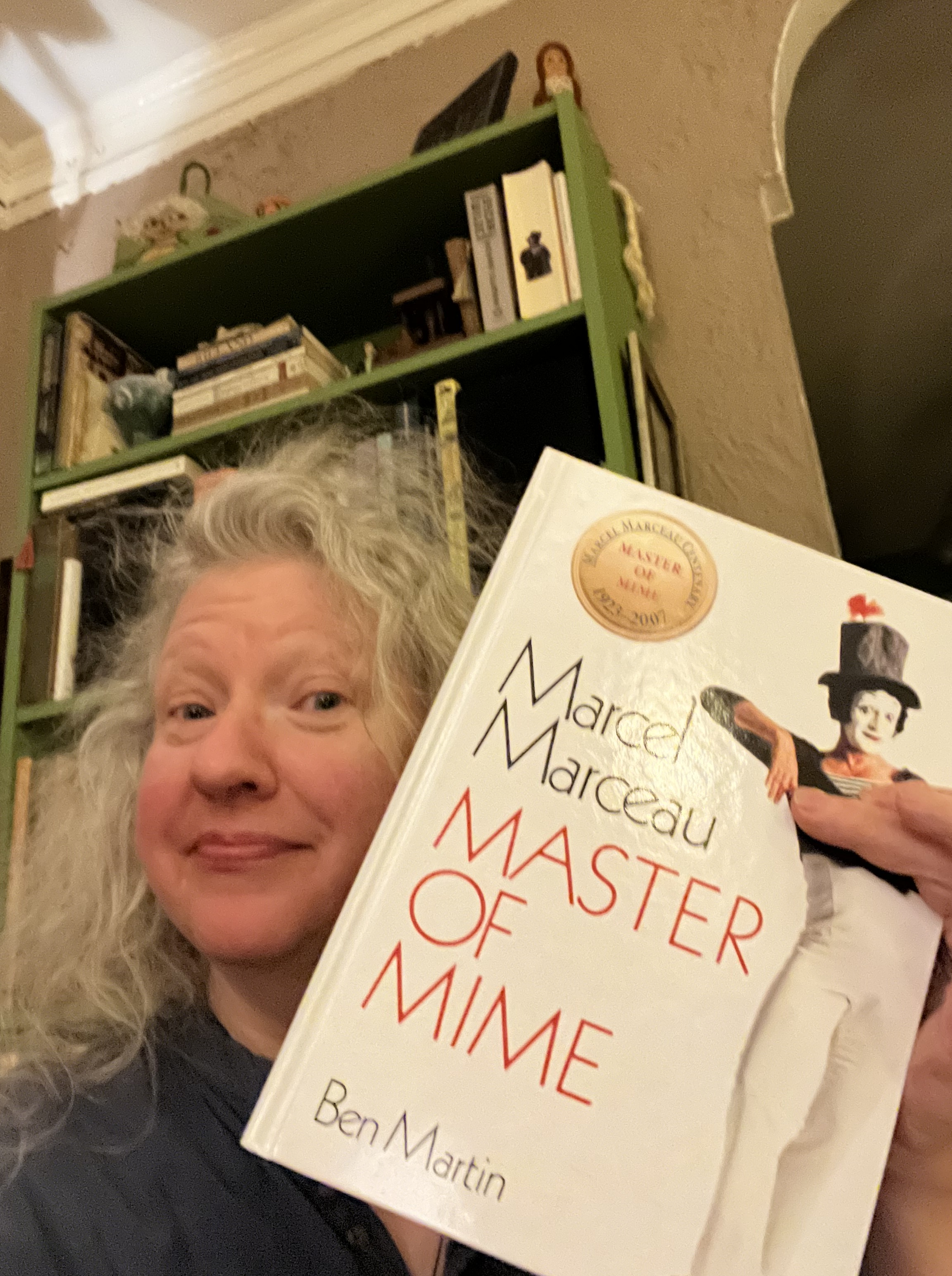
So imagine my joy as a result of the click on the Google doodle to find out 1) NYC has a National Arts Club on Gramercy Park South, which is free; and 2) said space has an exhibition of Marceau portraits by photographer Ben Martin. And imagine my joy at finding out the book is back in print, and that on Thriftbooks I could find two other books by Marceau, including one with his own paintings and one co-authored by a man I actually know, all on the art of mime. To learn more about tis wonderful artist, there is a 2022 documentary that Miss O’ dreams will come to New York City.
“One must think like a hero to behave like a merely decent human being.”
~ May Sarton, Journal of a Solitude, 1973

Bip is the hero of his own story, and in moving through the world heroically, he is a decent creature and shares with us his decency. (Miss O’ notes here that feeling oneself to be a hero is not the same as feeling oneself to be God. Gods are monsters. Take a memo.)

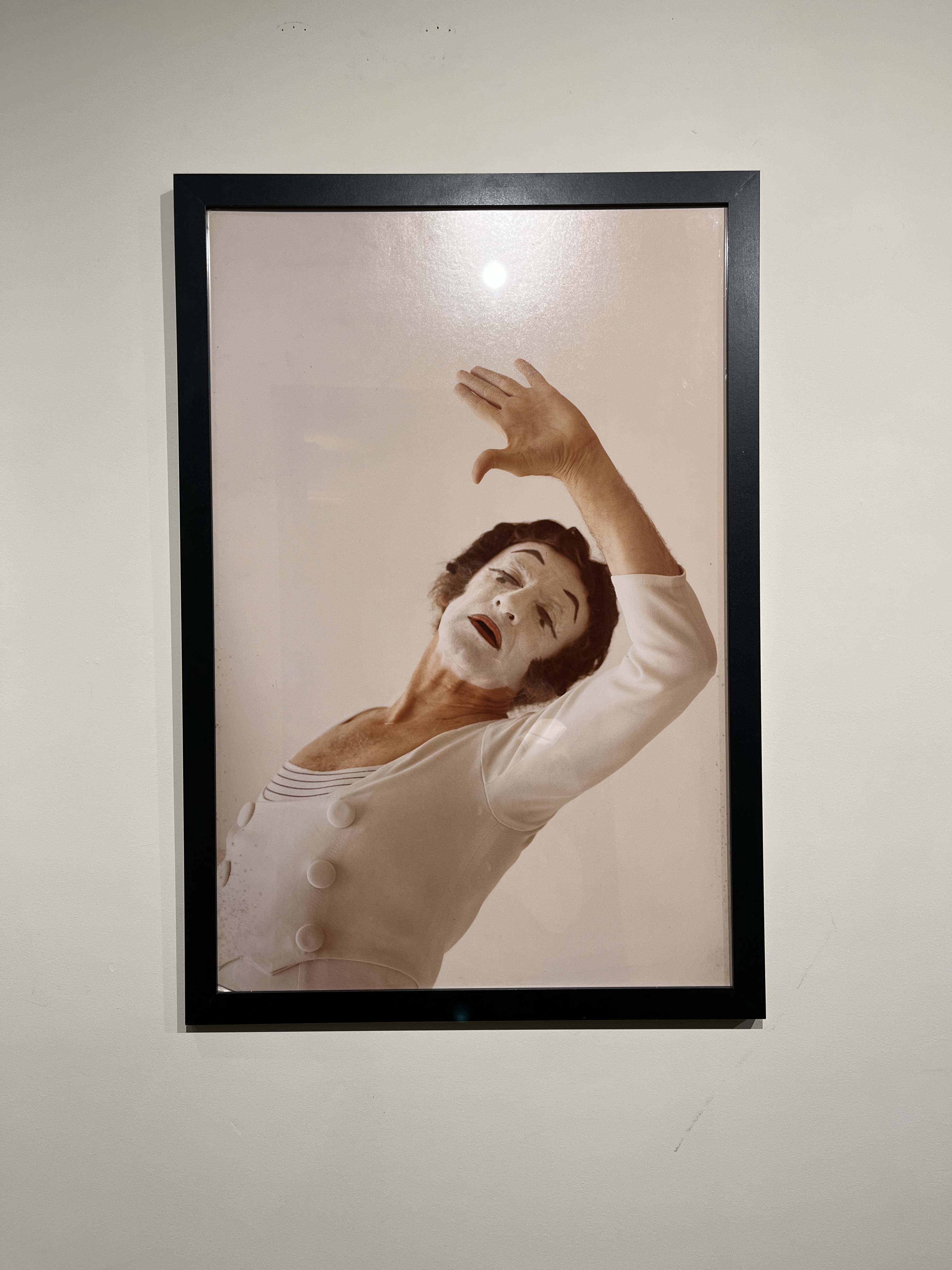
Marcel Marceau, photographed by Ben Martin in 1973. Originally supposed to be a piece for Life Magazine, the project never came off because the magazine folded. So Martin made it into a book.
Photo by LO’H, National Arts Club, NYC

Marcel Marceau, photographed by Ben Martin in 1973. Marceau was initially against Martin’s project, as he was sure he would look absurd in still pictures and not in performance.
He was wrong. Photo by LO’H, National Arts Club, NYC

On Being, in Mimicry

I realize something every time I latch obsessively onto a form of study, such as mime, I begin to see reflections of that obsession in everything; in this case during Lent, mime was suddenly everywhere. The art of mime, of mimicry for survival, is in fact all around us, and I lucked into specific connections (well, we luck into things when we are looking, don’t you think?). Listening to the podcast On Being recently, I heard about the work of Janine Benyus for the first time. She helps companies learn to use the tools of nature, the natural processes of successful living things, to solve their manmade engineering and environmental problems. Isn’t that fascinating? She herself never understood why it wasn’t simply obvious to follow nature’s lead. Since childhood, Benyus had loved wild spaces, and was traumatized the first time she saw bulldozers destroy her wild lots, where she knew all the creatures and plants by their names and habits. I myself grew up catty corner from a huge vacant (we say “vacant” when there are no humans living there, you notice that?) lot that was anything but empty: filled with a creek, rocks, a dirt lot for kickball, pine trees, grasses, and blackberry thickets. When I was in my 20s, a developer bought the lot and turned it into houses, cemented up the creek bed and fenced it off with high chainlink—it was horrifying. And that sadness made me remember the old McNeil sisters who used to pick those blackberries—all that land had been once their father’s farm, and now they shared a house on Kentucky Avenue in a huge subdivision. And that made me remember that before that, it was Native American land. And before that, a wild place for all the creatures. This endless cycle of taking over, of colonizing, is really painful when you tune into it, in ways small and large. (Marcel Mangel grew up in Strasbourg, in Alsace-Lorraine, which was sometimes German, sometimes French, in the struggles to own territory, to annex, to conquer, and we all know what that led to.)

In her book Biomimicry (on my booklist now) Benyus explores how humans have ignored the ways in which nature can teach us, that because humans see themselves as having “dominion” over the earth, we think we have to do all the thinking. And our thinking is often sheer stupidity; and that stupidity is killing the planet. Benyus talks about this without malice, with love and hope, though. Podcast host Krista Tippett read aloud from the last page of the book, showing there is hope for solving the problems we have created for our world:

“The good news is that we’ll have plenty of help. We are surrounded by geniuses. They are everywhere with us breathing the same air, drinking the same round river of water, moving on limbs built from the same blood and bone. Learning from them will take only stillness on our part, a quieting of the voices of our own cleverness. Into this quiet will come a cacophony of earthly sounds, a symphony of good sense.”

~ Jane Benyus, Biomimicry

I thought of Benyus’s continued hope this stillness, and it put me in mind again of Marceau, of Bip. In the quiet of his performances, Marceau elicited a cacophony of earthly sounds, perhaps in musical accompaniment, by Bach, say, but always also the laughter, gasps, and applause of human beings. Marceau played at life, at dreams in the hope a symphony of good sense, but more than that, a symphony of love.

From Benyus’s trauma of seeing her wild space bulldozed through past the topsoil to Marcel Mangel’s witness to Nazi persecution down to his own father’s deportation and murder—both made art out of it, science out of it, education out of it. Their work is and was marginal, and made more important and beautiful and necessary because of that. We all do our best thinking doodling on the margins, don’t we?

Vanity of Vanities, All Is Vanity

“The whole point of Jesus’s life was not that we should become exactly like him, but that we should become ourselves in the same way he became himself. Jesus was not the great exception but the great example.”

– Carl Jung

On Easter Sunday, people post, “He is Risen,” that sort of thing. When people fall into idolatry, worship, they may also slip into an inauthentic imitation, or a glory of themselves in the religion rather than the religion in themselves.

I don’t understand worship. I understand curiosity and passion, and I understand a desire to learn. We lose great art, great thought, great science, it seems to me, when we see imitation all around us. Education, enlightenment, and exposure to new ideas are supposed to help us become who we are, generate more new ideas, new hopes and dreams, new beauty.

I think mime died out (which is not to say it’s dead) for two reasons: 1) it’s unbelievably hard to do well; and 2) everyone tried to be Marceau. This is a shame. Marcel Marceau wanted to teach people mime because he loved his art, not because he wanted a planet covered in white-faced pale imitations of himself. He loved Michael Jackson because Jackson (white-faced and pale though he became) took a lesson in walking against the wind and turned it into the moonwalk; Jackson elevated the form and made it personal. Similarly, Jesus didn’t ask for a planet full of imitators and power mongers to “spread his word” (his apostles did that); he (lowercase human pronoun) wanted people (as I read it) to simply live in a radically alternative way: love over hate, kindness over violence, the love of all over the love of money, equity for all (women, men, whatever) over huge power of some over the rest. It’s not difficult. But it feels impossible to accomplish, like walking against the wind.

The nature all around us, the earth that holds us—how does this not feel like our true mother, our closest companion, our guide, our lover, our teacher, our friend? Why do we push it off, push against it and each other?

Let us, like Bip, don our opera hat proudly every day, dressed up with a fresh flower on top, the scent of which we smell with delight before we move to walk against the wind into the world to do the best we can.

Silence is about attention. An audience may break that silence with response. Something inward goes outward. I say that because most everyone now can be seen staring silently into a phone, scrolling dead-eyed, a quiet trance of habit that isn’t what I mean by silence at all. With Marceau’s art, silence is about concentration, the mime’s attention to the art in emotion, and the audience’s attention to the performance. If we mimic anything in this life, let it be the nature around us, and the artist’s attention to his art. And another’s kindness.

Love, somehow, to all.

Miss O’ with Bip. National Arts Club, NYC, special exhibition of photos by Ben Martin.

Under Covid of Darkness

I’m on Day 12 of Covid, contracted I think on the New York City Subway System, being the only masked person around coughers and sneezers; or else in the brief unmasked walk from Port Authority to the subway entrance on 7th Avenue. However one gets it (only 5 days into my bivalent vaccine, I wasn’t yet efficacious) it’s been a helluva bedridden ride of waves of all the various Covid symptoms I’ve read about. As a result of the positive test (taken a few days prior to heading to Virginia for my 40th high school reunion, with a sore throat and runny nose, oh shit), I’ve found myself living in bed and relying on the kindness of my friend Cathy and her husband and son, who check in daily, pick up takeout for me and a few groceries. I’ve been subsisting on V8, apples, brown rice, beans, some Chinese soups, and tea. And The Graham Norton Show via YouTube. I tested positive again after five days, and again after ten (though a lighter line), so I’ll try again on Wednesday, which will be a full two weeks plus one day. I’m running out of tests. But at least I’m dressing for the day again.

Recently I (in my return to social media after a three-month hiatus) saw that above quote on Harvey Fierstein’s Facebook wall in the context of gaining sobriety, but I truly appreciate this in the context of Covid recovery. I have not been living my life properly in the past few years. I am a recluse agonizing over rising fascism, without intelligence or talent enough to do anything useful to stop it. As of November 8, when the Republicans take over and impeach Biden and Harris, install the Speaker of the House as president, hang Pelosi, and deploy the military to overrun the liberal cities and imprison all of us…because I think that is more likely than not to happen should Republicans take the House and Senate…it will be too late to do more. Ain’t that a kick in the head?

Amidst the coming end of democracy as a concept, I’ve also been thinking about age, how we change, or don’t. It’s all part of the mix of my brain fog.

Reflections on the High School Reunion I Missed 

My friends Mark and Carl urged me to go, so I signed up, and then I got Covid, as I somehow knew I would, so I kept myself awake that night to find out who they got to see.

The boys sweetly texted me pictures of the kids (who are all 58), many of whom I’ve known since childhood—the Arrington twins; Juanita the piano prodigy and probably the smartest kid I knew. Then there was Janet, who was voted most talented from a high school senior class of 1,000—still a tall drink of water, same long blonde hair, a toned and tan former gymnast who could still fit into her show choir ensemble and her high-kick team dress and wow them all with a smile, the one who gives you hope. Lots of people for whom high school may or may not have been a blast, as they say, were there, too.  

Prior to the reunion, I posted on our page the following memory, wondering if everyone was hoping we’d “sing”:

Lisa O’ and Mark Robinson, ca. 1981, promoting the Junior Variety Show we hosted, and more recently.
Friends since 2nd grade, or thereabouts, Mark and Carl and I were always somehow involved in music, our last outing together ca. 2018 found us singing karaoke, “I Love the Nightlife,” in Rehoboth Beach. As Mark reminds us, three separate people said we were great. So.

I sent along to them a sickbed selfie, and it caused me to reflect on aging; when I attended a group 50thbirthday party years ago, my brother Jeff took a photo. When I posted it on Facebook, my friend Jen said, “Don’t take this the wrong way, but you were born to be 50.” I think I was. However, it was the last photo in which I looked like myself, a Lisa O’ anyone would recognize. A couple of years ago I became old—see sickbed selfie. It was time.

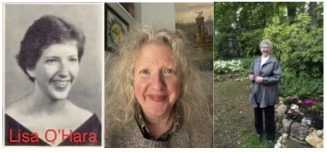
Miss O’ at 18, 58, and 50. I blame lovers of Trump.

I loved all the pictures Mark was sending, but I didn’t understand his constant texts: “EVERYONE is asking about you!” I responded first with a “Ha!” comment thingy. But he persisted. And I couldn’t understand this sentiment because I was such a dull kid, not a standout at anything; just kinda skated through school, tried to be helpful, did my work, did a few plays, stayed out of trouble, head down, big laugher at the jokes of funnier people. 

And you realize that all of us, whatever we thought ourselves, were part of one another’s stories, and that we are somehow still dear to one another, part of one another’s memories. We all can’t be beautiful or stay young, whatever that is, and what is even the point of the concern? In the end the Republicans will gun it down.

I recently read this definition of Beauty: “the adherence to the balance and structure of the Universe.” Seen that way, most of us can feel just fine.

Vanity: Reflections of a Royal Philosopher, from Ecclesiastes, 2-11

It’s Sunday, so here’s a little of the Bible that most American Christians (given their actions in favor of dead mothers and gunned down children and their worship of a narcissistic, unapologetic adulterer, conman, and cheat) clearly haven’t read, but a surprising number of my Jewish, agnostic, and atheist friends have.


The words of the Teacher, the son of David, king in Jerusalem.

Vanity of vanities, says the Teacher,

vanity of vanities! All is vanity.

What do people gain from all the toil

at which they toil under the sun?

A generation goes, and a generation comes,

but the earth remains for ever.

The sun rises and the sun goes down,

and hurries to the place where it rises.

The wind blows to the south,

and goes round to the north;

round and round goes the wind,

and on its circuits the wind returns.

All streams run to the sea,

but the sea is not full;

to the place where the streams flow,

there they continue to flow.

All things are wearisome;

more than one can express;

the eye is not satisfied with seeing,

or the ear filled with hearing.

What has been is what will be,

and what has been done is what will be done;

there is nothing new under the sun.

10 

Is there a thing of which it is said,

‘See, this is new’?

It has already been,

in the ages before us.

11 

The people of long ago are not remembered,

nor will there be any remembrance

of people yet to come

by those who come after them.

The friend who posted this on her wall asked: “So, like, what EVEN is the point.”

The existential questions are the worst. What I’ve never understood, when I look at all the guns and people threatening people over their race or gender, for example, is that if this is all we know—this time on earth, this life—why would anyone choose to spend it glorifying themselves, playing the lottery, and spreading misery? And that leaves the rest of us in a power struggle with those people, scratching for our bits of joy where we find them. There’s a great play called Every Brilliant Thing I saw a few years back at Barrow Street in Greenwich Village, about a little boy who goes on a quest to try to help his depressed mother—and he finds the joy in himself. Love people, find the joy, eat the chocolate. Do your best.

We all have regrets and most of us know that those regrets, as excruciating as they can be, are the things that help us lead improved lives. Or, rather, there are certain regrets that, as they emerge, can accompany us on the incremental bettering of our lives. Regrets are forever floating to the surface… They require our attention. You have to do something with them. One way is to seek forgiveness by making what might be called living amends, by using whatever gifts you may have in order to help rehabilitate the world.” – Nick Cave

This quote can be found on the website The Marginalian, curated by Maria Popova. She shares ideas from artists, their quotes, and then her own reflections. What Cave got me longing for, or reminding me of, is the idea of being an artist. I really wonder what that must be like. (Whatever light I have in potential, I learned years ago, must be kept hidden or it upsets too many people; you have to trust me on this.) At least my one real joy as I age is that I can still enjoy art. 

Art does have the ability to save us, in so many different ways. It can act as a point of salvation, because it has the potential to put beauty back into the world. And that in itself is a way of making amends, of reconciling us with the world. Art has the power to redress the balance of things, of our wrongs, of our sins… By “sins,” I mean those acts that are an offence to God or, if you would prefer, the “good in us” — that live within us, and that if we pay them no heed, harden and become part of our character. They are forms of suffering that can weigh us down terribly and separate us from the world. I have found that the goodness of the work can go some way towards mitigating them.” – Nick Cave

In my search for more about suffering and surviving it, I happened on a couple of TED Talks that only pissed me off. On Being with Krista Tippett, now defunct in terms of its old format but still out there, is a good bet. Still, when I go hunting to try to understand all the shit, I find things that exhaust as well as inspire. 

Ultimately, Bruno Latour (1947-2022), the scholar who passed last week, took nothing for granted: not science, not society, not even “reality” or “existence.”

The Nation header on Facebook

And I realized, reading that banner, how TIRED I am of reality and the lunacy of existence—the realization that we’re all stuck in an overwhelming cycle of …

In the meantime, life goes on, somehow. 

Preoccupations on Reflection

In my last blog post I paid tribute to the remarkable theater artist and teacher Maureen Shea, who died unexpectedly in September of this year. Shortly after posting, my old Virginia Tech friend Todd located and “liked” this Facebook post from 2020, I guess because of the attached photograph he must have recalled. Todd was very close to Maureen, too. Here is the post, in full:

Miss O’, ca. 1987. I’m posting it because I have always hated this picture, but kept it because mentor Maureen Shea is in the background, on the left on the hill, in a cast, and it does capture a moment in time. Oddly, this is often other people’s favorite photo of me whenever, back in the old days, we’d flip through one another’s photo albums.
Similarly—and stay with me here—while I was the favorite and most beloved teacher of some students, I was just as often the most reviled and dreaded teacher of other students; and still others didn’t even remember being in my class when I’d say hello to them as seniors. Think of them as pro / no / undecided voters.
Here’s my point: Yesterday I saw the “well, I’m not voting for Biden if it’s Harris” posts begin. Here we go, I thought, 2016 redux, “but her emails,” any excuse to not vote a woman into office. Because I believe, truly, however evolved people think they are, that that is what it comes down to. These folks can rationalize it all they want, but it comes down to misogyny. They’d rather end democracy, keep Bill Barr and Trump and Miller, and destroy the Supreme Court and even the planet, for the rest of their children’s natural lives, than vote for a woman—for whatever her “sin” is, it’s always one hundred times worse than the sins of the men who are caging children and denying a pandemic and allowing Russians to own our elections and put bounties on the heads of our soldiers in the field.
America, don’t do that; don’t be that voter all over again.
Because let’s face it: I’ve always hated this photo of myself, and yet I now have to admit I am adorable in it. All those years of self-loathing, and for what? 

It’s 2022, and here we are AGAIN. Voters, Americans, for fuck’s sake: Do the work, love the people, be good to the earth, find a purpose, appreciate art. Get over yourself. And vote Democrat. 

Until they take it away, use what you got.

Word Clouds

A commercial for an orange tube-y snack food shows a hip hop artist waving his fingers across bricks in an urban landscape and a colorful mural appears; he passes a child playing plastic buckets and the boy is now sitting at a red and chrome full drum kit. The plain glass buildings all begin shimmering in color. 

Because in America, at least, you can’t enjoy anything, not even a junk food treat, unless you are changing the world. And it’s not enough to have a tasty bite. You have to gorge on a whole fucking bloomin’ onion, loaded nachos, and whipped cream on the dessert, with a table filled with family or friends, or why did you bother to go out? 

And it’s not enough to enjoy the 4th of July with a sparkler; you need to listen to the incessant sounds of explosions all over Queens and watch the aftermath of a mass shooting of 30 spectators watching a parade in a small town in Illinois.

Art by Rebecca Morgan, as seen on Instagram

And I don’t know about you, but this kind of “go big or go home” bullshit is starting to give Miss O’ more than hives.

What’s the Meaning of All This?

Back in 1964, philosopher Marshall McLuhan famously said: 

“The medium is the message. This is merely to say that the personal and social consequences of any medium – that is, of any extension of ourselves – result from the new scale that is introduced into our affairs by each extension of ourselves, or by any new technology.”

Fifty-eight years ago, McLuhan also said, “Ours is a brand-new world of all-at-onceness.” Director Mike Nichols, in an interview in the 1990s, talks about how much McLuhan got right, though McLuhan seemed to be dropped from our consciousness. (I say “to be dropped” because we live in a disposable culture.) People used to receive information at different times, Nichols noted, and in different forms—newspapers, letters, magazines, telegraph, newsreels. News used to reach people weeks or months, or years, after an event occurred. The Emancipation Proclamation, signed in 1863, did not reach enslaved people in Texas until June 19, 1865, and deliberately so—the goal being to keep this from them for as long as possible so the farmers could get another harvest out of the enslaved for free.

With TV, we all saw the Kennedy assassination aftermath play out immediately, for example. Nichols, speaking of the challenges of directing new scripts, pointed out that because exciting real events—from assassinations to the moon landing to wars—come to us in real time, fiction just can’t measure up. And so now instead of deep, simple human stories to sell tickets, we reach for Superheroes and Armageddon for entertainment.

Nothing seems to be enough to sate us. The news media and its audience now hear of mass shootings and barely register an “oh, god,” just before the yawn; you see that it’s getting increasingly harder to satisfy our sensory desires. Overloading on porn and all its vulgar unrealism is why all those Incels (involuntary celibates) can get no pleasure from sex with women. The medium is the message: sex isn’t about intimacy, but rather gratification and power.

“We shape our tools, and then our tools shape us.”

~ Marshall McLuhan

Understanding Media: The Extensions of Man 1964

Miss O’ Wonders

Query: What message are Americans told, by one another, is the message of America?

Response: Freedom.

Query: If your culture’s primary tools (or mediums) are guns, unmediated information highways, evangelical Christianity, and self-proclaimed “influencers,” what is the actual message?

Miss O’s Current Response: The message is that one ideology pushed by a lone individual’s power to kill or influence others is the single most valued aspect of the culture.

It’s a question of lenses.

A philosophy professor of mine once taught about hedonism. He said people misunderstand it, thinking a hedonist is someone who debauches and can’t get enough of pleasure. In fact, Prof. Smith said, “A hedonist is supposed to get an orgasm from bread and water.” Hedonists in fact set up a philosophy with forced, unsustainable expectations for actual humans. Bread and water will never be orgasmic, however nourishing, unless you are first dying of starvation and thirst. 

From Instagram

In its latest attempt at a national philosophy, America has set up a forced, unsustainable set of messages for Americans through the medium of video, meaning we all see and hear these messages. 

  • First, we are supposed to place the needs and desires of the individual above society, unless that individual is Black/brown, poor, and/or a woman. 
  • Next, we must yield to the power of guns and ones who wield them over any individual’s freedom to speak, assemble, worship, or report news, unless that person is a white male with shit tons of money. 

If the medium is an unmediated Medium, is the message that we are living in Babel?

I often spend whole mornings just deleting email junk so I can free up my email storage for more junk.

If the medium is an unstoppable garbage bin of random communications, is the message that there will be respite from the noise of humans and technology?

I have seen tweets of mine go mini-viral and had panic attacks.

I have tweeted, blogged, or posted on my wall things that I find vitally important and not one person agrees with me in even the form of a like.

I begin to value myself based on the mediums.

Which medium are we going to amplify? Which message will sound off and win in the end? Is there an end?

Is there anything duller and less surprising, however continually shocking, than American politics? Republicans can only stay on brand by grabbing power and rejecting anything democratic; the Democrats can only stay on brand by rejecting revolutionary progress and staying steady. 

If the medium is the message, what is the proper medium for politics? What is the MESSAGE of our political life?

I keep getting stuck on these questions. “Stalemate” comes to mind. “Bartleby the Scrivener,” too.

Because a stable democracy is dull copy for our hundreds of 24-hour cycle “news” outlets, whether on a cable network, local television, or a newspaper, the Big Stories I see are almost never to do with public good so much as public titillation for ratings or sales. (And now this commercial message.)

The collective message is what exactly? Consume mass quantities and die already?

I awoke this morning, the Fourth of July, 2022, as I have every morning for months, in a pit of despair. Between the climate crisis-induced collapse of an Italian glacier and the invasion of Ukraine, along with the naked Republican attempt at every level of government over the past three years to end our constitutional democracy—and a press that does little more than pass the popcorn—it’s hard to write anything, create anything, feel there’s any point. And as I stood in my hallway after the coffee, half naked, holding a bra, vacillating between putting on real clothes to leave my apartment so as not to listen to the lone skateboarder on the asphalt playground who decided to practice his tricks right next to my little abutting porch (knowing that will also be in for an endless night of illegal fireworks); and falling into a ball of lonely weeping, as I do rather a lot these days; I mercifully remembered I have friends. I texted everyone I love and care about that piece of art by Rebecca Morgan, up there, because they all would instantly get it, and they did. And they answered.

My friends Carl and Mark, buddies of mine since 2nd grade wrote back too. Both of them are gay. Carl lives in our home town; Mark lives in Delaware with this husband. In response to our group, Carl said, “Not feeling celebratory. Low key chill here. Cleaning and organizing.” Mark said, “America doesn’t deserve a birthday celebration this year 😤.” I said, “I’m writing a blog.” Carl said, “Excellent.  I hope you include my disappointment.” Mark sent his love, calling us, “MY FAMILY.” And that just broke me up. You know? That sudden burst or wave of love. And if I hadn’t broken the grip of depression, pushed past the despair by becoming outer directed, I suppose I would have started drinking wine at 10:30 AM and not really looked back.

And wine is a lousy medium for any message. Here are some better ones:

  1. Honeysuckle
Photos by Miss O’
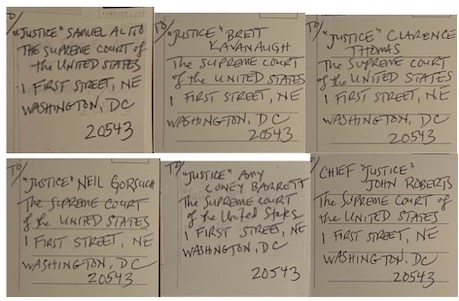
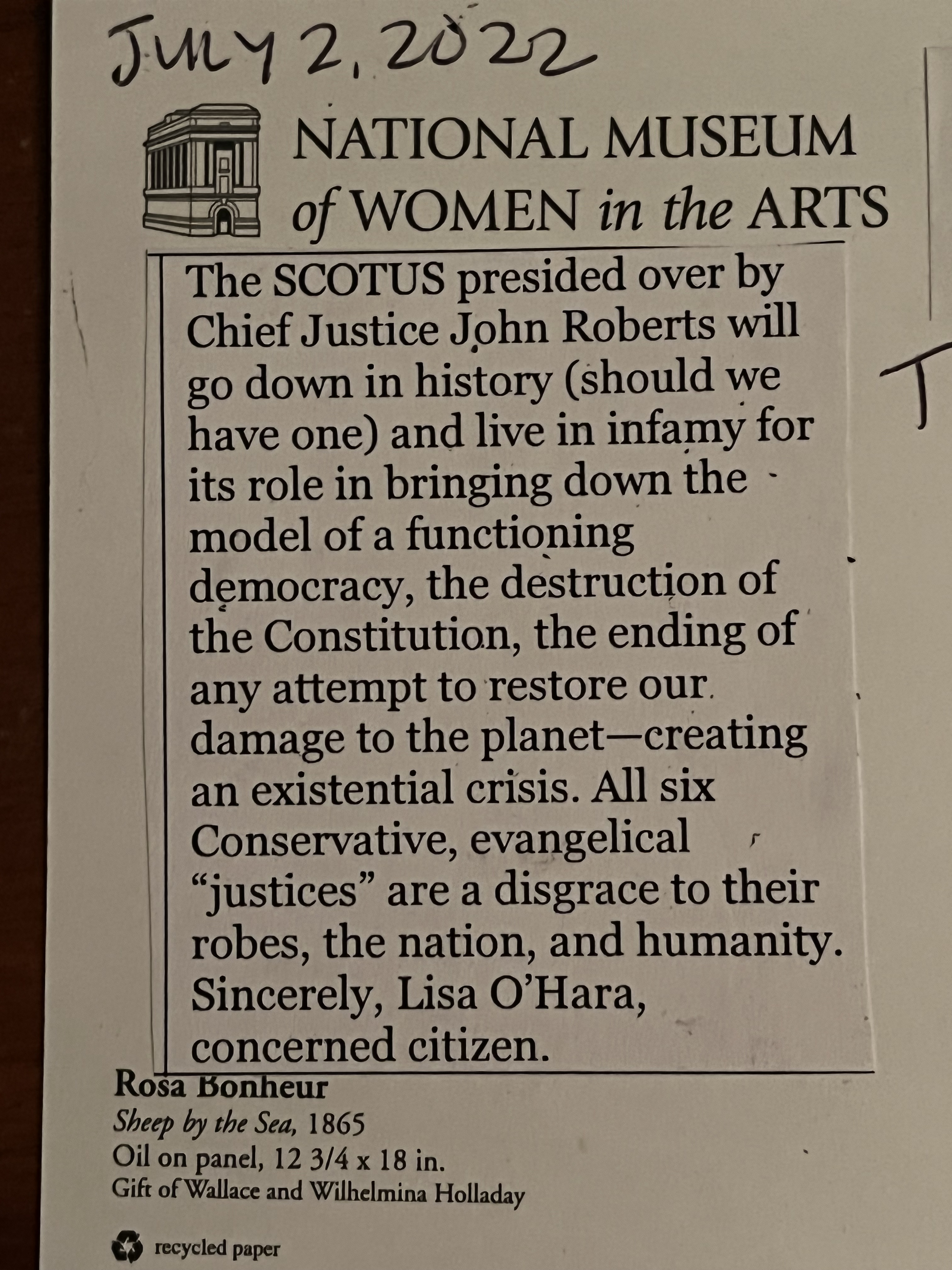
  • Postcards to SCOTUS
Miss O’ uses up some postcards.

Most of our important commentary anymore comes through in the medium of satire, including comics, cartoons, and Comedy Central’s The Daily Show and TBS’s Full Frontal. The medium is the message: We treat our existential truths like jokes. The “breaking news” of the NYT is often the equivalent of “What happens to Jolly Ranchers when they stay all day in a hot car?” The medium—the paper of record—is the message, and that message is “accentuate the trivial and don’t mess with existential truth in between.”

Like millions in the world, I write what’s on my mind and post these ideas for free for all to see. I have no mediators. No one, not a partner or friend and certainly not a paid editor, is around to read behind me, suggest where I might improve, strengthen, or refocus. Nor does any publisher or advertiser pay me for my thoughts. 

And it’s still only one voice trying to mediate all the other voices and create a message that is coherent and true.

I still don’t know how to do it. Nevertheless I persist.

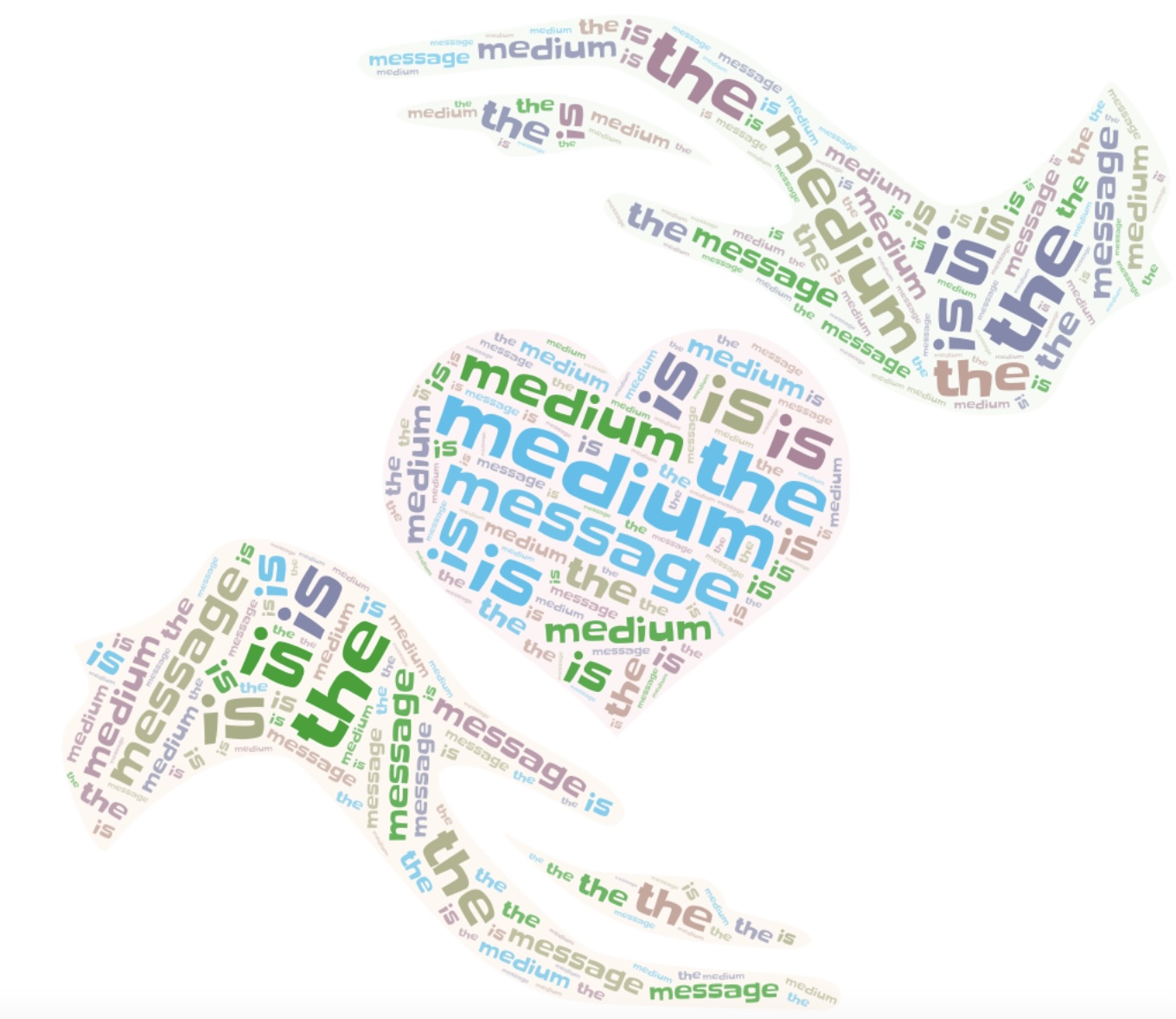
Miss O’ Makes a Word Cloud

On Turbulent Flow, Part 2

Ordinary Life, Queens

I wrote the paragraph below around March 5:

It was nearly 60 degrees in Queens yesterday; it’s snowing this morning. This has happened two weekends in a row. I’ve been thinking a lot recently about turbulent flow, the reasons for which I’ll get to, but first I’d like to open with an apology for my own flow: I used to be funny. I used to have a capacity to write about things in an energized and witty way. And then that one guy became “president” in 2016, the world turned upside down, as Americans started voting against their own best interests, hell, their senses, and in direct opposition to their self-proclaimed Christian faith, and called it righteous; Earth started turning on us in earnest in response to our neglect of our responsibility to be stewards of the planet, i.e. to not shit where we eat, and our abject failure to do this. I can’t walk down the aisle of a supermarket, department store, or dollar store and not think, “All this is heading directly to a landfill, and there are millions more aisles like this of packed shit none of us need, not a bit of it,” and I start weeping. 

Tile adorning my bookshelf, gift from Colleen Cosgrove 2022

Written around the same time:

This past Monday I spent part of the day chasing down a running toilet. I heard the telltale hiss, on for 15 seconds, off for 10 seconds, through some stack in my kitchen; down in the basement it was louder. It wasn’t my toilet—the source was somewhere else in the building. Around 8:30 AM I emailed my immediate neighbors in my small complex, and they too heard the hiss. A couple next door heard it at 11 PM the previous night, and all night, but had been too tired to do anything about it. Next, I sent a group email to the other 16 units: Hi, everyone…anyone got a running toilet? Some replied that they thought is was related to our dysfunctional boiler and steam heat hit and miss; but the fuel company guys (whom another board member—that’s right, I’m on the Board! —chased down at the same time) assured us there couldn’t be any connection. Running toilets are more than just annoying sounds; it’s a water leak and the money adds up. In a small complex like ours, it’s not something you can ignore, but we all want to, don’t we? So finally the culprit revealed herself in a private email to another Board member. Sheesh.

Later that week:

At the supermarket this afternoon, I introduce a little turbulence into the normal flow of a cashier’s day: My order comes to $21.86. I have a $50 bill I want to break, but I already have a lot of ones and pennies, so I give the cashier, a Muslim woman around age 40, I’d say, $52.01. She has finished bagging my groceries, placing them in the bags I brought (this act used to cause turbulence, but not any more, so that’s progress), and as I hand her my odd cash I explain, “I’d like even change.” She looks confused and says, as I suspected she would, “But your total is $21.86.” All I could say was, “Trust me.” “Okay…,” she says, and taps in 5-2-0-1. She turned to me with wide eyes after seeing “30.15” come up on the little screen. “How did you do that?” she asked. “I used to be a cashier, and back in my day we had to figure out the change up here,” I explained, gesturing to my head. I took my 10 and 20 and nickel and dime and put them in my wallet as she said, “I always tell my kids, you got to learn the math,” and I agree, saying, “This is when it comes in handy,” and we exchange “have-a-nice-days,” and I hope we will. Turbulence as magic.

Back to the present, March 20, 2022, the first day of spring. 

Tasks of Note:

Got my taxes done this week. For many years it was the EZ form for me—small income, no mortgage, as I was a lowly public schoolteacher who would never see $60K. Now in NYC, at a corporate job and with a co-op apartment, so many forms, I needed help. But what used to take me forever in the way of finding and pulling all the forms is just another task anymore, whatever the technology needs are to make it happen.

Washing coats and scarves, another task this week, used to be an event to me; now in my late fifties, I just wash the coats one day. Hang them up. Go on to the next task.

Baking sourdough bread and keeping up with a starter was something I found arduous in my twenties, since I moved a lot back then; in my late fifties and in one place for nearly 19 years, I think nothing of making my own bread with a starter. Toss in various kinds of flour, water, molasses, salt. Knead it, stick the round in a greased bowl, let it prove a couple of days. Feed the starter, keep it out to grab yeast from the air, stick it in the fridge. Stir it once in a while and feed it in preparation for the next loaf. Bake a loaf, cool, slice, freeze. Bread for a month. (Thanks to Anna’s husband Michael.)

How Ordinary Becomes Precious

Now imagine all those necessary complex and simple tasks under fire. Imagine the work of your everyday world under mortar shelling, your papers and photos and textiles destroyed, that collapse, life reduced to huddling in a basement for weeks on end, little water, little food, no power. I should have really imagined all this long ago—it should never have seemed “other”—but until Trump’s improbable rise and Putin’s recent mental crack-up, I guess I just didn’t realize how possible The End is now. How probable. And what’s worse is 40% of my own fellow citizens would take Putin’s side and kill people like me with abandon. Seeing the footage from Ukraine, in cities that look like New York, it’s surreal and all too real.

You’d think, with all the natural calamities that flesh is heir to, that in 2022 we’d have just fucking stopped war, that we’d unite globally to save the planet that we have trashed. Every generation, though, seems to become simultaneously more evil on the one hand and more evolved on the other. The divide widens. The turbulence increases.

On his death bed, the physicist Werner Heisenberg is reported to have said, “When I meet God, I am going to ask him two questions: Why relativity? And why turbulence? I really believe he will have an answer for the first.” (It’s quoted in Chaos by James Gleick, but I’ve read that the quote is probably apocryphal, so I guess that by continuing to possibly misquote or mis-attribute such a quote we only add to the chaos. We do not, however, lose the intelligence or humor of it, so does it matter? Dammit.)

Being in this Moment

I, the pagan Miss O’, follow blogger John Pavlovitz, a pastor and writer, who is himself a devout Christian whose political writings rail against the co-opters of faith as a means to destroy others and gain money, power, or fame for themselves. In one his blogs from 2020, “I Don’t Want Unity with Hateful People,” he writes:

I am not morally bound to make peace with a heart that dehumanizes other human beings because of the color of their skin, their nation of origin, their gender, their orientation. And to have embraced Donald Trump now, is to unapologetically brandish such a polluted heart; to be actively perpetuating inequity and stoking division and manufacturing discrimination in this very moment.

I steadfastly refuse such an alliance. I am a loud, conscientious objector in their war against the world.

More recently, Pavlovitz wondered why it is that all these “Christians” believe God will protect them from a deadly pandemic without the need for masks or vaccines, but somehow still feel the need to carry a concealed weapon everywhere they go. I mean, which is it?

The trick for the rest of us, then, the ones who wrestle with it all with compassionate hearts, is how to keep the flow of life going on a planet inhabited by not only good people but also by hateful, hypocritical, destructive people. In these moments of despair, many people turn to faith, but faith as a concept let alone practice has never appealed to me. So your Miss O’ has been doing some digging lately to better understand why that is.

Krista Tippett, who has been suggested to me so many times by dear friends that I have become a regular listener, replayed an episode from her podcast On Being which featured the Vietnamese Buddhist monk Thich Nhat Hanh, who died recently at age 95. Hanh was such a powerfully popular figure in spiritual circles that I decided I should give him the respect of a listen. In the interview, he explains that suffering—all this agony and despair—is part of the point. In Christianity, for example, people are promised that in death they will be sent to a place where there is no more suffering. Hanh does not accept this in his mindfulness practice.

Thich Nhat Hanh: Yeah, because I could not like to go to a place where there is no suffering. I could not like to send my children to a place where there is no suffering, because in such a place they have no ways to learn how to be understanding and compassionate. And the Kingdom of God is a place where there is understanding and compassion; and therefore, suffering should exist.

Tippett: That’s quite different from some religious perspectives, which would say that the Kingdom of God is a place where we’ve transcended suffering or moved beyond it.

Thich Nhat Hanh: Yes. And suffering and happiness, they are both organic, like a flower and garbage. If the flower is on her way to become a piece of garbage, the garbage can be on her way to becoming a flower. That is why you are not afraid of garbage.

(So, Miss O’ understands him, turbulence, suffering, garbage—it’s all part of the experience of living. )

Hanh continues:

I think we have suffered a lot during the 20th century. We have created a lot of garbage. There was a lot of violence and hatred and separation. And we have not handled — we don’t know how to handle the garbage that we have created, and then we would have a chance to create a new century for peace. That is why now it’s very important for us to learn how to transform the garbage we have created into flowers.

Tippett: I look at the violence that marked the world in the period when you were a young monk — there was the Cold War; there was a certain kind of violence and hostility. A lot of that has changed, has gone away, a lot of the terrible threats and the sources of the worst fighting. And now in its place we have new kinds of wars and new kinds of enemies. I’d be really interested in, as you look at this period of your lifetime, is there any qualitative difference between the violence that we have now and the violence that we had then? Is there anything like progress happening, or is it the same pattern that repeats itself?

Thich Nhat Hanh: Yeah, you are right. It’s the same pattern that repeats itself.

Tippett: And does that make you despair?

Thich Nhat Hanh: No, because I notice there are people who are capable of understanding, that we have enough enlightenment, and if only they come together and offer their light and show us the way, there is a chance for transformation and healing.

(And within weeks of the replay of this podcast, it’s worth noting, Putin invaded Ukraine, upping the garbage quotient exponentially.)

Miss O’s own qualm with the art of mindfulness is that it seems, somehow, incompatible with joy, humor, ecstasy, agitation, and fun, and synonymous with silence, chanting, bells, quiet, slowness, and dullness. This is not fair, and surely not accurate, but I’ve never heard an interview about the need for mindfulness that includes even one chuckle. And the second I hear Eastern chants and gongs, I think to myself, No.

And so it is that I’ve come to understand that humor is, essentially, a response to inner turbulence; that without this turbulence there would be no reason for humor, no reason to laugh, and life without laughter is…what? And where does faith fit in? And what about the role of art in our lives?

And like MAGIC, my friend Kevin Townley, a practicing Buddhist and teacher as well as actor and writer and Met Museum tour guide, came out this month with a wonderful, funny, deep, personal, and insightful book to help guide me to a new understanding: Look, Look, Look, Look, Look Again: Buddhist Wisdom reflected in 26 Artists. I’m only a third of the way through, because I’ve found I have to read it with my pencil. The best books require that—so many observations to underline and reflect on. “Most people who embark upon a spiritual path don’t do so because they’re feeling fabulous,” he writes. And I laughed out loud. And so I came to see that the reason religion or a practice of any kind seems negative to me is that people seek faith for a release from depressive habits and feelings. So it makes sense, really, that it was hard for me to equate Buddhism, as I said, with joy. Kevin manages to link his irreverent humor and love of art with his spiritual practice, and in writing about it he threads in joy and creates openings for skeptics like Miss O’. Thanks, Kevin.

Miss O’ holds her very own copy, and you can, too, if you want!

Why relativity? Why turbulence? Artists often seem to hold the key. There is a Ted Talk on the unexpected math behind Vincent Van Gogh’s The Starry Night, a painting I have seen in person at MoMA here in New York, but it’s usually so crowded I’ve never had a chance to really see it. This talk, written by Natalya St. Clair, will blow your mind. In turbulence, “Big eddies transfer their energy to smaller eddies, which do likewise at other scales…,” and scientists have discovered “that there is a distinct pattern of turbulent fluid structures…hidden in many of Van Gogh’s paintings.” Gogh know! Artists are the reason to live.

“Seek and Ye Shall Find, and then

…when you find, you will become troubled; when you become troubled, you will be astonished, and rule over all things.”

The Gospel of Thomas (one of the Gnostic Gospels that the papal crowd decided to pull out of the New Testament; because god forbid a person feel empowered without a pope to lead her)

So I have to wonder: could the purpose of turbulence be that there is beauty in turbulence? And without turbulence we have no beauty? That Hanh is right, that without suffering there can be no joy?

Last week I noticed the bird’s nest under my neighbor Bob’s second floor air conditioner, a nest that has been there every year for the past 18 years; the chirping heralded spring, and I remembered: baby birds are coming. Then two days ago I looked up and the nest had vanished. Wind? Rain? It’s happened before, somehow the nest is gone, but miraculously, resiliently, the house sparrows are not. There they were, out flitting on the fence, and I saw one fly back up with a small twig in its beak. Rebuilding.

Ukraine will be next. And the earth after that. Take a memo.

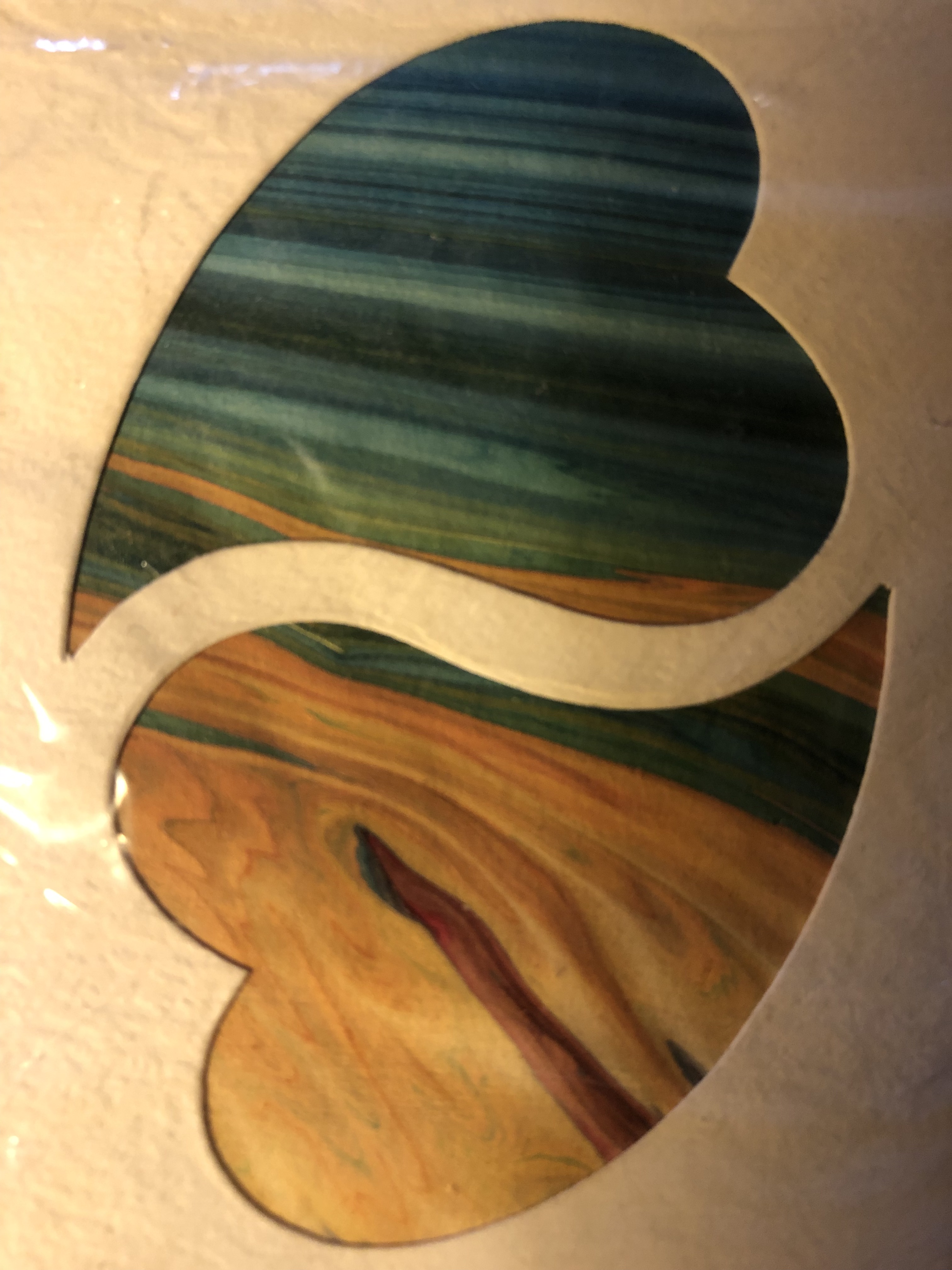
Card by Turkish paper marbling master that reminds me of the symbolic colors of Ukraine.