Offloading our hearts and minds, tempest-tossed, and the salve of art

O, I have suffered
With those that I saw suffer.

(Miranda, The Tempest, Act I Scene 2)

I read this week that the tech bruhs, so called in current parlance, see the world as being divided into two classes of people: the thinkers and the scrollers. While they, the Thinking Class, devote themselves to higher learning, philosophy, and deep work, affording the same wealth of life experience and cashflow to their offspring, they themselves are engineering the planet so that the rest of us, by which I gather they mean the 99% and our offspring, are relegated to the Scrolling Class, those who work as drones and merely consume whatever they, the Thinkers, put out for profit.
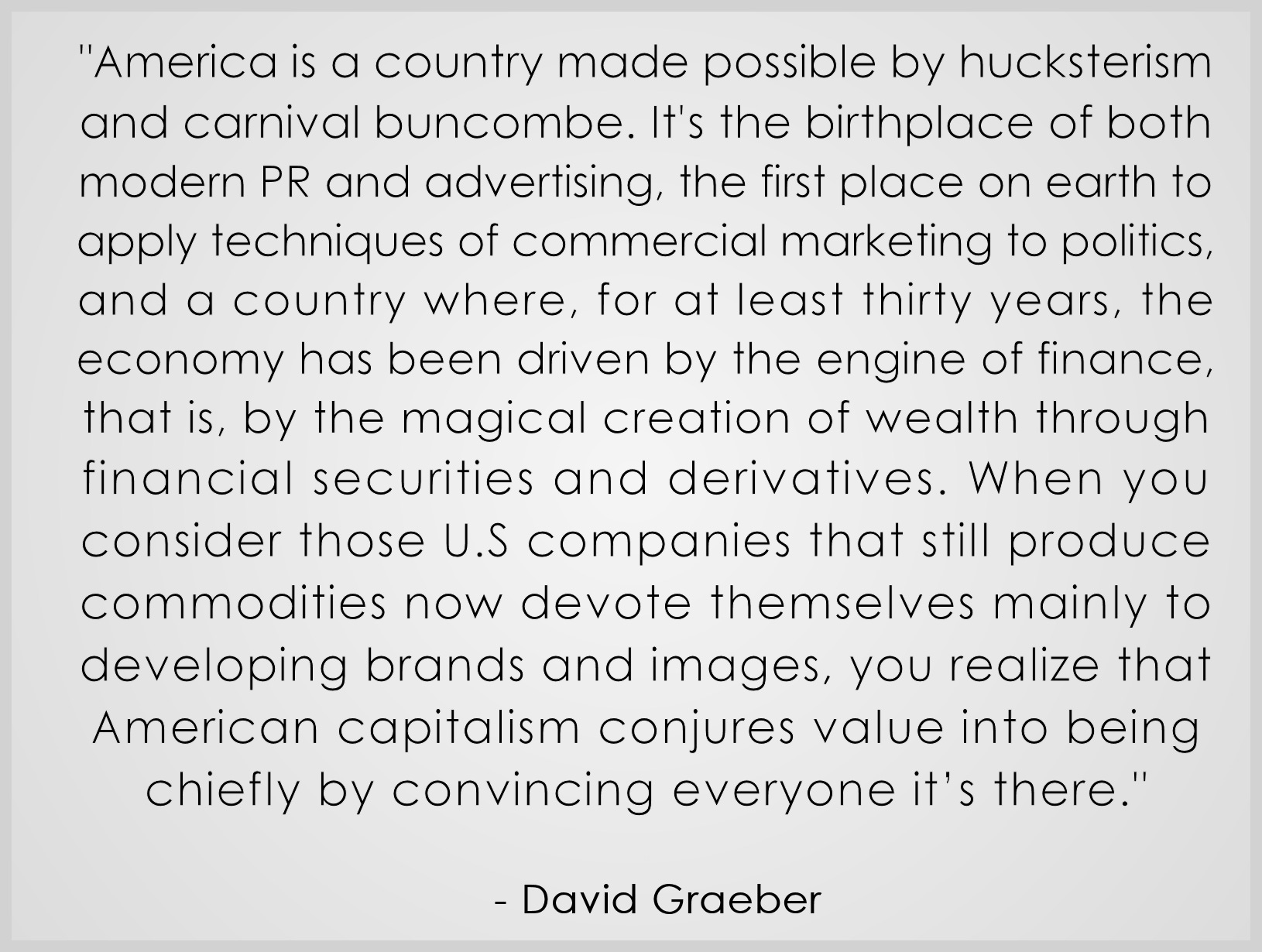
It’s all very Brave New World, a novel I read in high school and can’t shake. Will you be made into an Alpha or an Epsilon? Will you even know? And even if you are an Alpha, watch out if you forget to take your soma (“the opiate of the masses” that replaces religion) and have an original thought. All hell will break loose, and the only antidote is a rebel copy of Shakespeare.

My library was dukedom large enough.
(Prospero, The Tempest, Act 1 Scene 2)

This week the Trump Administration, illegally as usual, dismantled the U.S. Department of Education, spreading all the allocated funds around (which legally only Congress can do, but Republicans) to different departments, so K-12 education is now under the U.S. Department of Labor. Huh? In a seemingly unrelated development, the Trump Administration also demoted a bunch of educational degrees to “nonprofessional,” meaning people pursuing nursing, say, or teaching, will not be able to take out unlimited loans to attain a degree. Not only were the listed degrees for women-dominated professions, the professions listed were those whose members are legally bound to report suspected child abuse. If no one is educated to take those jobs…

Are you following? The Pedo-in-Chief is terrified of the release of the Epstein Files, and his Secretary of Education, Linda McMahon, whose husband Vince McMahon was set to go on trial amid accusations of child sexual abuse until a Chicago judge paused the case last December when Linda was announced as Trump’s pick for her new position. Meanwhile, Trump’s former “spiritual advisor” was arrested for child rape and plead guilty. In a call-in show I heard a snippet of this week, a caller demanded to know what was “wrong” about child rape.

The cumulative effect of all this during a single week has made me a bit of an emotional wreck, but it was an independent journalist on Instagram who formally linked all these pieces for me. From Love Ethic Yoga:

Moving K-12 education to the Department of Labor while red states are removing child labor laws & dropping the age of consent to 12 or 14 is a calculated move. The leaders of these departments are pedo📁files or pedo apologists. This is NOT coincidence.

Uneducated children are easy prey.
Hungry children are easy prey.
Homeless children are easy prey.
Unaccompanied minors are easy prey.


These predators are baiting the water. They’re creating the proverbial “fish in a barrel”. Yes, privatization is part of this but we cannot forget how many pedos are in this current admin. We cannot let them get away with this.

I got ill—I mean, Trump and his people are transparently, openly constructing a world where child sexual abuse is normalized, institutionalized, and unstoppable. These “men” want all young women and girls (40% of whom between the ages of 15-44 want to leave the United StatesI saw in a recent poll) under their complete control in order to force-breed children, for either labor on behalf of or the sexual pleasure of (white Christian) men. Once the children “age out,” a term I learned on Law and Order: SVU, they will be, one presumes, forced to push through their trauma with slave labor, living in one of the concentration camps being constructed all over the United States.

Utah’s planned mega-shelter should be like a jail for homeless people, one widely embraced group says

This is the Brave New United States of America, friends.
It’s more than hard to take—it’s impossible. This insanity has to stop. We need to see handcuffs and prison bars on the right people, and soon. We know this.

I can’t take in everything—you can’t either. So while I know there’s Israel’s defiance of the ceasefire, and Russia’s wish-list labeled a “peace agreement” by Trump and Rubio (rejected, thank goodness) by Zelensky; protests in Charlotte and Raleigh over ICE raids; so much, so much, my god, it was the children and their protectors I focused on, “offloading” the rest, more or less.

This week on a work Zoom call, a colleague mentioned that there is always work or training or something that we simply have to “offload.” It’s not a term I knew—but I got it. You just pass that conceptual understanding to someone, maybe a spouse who gets plumbing or a coworker who is good at Excel, and you don’t worry about trying to learn that thing, much less master it. You only have the capacity for so much, and recognizing that is not a bad thing. (That said, we all have to trust in our capacity to learn new things, and try to do that, even though in my early 60s I’m finding that I have to immerse myself with the focus of a monk to his devotions to do something as complex and unintuitive as Jira (if you don’t know, don’t ask), say, but it’s reassuring to know that I can still do it, if more painstakingly.)

Speaking of offloading: I no longer have a creative life in the recognizable sense. I’m sorry about it, but between taking care of family, holding grief, learning new things on the job, and this fucking administration’s atrocities, I had to let something go, and that was it—and it’s no great loss to the world, obviously. That out of the way, I’d like to celebrate the achievements of women artists whom I know as friends. In a world, and more specifically a nation, that doesn’t value women, children, innocence, creativity, or truth, here’s some art you need.

  • Read Amanda Quaid’s debut poetry collection No Obvious Distress, which explores her (still) young life with Stage IV metastatic mesenchymal chondrosarcoma (learning the pronunciation of which seems to be more trouble from some people than her years of treatment, so say the name) in all the ways;
  • Read Anna Citrino’s fourth collection, Stories We Didn’t Tell, which explores the unspeakable hardships and abuses of her American prairie women ancestors, based on the poet’s decades of research, in rich language;
  • Watch Patricia E. Gillespie’s documentary, The Secrets We Burywhich I saw at IFC here in New York in its premiere screening this week, about a true crime, told with love and empathy and not sensationalism;
  • Listen to Patti Smith’s Horses (1975). (Envy me my Row X seat at The Beacon Theater on Broadway Friday night in New York City to see Patti Smith and her Band play the shit out of Horses in its 50th Anniversary Year, plus encores of classics. Patti also spat, twice, and it was glorious.)

So lest you think Miss O’ has given up on art, I haven’t, and I hope you haven’t either. There is nothing on this earth as satisfying as a creative act, something you can point to and say, “I made that.” There was nothing, and now there’s something, and I did it. And the world is more colorful and right and full than it was before you created that thing, however small, even making a smile happen on a stranger’s face in a notebook store, which I did on Friday night before the concert. I did that. That thing, there? You did that. Not AI, not engineered by some tech bruh, or ordered on you by some basement-dwelling podcaster or a bottom feeder in Washington. You. Just you.

Let’s stop scrolling together and get seriously radical in creative community. Take a moment to read. To be quiet. And then connect.

Here’s Mr. Rogers on the value silence from Charlie Rose, which is a clip I hope you watch. “My, it’s a noisy world,” he says, and it is. There’s more he goes on to say from his 1994 book, You Are Special, including about his professor, Dr. William Orr, who told him, “You know Fred, there is one thing that evil cannot stand, and that is forgiveness.” Take a minute with that. As a reader, Rogers says that the white spaces between the paragraphs are more important than the text, by which he means that if you aren’t using silence to reflect on what you are reading, you are missing the point of the endeavor. You can see more clips of Fred Rogers here. “A great gift an adult can give to a child is to let the child see what you love in front of them.” Whether it’s car repair, lawn maintenance, playing cello, fixing things, reading, singing, cooking, telling stories, dancing, whatever it is (note: what you love, not what you exploit)—that is the gift. I think I try to do that in life—to show love of life in greeting others. It’s tiny—I’m not a worldwide creative power like Patti Smith—but really it’s about being present, as Rogers says, moment to moment (and it’s the most important work in rehearsing a show, as shown me by director Maureen Shea). Doing things even a little larger than ourselves, then, in presence, is the point. Mr. Rogers only cared to be recognized if it made a child feel special—Fred Rogers liked “not the fancy people,” but regular people, and he aspired to “be the best receiver I can ever be—graceful receiving of what someone gives us; we’ve given that person a wonderful gift.”
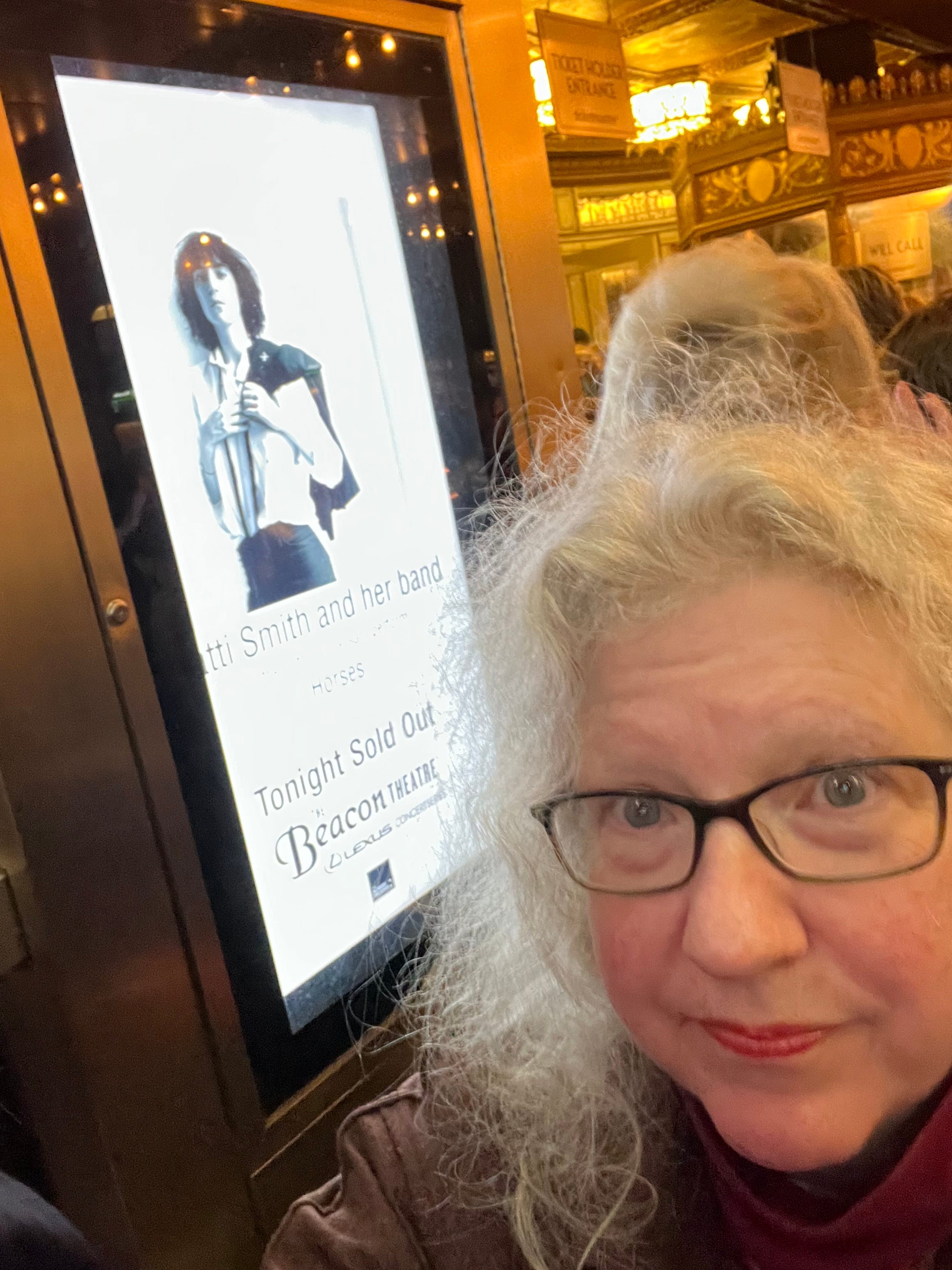
Miss O’ most gracefully received.

The play I’ve been quoting here interstitially, The Tempest, is my favorite Shakespeare play; in some ways it’s like a compilation reel of all his best ideas, and his final play and only original plot, his retirement play. I’ve seen four productions of it—at the Globe in London, with Vanessa Redgrave as Prospero (it was awful); at the Shakespeare Theater in Washington, D.C., directed by Garland Wright, which still ranks as the top theater experience of my life (even after seeing Hamilton and Gypsy with Patti LuPone); one at Classic Stage Company downtown, with Mandy Patinkin (okay); and the fourth at St. Ann’s Warehouse, an all-women cast set in a women’s prison, directed by Phyllida Lloyd, with Harriet Walter as Prospero (fantastic). The most famous speech of the play, by Prospero, comes in Act IV, and I always think of it when eras end, as well as even a simple good thing, and especially a life:

Our revels now are ended. These our actors,
As I foretold you, were all spirits and
Are melted into air, into thin air;
And, like the baseless fabric of this vision,
The cloud-capp’d towers, the gorgeous palaces,
The solemn temples, the great globe itself,
Yea, all which it inherit, shall dissolve,
And, like this insubstantial pageant faded,
Leave not a rack behind. We are such stuff
As dreams are made on: and our little life
Is rounded with a sleep.

(Prospero, The Tempest, Act 4 Scene 1)

In the final act of the play, Prospero’s daughter newly in love sees all the possibility of life, and this is from where Aldous Huxley took his dystopian novel’s title:

O, wonder!
How many goodly creatures are there here!
How beauteous mankind is! O brave new world,
That has such people in’t.

(Miranda, The Tempest, Act 5, Scene 1)

Sure, love is wildly naive, but it’s the beginning of everything. There’s a new world to be made. Let’s stop the fucking fuckers and do that.

Sending love, philosophy, music, poetry, creativity, all the good church,

Miss O’
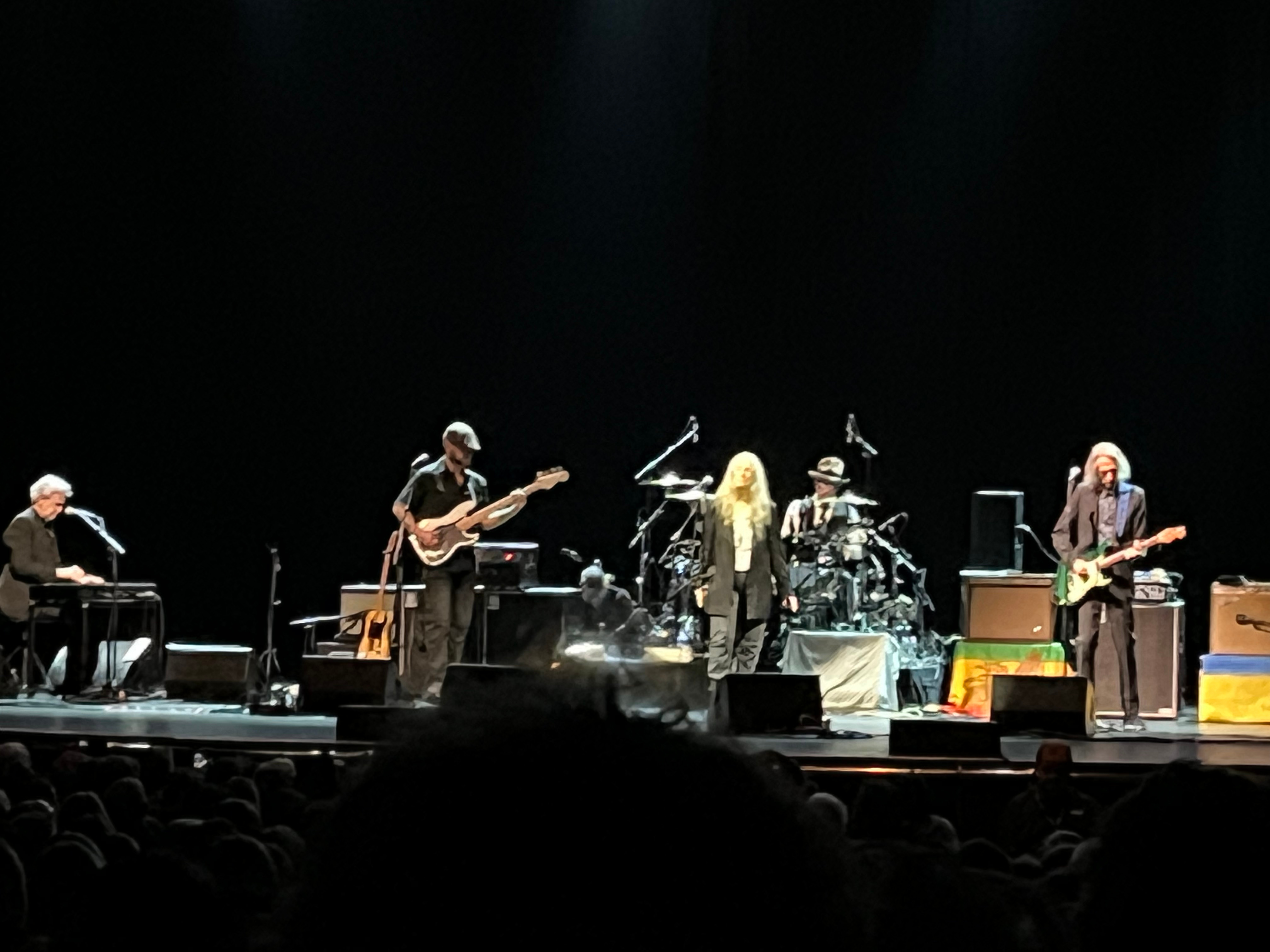
The People Have the Power: Patti Smith and her band, The Beacon Theater, NYC, 11/21/25, the 50th Anniversary of Horses. Photo by LO”H. This was church.

Food, Home, Music

Ways we see some sense, in lists of three

Babies, like you, I am about to simultaneously explode and collapse from rage, numbness, boredom with the stupid, and Dorothy Parker’s “What fresh hell is this?” pounding in my ears, I mean for the LOVE of GOD.

Look, we all of us—all of us—every mother lovin’ one of us—white, brown, black, all the colors; man, woman, trans, all the genders; short, tall, medium, all the heights; ambulatory, prostheticized, wheelchair-bound, all the abilities; Euro, African, American, Indigenous, Indian, Chinese, Korean, all the places; Jewish, Muslim, Christian, Buddhist, Hindu, all the faiths–love three things, and I mean LOVE:

1. good food;

2. a comfortable home; and

3. music, whatever that music is.

Watch Home Town on HGTV and tell me you wouldn’t want Ben and Erin to help you make a home for yourself; walk past any bakery in the morning and try to pretend you don’t smell that bread; hear a catchy tune on a radio at the laundromat and not pause and bop. You can’t. Because roots as old as the Big Bang, baby, give us a common consciousness. Eat it.

And for some reason, too many whites in this country think ONLY THEY should have any of those desires, those sensory experiences, those moments. This is insane, it’s psychotic. How do we shake sense into these racist, bereft, sociopaths? Those “Frozen People”? They have become new gold standards for the worst of humanity. Somebody, quick, sick a porch swing, Dolly Parton, and fresh peaches on ’em.

I wish we could cook it out, dance it out, whatever this psychosis is, everybody walking into and out of a Wayfair commercial to create that fulfilling home, and combine all of it into community. It’s all so basic.

Inspired by my friend Susan, who got me making Lists of Three (various categories) and sharing them with her the other night; and colleagues who want to have a Zoom social and talk food, I have listed my dream meals, in honor of Thing One we all love. You’ll pardon me if I’m feeling a need to be elaborate.

Dream Meals

1. Breakfast: my dad’s cheese omelet with American cheese, cooked in bacon grease, with biscuits from The Red Truck bakery in Warrenton, Virginia; coffee from Baruir in Queens.

2. Lunch: the brown bread, Stilton cheese, and tomato chutney Ploughman’s lunch, from the pub in Kent, England, 1992, followed by a cup of Yorkshire tea.

3. Dinner: The fried chicken and collard greens from Mama Dips in Chapel Hill, North Carolina; the hush puppies and sweet tea from the midcentury diner near Seagrove, NC; my mom’s potato salad (sweet relish is the key); fresh-from-the-garden baked sweet potatoes (the way my Appomattox landlady Margaret Stokes from Chesapeake made them), and ice cold fresh sliced tomatoes from the garden.

P.S. Dessert: childhood next door neighbor Frances Christie’s homemade apple pie with the all-butter crust and fresh apples from the Blue Ridge in Virginia.

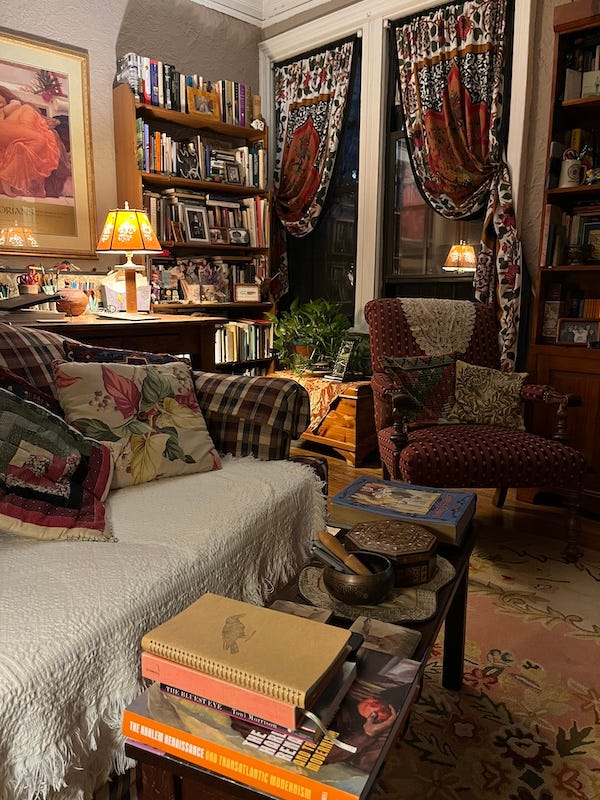
Dream Home

Very grateful to have been able to build this, over many years, across many lives and houses:

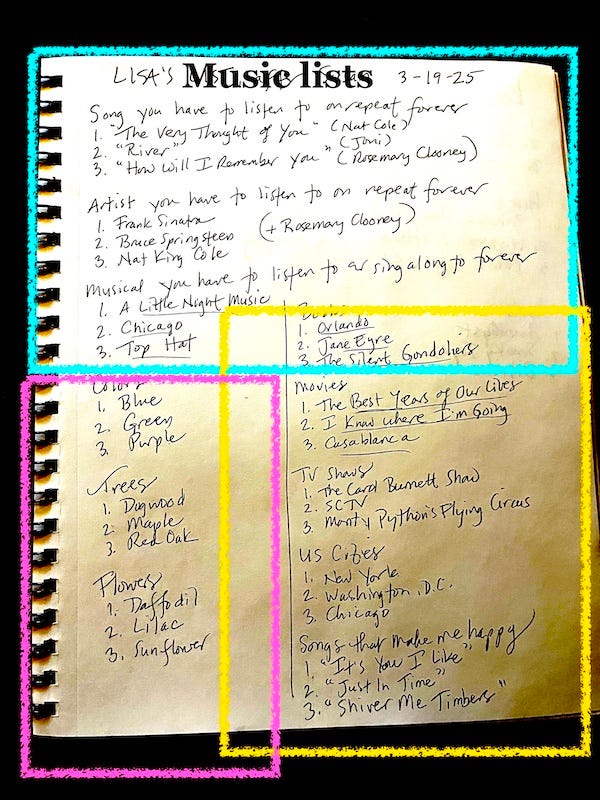
Dream Music

There’s so much not on here, but what can you do? The categories force you to go with your gut. I even surprised myself. (When I lived in my basement during 2017-18, while a friend took my main floor bedroom as she recovered from breast cancer surgery, I missed street noise so much that I found I had to play music on low to sleep. Those CDs? Tony Bennett, The Rodgers and Hart Songbook, and Rosemary Clooney, Songs from the Girl Singer. Every night for nine months. And on the list down there, Rosie was an afterthought; Tony didn’t even make the cut. How?)

Does this get your brain percolating? With a hat tip again to Susan for inspiring me to start remembering all the foods, homes, songs, as well as people and places I like, and the experiences I’ve lived: here’s a little challenge to you, my reader:

In the comments, if you want, give us a List of Three of whatever, no explanations needed, just a label and a list of three. Let’s inspire each other. Let’s connect. Let’s take some recommendations. See what happens.

I could really use reminders of our common humanity. How about you?

Love, love, love,

Miss O’

Caution Tape

Thinking about how things land where they do

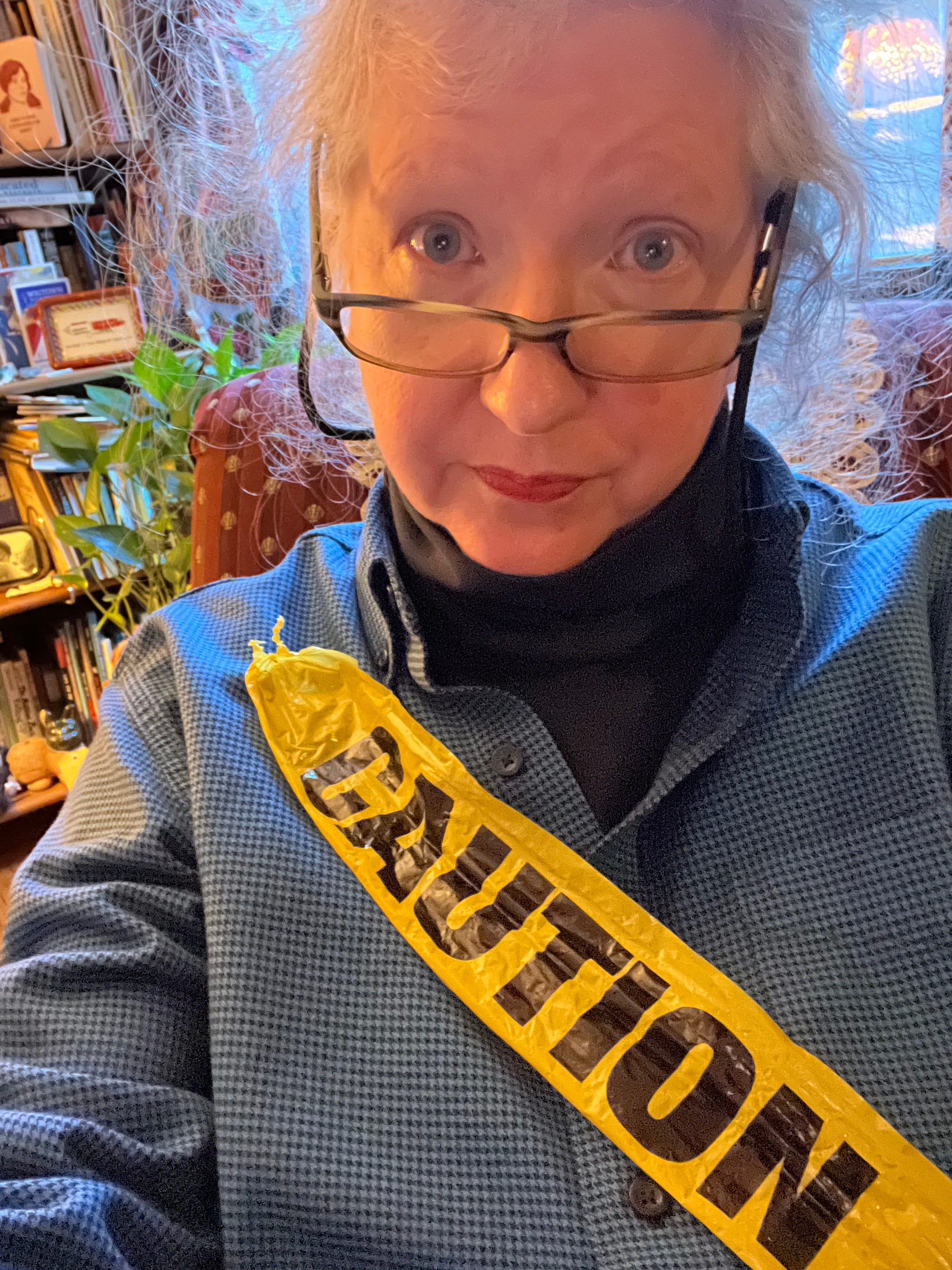
Years ago, my friend MB was invited to a costume dance but had no idea what to wear. A few days before the event, he got inspiration from a construction zone in his Manhattan neighborhood. Late one night, he crept out onto the street and tore down a big length of “Caution” tape along the sidewalk, his heart beating like mad as he raced back into his building, terrified he would be caught (he had no idea where one bought Caution tape or he would have). The next day he went to a thrift store and found a short pink dress and a blonde wig. Before the dance, he put on the wig, applied lipstick with a trowel, arranged the Caution tape over his dress like a Miss America sash, and voila: Streetwalker Barbie!

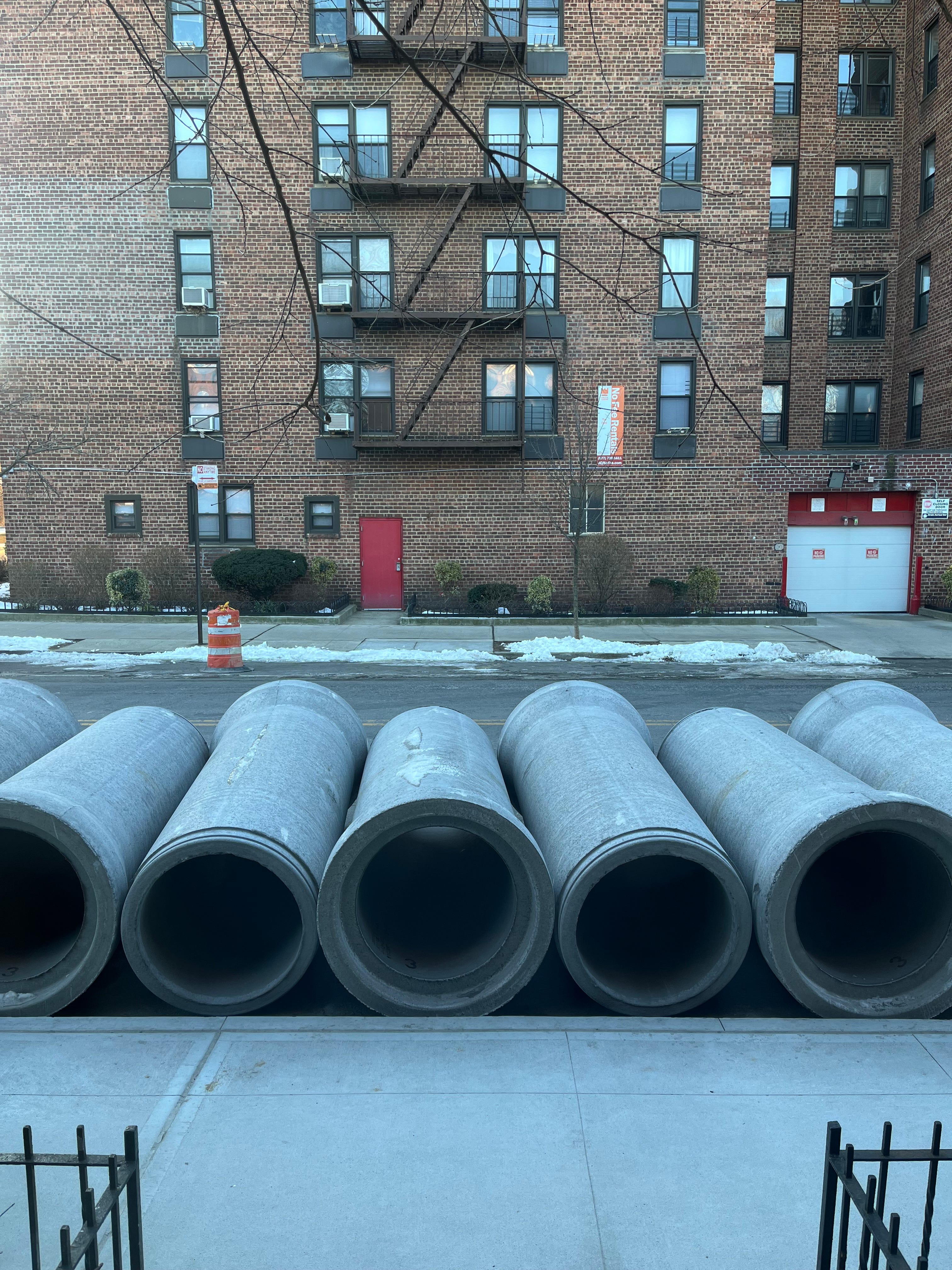
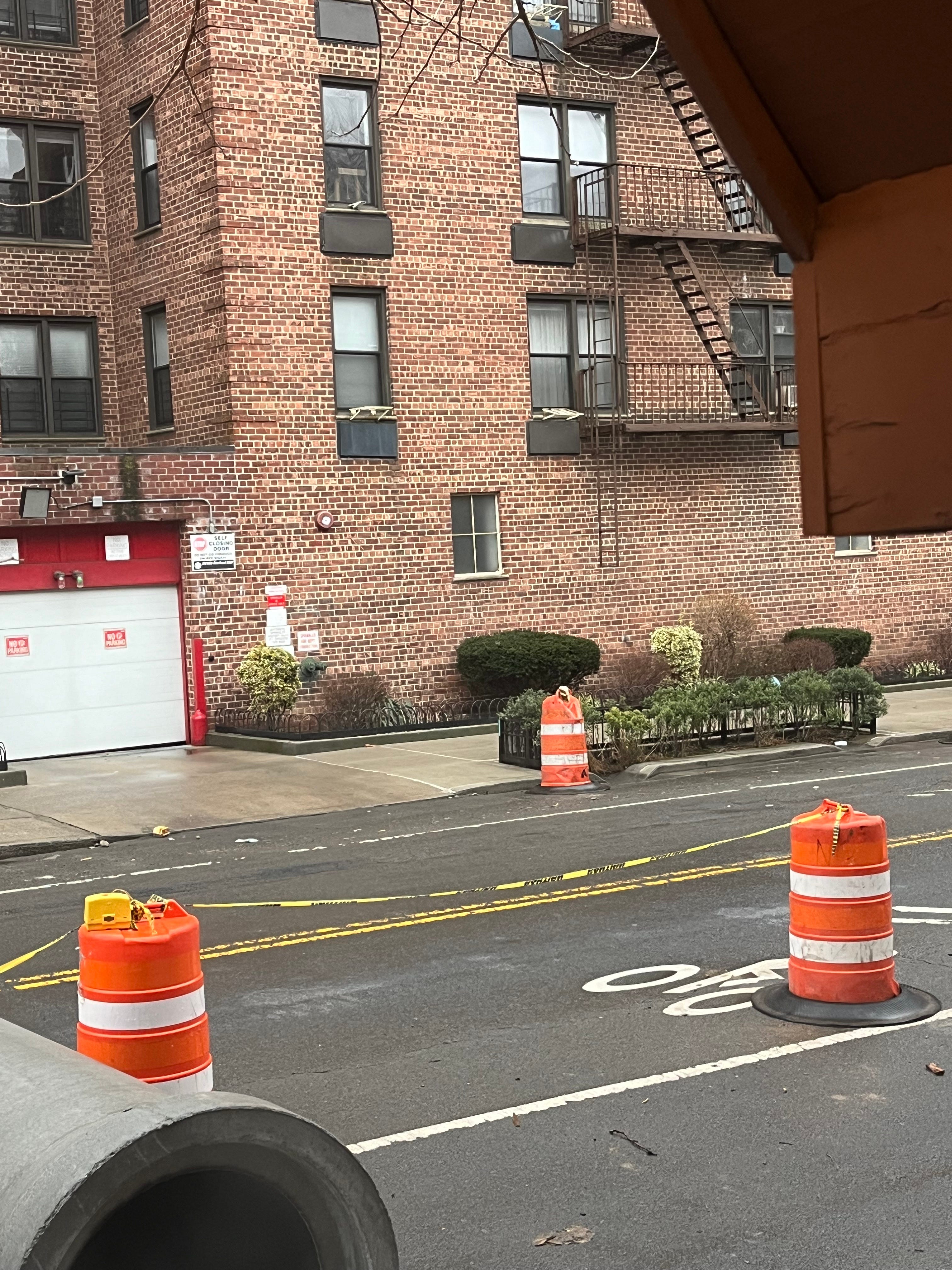
I’d love to be that inspired by the detritus of Caution tape outside my apartment building over the past two weeks. The city is completing “emergency repairs” (the notice taped to door said) of the sewer along part of our building past the elementary school. The yellow tape and tall orange barrels prevent parking for now (who put it all there?), the street organized to prepare to dig up a city block to replace perhaps a dozen or more giant concrete barrel-tubes, whatever they are called (how did they get there?), taking up those parking spaces-in-waiting, and I had to wonder, “Emergency repair?” Yikes. But this work is meaningful work. Look at all that equipment, crew, the purpose: I understand the kind of impact this work has. Results you can see, work you can use.

There’s something magical about construction like this, isn’t there? Photo by LO’H, Queens.
Sometimes, it’s needed. Photo by LO’H, Queens.

This morning early, I emptied out the corner cabinet in my small apartment kitchen to disgorge it of plastic storage containers. Call it an emergency repair. I don’t know why I live like this, saving every single plastic container that once held takeout shrimp and broccoli from Ten Full around the corner, but I do. I stuff them in, harder and harder, until one late winter morning, usually during Lent, I can’t take it anymore and I go in for the big clean-up and reorganizing. I hate being this all-or-nothing-at-all person. I would like to be a flowingly tidy person, who effortlessly tidies as she goes.

I look at just the surfaces of my place and see 1) a financial packet (I really mean to make that phone call, so it’s on my desk in the living room); a notice from Con Ed (since I have to make sure I schedule the natural gas detector installation, this is taped to the back of my front door); 3) a request for a proxy vote from another financial institution that holds the keys to my retirement (and since I’m not sure what to do, it’s on the kitchen sideboard to think on). Do you place things like this? And why? And for how long? How do these locations gain meaning?

I don’t know about you, but I also tend to be a person who creates in bursts, writing or drawing or making collages daily, for a week or three. And then I seem to crash; my creativity may lie fallow for months at a time. This manic-depressive quality is what drew me to theater, I think, beginning back in middle school, because after you’d rehearsed a show every day for eight or ten weeks, performed it three or four times, and stayed after school the next week (or in college, all night after the final performance) to strike the set, you were done! (The appearance of the final ghost light, literally and figuratively, remains one of the most satisfying feelings I know.) You then spent the next month catching up on all the stuff you’d neglected, like housework, paperwork, grocery shopping, or, when aged 12, cleaning your room and finishing those two big school projects. And after all that, you could dream again.

What has to happen to make this repair an emergency repair? What makes that place the place to put something? What causes inspiration to strike just then?

O park of wondrous flowing green
And more than passing fair,
We wonder if you would mind if we
Walk barefoot through your hair.

~ by Lois Oberdin, a great friend of my mom’s when they were about 16; this poem created and recited in situ while crossing Bayliss Park, Council Bluffs, Iowa, ca. 1950.

I share that poem up there, by my mom’s friend Lois, because when all else fails or seems merely duty-bound and cold, poetry cares (as Naomi Shihab Nye says). Poets feel. Of the poem’s creation, my mom said of Lois, “She’d do things like that all the time.” Mom then told me that her friend, around the age of 18 or 19, was institutionalized for schizophrenia; my mom never saw her again. When I learned that (I was maybe twelve), I made it a point to memorize Lois’s impromptu poem, and I am glad I did, because this beautiful, unusual girl never had a chance to live a full, creative life or grow up to loathe a corporate job, or make her home and papers disorganized, or stare from her stoop at Caution tape along her street. It’s terrible to think about. But we have a poem, at least one poem, a creative act to recall, to celebrate Lois.

And when you stop to think about it—all of us, our habits, our anxieties, our personalities; all the messes in our houses, in our heads, under our streets— maybe everything and everyone should come equipped with a roll of Caution tape, you know? Just throw on a Caution sash as a warning of our own emergency repairs.

You’ve been warned. And yes, that is a Chia Pet on my shelf.

Always a work in progress,

Miss O’

Objects Found and Lost

It’s Hot Up Here

Miss O’s childhood sidewalk, summers ca. 1960s to ’70s (skates, bike, and bare feet not pictured)

New York City, like most of the planet, has been enveloped in a heat wave for the past couple of weeks. Until around 4:30 this morning, at 82 degrees and 68% humidity, I’d managed to avoid turning on my air conditioning (I know this sounds pompous, but fuck it: I figure it’s the least I can do for the earth). But yesterday, walking to and from the farmer’s market, I heard or saw a half dozen ambulances, and not counting Covid or other catastrophes the only other times you experience that here are during heat waves—heat stroke victims who live on the eighth floor, say, and can’t afford to own or run an air conditioner (55%-70% of our incomes are spent on rent here). Friday evening I was pulling garbage to put out for my co-op apartment complex (only 17 units, could be worse with a super on vacation), and even with help and being fully hydrated I had to stop to get more water, rest, breathe. And I had to wear a mask for the smell, and latex gloves (that became filled with sweat), so that didn’t help. The air quality is bad, too. Oil, engines, machines. I awoke in wee hours today, as I say, hearing my 88-year-old mother’s words on the phone yesterday, “Don’t die,” and broke my vow. Sure, I’ll live another day in the mid to upper 90s, but to what end?

In the trash room, Miss O’ fights with the bad recycling.

Calm My Ass

Scrolling through the ol’ Instagram at 5 AM as I drank ice water and waited for the cool air to kick in, I came across an ad for a popular meditation app. There are three signs, it flashed up in meaningful words, that I might be “emotionally detached”:

  1. Neglecting your needs or depriving yourself of pleasures
    [Warning: lack of parallelism coming up. -ed.]
  2. You are numbing yourself with social media, food, or alcohol
  3. You feel inadequate and alone

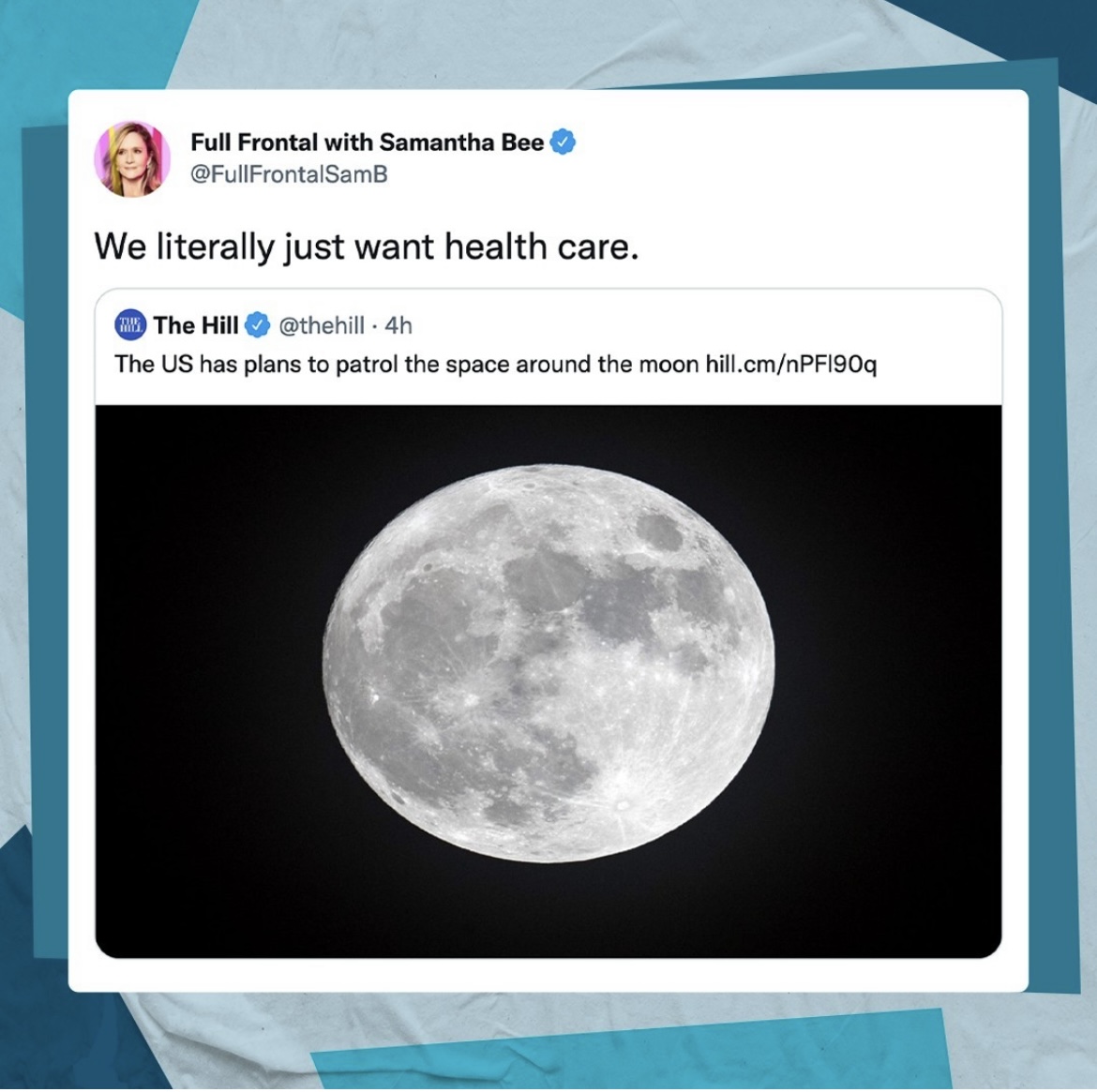
So…Tuesday? Because isn’t this everyone on the planet who is guided by love, at this point? (Note: All kinds of five-star ratings and quotations came up, too, encouraging me to “face my fears” and “become a new person”…by, what, shutting off?) I mean, did you watch the eighth Jan. 6 hearing? I think Rep. Elaine Luria (D-VA) summed up the week’s news well with this tweet:

Take a lesson, people.

This app ad got me realizing that in fact I don’t want to be peaceful. Far from it. I want a fire in my belly. I want to feel engaged, alert, excited. I’m tired of feeling tired, sick, inert. This world is on fire. I want to make the dogs bark.

Angela Sidney, Life Lived Like a Story, 1990, p. 156
University of Nebraska Press, 1990. These women are true warriors.

The Voice

Question from a friend and blog reader: “All your blogs have a very specific rhythm and pattern. Is that intentional?”

Answer: Yes. [Shakes head.] (Also, No. [Nods.])

I also responded, “I’m not sure it’s pleasing. I play with moments.” 

I think a voice one “hears” in a letter or blog (which for me is a kind of letter) is as particular as a speaking voice. I think there is an expectation with writing that writers will mix it up a little. Certainly, in my speaking voice, I can become a little bit Southern (from my Virginia background), or a little Midwestern (my folks), or randomly Cockney (natural mimic), depending on my mood and who I’m with. But really, Lisa O’ has one speaking voice. And over time, I’ve developed one writing voice, and I find it only varies when I am writing, say, dialogue for characters. I think it’s okay. (I knew a wonderful professor, Andrea Lunsford, at Bread Loaf who introduced herself at seminars by saying, “As my granny used to say, ‘Andrea, you have a loud but by no means pleasing voice.'”) I mean, you always know it’s a Keith Haring work, or a Georgia O’Keeffe painting, no signature required. And I don’t think you have to be that level of genius to have your own style and say many things within it.

A few years ago, a friend’s son (and he’s my friend, too) and his boyfriend at the time visited my home in Queens. He later told me that I had a very specific aesthetic. When I asked what it was, he paused and thought (we were standing in the Brooklyn Museum, looking at the Judy Chicago installation “The Dinner Party”) and he said, “Dimly lit whimsy.” He smiled. 

I think that describes me, my life, my talents, and my writing, too.

Dimly Lit Whimsy

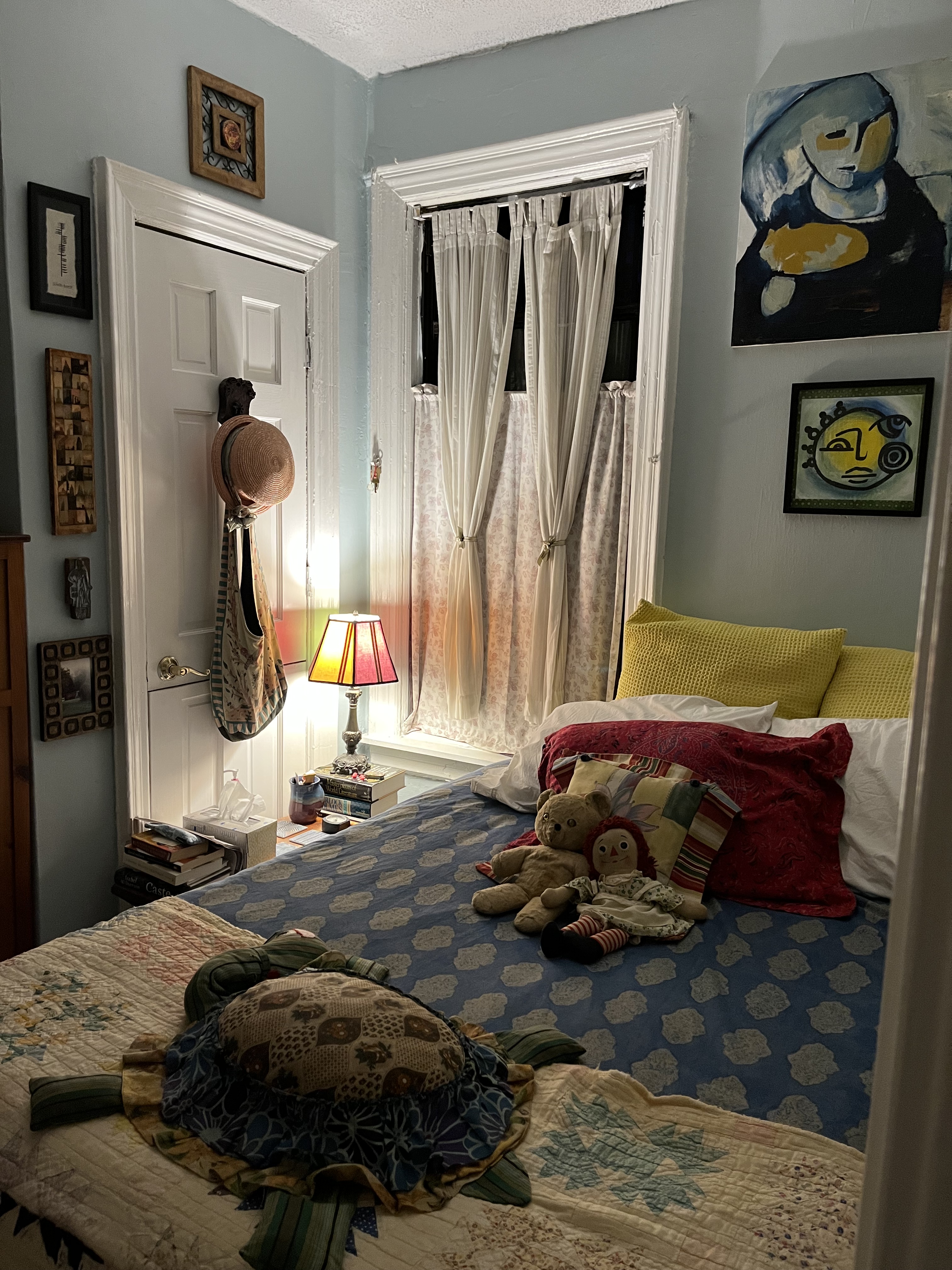
I play with moments. My home aesthetic is born of arranging found and received objects, such as cards and gifts and rocks and pins and books, into vignettes. I play with moments, dimly lit. (I’m not sure I illuminate anything.) Each item in my place came to me at one moment or another, and I assemble and reassemble these moments on my shelves like a story, as I do in my mind, or in a blog post. If I make any “art,” this is about it. I’m not sure there’s any there, there, to paraphrase Gertrude Stein. I wish I were capable of greater depth, of making real art, for example, but I’m limited to the appreciation of, and at best the arranging/displaying of, the art that others make. (Flashing Sign #3, in red, “inadequate and alone”; very few people see it.) 

Miss O’ at home, with foot.

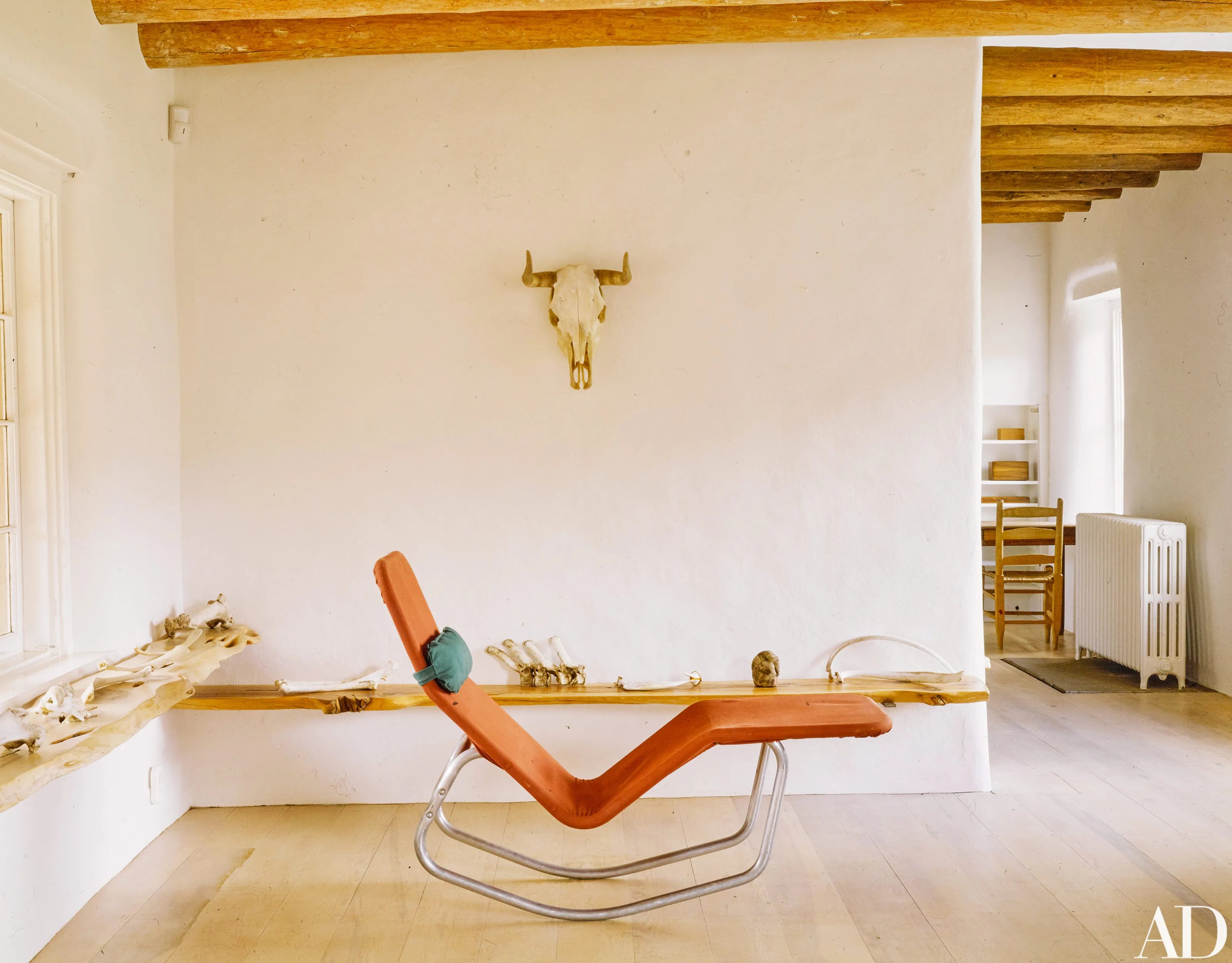
Whenever I look at pictures of Georgia O’Keeffe’s home in Abiquiu, New Mexico, however, I find myself dreaming that I was that person, content with one lovely stone, a clean old bone, a simple wood slab of a table, white walls, bright natural light, maybe two wooden chairs, a desk, a sculpture, one painting.

From Architectural Digest

The way I live, in reality, couldn’t be more the opposite of that. I’m not entirely sure why. Something about a need to feel cozy, to not lose a single memory.

More dimly lit whimsy, with original art from all over, arranged just so.

When I started blogging several years ago, on Blogger, I made it my weekly task to hold in my mind all the disparate things that caught my whimsy and use the writing task to arrange a sort of pastiche/synthesis (since the post-modern world is essentially collage) to see if I could find the connective tissue (sorry—mixed media, mixed metaphors) to somehow point to solutions for the troubles of the world. It all came down to education. Everything does. Not merely knowing a lot or being smart, but rather making connections among the things we learn to try to do something with it, to use it, to put in service to something. 

I’m not sure that I accomplish anything, and yet I persist, as I’ve noted before. I had a high school friend who always introduced himself with his IQ, 185, and when I reconnected with him decades later, he was still doing that, as if stuck on a tape loop. (Am I stuck on a tape loop? See also, “feeling alone and inadequate.”) Where do we find the inspiration to grow and change?

Speaking of tape loops, I often return to this little gem. Sir Peter Brook died 7/2/22 at age 97.
(For best results, substitute “Life” for “Theatre.”)

Dimly lit whimsy: More and more I find myself writing in the dark.  Less and less to say. Amidst so much chaos, so much violence, so many opinions, causing, ironically, so much isolation, where to? And like me, I suspect we all desire not so much “quiet” inside ourselves as stability in our outer lives.

From Instagram.

I believe this is important. Without stability in our most basic living, it’s hard to become outer directed. And if we don’t create a stable center and combine with a contained fire of purpose, the nihilists win.

Seen on the web. People are funny.

In the meantime, as that fucking app reminds us, we eat, we drink. Possibly we read. We watch the January 6 hearings. We vote. Stream a show to binge watch. But there has to be more inside us. And it wants to come out.

So here’s a call to action, to us good, caring folks who need to get off our asses and do what needs to be done, somehow. Right after this heat wave passes.

Lawn chair in O’Yard, ca. 1970s. Doodle by Miss O’, who reminds you
to conserve energy and stay hydrated. For all of us.