In my room, the world is beyond my understanding; But when I walk I see that it consists of three or four hills and a cloud.
Surface Chair
Years ago, my friend Tom and his partner were moving and downsizing, and he sold me a delicious olive green wing chair (which I foolishly gave away when I later moved to New York and I miss it still). On first seeing the chair, which was solid and plain, in my house, my friend Chuck remarked, “Now it just needs a couple of bright pillows!” When walking the shops of Fredericksburg, Virginia, I found two expensive hand-painted pillows, with an accent of that very olive green, that did just the trick. I thought of all this just now as I pulled down my bed covers and shifted one of those very pillows to the side so as not to crush it in my sleep.
So much of life and living is surface, a chair you buy and lose, the bright pillows you spend so much money on to decorate the chair, the casual remark that caused you to elevate your home decorating aesthetic beyond solid colors into bright patterns of possibility. All surface thoughts, yes, but more than the surface shifts. Doesn’t it?
II
From my balcony, I survey the yellow air, Reading where I have written, “The spring is like a belle undressing.”
Surface Friend
Thursday afternoon, I texted my dear friend Cindy who lives on Maui to ask what was happening and if she and her family were safe, and they were, as the fires were not on her part of the island, but oh how she was grieving the loss of Lahaina. She then texted, “Did you know that Tammy [a fellow student and actor from Virginia Tech days in the 1980s] passed?” I did those things we do now: looked up Tammy’s obituary online; wrote a tribute memory; posted of her death in a social media alumni group. I really had only a surface relationship with Tammy, acting with her in a Summer Arts Festival production of Andre Gregory’s adaptation of Alice in Wonderland the few months before I started my teaching career. We took to walking home together on the nights after rehearsals and performances, as neither of us had cars, and her place was my halfway point. She’d kiss my cheek, wish me “safe home,” a phrase I didn’t know. She graduated the year I was a freshman, and by the summer I got to know her had waitressed and auditioned in New York City for three years and lived with a Russian boyfriend named Roman who wouldn’t go down on her because he didn’t understand what “the magic button” was, which was not where women bleed and pee, and her favorite city memory was Roman pushing her around the East Village in an abandoned shopping cart in the cold wee hours after the bar where they worked closed for the night, her legs sticking up out of the cart while he spun her around on the deserted streets and she screamed and laughed. That’s what I know about Tammy. And can’t forget.
Surface memories as lasting as love.
At the Planetarium, American Museum of Natural History. Photo by LO’H
III
The gold tree is blue, The singer has pulled his cloak over his head. The moon is in the folds of the cloak.
Surface Life
Sometimes I think I have only ever known surfaces, surface friendships, surface news, surface travels, surface nature, surface career, surface artistry, surface feelings, surface disaster, surface stories. So of course I dread. I obsess over decorating a home, oddly, that almost no one sees, an art project for an audience of one, knowing it and I could be lost at any time, and it’s so much fog, really. I see spots I missed when I dusted today. And what should I have to show for all this care and attention? Is there anything inside me deeply affected by bright pillows on a muted chair? Is there anything that can emerge out of me that will deeply affect the world? And what of all this death?
Three or four memories and a cloud. Is there much more we can expect?
Sending love out to everyone who needs it, even from my surface, to help you absorb whatever was your loss in life this week.
Morning from the 82nd Street Subway Station. A couple of cars and a sun Photo by LO’H
“I’m just going to read one of the things you said. You were talking about the evolution of science and then of physics in particular: ‘The deeper revelation’ of physics in our time — and it has just kept going in that way that was evolving right at the end of the 20th century — ‘The deeper revelation is one of undivided wholeness, in which the observer is not separable from what is observed. Or, in Heisenberg’s words, ‘‘The common division of the world into subject and object, inner world and outer world, body and soul is no longer adequate.”’ And then you said, ‘Is this physics or theology, science or religion? At the very least, it is poetry.’”
Krista Tippett, quoting her guest Barbara Brown Taylor, On Being, April 2, 2023
I haven’t written in a while. Right now, I’m busy cleaning my apartment in preparation for good company and being a sweat factory during the hottest days in the recorded history of the planet, and I’m finding it hard to get really excited about anything, and I don’t mean this meanly. I mean, we’re in the middle of the Sixth Mass Extinction, so if you, who are no doubt going about your business, have ever wondered whether or not people noticed the Roman Empire fall, we now know that the answer is, “Not really.”
View down W. 53rd Street during AQI 400 day in NYC. Photo by LO’H.
As a result of this hyper awareness of planetary death, this morning I had this sudden vision of Rep. Jim Jordan (R-OH)—the disrespectful wearer of shirt sleeves and insolent spewer of nonsense and censurer of Rep. Adam Schiff (D-CA)—standing waste deep in a raging flood, screaming above the din, “Hunter Biden!” followed by “Abortion!” followed by “No gays!” followed by “What abuse?” just as the waters reach his chin; he is circled by small rafts of the last of the eager reporters, holding out their recording iPhones to catch his every word as the last iceberg melts completely as they are all dragged under, disappearing into the muddy current.
What in the actual hell is the matter with these people?
To open up my heart to hope, I wash my kitchen floor and outer cabinets, sink, fridge, stove, reminding myself to be oh so grateful for the relative ease of my life, remembering how hard I try not to turn on my air conditioning to try to offer this to the planet. As I stream rivulets down my face and body through this work-as-prayer, I listen to episodes of On Being with Krista Tippett and learn something.
We all need a go-to for grounding. It’s philosophy and theatre that center me. My theatre this week was seeing the ballet Giselle performed by American Ballet Theater (ABT) at the Metropolitan Opera House at Lincoln Center. Too beautiful, and ballet is not the usual thing for me to see. I keep trying to expand my culture, so thanks to my friend Tom Miller for asking me to go. As for philosophy, On Being guests Barbara Brown Taylor and Ruth Wilson Gilmore were my philosopher activist humans for learning.
OtherWays of Seeing
Years ago, back in 2016, in the before times, I eagerly sought a documentary about one of my favorite writer-artist-critic-philosophers, John Berger, famous for this book and TV series Ways of Seeing. The film, made in part by and featuring Berger’s friend Tilda Swinton, was called The Seasons in Quincy. It was sort of not that good, as I recall, but surely made with love if not skill. (There is one sequence in particular that caused the audience at Film Forum in New York, where I saw it, to break into cascading “harumphs” and derisive chortles: Swinton, cutting and peeling apples for a pie, seems to be having a fluid conversation with Berger in his farmhouse kitchen in France, but each quick cut back to Swinton shows apples going from peeled to unpeeled, the bowl of slices one moment full, the next empty, then half full; continuity ain’t no joke to serious urban filmgoers.) Berger died shortly after it came out, aged 90, so it was good to have a love letter compendium of his greatest contributions to culture, and I’m not sorry I saw it. Possibly, too, were I watch it again, I would be less critical for that reason.
Sidebar about Tilda Swinton: her performance in Sally Potter’s Orlando is just a marvel. One of my favorite of Virginia Woolf’s novels, my gateway drug in fact, this is a singularly fascinating adaptation of Orlando (1928!). Gender is jazz now.
From the exhibition at the New York Public Library of Woolf items. Photo by LO’H
One moment in the documentary The Seasons in Quincy that stands out for me: Berger on music. The scene is odd, a contrived gathering of current, younger philosophers gathered seemingly to pay tribute to the old man (not that Berger sees it that way), Berger says that he sees salvation of the future happening through a surprising thing: “Maybe we live in a time when the truth is most easily told in song.” The others look at him, at each other (is it fair to say, with pity?), without assent, as I remember it. Well, their silence seems to say, the old man has finally lost it, still living in the ’60s.
I took from Berger’s comment something else, whatever he intended, which is that in song we find our truths, our joys and sorrows, and our collective experience most fully expressed and shared across generations and backgrounds—not that truth is easy, but that in genres from jazz to hip hop to rock, from protest ballads to power love ballads the truth of being human is most understandably told, making connection most universally possible, which is not to say most useful if changing the status quo legislatively is the aim of art. Sometimes you just need to dance it out.
I was reading and listening to blogs by Patti Smith on Substack, on poet musicians like Lou Reed—the innovator jazz artists like Coltrane, Pollack—all the theatrical forms, the rehearsed forms, forms she took part in with great collaborators. Smith—can I call her Patti?—is another philosopher artist who is helping me transition, I hope more gracefully than I might have, into old age.
Feeling the Rhythm
Look at our world now, our Earth—seasons are jazz—there’s a form we used to know, an expectation, an order, but depending on the results of the latest continued human interference, the changing weather patterns, daffodils can bloom in February. You know. The poems are changing, the dance, the music. Or they should.
The 20th Century was dedicated to the annihilation of man; the 21st Century to replacement of humans as a species. Might be good for the plants and animals.
The trouble with zoos.
And blogs.
And I wish I was a poet so I could stop writing long sentences about all this shit.
So much death and dying. Yet life, too. Promises of joy. The sweet Cochranes are coming from Scotland to stay for a couple of weeks. My friend Colleen wrote a play called Dickens Packs Her Bags, and I’m participating in the reading.
Jazz is life.
Why can’t I concentrate to read a book? (I did finish Harvey Fierstein’s memoir, I Was Better Last Night, and I’m rereading it. His life is inspiring art jazz.)
I can’t quite listen to The Velvet Underground this week for some reason, so I’m back to my Apple Music “Lisa O’s Ecclective Faves” Playlist. It’s pretty great.
Maybe I’ll reread Orlando. Right now, I’ll listen to Bruce.
I was tryin’ to find my way home But all I heard was a drone Bouncing off a satellite Crushin’ the last lone American night This is radio nowhere, is there anybody alive out there? This is radio nowhere, is there anybody alive out there? I was spinnin’ ’round a dead dial Just another lost number in a file Dancin’ down a dark hole Just searchin’ for a world with some soul This is radio nowhere, is there anybody alive out there? This is radio nowhere, is there anybody alive out there? Is there anybody alive out there? I just want to hear some rhythm I just want to hear some rhythm I just want to hear some rhythm I just want to hear some rhythm I want a thousand guitars I want pounding drums I want a million different voices speaking in tongues This is radio nowhere, is there anybody alive out there? This is radio nowhere, is there anybody alive out there? Is there anybody alive out there? I was driving through the misty rain Yeah searchin’ for a mystery train Boppin’ through the wild blue Tryin’ to make a connection with you This is radio nowhere, is there anybody alive out there? This is radio nowhere, is there anybody alive out there? Is there anybody alive out there? I just want to feel some rhythm I just want to feel some rhythm I just want to feel your rhythm I just want to feel your rhythm I just want to feel your rhythm I just want to feel your rhythm I just want to feel your rhythm I just want to feel your rhythm
Did you ever have one of those days (years, lives) when everything breaks? The one where you look at the pot handle lonely in your hand as the pot you wanted to fill with water clangs onto the kitchen floor, and you scream, “I’m so glad this is hard.” Dumb tasks that should take a second become all-day quests on the scale of Don Quixote. The other morning one of the little plastic doohickeys on the collapsible plastic tube that keeps the toilet paper attached to the porcelain thingy on the wall snapped off when I tried to replace the roll. My first instinct in cases like this is to try and fix it. So several squirts of epoxy and some duct tape later I realize, “For the love of god, Lisa, stick this in your bag and go to a hardware store.” $2.99 + tax later, all was mended. But the cost to my day? Priceless.
Everything, it seems to me lately, is breaking. The existential stuff, sure, but what about my parents’ yard? The other week when I visited Virginia, brother Jeff and I pulled into our parents’ driveway, and the first thing I noticed was all the chickweed in the flower beds. By this time of year, those beds are cleaned out, mulched, and planted with petunias, but ol’ Bernie in his 89th year has a hernia and was waiting for surgery, so all the planted beauty was on hold. Upon surveying the rest of “estate,” I noticed piles of oak tree spooj, er, “catkins,” in pond form on the driveway and pea gravel patio; periwinkle out of control; a dead dogwood. So after days of rain, during which I cleaned their house, stocked up at the grocery store, and did whatever other daughter stuff was needed, I set off for outside to pull chickweed and sweep up the driveway.
Within ten minutes of using the outside broom—mended at the bristle-handle connection several times over with Gorilla (TM) tape—it broke past repair. The handle coating was cracking in strips. The third time I used the dustpan it literally crumbled in my grasp.
WHAT IS HAPPENING?
I just turned 59, so you’d think I’d just roll with all this, but in truth I got weepy, not because of the broom and dustpan, though sure, it was an inconvenience (I texted Jeff to please buy one at Lowe’s while he was there picking up a new latch for the 50-year-old front storm door, the one that caused our father to get locked out the previous morning while out getting the paper at 4:30 AM—fortunately we are all early risers and I heard the knocking while Jeff was in the bathroom and our mother still in bed with her coffee). It’s that all this infrastructure breaking down mirrors my parents’ physical and mental deterioration; inevitable though it is, and tough old birds that they are, it’s not something you can just smile through. Though we do, often as not.
Couple this personal existential stuff with the coming end of the democratic experiment in America—and forget that, what about the EARTH?—and I have to ask, how are we all not losing our minds?
Blooms Buried
This spring, everything bloomed a full month early. (New York City—a city of subzero winters and months-long snowpack when I moved here 20 years ago, had the warmest winter I can remember, and sadly will probably never know such cold winters again in my lifetime; my co-op doesn’t even bother to order salt anymore, and we used to order a dozen bags a winter.) I do not celebrate this. Lilacs, a mid-May flower, were here and gone in early April; so were the daffodils, tulips, and azaleas (a late May bloom), all at once. I don’t know if you follow bloom schedules, or enjoy the unfolding of seasonal changes as I do, but last spring’s walks were simply miraculous, helping me emerge out of my Covid coma, spring taking its sweet time moving from crocuses, to daffodils, to tulips, to blossoming trees, to irises, right up to honeysuckle.
This year, it’s like the whole bloom gang showed up drunk to your spring party and passed out as they handed you their coat.
My friend Tom, a Virginia native, retired English teacher (mine, in high school), and avid gardener, called me from his Arlington home a week or so before my visit, freaking out about this seasonal disruption. “What is happening? Everything bloomed for a split second and was gone! I can’t keep up!” He was also freaking out because of the steady and unstoppable decline of his partner and spouse of fifty years, Ron, who was dying of cancer of the bile duct in a nearby nursing home. And as passionate about politics as he is about poetry, Tom was also having apoplexy over the Republican Party’s transparent policies to unapologetically end democracy. Death was in his garden, in his home, in his country. It was all just too much to handle all at once, and yet there he was, handling it.
Before I could visit, Ron died shortly after I arrived in Virginia, peacefully but still unexpectedly around noon on May 2, right there with Tom. It happened the day after the 50th anniversary of their meeting. EMTs, police, inquest, courthouse, death certificate, phone calls to insurance and Medicare and Social Security and Dominion Power and the bank…and not a second to grieve. Our whole American system is hurry-up heartless. Tom only spoke to one actual human, who was so kind, while the rest was AI simulation voices or operators from overseas reading from a script of “How can I help you today?” to “I am sorry I could not fulfill your request.” Fuck them all.
Tom’s obituary for his partner and spouse of 50 years, in my journal. How do you measure a man’s life?
Today is Mother’s Day, and so far Lynne is hanging in there. On Thursday, May 18, the good lord willing and the creek don’t rise, my parents will celebrate their 60th wedding anniversary. On June 5, my dad is scheduled for outpatient hernia surgery. Meanwhile Jeff is cutting the grass and trimming out the lawn; we bought a hanging basket for the backyard while I was home. And Tom is trying to figure out a good time to have a gathering to remember Ron, at their home, maybe this June; and Democrats still use their elected offices for governance of and for the People, bless ’em.
Miss O’ and mom Lynne, May 2023Miss O’ and brother Jeff O’, train station, VirginiaBernie and Lynne with their oldest child and youngest grandchild (not Miss O’s)
Our Earth continues to warm at a beyond alarming rate. Republicans are breaking democracy. Declines happen. But the death of the Earth, the death of democracy, unlike human death, is not inevitable. We don’t have to lose them. We don’t have to annihilate all life as we know it just because a few people are having, I guess, really bad days (years, lives) and are taking it out on all of us.
This week I sent money to Biden to stop fascism and Brady to stop guns. At the farmer’s market on Saturday, I bought plants for the porch pots on my little deck over the trash alley here in Queens. Every little bloom counts. It has to.
Leafing through social media, which I’ve returned to, post-Lent (and “leafing” makes it sound more tender than “scrolling”), I happened on a snippet of a YouTube clip of researcher and author Brené Brown, from her keynote address at 99U, an event series from Adobe for design and innovation. The clip was interesting, but not quite fulfilling, and I saw that it was in fact part of a 22-minute address that was filled with ideas that interested me even more.
Brown is addressing a room full of “creatives,” which she calls her tribe, though she isn’t sure she’s really a member. She points out that “creatives are the kids no one sat with in high school and then everybody wanted to be when they grow up,” but adds ruefully that as a researcher, still no one wants to sit with her. Nevertheless, she wants to be just who she is, doing the work she cares about. She entitled her talk, “Sweaty Creatives.”
I’m Nobody! Who are you?
“No one wants to sit next to you.” I started thinking about all the kids “no one” wanted to sit with in high school. (Miss O’ raises her hand.) And then I wondered, who were all the “no ones”? Remember them? Me, neither. Isn’t that great?
Brown’s field is “vulnerability and love,” which I didn’t know could be a field—and really, shouldn’t that be part of everything human? She recognized, as she reflected on the daunting task of her 99U keynote, that “design is a function of connection because there’s nothing more vulnerable than creativity, and what is art if it’s not love?” She says these beautiful things so conversationally, I nearly missed the radical. I had to turn on closed captioning and watch the video again, go moment to moment, and copy some of the words. Great words.
Brown talks about how a particular quotation, which she will come to, changed her, about the arrival of words “you’re ready to hear,” and how as a result, “something shifts inside of you.” First, for context, she talks about the comments sections that followed articles about her, the devastating personal attacks by “critics” (see also: those “no ones” above) who felt the need to bring her down for having the audacity to do a TED talk that went viral, for sharing her creative work with others. (In that talk her thesis is that we as a species are in great danger because we are “losing our tolerance for vulnerability.” It’s interesting to listen to her in some ways, because her examples of “foreboding joy” and “disappointment as a lifestyle” struck me as very must part of the makeup of historically oppressed people, who often turn this negativity into successful comedy. But I digress.)
Meet the Critics, Part 1
Years ago, when I started writing my first Miss O’ Show blog on Blogger, I did it because I had a lot to say about the importance of teacher training, which is almost nonexistent in the United States, especially and ironically in colleges of education. After 15 years in the classroom teaching English 9-12, Humanities, Speech and Drama, and Theater Production, I had created so many lessons, amassed so much technique, I couldn’t let it all languish in my file boxes after I’d moved to New York and another career. So I wrote. I wrote and wrote and wrote and wrote. A few former students followed me, a few friends followed me, and we had some lively conversations in the Comments section. I really enjoyed it.
A couple of close friends, I couldn’t help noticing—real writers, people who published beautiful writing in journals and even books—either didn’t read my work, stopped reading if they’d read at all, or else pointed out that my blogs were subpar, that I wrote without enough care for being artful. I had not stopped to think about what kind of writer I was, or how gorgeous I might make each sentence sound (I knew a writer once who said, “I’m physically incapable of writing an unlovely sentence” as his excuse for not rendering dialogue truthfully)—what I cared about was teacher training, to begin with; then it went to other, more personal stories, and perhaps I lost my way sometimes. One writer friend seemed to suggest I stop publishing, and I did, for a time.
So I was intrigued by the focus of Brown’s talk, which centered on a culled section of a quote by President Theodore Roosevelt from a speech known as “the man in the arena speech”:
“It is not the critic who counts; not the man who points out how the strong man stumbles, or where the doer of deeds could have done them better. The credit belongs to the man who is actually in the arena, whose face is marred by dust and sweat and blood; who strives valiantly; who errs, who comes short again and again, because there is no effort without error and shortcoming; but who does actually strive to do the deeds; who knows great enthusiasms, the great devotions; who spends himself in a worthy cause; who at the best knows in the end the triumph of high achievement, and who at the worst, if he fails, at least fails while daring greatly, so that his place shall never be with those cold and timid souls who neither know victory nor defeat.”
Three things shifted in Brown, she explains, when she read the quote, all having to do with her 12 years of research into vulnerability: 1) “It’s not about winning, it’s not about losing, it’s about showing up and being seen”; 2) “This is who I want to be; I want to be creative; I want to make things that didn’t exist before I touched them; I want to show up and be seen in my work and in my life…and there is only one guarantee [if you do this]: you will get your ass kicked…if courage is a value that we hold, this is a consequence;” 3) “If you’re not in the arena, also getting your ass kicked, I’m not interested in your feedback.” Can I hear an amen?
Speaking, however, of the friends who expressed unhappiness with my writing: they were and are, in fact, in the arena of publishing. They do the thing, and so their feedback is something I can’t discount. In addition, thinking of Oscar Wilde and his essay, “The Critic as Artist,” it’s obvious that a critic can also be a creative force, thereby getting his ass kicked. It’s not either/or, meaning you are a critic, or you are in the arena. The question any legitimate critic has to ask, though, is, What is the purpose of my critique? And the question an artist has to ask is, Do I listen to the criticism or do my work the best I can?
I think when it comes to critics to ignore, it’s about the critics in the Comments sections. We have all left comments, I’m guessing, on articles and essays, and some comments are very much worth listening to when they are genuine responses. But a lot of commenters are just out to be assholes. Brown is addressing the assholes. All those damaged, lonely assholes.
Armor Up
But something took a turn inside Miss O’ at another point in Brown’s talk, where I took a metaphor she used and made it literal. Brown said, talking about how to deal with the “self doubt, comparison, anxiety” that creatives feel before entering the arena, “You armor up, right?” Against uncertainty and fear, this is what most people do.
Brown meant this, as I say, metaphorically, but I took that and went full-blown NRA. America in the 21st century is all about fear and guns, and religious fervor as an excuse to kill. Fear and irrational hatred of the other as an excuse to kill. Literally “armoring up.”
Brown notes about the metaphorical armor (and Miss O’ echoes her on the literal armor): “But god that stuff is heavy, and that stuff is suffocating, and the problem is, when you armor up against vulnerability, you shut yourself off…from everything that you do and that you love.”
There it is. There it is. Brown points out that while vulnerability is about fear and uncertainty and shame and all that stuff, it’s also “the birthplace” of these other things, and she showed a list:
love
belonging
joy
trust
empathy
creativity
innovation
All this points to why I love the arts so much, and Brown’s list underscores my continual declaration that the arts are the great civilizers, the reason for all the work we do on earth. Whether it’s a Netflix binge or a trip to the Met or a podcast or a playlist, making theater or writing poems or knitting or making beads out of Sculpey, it’s the arts that feed us, that make life worth living.
And Brown’s talk also underscored for me the extent to which our society has lost its way as a civilization. Today in the United States, gun violence is the number one cause of death among children. How many mass shootings does it take to change this? Where does it end? Now random people, including children, are shot for simply ringing a doorbell, turning up the wrong driveway, retrieving a ball from a neighbor’s yard. Why are so many Americans feeling they must “armor up”? Why are they all feeling so vulnerable and afraid?
And why is one political party absolutely in denial that there is a gun death problem? Why does that same party rail against taxes on the rich for the public good, including funding the arts and building infrastructure, while at the same time using tax money to pay bounty hunters to stop abortions that are no one’s business but a woman’s? How can it be reasonable to think regulating guns is authoritarianism but forcing a woman to die in carrying a baby to term is justice?
Weirdly, a lot of gun owners identify as Christians. A lot of Christians freak out about children being molested, and while that is a legitimate concern, obviously, what’s not legitimate is blaming transexuals and drag queens. Many culprits, in fact, turn out to be priests and pastors. And it got me wondering if past abuses in the most sacred spaces have caused American Christians to assume that the whole country is even worse. Thieves live in a world of thieves, after all. Compound that damage with racism and misogyny and deep ignorance of humanity in general, and the easy answer is “armor up.”
Meet the Critics, Part 2
Brown talks about how when we enter the arena, there are lots of people in the seats, but we focus only on the critics. The three big ones are “shame, scarcity, and comparison.” Shame: who am I to create? Scarcity: how can I think that anything I’m doing is original? Comparison: how can I ever be as good as….? Speaking as a former teacher, I remember almost exclusively my failures to do my job well, for all three of the reasons up there, and rarely recall my reasons to feel successful. I agree with Brown that this is human—we want to be loved and rooted for and capable, and no one wants to feel they have failed someone. Our inner critic makes us nuts. And no one wants to hear the outside critics. We don’t want to sit with them, right? And they never wanted to sit with us.
But you don’t shoot them. You just don’t. Not in a sane world. Brown said she avoided doing things in her career, putting things out there, because she didn’t want any critics in the arena, but she knew she couldn’t control that. No one can. I think of the end of the movie Witness (spoiler coming), when Harrison Ford has killed off all the bad guys but one, and there the last bad guy is with a gun, and Harrison starts yelling at him, how many more are you going to kill? The killing would never end. You want every witness dead? You only create more witnesses as your crimes pile up. In American politics now, everyone wants the “other side” to just die already. Are they high?
At least three things are true in all this: 1) Living life is a creative act; 2) No one likes criticism; 3) Few people know how to give criticism in constructive and loving ways, I suspect because they often don’t know why they don’t like something. As to that third thing, I think that when people can’t exactly say why they are upset, it’s because a nerve was touched, a box in the attic of their mind was unexpectedly unlocked, and they want the lid to stay down. At other times, I think critics often project their own fears onto the creatives, resent a creative person’s willingness to reveal vulnerabilities that they themselves would never bring to light. (I remember poet Sonia Sanchez saying in the documentary The Pieces I Am that when she first read Toni Morrison’s novel The Bluest Eye, she would periodically throw it across the room.) Possibly, too, in the case of close friends, they can be hurt that we reveal something in a creative public space that we have not personally shared with them. Maybe a combination of all three. The fourth possibility is you do, in fact, suck at your art. But so what, really? You can still improve! And no one dies.
There’s a fourth critic’s seat in the arena, Brown says, after Shame, Scarcity, and Comparison—the teacher, the parent, the pastor, the person who made you feel less. The fifth seat, the final critic’s seat, is for you, or me, our personal self-criticism seat.
Damaged people, man. We are all damaged to an extent, but somehow we have to help one another to repair all this damage. The scary, confounding part? How to start. A famous (white) actress posted to social media to say, of the rise of fascism, that she didn’t know what to do, that she gives money, she makes videos, she calls her senators, and she’s feeling lost. She was taken down by another woman (a woman of color) who said she can’t understand why white women don’t understand they have all the power but don’t use it. And I, speaking as a white woman, still don’t know what I am supposed to do, either. That is how damaged and isolated many of us are. It’s hard to know how to show up, where to show up to, what showing up actually looks like sometimes. And that’s why I love good leaders, since most of us aren’t.
But the vast majority of us humans, fortunately, don’t see building a literal arsenal as an answer to all our power problems and struggles with others. But neither should we stop caring what other people think. Brown points out that “when we stop caring what people think, we lose our capacity for connection.” I think this is true: if shooting random people doesn’t shame you, you are diseased. If your answer to every criticism is to shoot (or shoot down) someone, you are diseased. On the other hand, Brown notes, “When we become defined by what people think, we lose our capacity to be vulnerable.” Artistically speaking, if I try to write something in order to please one person or to avoid criticism, the writing always fails. This is not a coincidence. When I am not vulnerable, I see now, I don’t write from an authentic place. When you aren’t authentic, the art fails. And the artist feels like shit.
But whatever else you feel, if you want to grow, you have to show up. As Brown says, “If courage is my value, I have to show up. Whether it’s successful or not is irrelevant.”
Seen on Skillman Avenue in Queens, 2023. Bless that literary Banksy.Photo by LO’H. Artists Who Keep Showing Up.
Brown sees two crucial things to the life of a creative: 1) clarity of values; 2) one person in your corner to be there for you no matter what. I don’t have the second thing—I suspect most of us (looking at the numbers of single/never married/never partnered people, esp. women) really don’t have that second thing. Speaking artistically, I suspect I can’t really become anything like a true artist without that person. People who tell me otherwise always have that one person in their corner. They cannot imagine life any other way. They really can’t. And yet I persist. As most of us do.
I suspect that murderers and gun-clingers never had that one person in their corner, either, but something else is going on when the gun is their answer to every one of life’s questions. Even if we other the killers, we have to acknowledge that almost all our television shows, our “entertainments” on screen, feature guns. The only power is might. But in real life, we don’t live like that. Every moment is not about murder and terror. Why do we like watching it? Why do we all accept these mass deaths by guns? How damaged are we?
Brown closes her keynote with the importance of making a seat for yourself in the arena, noting that very often we have an ideal of ourselves, and in trying to reach that ideal, “we orphan all those parts of ourselves to fit what we think the ideal is supposed to be, and that just leaves the critic.” Creating is, after all, about self-discovery and connection, and who is anyone, really, to try to drive away that impulse? Unless, of course, a person’s “creative act” is about destroying others.
Most of us don’t have the quiet, the space, the health, or the support to reflect on our personal growth let alone create. And that shouldn’t be. So, if I have the privilege of the reflection that I can do in this creative act of a blog, I need to keep trying to do it well. As Brown says, “nothing is as scary as getting to the end of our lives and thinking, what if I would have shown up?”
Show up. Somehow.
Love to all.
Selfie taken after a day in which Miss O’ attended all-day corporate meetings, wrote a lesson on parallel structure, and (with her awesome upstairs neighbor, Debbie) buried a dead squirrel in full rigor, all in the same outfit. NYC 2023. If you can make it here…
When I was in sixth grade, I learned about Lent and the practice of giving up something you really enjoy for 40 days. Something to do with Jesus wandering in a desert, David Elmore said. But what I was taken by was the idea of the discipline, of sacrifice. I thought hard. What would I sacrifice? My mom, Lynne, told me, shaking her head as she owned her hypocrisy, “I gave up candy, but I’d buy Smith Brothers Cough Drops, because they didn’t count.” Recognizing the trap of the generalist (“candy”), I gave up, very specifically, Doritos. (Fritos didn’t count.) Sainthood within easy grasp notwithstanding, I expanded the practice, over the years, to encompass all junk food. Can I hear a so what?
Somewhere along the Lents it did finally dawn on me that such a sacrifice was, I don’t know, lame. What is the sacrifice (Doritos? seriously?) really for, you know? Inspired by a “reading deprivation” exercise in The Artist’s Way, I realized that Lent could be an opportunity to tune out noise and make a discovery. So for Lent this year, as Miss O’ has for many other years, I gave up the distraction that is media; and in the past several years it’s been social media and sometimes also television. It really is instructive, these periods of deprivation, restful and oddly energizing.
One thing that Doritos and media have in common, by the way, is that both are engineered to be addictive. I have an addictive personality. I have to be really careful about drinking, for example, so in the past few years I’ve given that up, too, or at least drinking at home. I can drink if I’m out with people I know, which includes my bartenders at the Globe Tavern. I earned those stouts (all six over 40 days). At least I was off Facebook and Instagram, bitches.
What I get out of all this modern-day desert wandering is the happiest thing imaginable: I enjoy 40 days of a quiet mind. It’s amazing what you read, see, and consider when you aren’t scrolling a phone. This Lent gave me a surprise in the form of a different, and yet familiar quiet, a kind of memory of quiet.
Walking on the Moon
On March 22, 2023, Google made a doodle that caught my eye, and link leading to link by art gallery by video by article by book sent me down a mime rabbit hole: the miraculous Marcel Marceau, who would have turned 100 this year! I have a brief collegiate history as a mime, saw him perform live in 1986 at Virginia Tech, saw/heard him lecture the next day—mesmerizing, so brilliant. I wrote a blog about it (among other things—it’s buried in the middle) once. And here I am again.
Just full out, let me say this before I say more about Marceau: Marceau’s character, Mr. Bip, has a history, a reason for being, far deeper than easy caricatures might suggest. Marceau explains about it in a Wallenberg lecture from 2001, when he was 78 and receiving the Raoul Wallenberg Medal for the work he did during WWII as a teenager. Marceau (born Marcel Mangel) himself a Jew whose father had been deported to Auschwitz never to return, helped save dozens of orphaned Jewish children and others by leading them to the Swiss border as part of the French Resistance. Marceau’s part of the lecture begins at the 39-minute mark, and you can learn about his life from his own lips.
I want to tell you, I love mime, and I love Marcel Marceau. So let me just say that what happened to mime in the United States took his beautiful art form and made it into a parody, a travesty of silly imitation because in America we got no sense of history. Marceau’s white face, first of all, harkens back to the French Pierrot figure, and it was young Marcel’s wish to reclaim French culture after the Nazi occupation; Mr. Bip is named in honor of Pip, the protagonist of a beloved Dickens novel, Great Expectations. And it all started with seeing a Charlie Chaplin silent film with his father when little Marcel was seven years old turned the young Marcel into a mimic and the Little Tramp became his hero (but not one he merely imitated as a mature artist). Marceau was born to pantomime, he felt; it was universal, he believed—storytelling that transcended race and ethnicity and culture, found famously in the Orient and also in some form on most every continent; it was an art that could bring us together in love and humanity. Mr. Bip, his everyman, had terrible troubles, but he never lost his hope. Before every adventure, humorous and tragic, Bip removes his opera hat, smells the red flower that decorates it, sets down the hat, and tries. Bip tries and tries and tries.
Throughout the years Marceau lived his art, he taught, (and he loved to teach) at his school in Paris, what he called the grammar of mime, the techniques, and the arts that inform it, like fencing, ballet, acrobatics, and juggling. Nowhere in his teaching is there a dictum that to be a mime you must wear a white face, black and white clothes, and pretend to push against an invisible wall for no reason. Marceau wanted new artists to create new mimeodramas, new stories, new characters. He wanted his art to grow and not be mummified in museums.
Mime is the art of making the visible invisible, Marceau says. I interpret this to mean that his white face, red lips, and black eyebrows as well as his white and gray sailor costume disappear into the lights as he becomes a judge, a prosecutor, the defense, and the defendant in “The Trial.” Mime is also the art of making the invisible visible, as you are sure you are in a fully realized courtroom instead of a bare stage when you watch this same drama, or seeing a universe while witnessing the birth of the world in “The Creation of the World.” Having seen both the video and the live performance, I will tell you the live version is far more magical and transporting, but I am so grateful to have these videos to sharpen my memories. In this video of “The Cage,” Marceau expresses his hopes for what his art can do. I’m grateful for the videos, but speaking from experience, Miss O’ can tell you they can’t hold a candle to the electric experience of seeing Marceau live.
I learned in my searches that Marceau adored Michael Jackson, “a poet,” he said, who loved Chaplin (Marceau’s early hero) and Marceau, learning how to “walk against the wind” and turning it into the moonwalk. Marceau loved that. That is what an artist does—takes the old teachings and makes them new. A planet of imitators will not do. (Painters study Rembrandt and Van Gogh and Picasso, but no one would tolerate a mere mimic; there was only one Marilyn Monroe, as it should be.) And I think I felt this in my limited artist’s heart as I myself learned mime and performed. Why a white face? Because that’s what you do. Why? So I drew a line around my white face and added rosy cheeks, but it never felt authentic. Marceau would agree. I needed to find my own character for my own reasons, to tell my own stories that might be also universal. Still, I have never lost my training, still aware of how all the movements of the body articulate and what those movements can convey emotionally. I still love the art, this art of silence which is really so much more.
Miss O’ and Debbie Hodges in Roanoke ca. 1986. We saw Marceau together, and before the show two odd things happened: 1) hearing an announcement that the show had to be delayed because the (wait for it) sound system had not yet arrived; and 2) Debbie turning to me, voice quavering: “Lisa, I just saw something beautiful, but I don’t understand it.” What? “That woman, being helped by the the usher. She’s blind. Lisa, it’s a pantomime.” Thus began a cascade of laughter, and tears. Ah, humanity.
So imagine my joy as a result of the click on the Google doodle to find out 1) NYC has a National Arts Club on Gramercy Park South, which is free; and 2) said space has an exhibition of Marceau portraits by photographer Ben Martin. And imagine my joy at finding out the book is back in print, and that on Thriftbooks I could find two other books by Marceau, including one with his own paintings and one co-authored by a man I actually know, all on the art of mime. To learn more about tis wonderful artist, there is a 2022 documentary that Miss O’ dreams will come to New York City.
“One must think like a heroto behave like a merely decent human being.” ~ May Sarton, Journal of a Solitude, 1973
Bip is the hero of his own story, and in moving through the world heroically, he is a decent creature and shares with us his decency. (Miss O’ notes here that feeling oneself to be a hero is not the same as feeling oneself to be God. Gods are monsters. Take a memo.)
Marcel Marceau, photographed by Ben Martin in 1973. Originally supposed to be a piece for Life Magazine, the project never came off because the magazine folded. So Martin made it into a book. Photo by LO’H, National Arts Club, NYCMarcel Marceau, photographed by Ben Martin in 1973. Marceau was initially against Martin’s project, as he was sure he would look absurd in still pictures and not in performance. He was wrong. Photo by LO’H, National Arts Club, NYC
On Being, in Mimicry
I realize something every time I latch obsessively onto a form of study, such as mime, I begin to see reflections of that obsession in everything; in this case during Lent, mime was suddenly everywhere. The art of mime, of mimicry for survival, is in fact all around us, and I lucked into specific connections (well, we luck into things when we are looking, don’t you think?). Listening to the podcast On Being recently, I heard about the work of Janine Benyus for the first time. She helps companies learn to use the tools of nature, the natural processes of successful living things, to solve their manmade engineering and environmental problems. Isn’t that fascinating? She herself never understood why it wasn’t simply obvious to follow nature’s lead. Since childhood, Benyus had loved wild spaces, and was traumatized the first time she saw bulldozers destroy her wild lots, where she knew all the creatures and plants by their names and habits. I myself grew up catty corner from a huge vacant (we say “vacant” when there are no humans living there, you notice that?) lot that was anything but empty: filled with a creek, rocks, a dirt lot for kickball, pine trees, grasses, and blackberry thickets. When I was in my 20s, a developer bought the lot and turned it into houses, cemented up the creek bed and fenced it off with high chainlink—it was horrifying. And that sadness made me remember the old McNeil sisters who used to pick those blackberries—all that land had been once their father’s farm, and now they shared a house on Kentucky Avenue in a huge subdivision. And that made me remember that before that, it was Native American land. And before that, a wild place for all the creatures. This endless cycle of taking over, of colonizing, is really painful when you tune into it, in ways small and large. (Marcel Mangel grew up in Strasbourg, in Alsace-Lorraine, which was sometimes German, sometimes French, in the struggles to own territory, to annex, to conquer, and we all know what that led to.)
In her book Biomimicry (on my booklist now) Benyus explores how humans have ignored the ways in which nature can teach us, that because humans see themselves as having “dominion” over the earth, we think we have to do all the thinking. And our thinking is often sheer stupidity; and that stupidity is killing the planet. Benyus talks about this without malice, with love and hope, though. Podcast host Krista Tippett read aloud from the last page of the book, showing there is hope for solving the problems we have created for our world:
“The good news is that we’ll have plenty of help. We are surrounded by geniuses. They are everywhere with us breathing the same air, drinking the same round river of water, moving on limbs built from the same blood and bone. Learning from them will take only stillness on our part, a quieting of the voices of our own cleverness. Into this quiet will come a cacophony of earthly sounds, a symphony of good sense.”
~ Jane Benyus, Biomimicry
I thought of Benyus’s continued hope this stillness, and it put me in mind again of Marceau, of Bip. In the quiet of his performances, Marceau elicited a cacophony of earthly sounds, perhaps in musical accompaniment, by Bach, say, but always also the laughter, gasps, and applause of human beings. Marceau played at life, at dreams in the hope a symphony of good sense, but more than that, a symphony of love.
From Benyus’s trauma of seeing her wild space bulldozed through past the topsoil to Marcel Mangel’s witness to Nazi persecution down to his own father’s deportation and murder—both made art out of it, science out of it, education out of it. Their work is and was marginal, and made more important and beautiful and necessary because of that. We all do our best thinking doodling on the margins, don’t we?
Vanity of Vanities, All Is Vanity
“The whole point of Jesus’s life was not that we should become exactly like him, but that we should become ourselves in the same way he became himself. Jesus was not the great exception but the great example.”
– Carl Jung
On Easter Sunday, people post, “He is Risen,” that sort of thing. When people fall into idolatry, worship, they may also slip into an inauthentic imitation, or a glory of themselves in the religion rather than the religion in themselves.
I don’t understand worship. I understand curiosity and passion, and I understand a desire to learn. We lose great art, great thought, great science, it seems to me, when we see imitation all around us. Education, enlightenment, and exposure to new ideas are supposed to help us become who we are, generate more new ideas, new hopes and dreams, new beauty.
I think mime died out (which is not to say it’s dead) for two reasons: 1) it’s unbelievably hard to do well; and 2) everyone tried to be Marceau. This is a shame. Marcel Marceau wanted to teach people mime because he loved his art, not because he wanted a planet covered in white-faced pale imitations of himself. He loved Michael Jackson because Jackson (white-faced and pale though he became) took a lesson in walking against the wind and turned it into the moonwalk; Jackson elevated the form and made it personal. Similarly, Jesus didn’t ask for a planet full of imitators and power mongers to “spread his word” (his apostles did that); he (lowercase human pronoun) wanted people (as I read it) to simply live in a radically alternative way: love over hate, kindness over violence, the love of all over the love of money, equity for all (women, men, whatever) over huge power of some over the rest. It’s not difficult. But it feels impossible to accomplish, like walking against the wind.
The nature all around us, the earth that holds us—how does this not feel like our true mother, our closest companion, our guide, our lover, our teacher, our friend? Why do we push it off, push against it and each other?
Let us, like Bip, don our opera hat proudly every day, dressed up with a fresh flower on top, the scent of which we smell with delight before we move to walk against the wind into the world to do the best we can.
Silence is about attention. An audience may break that silence with response. Something inward goes outward. I say that because most everyone now can be seen staring silently into a phone, scrolling dead-eyed, a quiet trance of habit that isn’t what I mean by silence at all. With Marceau’s art, silence is about concentration, the mime’s attention to the art in emotion, and the audience’s attention to the performance. If we mimic anything in this life, let it be the nature around us, and the artist’s attention to his art. And another’s kindness.
Love, somehow, to all.
Miss O’ with Bip. National Arts Club, NYC, special exhibition of photos by Ben Martin.
I’m on Day 12 of Covid, contracted I think on the New York City Subway System, being the only masked person around coughers and sneezers; or else in the brief unmasked walk from Port Authority to the subway entrance on 7th Avenue. However one gets it (only 5 days into my bivalent vaccine, I wasn’t yet efficacious) it’s been a helluva bedridden ride of waves of all the various Covid symptoms I’ve read about. As a result of the positive test (taken a few days prior to heading to Virginia for my 40th high school reunion, with a sore throat and runny nose, oh shit), I’ve found myself living in bed and relying on the kindness of my friend Cathy and her husband and son, who check in daily, pick up takeout for me and a few groceries. I’ve been subsisting on V8, apples, brown rice, beans, some Chinese soups, and tea. And The Graham Norton Show via YouTube. I tested positive again after five days, and again after ten (though a lighter line), so I’ll try again on Wednesday, which will be a full two weeks plus one day. I’m running out of tests. But at least I’m dressing for the day again.
Recently I (in my return to social media after a three-month hiatus) saw that above quote on Harvey Fierstein’s Facebook wall in the context of gaining sobriety, but I truly appreciate this in the context of Covid recovery. I have not been living my life properly in the past few years. I am a recluse agonizing over rising fascism, without intelligence or talent enough to do anything useful to stop it. As of November 8, when the Republicans take over and impeach Biden and Harris, install the Speaker of the House as president, hang Pelosi, and deploy the military to overrun the liberal cities and imprison all of us…because I think that is more likely than not to happen should Republicans take the House and Senate…it will be too late to do more. Ain’t that a kick in the head?
Amidst the coming end of democracy as a concept, I’ve also been thinking about age, how we change, or don’t. It’s all part of the mix of my brain fog.
Reflections on the High School Reunion I Missed
My friends Mark and Carl urged me to go, so I signed up, and then I got Covid, as I somehow knew I would, so I kept myself awake that night to find out who they got to see.
The boys sweetly texted me pictures of the kids (who are all 58), many of whom I’ve known since childhood—the Arrington twins; Juanita the piano prodigy and probably the smartest kid I knew. Then there was Janet, who was voted most talented from a high school senior class of 1,000—still a tall drink of water, same long blonde hair, a toned and tan former gymnast who could still fit into her show choir ensemble and her high-kick team dress and wow them all with a smile, the one who gives you hope. Lots of people for whom high school may or may not have been a blast, as they say, were there, too.
Prior to the reunion, I posted on our page the following memory, wondering if everyone was hoping we’d “sing”:
Lisa O’ and Mark Robinson, ca. 1981, promoting the Junior Variety Show we hosted, and more recently.Friends since 2nd grade, or thereabouts, Mark and Carl and I were always somehow involved in music, our last outing together ca. 2018 found us singing karaoke, “I Love the Nightlife,” in Rehoboth Beach. As Mark reminds us, three separate people said we were great. So.
I sent along to them a sickbed selfie, and it caused me to reflect on aging; when I attended a group 50thbirthday party years ago, my brother Jeff took a photo. When I posted it on Facebook, my friend Jen said, “Don’t take this the wrong way, but you were born to be 50.” I think I was. However, it was the last photo in which I looked like myself, a Lisa O’ anyone would recognize. A couple of years ago I became old—see sickbed selfie. It was time.
Miss O’ at 18, 58, and 50. I blame lovers of Trump.
I loved all the pictures Mark was sending, but I didn’t understand his constant texts: “EVERYONE is asking about you!” I responded first with a “Ha!” comment thingy. But he persisted. And I couldn’t understand this sentiment because I was such a dull kid, not a standout at anything; just kinda skated through school, tried to be helpful, did my work, did a few plays, stayed out of trouble, head down, big laugher at the jokes of funnier people.
And you realize that all of us, whatever we thought ourselves, were part of one another’s stories, and that we are somehow still dear to one another, part of one another’s memories. We all can’t be beautiful or stay young, whatever that is, and what is even the point of the concern? In the end the Republicans will gun it down.
I recently read this definition of Beauty: “the adherence to the balance and structure of the Universe.” Seen that way, most of us can feel just fine.
Vanity: Reflections of a Royal Philosopher, from Ecclesiastes, 2-11
It’s Sunday, so here’s a little of the Bible that most American Christians (given their actions in favor of dead mothers and gunned down children and their worship of a narcissistic, unapologetic adulterer, conman, and cheat) clearly haven’t read, but a surprising number of my Jewish, agnostic, and atheist friends have.
1 The words of the Teacher, the son of David, king in Jerusalem.
2
Vanity of vanities, says the Teacher,
vanity of vanities! All is vanity.
3
What do people gain from all the toil
at which they toil under the sun?
4
A generation goes, and a generation comes,
but the earth remains for ever.
5
The sun rises and the sun goes down,
and hurries to the place where it rises.
6
The wind blows to the south,
and goes round to the north;
round and round goes the wind,
and on its circuits the wind returns.
7
All streams run to the sea,
but the sea is not full;
to the place where the streams flow,
there they continue to flow.
8
All things are wearisome;
more than one can express;
the eye is not satisfied with seeing,
or the ear filled with hearing.
9
What has been is what will be,
and what has been done is what will be done;
there is nothing new under the sun.
10
Is there a thing of which it is said,
‘See, this is new’?
It has already been,
in the ages before us.
11
The people of long ago are not remembered,
nor will there be any remembrance
of people yet to come
by those who come after them.
The friend who posted this on her wall asked: “So, like, what EVEN is the point.”
The existential questions are the worst. What I’ve never understood, when I look at all the guns and people threatening people over their race or gender, for example, is that if this is all we know—this time on earth, this life—why would anyone choose to spend it glorifying themselves, playing the lottery, and spreading misery? And that leaves the rest of us in a power struggle with those people, scratching for our bits of joy where we find them. There’s a great play called Every Brilliant Thing I saw a few years back at Barrow Street in Greenwich Village, about a little boy who goes on a quest to try to help his depressed mother—and he finds the joy in himself. Love people, find the joy, eat the chocolate. Do your best.
“We all have regrets and most of us know that those regrets, as excruciating as they can be, are the things that help us lead improved lives. Or, rather, there are certain regrets that, as they emerge, can accompany us on the incremental bettering of our lives. Regrets are forever floating to the surface… They require our attention. You have to do something with them. One way is to seek forgiveness by making what might be called living amends, by using whatever gifts you may have in order to help rehabilitate the world.” – Nick Cave
This quote can be found on the website The Marginalian, curated by Maria Popova. She shares ideas from artists, their quotes, and then her own reflections. What Cave got me longing for, or reminding me of, is the idea of being an artist. I really wonder what that must be like. (Whatever light I have in potential, I learned years ago, must be kept hidden or it upsets too many people; you have to trust me on this.) At least my one real joy as I age is that I can still enjoy art.
“Art does have the ability to save us, in so many different ways. It can act as a point of salvation, because it has the potential to put beauty back into the world. And that in itself is a way of making amends, of reconciling us with the world. Art has the power to redress the balance of things, of our wrongs, of our sins… By “sins,” I mean those acts that are an offence to God or, if you would prefer, the “good in us” — that live within us, and that if we pay them no heed, harden and become part of our character. They are forms of suffering that can weigh us down terribly and separate us from the world. I have found that the goodness of the work can go some way towards mitigating them.” – Nick Cave
In my search for more about suffering and surviving it, I happened on a couple of TED Talks that only pissed me off. On Being with Krista Tippett, now defunct in terms of its old format but still out there, is a good bet. Still, when I go hunting to try to understand all the shit, I find things that exhaust as well as inspire.
Ultimately, Bruno Latour (1947-2022), the scholar who passed last week, took nothing for granted: not science, not society, not even “reality” or “existence.”
– The Nation header on Facebook
And I realized, reading that banner, how TIRED I am of reality and the lunacy of existence—the realization that we’re all stuck in an overwhelming cycle of …
In the meantime, life goes on, somehow.
Preoccupations on Reflection
In my last blog post I paid tribute to the remarkable theater artist and teacher Maureen Shea, who died unexpectedly in September of this year. Shortly after posting, my old Virginia Tech friend Todd located and “liked” this Facebook post from 2020, I guess because of the attached photograph he must have recalled. Todd was very close to Maureen, too. Here is the post, in full:
Miss O’, ca. 1987. I’m posting it because I have always hated this picture, but kept it because mentor Maureen Shea is in the background, on the left on the hill, in a cast, and it does capture a moment in time. Oddly, this is often other people’s favorite photo of me whenever, back in the old days, we’d flip through one another’s photo albums. Similarly—and stay with me here—while I was the favorite and most beloved teacher of some students, I was just as often the most reviled and dreaded teacher of other students; and still others didn’t even remember being in my class when I’d say hello to them as seniors. Think of them as pro / no / undecided voters. Here’s my point: Yesterday I saw the “well, I’m not voting for Biden if it’s Harris” posts begin. Here we go, I thought, 2016 redux, “but her emails,” any excuse to not vote a woman into office. Because I believe, truly, however evolved people think they are, that that is what it comes down to. These folks can rationalize it all they want, but it comes down to misogyny. They’d rather end democracy, keep Bill Barr and Trump and Miller, and destroy the Supreme Court and even the planet, for the rest of their children’s natural lives, than vote for a woman—for whatever her “sin” is, it’s always one hundred times worse than the sins of the men who are caging children and denying a pandemic and allowing Russians to own our elections and put bounties on the heads of our soldiers in the field. America, don’t do that; don’t be that voter all over again. Because let’s face it: I’ve always hated this photo of myself, and yet I now have to admit I am adorable in it. All those years of self-loathing, and for what?
It’s 2022, and here we are AGAIN. Voters, Americans, for fuck’s sake: Do the work, love the people, be good to the earth, find a purpose, appreciate art. Get over yourself. And vote Democrat.
Four Saints in Three Acts by Gertrude Stein, performed by David Greenspan (photo by Miss O’)
Three Acts
“What is the world of the play?” Maureen Shea would ask in our Introduction to World Drama and Introduction to Directing classes at Virginia Tech, where she taught me back in the ’80s. Whatever you wanted to do to a play—change the location or time period, say, or modernize it, or cast it in a nontraditional way—you had to be true to the world the playwright created. Your first task as a director was to immerse yourself in that world. Even if something didn’t seem to make sense, you had to make it make sense. That was your job. The playwright as artist takes precedence; the director’s first job is to serve the play. The director’s next job is to guide and shape the actors’ performances in service to play; and then to negotiate a design plan with the scenographer and costume designer, the crew, the management. Directing is an interpretive art, and an interpreter has sometimes the hardest human job of all the artists, which is to put it all together so that the director’s work disappears. And yet, directors have a signature. There’s no way to hide it, not if you are an artist.
Maureen Shea, who died unexpectedly on September 20,2022, was an artist of the first rank. I’ve spent a week trying to process this loss. I’m writing this essay—what am I trying to put together? Here’s what I wrote on Facebook to our Virginia Tech theater page:
Lisa Novitsky and I talked this morning; I called Richard Rauscher, texted and got a message from Cindy Babson…it’s hard to process. Maureen taught us, drove us, called us out on anything that got in the way of our artistry. Moment-to-moment work, transitions, connection, authenticity—all of it mattered, every detail. I knocked myself OUT for her. Every time. (I was not always successful.) When we did Museum, I was cast in a couple of bit character parts, but I came every single night of rehearsal and sat and watched her work. I saw every performance of How I Got That Story; I auditioned for Fen because she asked me to, saying, “Lisa, you’re perfect for Fen“; and even though I was student teaching and losing my mind trying to finish my education classes, I did it—because Mo said I was perfect for something. My last week in Blacksburg in 1987, after doing Alice in Wonderland with her at the Summer Arts Festival and before heading off to my first teaching position, we went out one night and closed down Maxwell’s as she gave me a master class in how to teach poetry. I was lucky enough to see her in NYC in 2018 and caught her show, Sugar, on 19th St., and we had a long, leisurely brunch the following Sunday, one of the best talks I’d had in years. Loved her so. This is hard. Thanks to Bo Wilson for sharing the Mo Quotes. Miss and love you all. Lisa O’
P.S. One more Mo Quote: Around 3 or 4 AM before leaving Maxwell’s, perhaps one scotch short of a DUI, Maureen riffed on Alice in Wonderland and my future career in education: “When you think about it, the only difference between a teacher and a mad person is that every once in a while, a teacher says, ‘You see?'”
Phrases and directives come back: The actor’s beat. The director’s beat. Beat change. The cap on the beat. Stakes and obstacles. Theater is life, life is theater.
Over the years I’ve realized that theater, for me, is church. I learned in this memoriam piece that Mo, who had spoken at a hearing in Boston to save a theater, saw it the same way.
“Maureen got up, had nothing prepared, and just started speaking from her heart. After she said something about responsibility of stewardship of these historic buildings, she started crying. She said, ‘I know you don’t understand, but for us, to turn a theater like that into a dining hall is like having to watch people eat french fries in church,” said Hickler. “And I watched the entire board … change their minds at the moment. Afterwards they were giving her hugs.”
When theater is your church, all the details of the show that is the service matter. I used to drive my old directing colleague, Ann, insane with my attention to details, but I knew they mattered. I always slicked down the boys’ hair with Knox gelatin for period shows, for example, and that detail is the difference between a Guys and Dolls that looks professional and one that looks like a high school show. (You might not even be able to put your finger on what’s wrong, but trust me, it was the dry hair.) “The coffee is hot,” Mo’s colleague and my acting teacher, Gregory Justice, would remind us. “The luggage is heavy.” Play that. “You are coming from somewhere.”
These notes were given to me in rehearsals for a play, Bad Habits by Terrence McNally, one act of which, “Ravenswood,” takes place at a sort of mental health spa/asylum. At my first entrance, I was pushing the wheelchair of the head therapist of the place, as if we have been touring the grounds. We performed the play in a black box with only small screen from behind which to enter. (My acting teacher, Greg, directed the play, and told me “the coffee is hot” note so many times that finally, one morning when I had tea, I studied what happened to my lips, my face (from the steam), my hands, all of it, until I could do hot cold.) But the “you are coming from somewhere” was Maureen, from watching her direct. After seeing the play, my friend Scott asked, “Is there another room back there?” He was convinced I had walked a long distance before coming on stage. He also asked me, “How did they keep that coffee hot for you?” See? All that detail. Maureen took this teaching to her next gig, too, at Emerson College in Boston. One student shared this:
Deaderick remembers a classmate in Shea’s class directing a short piece that took place at a diner. A character ordered coffee with milk, but when the server came back she poured black coffee, brought no milk, and the character drank it anyway.
“’In the critique later, Maureen was livid about that: no one who takes coffee [with] milk would just drink it without! They’d remind the waitress,” Deaderick said. “The problem wasn’t one of realism. It wasn’t about being accurate. It was that the audience would keep wondering about the milk. Which I had when I watched. It was Chekov’s gun, but with dairy.
“I carry that lesson with me in all my storytelling. Never leave your audience wondering about the milk.”
If you don’t know about Chekhov’s gun, he famously said in a letter to a friend: “One must never place a loaded rifle on the stage if it isn’t going to go off. It’s wrong to make promises you don’t mean to keep.” This principle is often stated now as, “Don’t have a character handle a loaded gun in first act unless it’s going to go off in the third.” The audience worries, you see* (*Miss O’ as teacher, not mad person). And how irritating is it when you find you’ve worried through a whole show for nothing?
(Now you might think, But Miss O’, your friend Scott was wondering/worrying why the coffee stayed hot. He wondered/worried what on earth was back there. Actually, he didn’t think about any of it until afterward, when we were talking, when he realized how real it all seemed.)
What seems unreal to me is Maureen not being here anymore. In this grief, I find gratitude that Greg was the one to message me on Facebook, and my dear friend and classmate Lisa Novitsky was the one to call first. Social media is only any social good at all if it’s about human connection. An emoji isn’t enough, a like, a heart—what I needed and found was the source, the authenticity, of our relationships, in the sharing of our common grief. That we could use words mattered. That we had details to share.
The world of our collective play didn’t change; a key character died. It doesn’t make sense. Now our job is to make it make sense. The playwright has spoken.
Four Saints
“There can be no peace on earth with calm with calm. There can be no peace on earth with calm with calm. There can be no peace on earth with calm with calm and with whom whose with calm and with whom whose when they well they well they call it there made message especial and come.”
~ Gertrude Stein, Four Saints in Three Acts
Stein said of her own play, “If you enjoy it you understand it.”
“There can be no peace on earth with calm with calm.”
If I were speaking this line, I’d score it thus: There can be no peace on earth / with calm / with calm. In other words, without a willingness to lose calm, we cannot create peace on earth. The making of peace, says Stein, is a noisy business. I think Stein says this.
She goes on: “This amounts to Saint Therese. Saint Therese has been and has been.”
Has Saint Therese been peace on earth? Has she been calm? Without calm? Has she simply been and her being gone on and on, much like Celine Dion’s heart?
“It’s too easy to assume—we have to find out. Ask questions, nose around.” ~ Maureen Shea, ca. 1984(as recorded by playwright Bo Wilson)
This week was the 100th anniversary of the publication of T.S. Eliot’s long, challenging poem The Waste Land. What does it mean? Why does it matter? To find out, I’ve been watching some old YouTube-sourced videos about it, and corresponding via email and enjoying a phone conversation with another beloved mentor, master English teacher Tom Corbin, on the effects of Eliot on poetry. Eliot and Stein were modernist contemporaries. Both writers, along with another contemporary, James Joyce, took pleasure in being unreadable. The boys, at any rate, relished the idea of academics chasing meaning for centuries, digging up all the clever literary allusions, writing the papers, making an industry of interpretation. Stein, by contrast, was trying to write in the complete present (something Joseph Chaikin and The Open Theater would try to replicate on stage in the 1960s in performance; it was Chaikin’s style that Maureen assigned to me for my final directing project my senior year, a style I found harmony with and used to create four original one-act plays with my students), allowing too for the ways in which humans continually repeat lines while telling a story (listen for it).
Eliot “never repeated himself,” one scholar says, and in doing that he “made it a myth that this is how a poet should behave.” I started thinking of the idea of repetition—what it means to stay with an art form and still find something new to say within it, and a new way to say something.
And I think of living on earth. How we must continually find something new in it to enjoy—I mean, for example, the clouds always change; the sky is always changing. I saw a grasshopper on 44th Street in Queens the other day, first grasshopper sighting in nearly 20 years in New York. That was new. And when we are feeling untethered, that grasshopper on the cracked pavement by the rusted out car on 44th Street might be the only thing that keeps us from falling off the earth, at least in that moment.
When I went to see Stein’s rarely performed play Four Saints in Three Acts on Friday night, I found myself, after an hour of travel from Queens, at a subway stop for the R Train (en route to Bay Ridge); and that was new. To get to the theater, in Sunset Park, I walked a long residential block, crossed a 12-lane boulevard under a highway, and headed into warehouses, all at sunset in Sunset Park, curiously enough, where I managed to find a yellow door with an 8” x 10” paper stuck to it, that said, simply, “Four Saints in Three Acts.” It was a miracle I found it. That paper and the address. (Later they put out a little table; see opening photo.)
Sunset Park, Brooklyn (photo by Miss O’)
And it’s a miracle that I was lucky enough to see it, only because I was blind enough to order a ticket before I realized that while the Lucille Lortel Theater was presenting it, the show was not in fact in Greenwich Village but, as noted, in Sunset Park, because if I’d known I don’t know if I’d have gotten a ticket; and how stupid and lazy would that have been? What has happened to me? Covid agoraphobia? Age? I don’t know. But I don’t like it.
There is no way to describe the work of David Greenspan, who performed this play as a one-man show, but the reviewer from this week’s New Yorker, Helen Shaw, pretty much nailed it. Her review ends,
All this means is that the show is occasionally difficult, just as a church service can be. Nearly a hundred years after Stein wrote it, “Saints” has not staled or softened. Even though I am bewitched by Stein, and by Greenspan, and by Greenspan doing Stein, I still found myself needing to enforce some mental discipline. About an hour into the performance, my attention started to slacken. (In my notes, I wrote, “Recommit!,” and then kept underlining it.) This is Stein’s and Greenspan’s way of using time, or, rather, of teaching us to use time. It’s theatre as meditative discipline. One must deliberately choose the show over other temptations: one must choose to listen. So we chose. We were choosing there. In a way, we are still choosing, with a great many saints there, who are choosing there together.
There is a point, isn’t there, in every sermon every play every workout every life, when the thing becomes hard. It’s hard. It’s too hard. It feels too hard and we just want it (the pain the grief the confusion the boredom the thing) to end, but it doesn’t end, and we have to keep doing it and staying with it and when we stay with it and the end does finally come, the reward comes. The joy comes. The reason comes. The arrival arrives. And we were there.
“It must become inevitable.” ~ Maureen Shea
To live in the world and in the play, attention must be paid. You must be here. Have this experience. Be in this world. Look up. (In how many blog posts have I pleaded for this? A prayer to myself.) The coffee is hot. Beat. The luggage is heavy. Beat. You are coming from somewhere. Do that. The cap on the beat.
The world of the play of the world was, in the early 20th century, a mess; the world of the play of the world in the early 21st century has also proved, also, to be a mess. Where people used to look to the saints and the poets for guidance, we seem to look instead to celebrities who most certainly aren’t artists or even very good people usually but are distractions from a with calm that is not the with calm we are supposed to be doing without to create peace on earth, if you see what I mean. (You see?)
The world of the play, this world play, our play, finally, has to be continually remade, and reinterpreted, and grieved, first of all, first and foremost, really; then connections must be reestablished, love renewed, our promises to one another recommitted, sinners and saints all; then if we are to repair this play on earth and ourselves on this earth, we have to give every moment the attention it must have. Before we can do that work, we also have to agree that this life on this earth, as it is, is the world of our play.
“We can find a million reasons for what’s wrong or why something doesn’t work, but that’s not our job. Our job is to make it work.”
Miss O’ in New Jersey ca. 2012; photo by George Lightcap
Yesterday evening I emailed short notes to two of my dearest friends to 1) apologize for not writing much, as one does; and 2) to ask after their life events. (Not to keep you in the dark: one set of spouses, in their eighties, has had loads of health issues this year; the other set of spouses, hovering around age seventy, just sold their longtime California home and closed this week on another, even drier, California home, one that is smaller, one-story, much less land to tend, and in walking distance to simple amenities, like a grocery store.)
I expressed to both halves of these respective spousal sets that I have felt, for want of a better word, deserted. Is that the word I want? I feel deserted as at a railway station, as if I’m supposed to be headed somewhere and there are no trains, or as if someone has forgotten to pick me up after a long journey; deserted by things as disparate as companionship, comradeship, an artistic muse, a sense of mission, original ideas, and the national shared practice of democracy. That’s quite a list.
When I wrote this to my friend Anna, she suggested I write a short blog post on the subject of desertion, and that felt exactly right.
Other Desert[ed] Places
First of all, I feel deserted by the practice of writing letters. Just so, long and deep conversations have deserted me. Other than Tom and Anna (my friends noted above), everyone else I’ve been in regular contact with for years tends to speak in memes and emojis, maybe links to articles at most. I respond in kind, mirroring what I receive. I know that many people are pressed for time in general and have dozens of people with whom they are in communication, whether friends or family or work colleagues. I never want to assume I should be somehow special. (Many of us have felt deserted by even our closest friends once they married, had kids, and made new parent friends.)
“Didn’t you see my post?” Deep connection has been supplanted by observational strings, er, threads, on Facebook. Several friends noted that it’s just easier to share their lives all at once rather than in individual letters to, say, me. In my own posting life, general observations shifted from “life in New York” to “politics all the time” when 1) Humans of New York started up, doing what I did far better and more deeply than I was, and with pictures; and 2) I saw the coming of a deep fascism with the election of the black president. (Big Tell for me: At President Obama’s first State of the Union Address, Justice Samuel Alito, who was in view of the camera, on several points about threats to our democracy, shook his head and said, “That’s not true.” I’d never seen a partisan justice at such a speech. Related: then-Speaker John Boehner (R-OH) wouldn’t look at the president, saying in an interview, “I can’t even look at him.”) All that open racism shocked me. Racism was, truly, the only explanation. I had to go on the offensive, deepen my understanding of racism, post like hell. Right?
In 2012, I voted for Obama’s re-election, Mitch McConnell (R-KY) became Senate Majority Leader, and a month later I released by e-book compilation of social media observations, Easier to Live Here: Miss O’ in New York City.
Now what? The nation was growing in chaos, and my sense of joy at living in New York began deserting me. This was 2013. My playwright’s lab disbanded; my first professional work project as a staff member at my work went to press and I felt sort of “done” with that job after seven years but couldn’t afford to leave; I was assigned to Grand Jury Duty at Kew Gardens in Queens for the entire month of September (with the disheartening revelation that Miss O’ may well have been the smartest person in the room, and that shouldn’t ever be the case), and that same month I began a deep but doomed love affair that would consume my heart for the next nine years, until learning, belatedly after a final breakup, of his death. (One of many blessings of this dear but complicated man was that he was not on social media.)
Desert[ed] Depths
The joy of knowing others doesn’t really come about in 140-character or 280-character posts, memes, emojis, GIFs. All these little sparkly things are fine, I guess, once you have a long-standing relationship of some kind—all good friendships develop their own shorthand, and in that context these digital digeridoos seem to me to be the equivalent of my friend Cindy’s old habit of looking at me, dropping an eyelid, and miming a cigarette to the lips when someone was about to pontificate or otherwise be an asshole. Without a word spoken, I would double over with laughter. I often act out the same gesture as a touchstone. A good meme can do that, too, and it’s funnier when you know the sender from your heart; but if I’m honest, it’s empty when that’s all there is.
Second of all, I feel deserted by stillness. This morning, for example, I woke before dawn to find the all-night party music from somewhere was still on in full force. The school playground next door now has LED stadium lights that are blinding our complex in the name of “security.” I can’t seem to find calm. (Tell it to Ukraine. See what I mean?)
just a mass of contractions
I miss a mind quiet enough to read longform New Yorker articles in one sitting. I miss a body quiet enough to sit still and play a new album all the way through, listening to every song. Then playing it again, this time reading lyrics and liner notes and credits. Then playing it through a third time. Vinyl was even better because you could play the A-side three times, and then the B-side three times, and then listen to the whole thing once through. My friend Lynda Crawford, a playwright, wrote on Facebook that she missed listening to records the way we used to—one friend would buy the record, and everyone would come over and sit on the floor and we’d play it, and talk about it. I remember doing that with a 45 RPM of Helen Reddy’s hit “Think I’ll Write a Song” on the A-side, and then playing “Angie Baby” on the B-side, and my mom, Lynne, coming upstairs and saying to me and my friend Peggy, “Who is that? Is that still Helen Reddy? Now that is a good song.” She was right. But we all had to hear the song three times.
Now, I hear you saying, “But Miss O’, you can still do those things.” (Still. Hmmmm.) Yes, I can, in theory. But I have Twitter to scroll. I might miss something. I have Facebook to check. What if a “friend” liked my post? What if no one liked it? (Should I edit it?) What if someone died and I didn’t realize it? What if what if what if what if what if what fucking IF. FOMO. (I’ve had to look that acronym up I think each time I’ve seen it in New YorkMagazine, which feels less and less relevant each issue. The best one in the past few years was an issue dedicated to Jerry Saltz and his quest to be a great artist. More of THAT.) Where was I?
The truth in all this is that I am deeply sick of feeling deserted by…something…somehting I cannot seem to touch with my soul, my heart.
Desert[ed] Hearts
Friends have lost family in the past two years. Last year, a poet friend lost his beloved wife to a stroke; two weeks ago a dear neighbor lost his brother suddenly to a heart attack; this week, another friend lost his beloved wife to lung cancer. Part of this is, we are all aging, my friends and neighbors and I. But the loss isn’t less. The feeling of desertion stings.
President Biden, who lost a son to brain cancer seven years ago, gave a speech Thursday night—possibly one of those historically great ones—defending democracy against fascism, and the three major networks and PBS deserted him and the American people by refusing to air it. (The next day, as if to reinforce this sense of desertion, newspapers seemed to support the wounded fascist MAGAs over the 70% of Americans who want to preserve the democratic union.)
And when all this happens, all this sudden and deep emotion, I seem to shut down. I don’t know how to help anyone, to help the country. I feel deserted by my mind.
In her deep empathy, Anna said in response to my feelings of desertion and perpetual waiting, “Seems like a lot of us are waiting for an unknown something. I wonder if we should just act as if what we’re waiting for is going to arrive or has arrived.”
That’s what President Biden has chosen to do—to act as if the People want democracy, are willing to vote to preserve it—and meanwhile, he is just legislating like hell, bringing down inflation, addressing global warming, championing women, the whole bit, like tomorrow is not only coming but is already here.
So, to paraphrase Helen Reddy, I thought I’d write this blog, one in which I act as if what I was waiting for was the impetus to write a blog. After all, the worst thing we can do is nothing.
Ballsy. This is a product (one of a number of other such actual products in 2022 America) being hawked on television commercials for the shaving of men’s ball sacks. And the mechanism doesn’t leave a “ball smell.” Huh? “Save Your Sack from Summer.” (Whatever happened to, I don’t know, bathing?)
It’s not that I’m squeamish. A child of the 70s, I spent my youth being bombarded with ads for Massengill Disposable Douche (a useless product designed to dupe women into thinking they can simply rinse out semen to prevent pregnancy; as well as for men who fear the smell of menses) and Kotex (a very necessary product). But ads for Venus by Gillette, now showing women, quite graphically on television commercials, using a razor to shave their pubic hair (another purely cosmetic thing), is really troubling me. Oh, and Bush Balm. So I sat down to write to figure out why.
Here it is: It’s 2022 and a 10-year-old rape victim in the Midwest cannot legally obtain an abortion since the overturning of Roe v. Wade. And child marriage is back on the table. Child labor, too. See also, the other extreme: The forcing of the aged back to work and the ending of retirement thanks to “Sen.” Rick Scott (R-FL).
The United States in 2022
Note to readers: It’s gonna get really ugly now.
Follow Middle Age Riot on Instagram and Twitter, if you want.
The end of Roe v. Wade is another “beginning of the end” situation in the U.S., sure. And the smoothest sacks and pubes in the world won’t change that. But that’s not totally what’s eating at me, not just the power over women and the hygiene distractors. There’s a larger, deeper sickness happening. The other week “Rep.” Matt Gaetz (R-FL) said that ugly women don’t have to worry about abortions. Hearing that brought up in me tears of rage—that level of open misogyny from a man accused of child rape who has yet to be indicted for it, though is wingman has taken a plea and gone to prison (and when called out on it the next day, he doubled down).
“Republican Rep. Matt Gaetz, who is under federal investigation for alleged sex trafficking of a 17-year-old girl, is under fire on social media after making fat-phobic and misogynist remarks about abortion rights activists to an audience of college students on Saturday, calling people protesting in support of abortion “disgusting.”
“’Have you watched these pro-abortion, pro-murder rallies?” the Florida congressman asked the teenagers gathered at the Turning Point USA Student Action Summit in Tampa, Florida.
“’The people are just disgusting. Why is it that the women with the least likelihood of getting pregnant are the ones most worried about having abortions? Nobody wants to impregnate you if you look like a thumb,” Gaetz commented.
“’These people are odious from the inside out. They’re like 5′ 2″, 350 pounds, and they’re like, “Give me my abortions or I’ll get up and march and protest.” And I’m thinking —march? You look like you got ankles weaker than the legal reasoning behind Roe v. Wade,’ he said to a cheering crowd.”
This is a U.S. Statesman of the Republican Party in 2022. New motto: “Odious from the inside out.”
Speaking of insecure male U.S. Republican statesmen: Back in the spring, “Sen.” Josh “Runs with Fist” Hawley (R-MO) denounced child pornographers so vociferously and so weirdly out of context and proportion during the Judge Ketanji Brown hearings, that it caused Miss O’ to wonder when Anonymous will hack into Hawley’s home computer.
Runs with Fist
Shits with Bricks (seen on the internet)
Meanwhile, Ghislaine Maxwell, a convicted sex trafficker, is moved to a cushy minimum-security prison with yoga. Because otherwise I guess she releases the names of all those powerful white, male johns.
New Republican Motto: Men gotta be MEN, and real men can only get it up for trafficked young girls, ammirite?
And all of this hateful humping hubbub is from a bunch of schoolyard bullies who don’t feel “manly.” Who see everything as a threat to their “masculinity,” from balls that aren’t smooth and tan, to erections they can’t hold, to games they never understood and couldn’t play.
But indoctrinating actual armies of white supremacists is not the actual problem.
And it only gets creepier every day.
Poke Her with the Soft Cushions
I awoke this morning remembering a summer day when my parents repurposed the feather-stuffed cushions on my mom’s fancy sofa—this light sort of champagne brocade-upholstered sleeper in the upstairs living room of our small split-level house with no real room for romping, so that room was sort of the place to do Play-Doh and draw on the walls (which we also had to help scrub), so naturally that fancy sofa from my mom’s days as a single naval officer got ruined in pretty short order; but rather than throw out the whole thing, my parents figured they could buy those zippered pillow cases made of striped ticking and stuff them (they went on to use these pillows for probably 20 years, by the way). I was a kid, maybe 9 or 10, when they laid out old sheets in the backyard, my dad split the cushions with a knife, and they tried to figure out how to transfer the feathers—millions of teeny tiny gray feathers—into the ticking. We kids chased the feathers that flew, but impressively most of them made it into stuffing, enough for four pillows, I think.
I don’t recall my dad wondering aloud if this activity—or for that matter, diapering his babies, cooking family meals, or reading the paper—supported and even glorified his “masculinity.” I feel confident, too, that my dad, who worked six days a week, sometimes two jobs, and yet always made time to make popcorn and play with his kids, had no time for shaving his balls or worrying about their smell. He’d have to wonder about men who had that kind of time on their hands.
That feather pillow stuff was around the time my mom got into decoupage, making all kinds of projects, burning edges of paper prints, gluing and varnishing them onto prepared painted and antiqued wood plaques or stools. It was really nice. And I remember a lot of felt crafts for Halloween, too, and making Christmas ornaments (at school and at home). My dad, a meat cutter (there’s your masculinity, Tucker), got into making his own sausage (!) and used to bring casings home from work (he could buy them wholesale), and we’d do that once a month or so.
So at age 10 I remember going to a lot of local carnivals, fort-building, making a treehouse; all us trying out being tough with toy cowboy guns and holsters; Malibu Barbie vans and building blocks, and Tonka trucks in the dirt, while my parents made food for cookouts in the backyard or a Prince William National Forest; neighbors coming over. Beer and soda. Good Humor Ice Cream treats.
I don’t remember getting raped, is what I’m saying. I don’t remember people getting shot all the time, and never entire classrooms full of children. Sex, rape, semi-automatic slayings—even when reported, none of this was remotely normalized for casual conversation among our elected leaders in the 1970s. I’m not saying bad things didn’t happen. I’m aware that my white parents worked hard to make the shift from working class to middle class in America and faced fewer obstacles doing it than their black and brown counterparts; and I’m also aware that plenty of my classmates grew up in trailer parks or in otherwise reduced circumstances. I was often shocked by white porcelains toilets the bowls of which were stained brown; layers of dust on the white oak floors, grease and grime on all the surfaces in the kitchen. And you heard about things, you know; you heard yelling, you had to wonder.
A girl relative of mine, who was white, was raped at the age of 9 back in the 1960s; being prepubescent, the perpetrator had to split her with a knife to enter her. She told her mom, “A man peed in me.” The police didn’t put much effort into looking for the man, who was most certainly a white school janitor, so no one was prosecuted; her family moved instead. Girls have never been valued much, unless their victimhood could serve as an excuse to lynch a Black man or shoot someone. (Men are so emotional, you know. Is that masculine? I think it’s shit.)
So I don’t want to sound absurdly naïve. When we look at the historical Republican Party (and forget Dixie-crats, who only went Democrat to veer away from Republican Lincoln), they totally and loudly advocated for the mass murder of Black children; the mass rape and murder of Black women; the mass lynching or incarceration of Black men to use as legalized slave labor.
Lately, however, these same Republicans have upped the stakes. We now have an entire political party, on TV and in the newspapers in 2022, pushing for the normalization of child rape (er, marriage), child sex trafficking, child labor. I can’t recall an elected representative in my childhood defending child mass murder, but that’s the case now. It’s not as if I didn’t see violence on TV, but the violence was often righteous, however a news anchor framed it: Black people tired of being targets, being kept down or segregated into project housing, being kept out of power; hippies protesting the war in Viet Nam; workers striking for fair wages; women out in force demanding equal rights; gays demanding to be seen in Pride parades.
The work never stops.
But here was a turning point: I remember when the “anti-abortion movement” started, ca. 1977 or so, and young Catholic school friends went to march on Washington, girls all, girls who’d never even been kissed. They’d cry abstractedly about unborn babies, these girls who were barely of age to babysit. I found it baffling.
Found on the internet; sorry I can’t credit the meme genius.
And that “pro-life” movement, I’ve come to believe, moved the idea of sexualized children (and not the prosecuting of Catholic priests for the molesting of boys; because it’s never been about what they did to the girls, even though the kids I knew who were molested by their priests were girls, but girls don’t count, see), rape, incest, and the oppression of women front and center in the news, and began normalizing the fucking of children and girls and women of childbearing years as both something of prurient interest and something to punish through forced birth; while simultaneously othering the sex of consenting adults of whatever gender.
So. Sick. Of. Male. “Leadership.” So over it.
When I was 10 years old, I played with dolls, acted out my own versions of I Dream of Jeannie and The Brady Bunch; had a crush on David Cassidy; ran barefoot all summer jumping off swings; when my arms and legs got sticky it was from melting popsicles rather than a man’s semen. And I know this kind of growing up is still possible. About the best parents I know are two gay men who limit their kids’ access to television, social media, video games, and sitting around. Their kids play. I texted them to say hi and see what was up. The boy, in middle school, was devastated because his favorite frozen treat, Choco Taco, had been discontinued. (Meanwhile Greta Thunberg gave up her childhood to protest the inaction of governments to stem global heating.) If it were up to Republicans, this sweet kid wouldn’t exist at all.
Full Frontal with Samantha Bee was CANCELLED suddenly by TBS under new management. That’s the price of being a popular woman with a strong voice in America. WOMEN: Start your own networks. OTHER WOMEN: Support them.
Why do Republicans want our women to have no autonomy? Our kids to have no childhoods? Our citizens no vote? Our people no freedom? Why do they want America to be a hellscape of mass murder and rape; floods and wildfires? Why do Republicans mock the very real problems and those who wish to solve them? I think they are diseased. They need help. But first, like any addicts, they need to admit they have a problem. We all know that men who have to pay for sex most likely aren’t any good at it; they know nothing of love, of intimacy, of seduction. They want to “take” a woman, rape a woman, and it makes them feel “powerful.” (Matt Gaetz, an alleged predator of teen girls, seeks children, doesn’t he, because they won’t know how bad he is at sex? Do all these Republican men have to use Nazism to rule because they are really bad at leading?)
Fascists pretend and propagate their inflated, insane idea of “masculinity” because they have no idea of the work it takes to be fully human. It’s not about masculine and feminine, guys. It’s about being a connected human being. It’s about leaving eighth grade, about growing up.
It’s at times like this that I want, at the age of 58, to be able to cross my arms out in front of me, flick my head, and blink all the toxicity away. Instead, I’ll be seeing you out on the streets and at the polls. Because that’s what adults should be doing, when they aren’t, you know, too busy shaving their balls and pubes for the sex they aren’t having.
Miss O’s childhood sidewalk, summers ca. 1960s to ’70s (skates, bike, and bare feet not pictured)
New York City, like most of the planet, has been enveloped in a heat wave for the past couple of weeks. Until around 4:30 this morning, at 82 degrees and 68% humidity, I’d managed to avoid turning on my air conditioning (I know this sounds pompous, but fuck it: I figure it’s the least I can do for the earth). But yesterday, walking to and from the farmer’s market, I heard or saw a half dozen ambulances, and not counting Covid or other catastrophes the only other times you experience that here are during heat waves—heat stroke victims who live on the eighth floor, say, and can’t afford to own or run an air conditioner (55%-70% of our incomes are spent on rent here). Friday evening I was pulling garbage to put out for my co-op apartment complex (only 17 units, could be worse with a super on vacation), and even with help and being fully hydrated I had to stop to get more water, rest, breathe. And I had to wear a mask for the smell, and latex gloves (that became filled with sweat), so that didn’t help. The air quality is bad, too. Oil, engines, machines. I awoke in wee hours today, as I say, hearing my 88-year-old mother’s words on the phone yesterday, “Don’t die,” and broke my vow. Sure, I’ll live another day in the mid to upper 90s, but to what end?
In the trash room, Miss O’ fights with the bad recycling.
Calm My Ass
Scrolling through the ol’ Instagram at 5 AM as I drank ice water and waited for the cool air to kick in, I came across an ad for a popular meditation app. There are three signs, it flashed up in meaningful words, that I might be “emotionally detached”:
Neglecting your needs or depriving yourself of pleasures [Warning: lack of parallelism coming up. -ed.]
You are numbing yourself with social media, food, or alcohol
You feel inadequate and alone
So…Tuesday? Because isn’t this everyone on the planet who is guided by love, at this point? (Note: All kinds of five-star ratings and quotations came up, too, encouraging me to “face my fears” and “become a new person”…by, what, shutting off?) I mean, did you watch the eighth Jan. 6 hearing? I think Rep. Elaine Luria (D-VA) summed up the week’s news well with this tweet:
Take a lesson, people.
This app ad got me realizing that in fact I don’t want to be peaceful. Far from it. I want a fire in my belly. I want to feel engaged, alert, excited. I’m tired of feeling tired, sick, inert. This world is on fire. I want to make the dogs bark.
Angela Sidney, Life Lived Like a Story, 1990, p. 156University of Nebraska Press, 1990. These women are true warriors.
The Voice
Question from a friend and blog reader: “All your blogs have a very specific rhythm and pattern. Is that intentional?”
Answer: Yes. [Shakes head.] (Also, No. [Nods.])
I also responded, “I’m not sure it’s pleasing. I play with moments.”
I think a voice one “hears” in a letter or blog (which for me is a kind of letter) is as particular as a speaking voice. I think there is an expectation with writing that writers will mix it up a little. Certainly, in my speaking voice, I can become a little bit Southern (from my Virginia background), or a little Midwestern (my folks), or randomly Cockney (natural mimic), depending on my mood and who I’m with. But really, Lisa O’ has one speaking voice. And over time, I’ve developed one writing voice, and I find it only varies when I am writing, say, dialogue for characters. I think it’s okay. (I knew a wonderful professor, Andrea Lunsford, at Bread Loaf who introduced herself at seminars by saying, “As my granny used to say, ‘Andrea, you have a loud but by no means pleasing voice.'”) I mean, you always know it’s a Keith Haring work, or a Georgia O’Keeffe painting, no signature required. And I don’t think you have to be that level of genius to have your own style and say many things within it.
A few years ago, a friend’s son (and he’s my friend, too) and his boyfriend at the time visited my home in Queens. He later told me that I had a very specific aesthetic. When I asked what it was, he paused and thought (we were standing in the Brooklyn Museum, looking at the Judy Chicago installation “The Dinner Party”) and he said, “Dimly lit whimsy.” He smiled.
I think that describes me, my life, my talents, and my writing, too.
Dimly Lit Whimsy
I play with moments. My home aesthetic is born of arranging found and received objects, such as cards and gifts and rocks and pins and books, into vignettes. I play with moments, dimly lit. (I’m not sure I illuminate anything.) Each item in my place came to me at one moment or another, and I assemble and reassemble these moments on my shelves like a story, as I do in my mind, or in a blog post. If I make any “art,” this is about it. I’m not sure there’s any there, there, to paraphrase Gertrude Stein. I wish I were capable of greater depth, of making real art, for example, but I’m limited to the appreciation of, and at best the arranging/displaying of, the art that others make. (Flashing Sign #3, in red, “inadequate and alone”; very few people see it.)
Miss O’ at home, with foot.
Whenever I look at pictures of Georgia O’Keeffe’s home in Abiquiu, New Mexico, however, I find myself dreaming that I was that person, content with one lovely stone, a clean old bone, a simple wood slab of a table, white walls, bright natural light, maybe two wooden chairs, a desk, a sculpture, one painting.
The way I live, in reality, couldn’t be more the opposite of that. I’m not entirely sure why. Something about a need to feel cozy, to not lose a single memory.
More dimly lit whimsy, with original art from all over, arranged just so.
When I started blogging several years ago, on Blogger, I made it my weekly task to hold in my mind all the disparate things that caught my whimsy and use the writing task to arrange a sort of pastiche/synthesis (since the post-modern world is essentially collage) to see if I could find the connective tissue (sorry—mixed media, mixed metaphors) to somehow point to solutions for the troubles of the world. It all came down to education. Everything does. Not merely knowing a lot or being smart, but rather making connections among the things we learn to try to do something with it, to use it, to put in service to something.
I’m not sure that I accomplish anything, and yet I persist, as I’ve noted before. I had a high school friend who always introduced himself with his IQ, 185, and when I reconnected with him decades later, he was still doing that, as if stuck on a tape loop. (Am I stuck on a tape loop? See also, “feeling alone and inadequate.”) Where do we find the inspiration to grow and change?
Speaking of tape loops, I often return to this little gem. Sir Peter Brook died 7/2/22 at age 97. (For best results, substitute “Life” for “Theatre.”)
Dimly lit whimsy: More and more I find myself writing in the dark. Less and less to say. Amidst so much chaos, so much violence, so many opinions, causing, ironically, so much isolation, where to? And like me, I suspect we all desire not so much “quiet” inside ourselves as stability in our outer lives.
From Instagram.
I believe this is important. Without stability in our most basic living, it’s hard to become outer directed. And if we don’t create a stable center and combine with a contained fire of purpose, the nihilists win.
Seen on the web. People are funny.
In the meantime, as that fucking app reminds us, we eat, we drink. Possibly we read. We watch the January 6 hearings. We vote. Stream a show to binge watch. But there has to be more inside us. And it wants to come out.
So here’s a call to action, to us good, caring folks who need to get off our asses and do what needs to be done, somehow. Right after this heat wave passes.
Lawn chair in O’Yard, ca. 1970s. Doodle by Miss O’, who reminds you to conserve energy and stay hydrated. For all of us.


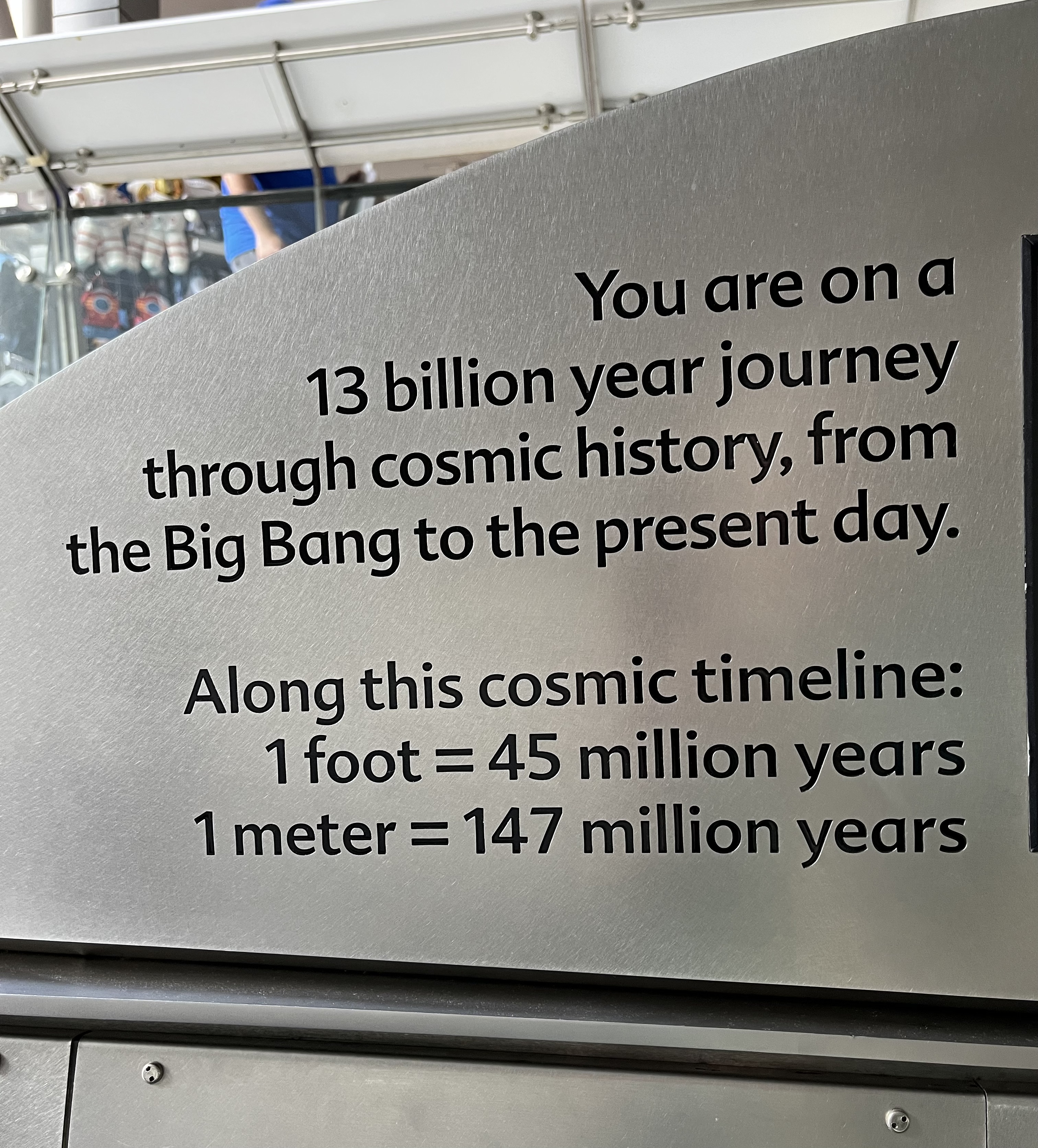
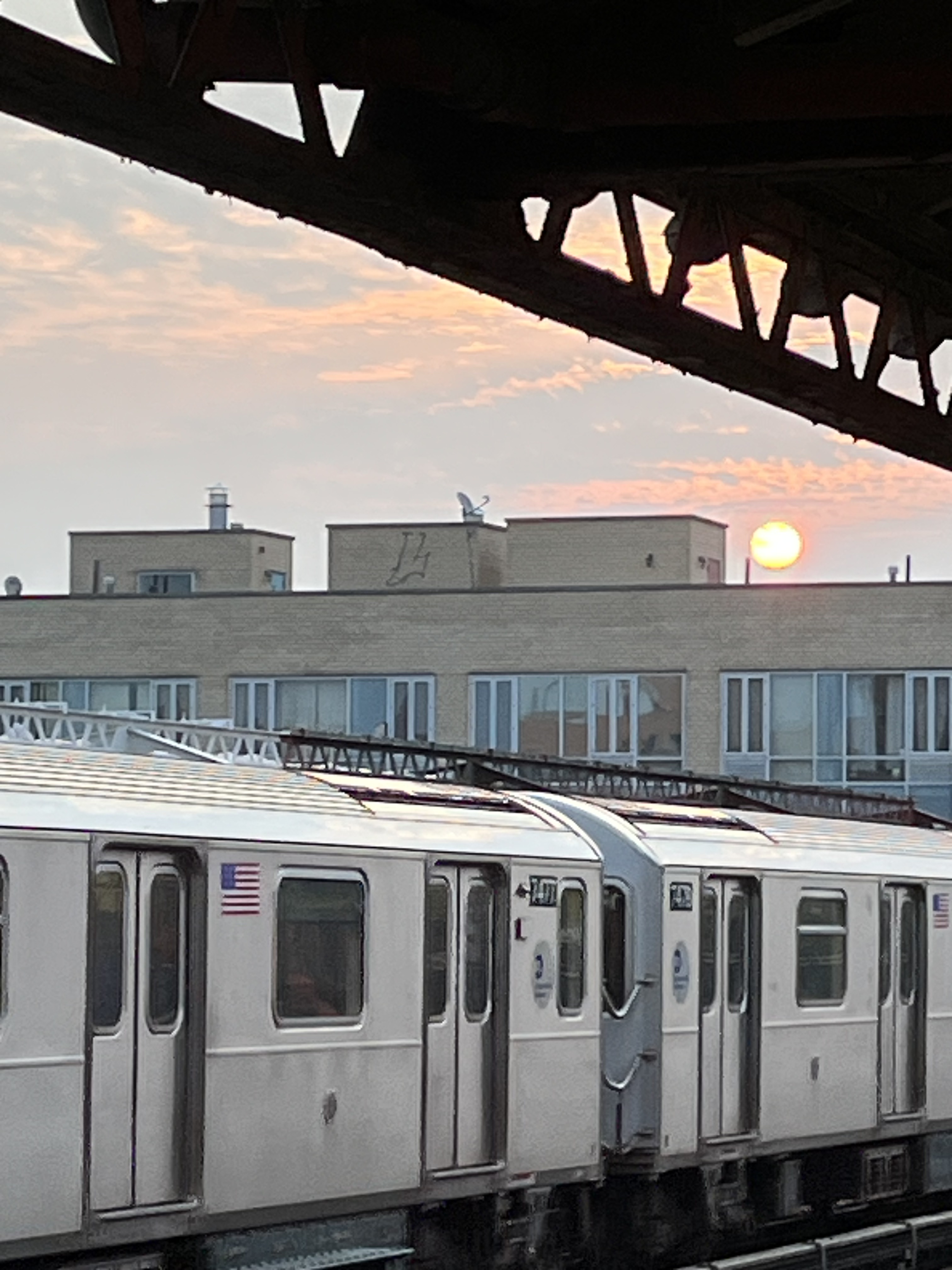


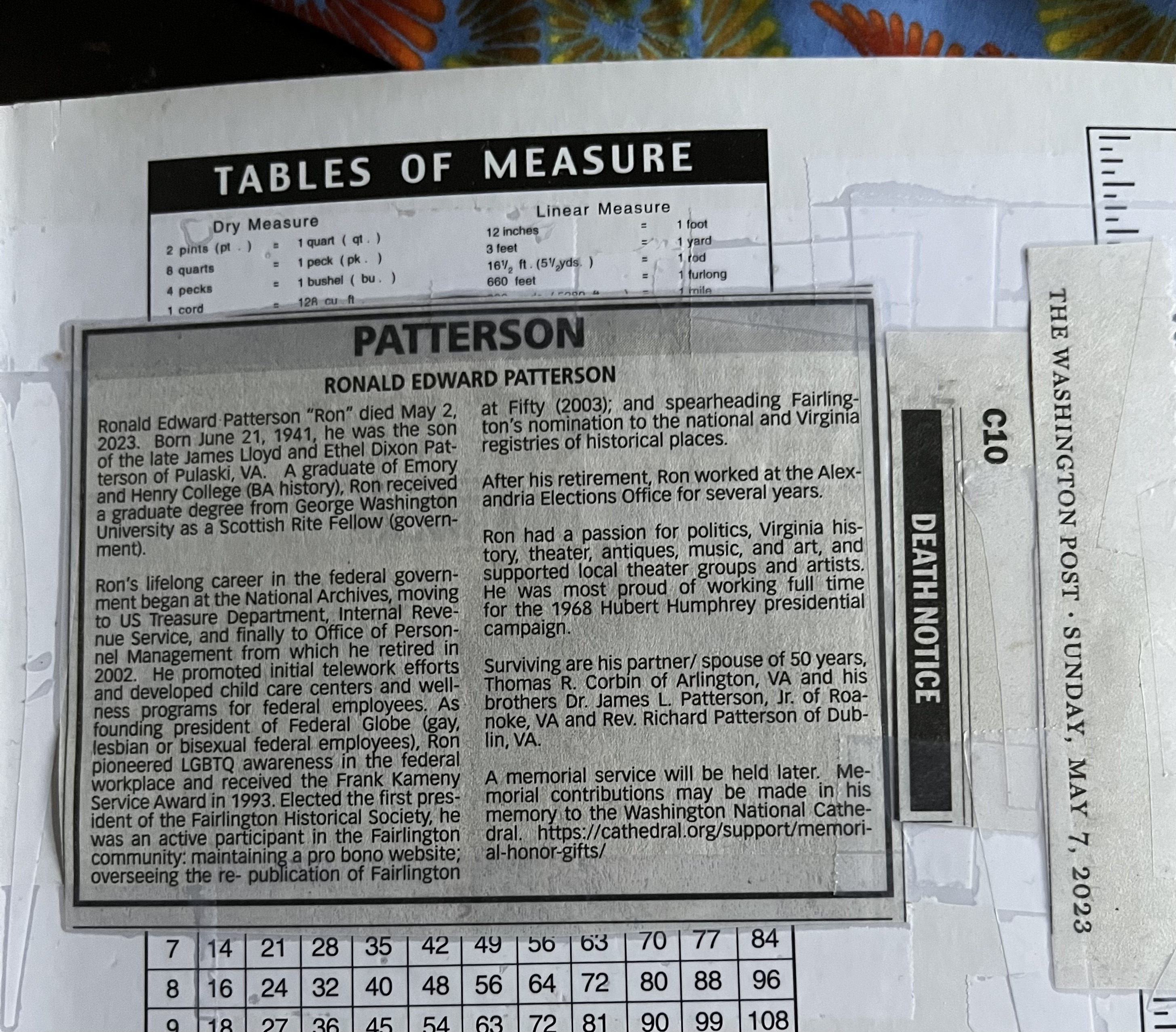

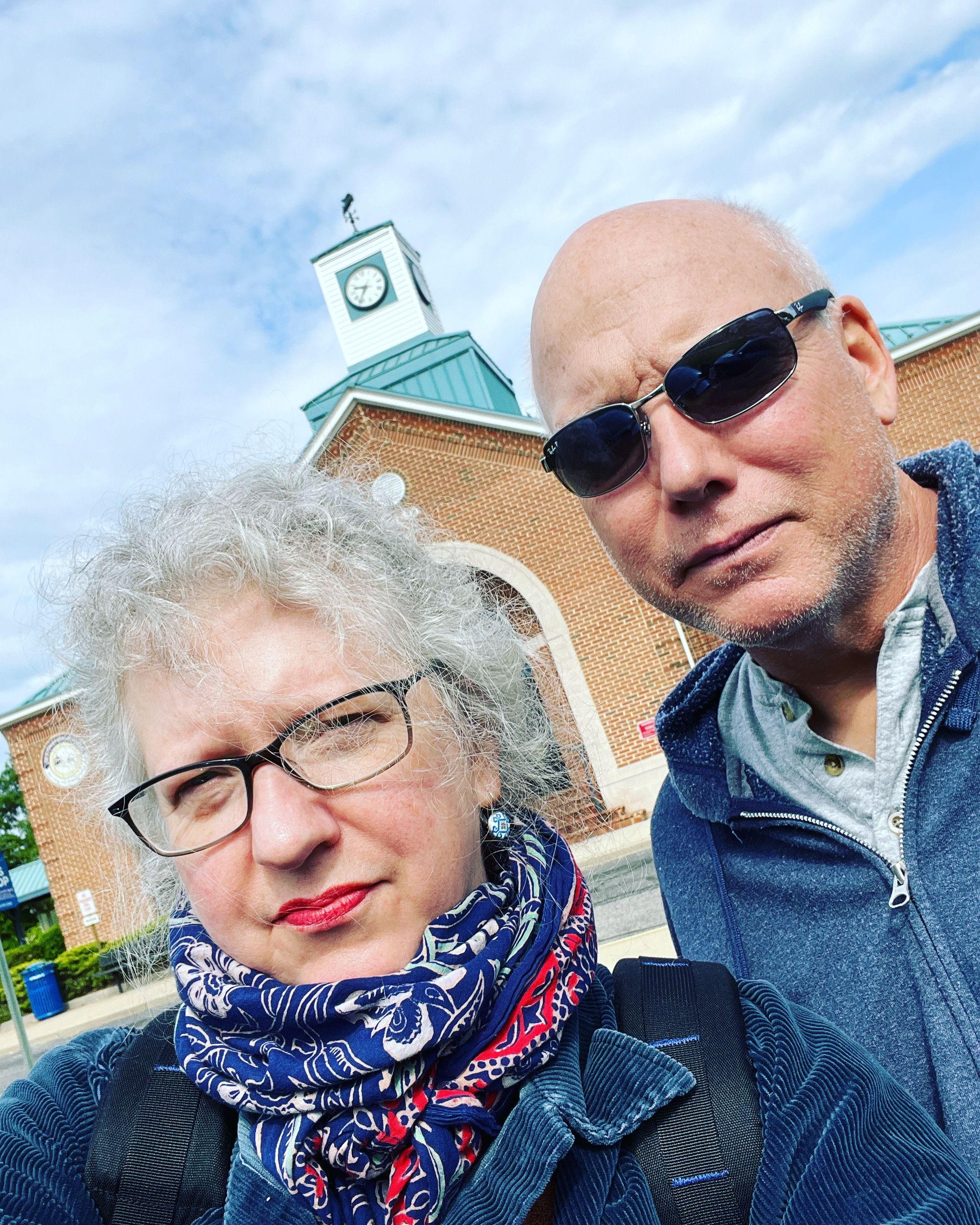



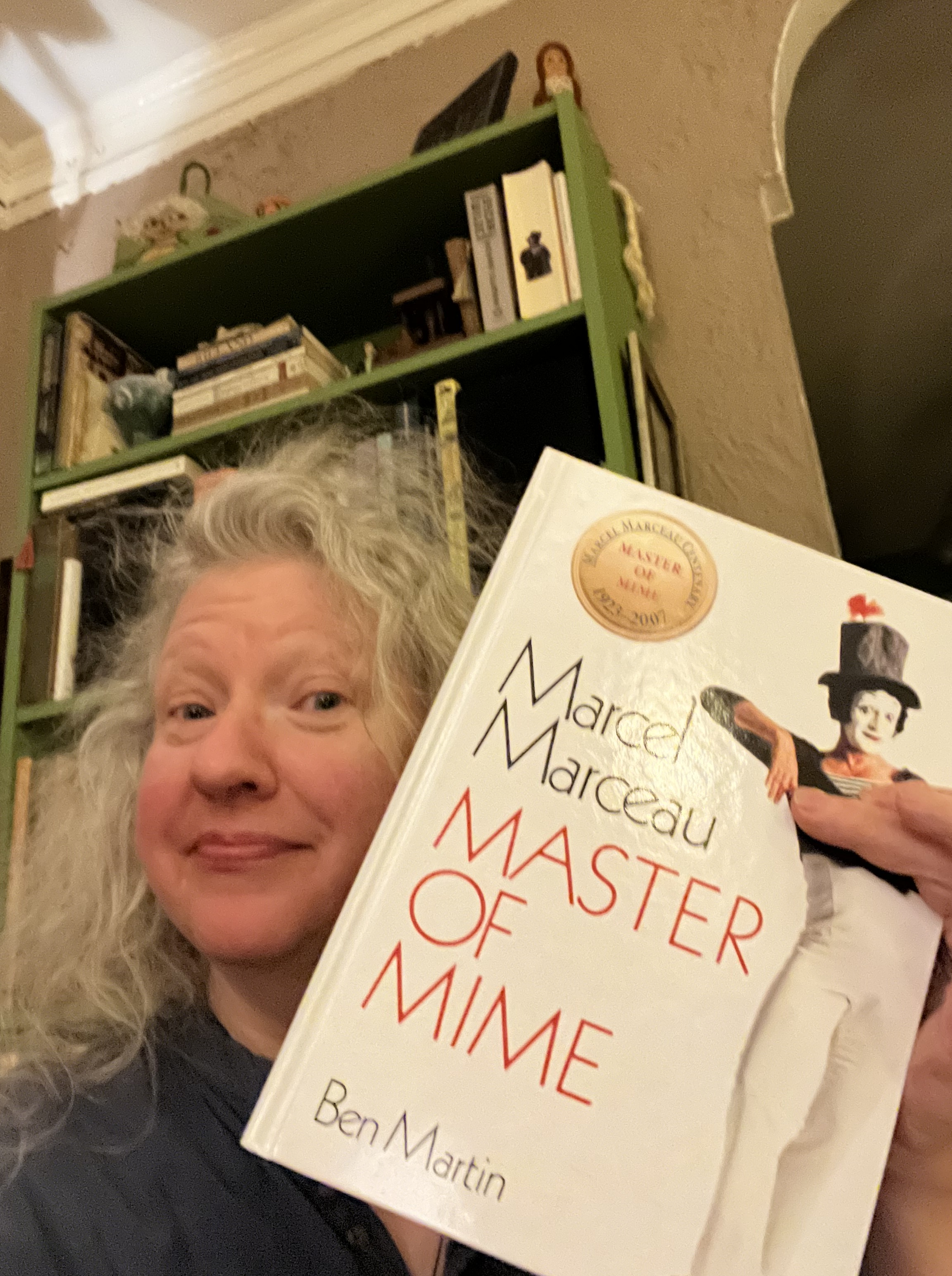


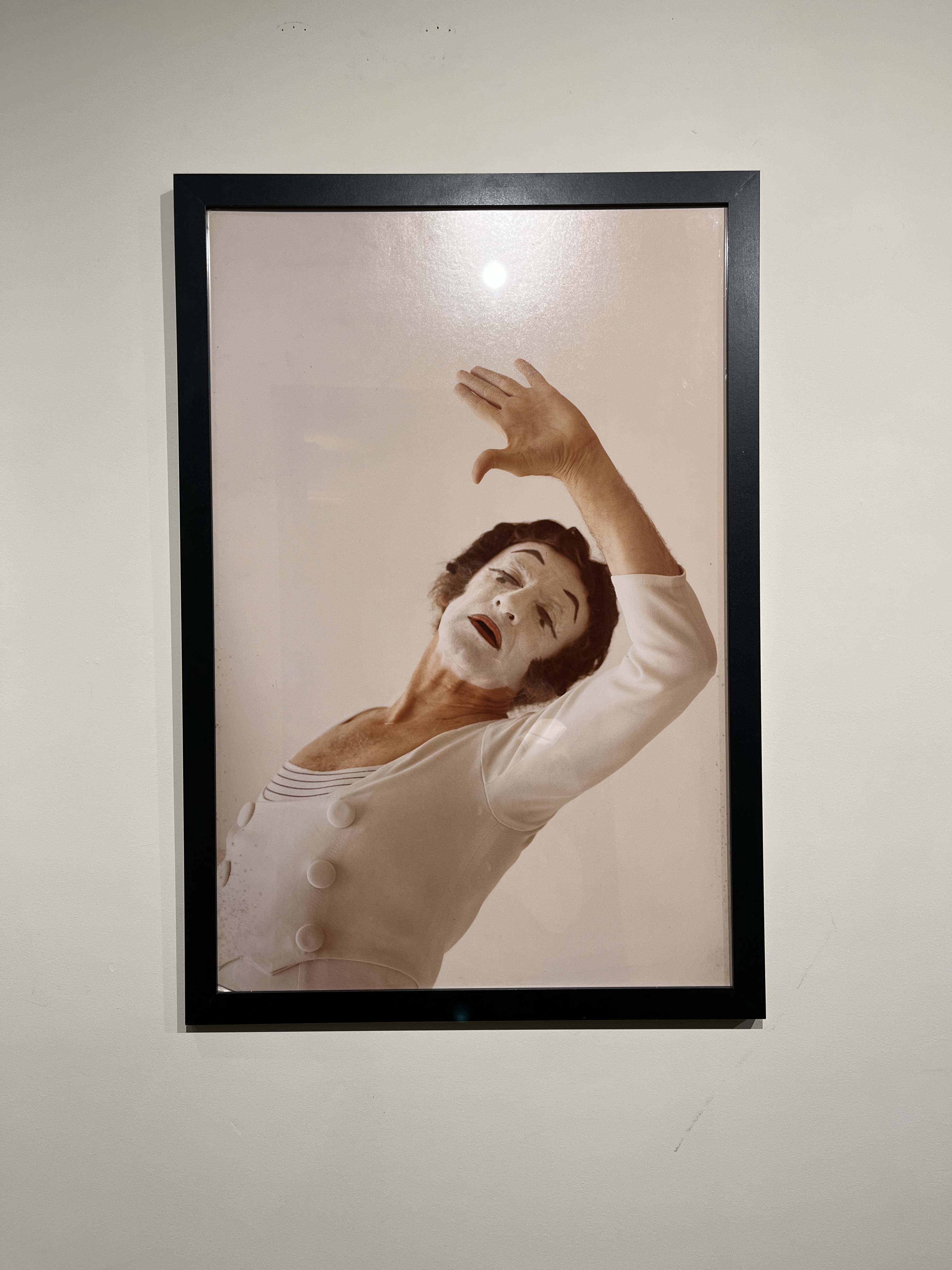


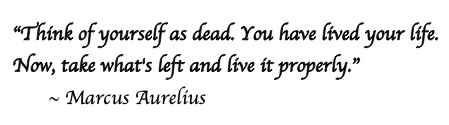
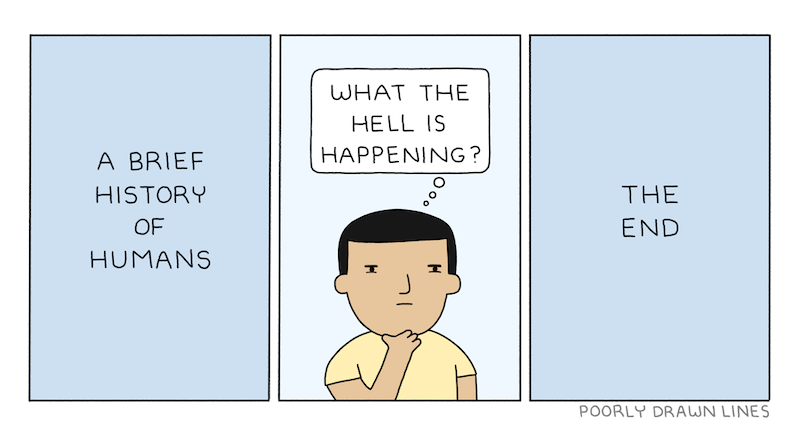

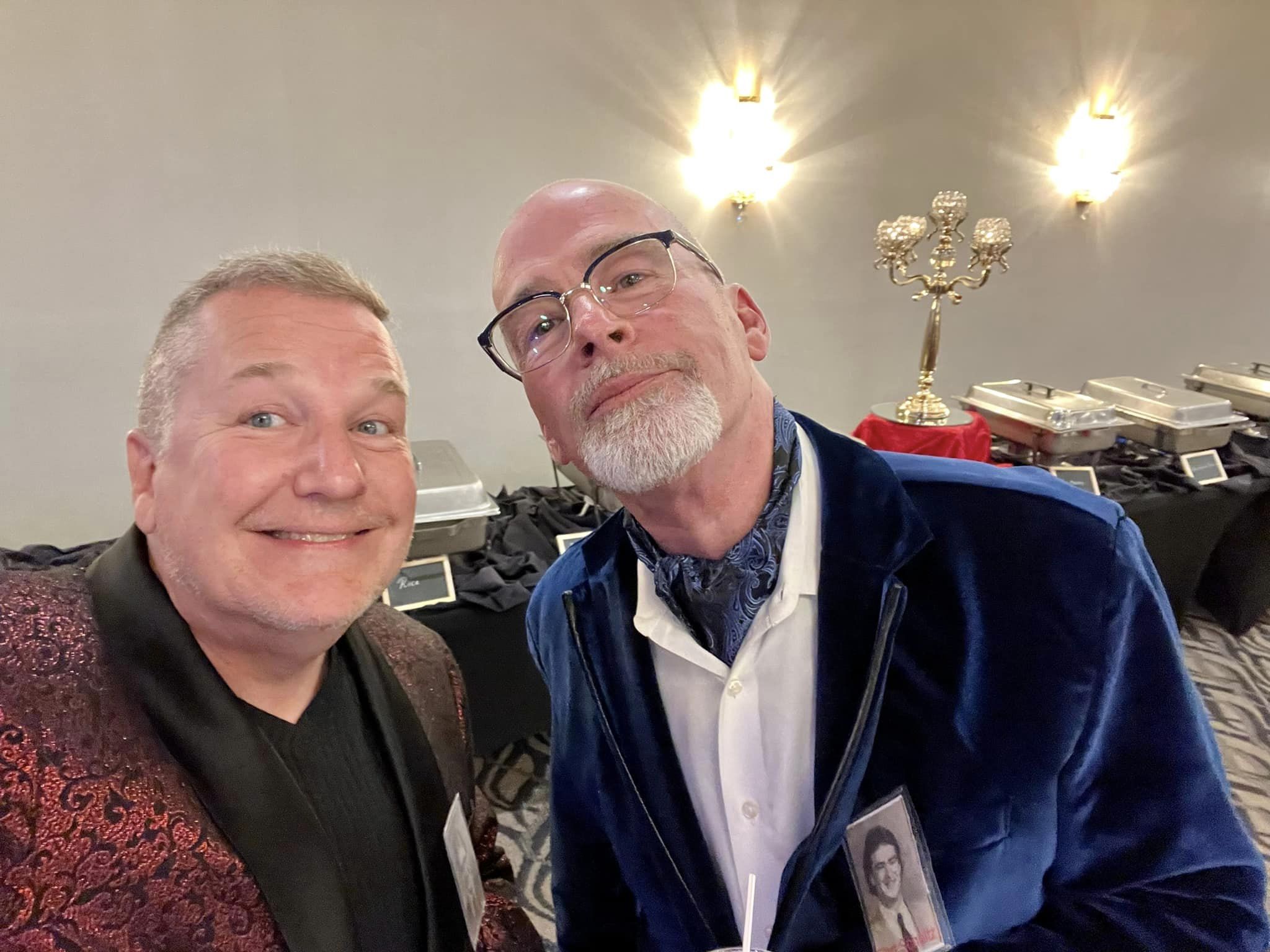
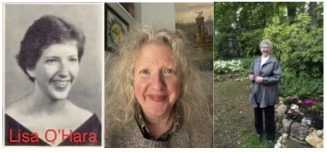


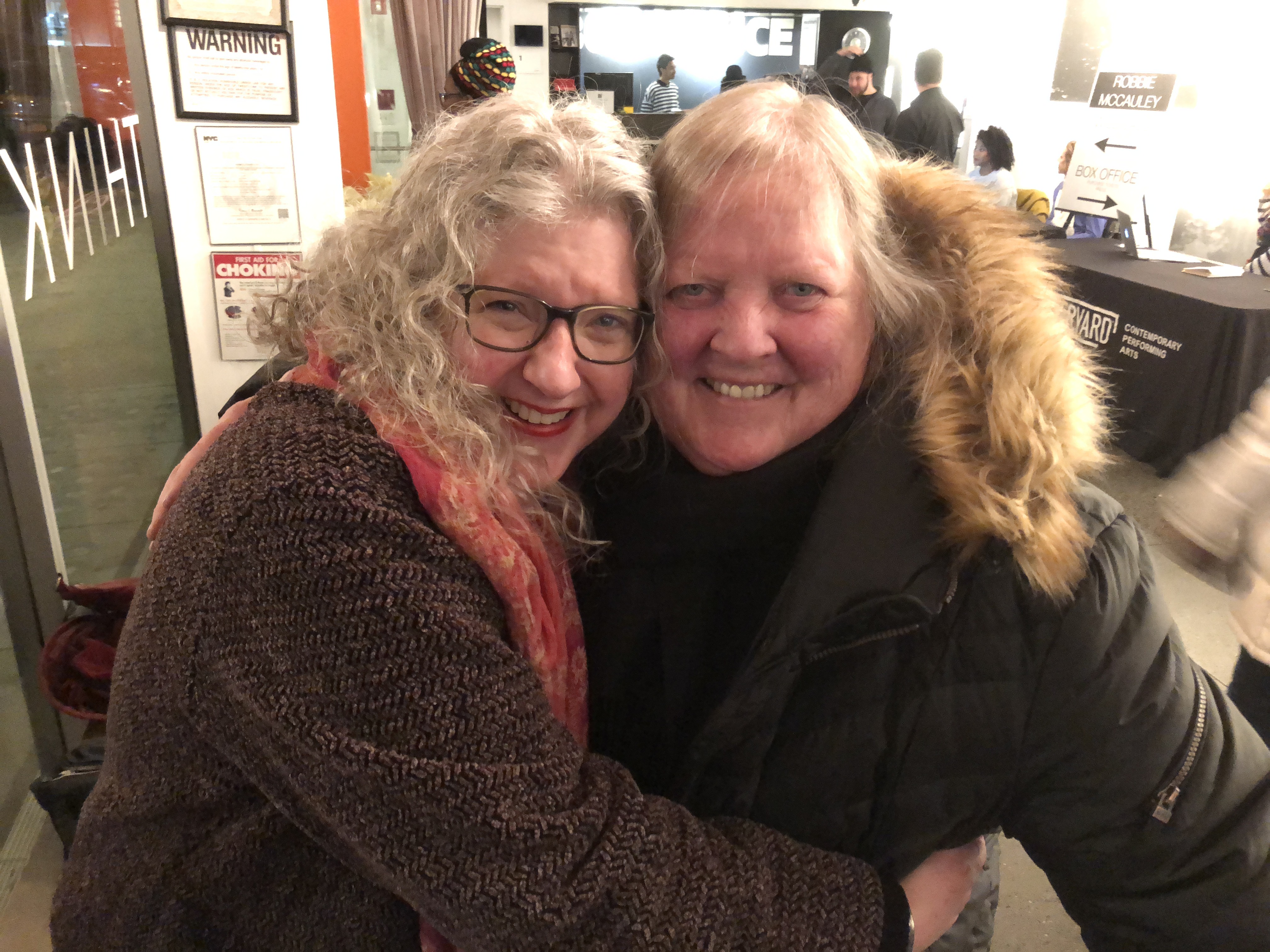

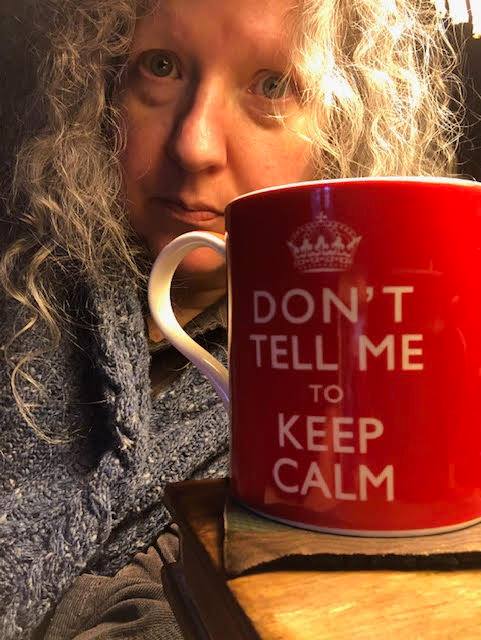

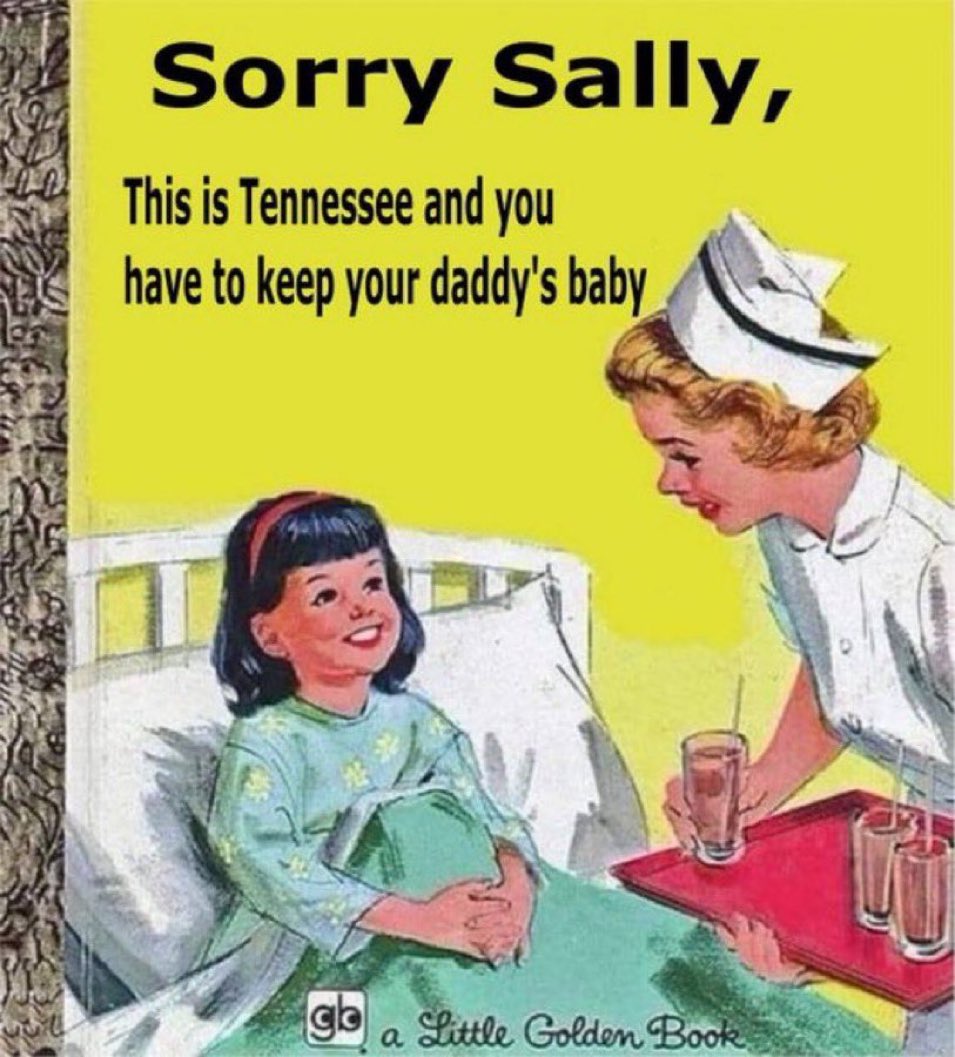



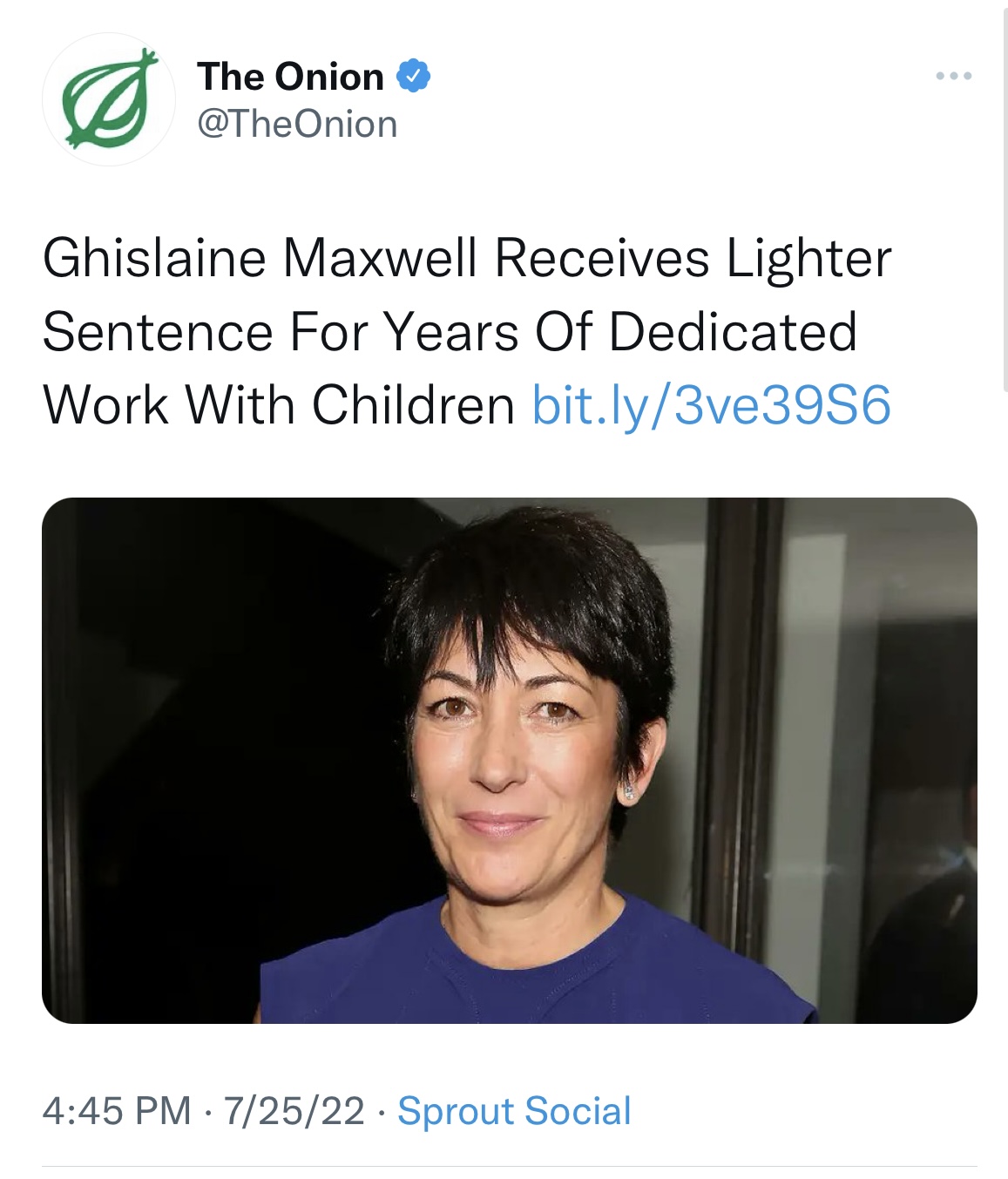








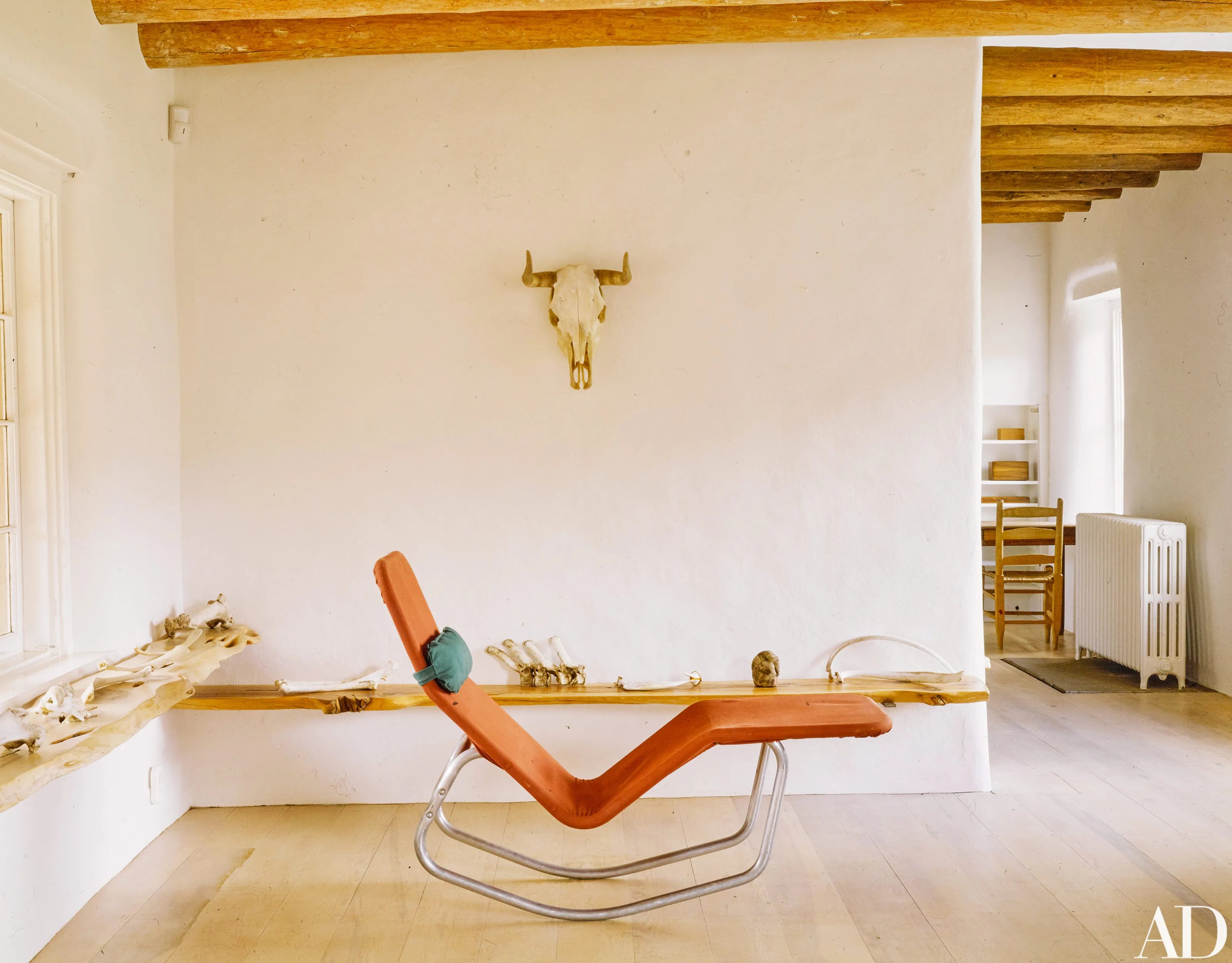
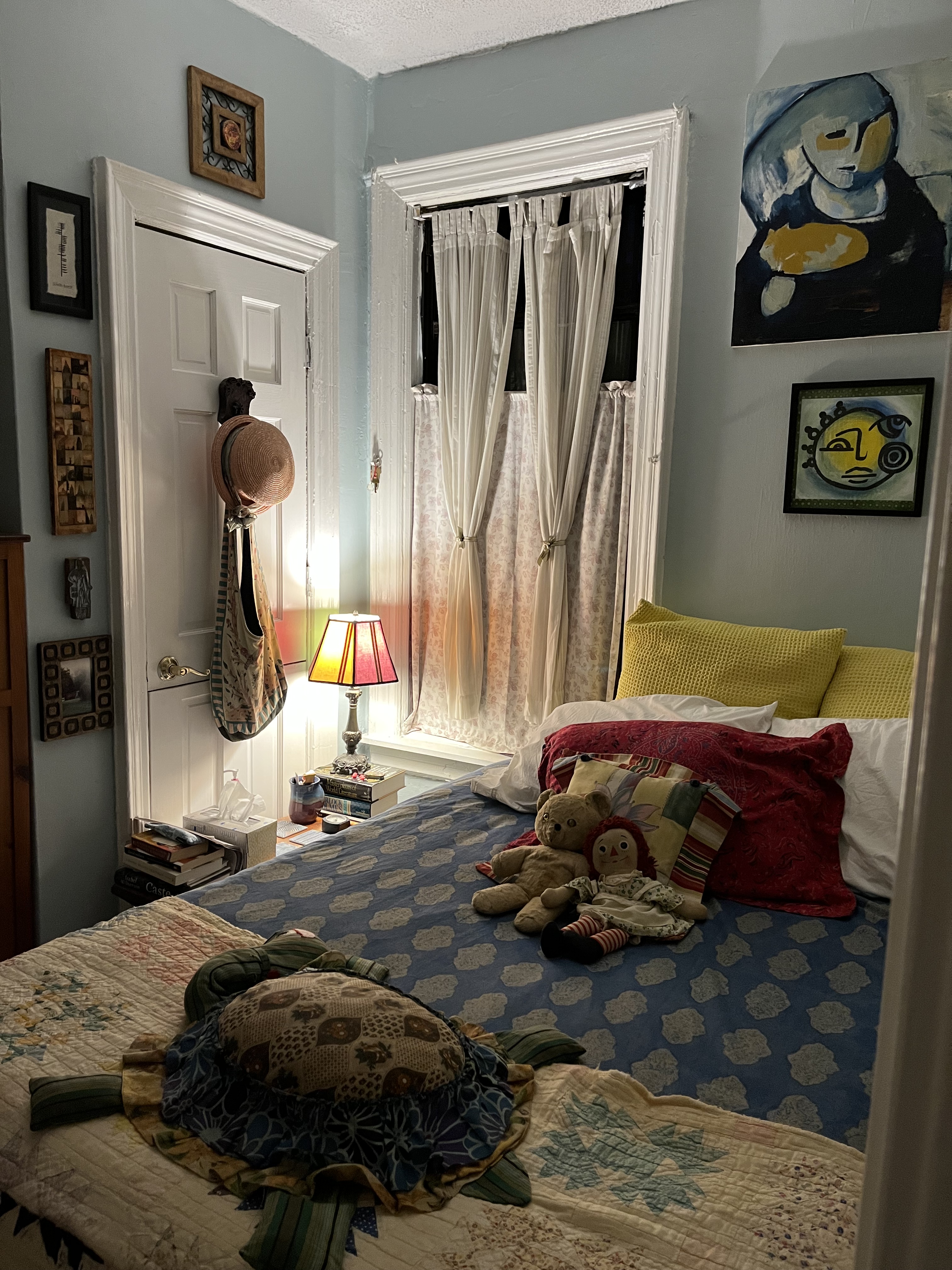



 The Miss O' Show (Teacher's Edition)