If you’re around my age and had a television growing up, you remember Sunday nights on NBC with Mutual of Omaha’s Wild Kingdom, which premiered (I read) in 1963 (you can still see the modern take on Animal Planet). It came on before The Wonderful World of Disney, which didn’t interest me—I think we turned it over to Hee Haw. Anyway, the show presented visits to the wild places of Earth, and Marlin Perkins (the zoologist host) and Jim Fowler (who seemed to do the real work) offered insights and commentary. It filled you with wonder, but more than that, for me, danger. I contrast that experience with once I have had as an adult watching Sir David Attenborough on PBS’s Nature programs, where the presenter expresses awe, delight, curiosity, and gratitude, all at once. Both programs came of age during fairly early television, with black and white cameras (or, in my case, a black and white television) to color. In Attenborough’s case, I learned from a documentary I watched last night that he’s won awards for all the phases of camera technology development, up to age 88!, beginning with black and white cameras, followed by color photography, to HD, 3-D, and now 4DX—the most advanced technology we have, most recently using animations and acting to tell the story, ironically, of animals of the past.
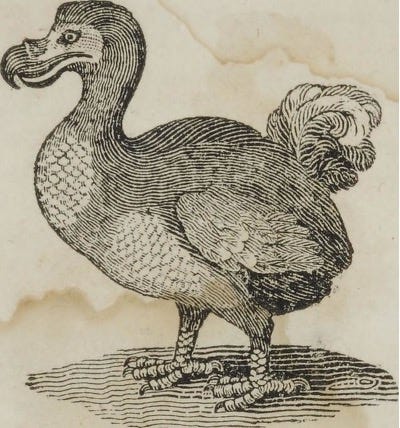
It’s here that I have to compare Attenborough to Thomas Bewick (say Buick), the 18th-19th century engraver whose engraved illustrations of British birds as well as many other animals gave the world its first affordable visuals, ones average people hadn’t had before. (I’ve mentioned in earlier posts that I recently read a book about Bewick’s life.) Watercolors and oil paintings of animals were in private collections and printed only in the most expensive editions, so common people in villages and towns might who had only heard about a camel for example, could see one. One famous flightless bird, the Dodo, for example was one such creature Bewick engraved. That bird of legend had gone extinct even before Bewick’s day, and it’s a bird that Attenborough also talks about in the 4DX in the last show he did in 2016, Museum Alive. (He’sstill alive, by the way, at 98. Bewick would be 271.)
Bewick’s Dodo, best guess based on maritime descriptions of the time and other people’s sketches. The one in the British Natural History Museum is a composite guess using the body and feathers of other birds. What is it about white men that their first impulse on seeing any unknown creature is to kill it?
Both Attenborough and Bewick love/loved wild places, wildlife. They love/loved working in their preferred mediums, television and engraving, respectively, and to use their arts to share this wonder with the world, with the common audience.
All this gets me thinking about all the ways we illustrate and instruct on the world around us, and how we used to unite around the common cause of our shared planet. When Rachel Carson’s book, Silent Spring, came out in the 1962, the one thing that everyone upset and focused them on ecology and caring was the possibility of the loss of songbirds.
Imagine that. If you have had the pleasure of sitting in my parents’ bird sanctuary of a suburban backyard, let me assure you can sit on that patio swing for hours and never be bored. Once all the birds forget you are there, it’s a party, the best kind of show.
Lately, America and the world have become focused on a collection of primates but not for the biodiversity and wonder and joy they bring. Instead, it’s a nature Reality Show from Hell.
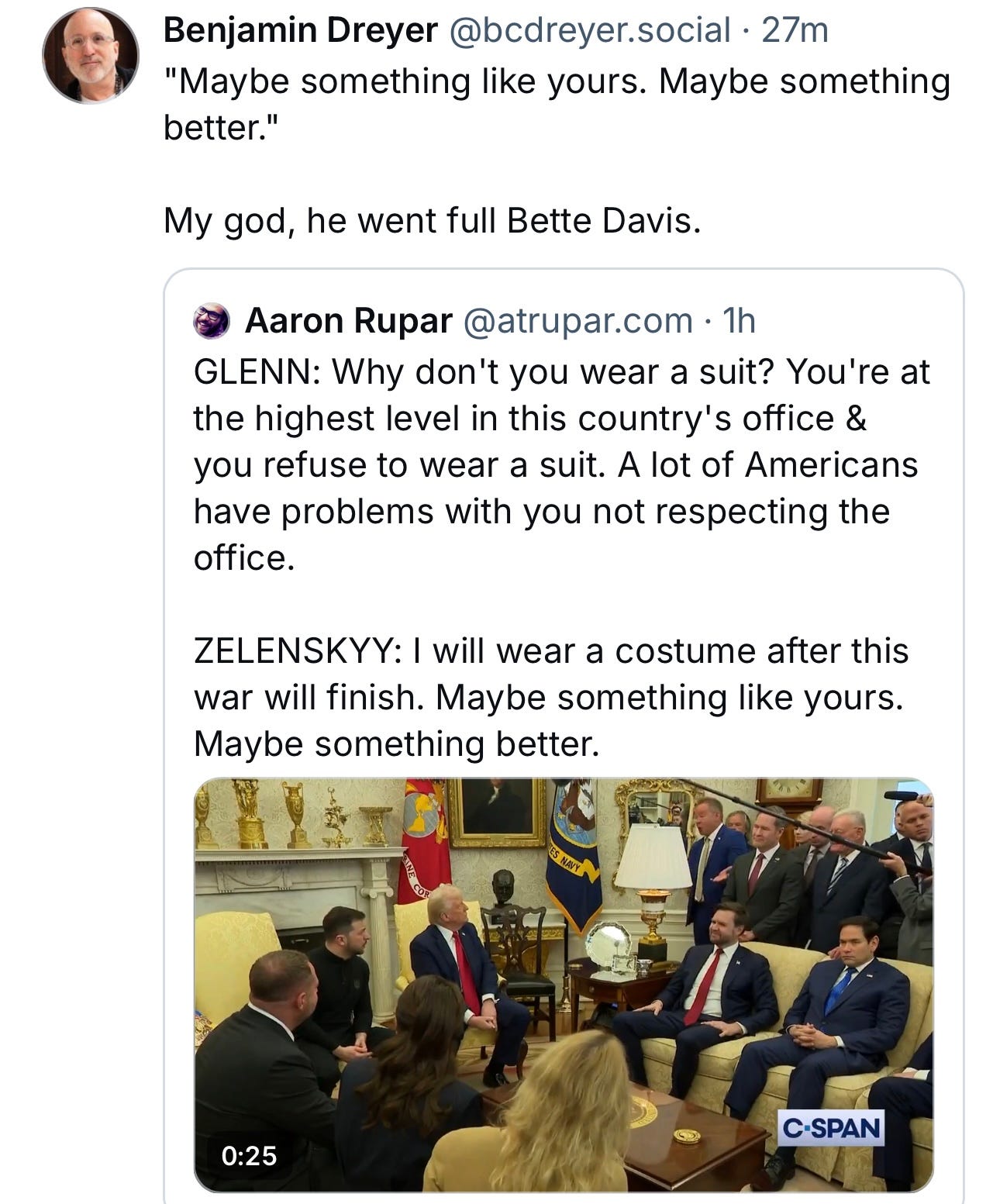
Yesterday, as the world watched, any sentient human cringed. Vance and Trump’s treatment of President Zelenskyy of Ukraine was beyond the beyond, trying to leverage their own favor-currying of Putin by placing the beholden Zelenskyy in front of right-wing American television cameras and reporters, to cow him, as if this man has not been enduring full-scale war for three years trying to save the democracy he loves. Lights,cameras? Bullying? 1) Have they no shame? 2) Are they high? 3) Fuck them.
Like nature at one time, democracy had been a common global cause for many, many years, but no more. President Zelenskyy is like the compelling, knowledgeable zoologist visiting a new kind of American wild kingdom in a television series, facing two aggressive and deeply stupid primates who exist only in captivity. It was, as you know, horrifying to watch.
President Zelenskyy prevailed. I hope he wins this war; he’s already won history. I don’t want Ukraine or him to go extinct.
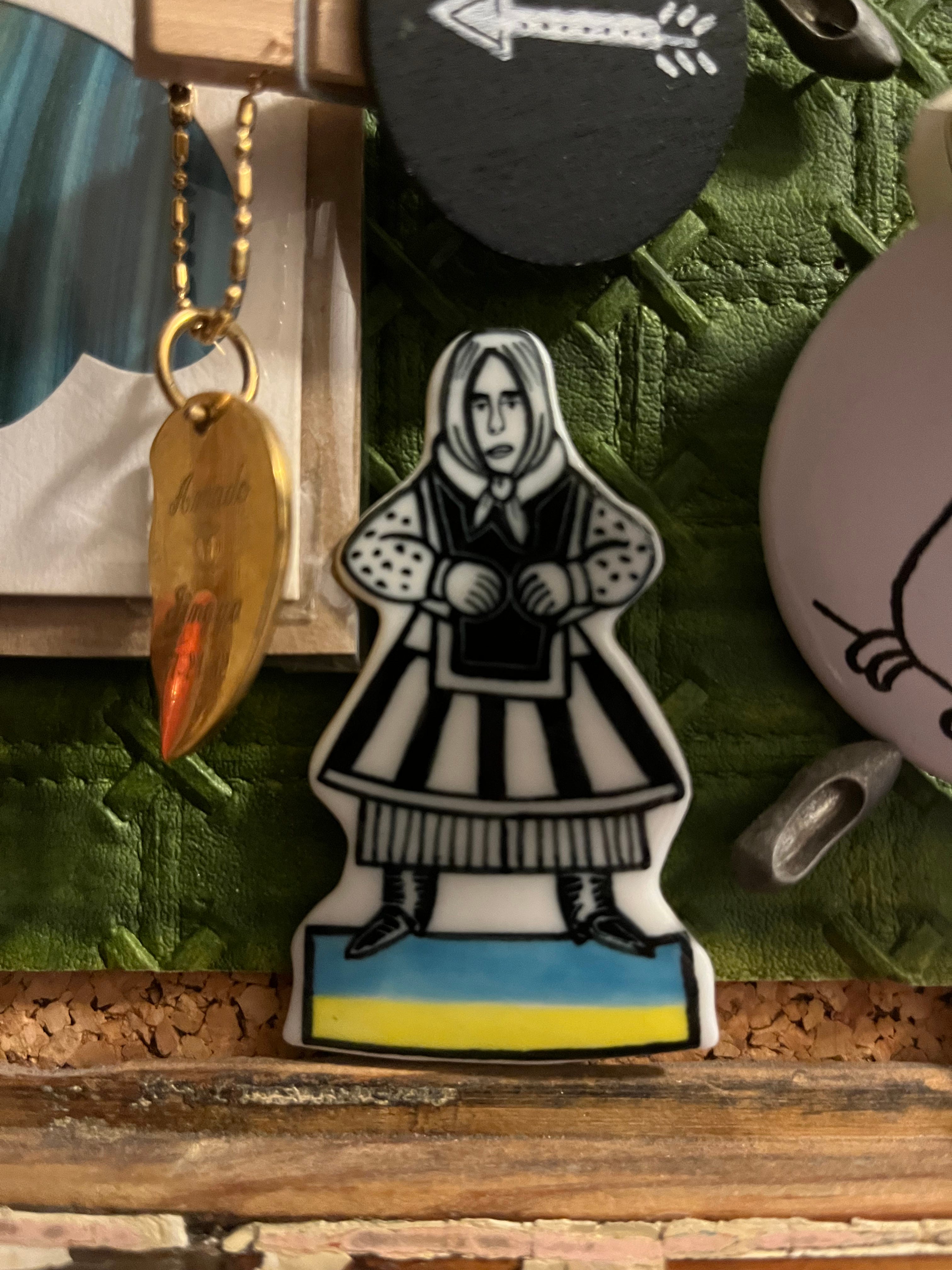
All of this is just to say, Slava Earth, Slava Ukraine.
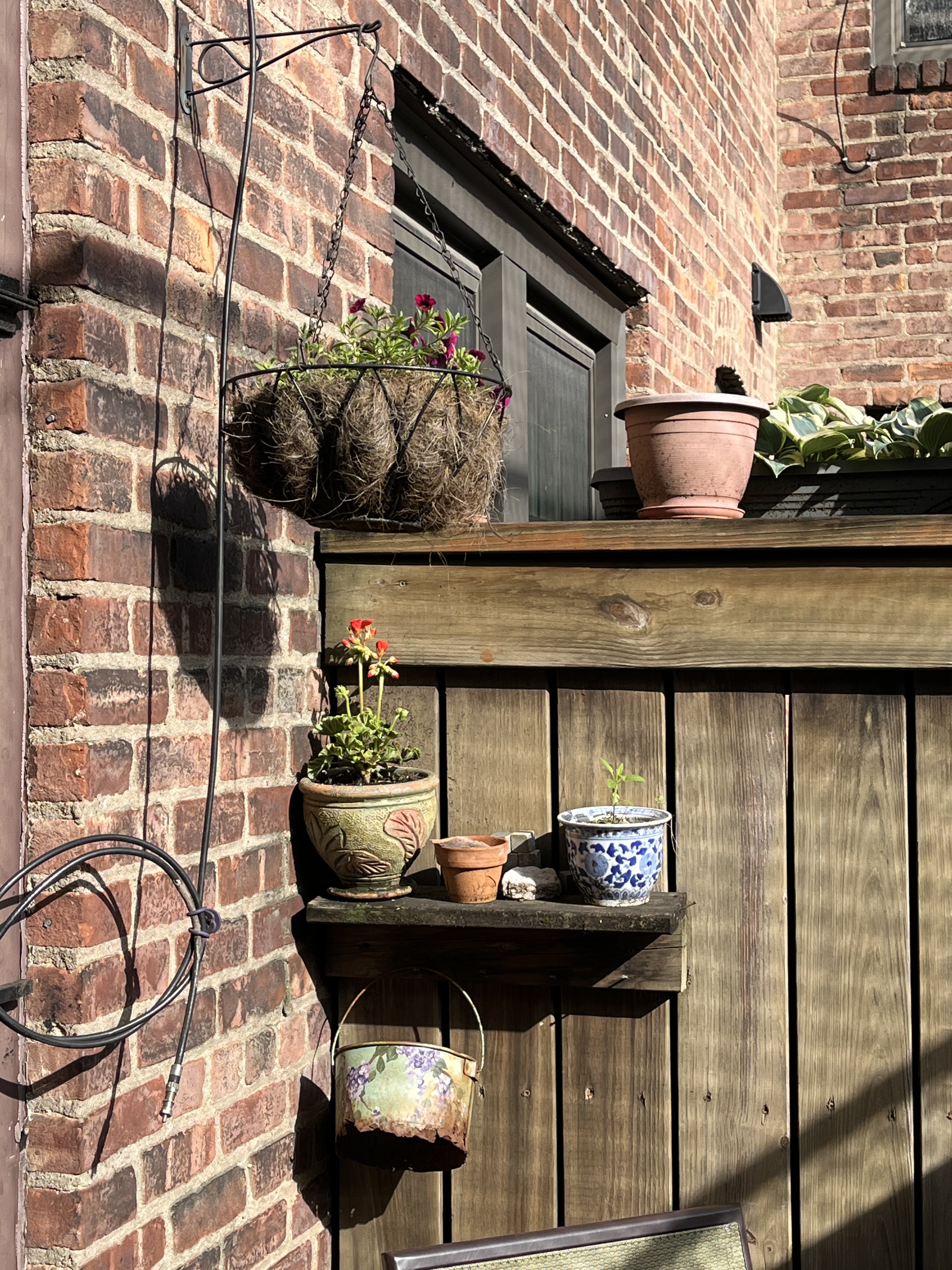
Home bulletin board detail. Queens kitchen.
Until the next episode of the Trump Wild Kingdom Shit Show, do beautiful things, somehow.
It’s an ordinary Saturday in Queens, which is to say “ordinary” if you aren’t thinking about the fascism. (I really can’t get over the way that Meta bleeps “Nazi” and “swastika” from videos, or that posters have to insert an * somewhere in each of those words so the post passes muster, even as Elon’s and Bannon’s sieg heils are fine.) I am waiting on a 7 Train, only to learn it’s not going all the way to Manhattan, so I have to switch the N or W, so my mind does a little adjustment. It’s all good.
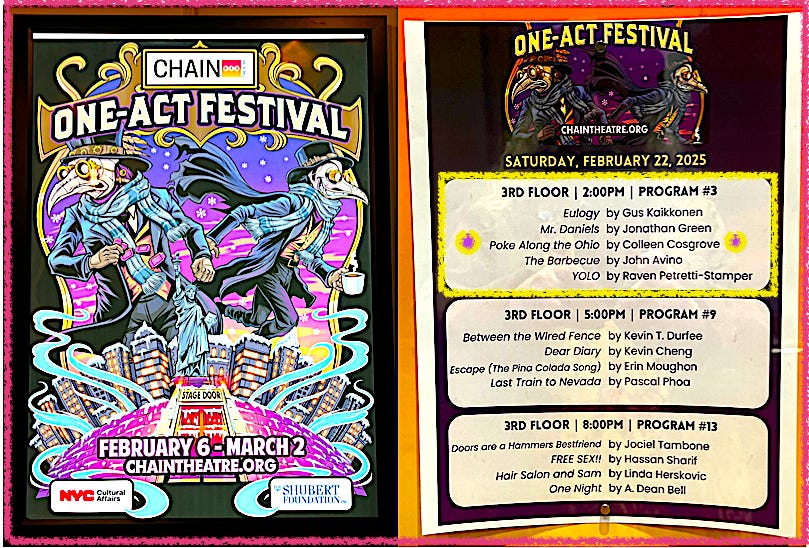
There used to be moments when, as my friend George puts it, it seems Americans are simply going to be inconvenienced to death. Now, unfortunately, and for a long foreseeable future, we are under threat of annihilation. But today, I’m heading to The Chain Theater at 312 W. 36th Street in Manhattan to see the 2 PM installment of their rolling rep One Act Play Festival, and today I don’t want to think about annihilation.
When I arrived at Times Square/42nd Street, I walked through Golda Meir Plaza, struck again that in the 1970s we had female leaders like Meir of Israel and Indira Gandhi of India, Thatcher in ’80s Britain, and that the United States couldn’t even manage one woman in 250 years, choosing an avowed white supremacist dictator, twice, over a highly qualified, democratic woman. And here we are, I think, wondering as I keep walking what will happen to the bust of Meir.
First, I have to go to the ATM, and for some reason my card chip will never work to open the door; another customer, a man in a hood, has a card that opens the door; he engages in no talk. I go in behind him, and I realize I’m shaking. I find I’m afraid to use the machine until I see him at the other machine, and really getting money; I finish before he does, even having to enter my PIN twice to get it right. Odd, having the shakes like that. Or not so odd. Frankly, that’s as fearful as I want to be in life.
It’s nice out, 40s, sun. I walk down 7th Avenue, taking it in, struck again how I can always spot a tourist. I am of New York City, I move that way, more grounded, a bubble of insulation and also awareness. I was a tourist for 20 years before I moved here, so I don’t mean this as criticism or praise; it just is.
I arrive a half hour before the play festival is to start. I see Mary, the director of my friend Colleen’s play, in the crowded lobby, and we hug. I check in at the desk, my friend Tom having bought our tickets online. Our friends David and Barry are also coming, and learning the afternoon is sold out, I go in when the house opens and save us a row, as it’s general seating. An older woman in the row behind me is doing the same thing. (It’s always funny to me how everyone who enters a general seating situation somehow believes they will get to sit alone, empty of audience members around them, and they look at my saved seats with resentment.) The boys show up just before 2 PM, so we don’t get to visit much, and they don’t have time to go out after. I seem to be the only person I know in the city who has nothing but time. Ah, well. Still, being in this community even for a brief time is comforting and energizing. Hopeful.
For the uninitiated: Attending a play festival of new work, especially one-acts, can be a crapshoot. I’ve attended many of these, both as a high school director and as an audience member in New York, and too often only two out of the five or six are well-written, and only one or two are well-acted and directed, and often it’s not the same set of two. So imagine my delight—I knew Colleen’s would be adorable because I’d read the stage directions for it at a workshop—when all five were simply excellent.
The common theme—and this was a really thoughtful grouping—was aging and death. This might sound awfully close to that annihilation I was avoiding, but it wasn’t the case. The first play was a monologue, a 60-year-old son eulogizing his father at the funeral; the second, two old people on the E Train platform; the third an older man trying to make a deal with Death; the fourth was Colleen’s (a play inspired by seeing a plaque in Evanston, Indiana, along the Ohio River, where President-elect James K. Polk was to have stopped his steamship and didn’t disembark), with an old woman (Colleen) and her grandson in 1854, the year Lincoln was really getting started; and the last a gay couple, older men, one who has, we see gradually, dementia. And all of these were by turns serious, funny, sweet, surprising. And ultimately, ordinary, in the best sense. Life lived.
I’ve realized lately that what I crave most in my music, my art, my nature, and my life, even, is ordinariness. I don’t want the surreal, the challenging, the wildly surprising. I get too much of that in unending loops in American society now, breathless, mean, chaotic, and all that hate and chaos, while not remotely sustainable, will be unending for four years at the very least, and if we all don’t stroke out and live to see another election, we may see a divine revolution. Until then, I want mundanity as a life theme.
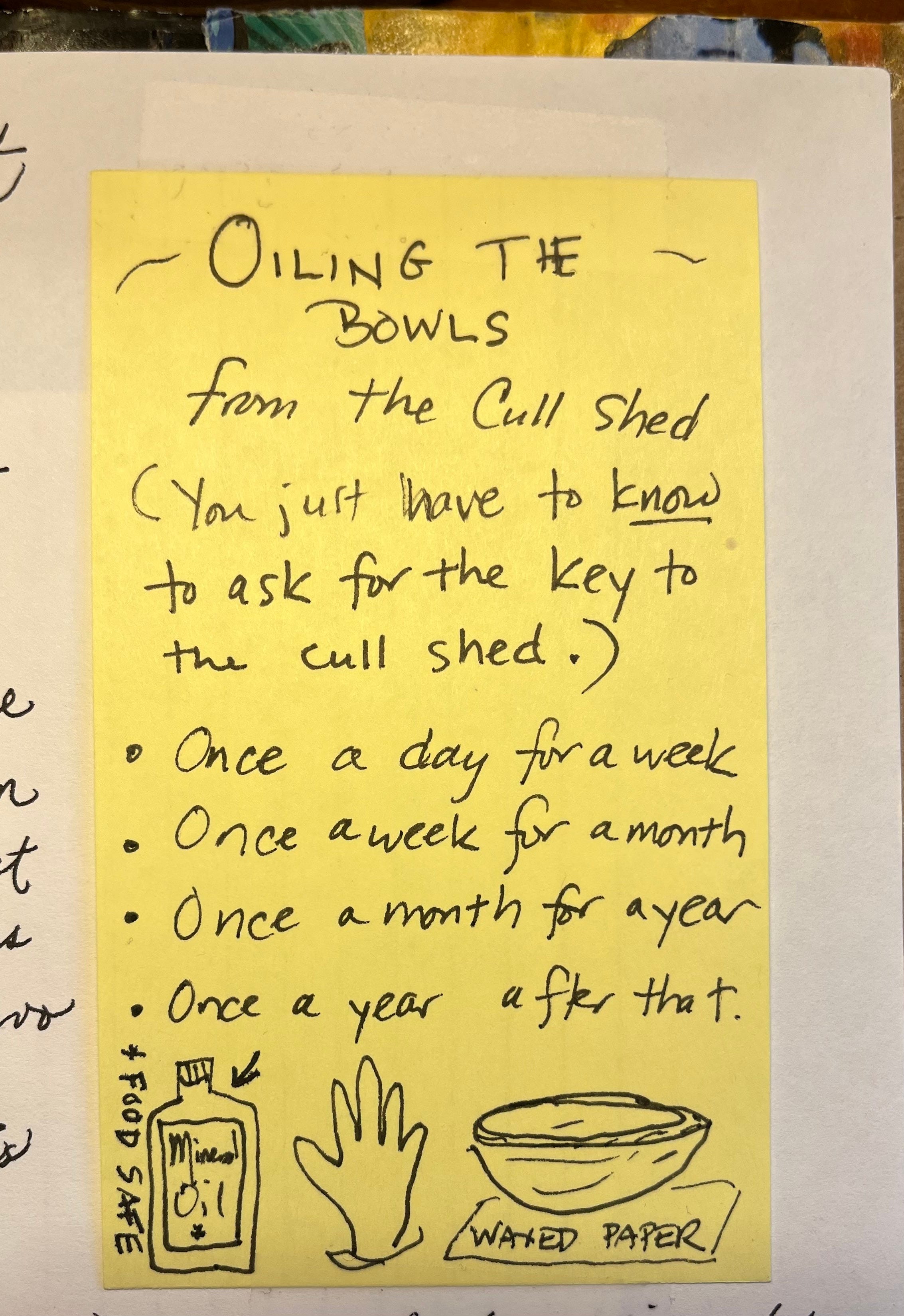
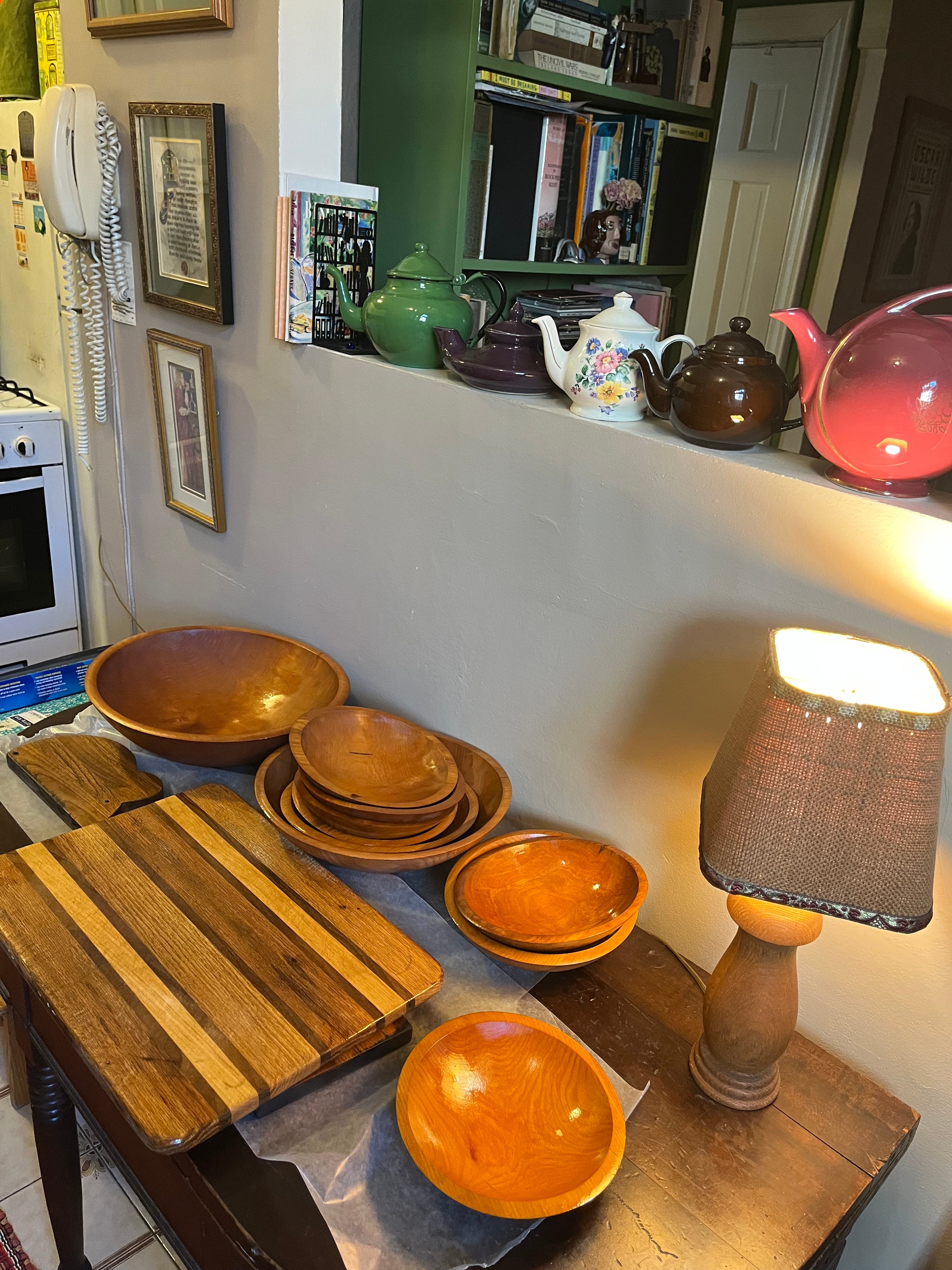
For example, here’s a task of basic maintenance.Simple chores. I did the annual bowl oiling during my lunch break one day since I work from home. So restful. Once the oil soaks in, they’re good to go for a year. I oil the cutting boards at least twice a year. Isn’t it nice to focus on that?
As another mundane activity, before leaving for the subway with a half hour to spare once dressed (I took care to pick my ensemble and accessories, knowing no one else would actually care, but it’s my inside feeling that counts), I noticed that I have a lot of loose knobs on my two dressers. One dresser requires a Philips head and one a flathead screwdriver. I keep these in a pitcher by the door—I like to have my tools ready at hand. Knob by knob, I tightened them. In doing this I noticed a few scratches, so I went to my tool closet and found the wax wood filler pencil. And I filled the scratches, and it’s funny how the more you fix the more you see.
And this by the way task was really satisfying. You know what I mean? And centering, before heading out into the chaos of New York’s mass transit.
Why do we have to exist in all this rage and war and hate and aggression and greed and chaos? We all have knobs that need tightening. Why, just because of a few psychotic, damaged men who cannot be satisfied or fulfilled by all the money and power in the world, do all the rest of us have to suffer for all time? Why do other people, people with absolutely no hope at all of either wealth or power, follow them, go psycho with them, and go after all the rest of us? Don’t THEY have knobs?
From the web.
I was thinking too about AI, how the goal is to replace humans, to erase humanity, and that AI cannot tighten knobs. How are we to cope with the attempted erasure of culture, of women’s sovereignty, of black and brown people, of the earth itself, when this desire for annihilation is beyond lunacy? Why can’t we be? Being is hard enough. Knobs come loose. Why can’t we work together to solve real problems?
From the web.
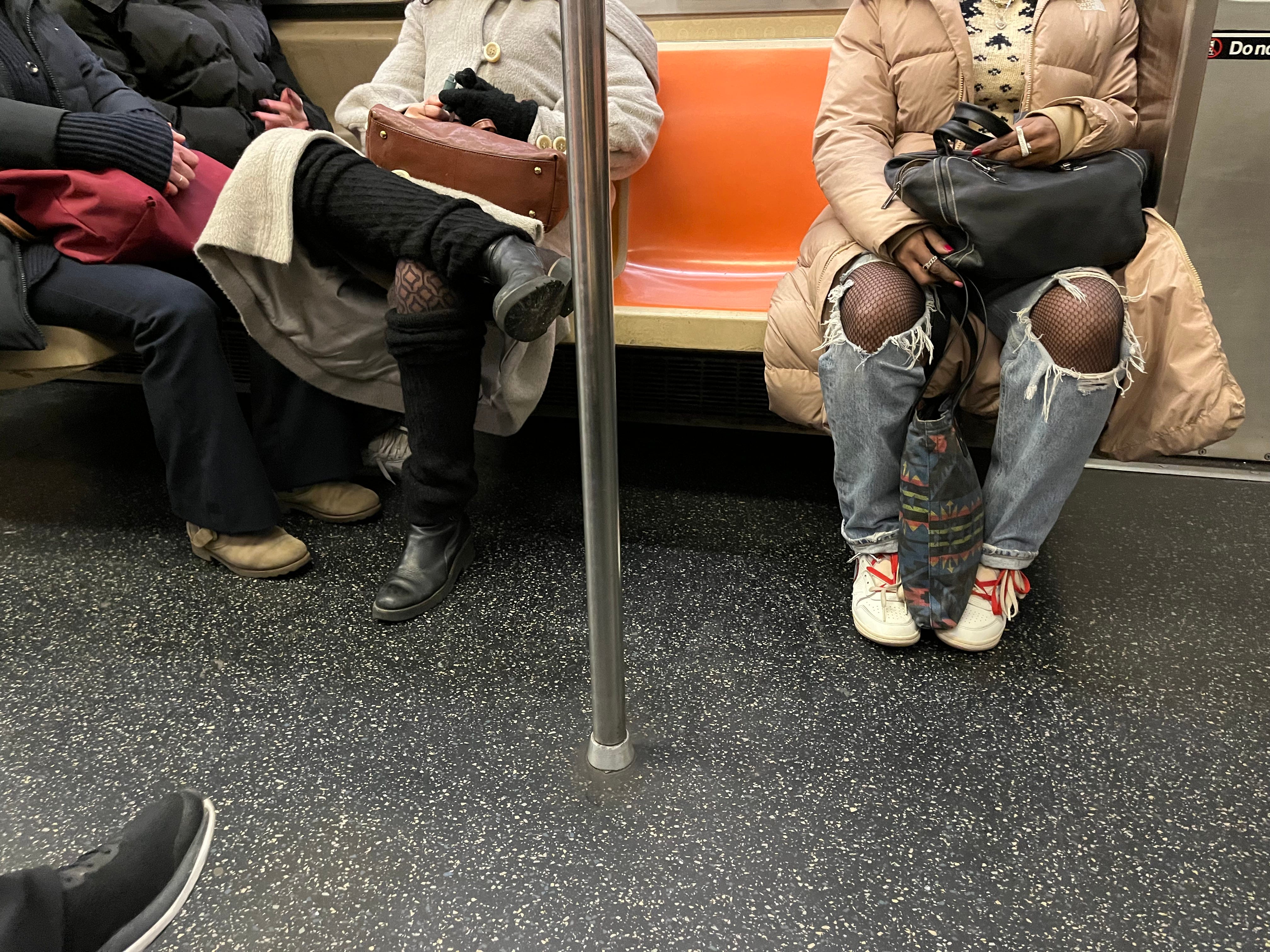
To cope with the whole mess, as I brace for some kind of war, I’m taking more and more pleasure in the very ordinary, like watching people on the subway.
A Study of Knees and Nylons. N Train to Queens. LO’H 2025
I know I can’t be alone in these chaotic feelings. How are you coping? In addition to doing chores, seeing art, and attending the occasional rally, I’m calling politicians and listening to Nina Simone. Followed by Yo-Yo Ma. You?
In my room, the world is beyond my understanding; But when I walk I see that it consists of three or four hills and a cloud.
Surface Chair
Years ago, my friend Tom and his partner were moving and downsizing, and he sold me a delicious olive green wing chair (which I foolishly gave away when I later moved to New York and I miss it still). On first seeing the chair, which was solid and plain, in my house, my friend Chuck remarked, “Now it just needs a couple of bright pillows!” When walking the shops of Fredericksburg, Virginia, I found two expensive hand-painted pillows, with an accent of that very olive green, that did just the trick. I thought of all this just now as I pulled down my bed covers and shifted one of those very pillows to the side so as not to crush it in my sleep.
So much of life and living is surface, a chair you buy and lose, the bright pillows you spend so much money on to decorate the chair, the casual remark that caused you to elevate your home decorating aesthetic beyond solid colors into bright patterns of possibility. All surface thoughts, yes, but more than the surface shifts. Doesn’t it?
II
From my balcony, I survey the yellow air, Reading where I have written, “The spring is like a belle undressing.”
Surface Friend
Thursday afternoon, I texted my dear friend Cindy who lives on Maui to ask what was happening and if she and her family were safe, and they were, as the fires were not on her part of the island, but oh how she was grieving the loss of Lahaina. She then texted, “Did you know that Tammy [a fellow student and actor from Virginia Tech days in the 1980s] passed?” I did those things we do now: looked up Tammy’s obituary online; wrote a tribute memory; posted of her death in a social media alumni group. I really had only a surface relationship with Tammy, acting with her in a Summer Arts Festival production of Andre Gregory’s adaptation of Alice in Wonderland the few months before I started my teaching career. We took to walking home together on the nights after rehearsals and performances, as neither of us had cars, and her place was my halfway point. She’d kiss my cheek, wish me “safe home,” a phrase I didn’t know. She graduated the year I was a freshman, and by the summer I got to know her had waitressed and auditioned in New York City for three years and lived with a Russian boyfriend named Roman who wouldn’t go down on her because he didn’t understand what “the magic button” was, which was not where women bleed and pee, and her favorite city memory was Roman pushing her around the East Village in an abandoned shopping cart in the cold wee hours after the bar where they worked closed for the night, her legs sticking up out of the cart while he spun her around on the deserted streets and she screamed and laughed. That’s what I know about Tammy. And can’t forget.
Surface memories as lasting as love.
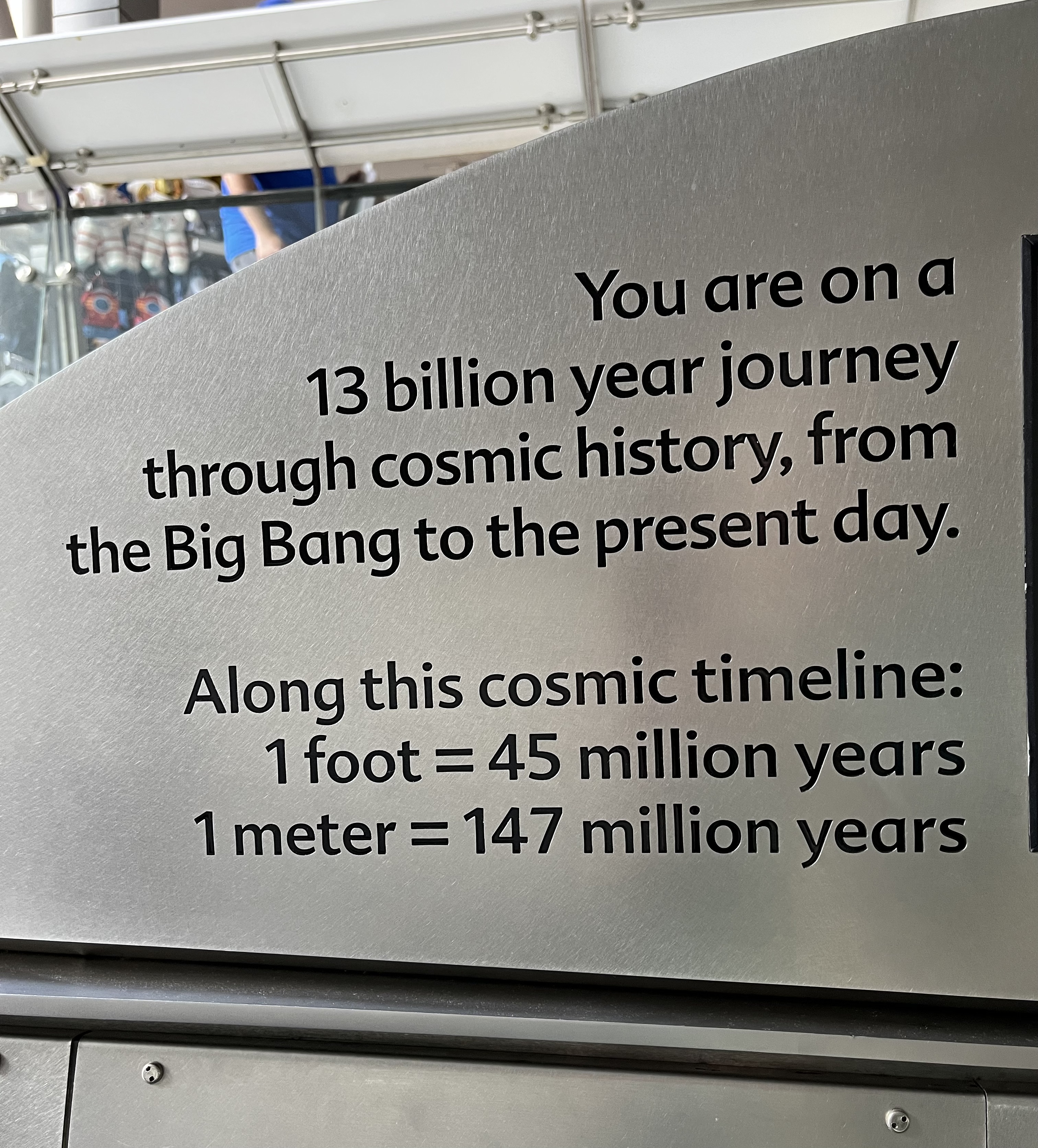
At the Planetarium, American Museum of Natural History. Photo by LO’H
III
The gold tree is blue, The singer has pulled his cloak over his head. The moon is in the folds of the cloak.
Surface Life
Sometimes I think I have only ever known surfaces, surface friendships, surface news, surface travels, surface nature, surface career, surface artistry, surface feelings, surface disaster, surface stories. So of course I dread. I obsess over decorating a home, oddly, that almost no one sees, an art project for an audience of one, knowing it and I could be lost at any time, and it’s so much fog, really. I see spots I missed when I dusted today. And what should I have to show for all this care and attention? Is there anything inside me deeply affected by bright pillows on a muted chair? Is there anything that can emerge out of me that will deeply affect the world? And what of all this death?
Three or four memories and a cloud. Is there much more we can expect?
Sending love out to everyone who needs it, even from my surface, to help you absorb whatever was your loss in life this week.
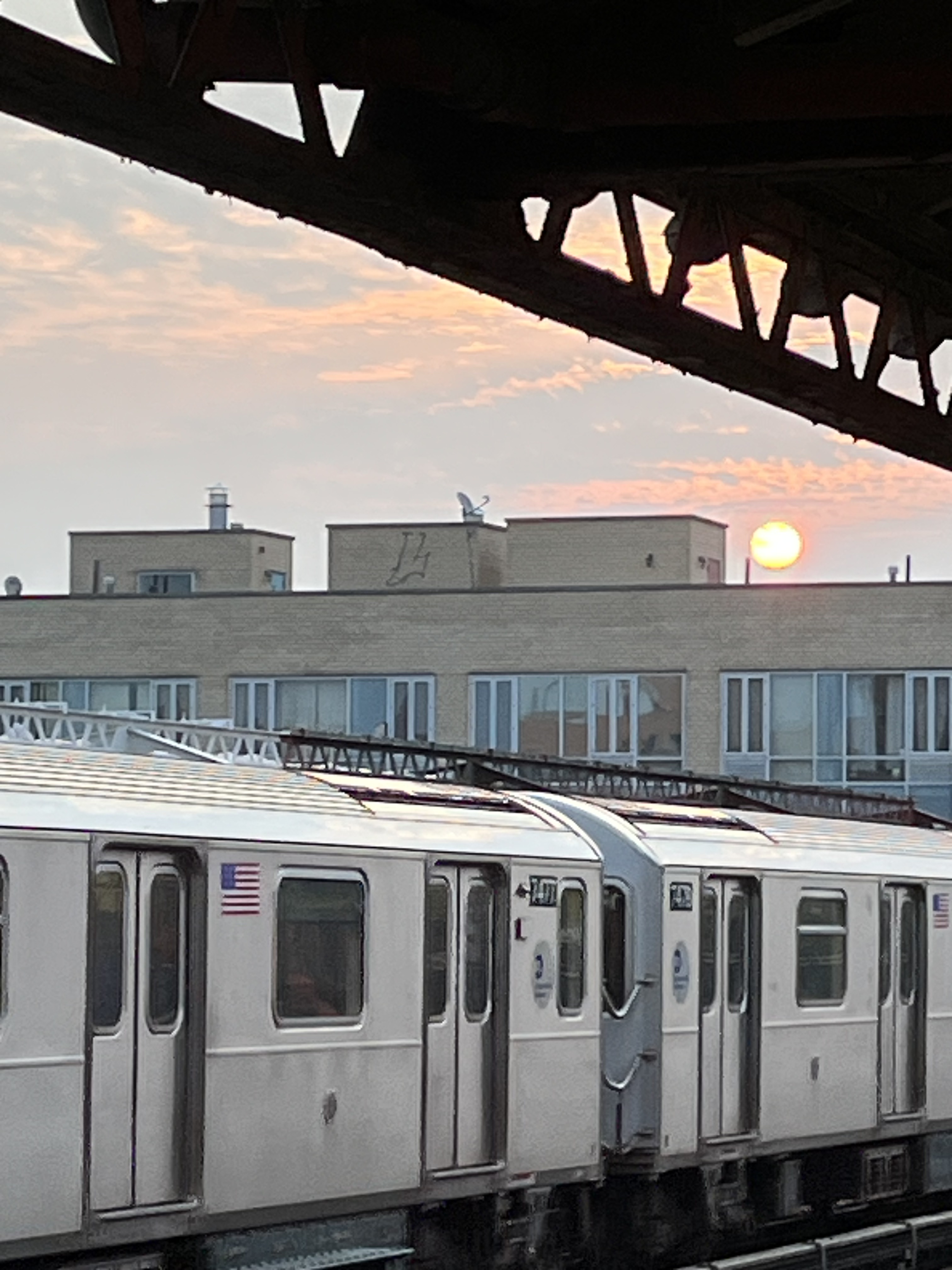
Morning from the 82nd Street Subway Station. A couple of cars and a sun Photo by LO’H
Did you ever have one of those days (years, lives) when everything breaks? The one where you look at the pot handle lonely in your hand as the pot you wanted to fill with water clangs onto the kitchen floor, and you scream, “I’m so glad this is hard.” Dumb tasks that should take a second become all-day quests on the scale of Don Quixote. The other morning one of the little plastic doohickeys on the collapsible plastic tube that keeps the toilet paper attached to the porcelain thingy on the wall snapped off when I tried to replace the roll. My first instinct in cases like this is to try and fix it. So several squirts of epoxy and some duct tape later I realize, “For the love of god, Lisa, stick this in your bag and go to a hardware store.” $2.99 + tax later, all was mended. But the cost to my day? Priceless.
Everything, it seems to me lately, is breaking. The existential stuff, sure, but what about my parents’ yard? The other week when I visited Virginia, brother Jeff and I pulled into our parents’ driveway, and the first thing I noticed was all the chickweed in the flower beds. By this time of year, those beds are cleaned out, mulched, and planted with petunias, but ol’ Bernie in his 89th year has a hernia and was waiting for surgery, so all the planted beauty was on hold. Upon surveying the rest of “estate,” I noticed piles of oak tree spooj, er, “catkins,” in pond form on the driveway and pea gravel patio; periwinkle out of control; a dead dogwood. So after days of rain, during which I cleaned their house, stocked up at the grocery store, and did whatever other daughter stuff was needed, I set off for outside to pull chickweed and sweep up the driveway.
Within ten minutes of using the outside broom—mended at the bristle-handle connection several times over with Gorilla (TM) tape—it broke past repair. The handle coating was cracking in strips. The third time I used the dustpan it literally crumbled in my grasp.
WHAT IS HAPPENING?
I just turned 59, so you’d think I’d just roll with all this, but in truth I got weepy, not because of the broom and dustpan, though sure, it was an inconvenience (I texted Jeff to please buy one at Lowe’s while he was there picking up a new latch for the 50-year-old front storm door, the one that caused our father to get locked out the previous morning while out getting the paper at 4:30 AM—fortunately we are all early risers and I heard the knocking while Jeff was in the bathroom and our mother still in bed with her coffee). It’s that all this infrastructure breaking down mirrors my parents’ physical and mental deterioration; inevitable though it is, and tough old birds that they are, it’s not something you can just smile through. Though we do, often as not.
Couple this personal existential stuff with the coming end of the democratic experiment in America—and forget that, what about the EARTH?—and I have to ask, how are we all not losing our minds?
Blooms Buried
This spring, everything bloomed a full month early. (New York City—a city of subzero winters and months-long snowpack when I moved here 20 years ago, had the warmest winter I can remember, and sadly will probably never know such cold winters again in my lifetime; my co-op doesn’t even bother to order salt anymore, and we used to order a dozen bags a winter.) I do not celebrate this. Lilacs, a mid-May flower, were here and gone in early April; so were the daffodils, tulips, and azaleas (a late May bloom), all at once. I don’t know if you follow bloom schedules, or enjoy the unfolding of seasonal changes as I do, but last spring’s walks were simply miraculous, helping me emerge out of my Covid coma, spring taking its sweet time moving from crocuses, to daffodils, to tulips, to blossoming trees, to irises, right up to honeysuckle.
This year, it’s like the whole bloom gang showed up drunk to your spring party and passed out as they handed you their coat.
My friend Tom, a Virginia native, retired English teacher (mine, in high school), and avid gardener, called me from his Arlington home a week or so before my visit, freaking out about this seasonal disruption. “What is happening? Everything bloomed for a split second and was gone! I can’t keep up!” He was also freaking out because of the steady and unstoppable decline of his partner and spouse of fifty years, Ron, who was dying of cancer of the bile duct in a nearby nursing home. And as passionate about politics as he is about poetry, Tom was also having apoplexy over the Republican Party’s transparent policies to unapologetically end democracy. Death was in his garden, in his home, in his country. It was all just too much to handle all at once, and yet there he was, handling it.
Before I could visit, Ron died shortly after I arrived in Virginia, peacefully but still unexpectedly around noon on May 2, right there with Tom. It happened the day after the 50th anniversary of their meeting. EMTs, police, inquest, courthouse, death certificate, phone calls to insurance and Medicare and Social Security and Dominion Power and the bank…and not a second to grieve. Our whole American system is hurry-up heartless. Tom only spoke to one actual human, who was so kind, while the rest was AI simulation voices or operators from overseas reading from a script of “How can I help you today?” to “I am sorry I could not fulfill your request.” Fuck them all.
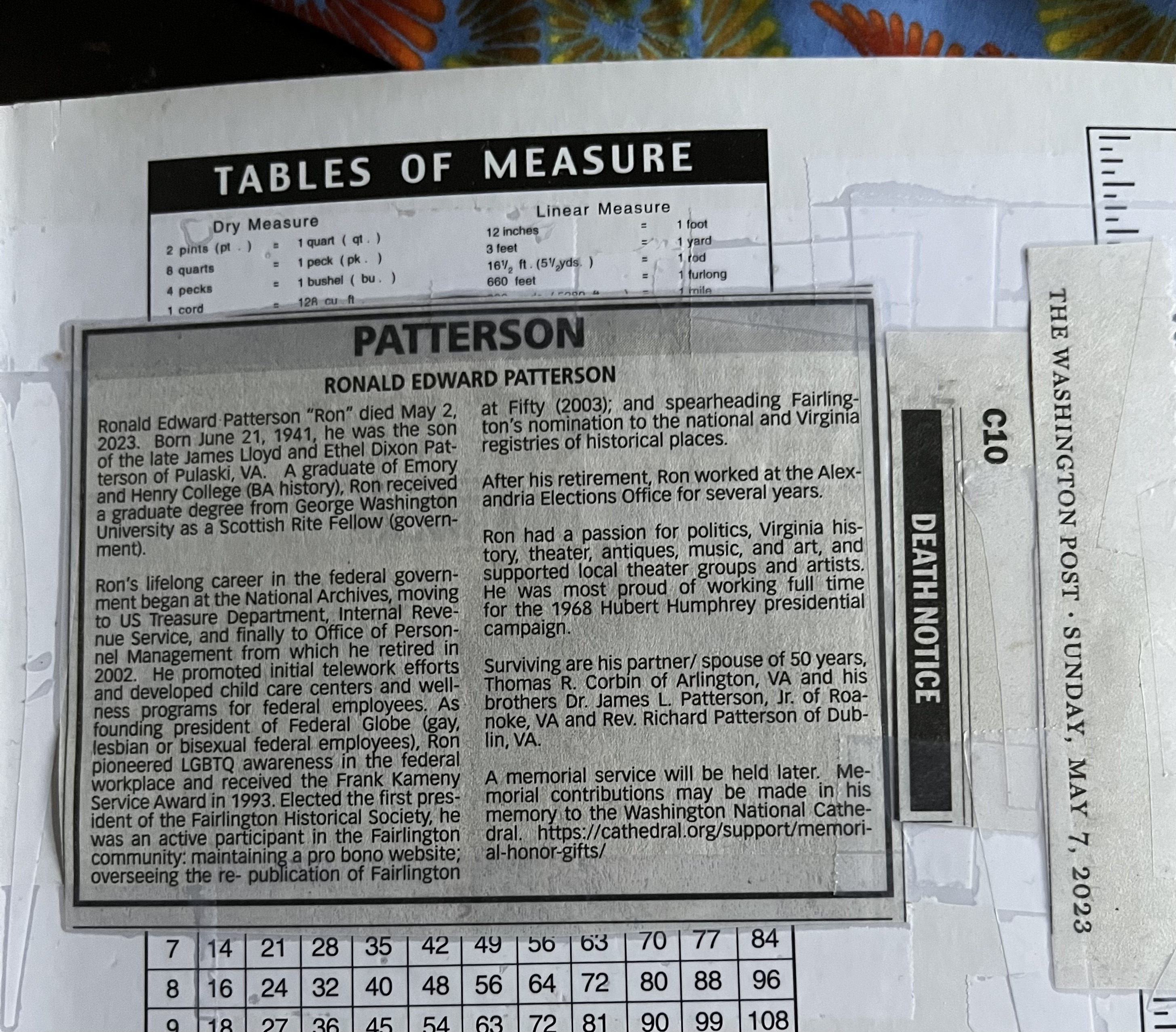
Tom’s obituary for his partner and spouse of 50 years, in my journal. How do you measure a man’s life?
Today is Mother’s Day, and so far Lynne is hanging in there. On Thursday, May 18, the good lord willing and the creek don’t rise, my parents will celebrate their 60th wedding anniversary. On June 5, my dad is scheduled for outpatient hernia surgery. Meanwhile Jeff is cutting the grass and trimming out the lawn; we bought a hanging basket for the backyard while I was home. And Tom is trying to figure out a good time to have a gathering to remember Ron, at their home, maybe this June; and Democrats still use their elected offices for governance of and for the People, bless ’em.
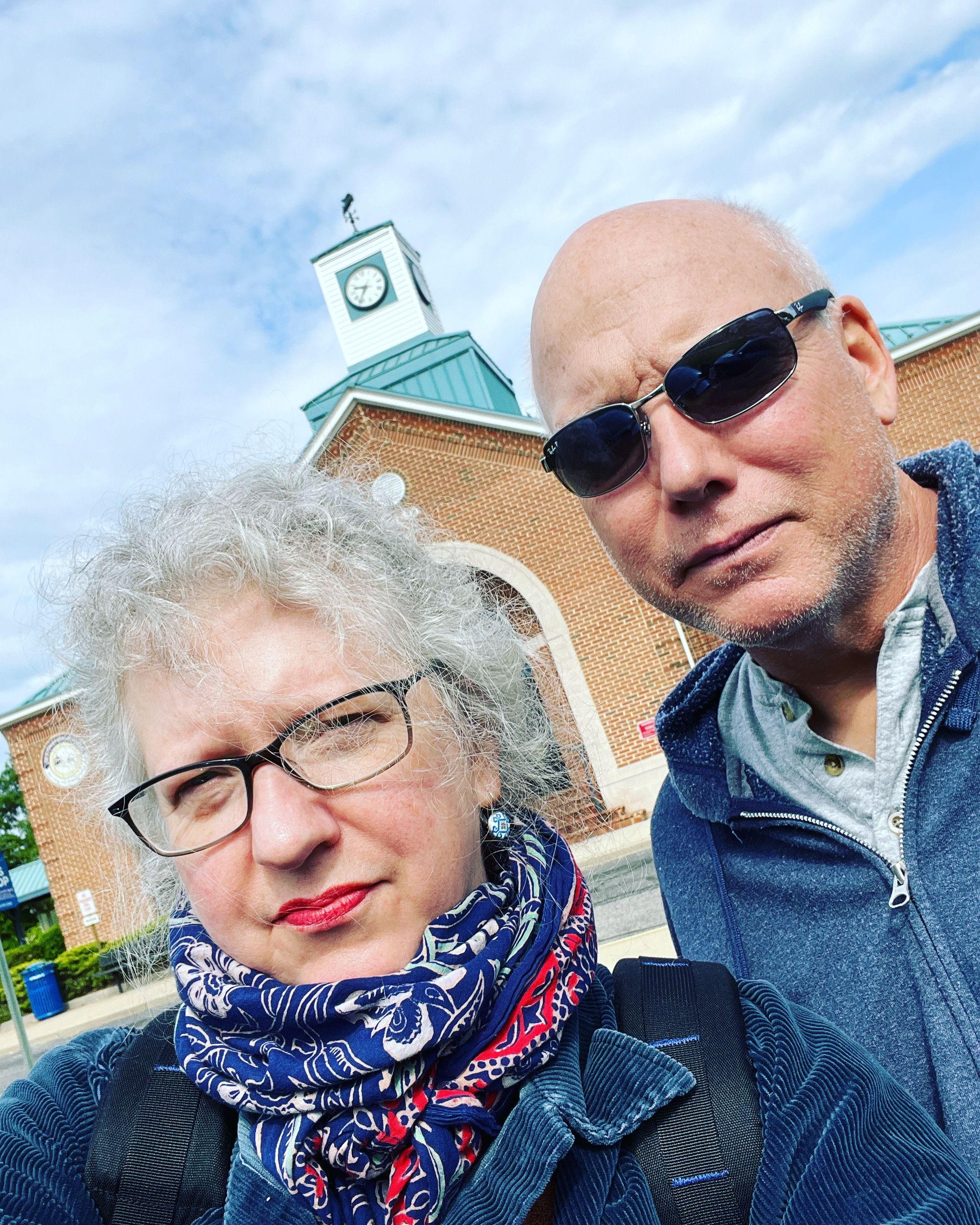
Miss O’ and mom Lynne, May 2023Miss O’ and brother Jeff O’, train station, VirginiaBernie and Lynne with their oldest child and youngest grandchild (not Miss O’s)
Our Earth continues to warm at a beyond alarming rate. Republicans are breaking democracy. Declines happen. But the death of the Earth, the death of democracy, unlike human death, is not inevitable. We don’t have to lose them. We don’t have to annihilate all life as we know it just because a few people are having, I guess, really bad days (years, lives) and are taking it out on all of us.
This week I sent money to Biden to stop fascism and Brady to stop guns. At the farmer’s market on Saturday, I bought plants for the porch pots on my little deck over the trash alley here in Queens. Every little bloom counts. It has to.
“I used to teach just the way I was taught, but now I let someone else do all the work for me. If plants are our oldest teachers, why not let them teach?”
~ Robin Wall Kimmerer, Braiding Sweetgrass: Indigenous Wisdom, Scientific Knowledge, and the Teachings of Plants
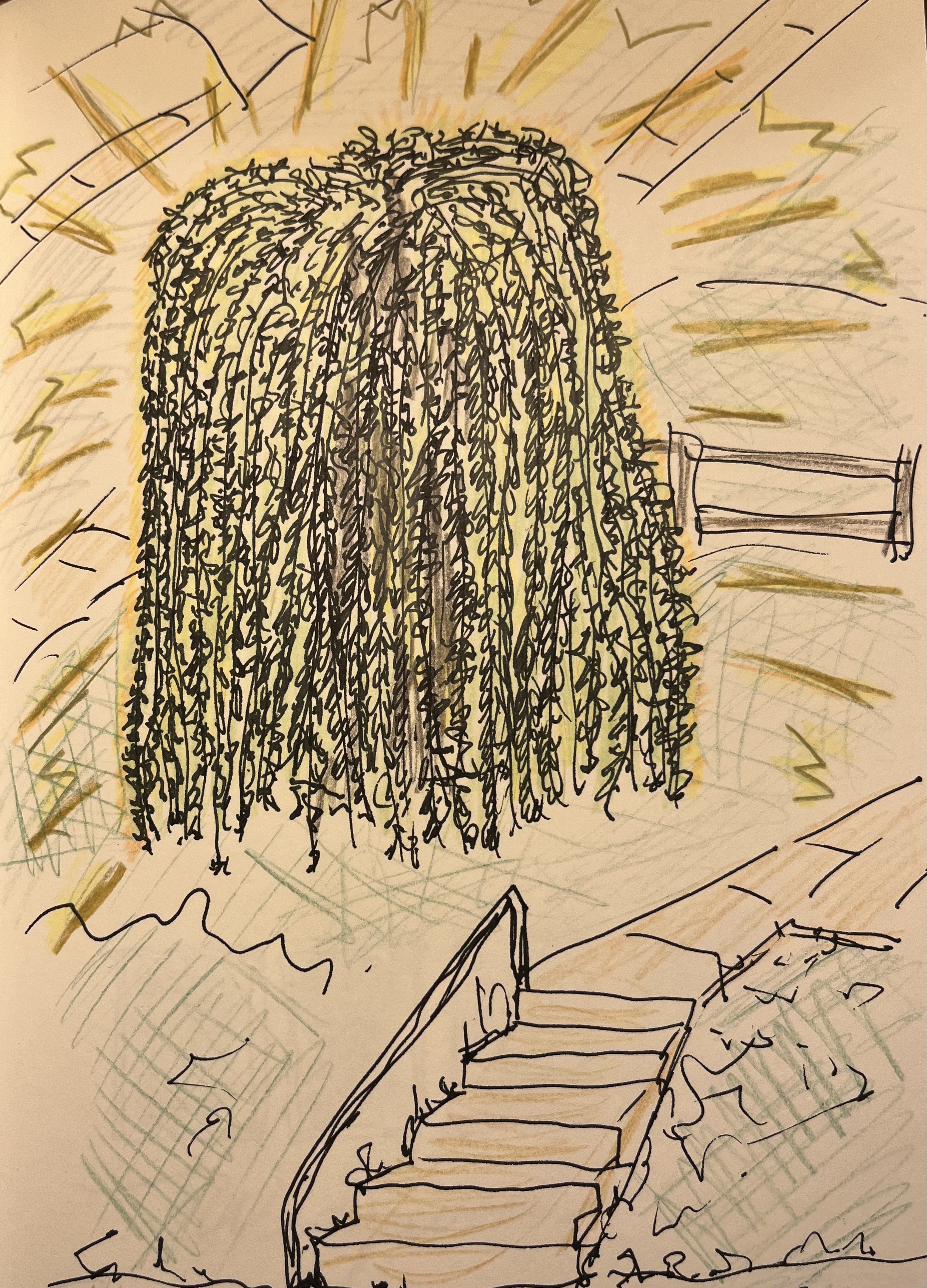
I lived in the country for the first twenty years of my adult life, and I have country trees I could talk about, but events of the week got me thinking about two particular trees—of my childhood and now—so much so that I had to try to draw them. I thought I’d tell you about them, though I’m not sure why I need to do this. Let me know if you figure it out.
Suburban Trees
When I was 11 or 12, I think, my next-door neighbors, Mike and Diana, hired people to come and chop down a weeping willow tree on their property, a tree that had grown to be nearly as large as the house itself. The willow sapling was planted around 1965 in the front yard by the first owners, John and Barbara, who moved to another subdivision around 1970 and who hadn’t really understood that a weeping willow might not belong in a front yard. The weeping willow is a tree I used to see in backyards in the Midwest, often along small creeks. It’s really not a front yard tree. Anyone could see the truth of that, since no one could any longer see the house from the street.
Sitting on my bed beside a window that looked over to their yard, a view nearly blocked by a giant cedar (one of two that framed our house, and which would be cut down and hauled away when I was in my thirties), I sobbed. I’d been standing in the yard when I saw what was happening, and began to protest, wanted to scream, and my mother said, “Oh for heaven’s sake, Lisa, it’s a tree. It’s too big. Get over it.” Something like that. She wasn’t wrong. Still, I ran inside and upstairs to my little room and slammed the door. Even as I type this, I can smell the old paint around my window, the glazing, a metallic dust smell, and feel the texture where my fingers gripped the sill. My runny nose against the chill of the glass, I had to turn away. I couldn’t watch. Still, I sat holding all my concentration on the tree during the chopping process. I felt I owed it to my friend.
How do you explain being in love with a tree? I was in love with many trees in my own yard, sure, but that was puppy love compared to my feelings for the willow. I used to float underneath it, back when the Yanos lived in the house; swim as one might in the sea, though I’d never been to the sea. I remember that I spent most of my time under that tall grass skirt on “my” side, closer to my house, not all around it, like there was an invisible wall that prevented me from complete freedom inside the arch of branches that reached to the ground. But I remember the magic, how deeply scared and amazed I used to feel. I don’t know why. So cutting down that tree was like watching a friend being murdered, everyone telling you it’s just a life. Get over it? How?
Weeping Willow ca. 1976 by LO’H
There were certain trees, growing up, that I felt belonged to me. I was so lucky to have, and my parents worked so hard to buy, a home, one with a backyard, in a subdivision whose designer left big swaths of old-growth trees across backyards that abutted across two streets, over blocks. Different kinds of oaks in my own backyard are still there, and I visit them whenever I go back to Virginia (touch wood) to see Bernie and Lynne, now in their 89th years. There’s the holly tree by the horseshoe pit. And I still “see” a beech tree that is gone now. I loved climbing it—not very high. I regret that I never really got to know the cedars. I don’t know why, exactly, but I suspect it’s because they were planted for ornamental reasons, and not quite part of the forest that was as much my home as anything inside. And unlike the willow, the Flahertys’ monstrously huge crabapple tree that the Hunnicutts planted across the street survived (Mrs. F. loved the spring blossoms) for years longer; though the next owners, whom I’ve never met, finally had it chopped down, at least I had that tree all through my childhood. And the forest that was my backyard home.
It’s even more magical now. Bernie and Lynne hauled every rock.
City Trees
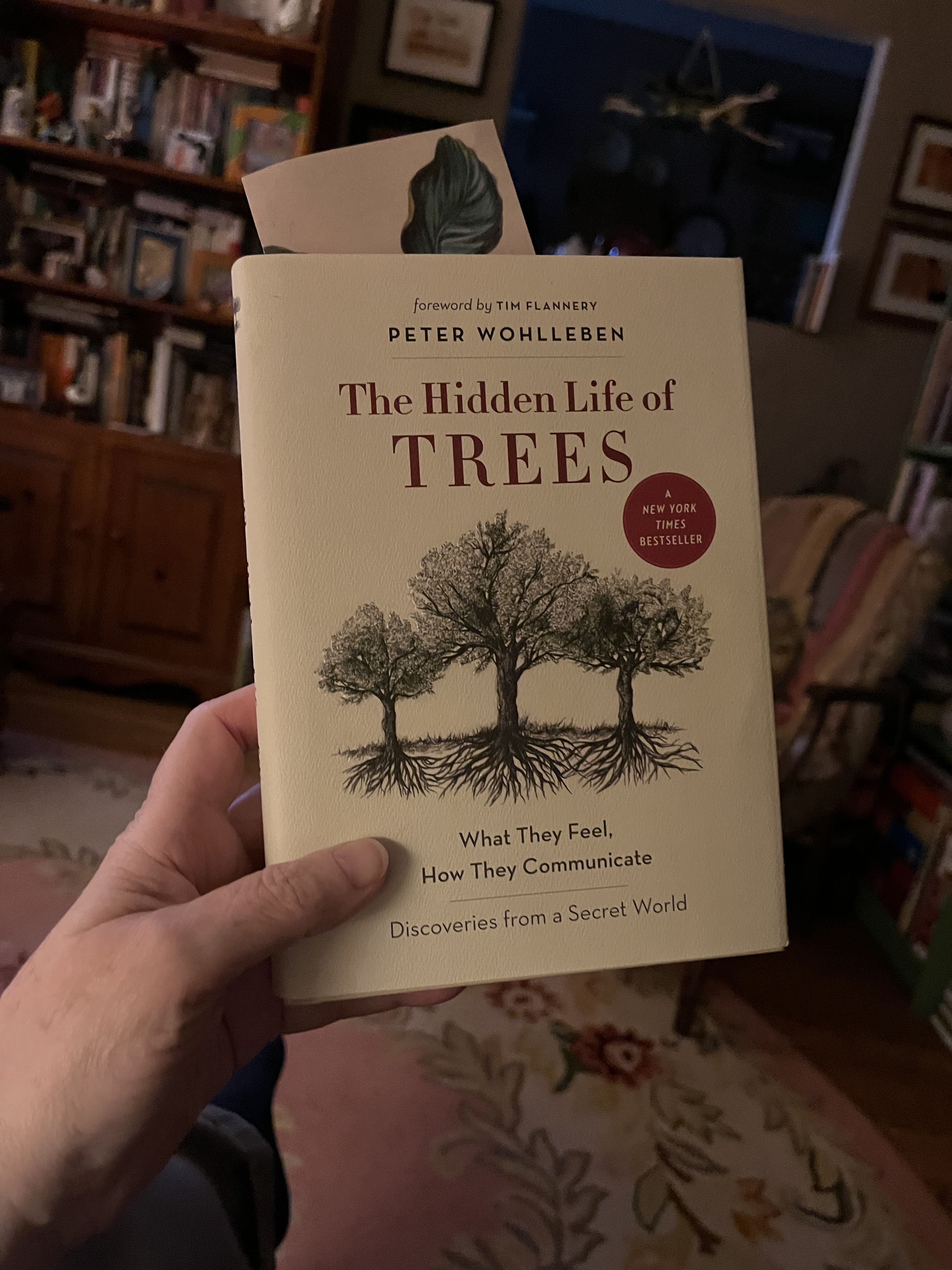
Several years ago now I was out in California visiting friends Anna and Michael, and one of the books in their guest room/office (pro tip: please have a library in any room where you have your guests sleep) was The Hidden Life of Trees: What They Feel, How They Communicate: Discoveries from a Secret World by Peter Wohllenben, a German forester. I recommend it.
“Trees can grow in many extreme environments. Can? Indeed, they must!”
~ The Hidden Life of Trees, “Specialists”
The upshot: Trees feel, they know, the connect, they have real lives. Any kid who has loved a tree the way I loved that willow could have told you that, but it’s better to have science to really drive it home, I guess. All of this is just to say the lost trees of my childhood aren’t the only ones I’ve grieved, and the older I get the more deeply I know there are connective threads among all these living things that only my heart understands. And it matters.
In my co-op apartment building in Queens, to take one example, the board has long neglected one side of the complex, the side I enter on, because no one else really sees it, as they enter on another street. A giant mulberry tree (that no one missed) had to be taken out of the fenced “garden” about fifteen years ago, before it compromised the foundation, though the seedlings and shoots keep coming up out of old the roots. (The struggle is constant and will be until we can afford a landscaper to dig it up properly, but you have to admire the tenacity, you know?) But it’s this one other little oddball tree, a blue spruce, on the edge of the iron fence that meant something. With the mulberry gone, it really took off, so I had to trim it a lot to keep the prickly branches from hitting people as they walked past. I did not trim it well, but I did the best I could. It looked like a giant bonsai tree. Okay? But it was our giant bonsai.
Last year, a neighbor in the complex thought he was giving me this great gift by chopping down that one remaining tree, that badly trimmed blue spruce that, it turns out, a few other folks in the neighborhood had also secretly called “the bonsai spruce.” I returned from a weekend visiting friends to see it gone, and I felt I had been punched in the chest. I choked back tears until I could get inside. I’d read an email from this (really very nice) neighbor which said he had “cleaned up the garden” but without mentioning this act of, frankly, vandalism (apparently he’d only cleaned up the garden because he personally hated that tree). People who regularly walk their dogs still ask me why we got rid of it. It’s sweet, though, isn’t it? I was amazed by how much of a touchstone that crazy little misshapen tree was for the residents of a Queens neighborhood. And you think New Yorkers don’t have hearts.
Illustration by LO’H
More City Trees
This past weekend I and two neighbors from the complex worked to remove an invasive tree near a cedar on the other side of my stoop, the smaller iron-fenced garden area along the sidewalk. Travis and Vaughn had taken a tree-pruning class when they lived in Brooklyn (!) and had the tools to properly prune a remaining tree (that someday really has to be removed) so the branches didn’t compromise our porch overhang and a couple of windows (should a big windstorm hit). They also trimmed the tall cedar (one we want to keep) way back away from the brick on one side and the sidewalk on the other. The city has been on everyone’s case to clear out anything remotely embowered in order to deter rats, so all this stuff had to go. (And now with all that low growth gone, maybe that weird old man with the red cart will stop pissing on the cedar as he pauses on his walks—at least I hope so.)
My upstairs neighbor, Debbie, who shares my entrance, came down to investigate after we’d finished up. Earlier in the week, Debbie had discovered a dead squirrel in full rigor sprawled out flat on the sidewalk. She texted me—I work from home and was on a Zoom call, but I couldn’t ignore her sad face emoji and “Our squirrel friend is dead.” This little guy has been around for years, digging in my herb pots and frolicking in the trees we’d just trimmed back. But I’d leave water out for him and the sparrows, in a plate on my little kitchen porch over the trash alley; once I left him a plum, which he took. The couple behind me also feeds him—he does get gaunt if we don’t help. The dead squirrel seemed bigger to me, but maybe it was the dead bloat thing. Because the kids were about to get out of school, we couldn’t just leave him there on the sidewalk. “Debbie,” I said, “can you get your snow shovel and sort of scoop him into the garden?” Good idea, she said. I went back to my meetings. A couple of hours later, I texted her and she came downstairs. We looked at his body there, exposed on top of weeds, and we couldn’t leave him like that. I remembered I had a real dirt shovel, left over from the old farm days, and I brought it up from the basement, dug a hole in our shitty old garden (or “garden”), into which hole Debbie scooped that stiff squirrel body. I covered him up with dirt, we said a few words (a shocked little boy saw what was happening as he walked with his dad; “You weren’t supposed to see that,” I said, and Debbie said, “He passed away, it was his time”). Ceremonies matter.
But while Travis and Vaughn and I were trimming on Sunday, Travis noticed there was a (live) squirrel watching our proceedings from all the way over at the other edge of the building. When Debbie came out later to check out our work, I saw that little squirrel again, but this time along the railing by the cedar. I’d noticed a huge nest in the cedar tree but thought it might belong to a family of house sparrows, so little do I know of nests. Debbie said, “He’s a friendly guy, isn’t he?” And then it hit me: That is his nest! This is our squirrel! He was still alive, after all. But man, had we fucked him over.
Illustration of existential moment by LO’H
I thought, suddenly, that maybe Vaughn had cut out the nest, but he hadn’t—there it was, up near the top. But it’s like if the back side of your condo was blown out, and you still had to sleep there. And I grieved that we’d ever trimmed that cedar. Trees are life, and how we measure all of nature in terms of human (in)convenience is really a testament to our planetary tragedy, isn’t it?
So let’s take a page or two out of Braiding Sweetgrass and The Hidden Life of Trees. Life is love, loss, grief. And nature. It’s all nature. Even in New York City.













 The Miss O' Show (Teacher's Edition)