Demon Number Four, from a Summer Series: Holding the Space


Demon4Paint
Demon Number Four for Miss O’ 8/27/16


Daydream Believer

I think the first time I was aware of the demon that is daydreaming (with nothing, such as plans, to back it up) was while sitting on the music room floor, side-saddle, as it were, because of the skirt, my right hand pressed hard onto the cold asbestos tile, holding me up, one day in fifth grade. Mr. Hart’s class—that was mine—was in charge of putting on the school talent show. We helped produce it (make programs, usher), light it (overhead projectors and lighting gels), and some of us might even perform in it, if we passed Mr. Hart’s auditions. When imitating Judy Garland in my bedroom, I was pretty sure I would have been a big star in 1939, but this being 1975, probably I was too late. Still, a girl can dream about being discovered and given her big break, and that’s what I was waiting for Mr. Hart to do while Brenda Naylor was singing “Have You Never Been Mellow?” along to the record by Olivia Newton John. Brenda was a very nice, quiet girl, largely built, of indeterminate ethnicity, with the smallest mouth I’d ever seen. She had a lisp. She swayed while singing, sang off-key, very hoarsely, and looked around at us uncertainly. She was just awful. Mr. Hart, though, treated her like a star. “Wasn’t that great, guys?” He made all over her, never noticing that a real star was sitting right there on the floor. Oh, I never bothered to sing, dance, speak, or in any other was actually audition—but if I really had talent, and I was sure I had, wouldn’t someone as bright as Mr. Hart just know it?

I was never afraid of being bad. I was fearless in my heart. What I was afraid of was looking like a show-off. I would watch amazed as the super-talented dancer Terri Trelinski (who is now an elementary school music teacher) performed this original robot dance to Queen’s “Killer Queen,” music I loved but was also afraid of because I didn’t understand what their songs meant. (The only movie musical lyric I didn’t understand up to that point was, “And you’ll find that you’re in the Rotogravure”, and that was totally forgivable.) I didn’t think of her as a show-off. So what was I doing sitting there on that floor, smiling mysteriously to myself while all the other kids did the actual work of performing an audition and got parts in the show?

It turns out I was becoming addicted to my first taste of a powerful drug called Holding the Space. So powerful did my addiction to this become, I didn’t even realize that in Holding the Space I was Holding Myself Back. In fact, I never even thought about this tendency in myself until some 30 years later at a space down on White Street below Canal, a fifth floor walk-up loft where I found myself as assistant director in an experimental theatre company in New York. (Note: The late great actress no one ever heard of, Ruth Maleczech (whom I met once, and really scary in her power), who dedicated her creative life to Mabou Mines, the legendary experimental theater company based in NYC, said, “Don’t call it experimental, because people will say the experiment has failed. Just call it your work.”) Herewith, Demon #4 in Miss O’s Summer Series:

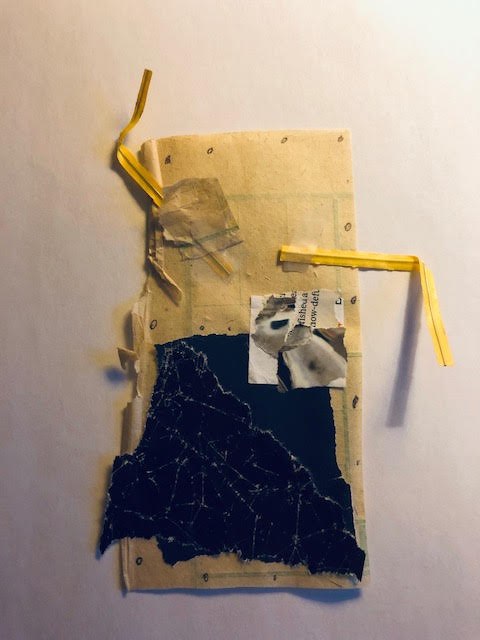
Demon4CollageStory
Miss O’s Demon Number Four: Holding the Space 8/27/16:    Years ago, when I was assisting a theatre genius who was guiding her company to create a piece I could not understand—I, who could only take notes, was unsure of my role in all this. About an upcoming rehearsal I could not attend, one actor said to the director, “But Lisa has to be there. She holds the space.” Whenever I feel lost, untalented, useless…I remember that perhaps my job is not to do anything, but rather, to just HOLD the SPACE. I think this sucks.

 Miss O’ Reflects

LISA HOLDS THE SPACE. She has to be there. She holds the space: Hear this like an echo chamber moment in Spellbound. The weight of the responsibility is enormous, in that unlike, say, being an actor there, my attention could not sway/falter/shift for an instant; I could not miss any single particulate of a moment if I was to do my job. More or less, that is my nature, and my students back in my teaching days found this unnerving. (“How do you remember all this?”) I also became aware that too many times I wasn’t remotely “holding the space” in my classroom when I learned later how much I actually missed—kids’ sense of confusion, being lost, feeling left out, etc., however much my awareness of life seemed heightened. (“I don’t see why you don’t think to help me just because I behave.”)

Holding the space made me well-suited to teaching and directing, professions as mysterious as they are obvious: Everyone knows directors make shows and movies, and that teachers teach school, but no one outside of it really knows how it gets done, how the work happens. Teachers and directors shoulder all the responsibility and accept all the blame, but are very often given no credit for successes. To the actor go the spoils. And for someone of my temperament—patient, a natural listener, given to life lived in the present (in what acting teacher Patsy Rodenburg calls “the second circle”)—holding the space or creating a place where people feel safe to be who THEY are, to create what they want, is a natural fit.

So this got me thinking: Is that who I am? A “space-holder”? And if so, is that a defeat for me as a creative person? Does this mean that in and of myself, I have nothing to offer to the world beyond my presence, my place in the audience, my payment for the purchase of your book, your art, your show ticket, and all the good wishes (truly heartfelt) that attend those purchases?

Rorschach

A few years ago, when I was at a low point—I would say nadir is not too strong a word—of my romantic life, a friend said to me, “You are a Rorschach. Like Marilyn Monroe, not physically, but in that way of hers. You have that something. People project onto you’re their fantasies, hopes, dreams, and expect you to reflect back to them exactly what they want everybody to see. And when you don’t respond the right way, they turn.” While not exactly comforting, the observation nonetheless made a lot of things clearer to me—mostly in the form of behaviors, turnabouts, and so forth. It also helped explain the sudden and deep criticism I might get from a friend I had known as supportive if I moved into a new creative area, or moved, say, to New York City. And it made me learn to stay away from Rorschach projectors. Here’s ink in your eye.

The connection between Holding the Space and Being a Rorschach has mostly to do with serving the needs of others. I’m very good at maintaining friendships, checking in on people or being there when they need me to. Sometimes I fail. But this thing that nags at me is, “Is there anything else I can contribute?” or maybe more than that, “Is there anything that I have to say for myself that others might want to hear?”

The Open Theater

In my junior year of college I was assigned to act in a directing student’s final project. The student, who went on to appear in a few films and in theater before giving it up (and happily) to be married and a mom, was given the task of creating an original piece in the style of Joseph Chaikin. Chaikin is all about emotional honesty, and I suspect she was assigned this style to help “grow” her professionally. It’s what taking classes is for. As we began the rehearsals, one thing that cropped up as a topic among all of us was daydreaming. I don’t know how we arrived there, but we all talked about our fantasies, and I shared mine, which was of “being discovered,” just like in fifth grade. And the director herself began turning around like an Oscar, and we developed my whole scene in a short time. Although it exposed my shallow dream for all to see, it was honest, and it was funny. When we went on to create her daydream—of being swept up by a knight in shining armor, to the strains of the soundtrack from On Golden Pond, the honesty nearly destroyed her. She returned to the next rehearsal saying we had to scrap the whole idea, that it was too close to the bone, and find a new idea to build a show around. We slapped together something, though it really didn’t have anything like the intended outcome of honesty and deep connection to the material, and I’ve always thought the loss of that show was a shame.

The consequences of this pulling back, pulling away from truth, though, has always stayed with me. It put me on the alert—looking to see when I did that to myself. And slowly, slowly, I have been working out this demon.

In graduate school—five summers at a the Bread Loaf School of English—I came to the summer before my senior one, and at a cocktail party the fiction professor (who had taught three of my closest friends there) asked, “Are you finally going to take my fiction workshop next summer?” He and I were both from Virginia and had bonded over that through the summers; I shook my head. “Oh, no, David, I’m not a writer. I teach and coach drama, theater is my thing.” And he eyed me over his gin and tonic and spoke in a way I had never heard, and it shocked me: “Is the baby afwaid to take my workshop?” I glared at him. “Fuck you. I’m taking your workshop.” He smiled, pleased with himself, and sipped his drink.

The following summer, as I was well into my second story in the workshop, I chanced upon Professor David as he left the tennis court. “And how is your writing life today?” he asked. My writing life. MY creative life. As a writer.

Whenever I feel lost, or untalented, or useless, I think I need to remember to ask myself that question.

I count it as the happiest question I have ever been asked.

LObridge
Miss O’ in Vermont, ca. 1990


Demon Number Three: I, Hermit!


Alone in My Room

Hermit
Miss O’ reflects on Demon #3, from her Summer Series

When I was born, my Great Aunt Lora (whose name I thought until about six years ago was spelled “Laura”), my mom’s mother’s older sister, made me a quilt. It had red and white squares in a pattern not quite checkerboard, but like that, over-embroidered with swirls of red thread, white thread quilting it together. It was measured for my twin bed, and included a pillow sham and a sham to roll an extra blanket into. I wore out the entire right side of the coverlet by sitting on it to stare into my mirror, the frame of which was painted red to match; and the mirror sat atop a quilted dresser scarf with a ruffle outlined in red, resting on a dresser that was also painted red. My walls, which began life in mint green and then robin’s egg blue, a color scheme from the 1950s, were finally painted white at some point. The room, about 7’ (maybe less) by 8’ (probably a little less), would be unsuitable for even an HGTV master closet today, but it created a nest for my dreaming ways. Though mostly red and white, including a clown lamp with white shade covered in red polka dots, and a red smiley-face rug, I remember my room in Technicolor.

HermitCollage
Room Collage Memory, with apologies to Van Gogh and the Stones

I was the only sibling of my parents’ four kids (my older half sister and brother, from my dad Bernie’s first marriage, lived in North Carolina with their mom) to have her own room. My three younger brothers shared the third bedroom, one that included bunk bed plus trundle bed, three dressers, and shelves, in a red and blue color scheme. We thought nothing of this crowding (until it came time to wash sheets, and then dear GOD, the gymnastics), seeing as my dad slept in an attic with his brother (two of eight) back in Iowa in the 1930s, so shut up already.

My room in our small house was a sanctuary from television noise and Lego fights, and I was put in mind of that cozy feeling again today, as I always am, when watching a TCM black and white classic movie from the 1940s—when a middle class (and inevitably white) character goes upstairs and retreats to her small but very pleasant bedroom to grieve, or dream, or scheme. Everyone was so clean in those films, and the rooms were so tidy. I still find it comforting to watch—they are so safe there, so loved. I’m not a nostalgic person, but I take my comforts where I find them.

I guess it’s not surprising that I had a reputation, if brothers are to be believed, as a hermit. My strongest memories from childhood are not really in my room, though, but outside playing, and yet when I reflect, I know I spent nearly all my time in my room reading Humpty Dumpty magazine for children, and, later, Scholastic books and Nancy Drew mysteries; listening to The Partridge Family, rearranging my little objects—a music box, a few dolls, a little ceramic bust of Mary in prayer (what else?), and my makeup tray-turned-bar (a decanter of my mom’s, filled with water and red food coloring flavored with cinnamon, and a glass for “sherry”)—drawing pictures (mostly copies of the cartoons my friends drew), and writing little poems. I loved getting a little desk with a blotter when I was in 4th grade. I still don’t know how all of it fit in the room, but it did.

Meet the Welcome Wagon

In my neighborhood in the 1960s and early ’70s, with our town situated between two major military bases outside of D.C., and this being the Vietnam War, we saw a lot of military families coming and going on two-year stints. Other neighbors, mostly young families, stayed only a short time and moved away to larger homes when they began to do better financially, or to trailers when the opposite happened. I remember my neighborhood, as a young child, seeming very empty of activity, and then wild with it, trucks to work on, cars and their radios, teenagers–all those potential babysitters.

Whenever a family with young children moved in—and this habit of mine began when I was in 2nd grade or so—I took it upon myself to be the Welcome Wagon I heard about on TV but never actually saw. Naturally watchful and shy, I simply SHONE when in the company of NEW PEOPLE. “Hello, new people,” I would say, “I am Lisa O’Hara.” I befriended the kids (teachers sensed this knack, and always put me in charge of the new kids in class), introduced them around (as best I could, given that I wasn’t “cool”), and played with them even though most were much younger. I liked looking at all their stuff. Then they’d move away: Michelle (who had a collection of dolls from Korea), Sandra (who had a lot of board games I’d never heard of), Teresa (who stole my allowance from my bunny bank), Dawn (who invited me for a sleepover and whose parents kept us up watching the creepy Charlton Heston movie Omega Man on ABC’s Friday Night at the Movies), Jimmy (who taught me the expression, “Finder’s keepers, losers weepers,” which I thought was hateful), Tommy (an early crush, and his parents were real-and-for-true hippies with a “Never trust anyone over 30” poster and a “Save water, shower with a friend” poster hanging in their basement). A lot of other kids stayed around for years, though, and we’d see each other in all the schools from first grade to graduation, on college breaks, in the store, but I remained close with only one or two people I grew up with in the neighborhood. I was always more comfortable helping all the new kids—a lifelong habit—than I was in maintaining friendships in situ, as they say.

How many friends was I close to for merely a few weeks or months of a school year? Surely I wasn’t the only one. Were other people like this? When I was in high school, my mom, Lynne, gave me a copy of Truman Capote’s memoir, bound in a lovely case, called “A Christmas Memory.” It’s the brief story of his childhood with his cousin, Sook Faulk (not named in the telling), and their Christmases together, including the baking of fruitcakes. They mail the cakes to friends: “Not necessarily neighbor friends: indeed, the larger share is intended for persons we’ve met once, perhaps not at all. People who’ve struck our fancy. Like President Roosevelt.”

This sentiment hit my heart just right, and so did this: “Is it because my friend is shy with everyone except strangers that these strangers, and merest acquaintances, seem to us our truest friends? I think yes.”

I am, by nature, an itinerant friend, but through great good luck and the energies of others, I have a wealth of friends kept over the long haul, people who don’t seem to tire of me after a month or two once I’ve helped them into the world, showed them the ropes of the work ring, or they’ve shown me; or simply moved to a new place. It’s a little miracle. I say this because one big down side of me, Lisa, is that I tend to put the feelings of complete strangers ahead of people I am close to. Once, a new boyfriend dumped me when, because our meal came late and the boyfriend was vocally critical of the service, I made a comforting joke to the waiter. Things like that. All the time. Somehow I feel it’s my job to take care of the feelings of strangers I will never see again in all my life. I have no idea why I do this.

I think it’s this habit of being—of being itinerant in my acquaintances and at ease in fast friendships—that made teaching a natural fit. I like meeting new people, working with them, and letting them go at end of term. I like moving on to the next people. Or rather, I did. At 52, much as I really love chatting up strangers here and there, making new deep friendships isn’t something I look for. I am so grateful for the ones I have. So lucky.

I must also note that I tend to inadvertently hurt new acquaintances because I create the feeling of ease and intimacy so quickly: They assume, these New People, that they have this new best friend, after the simplest of compliments or a casual funny remark, and sometimes there’s really no there there, as Gertrude Stein said of Oakland. “Hi,” I want to say to them, “I am Lisa Oakland.” And I feel bad about it, but not bad enough to protect feelings that might turn into “glomming,” as in “glomming onto me” for some kind of therapeutic reason or something. “No, really, I am Lisa Oakland.”

Dance, Ballerina

Oh, the sweet silence of my room. The pleasant feeling of walking into my very own room. It never gets old. In the silence of my room…I used to talk out loud, acting out scenes as if writing them, except out loud—and little, if anything, made it on to paper. After performing many of these scenes in the 3′ x 2′ of open floor space, I might, perhaps, dress up in one of my mom’s glamorous dresses from her swinging years as a naval officer in San Juan, and humbly, graciously accept my Academy Award. I would also accept offers to dance, or accept a date from Errol Flynn or David Cassidy. Games of my imagination felt very natural in the safety of my room, but outside playing with the kids from my street, any game other than kick ball or tag or racing on bikes would have made me feel foolish.

Above all, I remember that I spent hours staring into the mirror. Who am I? What will I become? What’s in a face? Why can’t I see my own eyes without a mirror?

Somehow, I turned inward into outward, walked through or past the looking glass, and tried out for plays. I wrote parodies of books, or musical versions of our dramatic efforts, such as Dracula set to the music of The Wizard of Oz.

 Weeeeeeeee’re OFF to see Count Dracula,

The count is a really bad guy!

If we don’t stab him in his coffin,

Then we all will die…”

Followed by: “Crosses and garlic and sun, oh my!”

I dreamed of being fabulous, glamorous, witty, and cool. An actor, a writer, a dancer, a dazzling interview guest on Dinah!. I also dreamed of being a school teacher. No one knew this. No one could have imagined how my imagination lit up while crooning along to Sinatra or Nat King Cole on my record player, performing Peggy Lee-style to the face of my clown lamp. I may have been a hermit; maybe I missed out on a lot of action out in the world. Who knows? And how to explain that being up on a stage, or in front of a classroom, feels just as safe as being alone in my old room? It’s the oddest thing.

I still live alone. A few roommates aside, I mostly always have. Was I right to play like this, live like this? Play at being a teacher to my dolls, being a performer for my stuffed animals—giving my all, all of me, once more with feeling, all for strangers I’d never meet, and later to perfect strangers? As Truman Capote might say, I think yes.

LisaRoom
Miss O’, ca. 1976


Demon! Number! Two! Second in a Summer Series

Demon Blog #2 July 16, 2016

In my continuing summer series based on the encouraging work of cartoonist and writer Lynda Barry in One! Hundred! Demons!, I bring you Miss O’s Demon No. 2:

BigMouthPaint
Miss O’s Demon #2

My Big Fat Mouth

It is in the small moments that I do it: Walking through a derelict section of town, a dust bowl, a collection of tall weeds and small multicolored houses from the 1930s, probably, now in decay, but still inhabited; a dirt road, maybe the last on this side of the county, runs its short length. My brother Pat and his friends always called it Carney Town, after their classmate Jimmy Carney, who lived there. They were being mean, in that thoughtless way little boys can be, but I wasn’t naturally mean, so I didn’t realize it. I thought the name was real, like a place named after its founder. Our grown older brother Craig was visiting, so Pat said, “Hey, can you walk us to the store?” We took “the path,” a supposed Indian trail behind the housing development where we lived, which ran through woods along a creek over to the elementary school, ending at Blackburn Road. We crossed the paved road and began walking the dirt road that led to the loading docks behind the new grocery store, a short cut. As we walked in the summer sun, I was feeling so free, just us kids hanging out and the dust blowing from the road; I announced to Craig our location, like an asinine tour guide.

“This is Carney Town!” I exclaimed, smiling.

Pat said, whispering hard, “God, Lisa, don’t say that out loud!”

“Why not?”

“It’s a JOKE. That’s Jimmy’s last name. We just call it that.”

“Why do you call it that?” I asked. Pat just shook his head.

And then I got it. And I wanted to die.

BigMouthWords
Collage response to Miss O’s Demon #2

I have done this sort of thing as long as I can remember. Sometimes I have the flair of a comedian, and the older I get and the less stupid I become, the more I manage that identity most of the time; but sometimes, especially in my youth, I might just humiliate myself, and everyone around me, with the casual gaffe. It’s my gift—the riches of embarrassment.

It’s a knife-edge I walk between funny and destructive over the shit-road leading outta my mouth. My brain makes a shift from surprisingly thoughtful to you did not just say that in the trip of a tongue. Here is a typical moment: Once, in high school, my friend Jason’s sister tried to commit suicide by taking twenty-two aspirin tablets. Jason was kind of a kook, troubled in many ways that would become apparent in later years, but he was wildly funny in a sarcastic way, laughing sometimes too loudly at the antics of others, or saying something bitingly nasty while serving you homemade cookies. You just never knew. One Friday night a group of us got together, all of us knowing what had happened to Jason’s sister, who had survived her suicide attempt and was in the hospital. We were all eating popcorn, sitting on the basement floor, I beside Jason. Someone shared an anecdote and remarked at the close, “I could have died right there!” to which Jason said, “Next time take twenty-two aspirins.” There was a silence, and I said, “Twenty-three.”

A beat.

And Jason collapsed with the most full-bodied laughter I’d ever seen. It was disturbing, but it gave the room a release—a terrible joke that came off, a blend of the situation, the recipient, and the timing, balancing on a knife-edge. I am haunted by the big fat mouth portion of this story, in any case, because I later learned about many problems Jason had, and how close I was to having it all go wrong. For example, not long ago, one mutual friend reminded me of a time that he, Jason, and I went to the mall, Jason driving, and that Jason later told the friend that he’d intended to kill himself on the highway that day, and take us with him, but that we’d made him laugh so hard he forgot to do it.

Is the story true? Did Jason really mean to do that? Suppose I’d said something that sent him careening into a guardrail while doing eighty? How could I have known? Did my big fat mouth, after all, save us?

For Living Out Loud

I live in New York City, where I take mass transit most every day with a hundred strangers on any given car and more on the streets, and somehow I still find myself talking out loud. Yesterday, for instance, I was saying something out loud on 7th Avenue by the Uptown 1-2-3 subway entrance, when a woman coming around to the entrance from the other side looked at me quizzically, and then said, gruffly, “Go ahead,” and used her arm like a maître d’, though she was closer to the entrance. My eyes widened, and I said, “No, please, go, I was just talking to myself.” I laughed. And she began descending the stairs, saying over her shoulder, “Oh, I do that all the time, too,…”. And you see, she was black, with an afro, and Obama had done this race “town hall” on ABC that afternoon, one that had turned into whites saying in essence that black people need to learn to behave and “comply,” with so little talk about the need for new training of law enforcement that it’s become a national humiliation, our racism—and I have no idea what I’d been saying, while talking to myself, I don’t know what she heard, or thought she heard, that caused her to assume something “entitled” about white me. But somehow, in being present to her, in simply saying the honest thing—that I was talking to myself—and laughing at myself, we figured out if not an intimacy, at least some kind of stair bond to get us to our trains.

Would You Mind Not Posting about Politics on Facebook?

F*#% you.

I say that with love. And often in print.

Guts and Glory: I Dream a Mouth

Listen, it’s not just talking to myself in public or loudly exclaiming my politics in social media and at the office that makes me unattractive. When I was in fifth grade, I said to Lori Grimaldi, “I hate your guts.” I’m not necessarily always a nice person, is what I mean. Sometimes I’m also a rat. Once, when I was around that same age as when I told off Lori back there, I told a fat old lady in a sleeveless house dress who was complaining about “these kids” that my brother Pat was one of them, and she said, “I’m calling the law.” And she was as good as her word, first calling up our house asking for my father. I’d answered the phone and then lied with “You have the wrong number,” and hung up. But she called again, and this time my dad, Bernie, answered. My face burned. I ran upstairs. The world was over—everyone was going to go to jail, Pat was going to jail, all because of my big fat mouth. But as it was, my dad talked the fat old lady down by threatening to countersue her “for calling those kids names,” and she shut up. “How did she get our number?” my dad asked me. Search me, I said. But I could never lie well, and his stare blew a hole through my heart and out my mouth.

I got over it.

I kept talking. I could keep talking about incidents like this, I gotta million of ’em, but I think you get the picture.

Where I worry most about the consequences of my big fat mouth, where my regrets run in mind mazes of torment, is when I try to get to sleep nights and begin recalling my life as a teacher. I’ve written blogs in the past (feel free to read them here and here) about particular students or classroom examples, but the truth is I don’t know how many times a smart remark or a naïve exclamation has ruined the days of how many people. Poor kids, I think to myself. God knows what I’ve said to let them down, because what I recall myself is most likely but a little spittle in the life spittoon.

Where do I still find the courage to talk? To crack jokes? To yell about injustice? To write and publish, to go out into the world making casual remarks on the subway hoping for a laugh? To tell a son of a bitch to calm the f*#% DOWN already? Where does anyone find it?

Red faces didn’t stop me. Braces didn’t stop me. The possibility of a smack upside the head still doesn’t stop me. Even the threat of the law, I guess, won’t make me shut it.

All I really want from this mouth of mine is either to make someone think or to make someone laugh.

Make my day.

LisaOBraces
Miss O’ announces her braces, ca. 1976.


One! Summer’s! Demons! With gratitude to Lynda Barry, though this is not her fault

Demons of Miss O’

This summer, inspired by my dear friend of 26 years, poet Jean LeBlanc, I am rereading her gift book to me, One! Hundred! Demons! by artist and writer Lynda Barry. When I first read it a year ago, or was it two, I enjoyed it. I was on a bus returning to New York City from Jean’s home (shared with husband George, retired school teacher and bead artist, and also a friend of 26 years) in western New Jersey, and the book was perfect for a two-hour ride; it was diverting, but at that time not wholly inspiring. I thought about the book, the art, the stories. I shelved it. I spent another year being depressed and creating nothing. Still in need of inspiration, obviously, after a year, I finally found the THING at a poetry workshop this past June, arranged by Jean, with poet and dancer Katrinka Moore (coincidentally a former colleague of mine in educational publishing). Through the processes of “erasure” and “augmentation” (do Google this, and the poets, too—must I hyperlink? must I?) with assorted pages of text, I felt I’d found a way to reconnect to the written word. And moved into rereading Lynda Barry’s book again by reading another Barry book, set out for me as Jean and George’s guest, What It Is, I realized that all of us go dry, aren’t sure where to turn—creatively or personally or life-wise—and that that is what art might be for.

So I have begun this past week listing my own 100 Demons, which is not the process Barry models at all—she models painting them out, an empty mind open to discovery and surprise, the traditional Buddhist way. My paintbrush, as it were, tends to be my eyes washing over the masses living in New York, and they inspire demons to appear before me so fiercely that I have to write them down. And since I can’t seem to locate the necessary Asian art supplies and really want to start, I’m beginning by using what I have at hand. In this blog this summer, I’ll be laying the resulting demons out and commenting on them in terms of teaching, which seems to be what I do and who I am, no matter what dreams I may have to the contrary or to the more glamorous. Dammit. Another demon.

Demon #1 PRAYER Demon

Photo 1: My painting using calligraphy practice paper, dried up India ink, water, and nearly-dry gold paint, all stored in a cardboard box where I keep 25-year-old calligraphy stuff, a gift from my parents back when I was a young teacher with dreams of lettering, and brushes I bought back in college for making watercolor renderings in set design and costume design classes. To the DEMON.

PrayerDemonPainting
Demon Art #1 by LO’H


Photo #2: My story, in brief. Curtains up on the…

PrayerDemonStory
Demon Story #1 by LO’H

 Miss O’, Teacher, responds/elaborates/queries:

In first grade, my mom, Lynne, had me wear a little gold cross to dress up my velvet multi-colored-stripe dress for picture day. This was a very expensive little necklace, very fine and delicate, and was only for special occasions. It had been a gift from my godmother, I think. So nervous was I, I guess, about hurting it, that I took it off for recess, putting in on the little tray just inside my school desk. When I returned with the rest of the class, the necklace was gone. That moment is amazingly vivid for me—the taking off of the necklace—and all my life since I’ve had to endure the premonition problem, that knowing that I am damned if I do, and if I don’t. (I’ve always known, when lending an item, whether or not it will be returned. I have not been wrong, and this is scary.) I remember that I told my mom but nothing else about it, and years later, when looking at pictures, she told me always regretted making me wear that cross. She blamed herself, though of course it was the sneak thief and his or her parents. My mom was always very fair to us that way, owning her choices.

That summer, though, or maybe the summer after second grade, my mom became troubled that I had no idea who Jesus was. “Who is Jesus? Why do kids keep talking about Jesus?” I asked. One day, I found myself crammed into a station wagon with the Hollisters, Jimmy and Teresa, as well as other neighbor kids, for an adventure in Vacation Bible School. I lasted one day. “We cut out pictures of Jesus and put him on popsicle sticks to carry around. Why are we doing this?” I demanded of my mom. I remember being disgusted, standing there on the yellow and beige asbestos kitchen tiles, wearing a tidy dress of some sort when I ought to be in shorts from Sears Roebuck. Strike two for Christianity.

But it was in middle school that the real “you need to find Jesus” or “you need to find God” pressure started. All the girls at lunch, the white, tall girls from the posh section of our suburbs, who’d been bused in from their overcrowded middle school, went on and on about God. I couldn’t help noticing that the people who most professed the need for God and the love of Jesus in my state of Virginia were either poor and black or rich and white. If you were working class or middle class, and not aspiring for riches so much as hoping to maintain a decent status quo, God was sort of a fact of life without the proselytizing.

And in college, some of us would try an occasional midnight mass. Our parents’ religious upbringings or personal beliefs notwithstanding, I and most of my friends enjoyed the American right of freedom of (and from) religion, and we enjoyed it with grace.

A few years ago, on a visit to Iowa and staying with my mom’s cousin, Denny, a longtime deacon in the Catholic church, I came downstairs to find him standing, eyes closed, hands against the wall, and he looked up. “You caught me in my morning prayers,” he said quietly, and then grinned. He became serious again. “Do you pray?” he asked.

I hadn’t thought about it—not since the Passion of the Plane Crash ca. 1979 (I think it was, and I am learning that I don’t need to Google this event just to prove a date, because really, is that even the point?)—and was surprised to hear a golden truth come out of my mouth: “Uncle Denny, I’m never not in prayer.” He regarded me and nodded. He’s a man who sees a truth told. “Wanna go to the cemetery?” he asked. And we did that.

Prayer for me is a private act. It’s not something that can be coaxed from me, nor advertised for on social media, nor requested on the phone. It’s an act performed at the oddest times and places, and that’s all I’ll say. To ask for prayers seems to me a kind of violation of basic etiquette, like telling me to send you a present for your birthday. Prayer for me is above all an expression of love, bestowed upon those I love, and some I don’t, freely, with real heart, and truly.

And finally, it’s not a little cross necklace worn on picture day, or Jesus on a stick.

But your way of praying is your way, and just as valid if it gets you through the chemo, the surgery, the childbirth, the deaths of parents. I wouldn’t take it away, though I may not answer in the way you want or at all.

I pray that with love.

11178380_10204836447459020_707285347772293812_n
Miss O’, ca. 1970

About Birds


Dead Birds

The spring here in New York City has been a seriously odd one: Odd because it was so cold, too dry, and then too wet, for so long; then the winds shifted and I went, quite literally, from wearing flannel pajamas to bed one night to wearing a tee shirt and turning on a fan the next night. And it’s been hot and humid ever since.

It’s been “seriously” odd because on sidewalks in Queens I’ve been seeing small blobs of what looks like flesh, and it wasn’t until I came home a few weeks ago to see such a blob on my own stoop, a curve of flesh with a bright yellow point on it, that I inspected closely enough to see the shape of a bird embryo. My friend Ryan remarked the other day that he’d never seen so many dead baby birds in New York in the 20 years he’s lived here. Neither have I.

Birds are consuming the attention of lots of my friends this spring. My super, Hasan, was hauling up the trash last week, and I saw him trying to catch something—which turned out to be a mostly-flightless baby bird. He’d been keeping an eye on two of them, trapped down there, and he was torn: He realized they were probably safer down there in the trash alley than out in the open, but also they needed water and food, and he grinned because they are so cute, but he also didn’t want to step on them. (And you might think: “It’s a couple of birds. Who cares?” If you thought that, why are you reading this? Go vote for Trump and watch the whole human story go up in YU-uuge showgirl plumes. You disgust me. I say that with love.) Hasan put out water and and I contributed crumbs, but in the end they didn’t make it. He told me yesterday he found both of them dead. “I think it’s pesticides,” he said; Rachel Carson’s “silent spring” 2016.

IMG_6649
The nest under neighbor Bob’s AC, Sunnyside, Queens

Signs of life: In a lump of an excuse for a spruce tree in front of my co-op, a Hispanic woman on my block pointed out the “bird that always sits in that tree”. I was out watering the flowers I’ve begun planting in an earnest garden attempt, for the second year, and she complimented my colors (it’s wildly life-affirming to see even the toughest looking New Yorker, and anyone of every imaginable background, have his eye caught by blooms in dirt). I realized this was the same mourning dove, or partner (because they mate for life), I’d seen pecking among the marigolds the week before. “There must be a nest,” I said, and maybe it’s a trend; a co-worker had recently posted her own mourning dove colony from her Long Island porch. I hope they make it, these babies. Hasan hopes no one smacks the tree—easy reach from the sidewalk; and you wonder why the doves landed here rather than behind the tree—I guess to face the sunshine. I put out a planter base and keep it filled with water. I hope I’m helping. Poor things—they’ve probably been breeding here for years and my expanded garden has encroached on their peaceable kingdom; or else mourning doves prefer to breed around people who tend gardens so they feel safe—perhaps human activity keeps squirrels and other birds at bay. (In my youth, we had a pair near my parents’ side garden for years; I suppose I could research these birds’ habits. I probably won’t. It’s the American in me.)

As a hopeful contrast to the bird deaths or worrying about their survival, I like to check on my friend David’s Facebook page, where he shares his daily photographs of his Vermont aviary—the wild visitors to his garden, a habitat complete with heated birdbath. I have the rather unimaginative habit of anthropomorphizing the portraits. It’s the actress and mime in me. I told David I’d like to do a series of essays called “Man Kinds: An Aviary,” and he gave me his kind consent. I haven’t gotten around to it, dwelling as I have been on birds dying no doubt because of human poisons. The birds seem to deserve better than to be compared to human types, better than to be labeled by my own limited worldview, to say nothing of limited talent.

Not to be a narcissistic asshole, but in former years I thought of myself as imaginative; creative; even, on occasion, artistic. I seemed to have unlimited faculties, deep memory, living equally, powerfully, in the present, past, and into the future. My mind, like the birds in fountain frolic, seemed to be in continuous motion, or majestic pause, or profound repose. Present. But lately my brain feels less like a marvelous engine of the gods and more akin to the dead embryos splayed on the sidewalks of Queens.

Kiss me, I’m poisoned.


Silent Spring Redux

IMG_6562
Mourning dove, first sighting, Sunnyside, Queens

What dominates your memory? Yards, food, couches, jobs, relatives, relationships, clothes, games, birds? Is it jagged? Spotty? Light like a balloon? Weighted by cement blocks of regret? A long line of losses? A fabulous ride with a Bond-style soundtrack in the background? Up until around my 52nd birthday, my life felt like a steady continuum, a nice little chug, you know, interrupted by mental breakdowns. Like everyone. This continuum/eruption pattern has ever been centered on, as for anyone, the places I’ve lived and the things I created there, jobs I’ve had, and the people I knew and cared about there. I used to could (I love that expression) remember with equal vividness living in my childhood home, my college dwellings, my first-job apartment, houses in rural Virginia, and my New York City apartments. I also remembered with equal vividness my friends’ homes around the country, from childhood and adulthood visits; relatives’ homes in extended visits to Virginia, Iowa, Nebraska, Ohio, North Carolina, and California; hotel rooms and campsites from various vacations. Schools, applications, interviews, degrees, theaters, deadlines, papers, rehearsals, votes, getting my truck inspected over 17 years—all tossed in the bowl of my brain like a delicious crisp salad, dressed lightly but with tang.

What has happened since turning 52 (this past month—I know, monumental reflection attends this writing) is that my memory has begun to slant and obscure—not from a disease, but from aging out of the past. I mean the past has begun to feel far away for the first time, veiled in sepia tulle in parts, the way I picture my parents’ childhoods during the Depression. The moment of the turning, or my awareness of it: Yesterday my old friend Rick wrote me that “it’s finally happening,” and his mother “is moving out of her home.” This news hit hard for a number of reasons—partly to do with circumstances and partly to do with the wording, and it’s in words that I really live. The circumstances: The reason for the move is that Rick’s father and a true friend to me died quite unexpectedly last August, and ever since, the question has been what his mother, Jane, would do, or rather what Rick and his sister would do with their mom, as we say now of the aged. And I don’t mean to sound flip—it was the first thing I thought of, and my wording, and she isn’t my mother. I and my friends are of the age that, if our parents are still living and not yet infirm, we have to think about this. Nearly all of my friends, come to think of it, are way past the thinking stage.

And not to turn this into a linguistic exercise, for my feelings about this are anything but a game, but I’m trying to trace my thinking about how the wording of Rick’s quite simple message seemed to melt my brain:

  1. “it’s finally happening”: “it”= what? Everything we dread: The eventual death of his mother on the heels of his father, the end of childhood, the abandonment of him and his sister to the winds; “finally happening”= inevitably, the thing that can no longer be put off or denied, the movement toward eternity, is coming to pass.
  2. “is moving out of her home” = “her home” is what hit me—“her”—the land where Jane’s house is that used to be the Family Farm; and it was a farm for three generations; but piece by piece by piece, by cousins and the kids, the farm was sold to developers, with some pieces taken by eminent domain for a road-widening project (for eleven years I rented a beloved little sharecropper’s house on this parcel); it was a farm where Rick and his sister Susan used to invite all their suburban friends for popcorn parties in the basement and jeep rides out to the cemetery in the woods on Halloween nights; where for all of Rick’s childhood was a goat pen and for the last 25 years a Christmas tree farm; and it hit me that since their marriages and children, it hasn’t been “their” home—the home of my friends Rick and Susan—not for a long time; and since the death of their father it hasn’t been “their” home, meaning the home of Jane and her husband Jerry, my friends’ father. It’s been Jane’s alone.
  3. And I felt that awful sting behind my eyes as my mind’s eye photograph of the farm and our youthful times there went slant, viewed as through a funnel. It freaked me out: In that moment, this part of my life became, officially “the past.” This is the first time in my life I was conscious of a huge swath of my life losing its presence in my mind. A boundary shifted.

Have you experienced that? Weird, isn’t it?

Blue Birds Return to Virginia

A few years before I left the house on Spriggs Road, my corner of the old farm, the blue bird house on the edge of the woods, across the fallow field that was my back yard, was finally occupied. Blue birds had become nearly extinct in Virginia, as invasive bird body snatchers threatened their survival. But one spring, I saw them—a pair—using the house. And it filled a girl with hope.

More hope: Each fall, the great migration brought the biggest murder of crows you ever saw, a veritable slaughter of wings, landing on the land all around the house to feed and rest before heading off again. It was thrilling.

And always the geese, the same flight, the same pattern, until one fall, when I saw geese flying around and around, crying out in calls that began to sound desperate. I went outside, and it seemed the arrow of geese was becoming tired, even frantic, and it hit me: I knew geese flew by topographical map, and not far down the road a swath of trees had been cut down that summer for a drainage project and new sewer line. I knew the pond they wanted, and they were about 200 yards away: I found myself waving like mad, pointing to the farm across the road. “Go! Go! You are so CLOSE!!!” Eventually they landed, and I’m sure I had not a goddamned thing to do with it.

IMG_6632
Goose Family, Syosset, Long Island industrial park. Surely there was a farm here once.

And now the farms all around that place are nothing but housing developments. God knows where the geese have gone, or the crows, or the blue birds.

I moved to New York.

But birds keep following me. Because it’s all about me. What I mean is—wherever you are, the birds got there first, and whenever you’re feeling lonely or in need of perspective, you can go watch birds. They just don’t get dull. It’s a mystery. For instance, I’ve got two whatever-the-hell-they’re-called sparrow-type things who fight most every morning around 8 AM by my air conditioner; I hope that’s a good thing. There’s a regular conclave atop the 15’ chain-link fence that separates our co-op (very like a coop) from the playground.

It’s the aviary of actual birds that matters. I’ve lost interest in comparing human types to the birds in David’s gorgeous photos. There are too many of us, anyway. Childless and in peri-menopause, I often think the very best gift I’ve given to humanity is no more of me. (Whatever ills the humans do, the birds show the symptoms if not at first, then at near-last, it seems, and either way it’s bad.) And if I’m lucky, no one will have to figure out what to do with me when my time comes. I just need a working rocker under a tree, a warm blanket, and a box of wine, until I turn into a tree myself. A wobbly tree.

In the meantime, I’ll keep up the bird watch. Much love to all those who are losing links in their chains of life. Look up, though. I see a bird.

IMG_6650
Mourning dove in Sunnyside, Queens

All photos by Miss O’, 2016

Bucking the System

Recently, in honor of Black History Month, one of my former students posted an essay on “buck breaking.” I had never heard of that. Here is research I found, oral histories of former slaves recorded at the time of the WPA in 1937. The pieces require real concentration, as the chronicler honored the dialect of each speaker, but the stories are horrifying and make for utterly necessary reading.

AMERICA: As Miss O’ used to point out to the white students who would ask (and ask and ask and ask) why 1) blacks just don’t “get over it”; and 2) why we don’t have a WHITE History Month–I could only point out that we had 350 years of slavery, and (today) only 50 years of civil rights; the Voting Rights Act and the Civil Rights Act were passed in MY lifetime. But I didn’t know the half of it: THIS is the history of slavery that needs to be taught in every high school. 

For your further edification, in case you missed it in your history classes, I am including photos and engravings I found on Google Images which further show the history of abuses chronicled at the time of slavery.

  1. This was the photo which appeared in a newspaper to galvanize the Abolitionist Movement in this country:1095374

Prior to the publication of this story, Americans at the time of the Civil War had no notion of the cruelties. These weren’t even the beginning of them–the accounts of sodomy (a white slave owner in front of his male slave’s family, to “break” his spirit) and rape, to say nothing of a white master standing over an unwilling “buck” and female slave to “breed” them. How does one recover from 7 or 8 or 9 GENERATIONS of this treatment in this country? HOW?

Scouraged-Back-Engraving-on-Paper-Harpers-Weekly-1863

2. Slaveowners “broke” “bucks” in any number of ways–torturing strong black men into “complying” with the “system”.

buck-breaking

Did that look familiar? It should:

eric-garner-police-brutality-ramsey-orta

3. And white slave owners forced other slaves to do the breaking for them:

3750214_orig

A friend of Miss O’s maintains to this day: “Lisa, slaves were lucky. How would they give up that way of life? They were nothing, and we took care of them.” And Miss O’ throws up a little in her mouth. Too many Southern whites (and other whites) feel this way–they dehumanize blacks and know nothing of the true history of slavery. Even in colleges and universities–particularly Southern ones–professors preach the old story of “states’ rights”, stating that the real cause of the Civil War was about state autonomy, though the South surely couldn’t have cared less about the North’s rights to house free men and women who made it North.

4. The above reasoning for the war’s cause is, frankly, BULLSHIT. The war was about slavery–the human rights abuses and the economic stranglehold the South held because of “free labor,” in the form of slaves. I hope that American schools today are teaching this, or will change if they have not already–to teach the truth of this horrifying practice of slavery as it really was, and then to acknowledge the PTSD suffered for generations. The police forces need this education, as do our politicians. ALL of us need this education, as ugly as it is–and at its ugliest.

afr-cof02s

It’s Black History Month. (And if for even a fleeting second you thought, “Why isn’t there a WHITE History Month, you need to read this piece more than anyone else. And also the ones I’m linking to below.)

Here’s a current piece that reflects the legacy of slavery, for as you ought to know, 42% of Black men are incarcerated, many for life. Read and contemplate, from The Guardian:

Albert Woodfox released from jail after 43 years in solitary confinement

From the article:

“Woodfox, who was kept in solitary following the 1972 murder of a prison guard for which he has always professed his innocence, marked his 69th birthday on Friday by being released from West Feliciana parish detention center. It was a bittersweet birthday present: the prisoner finally escaped a form of captivity that has widely been denounced as torture, and that has deprived him of all meaningful human contact for more than four decades.”

It’s worth noting:

“His murder conviction was twice overturned – once in 1992 on grounds that he had received ineffective defense representation, and again in 2008 because of racial discrimination in setting up the grand jury that indicted him. Last year, Louisiana announced it would put him through a third trial despite the fact that all the key witnesses to the killing have since died. Woodfox’s lawyers argued the lack of witnesses would render such a retrial a legal mockery.”

That’s right: TWICE overturned. Because white-owned and operated prisons don’t give two shits about justice, fairness, or following the law when it comes to Blacks. They don’t traditionally see Blacks as people. I say that with love, though Whites make it really hard.

So if you are a White person reading this, and especially if you count yourself among the  White people who have been outraged by the very existence of #blacklivesmatter; or are incensed that Black people are upset about the murders of other black people at the hands of cops, just because they wouldn’t “comply”; or who agree that the police should never indicted (unless the cop is Asian) for such murders; and who cannot understand why Black people don’t get that Trayvon Martin was killed rightly for being male, black, young, and wearing a hoodie; and who think that Tamir Rice deserved to get shot dead for playing in a park with a BB gun, without warning, and in an open-carry state; and who found yourselves baffled or “turned off” by the brilliant Kendrick Lamar’s shattering performance at the Grammys–read every single thing I shared in this little post.

And then:

Watch Kendrick Lamar Own the Grammys With a Stellar Performance Honoring Trayvon Martin

Again. And again. And again. Until you are sobbing like the ignorant White person you have been all these years.

AND CHANGE THIS.

Miss O’s friend Sylvia saw a sign on a college campus:  “Yes, all lives matter – so if your black brother feels his doesn’t, help him carry his sign.” This is your Miss O’ saying, “Make an effort.” For America.

Here’s to Black History Month.

P.S.

With all this in mind, the contributions of Black artists to American and world culture are all the more extraordinary. For Black History Month, I would also like to honor poet Nikki Giovanni. Back in the summer 1987, just after my extra year at Virginia Tech for student teaching and education classes, and before becoming a teacher, I was recruited to do a couple of stand-up comedy routines to introduce sessions at a national Women’s Symposium held on the campus. Ms. Giovanni was the featured poet. I didn’t care much for poetry–maybe because I was limited, but I rarely understood a poem without help–but I decided to go. I sat in front of Nikki Giovanni, who directed her poems to three people, mainly: all the black woman poems were delivered to a young black woman behind me; the black man poems to a young black man to my right; and all the creative/lonely woman poems were directed to me, my eyes. She read “Cotton Candy on a Rainy Day” to my face, and she opened something in me–she opened all poetry for me. And that fall (I think it was), she began teaching at Virginia Tech, and is still there today. (Her poem in honor of the massacre, delivered to a stadium, helped heal the campus.) Thank you, Nikki Giovanni.

Cotton Candy on a Rainy Day  (thanks to the the Tumblr “A Poem a Day” for posting)

It’s Only My Hair

For as long as I can remember, I’ve had an innate sense of justice and fairness. It’s obnoxious. I think the feminist mantra, “The personal is political,” got into my consciousness around the time it was coined, ca. 1969. I was five years old, living in a new-ish suburb of D.C., a working class kid with Depression-era parents who were moving into the middle class thanks to unions. I think my sense of justice came about because, almost from the time it came on TV, I was watching Rowan and Martin’s Laugh-In. Even the slapstick taught me that life is unfair, often cruel, but can be redeemed with a  hearty laugh at yourself. I also watched All in the Family from its first airing in 1971, when I was seven. And I even watched the Maude abortion episode in its original two-part airing in 1972 when I was 8. (My mom, Lynne, explained abortion to me, as simply as possible, and while I may be sketchy on her wording, I know it came down to a hard decision that a woman who is pregnant has to make for herself.) The Vietnam War was on television for the first ten years of my life (The year I was born, 1964, was the last year of the Baby Boom), and so were hippies, sit-ins, The Smothers Brothers, and Nixon. Public Service Announcements affected me deeply, however righteous or even absurd, as did School House Rock, where I learned to sing the Preamble of the U.S. Constitution in true folk singer tradition—with repetition, so we could all sing along. The phrase “establish justice” always stood out for me. I don’t know why.

It was in first grade that I first remember putting my hands on my hips and yelling at a peer, a white boy, to tell him to behave. I don’t know where I got that voice, exactly, from inside myself, because I was a rather shy child and very nice. But when I saw things I thought were wrong, I couldn’t stop myself from voicing my outrage. Naturally, my friends loved it. It didn’t embarrass them at all. And all those shows I watched? The ones that none of my friends were allowed to watch? Well, it was my job to retell them as stories. Surely this made me popular with their parents.

When I was in 7th grade, a teacher I adored didn’t like me much, and I chalk it up to that voice of mine. The great leveler—the event that should have knocked me and my voice down a peg or ten—came in the form of a haircut my mom gave me. My mom, Lynne, really had no business with a pair of scissors in her hand (see attending photo, pre-cut story), but we just didn’t have the money for haircuts. At this time, my mom hated my wavy long hair, and thought—oh, how wrongly she believed—that cutting it short would remove the curls. Instead I turned into Orphan Annie. It was all Miss C., the teacher, could do not to snort. And in that moment, far from losing all confidence, I lost instead all vanity, which is just what any 7th grade girl needs to do if she is to forge an independent life. Braces, freckles, clown hair: “I look surprising, and I know it,” my flashing eyes said. And then I laughed. I think it was then I settled into myself, that essence. It turned me into a teacher.

Who are you essentially? When did you know it? How have you used it? Let me hear a story from you.

Easier to Live Here

A Note to Readers of the Miss O’ Show (Teacher’s Edition) Site

Back in 2012, my friend Rebecca Cummins invited me up to Montgomery, Vermont, to read at her Celebration of Expressive Arts. “Read what?” I asked. Dispatches from New York City, posted on a certain social media site. Um, well, sure, if you really think people might enjoy it.

The dispatches (in the form of status updates) were downloaded–all 50 pages of them–printed out, triple-hole punched, placed in a binder, and then selected and rehearsed, enough for 2 sets of 15 minutes, during the 9-hour train trip to Burlington. Coincidentally, my colleague Magda Misiuna was looking for an opportunity to create an eBook, having just taken classes to learn the process. Her first one had gone well, and she wanted to turn it into a side business. “Do you have anything we could turn into a book?” she asked. Well, I guess I did.

While discussing this at the neighborhood watering hole with my artist friends Jodi Chamberlain and her partner Lisa DiPetto, Lisa said, “You know, I keep a sketchbook of a lot of your posts.” And so it was that the idea of illustrating the book was born. I selected and arranged posts by season, around 50 pages’  worth; paid Magda and Lisa for their work; and the book , Easier to Live Here: Miss O’ in New York City, debuted on Amazon and on Barnes and Noble for $2.99 on December 12, 2012, where it surpassed Tina Fey’s Bossy Pants as a best seller for about one hour. Foolishly, I failed to make a screen shot.

Since then, of course, a certain marvel named Brandon Stanton started a website and Facebook page, Humans of New York, which has generated three books, global fame, and done a real service to the world via photographs and then stories, too.

Ah, well.

Still, I think there is something to my tiny observations in words.

The New York adventure continues–with the dispatches to be posted right here on WordPress. Since its initial publication, however modest, Easier to Live Here has racked up very little return on my investment, financially speaking, but on the sweet side, I’ve very happily amassed 20 encouraging reviews from readers, who are all friends. And still I do wonder if it might have a wider reading public, untapped.

For the uninitiated: You can find the original book on Amazon and Barnes and Noble. If Miss O’ could sell, say, 50,000 copies, she could take off a year and not only revise and expand the book and pay Lisa for more awesome art, but she could ALSO finish and mount her one-woman show. (Sure, it sounds mercenary, I’d so much rather sell something I made than start a crowd-source fund. Shall we dance?)

More stories to come.

With thanks, and love,

Miss O’

http://www.amazon.com/Easier-Live-Here-Miss-York-ebook/dp/B00AJLW7Z6

Miss O’ Arrives

cropped-318052_103905473121841_194011374_n.jpg

“The only difference between a teacher and a mad person is that every once in a while a teacher says, ‘You see?'” ~ Maureen Shea, Miss O’s one-time director and theatre professor, after a summer of doing Alice in Wonderland, and by way of sending Miss O’ off to her first teaching job in rural Virginia, over drinks at Maxwell’s in Blacksburg. Thanks, Mo.