Food, Home, Music

Ways we see some sense, in lists of three

Babies, like you, I am about to simultaneously explode and collapse from rage, numbness, boredom with the stupid, and Dorothy Parker’s “What fresh hell is this?” pounding in my ears, I mean for the LOVE of GOD.

Look, we all of us—all of us—every mother lovin’ one of us—white, brown, black, all the colors; man, woman, trans, all the genders; short, tall, medium, all the heights; ambulatory, prostheticized, wheelchair-bound, all the abilities; Euro, African, American, Indigenous, Indian, Chinese, Korean, all the places; Jewish, Muslim, Christian, Buddhist, Hindu, all the faiths–love three things, and I mean LOVE:

1. good food;

2. a comfortable home; and

3. music, whatever that music is.

Watch Home Town on HGTV and tell me you wouldn’t want Ben and Erin to help you make a home for yourself; walk past any bakery in the morning and try to pretend you don’t smell that bread; hear a catchy tune on a radio at the laundromat and not pause and bop. You can’t. Because roots as old as the Big Bang, baby, give us a common consciousness. Eat it.

And for some reason, too many whites in this country think ONLY THEY should have any of those desires, those sensory experiences, those moments. This is insane, it’s psychotic. How do we shake sense into these racist, bereft, sociopaths? Those “Frozen People”? They have become new gold standards for the worst of humanity. Somebody, quick, sick a porch swing, Dolly Parton, and fresh peaches on ’em.

I wish we could cook it out, dance it out, whatever this psychosis is, everybody walking into and out of a Wayfair commercial to create that fulfilling home, and combine all of it into community. It’s all so basic.

Inspired by my friend Susan, who got me making Lists of Three (various categories) and sharing them with her the other night; and colleagues who want to have a Zoom social and talk food, I have listed my dream meals, in honor of Thing One we all love. You’ll pardon me if I’m feeling a need to be elaborate.

Dream Meals

1. Breakfast: my dad’s cheese omelet with American cheese, cooked in bacon grease, with biscuits from The Red Truck bakery in Warrenton, Virginia; coffee from Baruir in Queens.

2. Lunch: the brown bread, Stilton cheese, and tomato chutney Ploughman’s lunch, from the pub in Kent, England, 1992, followed by a cup of Yorkshire tea.

3. Dinner: The fried chicken and collard greens from Mama Dips in Chapel Hill, North Carolina; the hush puppies and sweet tea from the midcentury diner near Seagrove, NC; my mom’s potato salad (sweet relish is the key); fresh-from-the-garden baked sweet potatoes (the way my Appomattox landlady Margaret Stokes from Chesapeake made them), and ice cold fresh sliced tomatoes from the garden.

P.S. Dessert: childhood next door neighbor Frances Christie’s homemade apple pie with the all-butter crust and fresh apples from the Blue Ridge in Virginia.

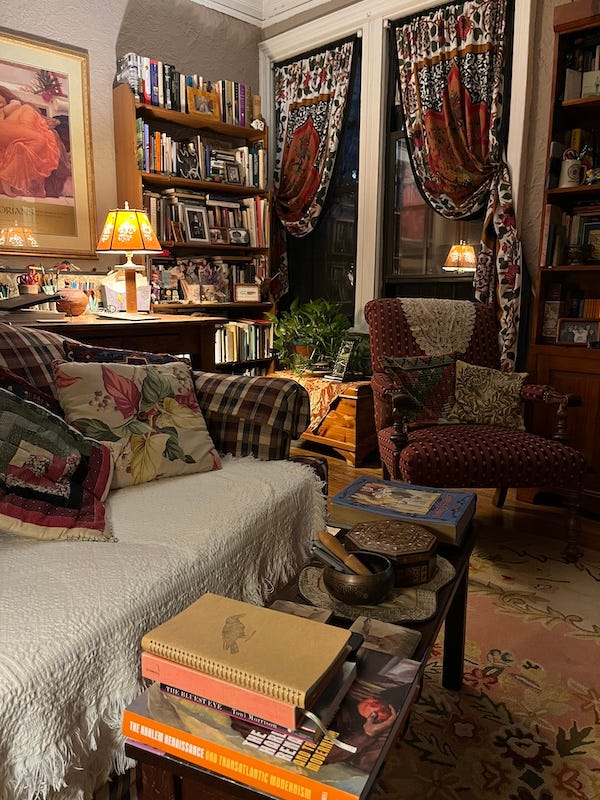
Dream Home

Very grateful to have been able to build this, over many years, across many lives and houses:
Dream Music

There’s so much not on here, but what can you do? The categories force you to go with your gut. I even surprised myself. (When I lived in my basement during 2017-18, while a friend took my main floor bedroom as she recovered from breast cancer surgery, I missed street noise so much that I found I had to play music on low to sleep. Those CDs? Tony Bennett, The Rodgers and Hart Songbook, and Rosemary Clooney, Songs from the Girl Singer. Every night for nine months. And on the list down there, Rosie was an afterthought; Tony didn’t even make the cut. How?)
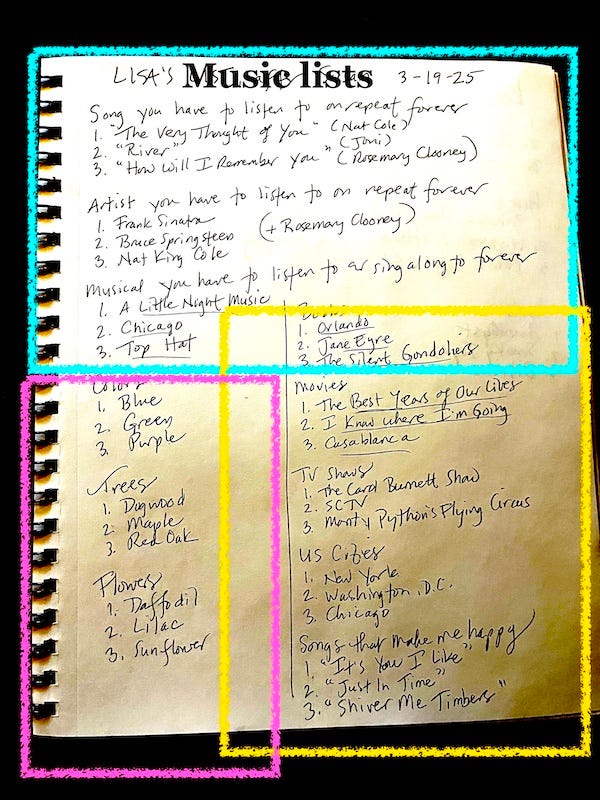
Does this get your brain percolating? With a hat tip again to Susan for inspiring me to start remembering all the foods, homes, songs, as well as people and places I like, and the experiences I’ve lived: here’s a little challenge to you, my reader:

In the comments, if you want, give us a List of Three of whatever, no explanations needed, just a label and a list of three. Let’s inspire each other. Let’s connect. Let’s take some recommendations. See what happens.

I could really use reminders of our common humanity. How about you?

Love, love, love,

Miss O’

An Ordinary Day

On missing days of normalcy, and making them

It’s an ordinary Saturday in Queens, which is to say “ordinary” if you aren’t thinking about the fascism. (I really can’t get over the way that Meta bleeps “Nazi” and “swastika” from videos, or that posters have to insert an * somewhere in each of those words so the post passes muster, even as Elon’s and Bannon’s sieg heils are fine.) I am waiting on a 7 Train, only to learn it’s not going all the way to Manhattan, so I have to switch the N or W, so my mind does a little adjustment. It’s all good.

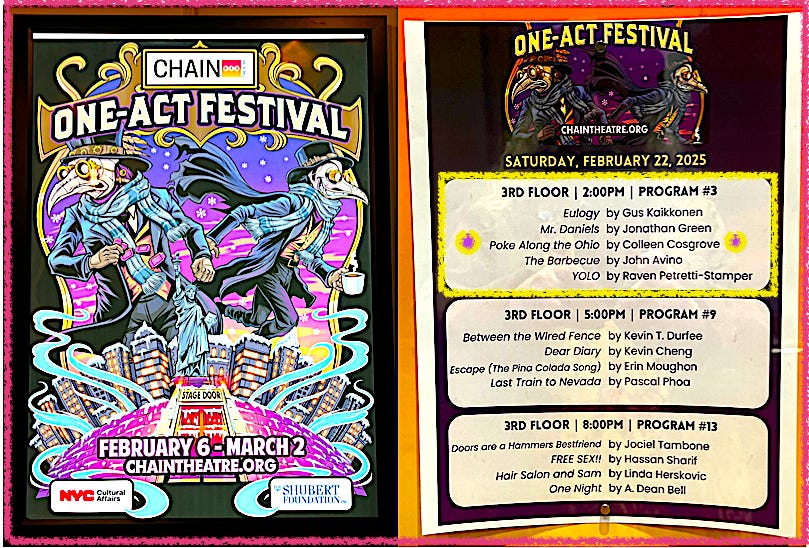
There used to be moments when, as my friend George puts it, it seems Americans are simply going to be inconvenienced to death. Now, unfortunately, and for a long foreseeable future, we are under threat of annihilation. But today, I’m heading to The Chain Theater at 312 W. 36th Street in Manhattan to see the 2 PM installment of their rolling rep One Act Play Festival, and today I don’t want to think about annihilation.

When I arrived at Times Square/42nd Street, I walked through Golda Meir Plaza, struck again that in the 1970s we had female leaders like Meir of Israel and Indira Gandhi of India, Thatcher in ’80s Britain, and that the United States couldn’t even manage one woman in 250 years, choosing an avowed white supremacist dictator, twice, over a highly qualified, democratic woman. And here we are, I think, wondering as I keep walking what will happen to the bust of Meir.

First, I have to go to the ATM, and for some reason my card chip will never work to open the door; another customer, a man in a hood, has a card that opens the door; he engages in no talk. I go in behind him, and I realize I’m shaking. I find I’m afraid to use the machine until I see him at the other machine, and really getting money; I finish before he does, even having to enter my PIN twice to get it right. Odd, having the shakes like that. Or not so odd. Frankly, that’s as fearful as I want to be in life.

It’s nice out, 40s, sun. I walk down 7th Avenue, taking it in, struck again how I can always spot a tourist. I am of New York City, I move that way, more grounded, a bubble of insulation and also awareness. I was a tourist for 20 years before I moved here, so I don’t mean this as criticism or praise; it just is.

I arrive a half hour before the play festival is to start. I see Mary, the director of my friend Colleen’s play, in the crowded lobby, and we hug. I check in at the desk, my friend Tom having bought our tickets online. Our friends David and Barry are also coming, and learning the afternoon is sold out, I go in when the house opens and save us a row, as it’s general seating. An older woman in the row behind me is doing the same thing. (It’s always funny to me how everyone who enters a general seating situation somehow believes they will get to sit alone, empty of audience members around them, and they look at my saved seats with resentment.) The boys show up just before 2 PM, so we don’t get to visit much, and they don’t have time to go out after. I seem to be the only person I know in the city who has nothing but time. Ah, well. Still, being in this community even for a brief time is comforting and energizing. Hopeful.

For the uninitiated: Attending a play festival of new work, especially one-acts, can be a crapshoot. I’ve attended many of these, both as a high school director and as an audience member in New York, and too often only two out of the five or six are well-written, and only one or two are well-acted and directed, and often it’s not the same set of two. So imagine my delight—I knew Colleen’s would be adorable because I’d read the stage directions for it at a workshop—when all five were simply excellent.

The common theme—and this was a really thoughtful grouping—was aging and death. This might sound awfully close to that annihilation I was avoiding, but it wasn’t the case. The first play was a monologue, a 60-year-old son eulogizing his father at the funeral; the second, two old people on the E Train platform; the third an older man trying to make a deal with Death; the fourth was Colleen’s (a play inspired by seeing a plaque in Evanston, Indiana, along the Ohio River, where President-elect James K. Polk was to have stopped his steamship and didn’t disembark), with an old woman (Colleen) and her grandson in 1854, the year Lincoln was really getting started; and the last a gay couple, older men, one who has, we see gradually, dementia. And all of these were by turns serious, funny, sweet, surprising. And ultimately, ordinary, in the best sense. Life lived.

I’ve realized lately that what I crave most in my music, my art, my nature, and my life, even, is ordinariness. I don’t want the surreal, the challenging, the wildly surprising. I get too much of that in unending loops in American society now, breathless, mean, chaotic, and all that hate and chaos, while not remotely sustainable, will be unending for four years at the very least, and if we all don’t stroke out and live to see another election, we may see a divine revolution. Until then, I want mundanity as a life theme.

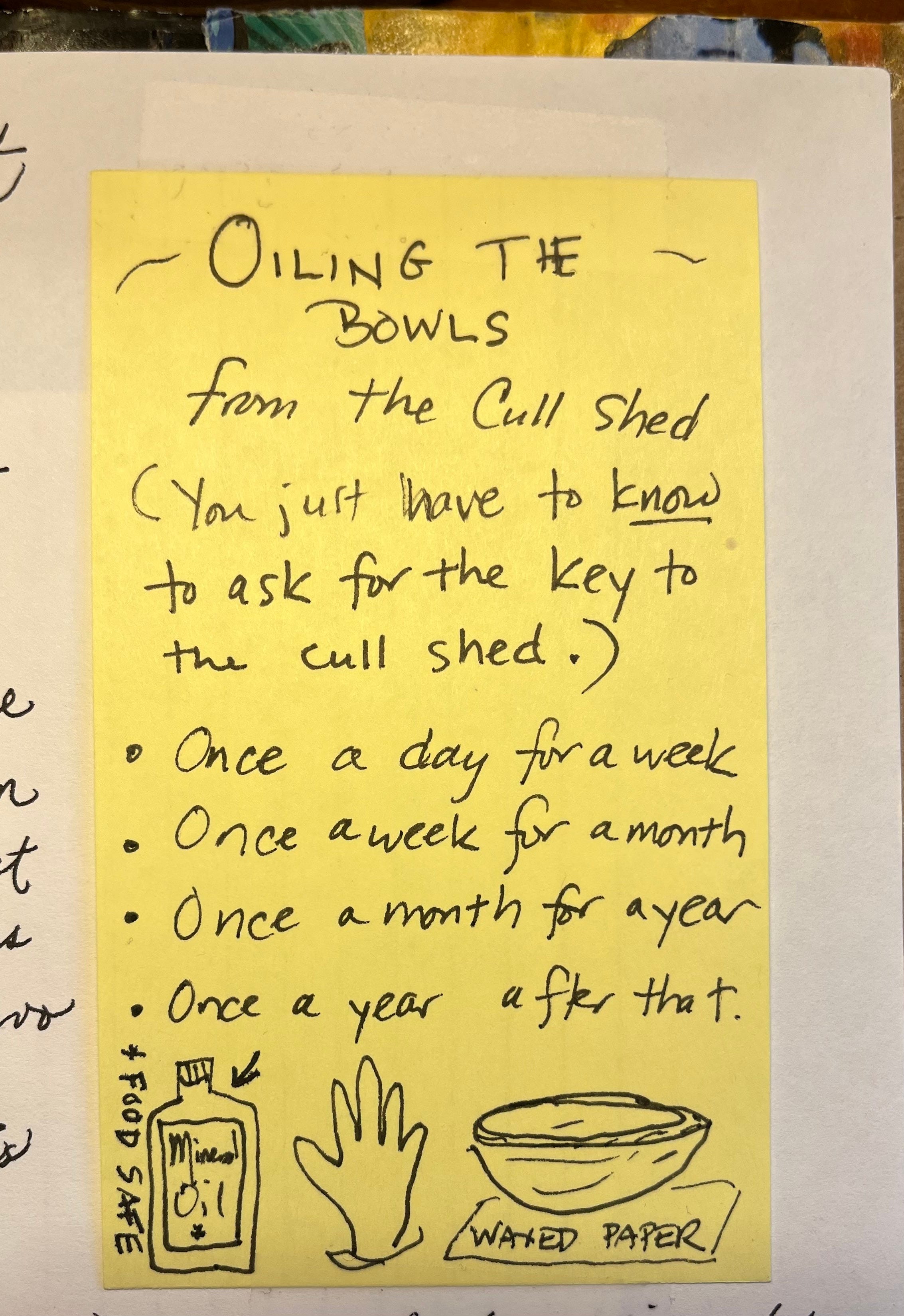
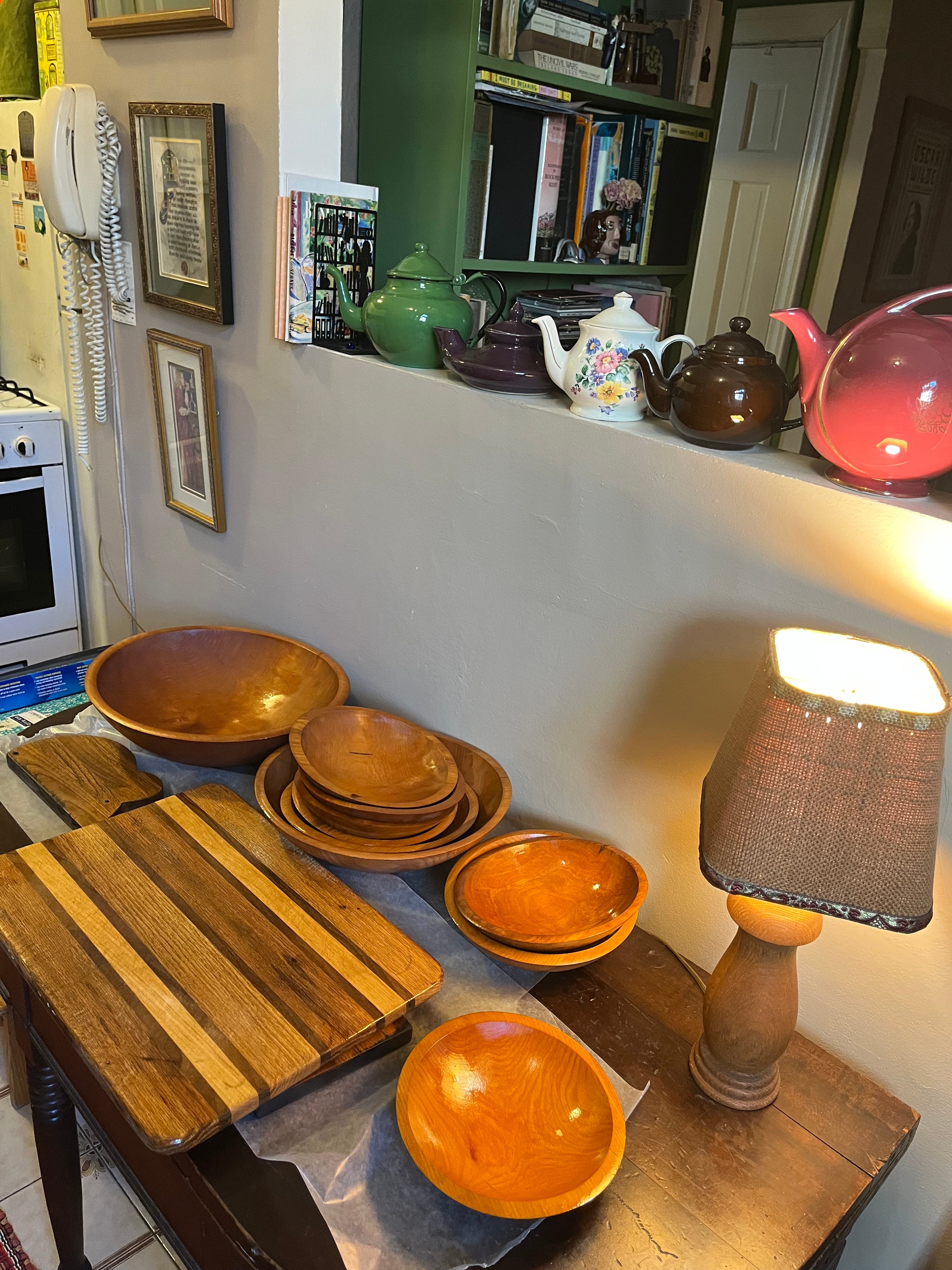
For example, here’s a task of basic maintenance.
Simple chores. I did the annual bowl oiling during my lunch break one day since I work from home. So restful. Once the oil soaks in, they’re good to go for a year. I oil the cutting boards at least twice a year. Isn’t it nice to focus on that?

As another mundane activity, before leaving for the subway with a half hour to spare once dressed (I took care to pick my ensemble and accessories, knowing no one else would actually care, but it’s my inside feeling that counts), I noticed that I have a lot of loose knobs on my two dressers. One dresser requires a Philips head and one a flathead screwdriver. I keep these in a pitcher by the door—I like to have my tools ready at hand. Knob by knob, I tightened them. In doing this I noticed a few scratches, so I went to my tool closet and found the wax wood filler pencil. And I filled the scratches, and it’s funny how the more you fix the more you see.

And this by the way task was really satisfying. You know what I mean? And centering, before heading out into the chaos of New York’s mass transit.

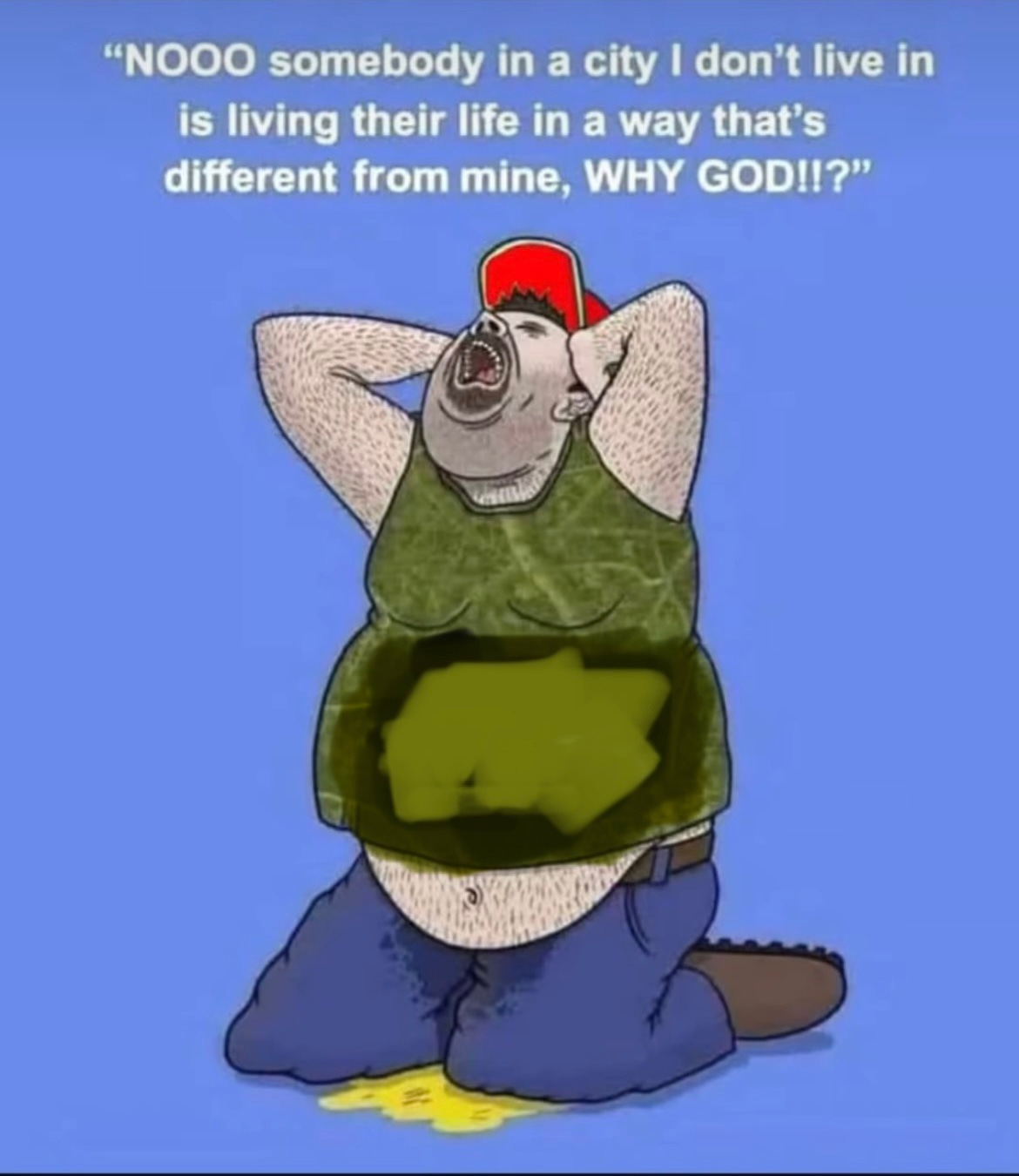
Why do we have to exist in all this rage and war and hate and aggression and greed and chaos? We all have knobs that need tightening. Why, just because of a few psychotic, damaged men who cannot be satisfied or fulfilled by all the money and power in the world, do all the rest of us have to suffer for all time? Why do other people, people with absolutely no hope at all of either wealth or power, follow them, go psycho with them, and go after all the rest of us? Don’t THEY have knobs?

From the web.

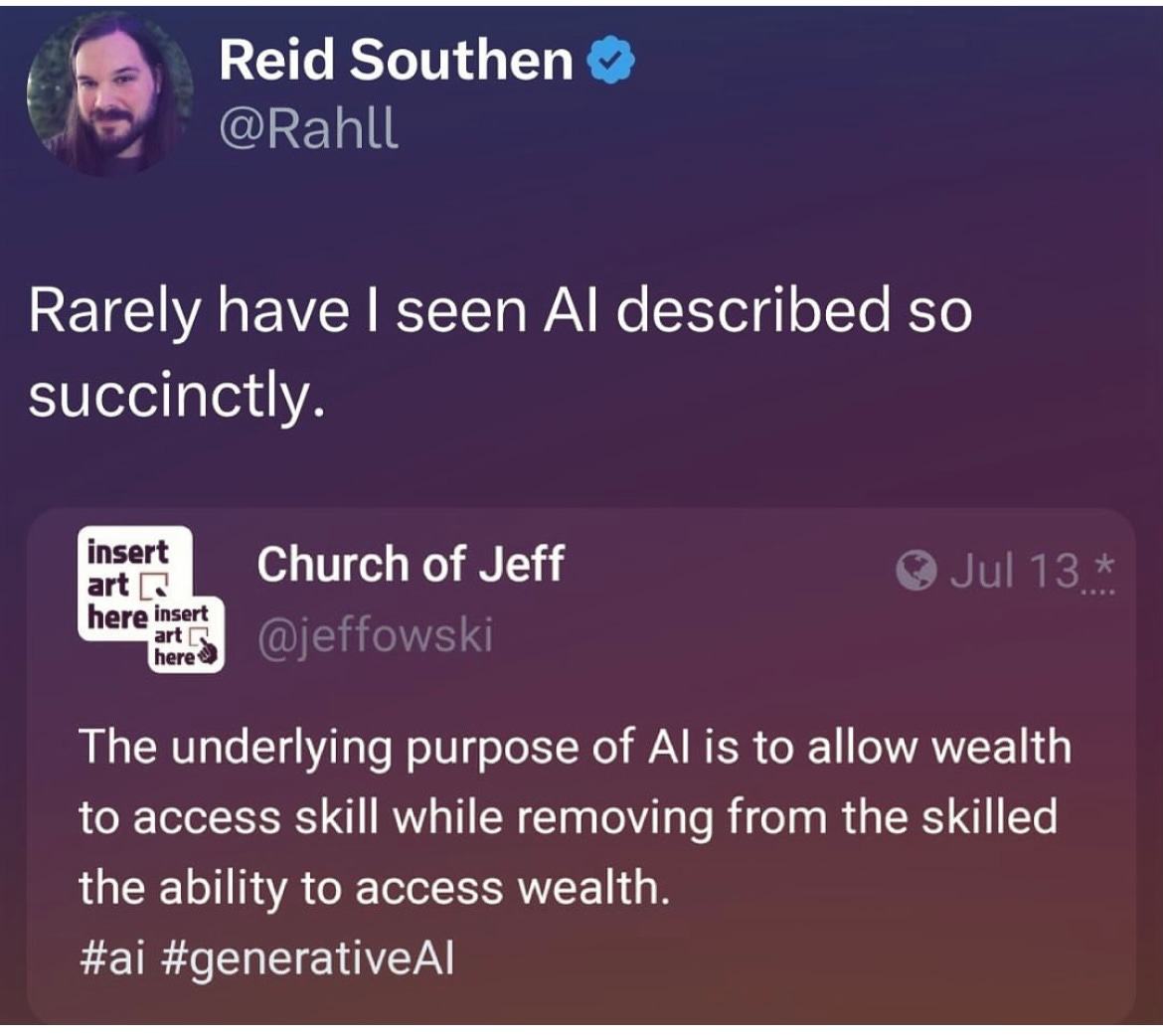
I was thinking too about AI, how the goal is to replace humans, to erase humanity, and that AI cannot tighten knobs. How are we to cope with the attempted erasure of culture, of women’s sovereignty, of black and brown people, of the earth itself, when this desire for annihilation is beyond lunacy? Why can’t we be? Being is hard enough. Knobs come loose. Why can’t we work together to solve real problems?

From the web.

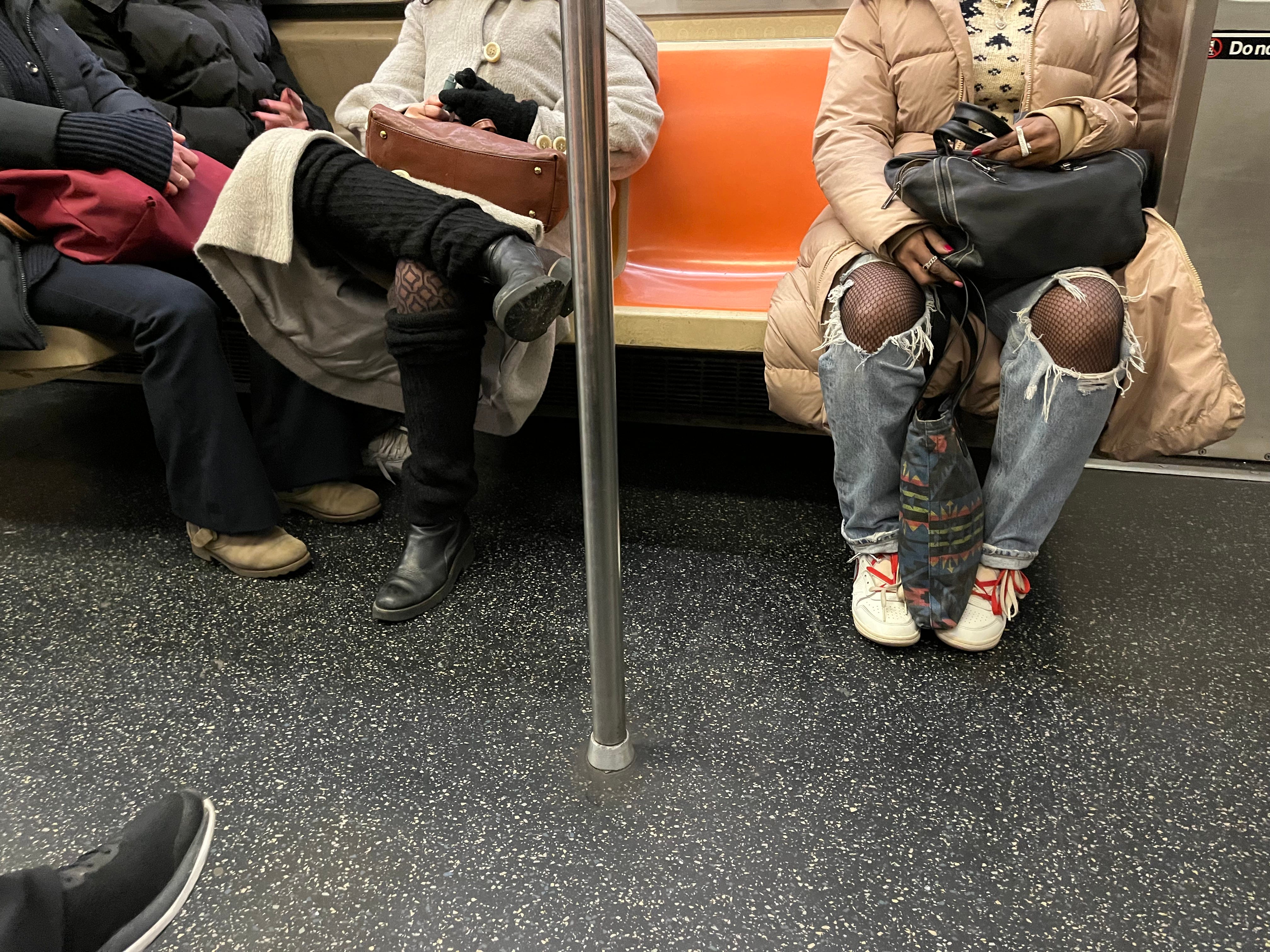
To cope with the whole mess, as I brace for some kind of war, I’m taking more and more pleasure in the very ordinary, like watching people on the subway.

A Study of Knees and Nylons. N Train to Queens. LO’H 2025

I know I can’t be alone in these chaotic feelings. How are you coping? In addition to doing chores, seeing art, and attending the occasional rally, I’m calling politicians and listening to Nina Simone. Followed by Yo-Yo Ma. You?

In the meantime, don’t be a stranger.

Sending love from whatever fresh hell this is,

Miss O’

Like Home There’s No Place

Ruminating on feelings of in between

Transition in Transit

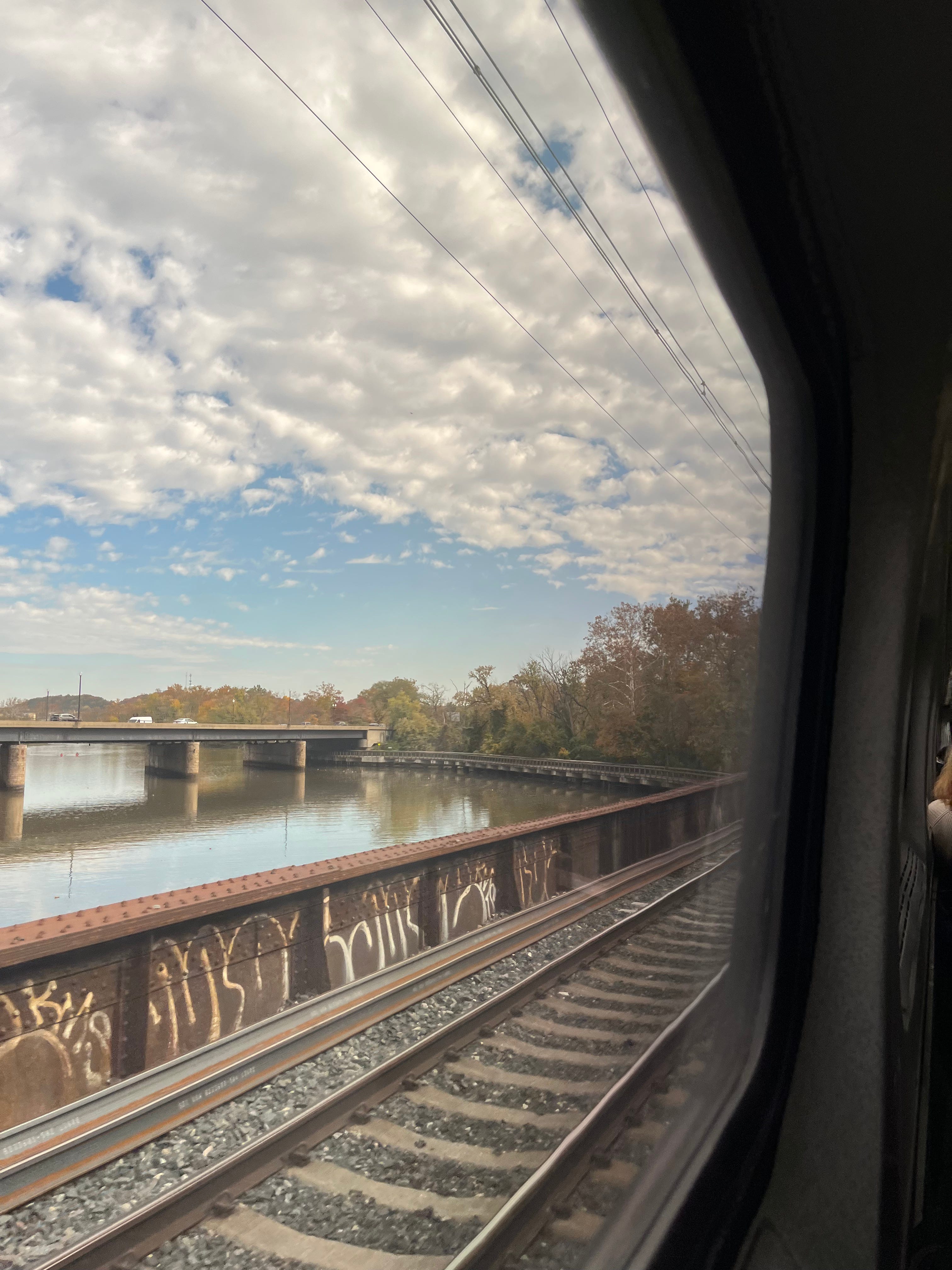
Somewhere in Maryland. Photo by LO’H.

Yesterday, I took Amtrak from Virginia to New York City, after two full months living in my parents’ house. (Bernie and Lynne are coming along, for however long they can.) Even though theirs is the house I grew up in, nearly all the aspects of it that made it home are gone or changed so significantly that it really feels like a different house. The 1960s offered a white house with green shutters, exposed asbestos tile floors on the half-basement level of the split foyer. During my growing up, when harvest gold industrial carpet took over the floors and steps and upstairs living room, so did the 1970s palette expand to bring in orange and avocado green and brown. In truth, my mom did this palette really tastefully and artfully, refinishing now tossed furniture pieces that I really miss, replaced in the late 1980s country makeover—suddenly a windfall of cash with no kids in college and two incomes allowed my mom to indulge her passion for blue and natural wood. The result is that I’ve known the present incarnation of their house only as a self-supported adult, so whatever there was of my home (my bedroom stuff pared down to a single large box back when I went to college), it’s no longer a built environment (objects of deep memory and family history notwithstanding) that I feel particular warmth for.

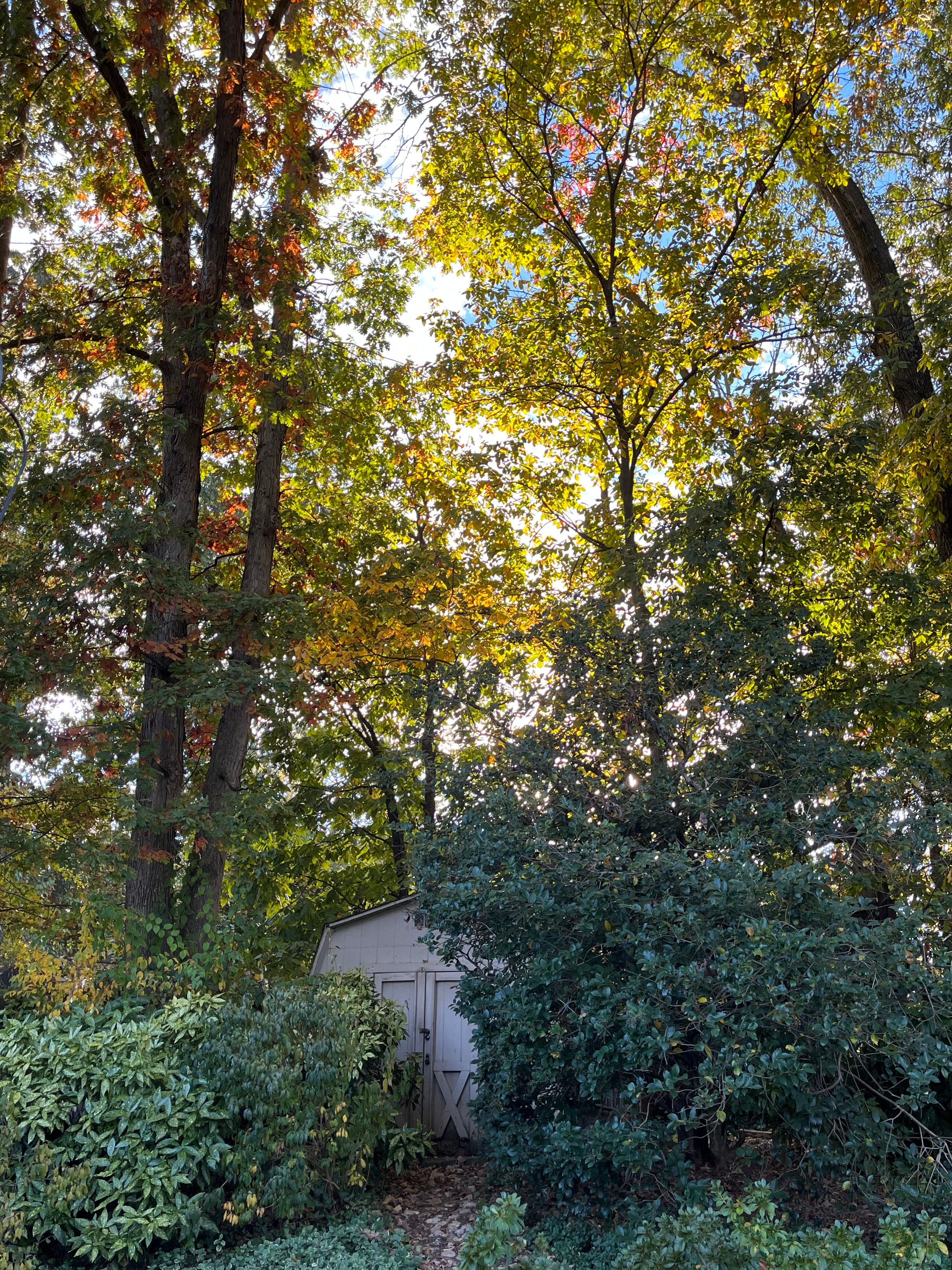
The curious thing is that my connection to the yard runs as deep as ever. The majority of my accessible childhood memories are tied up in grass, dirt, shrubs, trees; often, too, a swing set, a shed, a playhouse, a fort, though gone, appear as ghosts. I am always barefoot. The maple in the front yard has been my constant greeter for 59 years; the crepe myrtle, too. The oaks of various species in the backyard were there for decades before I was born, and the hickories have grown up with me. The holly trees, shrouded by the taller deciduous trees, have never gotten really large, but they are my age, at least. (I can still feel the prickly fallen leaves lodge in my heels.) It is to the yard that I want to go when I get home, to feel that I’m home.

Backyard. Photo by LO’H.

You Can Be Anyone You Want to Here

My Aunt Mary from Iowa said the above when she was standing on Canal Street, her first visit to New York, in 2004. I would add, “If you can make it here.” My home for the past 20 years has been a co-op apartment in a 90-year-old building in New York City’s borough of Queens. Coming off the train into Penn Station yesterday, wearing an air cast on my left leg (over my black travel slacks, to prevent a rash from the plastic—menopause has a been a blast, you guys) and a gray combat boot over my slacks on my right leg (for not one but two sprained ankles!), carrying a large sling bag, full backpack, and computer tote bag, not a single person gave a flying fuck. And that is the price you pay for all that freedom to be you doing you: supreme indifference to my personal human plight. I’m always agonizingly aware of my own complicity in this survival game as I pass homeless people without giving alms, in my rush, I think, which is really avoidance of culpability. For that reason, I don’t begrudge anyone racing past me up or down the dozen flights of stairs I had to take to find a working subway going in my direction (midtown was pure gridlock so any cab or Uber was pointless, unless I wanted to spend three hours getting back to Queens). All I know is that as I trudged past construction on 7th Avenue and 33rd Street that has literally been in progress for SEVEN FUCKING YEARS, with no end in sight; past orange cones and trash and and scaffolding and pilings and strollers and tourists walking past all the chain store banality that is 7th Avenue four abreast, down steps (foot-foot, foot-foot) where I have to inch past guys blissed out on weed; into the bowels of Times Square only to find out the 7 Train is not running; up the four flights of stairs (foot-foot, foot-foot) to the N Train (because the escalator up starts down by the 7 Train, and those stairs are blocked off and are being policed); and by now in the global warming October heat with the schlepping and the sore ankles and endless walking, shoved or ignored, and feeling by this point a little weepy, I really had to ask myself, seriously, “Why the fuck do I live here?”

And later, in my own bed, unable to sleep from ankle pain and the chill and recalling the stack of mail and all the unpacking and plugging in of laptops and texting people I’m back—I realized I really do hate living here. I have, as of November 1, been living in this apartment for 20 years. Of those two decades, only the first one was good. In 2013, my play lab ended, my work role changed to working essentially for a partner start-up, I had a miserable month of grand jury duty, and I met a man who gave me the deepest love and caused me more grief over the next decade than I want to speak about. And, post Covid, I have accomplished exactly zero as a creative person. As I now work exclusively “from home” (great for flexibility if not sociability), I see almost no one—a dinner here and there once or twice a month. My old building needs too much work. Global warming is creating a flood plain out of the city. And I’m going to be 60.

I turned on the light then, because I had this flash of memory, of going with my college friend Richard as his plus-one to his cousin’s wedding in New Hope, Pennsylvania, back in 1985 or so. The downtown was lit up at night, even in summer, with white fairy lights strung here and there. Everything about the place was joyful and cozy, people out and about, shop windows so inviting. This was like Blacksburg, home of our college, Virginia Tech, without the carousing drunk frat boys. Ever since, I have dreamed of living in a town that felt like that—creative and joyful and pleasant, but with diversity, room for the middle class, and lots of live music and dancing in parks and plazas in the summers. A community theater, concerts, art for people who lived where they worked.

I realize now that those places don’t exist ready made for me to walk into—an enchanted village in a story book that become real, like Brigadoon. Community like that, place like that, has to be built, and not presented as a gift. I have always worked very hard to create a life for myself everywhere I’ve lived. What is different now? I guess, looking at 60 and returning from nursing my parents as best I could, faced with two square feet of junk mail to sort (with unending gratitude to my upstairs neighbor, Debbie, who built that pile of junk mail, watered the plants, and ran the taps AND cleaned up my basement after it (mildly, mercifully) flooded with the remnants of Ian—see Brooklyn for reference)—I guess I’m really wondering about where I belong, what I do next, and how I do it. I feel, weirdly, totally lost.

On my way down the sidewalk near my apartment (all my gear by now giving me its full weight) past the playground, my eye caught a shiny object in the leaves along the chain-link—a New York driver’s license. I picked it up, someone on 41st Street. I’ll try to find him tomorrow, I thought. (This morning I strapped on my “casts” and went out in the rain over to his apartment building, buzzed his number, no answer, so I left it on the ledge above the buzzers—and then I spent the next two hours beating myself up for not thinking of MAILING it back to him.) It’s a small but common event for me in this vast city, helping a stranger in an odd way. Sometimes I wonder, given the last decade of my life, if all I’m really here for is not to be an “artist,” but really to be a clean-up crew of one, one human accident at a time. Maybe that’s who I am, and these notions that I should accomplish more are foolish expressions of ego.

View from the 7 Train Platform, Queens. Photo by LO’H.

After all, unlike too many people, I have not one but two roofs to shelter under, at least for now. Trees to visit. Good neighbors. Friends, however much they are only available via text. It’s a crazy modern world, and there’s no good where to be unless we make it the way we like it. Where my next home will be or how I remake the one I’m in, I can’t know, but in my heart I know the search is on.

Hope you are feeling home in your own heart. I saw this quote on a meme recently, and it hit…home:

Home is not where you were born; home is where all your attempts to escape cease.

~ Naguib Mahfouz

Love to all.

Miss O’