Over Christmas I was sitting in the living room watching a bowl game with my dad, Bernie. All the O’Haras print out a sheet of the bowl game contenders, make our picks, and keep score. (Fun fact: I won this year—just picking schools I “liked.”) That evening, I don’t remember who was playing, but the winner had become obvious, so during the commercials, we’d flip the channel to see what was playing on TCM. Dad and I started watching the last part of I Remember Mama, where Irene Dunne’s brother is dying, and Barbara Bel Geddes writes her story, and Mama reveals her big secret, and I looked over and my dad is weeping, and I’m weeping, and then we see each other doing this.
I remember my mom (I tell my dad)—who had already gone up to bed this bowl evening—coming downstairs years ago to tell me, “Lisa, at eight o’clock on TCM, I Remember Mama is on. Now, watch it.” I had neglected to do it for years, sure that it would be super sentimental and make me cry, and I hate crying—or do I? Anyway, I watched it, I wept happy tears; and every time I watch it now, I start crying at the very beginning and weep, more or less all the way through. (The same is true of the 1939 Goodbye, Mr. Chips, which I watch any time I notice it’s on, crying right away.)
I tell my dad about this, as I say, as we dry our tears from I Remember Mama, all these movies that make me ball, how I still watch them knowing I’ll be crying all the way through them, and then Dad’s talking about movies like that for him too; and I look at him, because he and I have started crying just talking about these movies, and then we look at each other and we begin laughing so hard, I mean shoulder shaking, helpless laughter—the depth of emotion in us O’Haras is so huge, running the gamut from A to Q to Z and back to fast it makes your head hurt, but I gotta say, my heart is always lighter for these wild expressions of emotion, in a span of a few minutes at most.
And in that exchange up there you might better understand why my dad, Bernie, who is 90 now, is the parent I always had the deep talks with. Politics, religion, societal changes, boyfriends, school. I told you this story, how once we had a deep argument about homosexuality, which concept Bernie couldn’t get on board with or begin to understand, but I his college-age daughter felt compelled to push him on because being in the theater, I now had so many male friends who were gay. “What is your problem, Dad?” And he finally admitted, “I don’t like to picture those people having sex.” “Okay Dad,” I replied, thrusting my arm to point across the street, “Bob and Hazel Hunnicutt, Dad, you want to picture them having sex?” He quickly made an ick face. “Ew, ew, my God no.” I looked at him, “Dad, how many people do you really want to picture having sex?” He thought about it and couldn’t think of any. And scene.
Years later, my friend Richard and his partner (now husband) John were finally having a child via surrogate (and got twins!)—I shared this news with my folks on a Sunday morning phone call, since they’d known and loved Richard since our college days. My dad couldn’t understand it. “I got on board with the gay marriage thing,” he said, my mom recalling the time then-Mayor Gavin Newsome made the case on the Today show and my parents had no arguments, “but why do they want to bring kids into it?” They want to be parents, I explained. My dad’s voice softened, “Oh, oh. I understand that.” And I said, flatly, “I don’t.” Beat. “You don’t?” he said. Nope, I never wanted to be a parent. I have no idea what that feels like, that desire, though I’ve seen it often enough in other people. Like my parents. And…scene.
I’ve written about my mom a lot in recent blogs, probably too much or too personally for public enjoyment, but it’s what I’ve needed to write; publishing helps me not lose my memories. And while I’ve never had perfect relationships with either parent, I can’t help thinking about the ways in which all of us relate to our parents, if we are lucky enough to know parents who love us, who sacrifice for us, who rear us. This is about my dad.
Miss O’ with dad, ca. 1975.
When I came home after my first year at Virginia Tech, I was sitting there in the living room, talking intently about all the learning I’d amassed in my three quarters of classes, 18 and 19 hours’ worth of courses each quarter, the shows I’d worked on in the theater department, my new friends. I don’t know what exact smart thing I’d said to trigger his move, but my dad got up and went into the kitchen. I followed him. I continued educating him as he pulled out a whole roasting chicken from the fridge and put it on the counter. “Clean it,” he said. I just stared at it. He looked hard at me, saying, “You still can’t clean a chicken, can you.” No sir, I can’t. That shut me up.
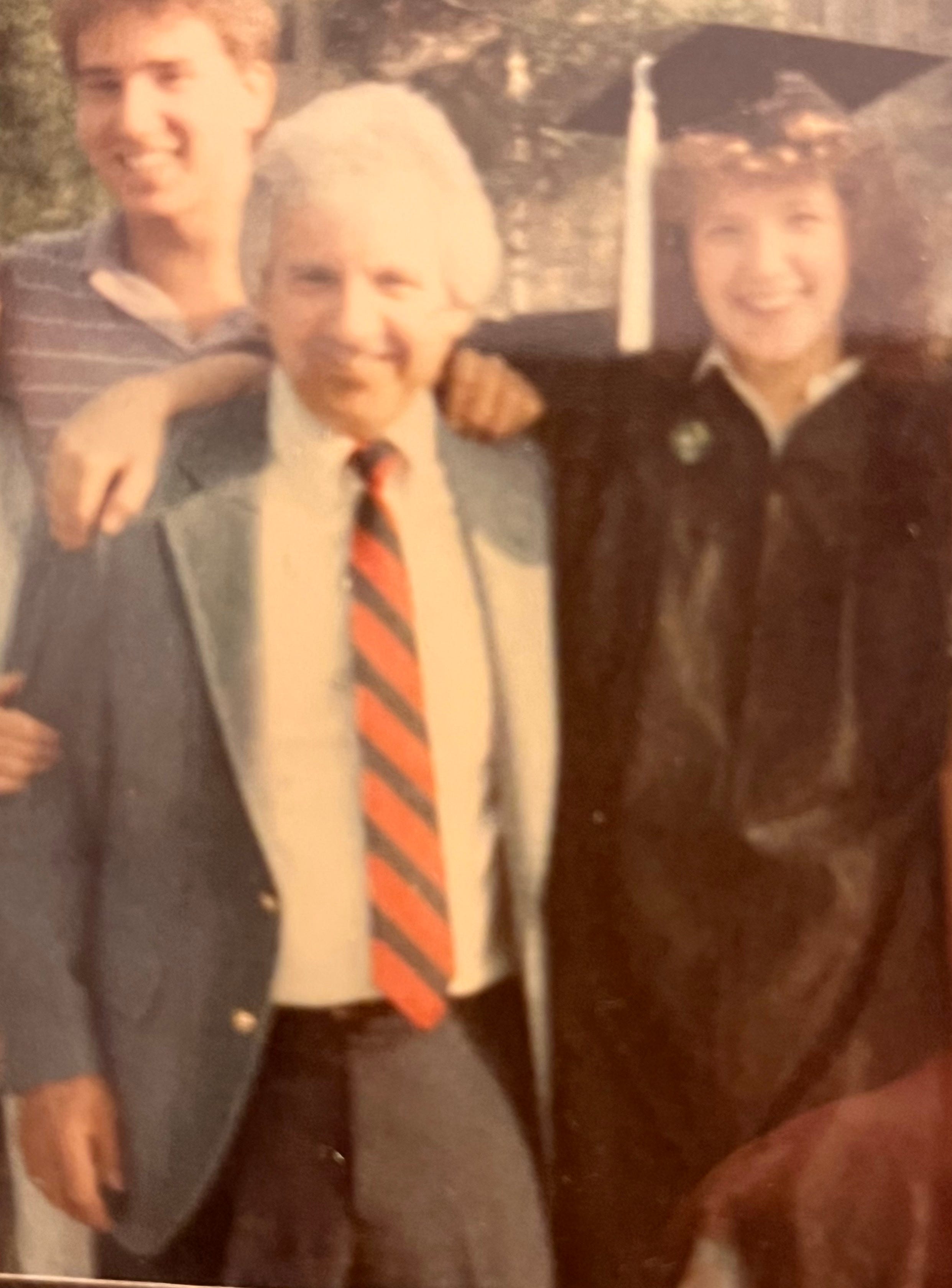
Miss O’s graduation from Virginia Tech, June 1986, made possible by Bernie’s union meat cutter job. Hardest working human I’ve ever known. And glad to do it.
And I know I told you that story, what Bernie told me after my first serious breakup, with the guy I thought I would marry. I’d been quiet, depressed for months. My dad asked me if I wanted to come to Springfield Mall with him to pick up my mom’s Christmas present. I did. We didn’t speak the whole ride. When he pulled into the parking space, as I took off my seatbelt, he said, sharply, “I know you’re upset. But a boy like that, he’ll always have a harem. You didn’t lose nothin’.” Over time, that observation saved my heart. When I recalled that story to my dad recently, my mom said, “Did he tell you that?” And I said yes, and my dad nodded, and my mom said, “That’s good,” because I know she had been charmed by the boy too—and now she realized, I think for the first time, that Dad was absolutely right. (Note: said boy went on to live with no fewer than a half dozen women, possibly more, and enter into dozens and dozens of relationships in between; many of these women I met, including his wife; and it might interest you to know that the boy recently divorced her after nearly 20 years of marriage and four children, whom he raised while she worked—funny how all the women he leaves (I broke it off with him, for the record, because I just knew this couldn’t end well) have the same common fault: they get “angry” with him, “throw things,” and he “will not be yelled at” (how many times did I hear that and shut up; and I will not be shut up). All these breakups in an endless loop, as he repeated his habit of luring in attractive, smart, industrious, dynamic, multitalented, independent-minded women and then, as his gift, moving them into a ready-made box to try to contain them, limit them, redirect them for his pleasure, and then becoming disappointed when they’d “rebel.” You didn’t lose nothin’. You said it, Bernie.)
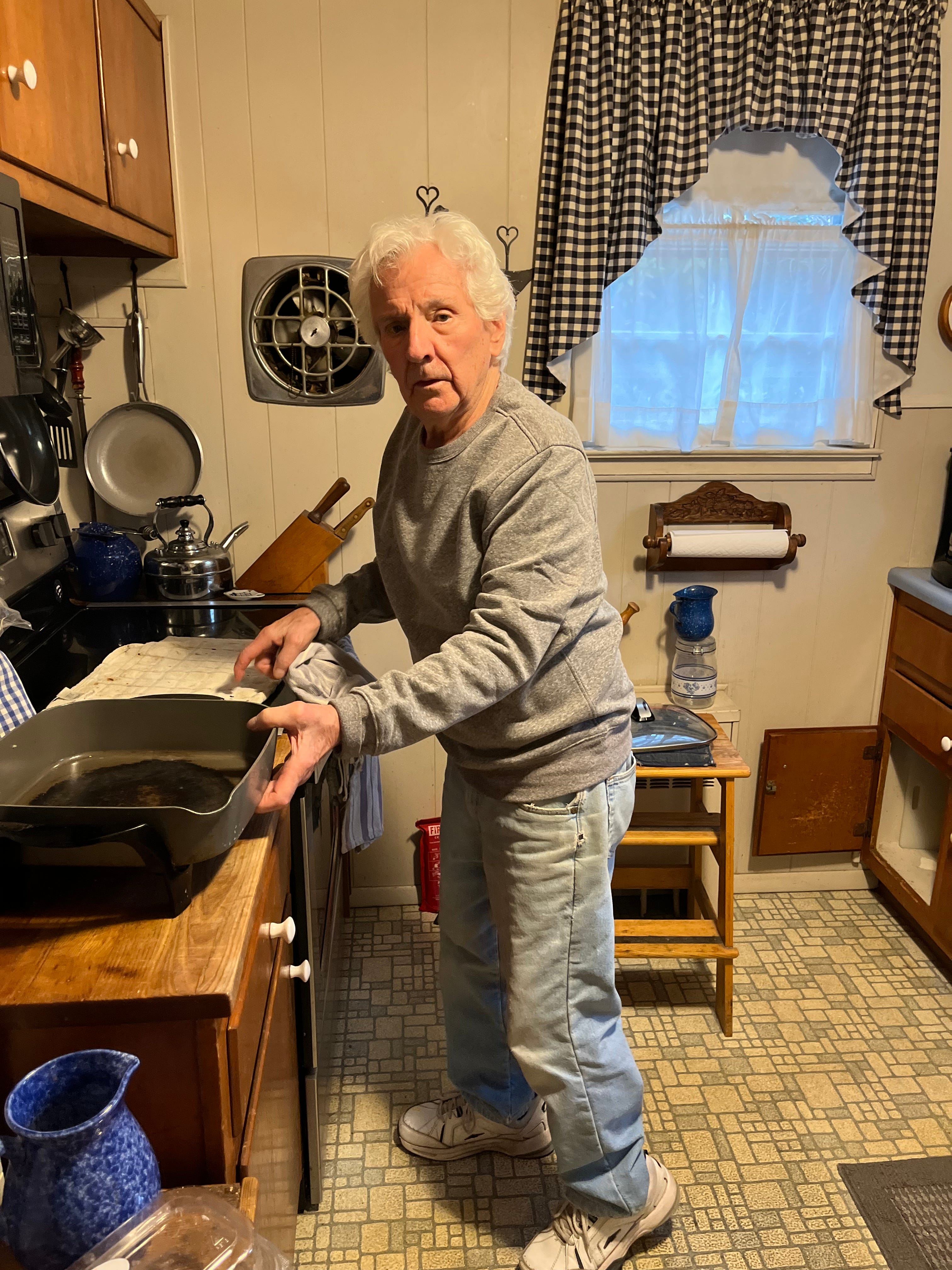
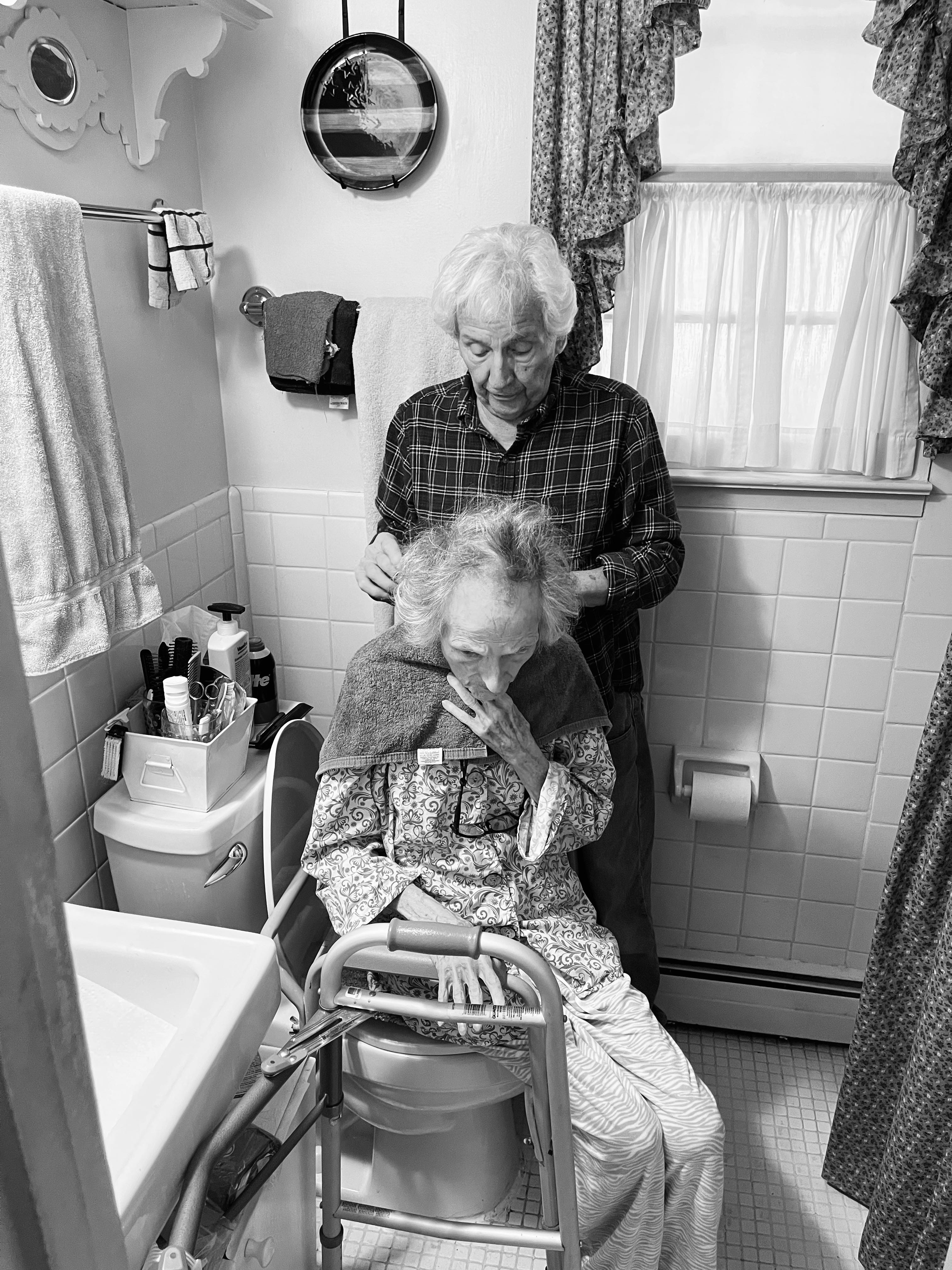
Bernie O’Hara, aged 90. in his natural habitat. Photo by LO’H 2023.
Sending love to all of you who could use parental advice, maybe, via parents or surrogates, to have good cry, enjoy a shoulder-shaking laugh, or hear the truth.
I was sitting here thinking of my mom, Lynne, a couple of years back, before she fell and started a slow downhill slide, which continues, tough old bird of 90 that she now is.
I think this was a year ago, we were out in the playroom, an addition to our small but sturdy house that was put on when I was in fourth grade. To access it you have to walk through the utility room from the little alcove by the kitchen. The kitchen ever was and remains comically small and impractical by HGTV standards. I watched my now 80-lb. mother determinedly making her famous lasagna in an oddly small Pyrex rectangular dish, with the intention of feeding a family of seven adults and a toddler. I don’t know if the bigger dish had broken or what; but she spent all morning at it before my brother Mike, his wife, and the newest grandchild, and our other out-of-state brother Pat arrived to visit from North Carolina and Florida for a weekend. Mom had sent my dad to the store for lasagna noodles, cheeses; they boiled and drained the noodles, cooked al dente; she painstakingly opened the various packages of cheeses, using a knife, so slowly; she had her signature tomato sauce on the stove to warm up from the freezer. The slowness of her movements just hurt to watch. I think I was the only on watching. See, no one asked for this lasagna, one of her handful of truly great dishes, but you could see she felt she should make it, perhaps for one last time, who knows, age being what it is, for her family. She didn’t look happy about it, but neither did she want my help.
When they all arrived, my mother was still putting the lasagna together. As I say, this seemed to go on for hours. She was missing the action, you know, the way mothers do, alone in kitchens. Finally, I went in and tried to get her to come out to the playroom to be with all of us, with the son and grandson and her other son, and me and Jeff, there to see her. At some point, she and my dad decided to put the lasagna in the oven, even though it was too early to eat, even for an early dinner.
The upshot is, it way overbaked, shriveled into a barely edible shadow of its former self; and it seemed to be a couple of layers lower than usual, as it was, as if she’d forgotten something. We ate it; I remember my mother’s face, her shoulders shrunk, all that work, the end without the joy and plumpness of abundance. And for some reason, just now, it came back to me, that moment, and I fell to weeping. Now I have to think about why.
Well Butters
I’ve written about this before, my invented term for people who cannot accept a story that you tell on your terms. They have to correct you. Sometimes they are correcting a story they were never part of in the first place, which is a trait my mom has. Sometimes they correct your memory of time in a certain geography, because they share that geography and don’t have the memory you do, or experience a place or event in a way different from you.
My mom, Lynne, for example, is a story corrector, a well-butter. I was telling her once about visiting a retired teacher-scientist friend who’d built a cabin in the woods on her family’s farm. Her kids were grown and gone, her husband ran the farm as usual, and she lived alone with her dog in the cabin, which she did for a year. She kept a journal, spent her days studying the ecosystem, reading Thoreau and Edward Abbey, doing experiments, and simply living. When I returned from my first visit, my mom wanted to know how she bathed. “Oh, she doesn’t. She might go for two weeks not washing at all,” and my mom admonished, “Well, but that’s a lie. Now, Lisa, don’t say things like that. Of course she bathes!” Mom left the room, a well-butter: “Well, but that’s a lie…,” and I turned to my brother Jeff: “No it’s not.” I know, he said.
Now, do I contradict my mother? No, I do not. I think about it, I reflect on it. I try to understand it. Because I’m insane, and a writer.
To take another example: if I say to a New Yorker friend, “I love New York! I love the energy, the art, the theater, the people watching,” that friend may quickly interrupt to say, “Well, but Lisa, the city is filthy, people are homeless, some can barely make rent, and who has money to see shows?” It’s Yes And. It’s both. This doesn’t have to be an argument.
And so, I do not argue with this well-butter. I say, “So where do you want to eat?”
Sometimes it’s just about differences in lived experience. The other day, I said to my friend Colleen, who has been a constant resident of two NYC boroughs since the late 1970s, that I missed snow, lost now to global warming. She looked puzzled, saying, “Well, but it’s not like New York was ever a snow city,” and I disagreed. “My whole memory of living here is that from December to April there’s snowpack,” I said, and Colleen looked at me like I had two heads. I didn’t argue, but instead asked, “Would you like some tea?”
The Snows of Memory
Now, why are our memories of snow in New York City so different, Colleen’s and mine? I’ve been reflecting, because I am insane, because I am a writer.
For one, I lived my first 39 years in Virginia, where there is maybe one big snow storm every few years, a little ice once in a while (I was a student and a teacher and lived for snow days in both iterations of my life, and we didn’t get to use that many), so that might account for some of the difference—that by comparison, any regularity of snow seems like “a lot.”
But I think another reason is more practical: Colleen has only ever rented her apartments, and so there is staff to shovel and salt (which is not to say reliably), and New York City is mad efficient at this in most places, especially Manhattan (it blew my mind when I first experienced it, how most everything still runs no matter what). By contrast, my tiny Queens co-op apartment building (since I bought in 2005) has never had a super who could be relied on to shovel snow, so (to avoid a citation) I and my upstairs neighbor Debbie used our own shovels and did it ourselves. As a board member, I ordered 12 bags of salt a year, for a solid 8 years, and we used nearly all of it every year, and I know this because I spread the salt myself. (By comparison, one or two bags of salt have held for the last three winters.)
In addition, I have muscle memory, walking the half mile to the subway every morning for 16 winters (before Covid), navigating the corner of 40th Street and 47th Avenue with great care because that building’s landlord never shoveled; and I constantly had my boots repaired at Drago Shoe Repair in Penn Station because of salt damage and puddle leaks. I felt every inch of the winters, and I also loved it, because I love winter. I am crazy about cold temperatures, battling the subzero winds, and I find snowfall a reason for rejoicing, at least when I’m not battling depression (always not wanting people to die). Colleen, by contrast, finds winter a misery, hates snow, hates cold, lives for summer heat; and I would suggest that a healthy mind like hers might slip into denial of weather you hate while you wait for the green splendors of summer. And because, in addition to all of the above, I can say with certainty that our last major snowstorm of any duration took place in 2016, and that was 8 years ago, I can also say with confidence that I am not crazy to say, I miss snow.
Back to Lasagna
So why was it so painful to remember my mom’s failed lasagna one winter ago? It’s one meal. No one else who was there may remember it at all, including the hunched shoulders, the strain of it, the sad face, all that work only to end up overcooked out of confusion, a change in routine. Like you, I’m sure, I’m starting to see her lasagna as a metaphor for a life lived, a life ending.
I have almost continuous memories of my mom making lasagna, or feel I do, because I loved it and enjoyed it so much—all the leftover noodles, the extra cheese I ate with them. But in truth, it was a dish she couldn’t have made above two or three times a year. For one, it was labor intensive, and there were four kids at home, she babysat neighbor kids, and by the time I was 15 she was back working full time (as a bookstore manager); next, it was expensive (with all her specific cheeses and special sauce—a secret), growing in size from a square Pyrex pan to a large rectangular one; and because we all loved it, there was almost none left over, and leftovers were always the Saturday night meal. So in actuality, in my 18 years under that roof, I had at most 40 large servings of lasagna. Is that enough? Never.
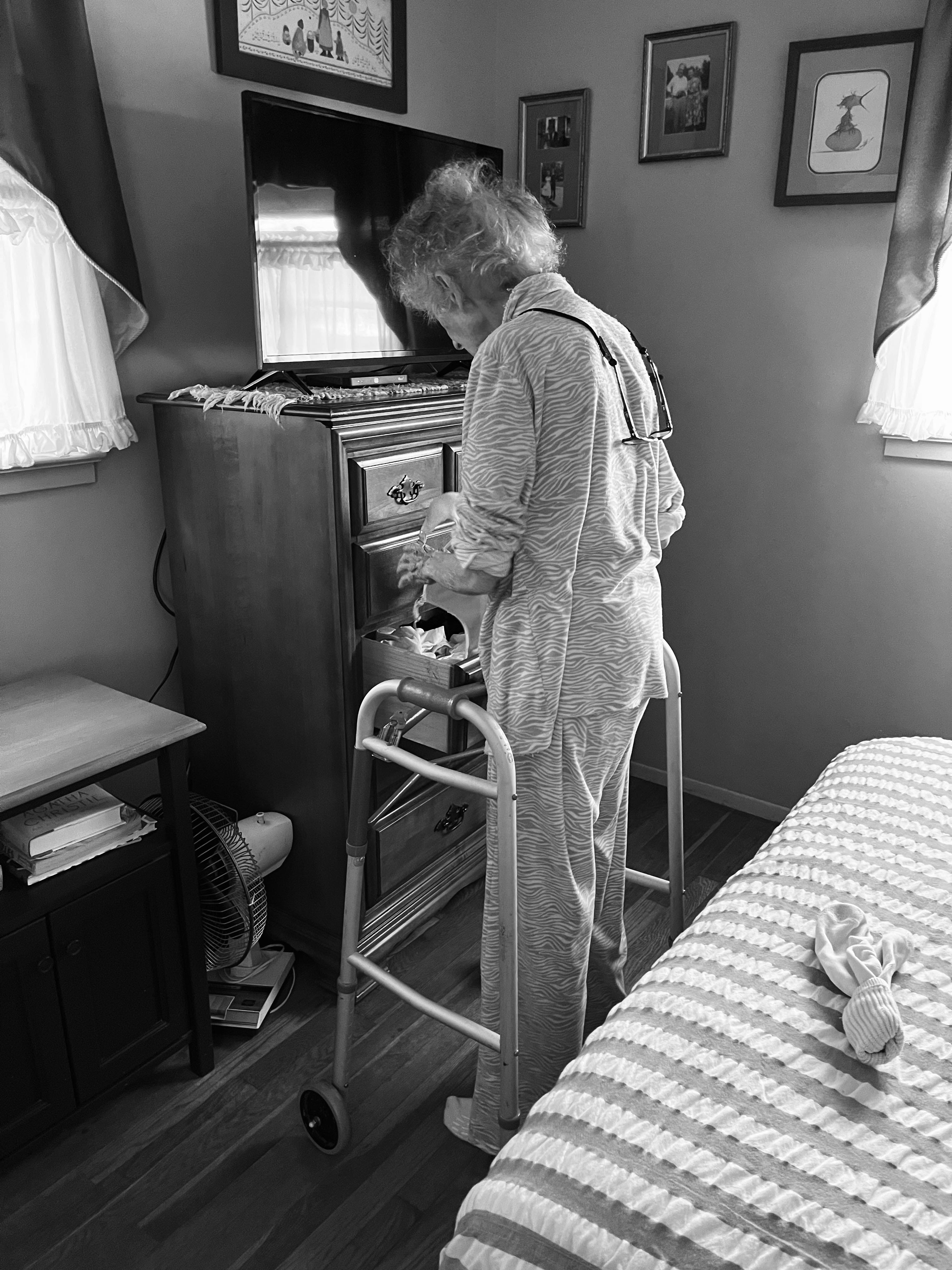
When I was home at Christmas, working from there for one week and on vacation for two, my mom spent a lot of time going through her recipe folder. She made her perfect macaroni and cheese for me—another agonizing effort, but she was determined. She showed me where all the important recipes were. (She also showed me where all the important sentimental things were in her dresser.) These things have to be done if we are to keep any family traditions going; I’m the only one who is interested, really, but that is only because I am the one preparing for the end. In time, my younger brothers will care, too. For now, I’m the keeper of the recipes.
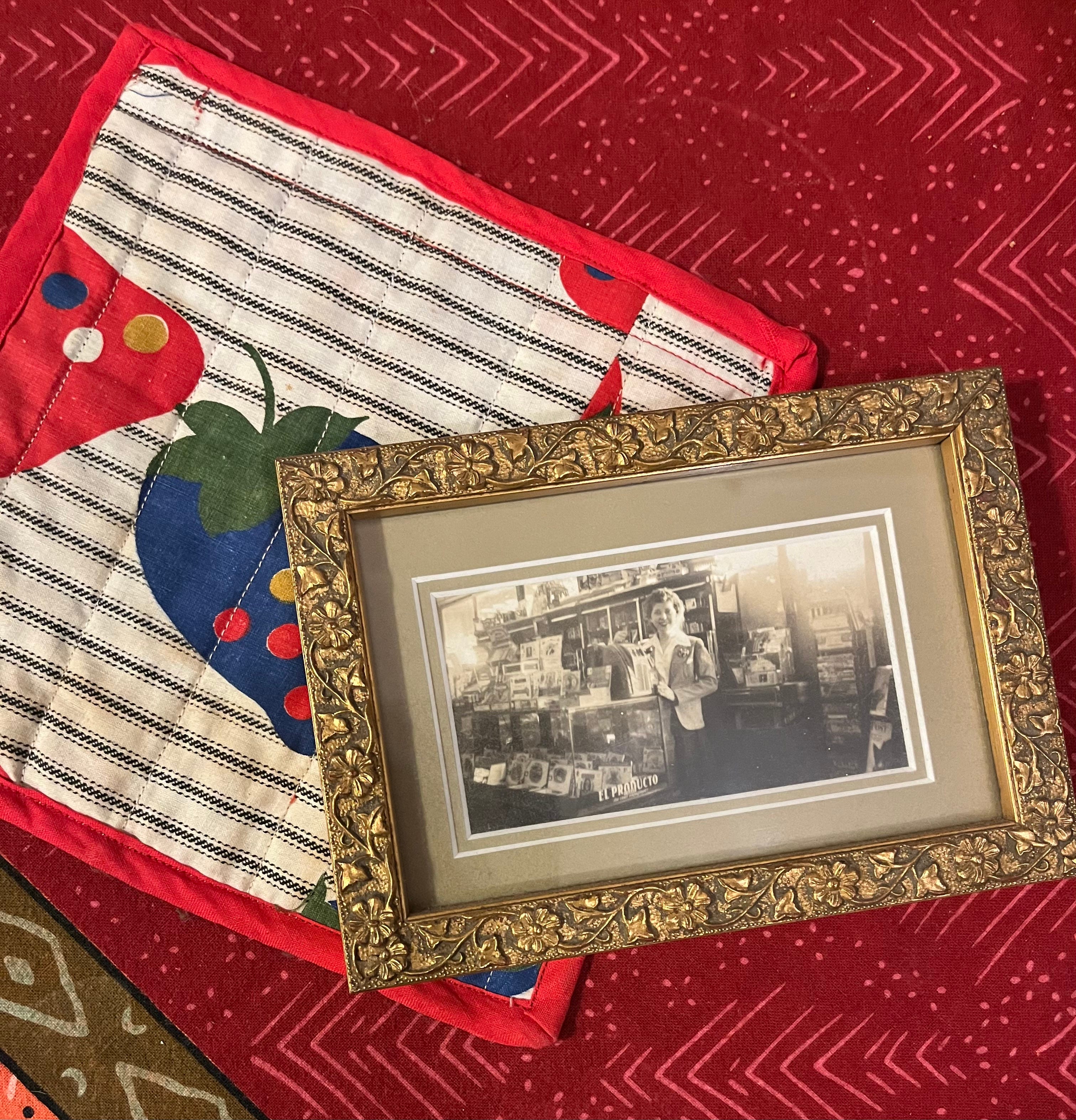
No one’s memory is perfect—I’d never pretend it was. But there is a decline that is sad and scary to see: one more was my mom holding a worn, torn potholder she wouldn’t let me throw out, saying, “My mother made this.” I looked at my brother Jeff. Idiotically, I said, “No, Mom, she didn’t make that one; I have the ones she made at my house.” She stared at the generic blue potholder again. “No,” she insisted, “my mother made this.” And she gripped it so tight it brought tears to my eyes, but only later when I recalled it, because I realized, My mom needed to touch her mom again, even if she’s spent most of her life saying she hated her; they are so close to meeting again, you see; amends need to be made, memories held.
Still life with potholder and my grandma, ca. 1945. Photo by LO’H
What am I on about? Life ends in old age if we are lucky. See it for what it is. We remember what we need to remember, okay? And we can tell our own stories, thanks, and we don’t need anyone correcting us. Watch, listen. And just say, “Oh.”
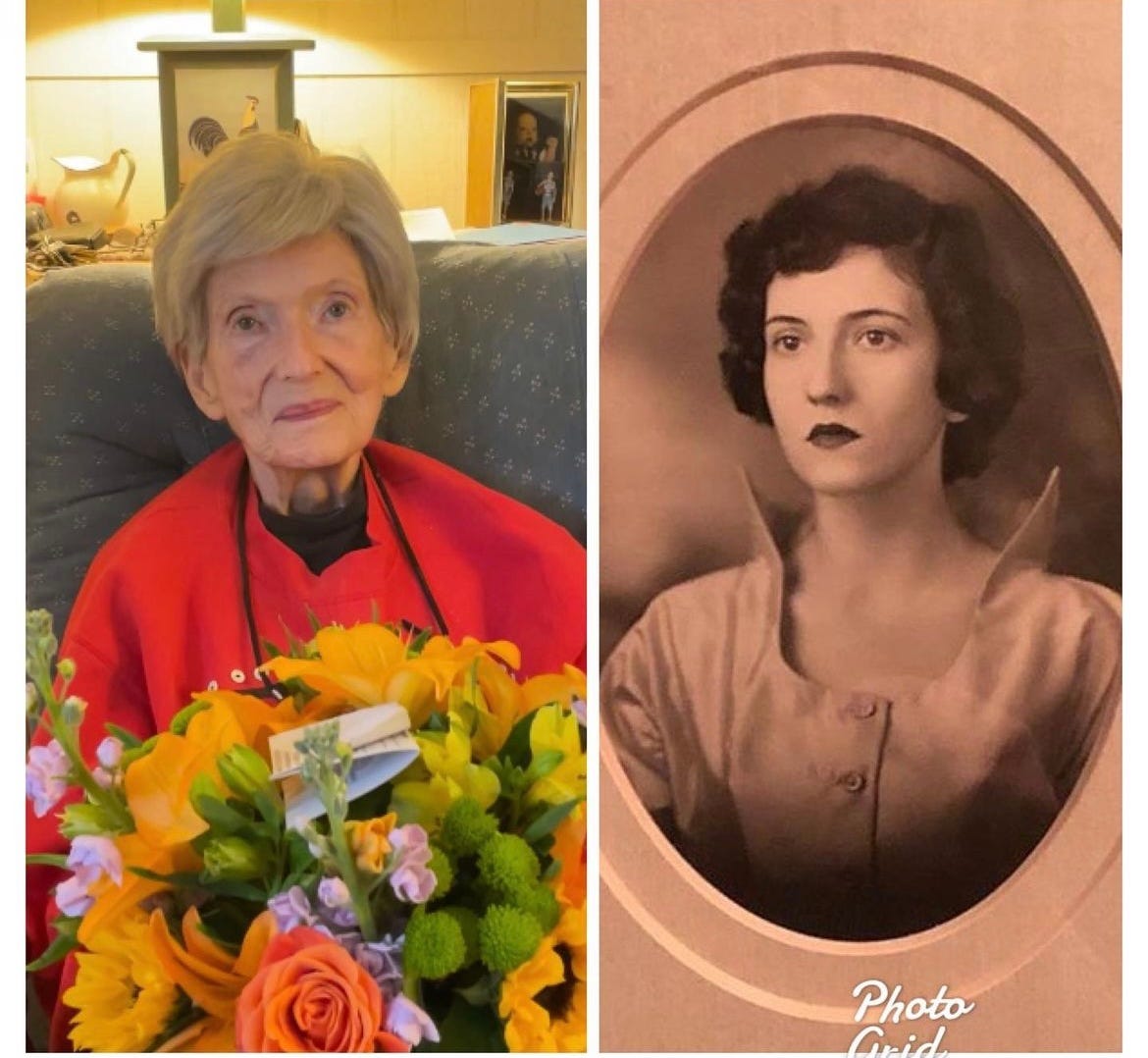
§ My mom, Lynne, is 90 years old today. Last night I forced myself to get out of the house on a damp, raw New York City evening and head to the theater to see Purlie Victorious before it closes, showing up at the Box Office at 5:45 PM or so to see if they had “anything for tonight,” and I indeed got a center orchestra seat. Magic. This morning I am thinking about transformation: how actors transform into characters; how young people transform into old people; how oppressed Black people transform into autonomous Black people; how racist white people too often never transform. But more to the point, how my depressed soul transforms in the presence of great art. How does this happen? Why is undergoing as well as witnessing transformation so necessary to our humanity? And why do we resist transformation?
My mom, 2024 and 1952.Perfection, the first Broadway revival of this play in 62 years.
§ Memories of transformation are often curious ones. When I was in 2nd grade, for example, Daphne O’Keefe brought in a Gallo wine jug melted over with rainbows of crayons. She was so proud of this show-and-tell object, explaining how she made it. She passed it round the class, and all I could think, confused, was, “What a waste of crayons.” Some transformations both small (see that wine jug) and large (see Tucker Carlson’s from “entitled Swanson Food trust-fund baby” turned “even richer Fox News personality” to “radicalized Russian-Putin ass kisser”) are lost on me. If transformations aren’t increasing your humanity or expanding your soul, what is the point? One woman’s wasted crayons may be another woman’s art (one man’s patriotism is another man’s treason?), and if the melting crayons make you happy, and you aren’t lying to yourself or hurting anyone in the process, melt way.
§ On my mind: Years ago, the now-famous comedian, podcaster, actor, and producer Tig Notaro was kind of doing okay as a mid-level comic, respected by her peers, booking enough gigs to make a living; one day she was diagnosed with Stage II breast cancer, and that evening she went on stage, “Hi, I have cancer…,” and her whole career changed. Soon after the diagnosis, her mother fell, hit her head, and died. Between a middling career, a double mastectomy, and burying her beloved mother, you’d think, “How did she keep going?” But it was the beginning of a transformational phase in Notaro’s life, one in which she became widely known and successful, met her wife, had a family, and is happier than she has ever been. Go know.
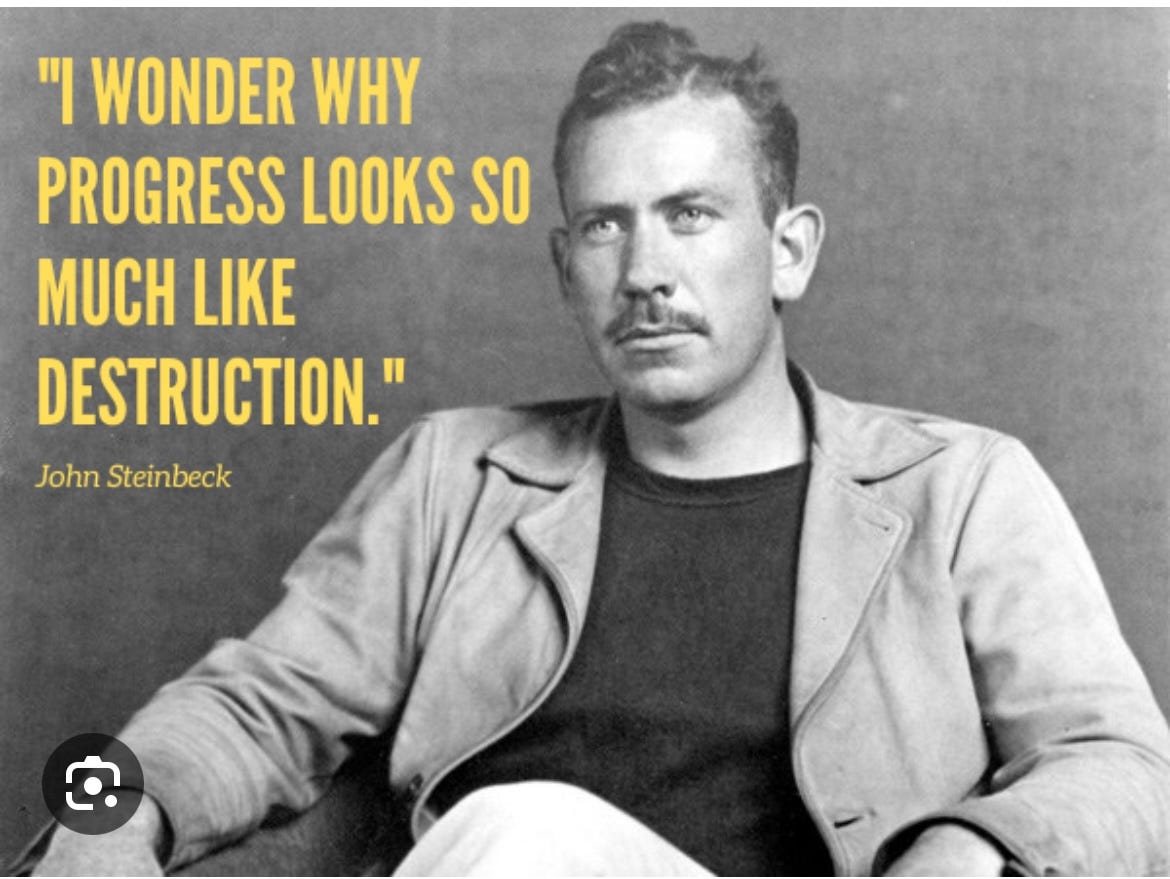
(Note: image found on the web..-ed.)
§ Scaffolding: It’s everywhere in New York City. You can’t walk a block or a street without walking under some at least once; I used to jokingly ask my friend, Richard, back when I visited the city, “When will it be done?” I return and return to this image of crumbling, but also of trying to repair—it takes such an absurdly long time; I want to walk around the city with a bull horn, “TRANSFORM ALREADY! BE DONE!” New York City’s Times Square was once glamorous and exciting, and then it became derelict and dirty, and then Disney moved in and transformed it into a theme park for tourists that makes me want to stab myself in the arm every time I walk through it, just to feel something more elevated than pissed off. Then I look around at the endless scaffolding in these high traffic areas, and “pissed off” is about all I will manage for a long time to come.
February, 2024
§ Since mid-January, my left eye has been arcing light, flashing, and also numb; in fact that quadrant of my head and face is sorta numb, too. I went to a neuro ophthalmologist today (after my regular ophthalmologist and primary care docs were stumped, and thank goodness a colleague had one, and that I talk about my life to other people who then often have suggestions, because appointments with specialists like that can take a year to get). This special eye-brain doctor (and I can’t believe how easily I spell “ophthalmologist” now) can determine for sure that your eye is in fact numb by sticking a sort of blunt pin in it and you not knowing she did that. She said, “I don’t like that.” She is, as promised by my colleague, a total doll, and has a very busy but well-run clinic; we scheduled the MRI (it’s in a month, the earliest appointment (which can take many months to get sometimes) and bloodwork, and follow up. “I don’t like that your eye is numb and that you have headaches,” she said, and then she looked into my face, “but we will solve it.” My life is either about to transform completely (my maternal grandmother died of a brain tumor at 60; I’m 60 in May), or just be inconvenienced. But it’s scary. I still haven’t told my family (older half-brother and sister caring for their mom with Alzheimer’s; my brother Jeff looking after 90-year-old parents; my brother Pat just lost his father-in-law), except for my youngest brother who also has eye issues, just in case I collapse or something so at least one person knows what’s going on. (I think six people read my blog, and none of them family.) My upstairs neighbor also knows, a few friends, and one colleague, so I’m covered. Will tell all.
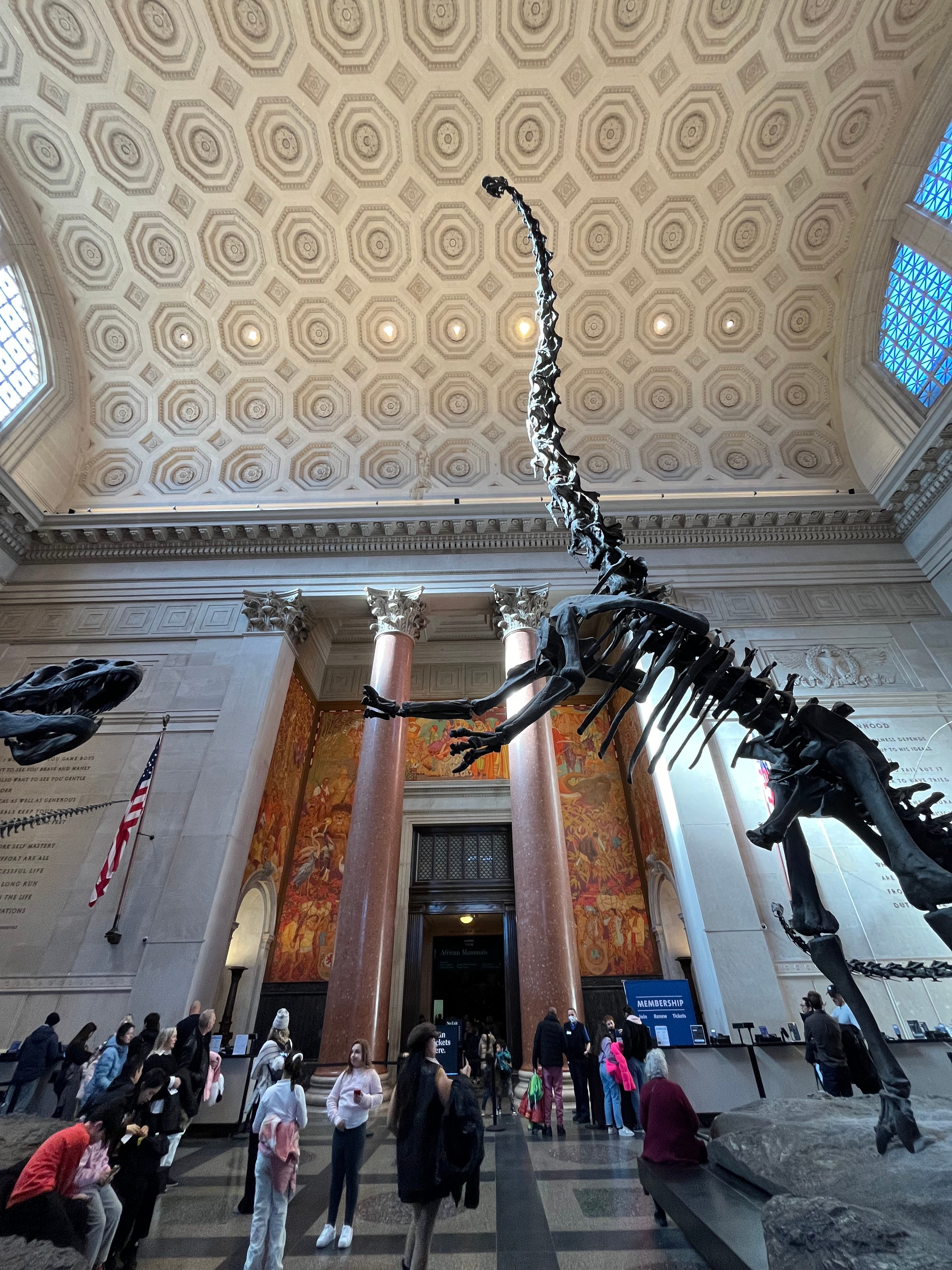
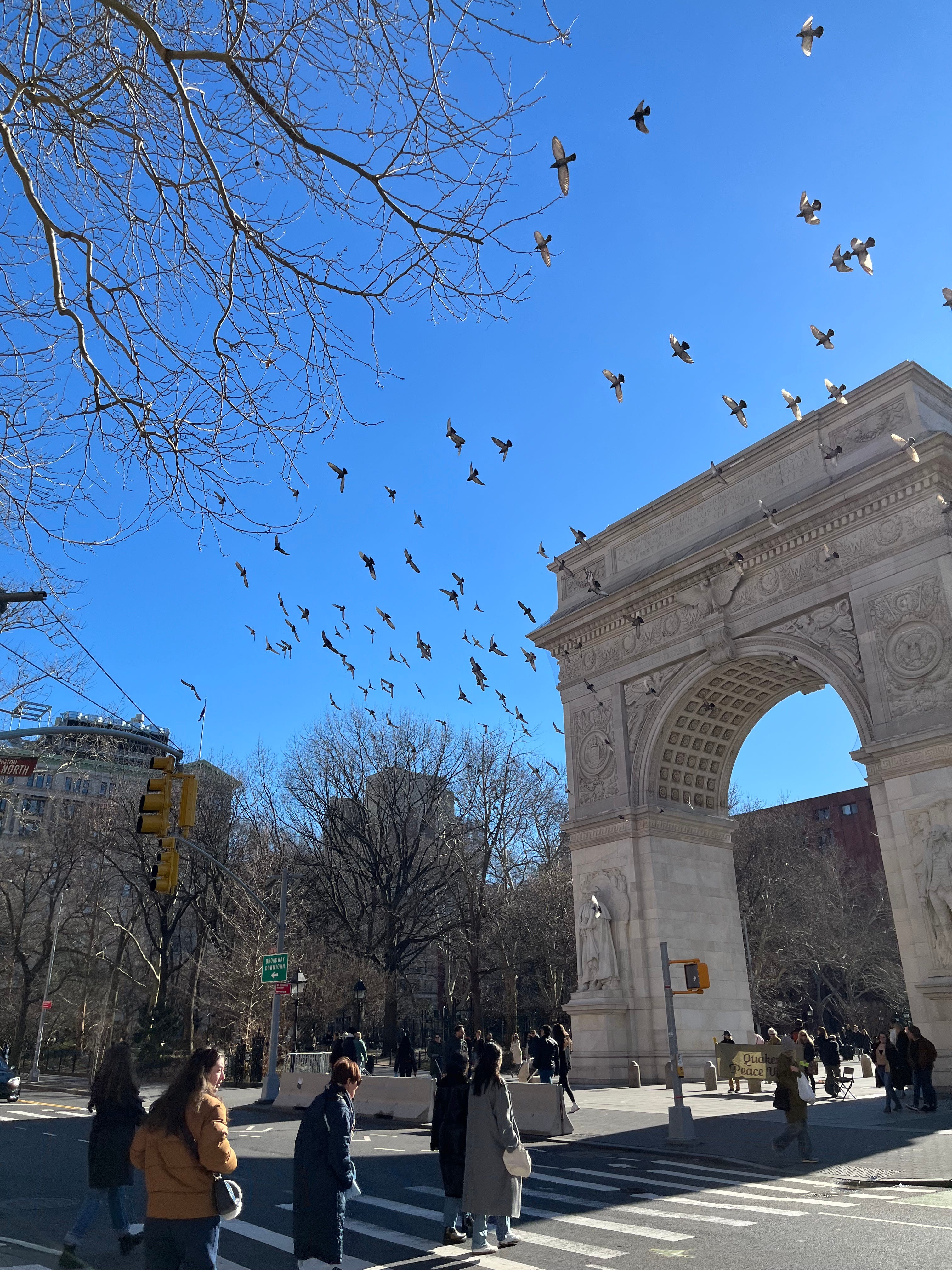
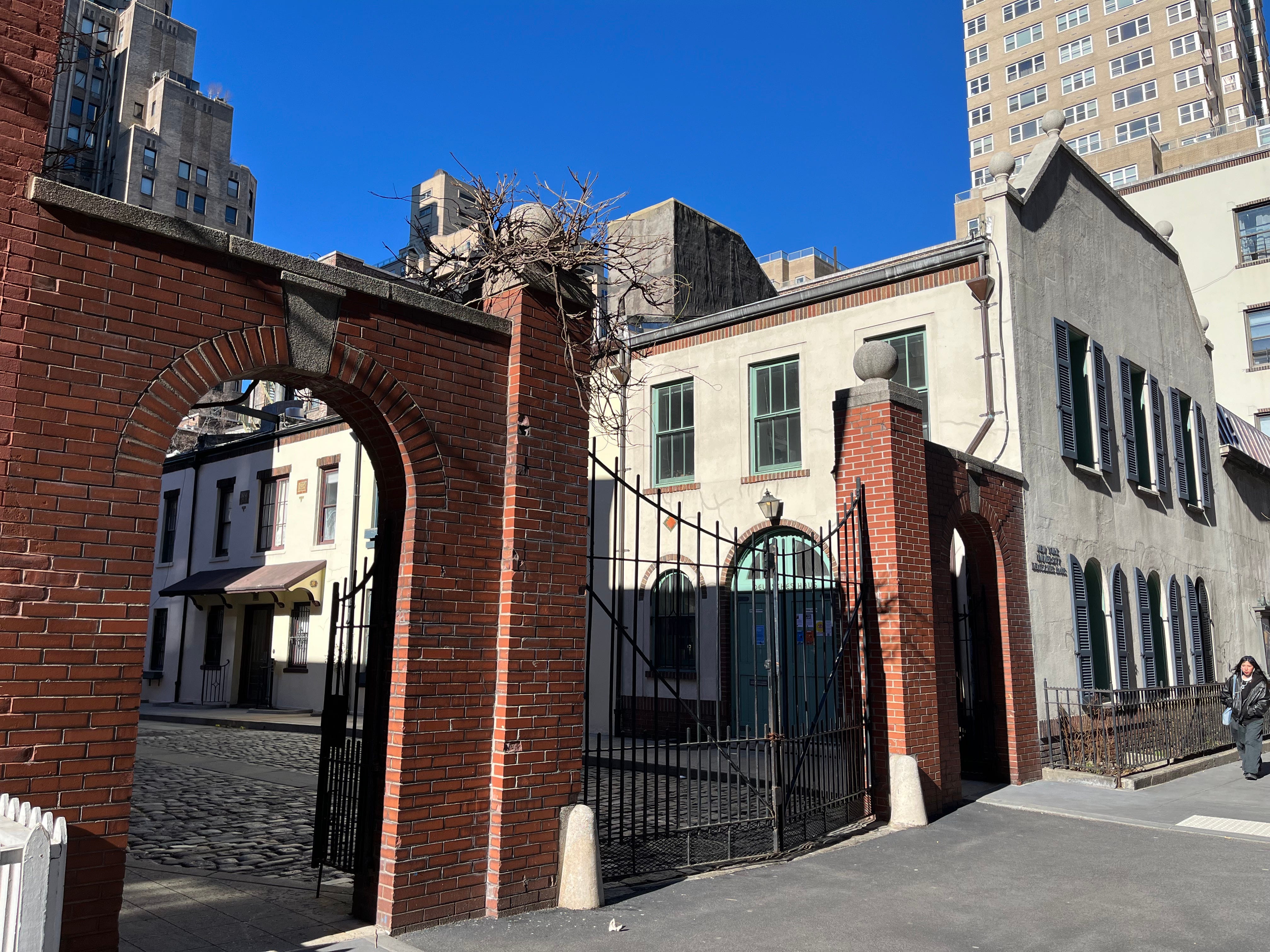
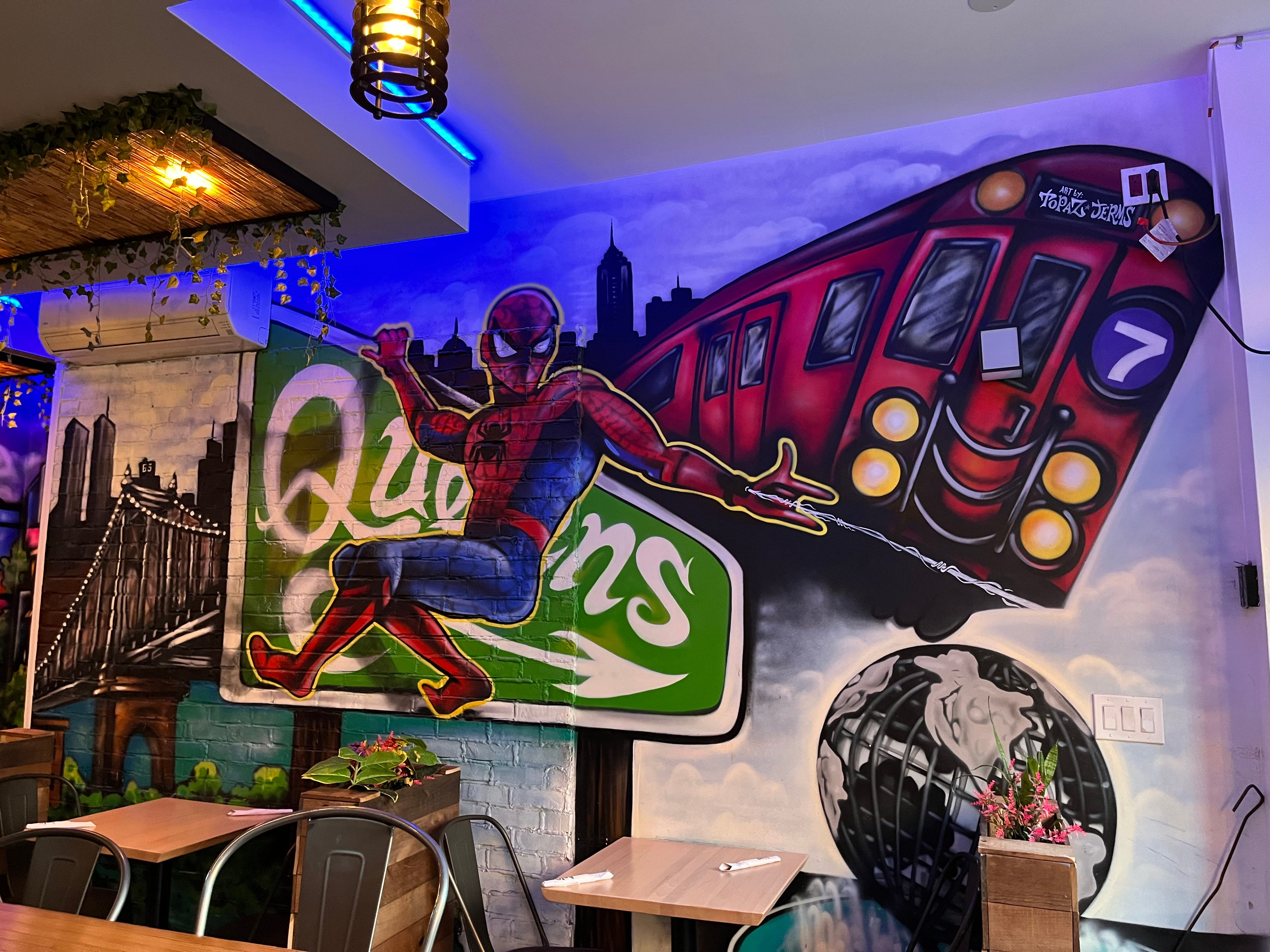
§ Sunday in New York, with photos: Grand Bazaar Flea Market (art purchase), American Museum of Natural History, Washington Square Park (with birds), Washington Square Mews (my favorite spot in New York, maybe), past Cooper Union, with lunch at Little Poland while you wait for the Rubber Stamp Store to open on East 11th St, near St. Mark’s Church, where you talk to Jimmy the owner, who has made all his own stamps since he became interested in coins in Ireland some 70 years ago, followed by a return to Queens and a binge of cocktails at Belo with the Cordero brothers Spencer, bartender, and Jonathan, owner. And all this, all this connection, is why we are alive, right? Republican motherfuckers be damned: we are here to transform each other and ourselves in creative, joyful ways. What else is the fucking point?
I love meeting new artists. Akasa was a doll.AMNH is always cool.Quite a show by pigeons.The Mews make me calm.Casey’s Rubber Stamp Store, E. 11th Street, NYCThe possibilities.Belo, a fabulous Brazilian-American restaurant in Sunnyside, Queens. (All photos by LO’H)
§ My Aunt Lorraine died on Valentine’s Day. She was 98, my dad’s oldest sister, the second oldest in a complicated family. Lorraine was my Grandma Fern’s daughter from her first marriage; Fern married Frank O’Hara, a widower with four sons, two daughters dead in infancy, and his wife dead in childbirth with the second daughter. (Fern and Frank only married because she was three months pregnant with what would be the first of five children, my Uncle Don.) When Lorraine died, various siblings and cousins speculated on the order of the kids, so I clarified: Chet, Lorraine, Bob (note: Chet and Bob were sent to an orphanage after their mom died; then returned when Fern (not that much older than Chet) became their stepmother), the twins Alfred and Alvin (who were adopted by Frank’s childless sister Emily and her husband Walter Smith), Don, Nadine, Bernie (my dad), Mary, and Francis, Jr. Of the ten children in all (not counting Grandpa’s baby girls), then, my dad is the last survivor. (For reference, they were all alive but Bob when Obama was elected president in 2008; I remember this because I called Uncle Chet on his birthday just after the election, and I told him I was happy about the outcome. “So that’s the way you went, huh?” he asked. I did. “Well, I did too,” he said. “Now I loved Hillary, loved her,” and he had even driven her around Omaha when she came to campaign. And I expressed my condolences about Uncle Bob. If anyone tries to tell you that American families should be “traditional,” you just point them to Frank and Fern in Council Bluffs, Iowa, ca. 1930. Oh, and Lorraine and Chet were best friends all his life (he died over ten years ago), and no relation to one another at all; my dad was a half-brother to each. Got that?) Families are living, breathing, ever-changing, and eventually dying, ecosystems, transforming all the time. Or they are if they are healthy, even if they sometimes put the “fun” in “dysfunction.”
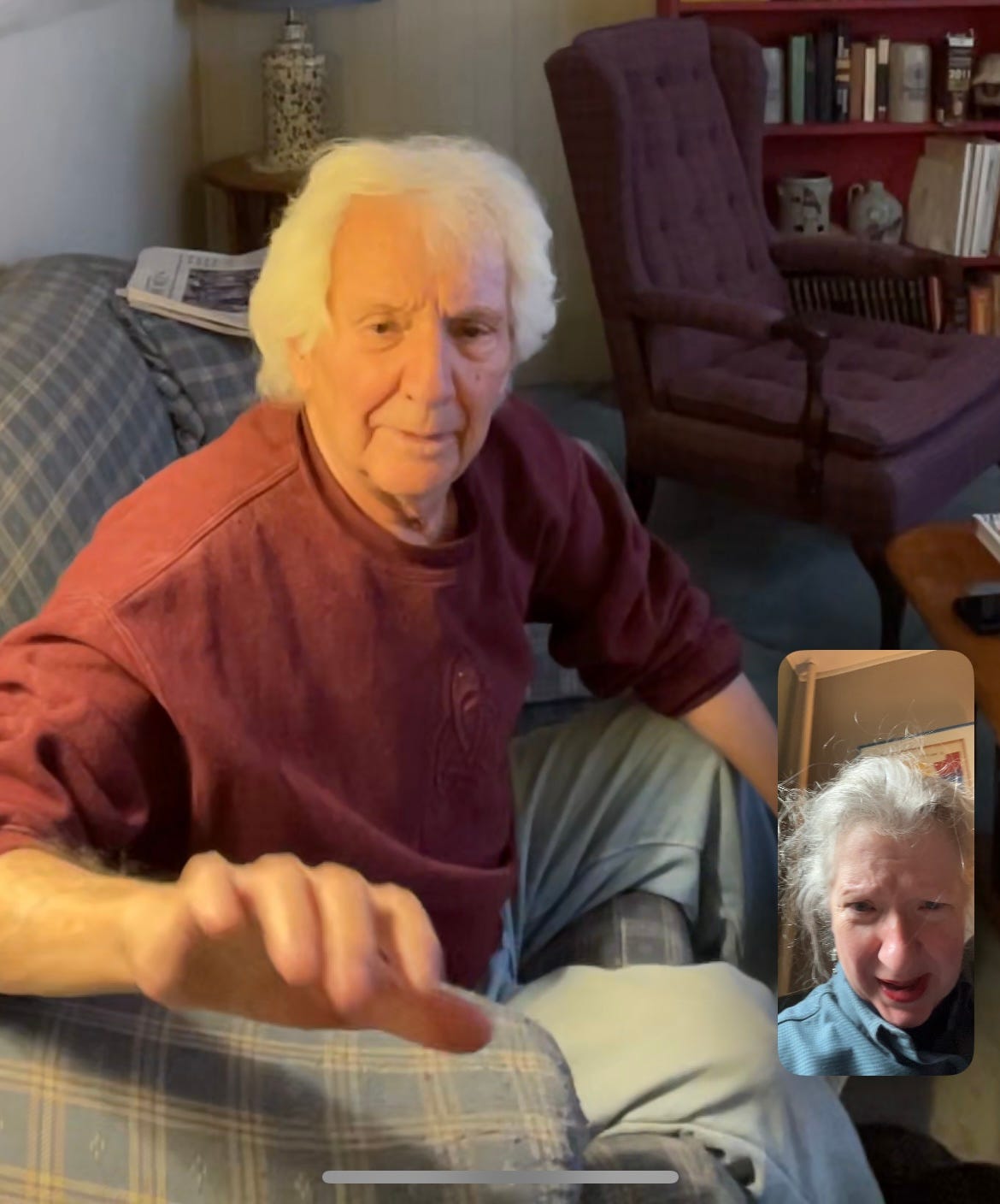
Over the phone this past week, I asked my dad, who turned 90 last October, for his memories of Lorraine, and he told me what he remembered. “When I was little,” he said, “Lorraine used to take me to over to Broadway [in Council Bluffs], when we lived on Avenue E, at Christmastime, when Santa came down. He always threw candy, and she’d help me, we’d run around and gather up all the candy we could. I think about that memory a lot, I don’t know why.” Here he laughed. “And it’s funny, because Santa was in a pick-up truck or something, and he threw hard candy, really threw it, and you wonder how nobody got hurt.”
Another memory: “I told you that story, about the time Dad [my Grandpa O’Hara], he worked on the railroad, you know, and they had a wine car there that was leaking, and all the men were catching that wine and drinking it all day. Dad came home smashed, yelling that he was gonna do this, gonna do that. And Lorraine—she was working at the bomber plant at the time, and muscular—she laid him out on his back in nothin’ flat and said, ‘You aren’t doin’ nothin’,’ and we all just cracked up.” And Lorraine’s first child, Patty (one of ten, two deceased), and my dad’s first niece (or nephew for that matter—is their a general term for that?), just celebrated her 77th birthday; my dad was 13, and he remembers coming home from school one day and seeing Lorraine holding her in her arms.
My cousin Kerry (Don’s older daughter) and I (Bernie’s younger daughter), I think, are the only ones who know who everyone is and the order they come in, from aunts and uncles to cousins; maybe my cousin Liz (Mary’s oldest daughter) knows. Lorraine’s daughter, Rita (one of twins, children 6 & 7 in the lineup), who called last week to tell me that her mom was in hospice care, confessed that she had no idea who any of my siblings were. (“How do you know everyone?” she asked. Because every Christmas the relatives put school pictures, labeled on the back, in the cards; and I memorized them, because I thought I was supposed to.) Rita and I became friends the year I went out for our Aunt Mary’s funeral (2012, I think), and her twin sister Ruthie had coincidentally just moved to the street where my Uncle Denny, my mom’s cousin (with whom I was staying), lived (are you following?), so Rita started giving me rides after gatherings, dropping off first me and then Ruthie. (Ruthie, by the way, has moved back to Kansas City to be near her kids; I have a nephew living there, but since no one would know him because they don’t know my half-sister, Sherry, why mention it?) Sending love to all of Aunt Lorraine’s loved ones in our ever-transfiguring families.
FaceTime with Bernie
§ Surprised by snow. Brown desolation to cheering plush white happens less and less frequently here in New York, and what does fall melts right away, so I went on walkabout and took photos. I was surprised how many folks were out doing just that on that chilly Saturday. I love when spring makes you beg for it.
Miss O’ in Queens
§ Sunday morning, bright blue and sunny, but chilly as winter should be. Time to head to the city, I think, to City Papery and buy some blank card stock, maybe spend the rest of President’s Weekend making some original cards for people using those rubber stamps up there for inspiration. First, I’ll post this blog. Love, Miss O’
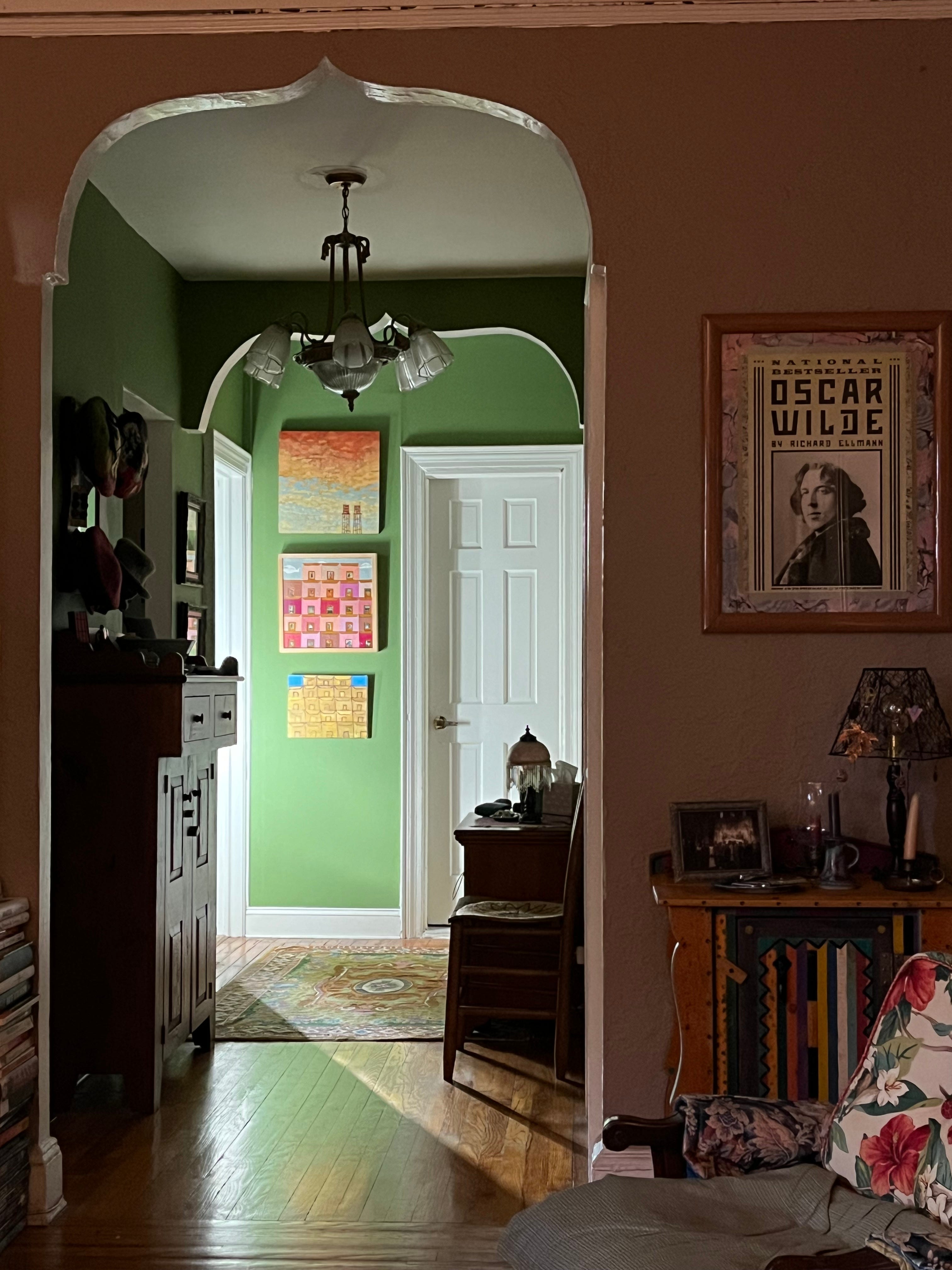
Miss O’s hallway, transformed each morning, when it’s sunny, by that shaft of light. Color me grateful.
Yesterday morning, Saturday, a week before I’m scheduled to return to New York (according to my latest in an ever-updating series of return Amtrak tickets), my mother, Lynne, still prone in bed in the playroom despite a light breakfast, sips of coffee, and blaring overheard lights, grumped to me and my dad from her near fetal position, “Would you leave me alone for a minute?” Sorry, Mom, I said, and out I went to get coffee; my dad remained, quiet, in a chair watching the very loud news. So it goes.
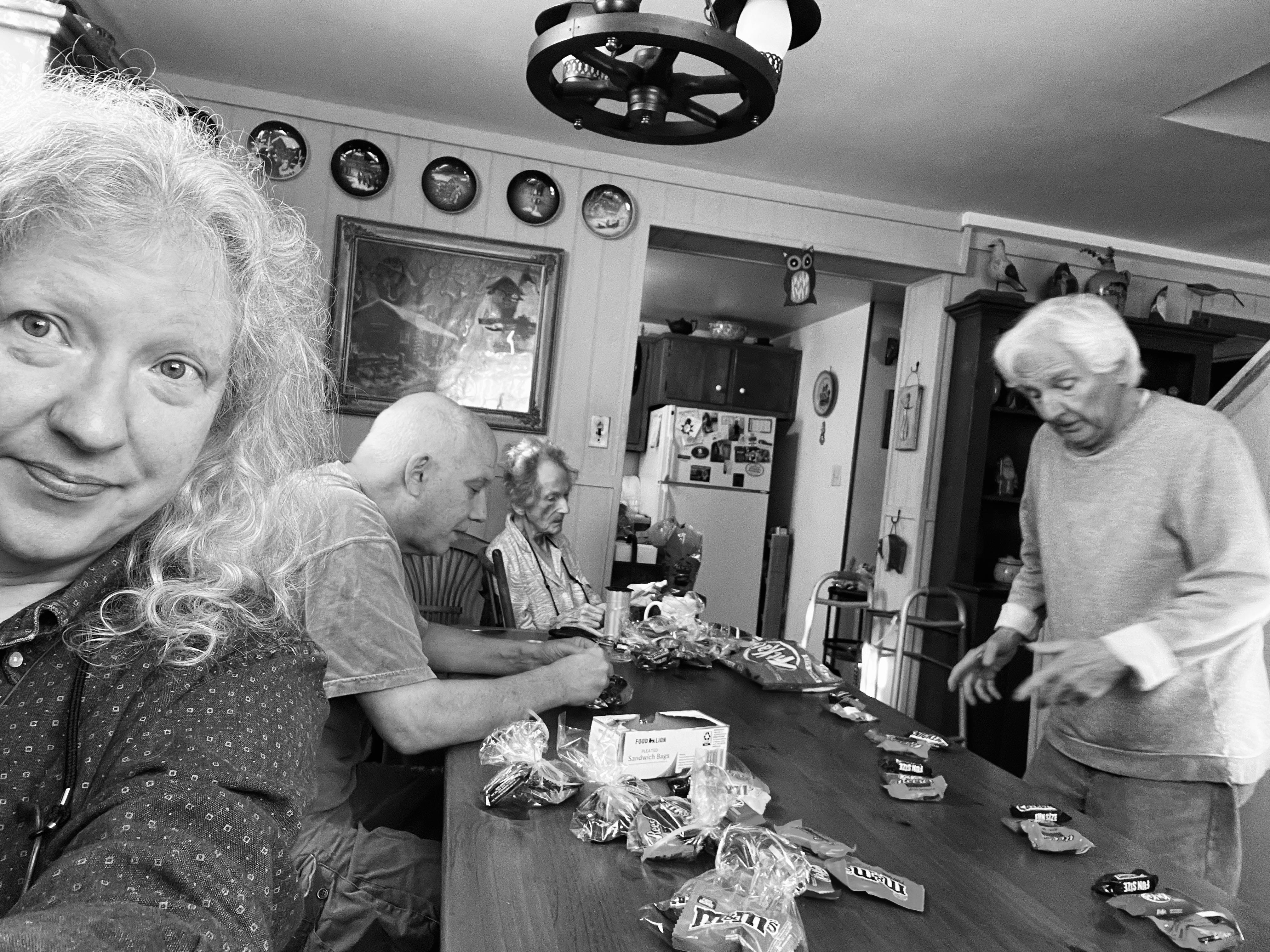
A few times during the last week, taking breaks from my own publishing job (where on Tuesday at the dining room table my computer died, had to order a new one via our help desk, get it FedExed to me, and return my old one, which I did, thanks to brother Jeff), I’d say, if I found her receptive, “You know, Mom, if you want to get dressed…,” and she’d say from under the covers, “Maybe tomorrow.” Friday evening, I’d told my dad and brother Jeff that I had a scheme: Since Dad O’ had bought bags of Halloween candy and baggies, and found the orange ribbon they always use, why don’t we set up in the dining room on Saturday morning and make the bags of treats they love to give out for Halloween, and make Mom O’ join us?
And, remarkably, we did that. (Generally, the jobs were as follows: Lynne (!) cut the lengths of ribbon, Bernie made the piles (one each of M & Ms, Snickers, KitKat, and Reece’s Cups), Jeff bagged, and Lisa tied them up. Sorry I couldn’t capture anything like fun, but we did have some nice little laughs, good memories. When sister Sherry called in the midst of this, Dad remembered Sherry and Craig (the children of my dad’s first marriage and who lived in Richmond) were in that house the first Halloween Bernie and Lynne and I lived there, in 1964, when county farmers (unbeknownst to my folks) would drop rural kids, piled into pick-up trucks, into all the new housing developments to trick-or-treat; as a result, the O’s quickly ran out of candy. Sherry (who was 7 or 8 then), who had a haul, said, “They can have some of mine,” and Dad wouldn’t let her. Sherry was born a doll. Dad said it’s the most kids they ever had for Halloween, even today.)
After we’d made 100 or so packets (my dad kept a tally sheet), my mom, Lynne, from this unaccustomed chair, said, “Now where do I go?” Her family had all gotten up to complete chores around the small house, my dad cooking up vegetables for ham and cabbage and peas porridge; Jeff to closet for the vacuum cleaner, I to the dust rag.
And in the midst of all this movement, Lynne made a decision. She decided to get dressed.
And, what is more significant, she wanted to get dressed in her room. Upstairs.
And she did that. For the first time in seven weeks, Lynne was in her room.
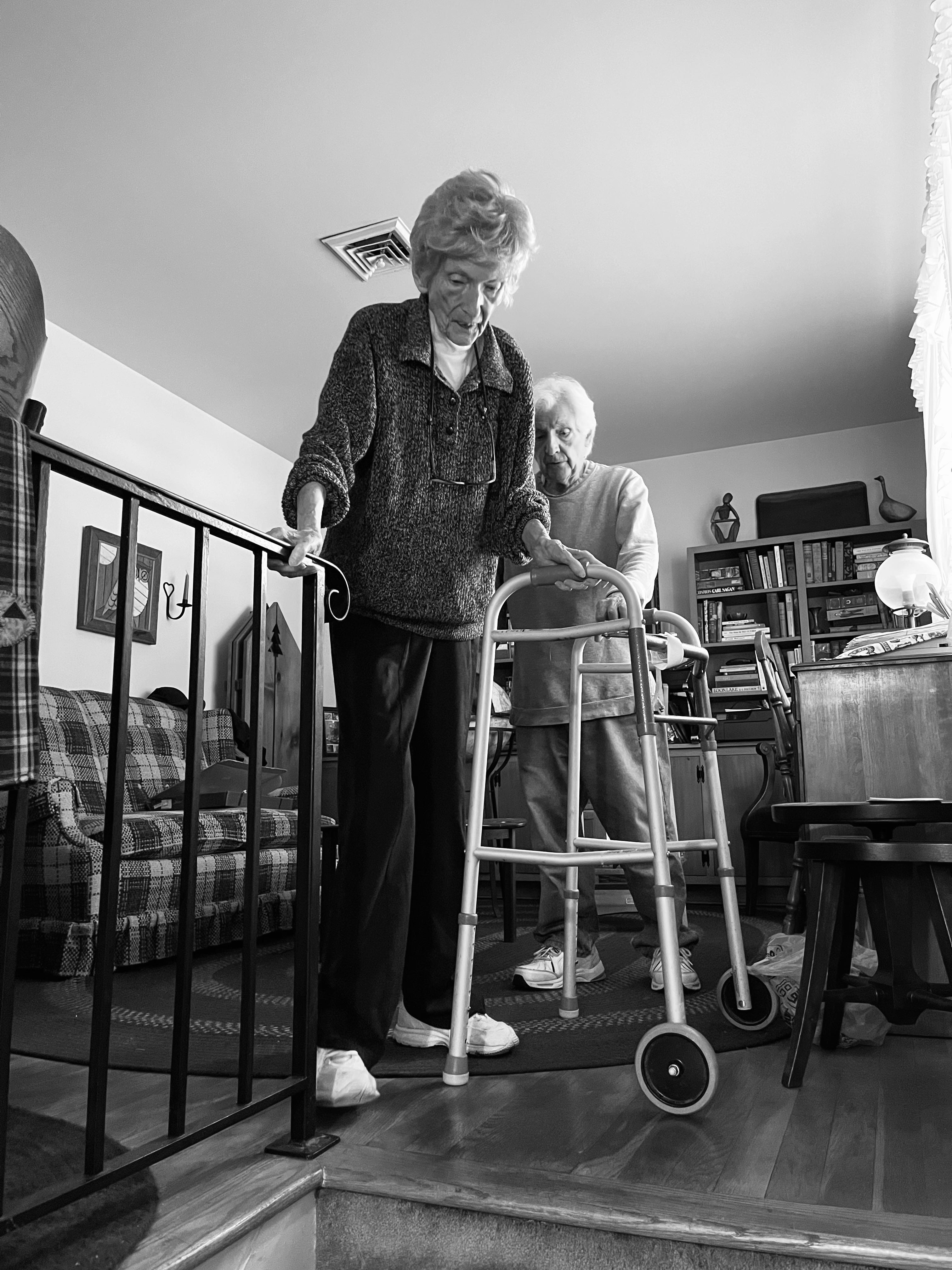
More astonishing, Lynne came back downstairs on her own, my dad bringing her walker as I watched her grab the railing with both hands, taking one step at a time, foot-foot, foot-foot.
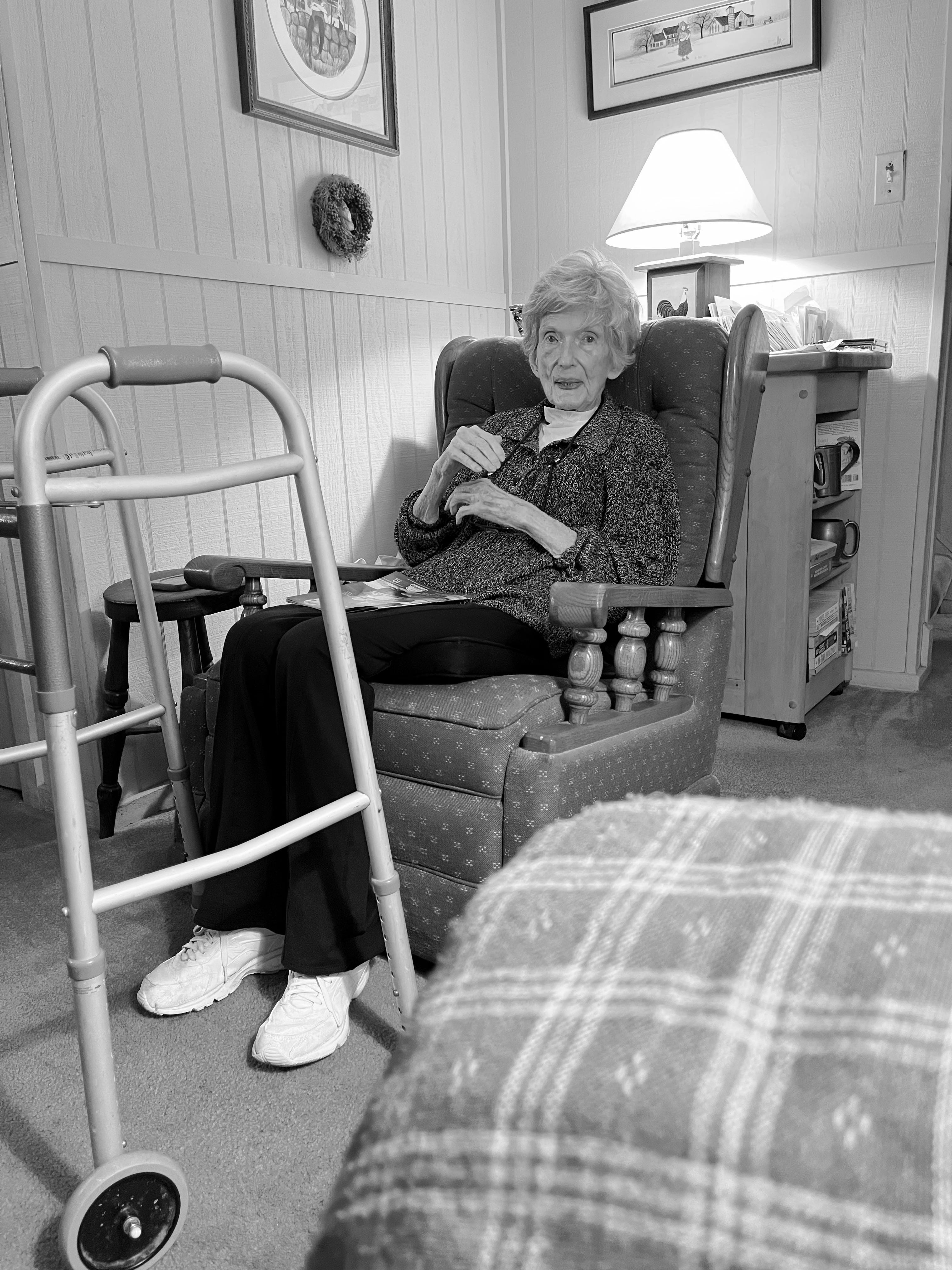
She sat in her usual living room chair.
And it occurred to me later that that’s where her irritation had come from earlier in the morning—Lynne, whether she realized it or not, was making a Big Decision. And she chose life. At least, yesterday she did. We’ll see how it goes.
Anger Management
On Tuesday of this week, my brother Jeff texted me, “I’ll be home in a few minutes. Will explain when I get there.” As it turns out, he’d been fired, after 35 years, despite being the most skilled glass cutter in the shop, for mouthing off one too many times. Over a week of shock, sadness, back and forths with the HR guy, Jeff figuring out Cobra, etc., the shop boss (who’d overreacted and must have quickly realized the quality of worker he’d dismissed) told Jeff he maybe could come back, as a beginning apprentice (!), if he went to anger management. Of that suggestion, Jeff, who had expressed worry over what would happen to him at another job should he get one, was totally on board. “I’ve needed it for years,” he admitted. I told him how therapy saved my life 30 years ago, and Jeff has been looking into how to get started. (Sidebar: Bernie said to me yesterday, “Why does anyone need therapy? It’s common sense.” Says the man who screams at his family viciously at least once a week for no apparent reason. Jeff and Lisa come by their raging honestly, Pops—and I warned him not to therapy shame. “You’ve seen that commercial with the guy lifting weights who refuses help?” Yeah. “It’s like that.”) (Sidebar 2: I told Jeff I have an idea for a children’s book, Jeff Loses His Job, that could be one of a series to make our fortune, and we sat and thought of other possible titles to come. I’ll keep you posted.)
Meanwhile on the planet, the other day I read this headline:
Ukrainians Destroy Russian Tanks with Radio-controlled Toy Cars
And if this is how we can do war now, why not send toy cars and toy tanks into an arena, blow them up, and call it a war? Why are Israelis bombing real hospitals in Gaza? Why is Hamas carrying out real Jewish genocide in the name of the Palestinians? How in the actual fuck are the peoples of this earth STILL STILL STILL doing all this shit to one another, destroying Earth in the process? Do it with toys.
Given this week in life, I couldn’t help thinking that the humans of Earth could all use a course in Anger Management. I’m sending out this call for a global PSA.
Until everyone realizes life on Earth is about survival, cooperation, and governance (Republicans, is this on?), let’s let the monster trucks do all the destroying of one another, better still virtual trucks. What has been the point of any war on any scale in the past several thousand years but to assuage one man’s ego and make him feel a king? Because amid all that shit, we know that every single little human on this planet is fighting their own demons, their own personal battles, trying to survive as best they can.
Today, anyhow, let’s hear it for tiny victories, the small battles fought and won, without bloodshed and in the face of great uncertainty, one moment at a time.
Years ago, I was visiting an elderly friend in Virginia, a former landlady whose dear husband had died a couple of years before. Her wonderful, caring daughter, a school nurse by profession, had just left to return to her own house next door, having checked on her mother’s food, water, and meds situation, dispensing advice to us about this or that, and after she’d departed, my friend turned to me and said, “Merry knows just enough to be obnoxious.” It wasn’t that Merry was incorrect about her information, but it was rather the authority with which Merry dispensed the information that made her mother cringe.
In the past weeks, I’ve seen that same reaction grow increasingly in my own mother, Lynne, who derisively calls me “Dr. O’Hara” when I hold up her water cup to take a sip. This morning she said, quite viciously, “Anything to shut you up.” That’s fine, I said. As best as I can gauge, my 80-pound mom drinks approximately one (measuring) cup of water a day, at most two. She sleeps nearly all the time, feels groggy and frustrated by her inability to wake up, so my pushing her to sip that dreaded water gives her the biggest rises of her day. The second great rise comes when I push her to drink (half, approx. 170 calories’ worth) of an Ensure. My mother is consuming approximately 500 calories a day, at best, as near as I can figure it. A bite of muffin here, a half a PBJ there, a bite of meat, a spoonful of potatoes, sometimes a few slices of pear, some Wheat Thins. My mom’s lack of appetite is a result of dehydration, and she’s dehydrated because, as for too many of us, dehydration does not register as thirst by the time the sleepiness or nausea sets in. And so it goes. It really doesn’t take a medical degree to know this, but the last thing medical professionals do is talk about food and water in the healing process, which is why idiot daughters like Lisa have to step in. It’s obnoxious.
Over the past couple of weeks, my mom—once her hip fracture more or less healed, the physical therapy began working, and her relative independence grew (she can now walk through the laundry room to the bathroom on her walker and use the toilet, all unassisted)—seems to have more or less decided (as of this writing) to accept stasis, which means, I guess, “give up.” She will be 90 in January, should she live that long (and I’m more than willing to be astonished by a sudden rally; just yesterday she asked her husband to trim her hair “with the scissors on the righthand side of your dresser, not the rusty ones on the left,” so who knows?).
I was talking to my half-sister Sherry yesterday, whose own mother is dying by inches, of Alzheimer’s, in a care facility (a housing decision she and our brother Craig had to make after their mom fell and broke her hip earlier this year), about my situation. Sherry worked in a retirement community for 20 years before herself retiring last year, so between caring for the residents and for her mother, she has seen a lot. In addition, Sherry worships my mom, so anything Sherry offers as advice, I know comes from experience and great love. Essentially, “if Lynne just wants to go to sleep,” Sherry advised in her soothing and practical-sounding North Carolina accent, “you have to let her. This is never getting any better.” On top of that, just before our talk yesterday, our dad had admitted to me that he had felt “messed up” in his head (how long? I asked; about a week, he said), which explained a lot about his more-erratic-than-usual behavior; and our brother Jeff was trying get him to go to the hospital though the old man was resisting. I told Sherry that I was concerned it was another ministroke, and I began choking up a bit, “We don’t know what to do, because he won’t do anything,” and Sherry said, practically and kindly, “Let him stroke out and end it. It’s all you can do when you’ve tried everything else.” (Coda: Jeff suggested, “Dad, do you think it’s vertigo?” My mom had said the same thing. As I was talking to Sherry, our dad knocked on my door and said, “I think it’s vertigo,” a chronic condition he’s had for about 15 years (one that caused my parents to have to stop traveling, after the third canceled trip due to the condition) but had not experienced for at least a year. We forget these things. So Dad took motion sickness medication, and within a half hour felt like himself. Crisis averted. And with that, Sherry and I began to talk about ourselves, our own trials, life in general, and find humor in getting on with it. I still can’t seem to get that humor into my writing, but my dear friends send me funny things.)
Death by Inches
On the Wednesday before my dad’s 90th birthday, during my fifth week here, my mom moving around a little better, the med situation stabilized (a fool’s belief, as it turned out, but life is moment to moment, you know), I made plans to go out for the first time, to lunch at 12:30 with my friend and former English department chair, Tom, meeting in a halfway-point town. Typically for schoolteachers, former and otherwise, Tom was an hour and a half early. He texted me at 11:00 AM that he had parked, it was “only four-hour parking” (teachers follow rules), and could I please “get here as soon as you can.” So I quickly changed clothes, grabbed my bag and my dad’s keys, said bye to the folks, and headed out to the family pick-up truck. Upon starting, I saw that the brake light was on, meaning the fluid was low. I went back inside, told my dad, who said it was fine. Incredulous, I headed back out; he followed me, said to pull the truck up into the driveway from the street, and as I stepped off the curb to do that, I somehow pitched forward, landing wrong on my right ankle, and then my left, banging a knee in the process, lying on the street behind the truck. A young Hispanic couple in a passing pick-up truck quickly stopped, had seen me fall, and the man got out and came over and asked if they could help, so kind. My dad came out just then with the brake fluid, saw me there, and whatever I may have tried to deny, I knew I had to go to the ER. I phoned Tom to beg off our lunch date, got into the car (thank goodness Bernie can still drive) (knock wood), and had my aged dad drop me off in front, where I inched into the ER on foot. (“Would you like a wheelchair?” Yes.) Five hours later, X-rayed (two sprains and a fractured foot), an air cast on one leg, a “combat boot” on the other, I called my brother Jeff to bring me home.
Now here is comedy: barely able to walk—and walk I must—I am unable to do basic caregiving; but more than that, I can’t return to New York until I’m fully healed, and sprains take weeks. New York is totally, utterly a walking city. Uber is expensive, cabs are expensive, and traffic is a nightmare (and one doesn’t Uber for two blocks up and back to the grocery store). I travel with a heavy backpack (containing my personal laptop and charger as well as toiletries and a few clothes), along with a small satchel containing my work computer, books for my job, my rain jacket, umbrella, and one extra pair of shoes (sneakers for walks, dressier slip-ons in case—just last year I had a funeral to go to). Probably 50 lbs. total. I was supposed to return to NYC October 8.
And just when you think maybe you can go back to your life, even for a few days, unexpected injury aside, you can’t: I found my father was wandering upstairs the other day carrying my mother’s pill case (the one I set up for them), confused about a missing pill—yelling at me, angry because “I never had any problem before,” that is before I, his daughter, set up this system. (I know just enough to be obnoxious.) If you’ll recall from a previous post—because this story is fucking fascinating, isn’t it?—for nearly a week after Lynne returned home, Bernie hadn’t given either of them their morning or evening meds; when I asked him what he gave them, and when, he couldn’t remember; and having had three ministrokes, Bernie is supposed to take one low dose aspirin every day (in addition to his blood pressure and cancer meds). He’d forgotten all about it until I reminded him. In addition, he’s been having panic attacks about food—after a lifetime in food service, including being a short order cook in the Air Force, a produce manager, and a meatcutter; he cooked half our meals during our growing up, and his panic performance each day over what to make for dinner could be a cabaret act. No amount of my brother and I saying, “we don’t care, we are grown people, just take care of you and mom” will make him understand that he doesn’t have to pack Jeff’s lunch every morning or cook his breakfast (he doesn’t cook for me, for the record, because I’ve always been independent; Bernie used to boast to all his friends that I raised myself). He screamed at me earlier in the week, when I told him not to worry about what to have for dinner, “I have people to feed!” When I told him he just had himself and mom to feed, that Jeff and I will be fine, he got even angrier. I came upstairs to write this, and told poor, long-suffering Jeff that I don’t know what to do, because this isn’t about food but his confusion. (And, as it turned out, vertigo.)
Our parents are our providers. It’s all they know. So, what I’ve finally come to understand, is that if he’s not providing, my dad doesn’t know how to co-exist with his grown children in the same house. But that’s just a small part of his anxiety. The main thing, of course, is this: life as Bernie’s known it over 60 years of marriage is ending. The great love of his life and his reason for living is slowing dying, dying by inches. He himself is physically strong but his brain could explode at any moment. It’s all coming to a close, all of the years getting out of poverty, the struggles and laughs, working toward a middle-class existence, raising your kids, building a solid life. It’s ending. And all his obnoxious daughter can do, really, is bear witness.
And all that I, that daughter, want right now, and no kidding, is to be able to take a walk around the block in the autumn wind. That’s it.
TV Dystopia, by Meters
This week, all over the media, we see how Hamas attacked Israel, another pogrom to wipe out Jews. Israel retaliated, another pogrom to wipe out Palestinians. We live in a dystopian world. To use weaponry instead of intellect and heart to settle differences is to show oneself to be the basest form of life. Moment to moment, day to day, Hamas (a terrorist group not to be confused with actual Palestinians) and Israel inch toward an unstoppable end; I am nearly 60 years old, and these horrors make up some of my earliest childhood memories, watching the 6-Day War on the CBS Evening News with Walter Cronkite.
And you realize that all those casualties of war now and over decades and centuries, all these displaced victims, are simply people who are trying to work, get married, give birth, take care of their kids, and care for their dying parents, and somehow plan for the future. Moment to moment, day to day.
And the people who perpetrate all this violence (see also: Russia against Ukraine, the U.S. against Iraq, pick a war) have no real ideas about governance, fair distribution of resources, or the creation of a loving and useful society. Raw power only spends itself and burns out until the next arms race, and the world’s sadists glory in the destruction while the loving ones rebuild, over and over and over and over again. (I have no solutions; I know just enough to be obnoxious.)
Last weekend, Jeff printed out my parents’ monthly bank statements so our mom can review them between naps. On Tuesday, Bernie got his partials replaced at the dentist, creating the illusion of a full mouth of teeth that can chew. Two days ago, with cold weather coming, Bernie got out the vacuum cleaner with the hose attachment and vacuumed all around the furnace; he replaced the battery in the downstairs thermostat. The next morning, I found him cleaning his electric shaver. Later today, he will make a batch of Lipton Noodle Soup for his wife. And have some himself.
And so the days go by. My ankles throb with pain. The evacuation orders go out overseas. I don’t know how to explain why, given that terrorist bombs aren’t (currently) dropping on our solid little suburban American house, I am yet so fragile, so weepy; why this relative ease feels so hard. I feel I am ridiculous. My parents’ hard-working life has come down to little more than consumption of media and packaged food and medications; yelling at their obnoxious daughter even as they are grateful for her help; and waiting for the end of it all, they hope, together. I think that is what troubles me—that there seems to be nothing but waiting right now. That this is what too much of life is—filling in the time between activities needed for life to continue as we wait to die; my shock that Beckett so clearly knew what he was about when he wrote Waiting for Godot. An old theater joke, “My life is a Pinter pause,” comes to mind. And the last line of that Sartre play: Nous continuons.
Did you ever have one of those days (years, lives) when everything breaks? The one where you look at the pot handle lonely in your hand as the pot you wanted to fill with water clangs onto the kitchen floor, and you scream, “I’m so glad this is hard.” Dumb tasks that should take a second become all-day quests on the scale of Don Quixote. The other morning one of the little plastic doohickeys on the collapsible plastic tube that keeps the toilet paper attached to the porcelain thingy on the wall snapped off when I tried to replace the roll. My first instinct in cases like this is to try and fix it. So several squirts of epoxy and some duct tape later I realize, “For the love of god, Lisa, stick this in your bag and go to a hardware store.” $2.99 + tax later, all was mended. But the cost to my day? Priceless.
Everything, it seems to me lately, is breaking. The existential stuff, sure, but what about my parents’ yard? The other week when I visited Virginia, brother Jeff and I pulled into our parents’ driveway, and the first thing I noticed was all the chickweed in the flower beds. By this time of year, those beds are cleaned out, mulched, and planted with petunias, but ol’ Bernie in his 89th year has a hernia and was waiting for surgery, so all the planted beauty was on hold. Upon surveying the rest of “estate,” I noticed piles of oak tree spooj, er, “catkins,” in pond form on the driveway and pea gravel patio; periwinkle out of control; a dead dogwood. So after days of rain, during which I cleaned their house, stocked up at the grocery store, and did whatever other daughter stuff was needed, I set off for outside to pull chickweed and sweep up the driveway.
Within ten minutes of using the outside broom—mended at the bristle-handle connection several times over with Gorilla (TM) tape—it broke past repair. The handle coating was cracking in strips. The third time I used the dustpan it literally crumbled in my grasp.
WHAT IS HAPPENING?
I just turned 59, so you’d think I’d just roll with all this, but in truth I got weepy, not because of the broom and dustpan, though sure, it was an inconvenience (I texted Jeff to please buy one at Lowe’s while he was there picking up a new latch for the 50-year-old front storm door, the one that caused our father to get locked out the previous morning while out getting the paper at 4:30 AM—fortunately we are all early risers and I heard the knocking while Jeff was in the bathroom and our mother still in bed with her coffee). It’s that all this infrastructure breaking down mirrors my parents’ physical and mental deterioration; inevitable though it is, and tough old birds that they are, it’s not something you can just smile through. Though we do, often as not.
Couple this personal existential stuff with the coming end of the democratic experiment in America—and forget that, what about the EARTH?—and I have to ask, how are we all not losing our minds?
Blooms Buried
This spring, everything bloomed a full month early. (New York City—a city of subzero winters and months-long snowpack when I moved here 20 years ago, had the warmest winter I can remember, and sadly will probably never know such cold winters again in my lifetime; my co-op doesn’t even bother to order salt anymore, and we used to order a dozen bags a winter.) I do not celebrate this. Lilacs, a mid-May flower, were here and gone in early April; so were the daffodils, tulips, and azaleas (a late May bloom), all at once. I don’t know if you follow bloom schedules, or enjoy the unfolding of seasonal changes as I do, but last spring’s walks were simply miraculous, helping me emerge out of my Covid coma, spring taking its sweet time moving from crocuses, to daffodils, to tulips, to blossoming trees, to irises, right up to honeysuckle.
This year, it’s like the whole bloom gang showed up drunk to your spring party and passed out as they handed you their coat.
My friend Tom, a Virginia native, retired English teacher (mine, in high school), and avid gardener, called me from his Arlington home a week or so before my visit, freaking out about this seasonal disruption. “What is happening? Everything bloomed for a split second and was gone! I can’t keep up!” He was also freaking out because of the steady and unstoppable decline of his partner and spouse of fifty years, Ron, who was dying of cancer of the bile duct in a nearby nursing home. And as passionate about politics as he is about poetry, Tom was also having apoplexy over the Republican Party’s transparent policies to unapologetically end democracy. Death was in his garden, in his home, in his country. It was all just too much to handle all at once, and yet there he was, handling it.
Before I could visit, Ron died shortly after I arrived in Virginia, peacefully but still unexpectedly around noon on May 2, right there with Tom. It happened the day after the 50th anniversary of their meeting. EMTs, police, inquest, courthouse, death certificate, phone calls to insurance and Medicare and Social Security and Dominion Power and the bank…and not a second to grieve. Our whole American system is hurry-up heartless. Tom only spoke to one actual human, who was so kind, while the rest was AI simulation voices or operators from overseas reading from a script of “How can I help you today?” to “I am sorry I could not fulfill your request.” Fuck them all.
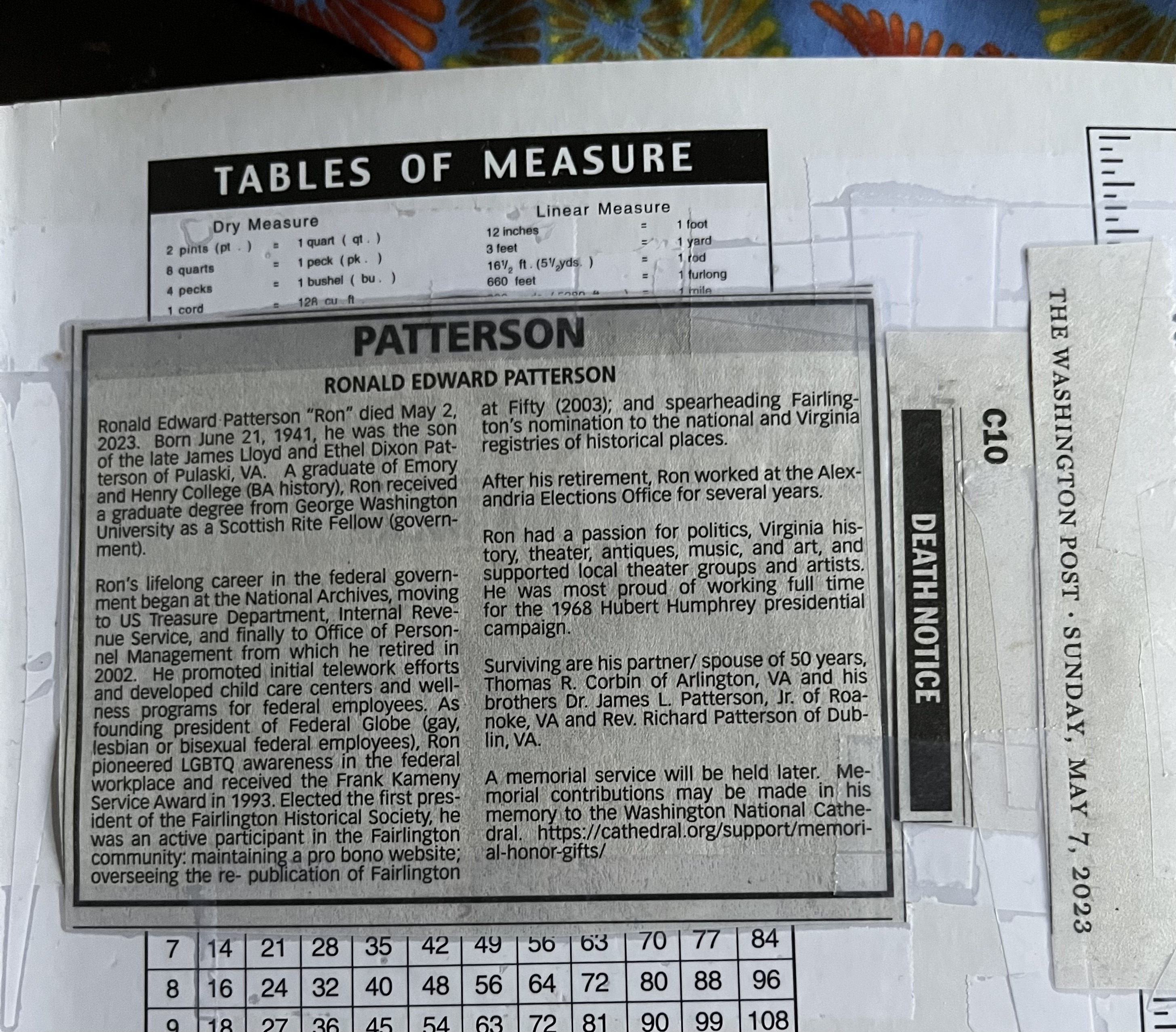
Tom’s obituary for his partner and spouse of 50 years, in my journal. How do you measure a man’s life?
Today is Mother’s Day, and so far Lynne is hanging in there. On Thursday, May 18, the good lord willing and the creek don’t rise, my parents will celebrate their 60th wedding anniversary. On June 5, my dad is scheduled for outpatient hernia surgery. Meanwhile Jeff is cutting the grass and trimming out the lawn; we bought a hanging basket for the backyard while I was home. And Tom is trying to figure out a good time to have a gathering to remember Ron, at their home, maybe this June; and Democrats still use their elected offices for governance of and for the People, bless ’em.
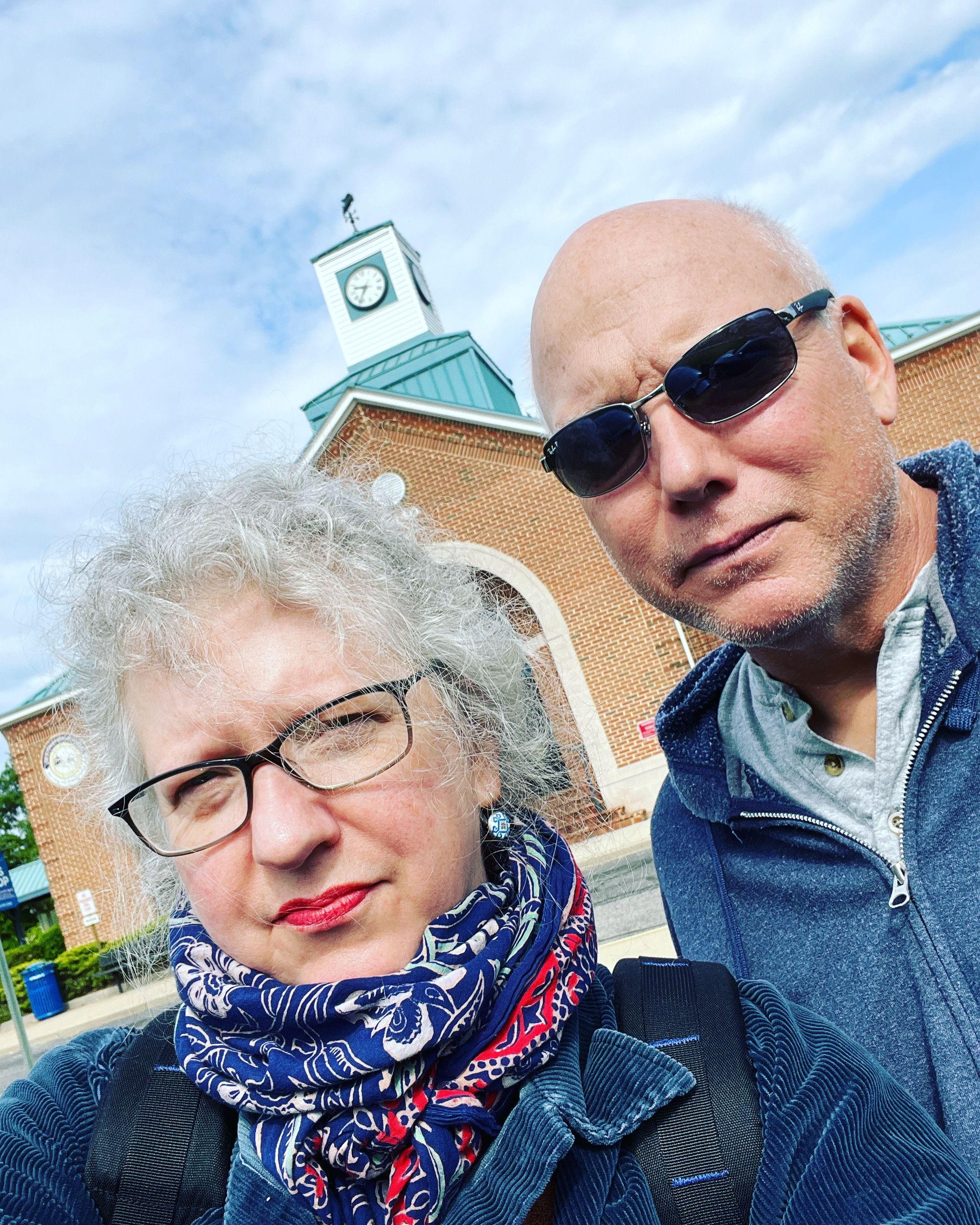
Miss O’ and mom Lynne, May 2023Miss O’ and brother Jeff O’, train station, VirginiaBernie and Lynne with their oldest child and youngest grandchild (not Miss O’s)
Our Earth continues to warm at a beyond alarming rate. Republicans are breaking democracy. Declines happen. But the death of the Earth, the death of democracy, unlike human death, is not inevitable. We don’t have to lose them. We don’t have to annihilate all life as we know it just because a few people are having, I guess, really bad days (years, lives) and are taking it out on all of us.
This week I sent money to Biden to stop fascism and Brady to stop guns. At the farmer’s market on Saturday, I bought plants for the porch pots on my little deck over the trash alley here in Queens. Every little bloom counts. It has to.
Outside my street-level bedroom window just now, I heard a man’s flat voice, and then a woman sobbing deeply, suddenly.
“Oh my God, I’m so scared,” she cried. I looked out the window. Do I get involved?
She was sitting in the passenger seat of an open-doored SUV, her chestnut hair thick and wavy, her skin smooth and olive; the man next to her only seen from the back, and barely, bobbing his grey-curled head, was fiddling around with something in the backseat, the backseat door open and between them. Her body was limp, heavy, head hanging. He said something, twice, about “the baby.” She turned to look toward him, and sobbed again.
Her sobs came in a rich voice, velvety and agonized, past which I heard his relentless, flat, hard words speaking over her cries in monotone, unemotional and relentless, without comfort or attention to her pain. Her sobs only deepened.
This, thought I to myself, is the near-complete story of Woman in the World of Man.
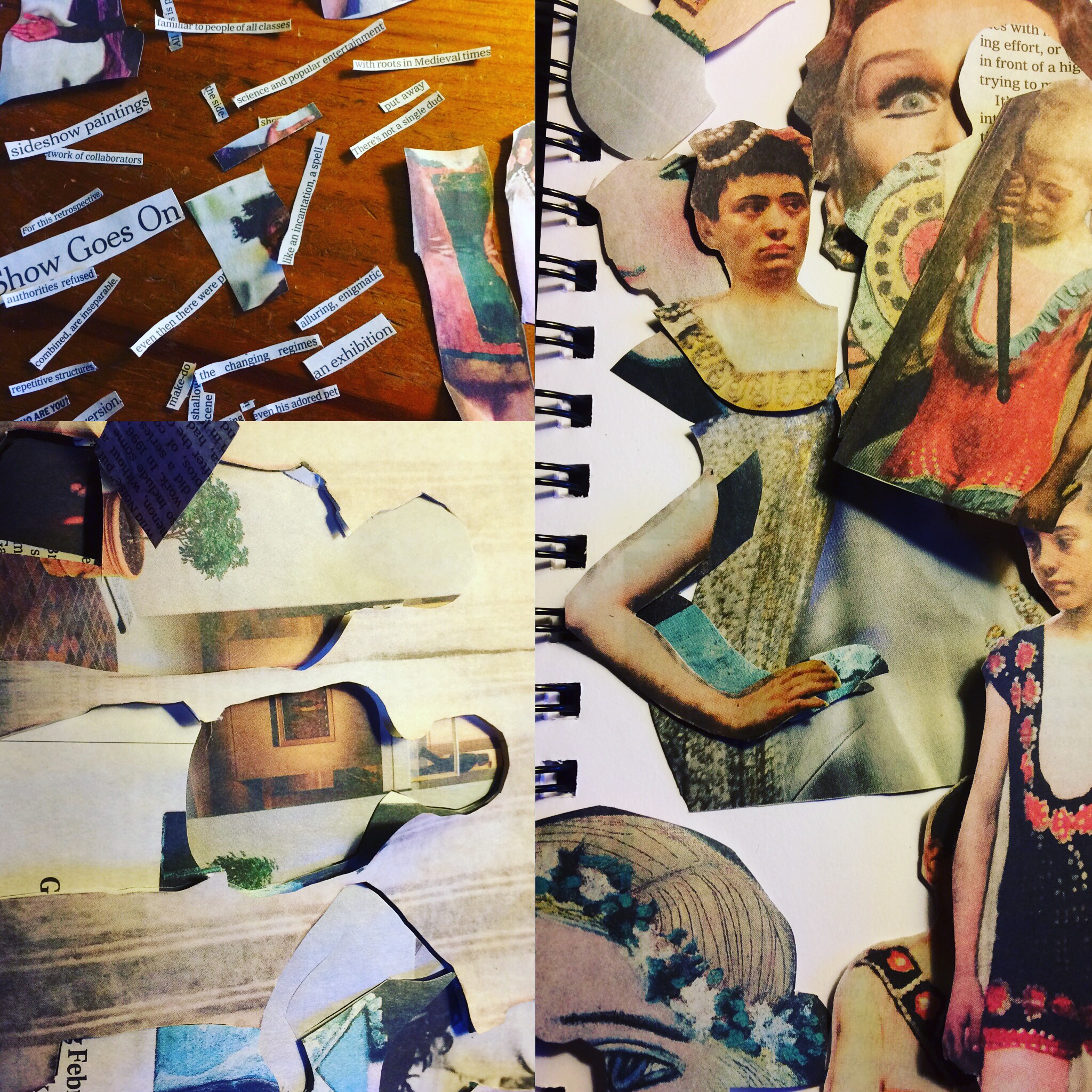
Collages in Progress, LO’H, NYC 2-18/19-17
“How the hell do I know why there were Nazis? I don’t even know how the can opener works.”
~ Father of Woody Allen’s character Mickey Sacks, Hannah and Her Sisters
Family Trees
What makes women and men so different? An age old question.
Another age old question: What makes families so different? This sort of questioning is what happens when you reconnect to childhood memories on social media, and lately those connections have been made through politics almost exclusively.
Here’s yet a third age old question: What is the best way to be useful politically? Do you write a check, or do you throw your body at it?
I have several different memories of people around our neighborhood doing what was called “volunteering.” They led newspaper recycling drives, or, say, cleaned the litter from the corner acre lot with the wild stream and blackberry bushes where we kids played kickball and built forts and explored. I remember Mr. Scott from up the block stopping by our house one day during just such a clean-up effort, to ask for a jug of water, which my mom, Lynne, happily handed him—a glass container that had once held orange juice, a thing which people like my parents, who grew up during the Depression, saved for moments like this. Later, Mr. Scott stopped by to return it, with thanks. Because he grew up during the Depression, too.
As I brought the jug into the kitchen, which was a very short journey from the front door in our very small house, I asked my mom, “How come we never help with things like cleaning up or being on the PTA or doing newspaper drives?” And my mom regarded me through the blue haze of her ever-present Salem cigarette and said, “Honey, we don’t volunteer. We write checks.”
Knowing as I did how little money we had and how carefully my mom managed it, it seemed kind of crazy that we would “write checks,” but that’s what we did, five dollars here and there, when we had it. We carried old clothes and other items to the Salvation Army or the Good Will. But we didn’t get involved at the community level, not bodily. It just wasn’t us. I am still this way.
What the O’Haras did, though, was get to know new neighbors, person to person. White or black, poor or rich, a dozen kids from assorted fathers and mothers or a small traditional nuclear family, if you moved in within ten houses of us, we may not bring you a cake, exactly, but we waved from across the street. If we got a response, we—and I mean all of us, kids and parents, individually—would walk across the street and get to know you. We’d size you up, sure, while we told you the history of the house you were in. We welcomed you as one of our own, and this only stopped the first time you stole from us, and this happened often, and my mom would sit you down and explain to you, firmly but lovingly, that we could no longer trust you to be in our home, and she was deeply disappointed in you. “All you had to do was ask,” she’d remind you. And the door closed behind you forever. Though we still waved, asked how you were doing, and cared.
What the O’Haras also did, to borrow from poet Marge Piercy, was “dive into work head first.” Wherever we were—and I’m feeling a little Faulknerian narrating in the first person plural but it’s what I mean—and whoever you were, whether a stranger in the supermarket parking lot trying to put bags into your car, or a kid who dropped books in the hallway—we would, by instinct, reach out to help you. Many hands make light work. It’s no trouble. Glad to do it. Pay it forward. We do it with money, too. (My youngest brother, just last Christmas, bought a $25 gift card at Walmart after I’d checked out, and handed it to the harried-looking Hispanic woman behind us, laden with stuff, counting pennies. He simply said, “Merry Christmas,” and off we went.) It’s a way of being, is what I’m saying. When people ask us—and they do—why do you bother to help like that, we always ask, “How can you not?”
That said, as I said, we don’t volunteer to do community work. That’s where the Rachovs come in. The Rachov family (as I’ll call them) lived two streets over, five kids, one for every one of the O’Haras plus one, and we went to school with them all our lives, even into college. But while we knew them, and they were really nice, and Mrs. Rachov was easy to spot for her great height, her big smile, and her ever-present bandana covering her hair as she knocked on the door to collect newspapers for the annual drive, I remember them not being exactly approachable. As a family, they seemed sort of in love with each other, and we O’s were raised to be independent.
What got me thinking about them at all was that recently, by accident really, I reconnected with the oldest of the Rachov children on Facebook, a friend of a friend, a woman named Martina Benson. “I used to be Tina Rachov,” she wrote me. When I realized who she was, I admitted, “Your younger brother un-friended me a few years back.” In fact, that “friendship” with Kurt lasted about a week, his right-wing politics outraged by my crusade for voting rights (which outrage never ceases to amaze me in a democracy). Tina remarked, “Yeah, I have him blocked. And his oldest son. And my parents.” I wrote her what I remembered about her helpful family, and she said, sarcastically (as it turned out), “We were so warm and inclusive.” And it was then that I recalled that her mom’s ever-present smile was sort of dead-eyed when not directed toward her kids.
And that’s how all this got me thinking about the O’Haras, who, whatever our failings in terms of community involvement, always voted and always took in stray people who just didn’t know where to go. Until they stole from us, which they almost always did. The Rachovs, by contrast, gave to the community as a whole, but were not only insular but it turns out repelled by the individual people who made up their community. Growing up, Tina was always described by her brother Kurt as “the crazy one,” and he’d shake his head and smile sadly as we passed her walking alone down the road. Now I realize that however much the Rachovs modeled civic duty, it was crazy Tina, the oldest and a girl, who had an actual heart as well as awareness of and real kindness toward those who were different from her. Go know.
And yet, looking at what the O’s and R’s both accomplished, don’t we need both sorts of families, however crazy-making?
Right Wing Meets Left Wing
Don’t we need both a right wing and a left wing if a bird is to fly?
Politically speaking, what makes the right wing and the left wing so different? Shouldn’t we want the same things, to fly in the same direction, toward food, warmth, safety?
What I really wanted to write about today was the three beliefs/qualities/ethos that separate the right wing from the left wing on this big-ass bird we call The Republic. It’s pretty basic.
Private vs. Public
a. The Right Wing: The right wing believes in legislating private morality, such as sexuality, reproductive rights, and the freedom to act on one’s personal biases based on race and sex, for example; and leaving the policing of public works and rights, such as air and water quality, land use, food supplies, and basic rights of citizenship, up to private corporate entities. The right believes that limited, exclusive, and private access to personal wealth is the only path to true freedom, and that there is no such thing as a social contract. Only by blocking social progress, limiting access to public help, and inhibiting the personal freedom of the lowest of society can man be truly free, and very rich.
b. The Left Wing: The left wing believes in legislating policies over things we all share, such as air, water, health care, and food supplies, as well as basic rights of citizenship and equality that allow us to have the freedom to pursue our happiness and not hold back the happiness of others. The left above all wants to make sure we all have equal access to all public works, including things as seemingly disparate as clean water and the arts. Public is public, and the left believes it is protecting the social contract that keeps all of us not only functioning but also aspiring to greater heights. The left wants everyone to feel they are invested in the society, money be damned.
2. The Myth of the Level Playing Field vs. Sharing the Wealth
a. The Right Wing: The right knows that it’s a level playing field, that all humans are born with the same rights, wealth, opportunities, and living situations, and that it’s up to each of us to make the most of what God has given us. Someone on the right will never, ever be okay with lowering his or her standard of living even a little tiny bit (unless it’s by spontaneous personal giving) in order to help the less fortunate, because there is no such thing. Therefore, whatever God sees fit to deliver to you—whether it’s extreme poverty or huge wealth, disasters or benefits of weather or health, an abusive home or nurturing environment—it’s all one and the same. One man’s suffering is no one else’s business, and certainly not the government’s. And the wealthier you are, the more God has blessed you, and so the easier you should have it in terms of rules and regulations.
b. The Left Wing: The left knows that it’s never been a level playing field, and that whatever you have been handed was nothing you asked for. Therefore, if you were born into extreme poverty, abuse, neglect, or other extenuating circumstances, there’s no reason in a country as vastly wealthy as the United States for citizens not to give someone a little help, at our collective taxpayer expense. A person on the left is always willing to lower his or her standard of living a little bit to help the least fortunate among us, because we know that at any moment, we could be in the same situation. God has nothing to do with it.
3. Secular Government vs. Religious Government
a. The Right Wing: The right places personal religious belief at the center of their governed lives and policies. That religion may be Christianity or Corporate Capitalism, but it is never Judaism, Islam, Buddhism, or Other. In keeping with this placement of religion in their lives, the right believes it has the right to Play God, choosing who should live or die and how, whether at the hands of weapons, a lethal injection, or inside a woman’s womb. The right is very comfortable assuming the role and judgment of God.
b. The Left Wing: The left places empirical knowledge, including science, history, journalism, arts, and debate, at the center of their governed lives and policies. This placement does not preclude religious belief, but religion does not play a role in governing beyond belief in the freedom to practice that religion. The left, caught in that curious mix of human limitation, human responsibility, and openness to the unknowable, does not feel it has the right to assume the role of God, and does not feel comfortable choosing for others who has the right to live and who should die, and therefore wishes to prevent, through legislation, those would do violence to others via weapons, lethal injection, or preventing a woman from owning her own womb and body (any decision about which is between a woman and her god and her doctor), and those who would carry out private violence.
So you see the problem. Ain’t no way this bird can fly.
Straighten Up and Fly Right
The buzzard took the monkey for a ride in the air, The monkey thought that ev’rything was on the square, The buzzard tried to throw the monkey off his back, The monkey grabbed his neck and said, “Now, listen, Jack, Straighten up and fly right, straighten up and fly right, Straighten up and fly right, cool down papa, don’t you blow your top. Ain’t no use in divin’. What’s the use of jivin’? Straighten up and fly right, cool down papa, don’t you blow your top.” The buzzard told the monkey, “You’re choking me. Release your hold and I’ll set you free.” The monkey looked the buzzard right dead in the eye and said, “Your story’s touching, but is sounds like a lie.” Straighten up and fly right, straighten up and stay right, Straighten up and fly right, cool down papa, don’t you blow your top.
~ Nat King Cole, “Straighten Up and Fly Right”
Different though the right wing is from the left wing, we are stuck to the body of one bird—this earth, this nation—and if the screaming eagle crashes into a glass ceiling or the rising sea or the shiny grill of an oncoming SUV, it’s because the right wing willfully denies and obstructs the talents and directional role of the left wing.
There used to be a time when you could say, “Hey, it’s BOTH wings,” but those days are gone. They began ending when Newt Gingrich took out a contract on America, and when the entire Republican Party made it its business to shut that whole thing down, that “thing” being government of, by, and for the People, and culminated in the election of Donald J. Trump, a president right out of Mad Magazine or a Marx Brothers movie.
There’s no denying the interrelationships among the right’s treatment of women, treatment of blacks, treatment of indigenous people, immigrants, and those of faiths beyond Christianity, treatment of the poor, and its treatment of the Constitution. The struggle toward a more perfect union is, for the right, answered in dissolution and apocalypse—an annihilation of their own creation. The ultimate Endgame. They cultivate the ignorant, whip them into a frenzy around a cult of personality, and set about “winning” through the destruction of such basic rights as access to free speech, access to voting, access to citizenship, equal rights for all citizens regardless of race or gender or religion, access to economic opportunity, and the right to an unpolluted natural world.
The left wants you to have equal access to affordable healthcare, jobs, citizenship rights, clean air and water, and education in a safe, secure, and inclusive nation. That’s about it.
Seriously. There’s no comparison between the two wings. Sure, the left wing is dull as ditchwater, but that ditchwater is potable, and if you need a ditch dug, they’ll help you dig that ditch.
All the feathers that cover the body of a bird make flight possible. When, say, a virus causes the bird to shed feathers of one entire wing, the bird goes nowhere but down. How far do you want me to stretch this analogy?
Hope Is the Thing with Feathers
The other week on the 7 Train here in Queens, where I live, I got on a car and sat next to an old man with a large head, shoulders bent over as his fingers, with deeply dirty nails, who reached into a cellophane bag for sunflower seeds in the shells. He’d crack, open, extract, chew the seed, and discard the shells under his seat. I judged this. A glance at his parka and pants and shoes suggested he was not probably homeless, and tufts of hair in her ears notwithstanding, his thick grey hair was washed and he was clean, except for the nails. A laborer. His eyes, when his head turned in a shell-crack moment, were large and crinkly and kind looking. I returned to my book. So the ride went. Then halfway in the tunnel, he began to sing quite happily, openly, in a language I didn’t recognize—somewhere between Greek and Italian or Polish—and his singing was so rich and gentle and natural, one let it go, the way people do in New York. But still, you wonder. Then a young woman who was standing opposite him came over to stand next to him and said, “Are you Armenian?”
He stopped singing, and looked up, “Yes! Are you?”
She said, “My parents are. I recognized the language. I think I’ve heard that song.”
He said, “It’s my birthday.”
“Happy birthday,” the young woman said.
I turned toward him for the first time and said, “Happy birthday!” Then, “It’s my mother’s birthday, too.”
“It is?” the old man said. “Happy birthday to your mom!”
Just then we approached Grand Central Station, and he stood up with his bag and looked sheepishly under his seat. “I make a mess. But it’s my birthday.”
The young woman reassured him, “Don’t worry, they sweep it out at 34th Street.”
And off he went, smiling. I stood up to await the next stop. As the train moved on, I caught the eye of the young woman and told her, “Thanks for that. This is why I live in New York.”
She nodded, smiled. “That’s why I moved here.”
There is no greater freedom than having the freedom to move toward the pursuit of happiness.
If your personal happiness depends upon the destruction of other people who have never wished you harm, you are a problem.
But now, in an ironic twist, my personal happiness depends upon the destruction of an entire political party whose sole purpose is to destroy my happiness.
But we come at this impasse from different angles: The right wing thinks they have the right to stop the old Armenian man from eating sunflower seeds and singing on the 7 Train because it’s fucking annoying, and also he should be deported; whereas the left wing recognizes the old Armenian man as a person with eccentricities who, when not merely tolerated but engaged, turns out to be a delightful human to know, his deeply dirty nails revealing, with some imagination, his history of laboring to live in and serve this country.
It used to be I only got involved with people on a personal level, as on the train back there, and that I didn’t get involved at the community level, at least not bodily. It just wasn’t me. I am still this way. Except on January 21, when I did the Women’s March in New York City. It felt good. I’ve done it several times since.
Miss O’ (right) with activist friend Colleen at the Women’s March, NYC, 1-21-17
What I’m saying is, people can change. If Miss O’ can change, the world can change.
So America: Make an effort. Talk to your neighbor AND throw your body at the problems. Mend these broken wings so we can take off like a big-ass bird.
And don’t be afraid if the pilots turn out to be a couple of women and an old Armenian man riding a train in New York. Indeed, the world should be so lucky.
















 The Miss O' Show (Teacher's Edition)