If you’re around my age and had a television growing up, you remember Sunday nights on NBC with Mutual of Omaha’s Wild Kingdom, which premiered (I read) in 1963 (you can still see the modern take on Animal Planet). It came on before The Wonderful World of Disney, which didn’t interest me—I think we turned it over to Hee Haw. Anyway, the show presented visits to the wild places of Earth, and Marlin Perkins (the zoologist host) and Jim Fowler (who seemed to do the real work) offered insights and commentary. It filled you with wonder, but more than that, for me, danger. I contrast that experience with once I have had as an adult watching Sir David Attenborough on PBS’s Nature programs, where the presenter expresses awe, delight, curiosity, and gratitude, all at once. Both programs came of age during fairly early television, with black and white cameras (or, in my case, a black and white television) to color. In Attenborough’s case, I learned from a documentary I watched last night that he’s won awards for all the phases of camera technology development, up to age 88!, beginning with black and white cameras, followed by color photography, to HD, 3-D, and now 4DX—the most advanced technology we have, most recently using animations and acting to tell the story, ironically, of animals of the past.
It’s here that I have to compare Attenborough to Thomas Bewick (say Buick), the 18th-19th century engraver whose engraved illustrations of British birds as well as many other animals gave the world its first affordable visuals, ones average people hadn’t had before. (I’ve mentioned in earlier posts that I recently read a book about Bewick’s life.) Watercolors and oil paintings of animals were in private collections and printed only in the most expensive editions, so common people in villages and towns might who had only heard about a camel for example, could see one. One famous flightless bird, the Dodo, for example was one such creature Bewick engraved. That bird of legend had gone extinct even before Bewick’s day, and it’s a bird that Attenborough also talks about in the 4DX in the last show he did in 2016, Museum Alive. (He’sstill alive, by the way, at 98. Bewick would be 271.)
Bewick’s Dodo, best guess based on maritime descriptions of the time and other people’s sketches. The one in the British Natural History Museum is a composite guess using the body and feathers of other birds. What is it about white men that their first impulse on seeing any unknown creature is to kill it?
Both Attenborough and Bewick love/loved wild places, wildlife. They love/loved working in their preferred mediums, television and engraving, respectively, and to use their arts to share this wonder with the world, with the common audience.
All this gets me thinking about all the ways we illustrate and instruct on the world around us, and how we used to unite around the common cause of our shared planet. When Rachel Carson’s book, Silent Spring, came out in the 1962, the one thing that everyone upset and focused them on ecology and caring was the possibility of the loss of songbirds.
Imagine that. If you have had the pleasure of sitting in my parents’ bird sanctuary of a suburban backyard, let me assure you can sit on that patio swing for hours and never be bored. Once all the birds forget you are there, it’s a party, the best kind of show.
Lately, America and the world have become focused on a collection of primates but not for the biodiversity and wonder and joy they bring. Instead, it’s a nature Reality Show from Hell.
Yesterday, as the world watched, any sentient human cringed. Vance and Trump’s treatment of President Zelenskyy of Ukraine was beyond the beyond, trying to leverage their own favor-currying of Putin by placing the beholden Zelenskyy in front of right-wing American television cameras and reporters, to cow him, as if this man has not been enduring full-scale war for three years trying to save the democracy he loves. Lights,cameras? Bullying? 1) Have they no shame? 2) Are they high? 3) Fuck them.
Like nature at one time, democracy had been a common global cause for many, many years, but no more. President Zelenskyy is like the compelling, knowledgeable zoologist visiting a new kind of American wild kingdom in a television series, facing two aggressive and deeply stupid primates who exist only in captivity. It was, as you know, horrifying to watch.
President Zelenskyy prevailed. I hope he wins this war; he’s already won history. I don’t want Ukraine or him to go extinct.
All of this is just to say, Slava Earth, Slava Ukraine.
Home bulletin board detail. Queens kitchen.
Until the next episode of the Trump Wild Kingdom Shit Show, do beautiful things, somehow.
Years ago, my friend MB was invited to a costume dance but had no idea what to wear. A few days before the event, he got inspiration from a construction zone in his Manhattan neighborhood. Late one night, he crept out onto the street and tore down a big length of “Caution” tape along the sidewalk, his heart beating like mad as he raced back into his building, terrified he would be caught (he had no idea where one bought Caution tape or he would have). The next day he went to a thrift store and found a short pink dress and a blonde wig. Before the dance, he put on the wig, applied lipstick with a trowel, arranged the Caution tape over his dress like a Miss America sash, and voila: Streetwalker Barbie!
I’d love to be that inspired by the detritus of Caution tape outside my apartment building over the past two weeks. The city is completing “emergency repairs” (the notice taped to door said) of the sewer along part of our building past the elementary school. The yellow tape and tall orange barrels prevent parking for now (who put it all there?), the street organized to prepare to dig up a city block to replace perhaps a dozen or more giant concrete barrel-tubes, whatever they are called (how did they get there?), taking up those parking spaces-in-waiting, and I had to wonder, “Emergency repair?” Yikes. But this work is meaningful work. Look at all that equipment, crew, the purpose: I understand the kind of impact this work has. Results you can see, work you can use.
There’s something magical about construction like this, isn’t there? Photo by LO’H, Queens.Sometimes, it’s needed. Photo by LO’H, Queens.
This morning early, I emptied out the corner cabinet in my small apartment kitchen to disgorge it of plastic storage containers. Call it an emergency repair. I don’t know why I live like this, saving every single plastic container that once held takeout shrimp and broccoli from Ten Full around the corner, but I do. I stuff them in, harder and harder, until one late winter morning, usually during Lent, I can’t take it anymore and I go in for the big clean-up and reorganizing. I hate being this all-or-nothing-at-all person. I would like to be a flowingly tidy person, who effortlessly tidies as she goes.
I look at just the surfaces of my place and see 1) a financial packet (I really mean to make that phone call, so it’s on my desk in the living room); a notice from Con Ed (since I have to make sure I schedule the natural gas detector installation, this is taped to the back of my front door); 3) a request for a proxy vote from another financial institution that holds the keys to my retirement (and since I’m not sure what to do, it’s on the kitchen sideboard to think on). Do you place things like this? And why? And for how long? How do these locations gain meaning?
I don’t know about you, but I also tend to be a person who creates in bursts, writing or drawing or making collages daily, for a week or three. And then I seem to crash; my creativity may lie fallow for months at a time. This manic-depressive quality is what drew me to theater, I think, beginning back in middle school, because after you’d rehearsed a show every day for eight or ten weeks, performed it three or four times, and stayed after school the next week (or in college, all night after the final performance) to strike the set, you were done! (The appearance of the final ghost light, literally and figuratively, remains one of the most satisfying feelings I know.) You then spent the next month catching up on all the stuff you’d neglected, like housework, paperwork, grocery shopping, or, when aged 12, cleaning your room and finishing those two big school projects. And after all that, you could dream again.
What has to happen to make this repair an emergency repair? What makes that place the place to put something? What causes inspiration to strike just then?
O park of wondrous flowing green And more than passing fair, We wonder if you would mind if we Walk barefoot through your hair.
~ by Lois Oberdin, a great friend of my mom’s when they were about 16; this poem created and recited in situ while crossing Bayliss Park, Council Bluffs, Iowa, ca. 1950.
I share that poem up there, by my mom’s friend Lois, because when all else fails or seems merely duty-bound and cold, poetry cares (as Naomi Shihab Nye says). Poets feel. Of the poem’s creation, my mom said of Lois, “She’d do things like that all the time.” Mom then told me that her friend, around the age of 18 or 19, was institutionalized for schizophrenia; my mom never saw her again. When I learned that (I was maybe twelve), I made it a point to memorize Lois’s impromptu poem, and I am glad I did, because this beautiful, unusual girl never had a chance to live a full, creative life or grow up to loathe a corporate job, or make her home and papers disorganized, or stare from her stoop at Caution tape along her street. It’s terrible to think about. But we have a poem, at least one poem, a creative act to recall, to celebrate Lois.
And when you stop to think about it—all of us, our habits, our anxieties, our personalities; all the messes in our houses, in our heads, under our streets— maybe everything and everyone should come equipped with a roll of Caution tape, you know? Just throw on a Caution sash as a warning of our own emergency repairs.
You’ve been warned. And yes, that is a Chia Pet on my shelf.
Back when I was a drama director, my school’s orchestra teacher, Mr. T, had to fill in as the conductor of the orchestra for The Music Man when not one band director but two had to bow out (one for a family tragedy, the other because he’d been asked to be an interim principal at another high school). Mr. T, who had strenuously avoided conducting kids in a pit, was a terrific conductor and teacher, but knew nothing about musical theater. One day in the library, where he’d tracked me down, he asked me about a bunch of music on the sheet. Those marks (Greek to me) turned out to be the opening of “Wells Fargo Wagon,” and just as Mr. T knew nothing about putting on a show, I knew nothing about reading music.
He asked, “You don’t need all this music, do you?”
Oh, yes, we do.
“Why? It’s a lot of music.”
Because all this intro music is covering a set change.
“Covering?”
Right—the orchestra plays while we do all this work behind the curtain, or on a darkened stage, and when the lights come up, the music stops. In fact (I explained to the perplexed Mr. T) we will probably need more than that, so you will need to pick a spot you can back up to and play it again. It’s called, Vamp until ready. (And here I sang a little, “Bum, bum, bum, bum” [key change] “bum bum bum bum…” and then, “Now the lights come up and Marion enters…and music fades….”)
To his credit, Mr. T listened, learned, and got it. I was really happy to work with him, and he was in turn grateful to conduct the pit, though once was enough (it’s a 10-week after school time commitment for no pay), because he’d had no idea what went into it or how interesting it was to watch a show evolve in rehearsals to performance. And since pit orchestras are among the biggest employers of musicians, even a high school production of The Music Man is real world work experience for the kids.
I was thinking one morning this week about that expression, “vamp until ready,” which I learned in college as a theatre major under the direction of the late, great Maureen Shea. I used to watch her direct even on shows I had nothing to do with, only one of which was a musical during my four years. (Sometimes, you only need one strong experience to bank away knowledge for a lifetime.) I’ve noticed that “vamp until ready” applies to my corporate work life, and by extension to my life in general right now, but oddly enough, also to world leaders; the question is, How long can we keep this up?
“Figure It Out”
Among the looniest takeaways from all the years of public or private education for Americans in general over the past many decades is the notion that teachers had nothing to do with our learning. Instead, too many who go on to adulthood, especially those who become “leaders,” are under the delusion that they themselves figured out how to read, write, calculate, observe, and think irrespective of the educators they had over the years; indeed, some believe they learned in spite of them (and however much we may not like a teacher, we learn that, don’t we?). Ergo, when these former students go on to lead projects for, say, the government or a corporation, they begin by telling you, the workers, about a vision, the market, and the research, and to explain your titles and roles in the creation of this new initiative or project.
And when you ask, “What do you want me to do, or how can I best be of service?” their standard answer is, all too frequently, “Figure it out.”
Or, worse, “I’ll know it when I see it.”
I believe this is because they, the leaders, know we have to create something, but beyond a pillowy, sparkly dream, they more or less have no idea how to execute it. Or, by contrast, they know exactly what they want to do and give innumerable lectures in meetings trying to get your buy in. Talk, talk, talk, talk, talk until blue in the face. And after two decades in corporate life, where I moved from worker bee to senior whatever, the same thing holds true, whatever the leadership style: No one in leadership gives a tinker’s damn what anyone on my level “thinks.” Nothing we “do” or “make” will ever be what they want because they have zero curiosity about what we on the ground are going through. Life as Monty Python sketch. So, in order not to go mad and to keep your salary and benefits, you learn that the best thing to do is “look busy,” or as we say in show biz, vamp until ready.
And one day, suddenly, the curtain will open, the lights will come up, and the leader will shout, “I need everyone on stage NOW.” And with the wave of a wand, the leader will tell you what they want you to do. Only now, instead of 12 months to make the product, you have one. And you’d better not fuck it up.
Work Until Living
Everything on earth is in crisis—the climate, the untold effects of war and natural disaster, governments taken over by the right-wing march to fascism—and where once we had (we thought) plenty of lead time to solve everything, the time has been lost primarily due to lack of capable leadership, or because good leaders have been thwarted by others devoid of curiosity and compassion and belief in something true. I’m looking at free-press publishers as well as mayors and governors and representatives and presidents. Even good leaders can’t move forward when no one else is cooperating. How many times must we quote “The Second Coming”? The best lack all conviction, while the worst / Are filled with passionate intensity.
But being a lowly worker bee, I can’t lead the world to victory over the latest crises. As a result, I find myself stuck with my own life to figure out. That’s where most of us are.
Where is my leader, I wonder, the one who will announce to me what I’m supposed to do and how I’m supposed to do it and what the deadline is? A lot of us could use a purpose, not life and death, maybe, not with stakes beyond what we can handle and live in joy at the same time, but I mean some kind of purpose that makes the work of living each day something beyond mere survival. Many people have love in their lives, a mate or children, to give them that level of desire for living. Most of us, however, do not. And that’s when we look to art, I guess, whether or not we have talent or direction.
I think, in fact, the worlds of business and government (and even puny human life) would do well to take a cue from the world of musical theater.
At the first production meeting for an upcoming show, the director (in charge of the whole shebang) sits with the musical director, set designer, lighting designer, costume designer, choreographer, and stage manager (and if at all possible the original authors, but I was never that lucky director) around a big table, scripts in hand. First, a good director will share the vision she has for the production. A really good director will move forward by genuinely asking each of the players assembled what they think about the script and score, looking at their preliminary sketches and notes. Next, an even better director listens to each person in turn, not as a courtesy but because she really wants to know what they think. The stage manager takes notes. Perhaps they break for tea and donuts. And if a director is excellent, she will tell back to each of the players all the ideas they shared that she would really like to incorporate. Then she will give them an assignment, which is to take everything they’ve talked about today and make adjustments to their previous ideas; this includes the director. And so the work goes. Ultimately, the director decides on the production concept and must make sure that all the pieces of the production, including performances, are working in concert (the setting not modern when the costumes are 19th century, say). All this work evolves over the course of, say, ten weeks, leading to the technical rehearsal with the performers. The tickets are sold, the show must go on.
Unlike world leaders faced with the problem of war or global warming, or a CEO launching a new, useful product in corporate America, in theater a leader is not allowed to go into denial, sit around making speeches or ringing hands or having drinks with other theater folks before deciding to finally start rehearsals a week before opening night.
There is in the theater what Dr. King called “the fierce urgency of now.” (How is this not true for too many when it comes to war and the planet, when the stakes couldn’t be higher?)
In the months or weeks leading up to an opening night of a show, the work has to be ongoing and purposeful (the theater is booked), the collaborations real (the tickets are sold), the director clearly in charge of pulling it all together. That’s the deal. A show might succeed or flop, but no one is setting out to fail. And the work in any case will help everyone involved be better trained for the next one. And there will always be a next one.
The theater process is worth studying, I think, because while the stakes often feel like life and death, because artists care so deeply about success, the truth is no one dies. All we ever have against us, whatever our job, is time. In the theater, every show needs two more weeks. Because we don’t have it, we go on, we work, we do our best. We don’tgive up.
Shouldn’t that be everywhere? With everyone?
More and more, I’m wondering if I’m feeling a crushing sense of my own life off the rails because all around me I sense the director left the building; I feel this enormous lack of sentience, wisdom, and leadership in the larger world. It’s hard to think of my little life having value or meaning when the highest of stakes, life and death issues, are being played for farce among, say, elected Republicans in our House of Representatives, where the instigators receive no rebuke in the headlines (while “the slap” gets unending coverage). How long can we keep up this vamp before the audience in fact dies?
Troubling Deaf Heaven
“Yet in these thoughts myself almost despising,” haply I ran across this quote from my idol Katharine Hepburn via Instagram. She’s absolutely right—the only one who has to change in the above scenarios is I. Yet how, I wonder. And to what end?
Leafing through social media, which I’ve returned to, post-Lent (and “leafing” makes it sound more tender than “scrolling”), I happened on a snippet of a YouTube clip of researcher and author Brené Brown, from her keynote address at 99U, an event series from Adobe for design and innovation. The clip was interesting, but not quite fulfilling, and I saw that it was in fact part of a 22-minute address that was filled with ideas that interested me even more.
Brown is addressing a room full of “creatives,” which she calls her tribe, though she isn’t sure she’s really a member. She points out that “creatives are the kids no one sat with in high school and then everybody wanted to be when they grow up,” but adds ruefully that as a researcher, still no one wants to sit with her. Nevertheless, she wants to be just who she is, doing the work she cares about. She entitled her talk, “Sweaty Creatives.”
I’m Nobody! Who are you?
“No one wants to sit next to you.” I started thinking about all the kids “no one” wanted to sit with in high school. (Miss O’ raises her hand.) And then I wondered, who were all the “no ones”? Remember them? Me, neither. Isn’t that great?
Brown’s field is “vulnerability and love,” which I didn’t know could be a field—and really, shouldn’t that be part of everything human? She recognized, as she reflected on the daunting task of her 99U keynote, that “design is a function of connection because there’s nothing more vulnerable than creativity, and what is art if it’s not love?” She says these beautiful things so conversationally, I nearly missed the radical. I had to turn on closed captioning and watch the video again, go moment to moment, and copy some of the words. Great words.
Brown talks about how a particular quotation, which she will come to, changed her, about the arrival of words “you’re ready to hear,” and how as a result, “something shifts inside of you.” First, for context, she talks about the comments sections that followed articles about her, the devastating personal attacks by “critics” (see also: those “no ones” above) who felt the need to bring her down for having the audacity to do a TED talk that went viral, for sharing her creative work with others. (In that talk her thesis is that we as a species are in great danger because we are “losing our tolerance for vulnerability.” It’s interesting to listen to her in some ways, because her examples of “foreboding joy” and “disappointment as a lifestyle” struck me as very must part of the makeup of historically oppressed people, who often turn this negativity into successful comedy. But I digress.)
Meet the Critics, Part 1
Years ago, when I started writing my first Miss O’ Show blog on Blogger, I did it because I had a lot to say about the importance of teacher training, which is almost nonexistent in the United States, especially and ironically in colleges of education. After 15 years in the classroom teaching English 9-12, Humanities, Speech and Drama, and Theater Production, I had created so many lessons, amassed so much technique, I couldn’t let it all languish in my file boxes after I’d moved to New York and another career. So I wrote. I wrote and wrote and wrote and wrote. A few former students followed me, a few friends followed me, and we had some lively conversations in the Comments section. I really enjoyed it.
A couple of close friends, I couldn’t help noticing—real writers, people who published beautiful writing in journals and even books—either didn’t read my work, stopped reading if they’d read at all, or else pointed out that my blogs were subpar, that I wrote without enough care for being artful. I had not stopped to think about what kind of writer I was, or how gorgeous I might make each sentence sound (I knew a writer once who said, “I’m physically incapable of writing an unlovely sentence” as his excuse for not rendering dialogue truthfully)—what I cared about was teacher training, to begin with; then it went to other, more personal stories, and perhaps I lost my way sometimes. One writer friend seemed to suggest I stop publishing, and I did, for a time.
So I was intrigued by the focus of Brown’s talk, which centered on a culled section of a quote by President Theodore Roosevelt from a speech known as “the man in the arena speech”:
“It is not the critic who counts; not the man who points out how the strong man stumbles, or where the doer of deeds could have done them better. The credit belongs to the man who is actually in the arena, whose face is marred by dust and sweat and blood; who strives valiantly; who errs, who comes short again and again, because there is no effort without error and shortcoming; but who does actually strive to do the deeds; who knows great enthusiasms, the great devotions; who spends himself in a worthy cause; who at the best knows in the end the triumph of high achievement, and who at the worst, if he fails, at least fails while daring greatly, so that his place shall never be with those cold and timid souls who neither know victory nor defeat.”
Three things shifted in Brown, she explains, when she read the quote, all having to do with her 12 years of research into vulnerability: 1) “It’s not about winning, it’s not about losing, it’s about showing up and being seen”; 2) “This is who I want to be; I want to be creative; I want to make things that didn’t exist before I touched them; I want to show up and be seen in my work and in my life…and there is only one guarantee [if you do this]: you will get your ass kicked…if courage is a value that we hold, this is a consequence;” 3) “If you’re not in the arena, also getting your ass kicked, I’m not interested in your feedback.” Can I hear an amen?
Speaking, however, of the friends who expressed unhappiness with my writing: they were and are, in fact, in the arena of publishing. They do the thing, and so their feedback is something I can’t discount. In addition, thinking of Oscar Wilde and his essay, “The Critic as Artist,” it’s obvious that a critic can also be a creative force, thereby getting his ass kicked. It’s not either/or, meaning you are a critic, or you are in the arena. The question any legitimate critic has to ask, though, is, What is the purpose of my critique? And the question an artist has to ask is, Do I listen to the criticism or do my work the best I can?
I think when it comes to critics to ignore, it’s about the critics in the Comments sections. We have all left comments, I’m guessing, on articles and essays, and some comments are very much worth listening to when they are genuine responses. But a lot of commenters are just out to be assholes. Brown is addressing the assholes. All those damaged, lonely assholes.
Armor Up
But something took a turn inside Miss O’ at another point in Brown’s talk, where I took a metaphor she used and made it literal. Brown said, talking about how to deal with the “self doubt, comparison, anxiety” that creatives feel before entering the arena, “You armor up, right?” Against uncertainty and fear, this is what most people do.
Brown meant this, as I say, metaphorically, but I took that and went full-blown NRA. America in the 21st century is all about fear and guns, and religious fervor as an excuse to kill. Fear and irrational hatred of the other as an excuse to kill. Literally “armoring up.”
Brown notes about the metaphorical armor (and Miss O’ echoes her on the literal armor): “But god that stuff is heavy, and that stuff is suffocating, and the problem is, when you armor up against vulnerability, you shut yourself off…from everything that you do and that you love.”
There it is. There it is. Brown points out that while vulnerability is about fear and uncertainty and shame and all that stuff, it’s also “the birthplace” of these other things, and she showed a list:
love
belonging
joy
trust
empathy
creativity
innovation
All this points to why I love the arts so much, and Brown’s list underscores my continual declaration that the arts are the great civilizers, the reason for all the work we do on earth. Whether it’s a Netflix binge or a trip to the Met or a podcast or a playlist, making theater or writing poems or knitting or making beads out of Sculpey, it’s the arts that feed us, that make life worth living.
And Brown’s talk also underscored for me the extent to which our society has lost its way as a civilization. Today in the United States, gun violence is the number one cause of death among children. How many mass shootings does it take to change this? Where does it end? Now random people, including children, are shot for simply ringing a doorbell, turning up the wrong driveway, retrieving a ball from a neighbor’s yard. Why are so many Americans feeling they must “armor up”? Why are they all feeling so vulnerable and afraid?
And why is one political party absolutely in denial that there is a gun death problem? Why does that same party rail against taxes on the rich for the public good, including funding the arts and building infrastructure, while at the same time using tax money to pay bounty hunters to stop abortions that are no one’s business but a woman’s? How can it be reasonable to think regulating guns is authoritarianism but forcing a woman to die in carrying a baby to term is justice?
Weirdly, a lot of gun owners identify as Christians. A lot of Christians freak out about children being molested, and while that is a legitimate concern, obviously, what’s not legitimate is blaming transexuals and drag queens. Many culprits, in fact, turn out to be priests and pastors. And it got me wondering if past abuses in the most sacred spaces have caused American Christians to assume that the whole country is even worse. Thieves live in a world of thieves, after all. Compound that damage with racism and misogyny and deep ignorance of humanity in general, and the easy answer is “armor up.”
Meet the Critics, Part 2
Brown talks about how when we enter the arena, there are lots of people in the seats, but we focus only on the critics. The three big ones are “shame, scarcity, and comparison.” Shame: who am I to create? Scarcity: how can I think that anything I’m doing is original? Comparison: how can I ever be as good as….? Speaking as a former teacher, I remember almost exclusively my failures to do my job well, for all three of the reasons up there, and rarely recall my reasons to feel successful. I agree with Brown that this is human—we want to be loved and rooted for and capable, and no one wants to feel they have failed someone. Our inner critic makes us nuts. And no one wants to hear the outside critics. We don’t want to sit with them, right? And they never wanted to sit with us.
But you don’t shoot them. You just don’t. Not in a sane world. Brown said she avoided doing things in her career, putting things out there, because she didn’t want any critics in the arena, but she knew she couldn’t control that. No one can. I think of the end of the movie Witness (spoiler coming), when Harrison Ford has killed off all the bad guys but one, and there the last bad guy is with a gun, and Harrison starts yelling at him, how many more are you going to kill? The killing would never end. You want every witness dead? You only create more witnesses as your crimes pile up. In American politics now, everyone wants the “other side” to just die already. Are they high?
At least three things are true in all this: 1) Living life is a creative act; 2) No one likes criticism; 3) Few people know how to give criticism in constructive and loving ways, I suspect because they often don’t know why they don’t like something. As to that third thing, I think that when people can’t exactly say why they are upset, it’s because a nerve was touched, a box in the attic of their mind was unexpectedly unlocked, and they want the lid to stay down. At other times, I think critics often project their own fears onto the creatives, resent a creative person’s willingness to reveal vulnerabilities that they themselves would never bring to light. (I remember poet Sonia Sanchez saying in the documentary The Pieces I Am that when she first read Toni Morrison’s novel The Bluest Eye, she would periodically throw it across the room.) Possibly, too, in the case of close friends, they can be hurt that we reveal something in a creative public space that we have not personally shared with them. Maybe a combination of all three. The fourth possibility is you do, in fact, suck at your art. But so what, really? You can still improve! And no one dies.
There’s a fourth critic’s seat in the arena, Brown says, after Shame, Scarcity, and Comparison—the teacher, the parent, the pastor, the person who made you feel less. The fifth seat, the final critic’s seat, is for you, or me, our personal self-criticism seat.
Damaged people, man. We are all damaged to an extent, but somehow we have to help one another to repair all this damage. The scary, confounding part? How to start. A famous (white) actress posted to social media to say, of the rise of fascism, that she didn’t know what to do, that she gives money, she makes videos, she calls her senators, and she’s feeling lost. She was taken down by another woman (a woman of color) who said she can’t understand why white women don’t understand they have all the power but don’t use it. And I, speaking as a white woman, still don’t know what I am supposed to do, either. That is how damaged and isolated many of us are. It’s hard to know how to show up, where to show up to, what showing up actually looks like sometimes. And that’s why I love good leaders, since most of us aren’t.
But the vast majority of us humans, fortunately, don’t see building a literal arsenal as an answer to all our power problems and struggles with others. But neither should we stop caring what other people think. Brown points out that “when we stop caring what people think, we lose our capacity for connection.” I think this is true: if shooting random people doesn’t shame you, you are diseased. If your answer to every criticism is to shoot (or shoot down) someone, you are diseased. On the other hand, Brown notes, “When we become defined by what people think, we lose our capacity to be vulnerable.” Artistically speaking, if I try to write something in order to please one person or to avoid criticism, the writing always fails. This is not a coincidence. When I am not vulnerable, I see now, I don’t write from an authentic place. When you aren’t authentic, the art fails. And the artist feels like shit.
But whatever else you feel, if you want to grow, you have to show up. As Brown says, “If courage is my value, I have to show up. Whether it’s successful or not is irrelevant.”
Seen on Skillman Avenue in Queens, 2023. Bless that literary Banksy.Photo by LO’H. Artists Who Keep Showing Up.
Brown sees two crucial things to the life of a creative: 1) clarity of values; 2) one person in your corner to be there for you no matter what. I don’t have the second thing—I suspect most of us (looking at the numbers of single/never married/never partnered people, esp. women) really don’t have that second thing. Speaking artistically, I suspect I can’t really become anything like a true artist without that person. People who tell me otherwise always have that one person in their corner. They cannot imagine life any other way. They really can’t. And yet I persist. As most of us do.
I suspect that murderers and gun-clingers never had that one person in their corner, either, but something else is going on when the gun is their answer to every one of life’s questions. Even if we other the killers, we have to acknowledge that almost all our television shows, our “entertainments” on screen, feature guns. The only power is might. But in real life, we don’t live like that. Every moment is not about murder and terror. Why do we like watching it? Why do we all accept these mass deaths by guns? How damaged are we?
Brown closes her keynote with the importance of making a seat for yourself in the arena, noting that very often we have an ideal of ourselves, and in trying to reach that ideal, “we orphan all those parts of ourselves to fit what we think the ideal is supposed to be, and that just leaves the critic.” Creating is, after all, about self-discovery and connection, and who is anyone, really, to try to drive away that impulse? Unless, of course, a person’s “creative act” is about destroying others.
Most of us don’t have the quiet, the space, the health, or the support to reflect on our personal growth let alone create. And that shouldn’t be. So, if I have the privilege of the reflection that I can do in this creative act of a blog, I need to keep trying to do it well. As Brown says, “nothing is as scary as getting to the end of our lives and thinking, what if I would have shown up?”
Show up. Somehow.
Love to all.
Selfie taken after a day in which Miss O’ attended all-day corporate meetings, wrote a lesson on parallel structure, and (with her awesome upstairs neighbor, Debbie) buried a dead squirrel in full rigor, all in the same outfit. NYC 2023. If you can make it here…
Miss O’s childhood sidewalk, summers ca. 1960s to ’70s (skates, bike, and bare feet not pictured)
New York City, like most of the planet, has been enveloped in a heat wave for the past couple of weeks. Until around 4:30 this morning, at 82 degrees and 68% humidity, I’d managed to avoid turning on my air conditioning (I know this sounds pompous, but fuck it: I figure it’s the least I can do for the earth). But yesterday, walking to and from the farmer’s market, I heard or saw a half dozen ambulances, and not counting Covid or other catastrophes the only other times you experience that here are during heat waves—heat stroke victims who live on the eighth floor, say, and can’t afford to own or run an air conditioner (55%-70% of our incomes are spent on rent here). Friday evening I was pulling garbage to put out for my co-op apartment complex (only 17 units, could be worse with a super on vacation), and even with help and being fully hydrated I had to stop to get more water, rest, breathe. And I had to wear a mask for the smell, and latex gloves (that became filled with sweat), so that didn’t help. The air quality is bad, too. Oil, engines, machines. I awoke in wee hours today, as I say, hearing my 88-year-old mother’s words on the phone yesterday, “Don’t die,” and broke my vow. Sure, I’ll live another day in the mid to upper 90s, but to what end?
In the trash room, Miss O’ fights with the bad recycling.
Calm My Ass
Scrolling through the ol’ Instagram at 5 AM as I drank ice water and waited for the cool air to kick in, I came across an ad for a popular meditation app. There are three signs, it flashed up in meaningful words, that I might be “emotionally detached”:
Neglecting your needs or depriving yourself of pleasures [Warning: lack of parallelism coming up. -ed.]
You are numbing yourself with social media, food, or alcohol
You feel inadequate and alone
So…Tuesday? Because isn’t this everyone on the planet who is guided by love, at this point? (Note: All kinds of five-star ratings and quotations came up, too, encouraging me to “face my fears” and “become a new person”…by, what, shutting off?) I mean, did you watch the eighth Jan. 6 hearing? I think Rep. Elaine Luria (D-VA) summed up the week’s news well with this tweet:
Take a lesson, people.
This app ad got me realizing that in fact I don’t want to be peaceful. Far from it. I want a fire in my belly. I want to feel engaged, alert, excited. I’m tired of feeling tired, sick, inert. This world is on fire. I want to make the dogs bark.
Angela Sidney, Life Lived Like a Story, 1990, p. 156University of Nebraska Press, 1990. These women are true warriors.
The Voice
Question from a friend and blog reader: “All your blogs have a very specific rhythm and pattern. Is that intentional?”
Answer: Yes. [Shakes head.] (Also, No. [Nods.])
I also responded, “I’m not sure it’s pleasing. I play with moments.”
I think a voice one “hears” in a letter or blog (which for me is a kind of letter) is as particular as a speaking voice. I think there is an expectation with writing that writers will mix it up a little. Certainly, in my speaking voice, I can become a little bit Southern (from my Virginia background), or a little Midwestern (my folks), or randomly Cockney (natural mimic), depending on my mood and who I’m with. But really, Lisa O’ has one speaking voice. And over time, I’ve developed one writing voice, and I find it only varies when I am writing, say, dialogue for characters. I think it’s okay. (I knew a wonderful professor, Andrea Lunsford, at Bread Loaf who introduced herself at seminars by saying, “As my granny used to say, ‘Andrea, you have a loud but by no means pleasing voice.'”) I mean, you always know it’s a Keith Haring work, or a Georgia O’Keeffe painting, no signature required. And I don’t think you have to be that level of genius to have your own style and say many things within it.
A few years ago, a friend’s son (and he’s my friend, too) and his boyfriend at the time visited my home in Queens. He later told me that I had a very specific aesthetic. When I asked what it was, he paused and thought (we were standing in the Brooklyn Museum, looking at the Judy Chicago installation “The Dinner Party”) and he said, “Dimly lit whimsy.” He smiled.
I think that describes me, my life, my talents, and my writing, too.
Dimly Lit Whimsy
I play with moments. My home aesthetic is born of arranging found and received objects, such as cards and gifts and rocks and pins and books, into vignettes. I play with moments, dimly lit. (I’m not sure I illuminate anything.) Each item in my place came to me at one moment or another, and I assemble and reassemble these moments on my shelves like a story, as I do in my mind, or in a blog post. If I make any “art,” this is about it. I’m not sure there’s any there, there, to paraphrase Gertrude Stein. I wish I were capable of greater depth, of making real art, for example, but I’m limited to the appreciation of, and at best the arranging/displaying of, the art that others make. (Flashing Sign #3, in red, “inadequate and alone”; very few people see it.)
Miss O’ at home, with foot.
Whenever I look at pictures of Georgia O’Keeffe’s home in Abiquiu, New Mexico, however, I find myself dreaming that I was that person, content with one lovely stone, a clean old bone, a simple wood slab of a table, white walls, bright natural light, maybe two wooden chairs, a desk, a sculpture, one painting.
The way I live, in reality, couldn’t be more the opposite of that. I’m not entirely sure why. Something about a need to feel cozy, to not lose a single memory.
More dimly lit whimsy, with original art from all over, arranged just so.
When I started blogging several years ago, on Blogger, I made it my weekly task to hold in my mind all the disparate things that caught my whimsy and use the writing task to arrange a sort of pastiche/synthesis (since the post-modern world is essentially collage) to see if I could find the connective tissue (sorry—mixed media, mixed metaphors) to somehow point to solutions for the troubles of the world. It all came down to education. Everything does. Not merely knowing a lot or being smart, but rather making connections among the things we learn to try to do something with it, to use it, to put in service to something.
I’m not sure that I accomplish anything, and yet I persist, as I’ve noted before. I had a high school friend who always introduced himself with his IQ, 185, and when I reconnected with him decades later, he was still doing that, as if stuck on a tape loop. (Am I stuck on a tape loop? See also, “feeling alone and inadequate.”) Where do we find the inspiration to grow and change?
Speaking of tape loops, I often return to this little gem. Sir Peter Brook died 7/2/22 at age 97. (For best results, substitute “Life” for “Theatre.”)
Dimly lit whimsy: More and more I find myself writing in the dark. Less and less to say. Amidst so much chaos, so much violence, so many opinions, causing, ironically, so much isolation, where to? And like me, I suspect we all desire not so much “quiet” inside ourselves as stability in our outer lives.
From Instagram.
I believe this is important. Without stability in our most basic living, it’s hard to become outer directed. And if we don’t create a stable center and combine with a contained fire of purpose, the nihilists win.
Seen on the web. People are funny.
In the meantime, as that fucking app reminds us, we eat, we drink. Possibly we read. We watch the January 6 hearings. We vote. Stream a show to binge watch. But there has to be more inside us. And it wants to come out.
So here’s a call to action, to us good, caring folks who need to get off our asses and do what needs to be done, somehow. Right after this heat wave passes.
Lawn chair in O’Yard, ca. 1970s. Doodle by Miss O’, who reminds you to conserve energy and stay hydrated. For all of us.
Miss O’s bathroom reminder not to be late. For whatever.
Pass the Data
The other day I heard a learned philosopher discoursing on self-knowledge. While we used to engage in self-exploration through meditation, sports, or art, for example, Yuval Noah Harrari asks what it means, then, “when this process is outsourced to a Big Data algorithm?” That line stopped me hard. Where Eliot’s J. Alfred Prufrock measured out his life in coffee spoons, how many of us measure out our lives, our wellness, and our worth in “likes”? in “steps”? in money earned, spent, and saved? in mileage on the bike? in states or countries visited? in our biometric numbers for sugar, cholesterol, weight, percentage of body fat, calories consumed, points earned? lays sought and found on a sex app? books read? shows seen? tweets twatted? MAKE IT STOP.
One way I measure out my mental health and self-worth is through the laughs I generate in others, and judging from that last few years of meager blog posts, posts on social media, and reactions the few times I’ve seen others in person, I am in rough shape. I don’t think this post bodes well for wit, and for that, one of my three or four readers, I apologize.
The most important measure of my mental health for me is my capacity to weep at beautiful songs, singers, poetry, movie moments, pictures, and other acts of human decency. I was just listening to the Barbara Streisand/Judy Garland duet “Happy Days/Get Happy” and found myself in tears. So, check. (I hadn’t thought about the ways in which I might bring others to tears, but I think that happens out of my capacity to irritate more than, you know, move someone by making something beautiful.
You Laughed at an Image
My first boyfriend*, from back in high school, got back in touch recently. He has been with his wife, a fellow artist, happily for 32 years. When they eloped after living together for almost a decade, I mailed them a toaster. They totally got it. He began reaching out to old friends, he said, in the wake of Covid, and on the cusp of age 60 next year. I told him that I myself have actually paid for a ticket to my 40th high school reunion. I am going with two buddies of mine since second grade; my old bf’s was last year, and he said, “MAGA vibe, super spreader event; pass.” Probably true here too, but friend Carl promises it’s really a reunion of friends from elementary and middle school, and it will be fun. Okay.
The best part of the reconnect has been the ART share, in multiple texts; the meme share; the political jokes. According to the data, I laugh and heart a lot, so that must be good. My inner life, I mean. Should I dig deeper?
*Note: I never had any boyfriends. Sure, I went out with two guys in high school, and steadily, and talked about marriage with another guy, but I was ABOVE BOYFRIENDS. And still am. Why? Dunno. Let me ask an algorithm. “You laughed at an image.” I guess I’m fine.
Weekly Report: Your screen time was down 11% last week.
Weekly Report: Your sense of self-worth was down 25% last week and continues to plummet.
Weekly Report: 99.9% of Republicans blame all girls under age 11 who are pregnant for being too hot to resist.
Weekly Report: Humans are fucking up the planet and are fucking fucked but only about 25% of Americans fucking believe it’s fucking true, and YOU are one of them.
Weekly Report: 100% of meals in America contain tough nuts.
Anything else to REPORT? I mean, there it IS.
Work It Out for Yourself
My Queens basement flooded again yesterday afternoon. Only one inch of rain in an hour. What the hell? Last September my last chance for a vacation for the foreseeable future (and what would have been my first in three years) was swamped over by drain overflow in the wake of Hurricane Ida. My last real vacations were in 2018 in California, Lake George, and here in NYC when friends came for a week to visit. The year 2019 was WORK, the year 2020 was WORK + Covid; 2021 same. But Labor Day week friends and I were going to make a break for Lake George again…and Ida. Since then, my parents, while still sharp and okay, have grown frailer. I spent 5 weeks there this spring to help my dad after a surgery, and help my 85-lb mother, too. Lucky to be able to do it—the sad residual benefit of the pandemic is that we have this new way of working, remotely. And wow does it make me feel remote—from others, from myself. A lot of us are at the point of wondering why we work at all—so many of our jobs are just humans trying to plug the holes and reduce the problems inflicted on humans by the humans who are doing the jobs in other companies and institutions and there is no bottom. Why aren’t we just growing food, singing a little, dancing, and cooking again? What happened? Boredom?
And don’t get me started on the rat infestation at my co-op building, or the super going on vacation and the back-up falling through and me being the only person not afraid of the rats, so this gray-haired fat lady will be sweeping up (including the dead rats) and hauling garbage out for the next two weeks. And temps in the 90’s. This is how I will die. And so what, really?
The opening phrase of the first poem of my friend Jean LeBlanc’s latest collection of poetry, our pitiful metaphors, is, “Work it out for yourself:” and the first time I read it I just about threw the book across the room. I was so tired, you see. I don’t want to be challenged or taunted or berated. I don’t want to work it out for myself. Just tell me my horoscope, give me the meds, the diet plan, the answer. Why is this hard?
“we inflict upon the cosmos our pitiful metaphors.”
I reread the collection this morning, after putting all the flood-soaked towels in the laundromat washer, which sounds like a pretty easy task, until you factor in moving all the shit in the basement mudroom to get the heavy duty cart out, lining it will a big plastic bag, filling it in four trips from bathroom shower to trash alley carrying the drenched textiles, heaving the laden cart up the stairs, locking the gate (dragging it over swollen concrete—is nothing just a thing?—and pushing it all to the facility; followed by returned the cart to the basement, etc. It’s laden with sadness, this poetry collection; arguments, missed connections, and loss. I find myself wrestling with all the terrible beauty. I contrast it with our friend Anna’s collection, Buoyant, about the joys of scuba diving, the poems’ speakers filled with wonder; and our friend Katrinka Moore’s latest collection, Diminuendo, which returns again and again to the sensation of floating, hovering, and the feeling of being connected tenuously by the thinnest of strands.
“When at last the great animal arrives/ out of the primordial past, mouth wide” (“Grace”)“but I make my way out. when/ I can. The fetch of space” (“Thin Places”)
There are moments these past few years when I’ve felt held together by only the thinnest of strands; known that I am forever and always having to work it out for myself; and also given a reprieve with moments of wonder, as this week with the first color images from the Webb Space Telescope.
I made the mistake of texting my despair post-flood yesterday to a friend who said, “Fuck, Lisa. Get help. Call 988.” I remembered the first time I went to therapy years ago, my therapist Goldye said, in response to my skepticism about going to a therapist when I have friends: “Our friends don’t care about our pain. They will say whatever it takes to make you okay so we can all go to the movies.”
Walking in Midtown Manhattan. Look up.
And this is why you walk your neighborhoods, write stuff, draw a little, and don’t share your pain with anyone, not even friends; why we have to turn to the poets, the artists, the musicians in our darkest hours. People have their own shit to deal with, and they don’t need yours. It’s a lonely truth in a lonely world.
Sending love and poetry, somehow. Bless those poets.
Turbulence, in science, is a chaotic fluid motion, unpredictable, as you see in the ocean surf or fast-running streams and rivers. My common sense tells me that all that wildlife in the water would help create that chaos, movements inside of the flow, but in any case, mathematically, there is no clear reason such a thing should occur. Why does turbulence exist?
I might well ask this question of life on Earth. Why are there psychotics? Why do some people create and believe in conspiracy theories that undermine forward motion and foment insanity in otherwise decent people?
Turbulence happens all the time, even in small ways. Every time a kid walked into my classroom, slamming books, grunting; or during class a kid called out, “this is a waste of my tax dollars,” the flow of the lesson was ruined.
A friendship flows along, and then one friend neglects another in time of need. Or grows jealous.
Turbulence.
Why is there turbulence?
A (now ex-) friend (a racist, homophobe, and xenophobe with no capacity to grow one inch over thirty years, so I have limits), used to complain, “Life should be gossamer!” I used to counter, “I think that’s heaven, right?” Life is brutish, nasty, and short, full of trials sent to test us, suck it up, etc. I accepted that.
Miss O’ ponders the Big Ideas.
So Why Can’t Everything Ever Just Calm the Fuck Down?
Now I’m stuck on this unsolvable mathematical problem, “Why turbulence?” Why is it that this one utterly unpredictable thing (as far as we know) cannot be solved or answered for?
No, Seriously, What in the Actual Fuck?
So I begin here with an admission: Despite the turbulence of continuing life in Covid-land, I enjoyed 2021. Well, the first part of it. Lockdown or no, once Biden was inaugurated and the American Rescue Plan was passed, and positive things were in MOTION, progress, repair, I could breathe. For the first time in five years I could breathe.
But.
It’s 2022.
Manchin and Sinema and the Barr and Pompeo Rehabilitation Tours.
Trump has announced his candidacy and is out on the rally circuit.
All these seemingly paid Russian agents, like Carlson and Gabbard, are getting a media pass. A DOJ pass.
And.
The left, so-called, is losing again.
Again.
Again.
The planet, the country, the voice.
And now Ukraine, a struggling and young democracy, is under assault by Russia out of Putin’s desire to recreate the Soviet Empire and to take its resources and thwart its democracy. As of this writing President Zelensky, a Jew, has asked to meet Putin in Jerusalem to try to broker peace. Putin does not want peace. He wants to rule the world. Putin is reportedly firing and arresting everyone around him, from ministers to generals, who has failed him, and he will doubtless have them all executed, er, report that they fell out of windows, with plenty more to take their places. You know, we all dream of a separate planet for all of them, while they dream of the annihilation of most of us, who are good, decent people. It’s the same old story. It’s Star Wars. Only now too many leaders of our planet root for Darth Vader without shame.
As Seen on the Internet.
Jerusalem
Singer-songwriter Dan Bern opens his song “Jerusalem” (which you can listen to here):
When I tell you that I love you Don’t test my love Accept my love, don’t test my love ‘Cause maybe I don’t love you all that much
It’s such a charming and funny opening to a song, and it’s merely a hint of greater things to come. While the song dates to the ‘90s, it may as well be written now. After a bit of a journey (and I hope you listened to it), the speaker offers the Big Reveal:
Everybody’s waiting for the Messiah The Jews are waiting Christians are waiting Also the Muslims It’s like everybody’s waiting They been waiting a long time I know how I hate to wait Like even for a bus or something An important phone call So I can just imagine How darned impatient Everybody must be getting So I think it’s time now Time to reveal myself I am the Messiah I am the Messiah
Trump’s supporters, as we witnessed, came all over themselves (and that’s not vulgar hyperbole, as I saw women on camera saying that they’d welcome being raped by Trump, which isn’t rape then, is it?) and continue to do so when they found their Messiah in Trump, which is beyond baffling to sentient people. (Not really is this the case for all-powerful Putin, because he’s not interested in being a Messiah so much as being Voldemort.)
Oh, that Internet. (Sub in Picture of Donald Trump. -ed.)
So here is where Trump channels Dan Bern’s speaker in the latest media tours and rallies:
Yes I think you heard me right I am the Messiah
I was gonna wait til next year Build up the suspense a little Make it a really big surprise But I could not resist It’s like when you got a really big secret You’re just bursting to tell someone It was kinda like that with this And now that I’ve told you I feel this great weight lifted Dr. Nusbaum was right He’s my therapist He said get it out in the open
Even the speaker of the lyrics has, like Trump, a fake doctor’s note of “all clear.” And, to make matters worse, Trump’s “message” is ever amplified by Right and Left alike, because everyone is, in fact, waiting for the Messiah. Everyone except those of us who just want to roll up our sleeves and for the love of fucking god do the WORK to SOLVE PROBLEMS.
What Is a Messiah?
If you, like me, ever found yourself in an Advanced Placement class or in some other Highly Challenging class, like Aristotelian Philosophy (which I, a theatre arts major, took in the hopes that we might talk about the Poetics, but if we ever did I was lost by then), you know the Boys Who Ruin Everything. They are the “smart,” or let’s say for the sake of accuracy, schmart boys, the boys obsessed with derailing every lecture, changing the subject to something they feel expert in (say, Plato, Pink Floyd, or Reagan), or comment derisively just because; and the teacher or professor of said course invariably proved incompetent to get the class back on anything like a sentient track. We see this behavior played out in today’s media in a frenzy, almost exclusively by the right-leaning Schmart Boys, whether it’s Cucker Tarlson on Fux or “Lincoln Republican/Never Trumper” Wick Rilson, have one thing in common: They have exactly zero ideas for how to make life better for anyone or for the planet. Zero! Nada! Ha, ha! Their joy—and it’s all over Twitter, all over Fux Nooze, is their GLEE at either supporting or amplifying via decrying the voices of hatred, doom, and Big Power. And also to knock down smart, capable women like Hillary Clinton (what larks! who does that skirt think she is?)—and maybe only Hillary Clinton—who are focused on solving actual problems, women who, as people in government, believe that government should identify and face a problem, discover the causes, and seek solutions that benefit the masses. How dull, these Schmart Boys shriek. (And yet if we need anything in government it’s more dull wonks who solve problems.) Let’s throw out “truth” bombs that make us look schmart!
Thanks, Internet. Because she really was.
And, right on cue once again, in 2022, despite the improvement in Covid numbers, the great jobs report, you name the success, the American news media are amplifying the voices of Trump, via Bill Barr and the American fascists via coverage of the trucker convoy and Russia’s Putin, and only criticizing Joe Biden and the Democrats.
Even Trevor Noah on The Daily Show joked (?) that the UAE wouldn’t ever have refused a call from Donald Trump, as they have from Biden, because Trump’s such a wild card, ha, ha! But now the Right is using this as a meme in their Twitter feeds (framed with a picture of the Black man back when he was “clean-cut”), further legitimizing Trump’s power and his right to take it back.
There are a few so-called “remorseful” Republicans, the faux-apologists (for not voting to impeach or convict, right, sure) like Rep. Adam Kitzinger (R-IL) who are only apologizing as they prepare for a run of their own, I suspect; and who still voted AGAINST the John Lewis Voting Advancement Act, the Violence Against Women Act, and who also are against a woman having control of her own body, and who have no problem with book banning.
So.
I don’t think it’s hyperbole to say we are in the midst of a global nervous breakdown. Putin is behaving like Dr. Evil in an Austin Powers movie and the media legitimizes him by calling him “president,” a self-conferred title, and by using Putin’s objectives to frame all their headlines, rather than the pain being felt by the Ukrainian people.
Republicans and Fascists and Authoritarians preach the Gospel of the Messiah. Their followers drink it like wine, munch it like manna. They convoy around it. They fall prostrate before it, and all the while their Messiah screws them up the ass, they weep tears of gratitude.
You know who’s NOT a Messiah? President Zelensky. President Biden. President Obama. President Carter. Hillary Clinton. These are people ON THE GROUND, doing the work, fighting for right. So why aren’t our American Democrat politicians praised for their heart, focus, and hard work?
Because there’s a Messiah problem on the Left, too.
Democrats are ALSO looking for the Messiah. That’s how Obama got elected, and talented though he was, he wasn’t, SPOILER, a Messiah, and so many people were so disappointed! And who can forget the Bernie Bro cult that went on to derail Hillary Clinton’s election? Because if a candidate isn’t “likable” or “perfect,” which is to say “male,” and if the candidate isn’t anointed by the press and Dems alike, fuck her and let the world collapse. (Meanwhile Republicans get a total media free pass to thwart good work. It’s their accepted role as the Evil Nemesis to Good!)
Until we on the so-called “left,” which is almost “right-center” anymore, reckon with our own messianic desires and dispense with them, this absurd pattern of annoint-or-derail won’t change. Until we admit of and celebrate the humanity, fallibility, and glorious possibility of our talented Democratic candidates and move past the plea for perfect alignment, we destroy all hope.
At the close of Dan Bern’s “Jerusalem,” the speaker returns to the opening lines, but now he is speaking not as a man but as the Messiah:
When I tell you that I love you Don’t test my love Accept my love, don’t test my love Cause maybe I don’t love you all that much
Anyone who calls himself a Messiah, is anything but. And maybe it’s the concept of a “messiah” that really is the greatest mind-fuck of all. Messiahs don’t have to accomplish anything; they just have to flatter to promote themselves. They don’t love anyone, really. Especially not you.
(Next time, Part II of Turbulent Flow will accentuate the positive. In the meantime:)
Featured on my kitchen wall is a framed series of five photos, one under the other, that depict me and two other women rolling down a green grassy hill. My friend, Patty, a professional framer, matted and framed this series for me many years ago, though why I wanted it, no one understood. I knew why, so really that’s all that mattered. And though it’s framed nicely, each time I look at it, I get stuck at the last two pictures. To me they are in the wrong order. The second to last one in the frame shows me and Roller No. 2 sitting up, my fists raised in triumph, my legs up, ready to do it again. The last one in the frame shows the Rollers 1, 2, and 3, passed out blissfully on the grass. The trouble is, the action happened in reverse of the order: We were passed out blissfully, and then we popped up and went back for one more roll. However, as Patty pointed out, anyone looking at the series would be aesthetically unsatisfied with that—she insisted that the three of us collapsed at the bottom of the hill was the right feeling of “this is the end.” I didn’t agree, but she was a terrific artist and very sure, and I just wanted to hold the memory, so I let her tell the story her way. It’s a story that, if you weren’t there, maybe made more sense.
Here is the real story: They were middle aged, these three women, and I had just turned 30, and we were teachers in graduate school for the summer. Three of us were housed in a large mansion-style dorm atop a big hill, and I had remarked on the day of our arrival, “This is a perfect hill for rolling.” I was wistful. The two women on my floor whom I mentioned up there, Anna (the photographer) and Suzanne (Roller No. 3), had no idea what I was talking about. Anna had grown up in California where there were no green rolling hills, and the same was true for Suzanne, whose landscape was Midwestern, up northern way. That very same evening—our first of the summer—Annie from Mississippi came up to the house on the hill, and from upstairs I heard her say, “This is a perfect hill for rolling!”
I flew through the door to the upper porch, where my room was set, leaned over the balustrade, and called, “Annie! Will you roll with me?”
Anna, from across the hall, called, “Wait for me!” and came out of her room with her camera.
Suzanne, next door, said, “You mean I get to SEE this?”
I said, “You have to DO it,” and we three raced down the stairs with that child-like rush of feeling—as if, if you don’t hurry, your chance will be gone forever—and outside, where Annie and I taught Suzanne her options: either arms crossed over your chest, or arms outstretched over your head. We spread out. And…GO! Somehow in that flash of chaos, Anna had managed to capture, 1) me rolling alone; 2) a shot of Annie and Suzanne rolling; 3) all three of us from a crotch view, slightly blurred; 4) us three flopped on the ground, three pairs of jeans and shirts of pink (me), lavender (Annie) and purple tie-dye (Suzanne) all against that deep, luscious green; and 5) me bent in a V from my butt, arms and legs up, and Annie, sitting with arms back, her face in a smile, and we’re ready to go.
That is the real story, the real sequence, but because it doesn’t read as the usual narrative, or the most tightly constructed or aesthetically pleasing narrative, I’m the only one who would look at the series and be dissatisfied. Or would I? In truth, I don’t think anyone has really ever looked at it outside of me, because it’s not exactly a universal story, or even a “lovely” portrait of any person, or of nature.
So what does it mean to tell a story “the real” way? And does it even matter?
When I was in college studying to be a teacher—which is as antithetical as it sounds, for as every professor of “education” will acknowledge, nothing they are teaching will be useful for at least three years into teaching, when experience would make it make sense; and my own view is that what they should be teaching is how to write a bathroom pass and not lose your train of thought in an instructional moment—I was fortunate, and I mean beyond lucky, to have two guest professors when I took Psychology of Education I and II in summer school. I’ll call them Ms. Lettuce and Ms. Lovage (with apologies to Terrance McNally). Both teachers were invaluable to me, but Mrs. Lettuce was the person who got me thinking about the “real” story.
As a first-year teacher in a coal-mining town in West Virginia—a town and culture she’d never before encountered—and on her first day teaching first grade, Miss Lettuce decided to start off by reading to her students “The Story of the Three Little Pigs.” When she got to the first instance where the wolf “huffed and he puffed and blew the house down”—the house of straw—a little boy in the front row said, “That son of a bitch.”
Mrs. Lettuce turned to the class, most of us either gasping or giggling, and asked, “What do you think I should have done?”
You know what’s great about her question? THIS moment is exactly the thing that university departments of education never teach you, the kind of thing that will happen to every new teacher in every new school on every single new first day of school in America, now and then and forever: the kind of moment that makes you quit by the end of the first year, after day after day of these moments, with no story to guide you.
Several of us teachers-in-potential raised our little hands, either pontificating on why he needed a stern punishment and a meeting with his parents, or gently suggesting that the teacher rephrase the remark to something more appropriate and speak to him in private later. Mrs. Lettuce said, “Why didn’t any of you ask how the other children reacted? Did you assume they laughed or gasped, too?” And it made me think: Why don’t we ever stop to ask something as basic as that, about context, to step back and look at the whole picture? She continued, “When that little boy said, ‘That son of a bitch,’ all the other children nodded,” and here she mimicked their very solemn nods. “Now what do I do?” No one in my class said anything. “Because you see what’s going on here, don’t you?” she asked. And we didn’t. “If he said that, and the children agreed and accepted it, that tells me that everyone in this community, in this culture, talks that way, that all their parents talk that way. I saw immediately that if I corrected him, I’d be correcting all these people I didn’t know. And I am the outsider, remember.”
So what did she do?
“I said, ‘Would you excuse me for a moment?’ and I went out into the hall, closed the door, and laughed. When I got myself together, I went back in, and I said, ‘I’m sorry I had to step out,’ and finished reading the story. That’s all.”
What Mrs. Lettuce realized was that the story of this culture was not her story, and so not her story to alter. It was her story to learn. And she passed that story onto us. (And this story helped me stay for three years in an alien rural school system where, in the view of many, I had no business to be.)
And as to the reaction that the child back there expressed about the wolf, “That son of a bitch,” was he wrong to feel that way? In fact, children have an innate sense of morality. Vivian Paley, a Chicago teacher and great researcher of children, relates in one of her books (I don’t remember which, and I think it was Paley, so I hope I’m not misremembering) a similar experience of reading “The Three Little Pigs” to four-year-olds.
First, let’s recall the original Grimm’s fairytale: three pig brothers have to build homes, and the first pig builds with straw, the second with sticks, and the third with bricks. The terrible wolf blows down the first two houses, and eats the pigs, but he cannot destroy the house of bricks. That last pig lives. The wolf goes away. The end. The lesson: You need to work hard and take the time to build a sturdy house to protect yourself, or you will DIE.
But that isn’t the story most people in America know, and here is what Paley discovered by telling the version of the story in which no pigs die. She read the children what I’d call the Disney-fied version, where the brothers sing, “Who’s afraid of the Big Bad Wolf,” and when the wolf comes, the first brother runs to the house of sticks, and when the wolf comes again, the two brothers run to the house of bricks, and then the three brothers trick the wolf and boil him in a pot. Disney, who really wasn’t one to shy away from violence—I mean, who can forget the death of Bambi’s mother?—for some reason didn’t kill off the pigs. Without those deaths, what is the lesson? Go ahead and be a lazyass pig—your brother will save you. That is not a good lesson.
And Paley’s young students felt that. When Paley finished reading, the children looked dissatisfied. One child asked, a little fearfully, “Is that the real story?” Other children asked the same question. They’d heard another one, perhaps, but somehow this one just didn’t feel right. And Paley told them they were right, that there was another version. And they looked afraid, but they wanted to hear it; and she told them, and they cried when the first two pigs were eaten by the wolf, but they were satisfied with the story, because innately they knew that this was life, that this lesson mattered. They wanted to hear the real story.
I think that inside of these children, of all children, must be a hundred thousand years of genetic memory. No one taught those four-year-olds about narrative structure, or ethics, or what happens in “real life,” and yet instinctively they knew the real story, what the true story ought to be.
I think American adults in general have lost their way when it comes to our real story, our national story, and the reasons for this go back to the Puritans, as everything does, with a view of life as something to be dictated by religious patriarchy rather than lived and experienced deeply, connected to the natural world and our own intuitive, honest natures. And so, as there must be one narrative, one story, to publish in the history books (for humans are still in need of a story, whatever else happens), we pick and choose the pieces we want to include in our collective story, and by “we” I mean white men, the majority culture, in power. I don’t write this in acrimony. That is part of our real story.
But here is the shame: The American story is not just Founding Fathers with capital F’s, the colonists against the British; or the Wild West, with capital W’s, with wars of cowboys against Indians; or the Civil War—which in much of the white South is known still today as The War of Northern Aggression—or even only wars. These stories, too often, have been reduced, in the popular imagination (until most recently and blessedly, Hamilton), to vague tales about ragged coats and red coats, white hats and black hats, blue and grey: they’ve become bloodless, artificial. What gets lost in these acceptable history book narratives is the deep story of the People: the thrill of the exploration of the oceans and discovery of new worlds and also the savage destruction of native people and cultures and lands; the astonishing bravery and also the emotional brutality of the Puritans; the deep Christian convictions of early settlers and also the hypocrites who took advantage of those convictions for personal gain; the astonishing growth of agriculture to feed the world and also the enslavement of Africans to make that growth possible; the growth of industry and also the exploitation of immigrants and the earth to make that growth possible; westward expansion and also the utter destruction of the native way of life; and woven through all of this, the story of women taking part in and helping shape all of these stories, shoulder to shoulder with men, with nearly none of that story recorded. This story of America is one thing AND the other. The story is huge and vast and messy and complicated and fraught. It’s a continuing story.
If four-year-old American children aren’t afraid to hear “the real story,” why are the majority of grown American adults afraid to hear it? Why are certain hugely powerful media companies run by white men, for example, so afraid of “the real story,” the true story, of America that they feel they must create their own narratives, narratives in which there must be good guys and bad guys, and the only possible villains can be immigrants, Muslims, blacks, or women, and the only good is the continuation and protection of white male greed using repression and guns? All over the news, this is too often the only story, or the story that a few others try desperately to fight against. But it isn’t the real story, is it? We know that it’s not. What is the real story?
This sort of story manipulation doesn’t belong only to America, and it surely can’t be laid on Disney’s doorstep, or even at the threshold of the corporate headquarters of Fox News. This deliberate, inorganic story manipulation has only been possible in the last few thousand years out of many millennia, when because of agriculture and surplus, nomads began settling into villages, where, out of laziness, really, a few charismatic men began duping and robbing the workers and families of these villages, amassing wealth, and then hiring the men they’d robbed to make weapons and form armies, so they, the overlords, could take even more, scapegoating races of people and creating the massive military industrial complex—models of this dating back to the building of vast flotillas of all manner of ships, the breeding of horses for riding, and the forging of iron weaponry, all made for the sole purpose of carrying out large-scale warfare, among the men of Egypt and Greece and Rome; among Vikings and Saxons and the Angles and Normans; among tribes everywhere, really, when one goes deep into the stories.
That’s the real story of the People of Earth.
And the only way to change that story—because it simply isn’t sustainable, resources being what they are—is to shift the power dynamic, to decide, as a People, that the sociopathic-lazy man-warmonger narrative is not only wrong, it’s silly. We could be having so much real fun when we aren’t facing real, naturally occurring dangers. More to the point, we are, right now, for real, a People in Crisis, a climate crisis, brought on by global warming born of industrial ignorance and, of course, greed. You can trace most any problem to the grasping greed of a few bad men. Wouldn’t it be amazing if we turned our story—focused all our warrior energy—into working to salvage and heal and restore our Earth?
Here is the story:
Once there were three women, all teachers, two middle-aged and one just turned 30. The young woman, from the eastern plain, saw a deeply gray, dirty world that cried out to be cleaned, to be respected, to be enjoyed, and to be loved. She shared her vision with the woman from the western plain and the woman from the northern plain, who agreed, because they had been thinking the same thing. And from the southern plain came another woman teacher, middle-aged, who cried out, “This is a great world, and it needs cleaning!” And the youngest woman called out, “Will you clean it with me, Annie?” And so it was. Western Anna grabbed her camera, to tell the story of the Great Cleaning, and Northern Suzanne, who hadn’t cleaned before and wanted to learn, joined the women of the East and South, and together from all four directions the women grabbed their brooms and flew out into the world to clean it up and make it live, and to tell the story.
Here the storyteller shows the children the pictures that Anna had taken. The children notice that the person who framed the photos of the women in this story showed them flying out to clean the world, one by one, and the last photo is of them lying down, exhausted and finished with the work.
And here a child asks, a little fearfully, “Is that the real story?”
And here the storyteller pauses, and sees that she has to tell the truth.
“No. There is another version. Do you see that second to last picture? The one where they seem to be getting up to do it again? That comes last. You see, the work never ends. The story doesn’t end.”
And though the children were afraid at hearing this, and even cried, still they were satisfied. This was the real story.
Photos by Anna Citrino; framing by Wilkins Myrick Frames and Fine Art; wall located in Queens, NY.
Today is Martin Luther King Day, and I am home with a holiday from work, able to write because of this great loss of life. So let us begin with him:
“Darkness cannot drive out darkness; only light can do that. Hate cannot drive out hate; only love can do that.”
~ Martin Luther King, Jr.
61st St. Station, Woodside, Queens. Photo by Miss O’
“Never are voices so beautiful as on a winter’s evening, when dusk almost hides the body, and they seem to issue from nothingness with a note of intimacy seldom heard by day.”
~ Virginia Woolf, Night and Day
Public Theater
The other night, Friday, I went to the Public Theater’s Under the Radar Festival’s presentation of Lula Del Ray by Manual Cinema based in Chicago. Such an unusual and simple story—an adolescent girl living with her mom in a trailer in the desert in the 1960s at the time of the space launch—but its chief feature was that it was performed live, with musicians, actors, technicians, and overhead projectors. Remember those? Miss O’ used them as a teacher nearly every day. The result of the layered images and slowness and music was that you experienced a whole interior world, so that each moment—from swinging feet while sitting on a rock ledge, to sleeping in a hammock, to listening to a record of two young country stars—became significant.
Public Theater. Photo by Miss O’
Before the show, sitting in the Martinson Theater at the Public with friends Heather and Bettina, we began talking politics, and I railed about the week’s events, including the votes to repeal the Affordable Care Act, which many Americans know as Obamacare, but don’t realize they are one and the same. So vociferous did I become, an older woman in front of me turned around, and I said, out loud to myself, “Lisa, shut up, you’re in a theater about to see a nice show, so please, just STOP with the politics!” And I laughed. I leaned down to the woman and said, “I am so sorry,” and she said, “I was just thinking that this is the conversation I have with my friends all the time.”
Taking moments to breathe: So important. Before the show, I’d picked up a turkey and brie Panini at a deli called Bully’s on Broadway, and had leaned against the Public’s stone facade to eat it. Outside in the chill dusk, staring into the buildings across the street, all that glorious architecture, made me calm but also inquisitive, contemplative. In one of the tall bright windows sat a slender young-looking woman in a sweater, short hair, bent over a desk, who appeared to be drawing. She did this steadily the whole time I chewed, slowly, bite after bite. New York is full of lives, millions of them, behind facades both material and emotional, working out things we can’t even imagine. Sometimes it’s nice to sit and contemplate only one of them, and I found it restful.
And as I write this I realize that my observation, of what was a kind of silhouette of a moment in a stranger’s life, was very much like seeing Lula Del Ray, and there was both emotional connection and distance, both cogitation and peace in each act. And this theater piece had something else: Romance—the romance of the desert, of being young, of listening to records, of space flight and flights of imagination. Also disillusionment, followed by, you know, growth. I miss romance. Thank goodness for books.
The gift of books from friend Tom Corbin.
Writers Resist: Louder Together
“ORWELL KNEW”
~ Protest sign at PEN rally, January 15, 2017
So in this most UN-romantic of times in America, I want to write about “Writers Resist: Louder Together,” the PEN Rally for Free Expression I attended at the New York Public Library, one of many set for Sunday, January 15, 2017, at libraries across the country, but I can’t stop laughing to think of it. Before I explain, let me say that PEN is a great professional writers’ organization, and while I’ve never been a member, it’s famous for a lot of great work to do with the freedom of ideas. It’s expensive to join for most people, given that unless you can fully participate, and who has time, it acts essentially a charity to promote literacy for other people, a charity about which almost no one will ever hear, which says so much that is ill about this nation. And given how powerful PEN might be at time when President-elect Trump is talking about removing the White House Press Room, the disappointment I felt—no, the agitation and annoyance I experienced at this PEN event—were couched in irony.
First off, you should know that the vast majority of writers in the world are not speakers—neither are most people, but at least writers use words for a living. Writers are introverts, for the most part, so you see where this is going. They are more than a little freaked out by crowds. Volunteers at the event were not, therefore, really “people” people, so would ask us, either sheepishly or with irritation, “Are you a speaker? No? Then you need to be over there; this area is for speakers.” (I placed a semicolon in that last sentence because I do think writers would think of their speaking in terms of punctuation.)
So what did the organizers do with their speakers at this big RALLY FOR FREE EXPRESSION? Did they open with, say, a rousing contemporary song about the world today, sung by someone interesting in terms of body and background? No. They opened (one imagines to establish patriotism, however unimaginatively) with “The Star-Spangled Banner,” sung by a slender young white soprano with long blonde hair. You can’t make this up. Was the first speaker a rousing, stirring voice of a generation? No, it was long-lived Rep. Jerry Nadler, from Congress, greeting us on the plaza (this placement making it hard to see him) with a flat, well meant, and staggeringly rote commemoration of Dr. Martin Luther King, Jr., as a kind of invocation, but the sound system made it hard to hear him. Did PEN then have the speakers speak from the microphones placed high on the steps? Nope. Each speaker spoke from what appeared to be (at best glimpse) a handheld mike on the plaza level, where only a few dozen could get a view. I sighed as I stood in a small puddle, getting shoved by short old women in interesting hats trying to get a better view. Everyone around me was white. Everyone as far as my eye could see seemed to be white, until I saw two Asian women, one old, one young, to my right. Some clapping happened. Did any speaker within the first fifteen minutes of the event deliver a rousing call to demonstrate that “the pen is mightier than the sword” and that our voices together made us louder and stronger, and tell us this from high up? I must say no. No one around me could hear or see him/her/it, whenever. The crowd, with no trace of irony given the title of the event, kept crying, “Louder!” And no one in authority heard them.
Miss O’ resists…screaming.
Was there anything amazing after the first fifteen minutes? I couldn’t tell you. I left the plaza and this surreal event and started walking up Fifth Avenue, muttering, “This is idiotic,” when I heard two white (of course) women about my age in front of me, talking good-naturedly about how they couldn’t hear anything and had decided to leave. I touched one on the arm. “Forgive me, but I couldn’t help overhearing, and I feel the same way.”
I went on as we paused there on the sidewalk, “I’m a theater person. How on earth can a group of introverts, one speaker more decrepit and whispery than the last, hold a rally? Why aren’t they talking from the top of the steps? Where was the big opener?” Here I mimed a cigarette and a New York rasp, “What they need is a director!” The women laughed, agreed, and at least this moment of communion felt real. I headed toward the subway steps at Bryant Park, contemplating my next move, when I heard the women laughing again, in agreement, repeating what I’d said. I felt a little bad, because here a great organization planned a vital rally, and all I could do was criticize. I don’t need Bread and Circuses (and this week I read that circuses are, finally, going the way of the vaudeville), but I expected ENERGY, and words expressed as ART, at a rally like this. It was strange. And, unlike the teeming world of the surrounding sidewalks, so, so, white.
In a quiet, internal response to all this, I, appropriately enough, found myself reciting Brooklyn-born poet Walt Whitman:
When the proofs, the figures, were ranged in columns before me,
When I was shown the charts and diagrams, to add, divide, and measure them,
When I sitting heard the astronomer where he lectured with much applause in the lecture-room,
How soon unaccountable I became tired and sick,
Till rising and gliding out I wander’d off by myself,
In the mystical moist night-air, and from time to time,
Look’d up in perfect silence at the stars.
F Train
Maybe I just needed to go and find my own voice for a while. So at Bryant Park I picked up the downtown F Train to 2nd Avenue and walked around the East Village, because that area of the city helps me think. It’s where I’ve always felt the most “at home” in New York, though I couldn’t tell you why.
Photo by Miss O’
Something about the age of the city, the low-rise buildings, and bars and cafes and unexpected historical plaques; all the theater on E. 4th Street, from La Mama to KGB Bar and the Kraine, to the acclaimed New York Theater Workshop. I always sort of dream I’ll have a show in one of those places.
Back on Houston St., when I first got off the F Train, I’d stopped for a hot knish from a real deal Jewish deli before I’d wandered to E. 4th St. I had the bag in my hand when I made my way to Swift, a Hibernian pub (for the second time in as many days, since it’s not far from the Public), where a cracked-leather covered stool in an empty corner by the window allowed me to sneakily eat my contraband knish with a pint of Smithwick’s, and enjoy the light of the window to read more from Patti Smith’s simply lovely book, M Train. From this book (M is for mind) I’ve learned that this revolutionary rocker, fashion icon, iconoclast, and artistic legend has, over her life, wanted nothing more dreamily than to open her own café. These dreams of the simple and communal are not unusual, but they can be surprising in spectacular geniuses. A poet friend—perhaps the greatest living poet that almost no one knows about, Jean LeBlanc—would love nothing better than to have a little shop that sold original arts and crafts and other neat stuff, where she could write more poems as I looked out for shoplifters. We want that blend of society and solitude, the warmth of handmade things, and fresh, warm beverages. Sure, it’s cheaper to make coffee at home, or buy a six-pack of IPO, or eschew material possessions for asceticism, but where’s the romance in choices like that? And, boy, do we need a rebirth of romance.
At Swift, E. 4th St. Photo by Miss O’
Something Curious
This week, as Onion-esque and Kafkaesque as it may seem, Donald J. Trump will be inaugurated as the 45th President of the United States. Rallies are scheduled, marches are happening across the country, and it’s all totally uncertain as to where this country is headed. And as horrified and depressed as I’ve been over the results of this election, I have to admit a curious thing:
I haven’t felt so alive to myself in my adulthood, as I do now, since the first summer I spent, at age 26, at the Bread Loaf School of English, my first summer of a five-summer graduate program. I’m 52, twice that age, and in having something to so clearly fight against, that my own values and morals, my ethos, my art, my friends and their safety—even the everyday sights of New York City—are at stake, my senses have been sharpened by the prospect of horrors to come, as a broadsword by a whetstone. I hope my pen proves mightier than any sword, or sling and arrow for that matter, from this sociopathic right wing. I tend to doubt it, but one must try.
Burst Your Bubble
To white Christian America, the original bubble people, who ironically think that all of us who move to the Big City are in a bubble, when in fact we’ve BURST our bubbles to reinvent our lives and connect to disparate humans from all parts of the earth (thus perhaps making a new bubble, but WOW, what a bubble!), I say this:
Find some old movies about New York. Nice ones. Watch Annie Hall and Hannah and Her Sisters. Whatever you think of Woody Allen, the man is at his best when he focuses on women and the complications of relationships, because it frees him to examine with real curiosity the beauty and intricacies of New York City. With only white people, a handful of Jews, and with a brief appearance by a black, singer Bobby Short, and taking place in the distance of the 1970s and ‘80s, maybe you white small-town folks won’t freak out. It’s romantic, really. For Allen, it’s all about romance. Remember romance?
From Queensboro Plaza, NYC. Photo by Miss O’
Curiouser and Curiouser
The way Lawrence Ferlinghetti was “waiting for a rebirth of wonder,” Miss O’ is awaiting a rebirth not only of romance, but of curiosity. I want to see people looking up and out, talking, listening, reading a fucking book. Collecting small objects of beauty, sending cards to one another, hearing live music, writing of our experiences, or at least sharing a good joke, before the joke on us is one we can’t laugh at anymore.
The most lacking thing for me, the observation that has been freaking me out more than a little of late, is vitriol spewed from mouths, or even hoarse laughter, accompanied by a total lack of affect in the eyes of Americans—a kind of deadness while the mouths move, however nastily or in mirth—and I demand to know, Where are the flashing eyes, where are the twinkles? It’s like inquisitiveness and connection to feeling never existed. While we all feel curiosity when it comes to gossip, say, wouldn’t it be lovely to be curious about why we feel and act as we do toward our fellow men and women and transgendered, and for that matter, PLANET? I think yes. Dammit!
So to all I say, Wake up, take up your pens, but also pick up your goddamned feet. Remember when your mom said, “GO OUTSIDE”? Go OUTSIDE. Go to a bar, to a café, for a walk around the neighborhood. Use your VOICE. Now go LOUDER. And also listen. Really LISTEN. And with love. Care deeply! And let me see the romance in your eyes.
Oh, and:
Miss O’ appeals to you.
P.S. LINKS TO STUFF YOU CAN DO TO CHANGE YOURSELF AND THE WORLD

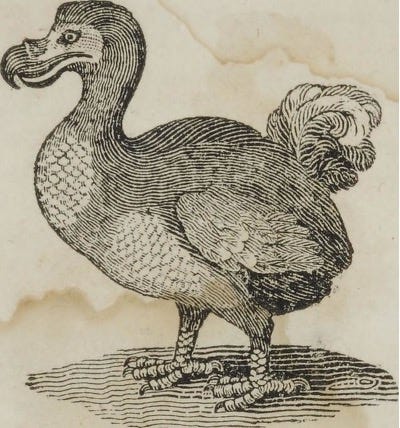

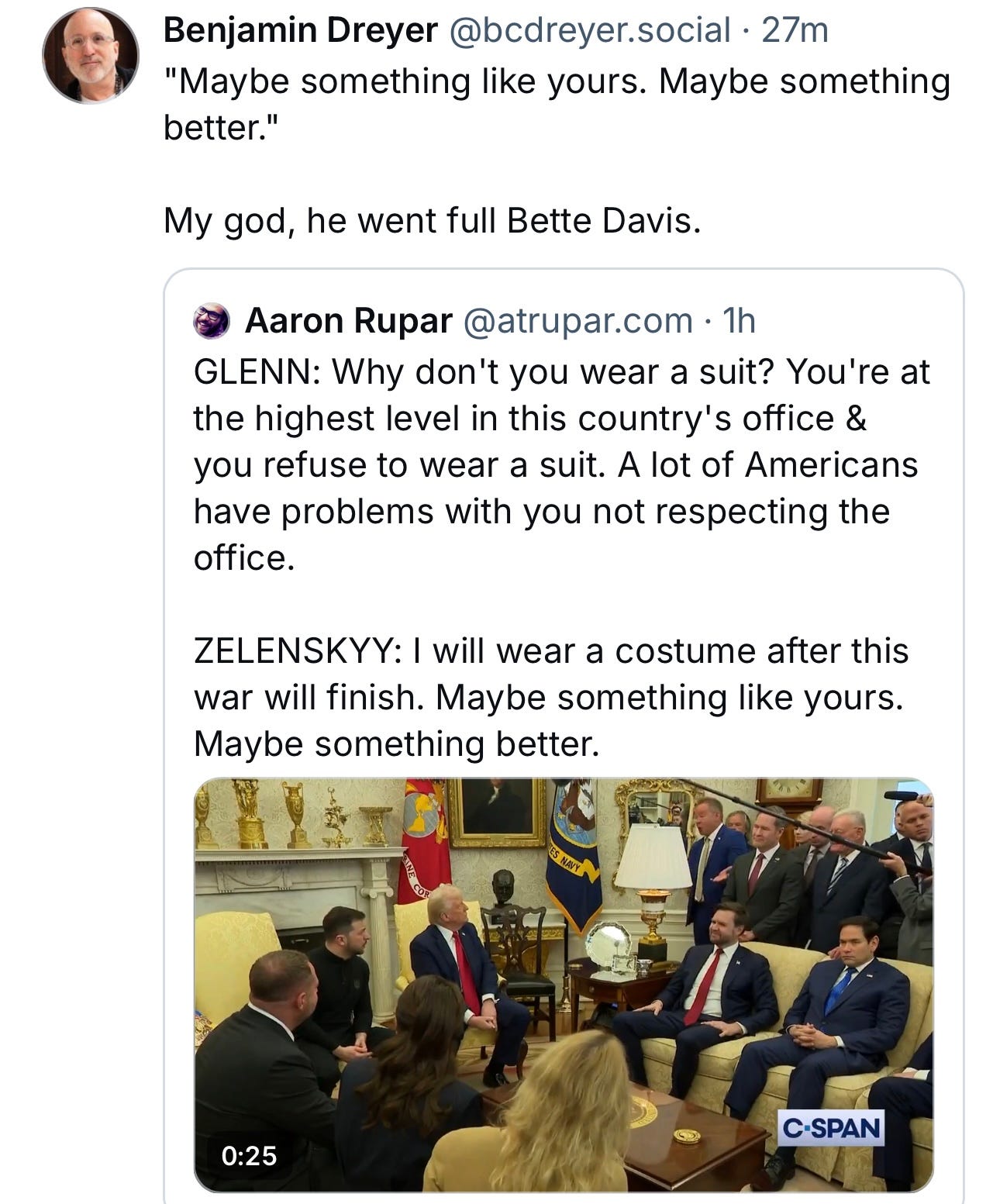
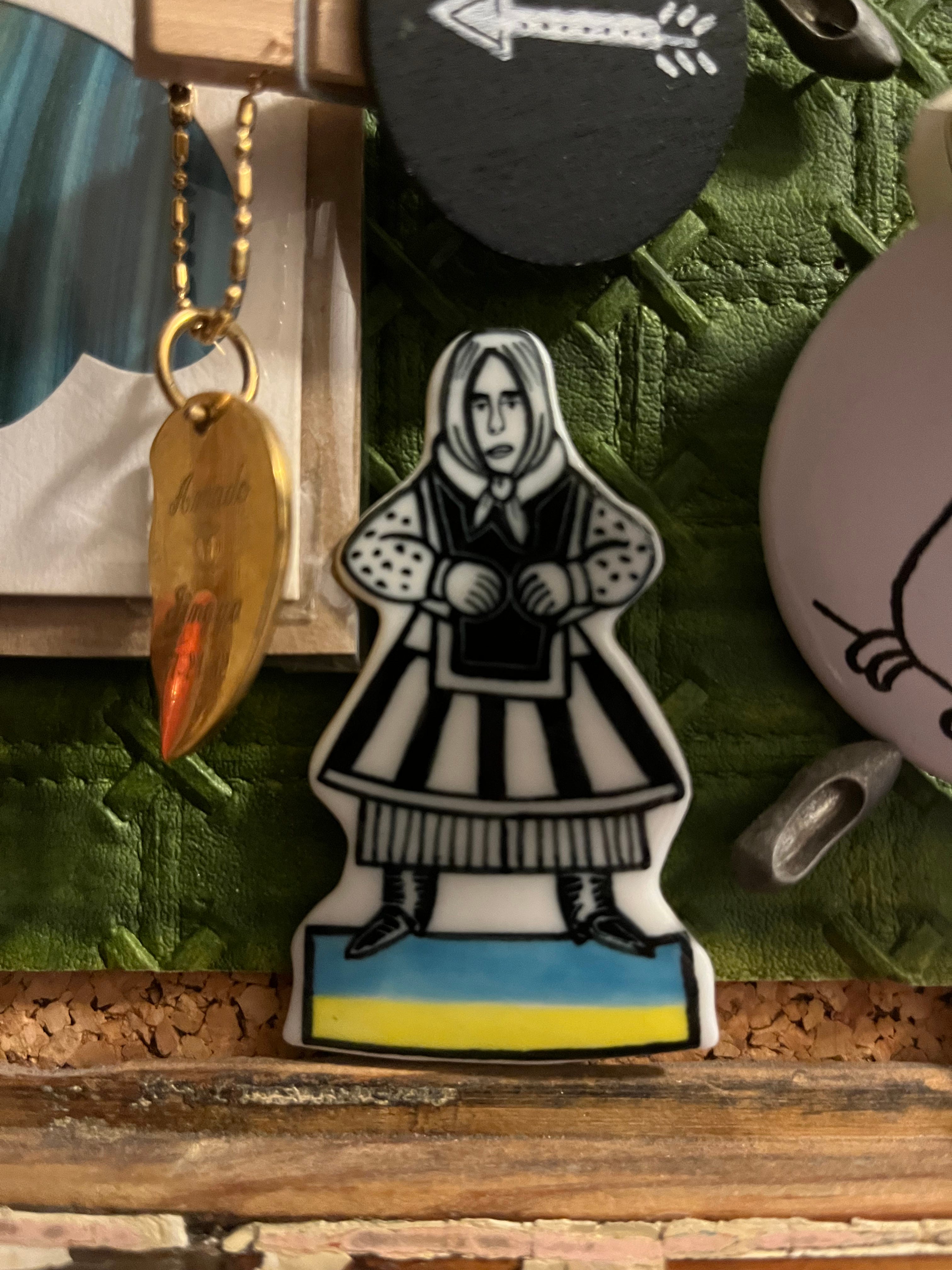
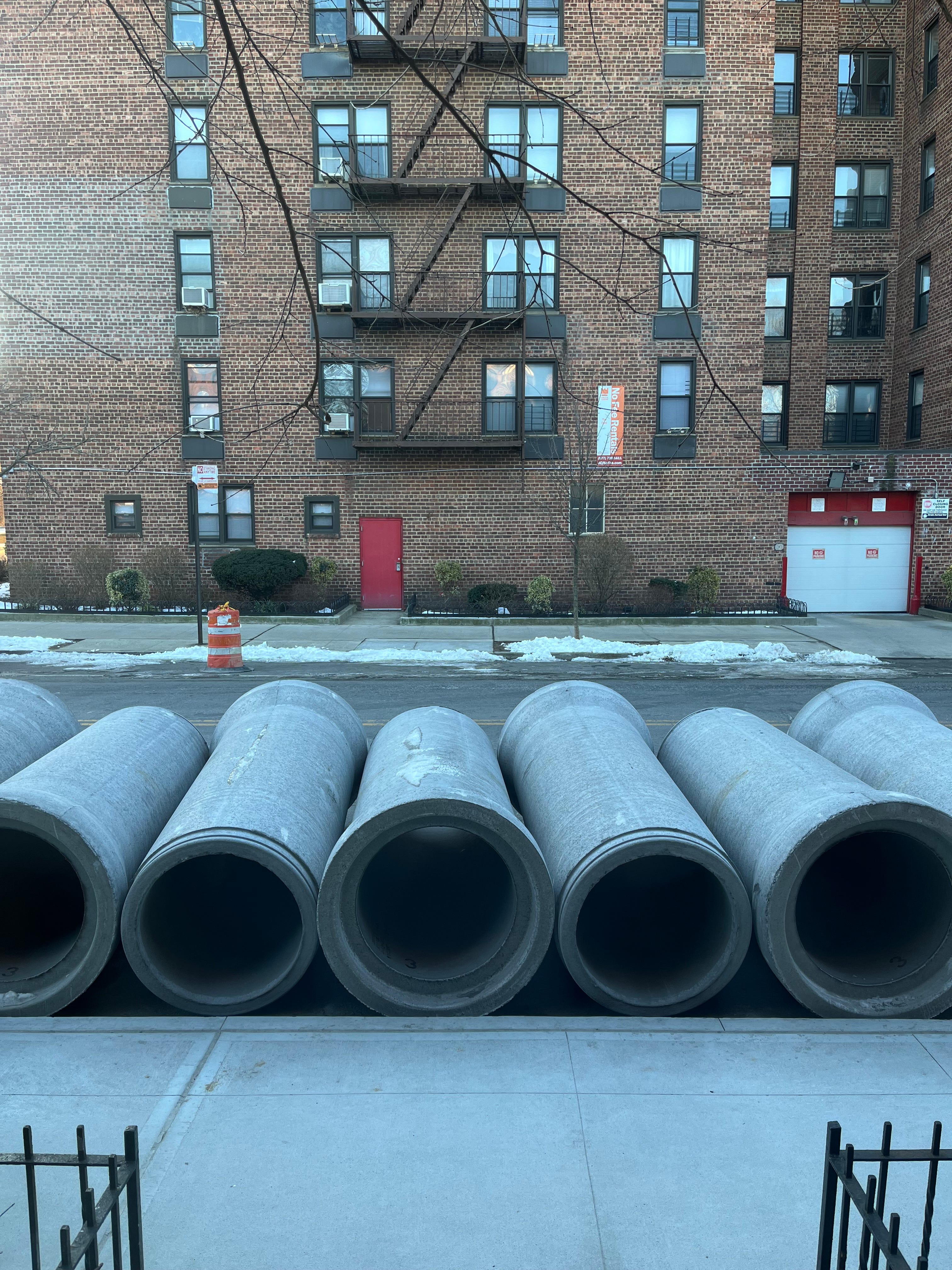
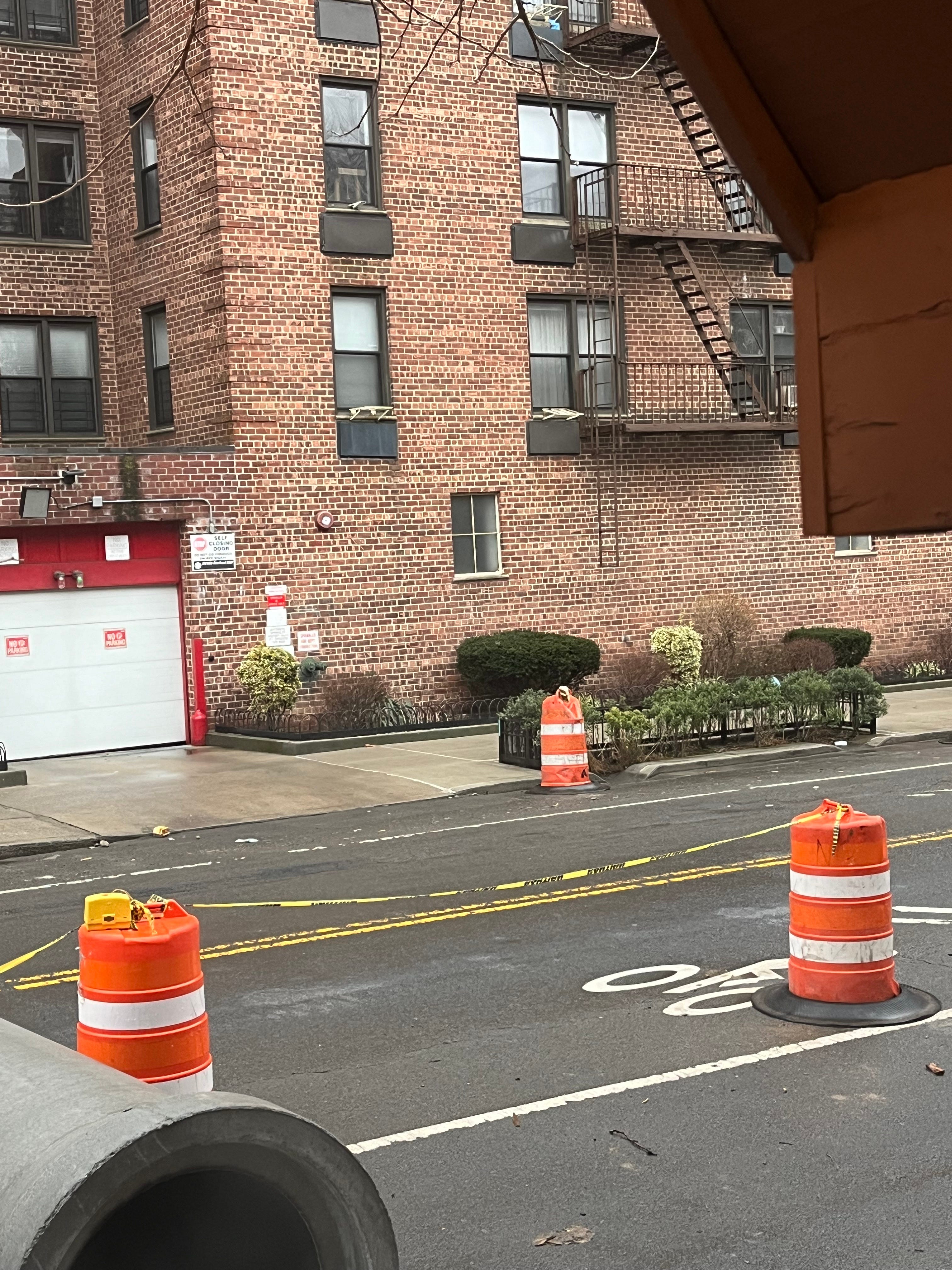
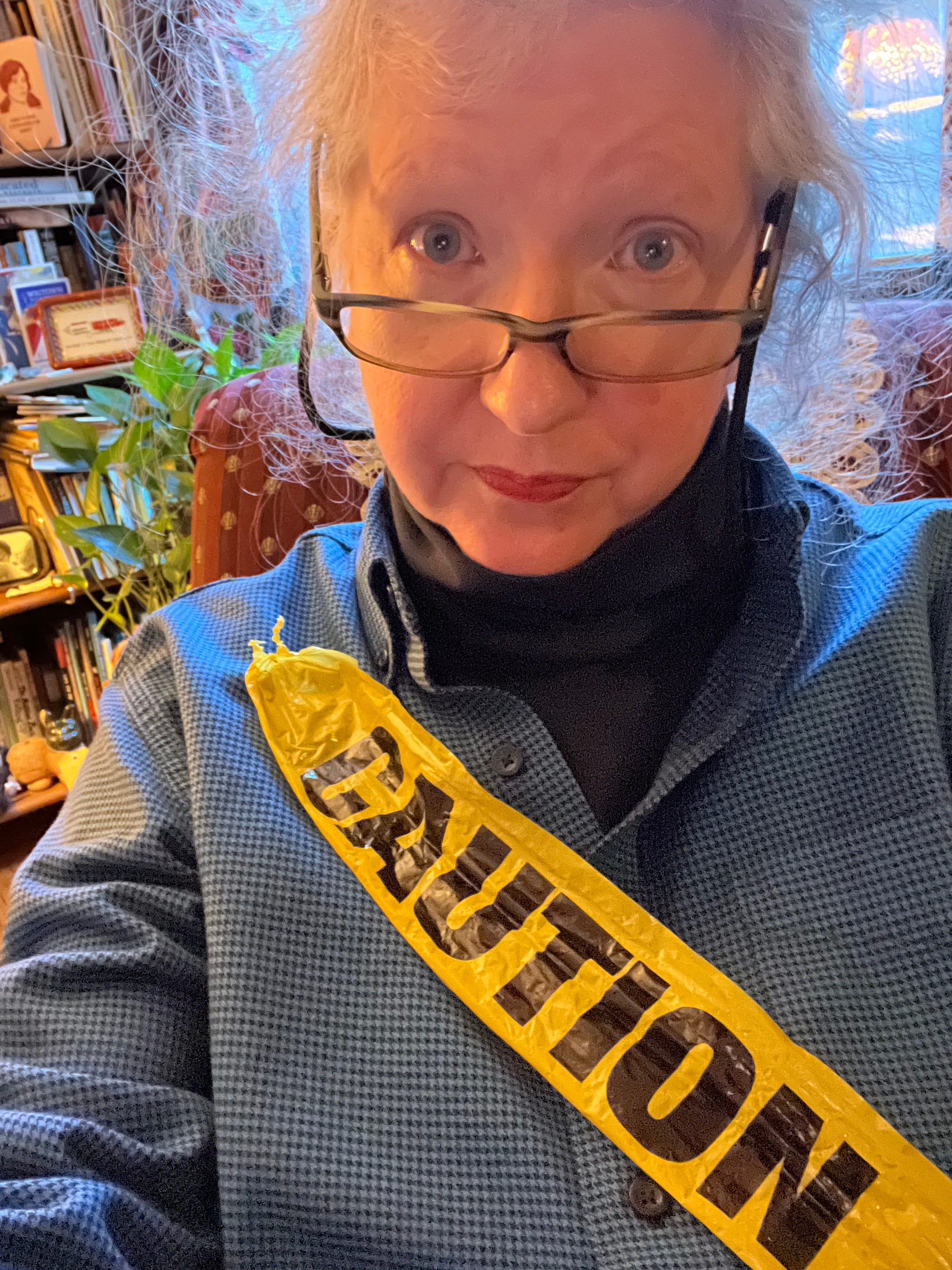
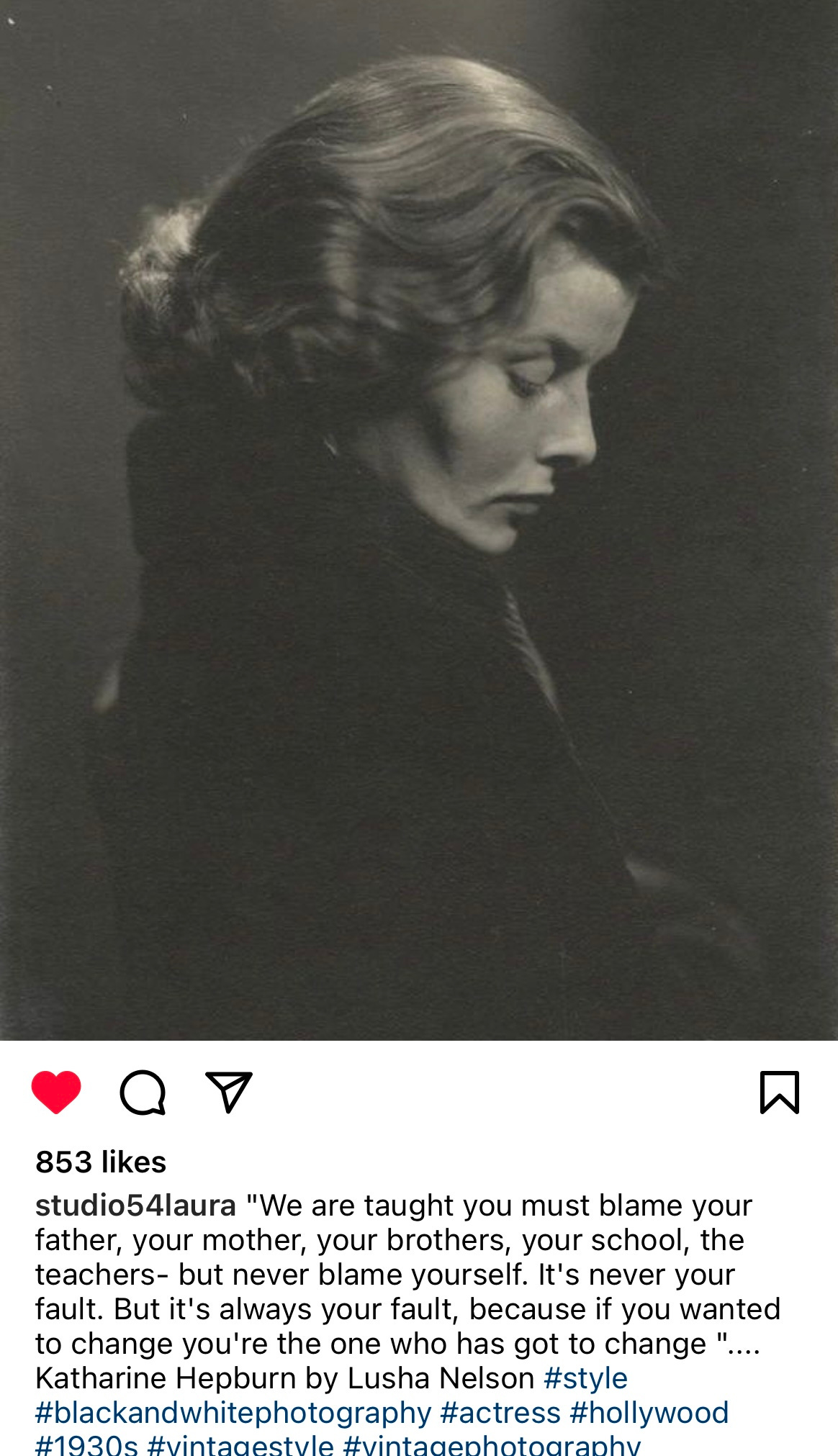





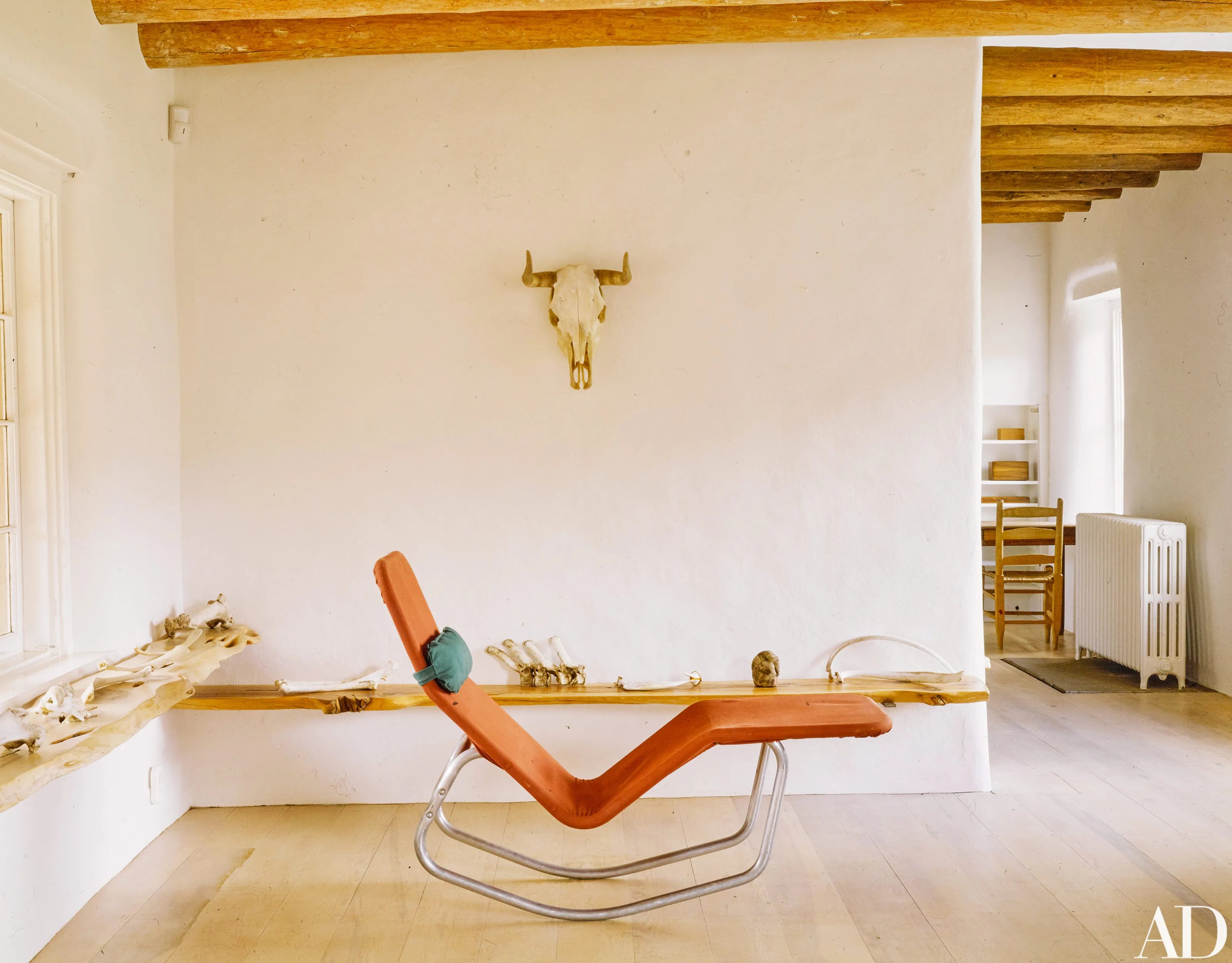
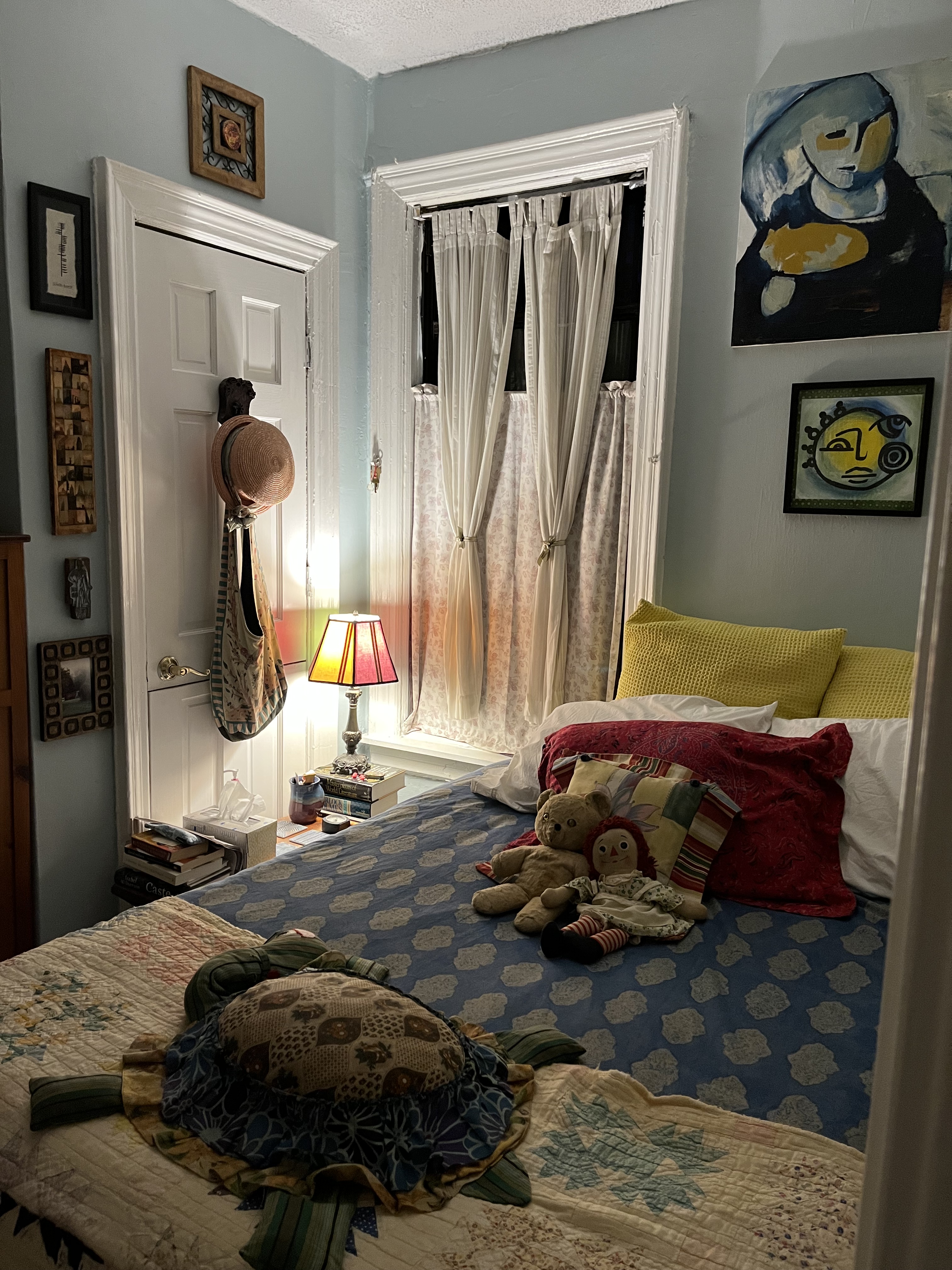

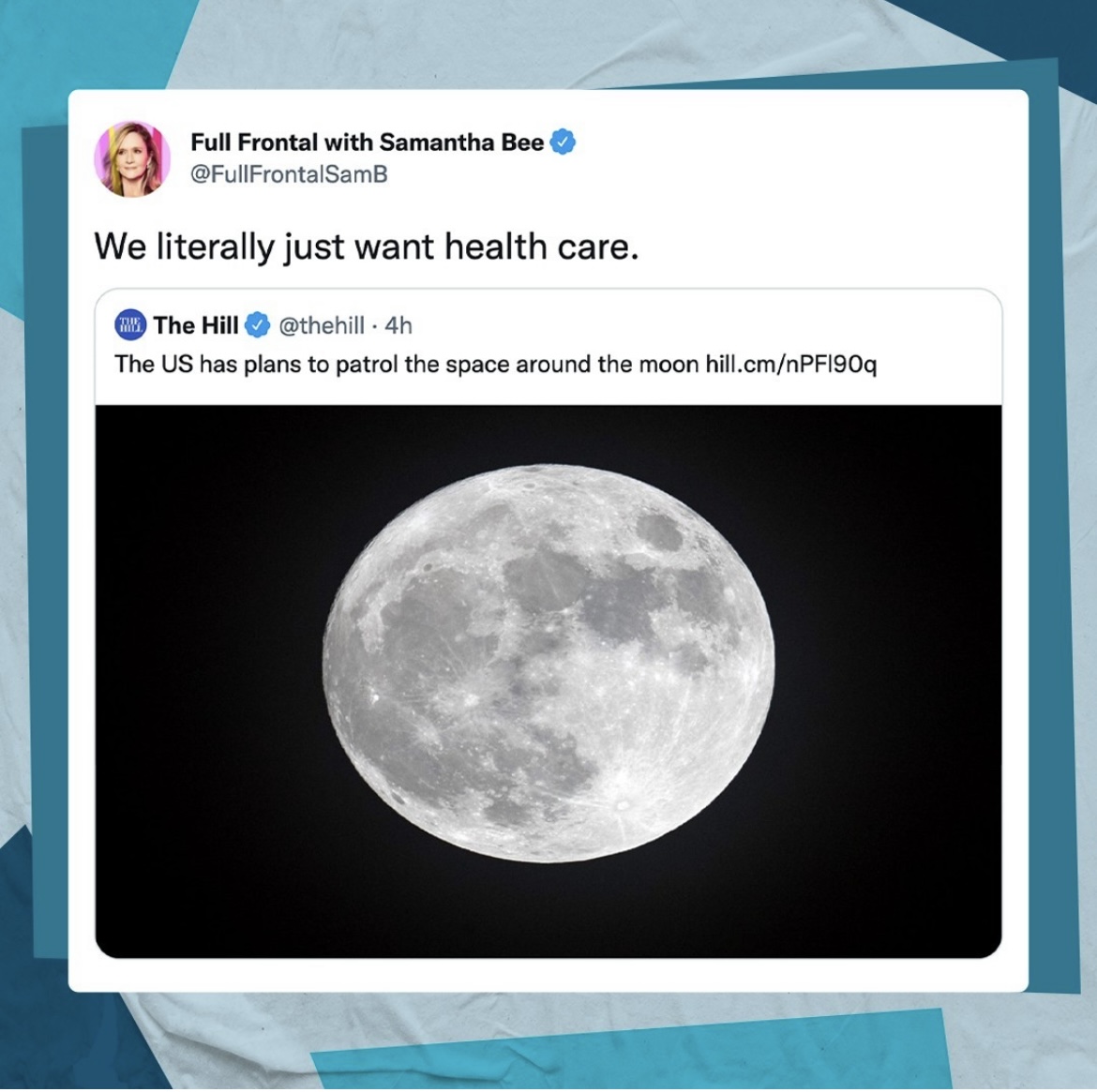


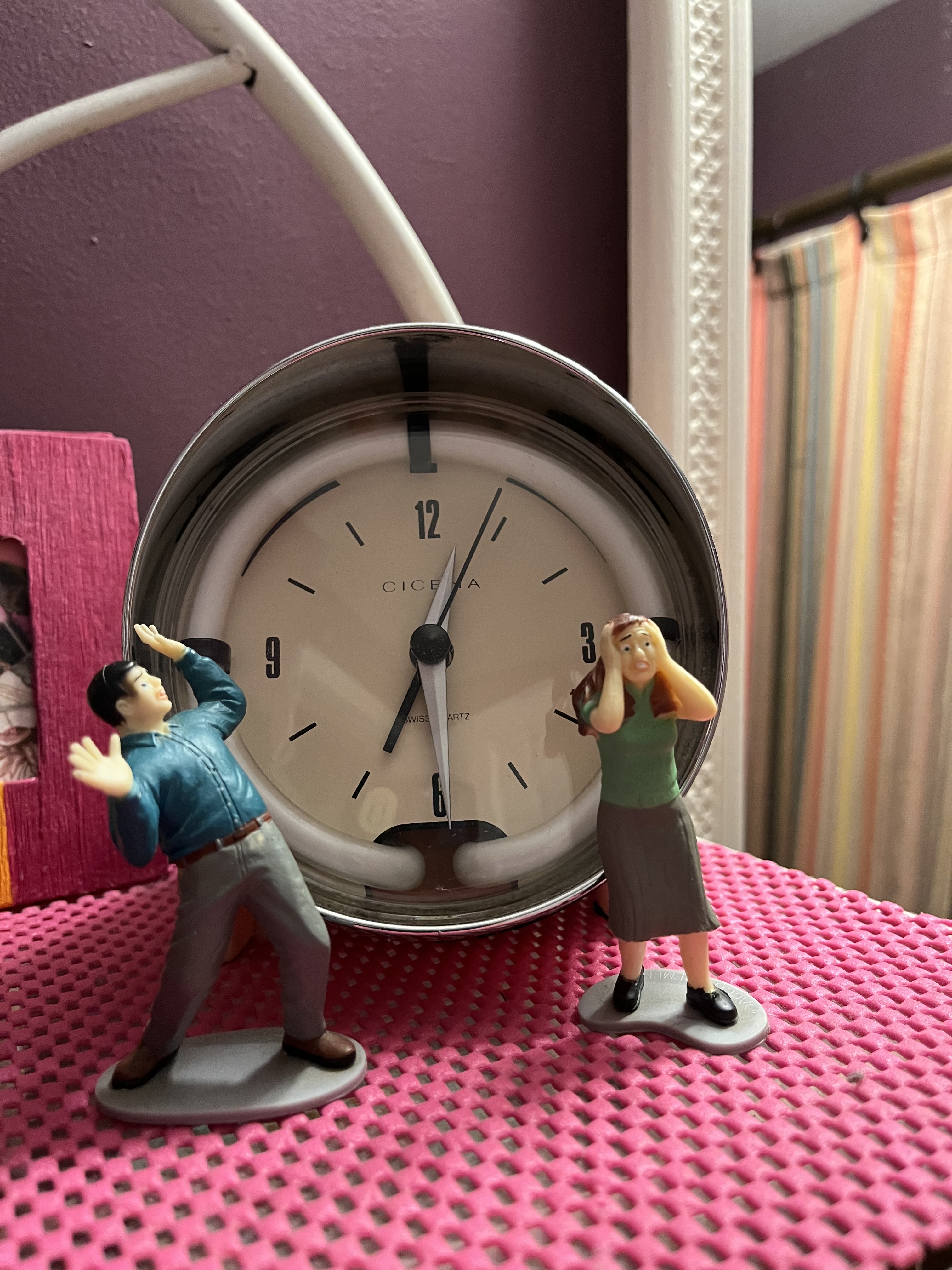


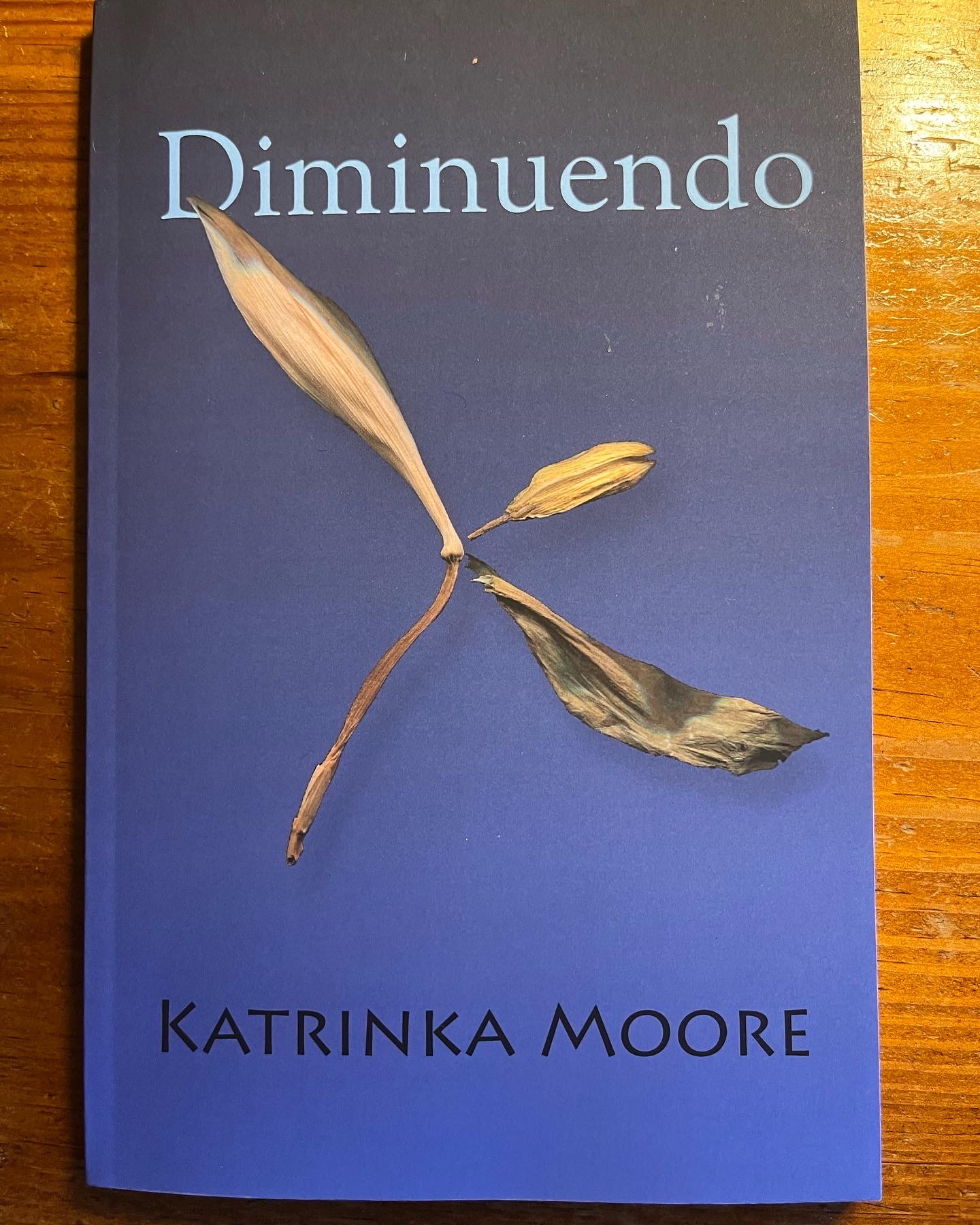







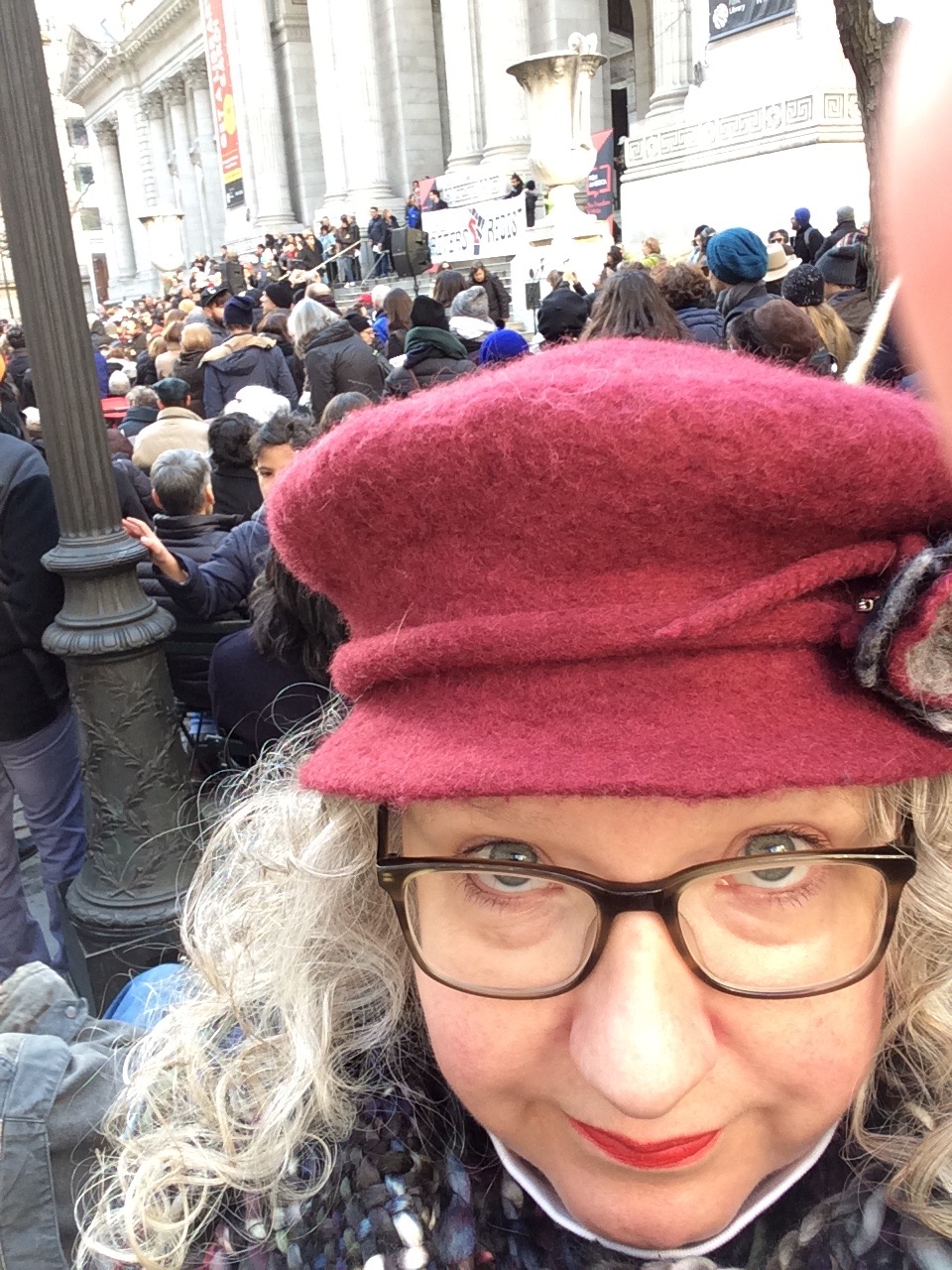


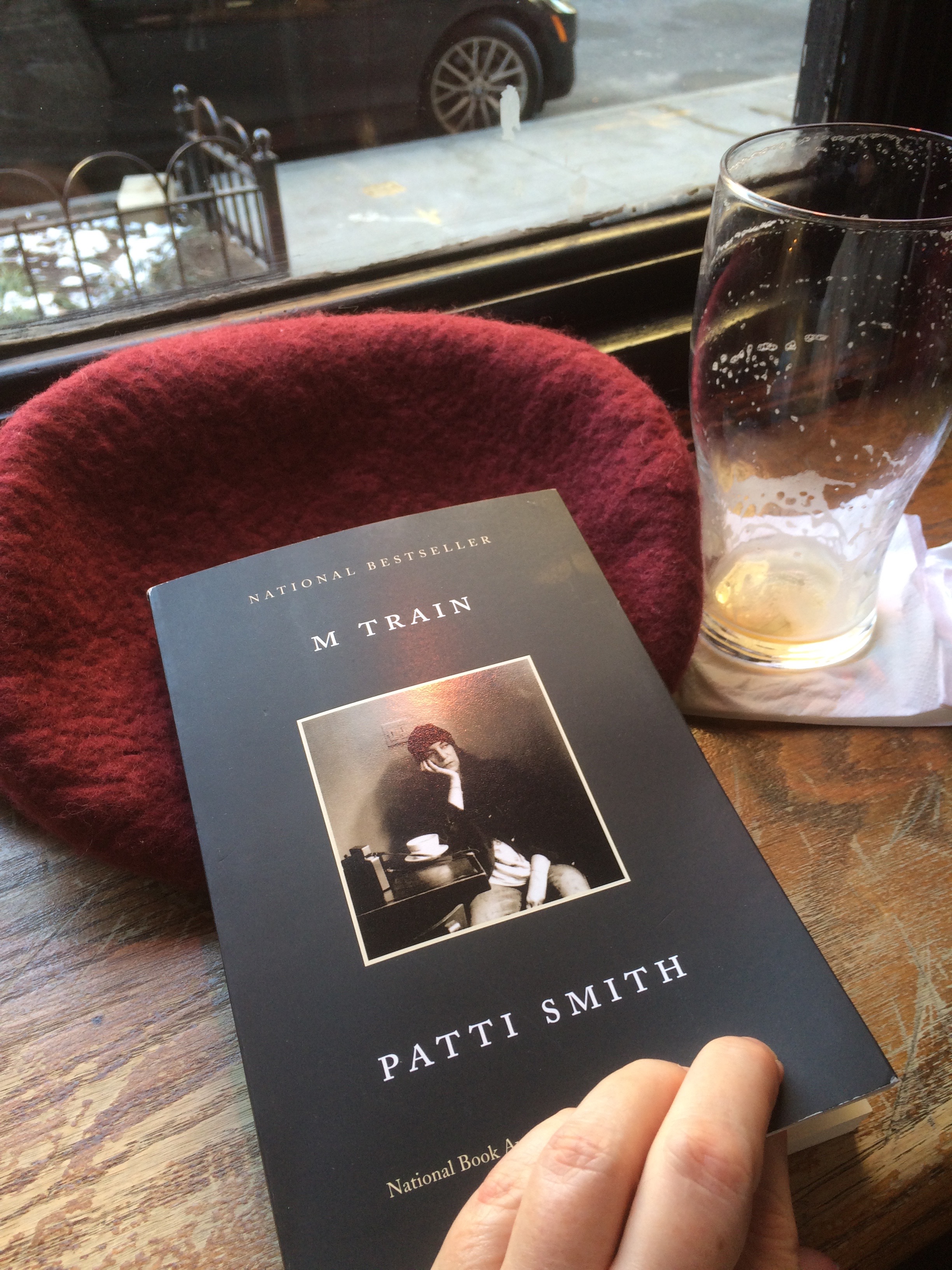
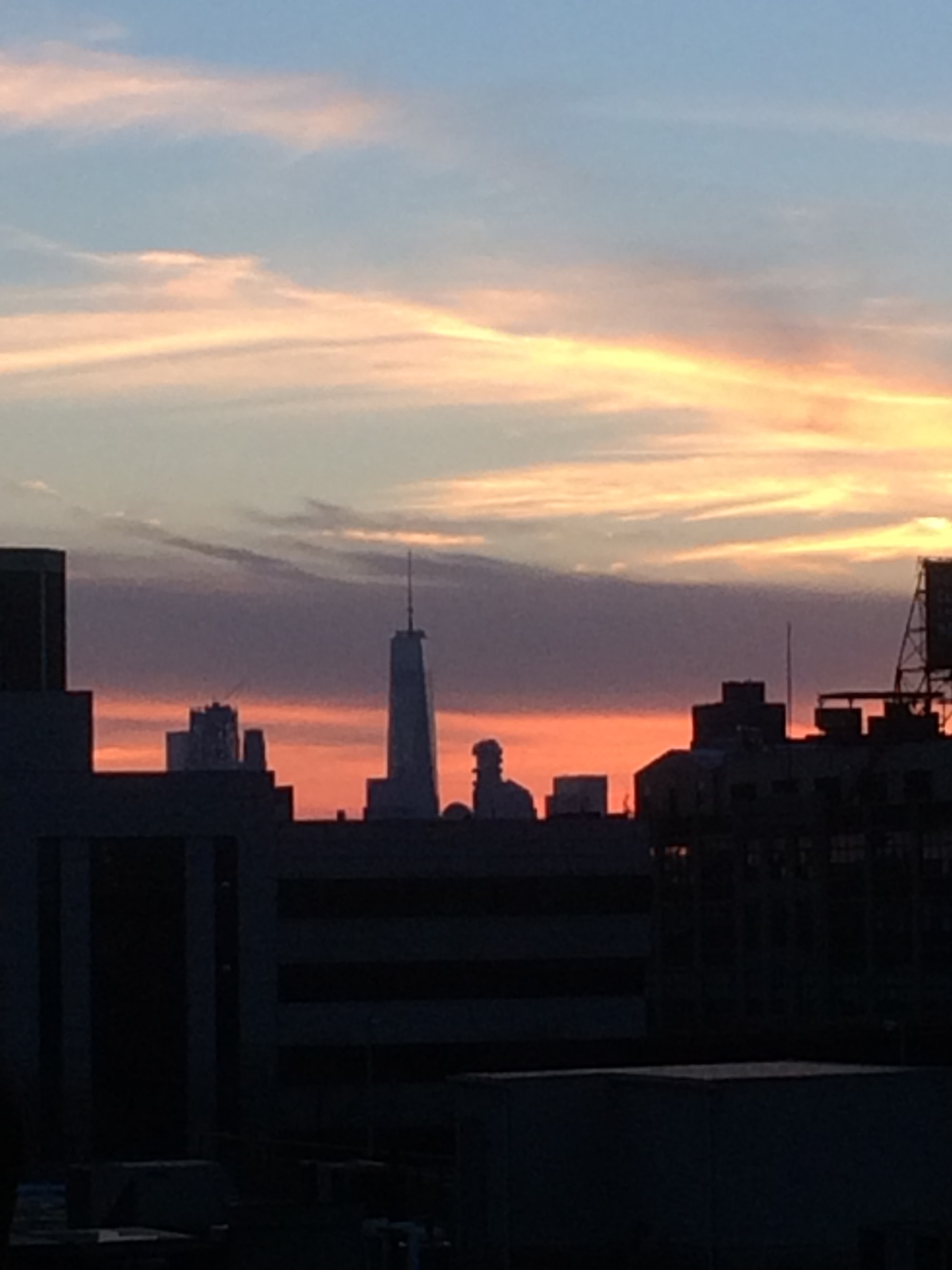


 The Miss O' Show (Teacher's Edition)