
Finding my way in the dark
This would have been 36, 37 years ago now, in the fall, the first year I moved out to Highway 644 in Appomattox, Virginia, the little yellow house—I told you this story—and my heat source was now a wood stove. My teaching colleague and neighbor Jeanne drove me and her trusty German shepherd Ton-Ton, struggling in her final year with hip dysplasia, in her truck just barely into the woods by Nixola Guill’s house, back just behind the old clapboard church that the historical society would later that year move to a “historic village.” It was just getting on dusk, and our plans had gotten waylaid by one thing and another, but the fact was Jeanne’s family was out of light wood, and I was going to need it too, if I wanted to get a fire going properly. This is the stuff sold as “Georgia flatwood” in cabiney catalogues, but what it is is old pine stumps, the pitch of which has turned into pure kerosene. Talk about a fire starter.
I don’t know who owned the land (and no doubt we were trespassing), but the forest was deciduous, changing over from pine to hardwood. As a result, the pine trees lost light, began dying, and the place had become loaded with pine stumps. Jeanne had noticed the abundance of them in one of her walks; it was getting on the time of year she had to put the dogs in blaze orange vests and wear one herself, early hunters out illegally, too, so our trespass was nothing, what with perfectly good lightwood just going to waste.
Jeanne pointed out the wide gully leading from deep in the woods to behind the church. “That was a road at one time,” she explained; walking in the woods with a biologist and native Virginian was always instructive. In fact, my four years living in that county could not have been a smaller life or a bigger education. I’ve written about it in places, but this is about wandering through woods at dusk. We’d walk, locate a stump, take a shovel, and dig; so old was the wood that it only took a little digging and some tugging to pull the stumps up. “Smell that,” Jeanne said. Oh, yes, there’s that kerosene smell. Jeanne’d brought along a couple of large burlap sacks to fill and that we did, dragging the sacks back to the truck, as Truman Capote might say, lugging the stumps like a kill.
By the time the dragging began, it was fully dark. You don’t think you can see in the dark, but you can. Because of the gully on our right, we knew which direction to walk in, and we also kept well to the left of the gully so we didn’t tumble in. It was cold now; supper sounded good. Do you know that feeling? And the tingle of wood smoke filled the air all around, all the stoves of the wide-apart neighbors commencing their roars. Lifting those sacks into the back of the truck, and Ton-Ton too, getting inside the cab, pulling out onto the road for the short drive to Jeanne’s driveway, I can’t tell you how alive I felt. Her husband would chop up a stump for me that evening to take back to my own stove down the road, where I’d go right after supper.
I get teary thinking about this, the exhilaration of that evening, one that felt like many hours but couldn’t have been more than one. A friend, woods, a dog, a truck, a purpose, and that dusky light, the promise of supper when the work is done. It’s all you need.
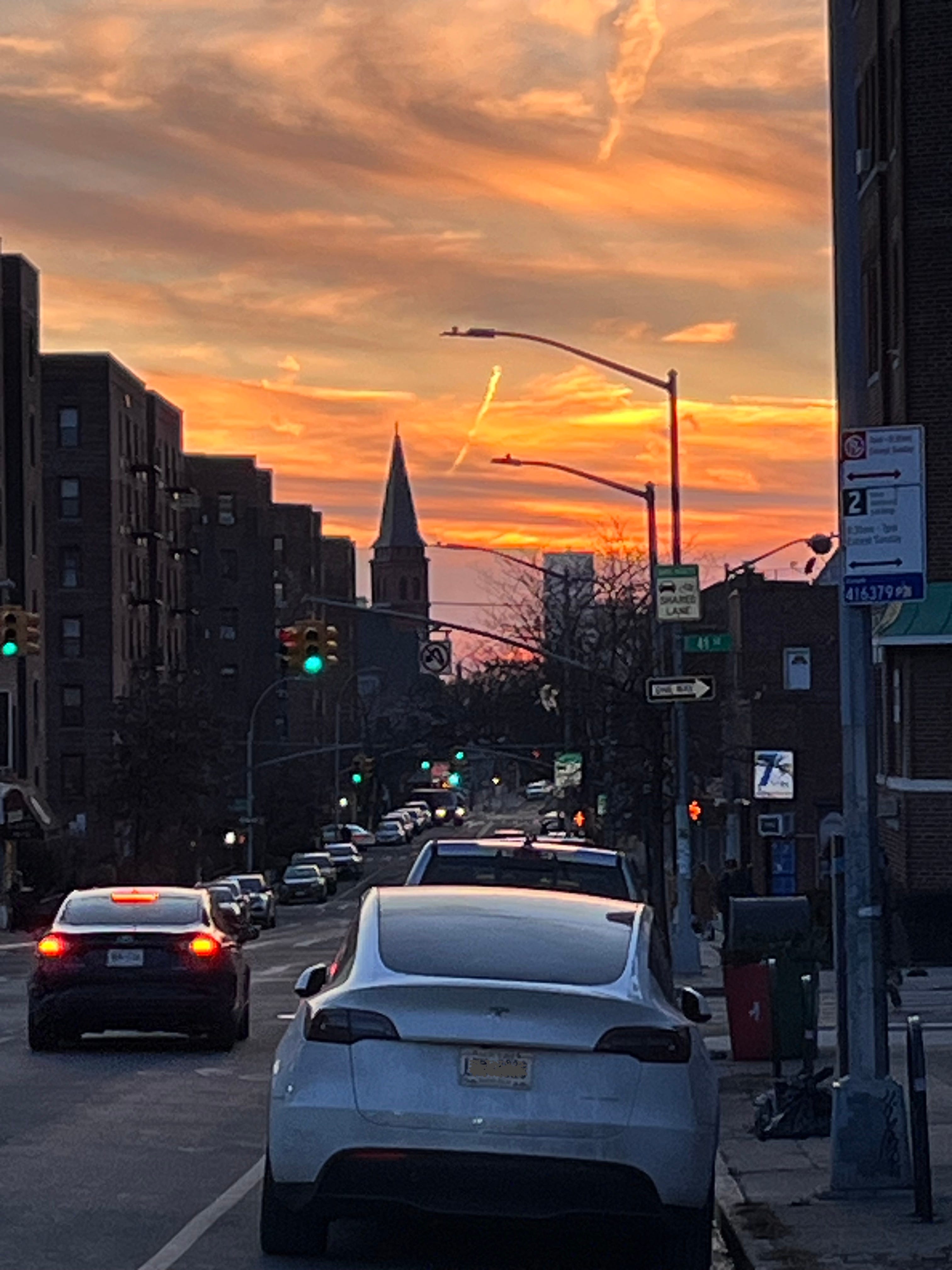
And walking around Queens this evening, that’s exactly where my sense memory went. And I thought I’d take you on a memory walk with me, in case you needed a reminder that there is not only a way into the woods, but also a way out, even in the dark, and if you pay attention and stay present, you’ll find it.
Sending love,
Miss O’

 The Miss O' Show (Teacher's Edition)