Bread and the Body

The Body in Transition

A friend texted me Saturday afternoon to ask when I will be writing another blog installment, after the previous post about caring for my folks, and I texted back, “Lather. Rinse. Repeat. There’s your blog.” What else is there to say? Day melts into day into day into day, as the days go by, every problem you thought you’d resolved (meds, meals, moving through exercise) back to square one, recalcitrance.

Sunday was a fragile day. I’d awakened about 1 AM, weeping, realizing how impossible it is for me to leave, trying to figure out if I should just sell my New York apartment and the bulk of my possessions and just move here, or try to wait it out. I don’t want to move back here. But I’m not sure what choice I have. I somehow got back to sleep for a few hours. Later, taking my dinner plate out into the playroom (where my parents live now), I startled my dad, whose Coke flew into the air. I set down my plate, went into the kitchen, got a went rag, wiped down the rug, and then picked my plate back up and walked back into the other room to eat. “You’re not staying?” my mom said. “Oh, come on,” my dad said. I didn’t know how to explain that the combination of the relentless overhead lights and the TV blaring at 100 (I am not kidding) and my mom barely eating and my dad so easily startled had caused me to begin weeping again, the result of being trapped in a bad movie that can only end after much more suffering to come.

I keep trying to find the humor in all this.

On Friday afternoon, around 4 PM, my parents, who had gone to bed at their usual time of 3 PM, were startled when they heard a knock at the back door of the playroom (their new bedroom-normal), and it was Justin the physical therapist. (On Wednesday, Justin had left before I could write down the time of his next visit (I was on a Zoom work call in the dining room), and my parents had said that there wouldn’t be another visit until next week.) To my surprise, my mom rallied, put on her nice wig, and went on the walks through the laundry room and kitchen, did the band stretches, made humorous comments. My brother and I, meanwhile, stayed stretched out and prone, Jeff on my mom’s lounge chair and I on the loveseat, watching Midsomer Murders. Justin came in with my dad to write his next visit on the calendar while I recorded that date in my phone, and I said to Justin, “I know that my brother and I look to you like geezers in our 50s, but inside we are just teenagers in our parents’ house.”

Oh, look. Found some humor.

I suppose that fact, of being a perpetual child, is why I don’t fully know how to be here, having also to do with the fact that on Saturday and Sunday, after her Friday late afternoon rally, my mom stayed in bed and barely moved except to walk on her walker to the bathroom a couple of times, and to sit up to nibble on what is probably at most 700 calories a day; I figure it’s closer to 500. I don’t know what to do, or how to get her and my dad to see that this starvation is why she is so tired. I just sound like a scold.

Not What It Used to Be

Calls from friends matter more than I would have imagined, like pictures of her baby grandson to my mother. I missed a call earlier this week from my friend Mark, a retired schoolteacher approaching age 80; I texted him; he texted back Sunday about a good time to call; I texted him that 7 PM would be a good time to call, and he called. (It’s all so complicated now, isn’t it?) He’d recently driven down from his home New Jersey to North Carolina to play piano for a former student’s wedding, and since he’d gone that far, he decided to continue down to South Carolina to visit a 92-year-old writing professor, a woman often described by the former director of the Bread Loaf School of English as “indefatigable.” But now Dixie tires easily, Mark said, though they had a very nice visit. The subject they found themselves coming back to, however, was not so nice: the deterioration of the place we all thrived in back in the 1980s and ’90s, Bread Loaf.

Unlike Mark and other friends, once I got my master’s degree in ’94 (and only returned in the summer of ’96 on an NEH grant for theater teachers, a return that made me know I was done with higher education), I had no real desire to visit. I like seeing people I love, but truth to tell, when I graduate an institution, I move on. Just as some Virginia Tech grads I knew became townies, some Bread Loafers returned to the Mountain, as we called it, in Ripton, Vermont, summer after summer to work there. I never felt that kind of attachment, though I dearly loved my time there.

The magic for me started with a brochure in my Appomattox P.O. box, one that showed a 30-ish blonde and bearded guy sitting on an Adirondack chair in a green meadow. The Bread Loaf School of English, located at the site of the famous Bread Loaf Writers Conference, boasted a wide array of classes, and required no thesis for its master’s program. In addition, the program only took place in the summers (five of them for a master’s) so that it could fulfill its mission to continue the education of working English teachers as well as writers. From the first arrival in my pickup truck (on my rural teacher scholarship, the big push I needed to apply in the first place), the creamy yellow-orange buildings with forest green trim, the meadow, the Green Mountains—all of it made me feel home. The added contraband view of electronics, including radios and televisions, and the discovery that there were no locks on the doors, made me weep with gratitude. A dining hall bell rang for the three very hearty meals each day, a room to sleep and study in, classes to attend, porches to sit on—all this and the ability to focus on growth instead of world worry was beyond a privilege. It was a lifeline for a Miss O’ that was a very lost soul at the time.

Over the years, as Mark went from Bread Loaf graduate (class of ’89) to administrative assistant (up until about 20 years ago, when his own parents required constant care) to regular visitor every August to play graduation, he has had to witness what feels to him like the deterioration of our beloved institution, degraded by the unavoidable advent of the personal laptop, personal printer, demand for internet access, and cellular service, and all the infrastructure updates these modern needs entailed. A change in administration brought a more hands-off, corporatized approach to the school, less benevolent parent who wants to see you thrive creatively, and more an efficient parent who makes sure you have clean shirts but otherwise keeps their distance. (Optional locks came to the doors my senior summer of ’94, when personal computers became more popular; permanent locks came about the following summer, after my time. I think of Robert Frost’s “Mending Wall,” wondering what we are walling/locking in or walling out.)

Metaphor Alert

The change to Bread Loaf from a kind of Brigadoon for teachers and literati became, as I talked to Mark, sort of analogous to the deterioration of my mom’s body; and the (understandable) lack of her hands-on nourishment of her children struck me as analogous to the (less understandable) demise of spiritual, personal, and creative nourishment at Bread Loaf and its former feeling of family and welcome and love of the human enterprises of reading, writing, and theater, of storytelling, of good talks, good walks, joy in nature, sunrises and sunsets, the heavy dewy mists after a late night of storytelling around the bonfire. We were there at a magical time, Mark and I agreed; were lucky to have been part of it when we were (though today’s students won’t know the difference, or what a difference of perspective they could be enjoying, given that there is no substantial shift from their everyday lives and the summer retreat, phones ever in hand). To continue this analogy, my mom moved from poverty to middle class prosperity; did better than her forebears but not without working for it; and there was a golden time, sort of, but that time is gone.

The big analogous questions: 1) Do I corporatize the care of my mom and dad? 2) Do I keep trying to force feed my mom? Finally, 3) Do I keep sending yearly donations to a corporatized Bread Loaf? Clearly these aren’t the same things, as for one, in my mom’s case she’s my mom, for crying out loud, and for now I remain on site; in the case of my school, it’s a place I’m not really responsible for, however much I’d like to help keep it going, though I haven’t been to Bread Loaf in 20 years and have no desire to see it again. Still, I want never to lose the feeling of deep connection and gratitude I have to both my upbringing and my education.

The analogy continues: just as the internet is never off now at Bread Loaf, the TV at I never off at my parents’ house. Like the internet for today’s generations, the television is for my parents their company, their connection to the world. It blares around 100 because of my dad’s hearing loss, so every conversation has to be had over the television; and by contrast, because of the radio silence, one witnesses very little in the way of conversation these days at Bread Loaf. With all this change, I guess, I get weepy, at moments, or get the shakes, not because of the inevitable (there is only one way this is going to end, after all) so much as that any possibility of preparing for it in anything like a meditative way is off the table.

There are other significant differences between my mom’s bodily changes and those of my beloved Bread Loaf. While I encountered the necessity of change at my parents’ house because of old age (an old age many don’t have the privilege of reaching or reaching in the relative comfort of their own home), Mark walked into the Bread Loaf community Barn this past summer, with its empty chairs, or one or two individual students sitting with a phone, no one in conversation, no one playing the piano; the snack bar for coffee and tea closed long ago, no fires lit in the fireplace, and no more dances there on Saturday nights, since people leave campus on the long weekends—no more Friday classes or planned weekend events, because the new administration, it seems, encourages people to get away. Fewer people to cook and clean for, I guess. That’s a choice the school made not because of an aged 100 years of the school’s existence, but because the human race appears to be done with bucolic life and the philosophical reflection that allows, at least for now.

Miss O’ in Queens, but the message remains the same.

I guess it’s an odd analogy, these two things, but it’s helping me think through change and luck and the necessity of moving on, of carving out a creative spiritual life despite or even because of this decay. Something has to rise from the noise and the ashes. Doesn’t it?

Sending love to all.

Miss O’
How It’s Going: Adventures in Eldercare

You Are Here

You don’t know where they keep, say, the batteries, the dust rag, sure, but really it’s about the morning and evening meds for both of them, your dad and your mom, both 89; and about the bills they pay online and by check, and online are they automated or not? (Only the credit card isn’t, but the trash bill has to be paid by check, and while you found the updated auto insurance policy you can’t find the bill, and right now your mom can’t remember how she pays it and your dad has never written a check in his life, since he has mom for that). Last year when you and your brother Jeff had to get them a new computer, and it was a large laptop, for some reason your mom could not seem to understand that the keyboard on the laptop does exactly the same things as the freestanding keyboard did, the screen is a screen, and the mouse is the same mouse, whereas your dad, who had avoided all things computer except to check emails, sort of, while standing by your mom, is now the email guy, if barely, but he doesn’t know anything about the bills. You see the desk, piled with clusters of old envelopes of bills in blue rubber bands, just as the downstair buffet is, and the console behind your mom’s chair, all labeled in your mom’s neat, fine point, all-caps script, some with notes like “KEEP,” but that doesn’t tell you why they are being kept, and your dad as no idea.

You then can’t help but notice that the kitchen and bathrooms could do with a cleaning and subbing in of fresh towels. In the linen closet in the small upstairs bathroom is a helter-skelter collection of sheets, pillow cases, and towels of all sizes, in some shade of blue or pink, most all of them frayed from 30+ years of use, and at the bottom of the closet are baskets of cleaning products and small appliances and tools and boxed tissues and rolls of toilet paper, none of which you can use for cleaning the sink the way you want to, since there’s no rag or sponge, because of course there isn’t. “It’s hanging on the towel rack in the downstairs bathroom,” your dad says, because when your dad cleans the bathrooms (your mom hasn’t been able to scrub or get down on the floor for a decade), he does them at the same time, see, so the rag ends up downstairs because he starts upstairs, see?

So then the meds. Dear god the meds. The morning ones for your dad are downstairs in the kitchen hutch, in a lidless round tin that once held Danish cookies, whereas his evening ones are loose bottles resting on his low dresser by the mirror; and all of your mom’s, the morning and the evening, are in the old Easter basket, atop the tall dresser by the TV, labels so smeared by your dad’s hand oils (within a week or so) that you have to strain to read them, even under and lamp and with your low Rx reading glasses. You ask, “What are these for?” and your dad says, “I don’t even know anymore,” so you study them, make lists. With a Sharpie fine-tip you find in the console behind your mom’s chair downstairs, you label “A.M.” and “P.M.” on each bottle, separating the bottles (and they aren’t really “bottles”?) by parent. On Amazon you order AM and PM weekly meds sorters, and when they arrive you take a Sharpie and write on each side of one, “LYNNE” and on each side of the other “BERNIE” (and on the one you got for yourself “LISA” which is weird because you, Reader, have some other name, probably, as do your parents, for that matter). You will need to sit with your dad to organize them. Note: Without the muscle memory of opening plastic bottles and walking from upstairs to down at the same time every morning, and downstairs to up at the same time every evening, your dad will spend weeks figuring out the new system, and he will take his evening meds in the morning and to forget to give your mom her meds at all; you realize you have to check on this and coach him. And when he does finally get the hang of it, his OCD kicks in and he refills WED AM as soon as he’s taken it, so you can’t tell if has actually taken them or not, and it takes three tries to get him to see what you mean. Now you realize you will have to check and actually ask him every morning and every evening if he and your mom actually took their life-saving medicines. Check.

Backstory, or Why I’m Doing This

The routine, see, is all new, because your 89-year-old mom tripped on a bathroom rug (the rugs the doctor told you to get rid of years ago but they are so pretty, and small, and what could go wrong?) in one of the world’s tiniest full bathrooms (second only to yours in New York City) in the middle of the night, fell, and cracked her hip. The EMTs had to get her down the stairs of a split foyer using a wheelchair. Almost 24 hours and a few tests later, your mom is transported from the local hospital to a more advanced medical center, where neither your brother Jeff (who lives in) nor your dad visit her for three days because each morning they’d call, her ladyship would declare, “Don’t drive over here! They are transferring me to rehab today,” so they didn’t, even after the second day when she called again at noon and said, “Haven’t you left yet?” because men. And when you finally arrive on Amtrak via subway from New York City (taking two days to put up the storm door, take down the AC unit, clear out the fridge, arrange for your wonderful upstairs neighbor to get the mail, water your plants, flush the toilet, and run the faucets once a week, and pack your work and home laptops and chargers and meds and a few changes of clothes) on the fourth morning of her hospital visit, you all drive over and you track down her nurse and you explain, “I’m her daughter from New York, my father and brother actually listened to her, because she runs the show, and we need to understand what is happening, and I’m so sorry,” and you explain this because you realize the nurse and doctor have assumed she has no one who cares about her, and of course they assume that and this is so, so not the case. And everyone feels terrible. Your mom really doesn’t seem to know what is going on.

First things first, you replace her matted gray wig with a combed-out silver wig, and your mom instantly feels a little better. The nurse has told you how your mom put on lipstick every day because “my husband will be here soon,” and after two days, they thought she had a negligent husband. You toss her matted wig in her “go bag,” a bag that each parent has and has needed more than once over the past few years.

You meet with the doc, figure out next steps—the fracture is inside the bone so there’s no operating they can do, it just has to heal on its own, but your mom only weighs 88 lbs. and wasn’t in great physical shape in terms of muscle mass to begin with, but at a rehab facility you know they are only going to work with her for 15 minutes once or twice a day, and you can do that at home, and be with her. Now your role gets really interesting.

You spend your first days home fielding calls from equipment suppliers and a managing nurse and the home care company to arrange all the caregiving. You have to help your dad, who will be 90 in October (and you had to take him to the ER last Christmas because he had a TIA, or ministroke, right in front of you, you running upstairs first to tell your mom, who is napping, which she has to do a lot these days, where you are going; and then spend the day in the ER with him, finally having to call your sweet brother to take over when he gets home from work because your head is so sick from not eating all day you need three ibuprofen), figure out how to get her to the bathroom on her walker and onto the raised toilet seat; and then your wonderful half-sister who worked in a retirement community until she herself retired, tells you to order a commode to keep by her bed, which you do, and it comes the very next day thanks to Medicare and their managed health care (the result of benefits your dad had from his 42-year union job, and thank the gods of unions, and why don’t we all have this level of care?) and is a godsend.

Oh, and the first thing you all did, by the way, before your mom got home via ambulance transport, was to figure out how to get her onto the main floor of the house, which is a sort of half basement with five steps down (note: never buy a split foyer), bolstering the foldout couch in the playroom addition with cot mattresses (after first trying to arrange cots and an air mattress in the little living room, which is closer to the bathroom), and removing all obstacles that you can, finding the sheets, figuring out blankets and pillows and all that. Will this work?

Pardon the Lack of Narrative Cohesion

And if all this information isn’t chronological it’s because it’s a jumble in your mind and a jumble in routine almost immediately and consistently, and that’s because you must spend all the time you can in the dining room on your work computer having Zoom meetings and trying to work on this new project for your income to keeping coming, while also remembering to take walks (you’ve done three in three weeks) when you can because of your ever increasing stenosis, but you don’t dare leave your dad alone with your mom because he has this tendency to go into the kitchen to cook, say, or want to go to the store or run another errand, convincing himself that your mom will be fine for 10 or 20 minutes (I mean, she’d be alone in the hospital room, he says, and you say, monitored), but his 20 minutes usually stretches to 45), so you have to run into the other room to be with her when he leaves (she always needs something, like water, which you have to remind her to drink constantly (and she’ll only do it if you put in a straw), and that’s just what life in an invalid state is), so you handle it, and then help him with the groceries when he gets home, and pause to pick up your mom’s water cup again and push it over toward her with the straw as you say, “Have some water,” while she screws up her lips and sighs; you have learned by now that to get your mom to do anything, you have to suggest it, count to ten, and watch your suggestion become her idea before she does it, and you are once again beyond grateful for your theater training to carefully observe without judgment, as if you were your mom. Now drink this Ensure. Sigh. Mom, you point out, you are down to 83 pounds. She drinks.

Yesterday your mom’s doctor called, and you put her on speaker; since you can’t get your mom to get up and exercise so she is strong enough to get to and into the car, her doc puts in an order for a wheelchair, which is fully covered by Medicare (which you learn when the supplier calls later, but there’s this rental contract coming online that you have to sign, and if the link is expired you can call this 800 number and someone will assist you, and your brother says, “Thank god you know how to talk to people because I could never do that,” and it’s just what people have to do sometimes, another reason everyone should take an acting class or be a teacher for a minute).

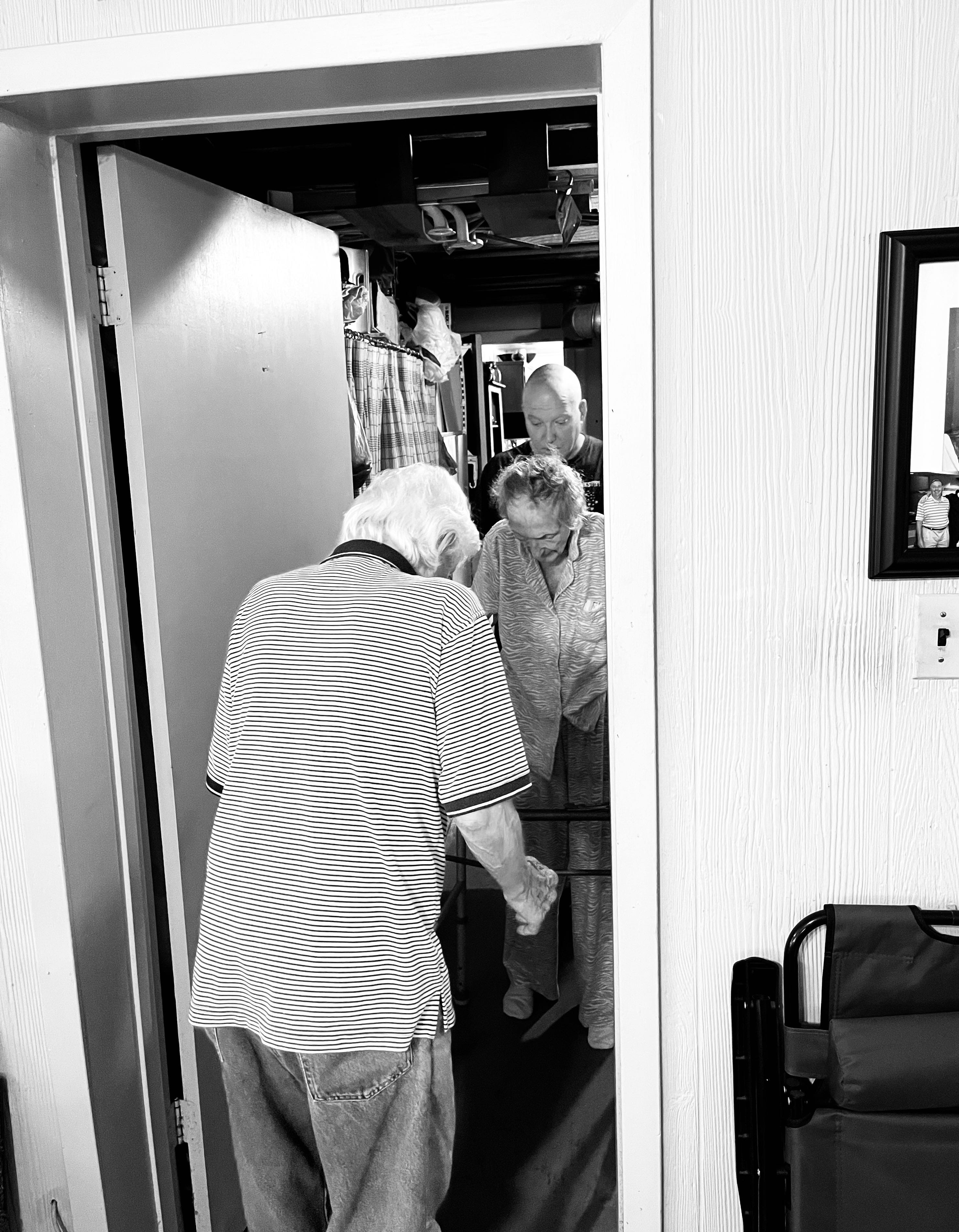
Your mom’s doctor, by the way, says the key thing, the main thing, and it’s not about wheelchairs: You can fight like hell and do the exercises and work to get better, or you can stay in bed and not get up. Both are reasonable options. They are. And the next day your mom seems determined to try all the exercises with the OT and the PT, and then the day after that she stays in bed, slack jawed with eyes closed, and barely eats. And the day after that is a blend. But your dad, with all the love in the world and more energy than most men of 60, cleans out her commode and walks behind her on her walker on her way through the laundry room to the bathroom, when she’s up for it, and all you can hope is that he doesn’t get another hernia or have a stroke. And, in the words of the great Kurt Vonnegut, Jr., so it goes.

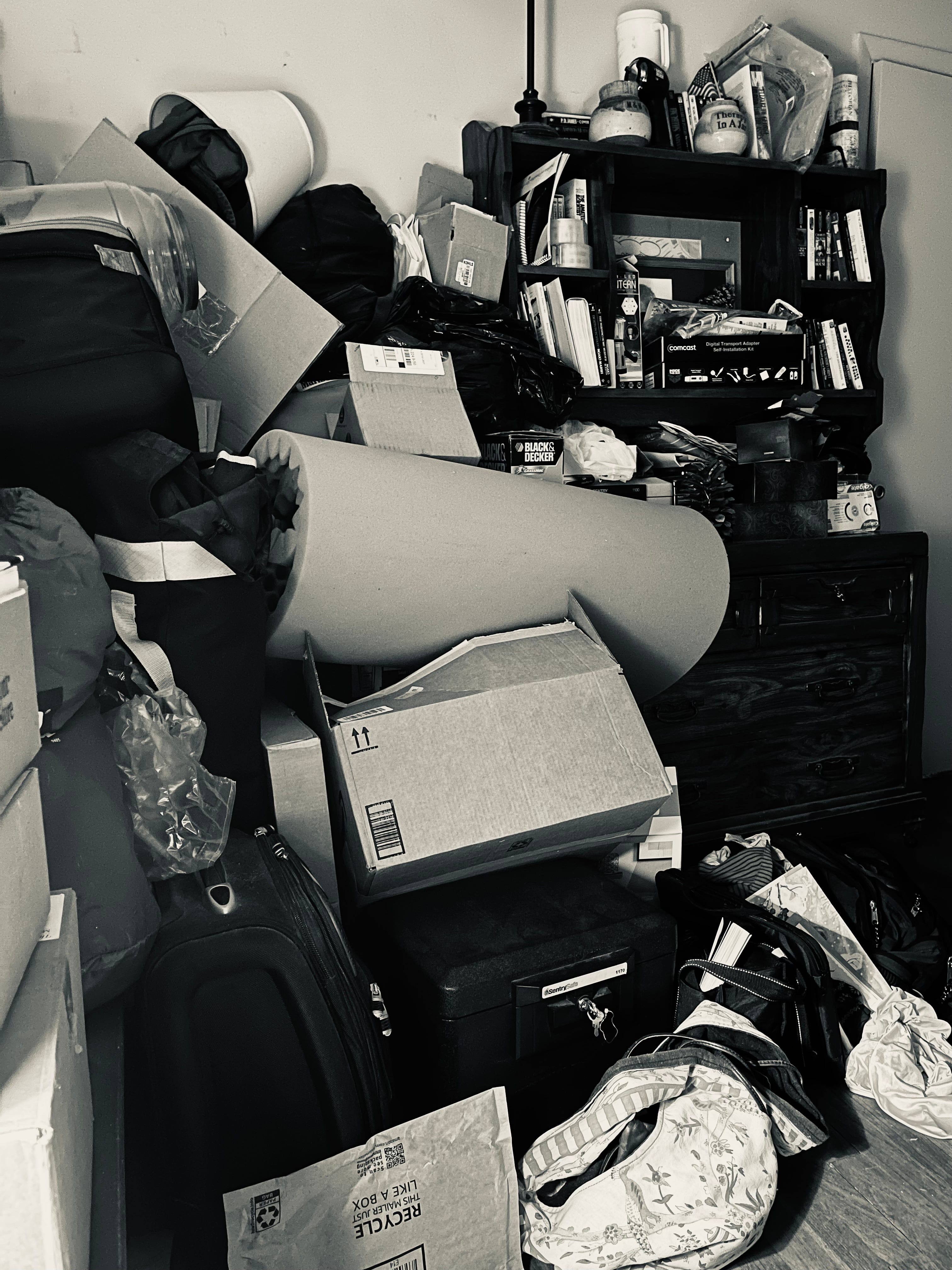
And in the meantime, you sleep in a room that was once your first bedroom which is now a dusty junk storage room with a bed in the corner, the bedpost serving as a closet and the front edge of an old book- and medicine- and tissue box- cluttered dresser for your toiletries, collecting your dirty clothes on the floor next to your backpack and purse. And you can’t help thinking, in passing, that this could be your life for years, your apartment in New York a distant memory, possibly a place you never again inhabit even as you pay your bills. But you can’t live thinking like that. Moment to moment, day to day. You can fight like hell and do the exercises and work to get better, or you can stay in bed and not get up. Both are reasonable options. But not, not now, for you; you have one option only because people are depending on you. And it could be so, so much worse. And it will be. Just a matter of time.

(Note: In this crazy world, it would have been easy just to come down here and not tell anyone besides your immediate neighbors in New York, not your friends, not the people at your job; you could literally live anywhere and under any circumstances with no one the wiser. But if you feel you have to hide and protect your friends from the complexities of your life, I hate to break this to you, but you don’t have friends. There are times when we all feel friendless, so ask yourself, “Have I shared my life?” and if the answer is no, you risk losing all connection, so for the love of god, share, and for the love of god ask them about their lives, and want to know.)

Love and kisses, with all the gratitude in the world to friends who text.

Miss O’

Under Covid of Darkness

I’m on Day 12 of Covid, contracted I think on the New York City Subway System, being the only masked person around coughers and sneezers; or else in the brief unmasked walk from Port Authority to the subway entrance on 7th Avenue. However one gets it (only 5 days into my bivalent vaccine, I wasn’t yet efficacious) it’s been a helluva bedridden ride of waves of all the various Covid symptoms I’ve read about. As a result of the positive test (taken a few days prior to heading to Virginia for my 40th high school reunion, with a sore throat and runny nose, oh shit), I’ve found myself living in bed and relying on the kindness of my friend Cathy and her husband and son, who check in daily, pick up takeout for me and a few groceries. I’ve been subsisting on V8, apples, brown rice, beans, some Chinese soups, and tea. And The Graham Norton Show via YouTube. I tested positive again after five days, and again after ten (though a lighter line), so I’ll try again on Wednesday, which will be a full two weeks plus one day. I’m running out of tests. But at least I’m dressing for the day again.

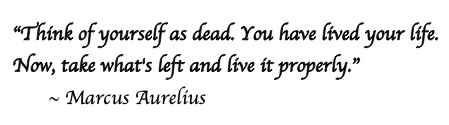
Recently I (in my return to social media after a three-month hiatus) saw that above quote on Harvey Fierstein’s Facebook wall in the context of gaining sobriety, but I truly appreciate this in the context of Covid recovery. I have not been living my life properly in the past few years. I am a recluse agonizing over rising fascism, without intelligence or talent enough to do anything useful to stop it. As of November 8, when the Republicans take over and impeach Biden and Harris, install the Speaker of the House as president, hang Pelosi, and deploy the military to overrun the liberal cities and imprison all of us…because I think that is more likely than not to happen should Republicans take the House and Senate…it will be too late to do more. Ain’t that a kick in the head?

Amidst the coming end of democracy as a concept, I’ve also been thinking about age, how we change, or don’t. It’s all part of the mix of my brain fog.

Reflections on the High School Reunion I Missed 

My friends Mark and Carl urged me to go, so I signed up, and then I got Covid, as I somehow knew I would, so I kept myself awake that night to find out who they got to see.

The boys sweetly texted me pictures of the kids (who are all 58), many of whom I’ve known since childhood—the Arrington twins; Juanita the piano prodigy and probably the smartest kid I knew. Then there was Janet, who was voted most talented from a high school senior class of 1,000—still a tall drink of water, same long blonde hair, a toned and tan former gymnast who could still fit into her show choir ensemble and her high-kick team dress and wow them all with a smile, the one who gives you hope. Lots of people for whom high school may or may not have been a blast, as they say, were there, too.  

Prior to the reunion, I posted on our page the following memory, wondering if everyone was hoping we’d “sing”:

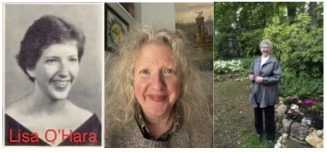
Lisa O’ and Mark Robinson, ca. 1981, promoting the Junior Variety Show we hosted, and more recently.
Friends since 2nd grade, or thereabouts, Mark and Carl and I were always somehow involved in music, our last outing together ca. 2018 found us singing karaoke, “I Love the Nightlife,” in Rehoboth Beach. As Mark reminds us, three separate people said we were great. So.

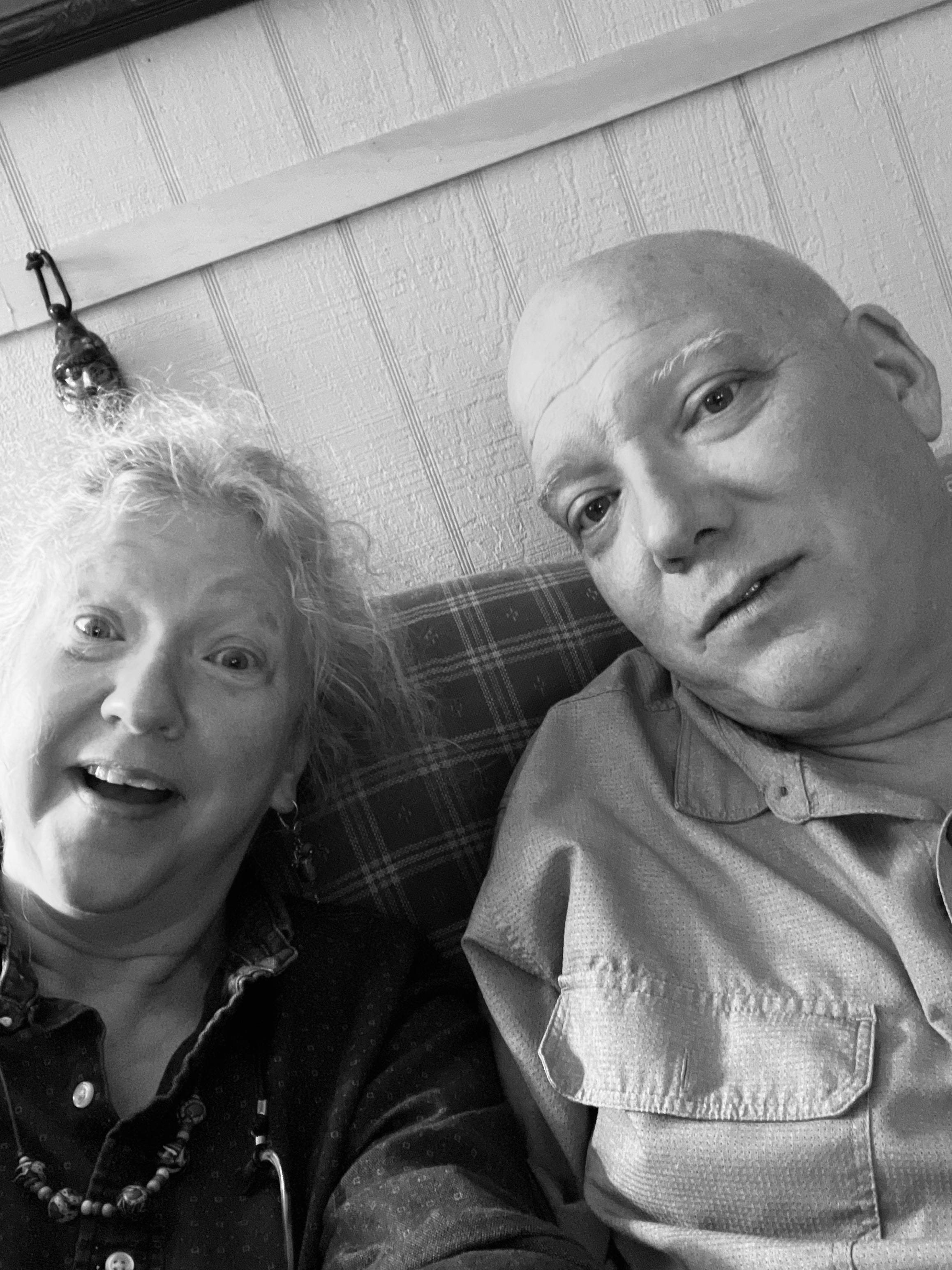
I sent along to them a sickbed selfie, and it caused me to reflect on aging; when I attended a group 50thbirthday party years ago, my brother Jeff took a photo. When I posted it on Facebook, my friend Jen said, “Don’t take this the wrong way, but you were born to be 50.” I think I was. However, it was the last photo in which I looked like myself, a Lisa O’ anyone would recognize. A couple of years ago I became old—see sickbed selfie. It was time.

Miss O’ at 18, 58, and 50. I blame lovers of Trump.

I loved all the pictures Mark was sending, but I didn’t understand his constant texts: “EVERYONE is asking about you!” I responded first with a “Ha!” comment thingy. But he persisted. And I couldn’t understand this sentiment because I was such a dull kid, not a standout at anything; just kinda skated through school, tried to be helpful, did my work, did a few plays, stayed out of trouble, head down, big laugher at the jokes of funnier people. 

And you realize that all of us, whatever we thought ourselves, were part of one another’s stories, and that we are somehow still dear to one another, part of one another’s memories. We all can’t be beautiful or stay young, whatever that is, and what is even the point of the concern? In the end the Republicans will gun it down.

I recently read this definition of Beauty: “the adherence to the balance and structure of the Universe.” Seen that way, most of us can feel just fine.

Vanity: Reflections of a Royal Philosopher, from Ecclesiastes, 2-11

It’s Sunday, so here’s a little of the Bible that most American Christians (given their actions in favor of dead mothers and gunned down children and their worship of a narcissistic, unapologetic adulterer, conman, and cheat) clearly haven’t read, but a surprising number of my Jewish, agnostic, and atheist friends have.


The words of the Teacher, the son of David, king in Jerusalem.

Vanity of vanities, says the Teacher,

vanity of vanities! All is vanity.

What do people gain from all the toil

at which they toil under the sun?

A generation goes, and a generation comes,

but the earth remains for ever.

The sun rises and the sun goes down,

and hurries to the place where it rises.

The wind blows to the south,

and goes round to the north;

round and round goes the wind,

and on its circuits the wind returns.

All streams run to the sea,

but the sea is not full;

to the place where the streams flow,

there they continue to flow.

All things are wearisome;

more than one can express;

the eye is not satisfied with seeing,

or the ear filled with hearing.

What has been is what will be,

and what has been done is what will be done;

there is nothing new under the sun.

10 

Is there a thing of which it is said,

‘See, this is new’?

It has already been,

in the ages before us.

11 

The people of long ago are not remembered,

nor will there be any remembrance

of people yet to come

by those who come after them.

The friend who posted this on her wall asked: “So, like, what EVEN is the point.”

The existential questions are the worst. What I’ve never understood, when I look at all the guns and people threatening people over their race or gender, for example, is that if this is all we know—this time on earth, this life—why would anyone choose to spend it glorifying themselves, playing the lottery, and spreading misery? And that leaves the rest of us in a power struggle with those people, scratching for our bits of joy where we find them. There’s a great play called Every Brilliant Thing I saw a few years back at Barrow Street in Greenwich Village, about a little boy who goes on a quest to try to help his depressed mother—and he finds the joy in himself. Love people, find the joy, eat the chocolate. Do your best.

We all have regrets and most of us know that those regrets, as excruciating as they can be, are the things that help us lead improved lives. Or, rather, there are certain regrets that, as they emerge, can accompany us on the incremental bettering of our lives. Regrets are forever floating to the surface… They require our attention. You have to do something with them. One way is to seek forgiveness by making what might be called living amends, by using whatever gifts you may have in order to help rehabilitate the world.” – Nick Cave

This quote can be found on the website The Marginalian, curated by Maria Popova. She shares ideas from artists, their quotes, and then her own reflections. What Cave got me longing for, or reminding me of, is the idea of being an artist. I really wonder what that must be like. (Whatever light I have in potential, I learned years ago, must be kept hidden or it upsets too many people; you have to trust me on this.) At least my one real joy as I age is that I can still enjoy art. 

Art does have the ability to save us, in so many different ways. It can act as a point of salvation, because it has the potential to put beauty back into the world. And that in itself is a way of making amends, of reconciling us with the world. Art has the power to redress the balance of things, of our wrongs, of our sins… By “sins,” I mean those acts that are an offence to God or, if you would prefer, the “good in us” — that live within us, and that if we pay them no heed, harden and become part of our character. They are forms of suffering that can weigh us down terribly and separate us from the world. I have found that the goodness of the work can go some way towards mitigating them.” – Nick Cave

In my search for more about suffering and surviving it, I happened on a couple of TED Talks that only pissed me off. On Being with Krista Tippett, now defunct in terms of its old format but still out there, is a good bet. Still, when I go hunting to try to understand all the shit, I find things that exhaust as well as inspire. 

Ultimately, Bruno Latour (1947-2022), the scholar who passed last week, took nothing for granted: not science, not society, not even “reality” or “existence.”

The Nation header on Facebook

And I realized, reading that banner, how TIRED I am of reality and the lunacy of existence—the realization that we’re all stuck in an overwhelming cycle of …

In the meantime, life goes on, somehow. 

Preoccupations on Reflection

In my last blog post I paid tribute to the remarkable theater artist and teacher Maureen Shea, who died unexpectedly in September of this year. Shortly after posting, my old Virginia Tech friend Todd located and “liked” this Facebook post from 2020, I guess because of the attached photograph he must have recalled. Todd was very close to Maureen, too. Here is the post, in full:

Miss O’, ca. 1987. I’m posting it because I have always hated this picture, but kept it because mentor Maureen Shea is in the background, on the left on the hill, in a cast, and it does capture a moment in time. Oddly, this is often other people’s favorite photo of me whenever, back in the old days, we’d flip through one another’s photo albums.
Similarly—and stay with me here—while I was the favorite and most beloved teacher of some students, I was just as often the most reviled and dreaded teacher of other students; and still others didn’t even remember being in my class when I’d say hello to them as seniors. Think of them as pro / no / undecided voters.
Here’s my point: Yesterday I saw the “well, I’m not voting for Biden if it’s Harris” posts begin. Here we go, I thought, 2016 redux, “but her emails,” any excuse to not vote a woman into office. Because I believe, truly, however evolved people think they are, that that is what it comes down to. These folks can rationalize it all they want, but it comes down to misogyny. They’d rather end democracy, keep Bill Barr and Trump and Miller, and destroy the Supreme Court and even the planet, for the rest of their children’s natural lives, than vote for a woman—for whatever her “sin” is, it’s always one hundred times worse than the sins of the men who are caging children and denying a pandemic and allowing Russians to own our elections and put bounties on the heads of our soldiers in the field.
America, don’t do that; don’t be that voter all over again.
Because let’s face it: I’ve always hated this photo of myself, and yet I now have to admit I am adorable in it. All those years of self-loathing, and for what? 

It’s 2022, and here we are AGAIN. Voters, Americans, for fuck’s sake: Do the work, love the people, be good to the earth, find a purpose, appreciate art. Get over yourself. And vote Democrat. 

Until they take it away, use what you got.