Like Home There’s No Place

Ruminating on feelings of in between

Transition in Transit
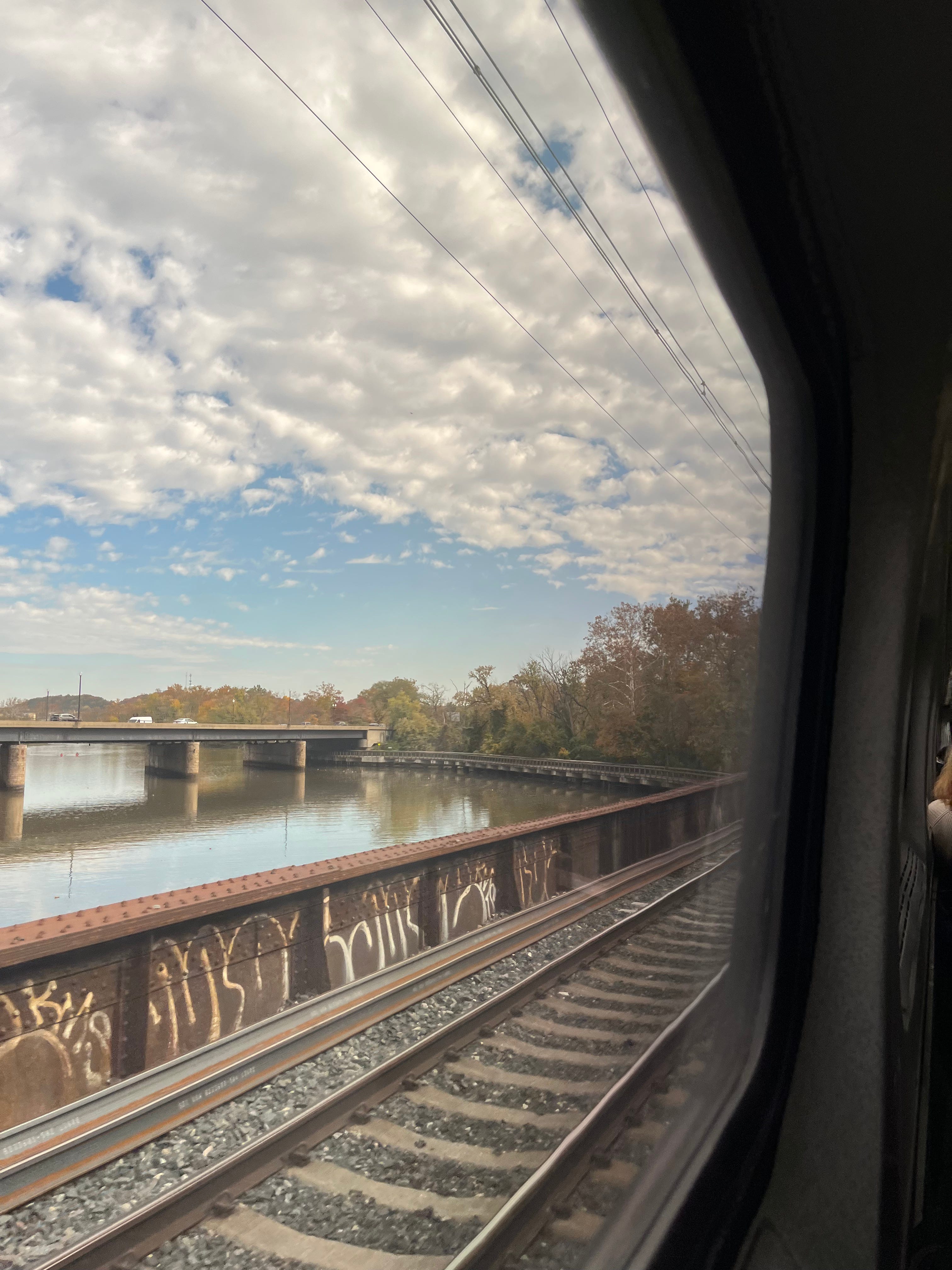
Somewhere in Maryland. Photo by LO’H.

Yesterday, I took Amtrak from Virginia to New York City, after two full months living in my parents’ house. (Bernie and Lynne are coming along, for however long they can.) Even though theirs is the house I grew up in, nearly all the aspects of it that made it home are gone or changed so significantly that it really feels like a different house. The 1960s offered a white house with green shutters, exposed asbestos tile floors on the half-basement level of the split foyer. During my growing up, when harvest gold industrial carpet took over the floors and steps and upstairs living room, so did the 1970s palette expand to bring in orange and avocado green and brown. In truth, my mom did this palette really tastefully and artfully, refinishing now tossed furniture pieces that I really miss, replaced in the late 1980s country makeover—suddenly a windfall of cash with no kids in college and two incomes allowed my mom to indulge her passion for blue and natural wood. The result is that I’ve known the present incarnation of their house only as a self-supported adult, so whatever there was of my home (my bedroom stuff pared down to a single large box back when I went to college), it’s no longer a built environment (objects of deep memory and family history notwithstanding) that I feel particular warmth for.

The curious thing is that my connection to the yard runs as deep as ever. The majority of my accessible childhood memories are tied up in grass, dirt, shrubs, trees; often, too, a swing set, a shed, a playhouse, a fort, though gone, appear as ghosts. I am always barefoot. The maple in the front yard has been my constant greeter for 59 years; the crepe myrtle, too. The oaks of various species in the backyard were there for decades before I was born, and the hickories have grown up with me. The holly trees, shrouded by the taller deciduous trees, have never gotten really large, but they are my age, at least. (I can still feel the prickly fallen leaves lodge in my heels.) It is to the yard that I want to go when I get home, to feel that I’m home.
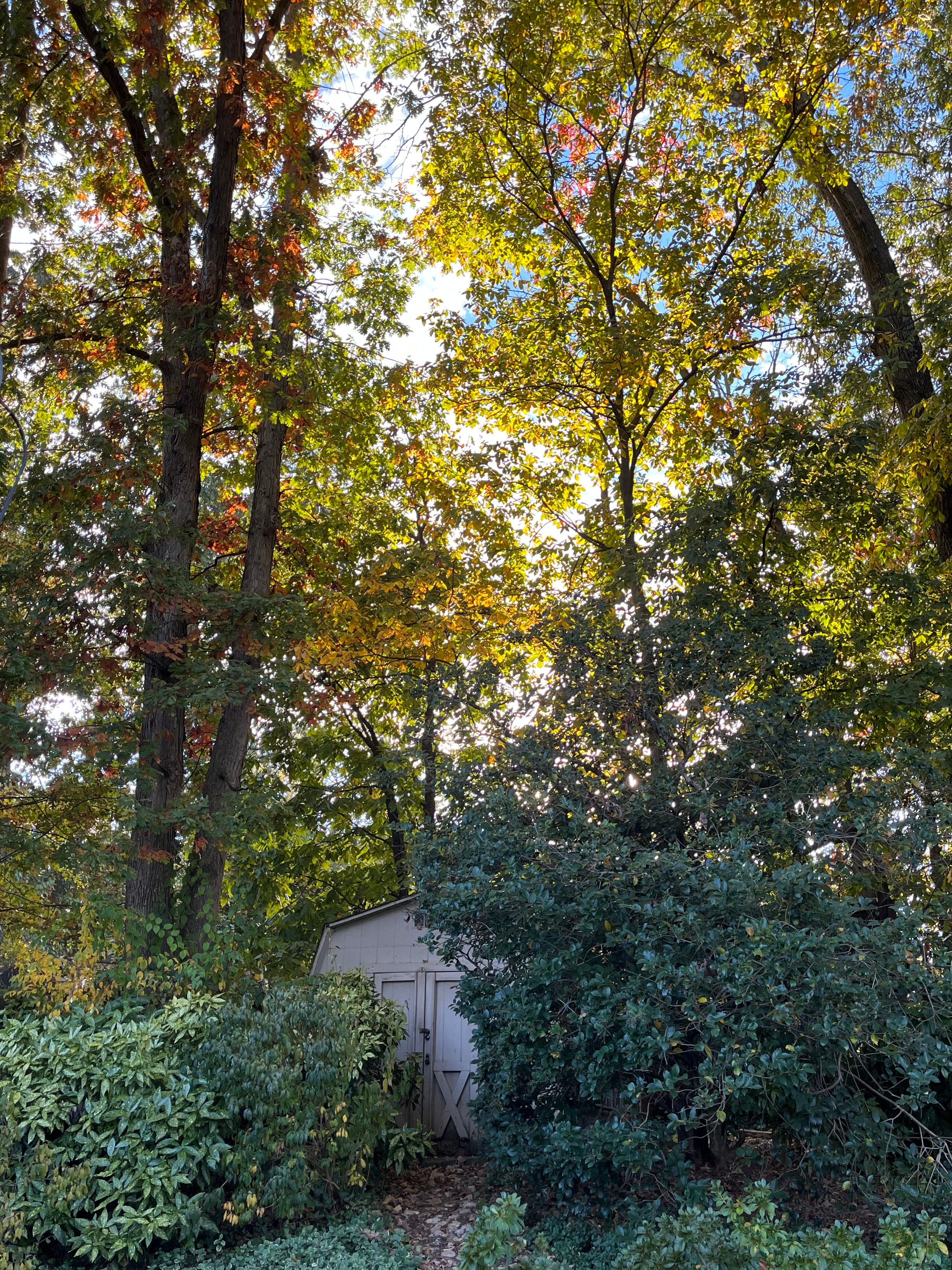
Backyard. Photo by LO’H.

You Can Be Anyone You Want to Here

My Aunt Mary from Iowa said the above when she was standing on Canal Street, her first visit to New York, in 2004. I would add, “If you can make it here.” My home for the past 20 years has been a co-op apartment in a 90-year-old building in New York City’s borough of Queens. Coming off the train into Penn Station yesterday, wearing an air cast on my left leg (over my black travel slacks, to prevent a rash from the plastic—menopause has a been a blast, you guys) and a gray combat boot over my slacks on my right leg (for not one but two sprained ankles!), carrying a large sling bag, full backpack, and computer tote bag, not a single person gave a flying fuck. And that is the price you pay for all that freedom to be you doing you: supreme indifference to my personal human plight. I’m always agonizingly aware of my own complicity in this survival game as I pass homeless people without giving alms, in my rush, I think, which is really avoidance of culpability. For that reason, I don’t begrudge anyone racing past me up or down the dozen flights of stairs I had to take to find a working subway going in my direction (midtown was pure gridlock so any cab or Uber was pointless, unless I wanted to spend three hours getting back to Queens). All I know is that as I trudged past construction on 7th Avenue and 33rd Street that has literally been in progress for SEVEN FUCKING YEARS, with no end in sight; past orange cones and trash and and scaffolding and pilings and strollers and tourists walking past all the chain store banality that is 7th Avenue four abreast, down steps (foot-foot, foot-foot) where I have to inch past guys blissed out on weed; into the bowels of Times Square only to find out the 7 Train is not running; up the four flights of stairs (foot-foot, foot-foot) to the N Train (because the escalator up starts down by the 7 Train, and those stairs are blocked off and are being policed); and by now in the global warming October heat with the schlepping and the sore ankles and endless walking, shoved or ignored, and feeling by this point a little weepy, I really had to ask myself, seriously, “Why the fuck do I live here?”

And later, in my own bed, unable to sleep from ankle pain and the chill and recalling the stack of mail and all the unpacking and plugging in of laptops and texting people I’m back—I realized I really do hate living here. I have, as of November 1, been living in this apartment for 20 years. Of those two decades, only the first one was good. In 2013, my play lab ended, my work role changed to working essentially for a partner start-up, I had a miserable month of grand jury duty, and I met a man who gave me the deepest love and caused me more grief over the next decade than I want to speak about. And, post Covid, I have accomplished exactly zero as a creative person. As I now work exclusively “from home” (great for flexibility if not sociability), I see almost no one—a dinner here and there once or twice a month. My old building needs too much work. Global warming is creating a flood plain out of the city. And I’m going to be 60.

I turned on the light then, because I had this flash of memory, of going with my college friend Richard as his plus-one to his cousin’s wedding in New Hope, Pennsylvania, back in 1985 or so. The downtown was lit up at night, even in summer, with white fairy lights strung here and there. Everything about the place was joyful and cozy, people out and about, shop windows so inviting. This was like Blacksburg, home of our college, Virginia Tech, without the carousing drunk frat boys. Ever since, I have dreamed of living in a town that felt like that—creative and joyful and pleasant, but with diversity, room for the middle class, and lots of live music and dancing in parks and plazas in the summers. A community theater, concerts, art for people who lived where they worked.

I realize now that those places don’t exist ready made for me to walk into—an enchanted village in a story book that become real, like Brigadoon. Community like that, place like that, has to be built, and not presented as a gift. I have always worked very hard to create a life for myself everywhere I’ve lived. What is different now? I guess, looking at 60 and returning from nursing my parents as best I could, faced with two square feet of junk mail to sort (with unending gratitude to my upstairs neighbor, Debbie, who built that pile of junk mail, watered the plants, and ran the taps AND cleaned up my basement after it (mildly, mercifully) flooded with the remnants of Ian—see Brooklyn for reference)—I guess I’m really wondering about where I belong, what I do next, and how I do it. I feel, weirdly, totally lost.

On my way down the sidewalk near my apartment (all my gear by now giving me its full weight) past the playground, my eye caught a shiny object in the leaves along the chain-link—a New York driver’s license. I picked it up, someone on 41st Street. I’ll try to find him tomorrow, I thought. (This morning I strapped on my “casts” and went out in the rain over to his apartment building, buzzed his number, no answer, so I left it on the ledge above the buzzers—and then I spent the next two hours beating myself up for not thinking of MAILING it back to him.) It’s a small but common event for me in this vast city, helping a stranger in an odd way. Sometimes I wonder, given the last decade of my life, if all I’m really here for is not to be an “artist,” but really to be a clean-up crew of one, one human accident at a time. Maybe that’s who I am, and these notions that I should accomplish more are foolish expressions of ego.
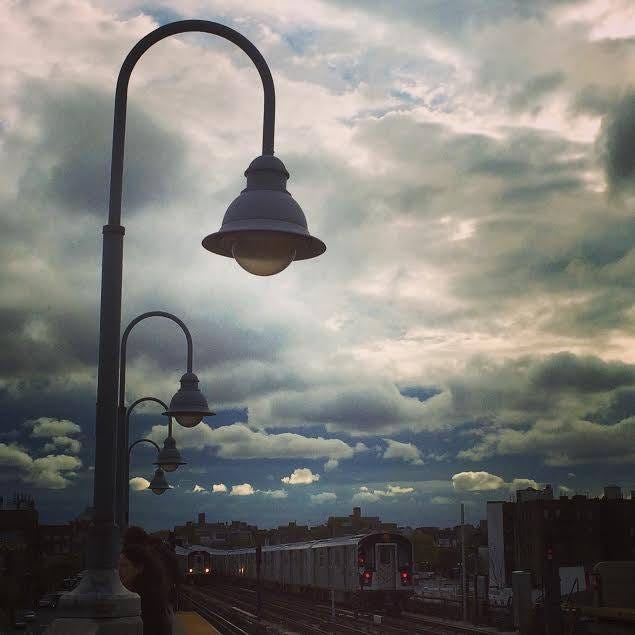
View from the 7 Train Platform, Queens. Photo by LO’H.

After all, unlike too many people, I have not one but two roofs to shelter under, at least for now. Trees to visit. Good neighbors. Friends, however much they are only available via text. It’s a crazy modern world, and there’s no good where to be unless we make it the way we like it. Where my next home will be or how I remake the one I’m in, I can’t know, but in my heart I know the search is on.

Hope you are feeling home in your own heart. I saw this quote on a meme recently, and it hit…home:

Home is not where you were born; home is where all your attempts to escape cease.

~ Naguib Mahfouz

Love to all.

Miss O’
Trees I Have Grieved, a Memoir

“I used to teach just the way I was taught, but now I let someone else do all the work for me. If plants are our oldest teachers, why not let them teach?”

~ Robin Wall Kimmerer, Braiding Sweetgrass: Indigenous Wisdom, Scientific Knowledge, and the Teachings of Plants

I lived in the country for the first twenty years of my adult life, and I have country trees I could talk about, but events of the week got me thinking about two particular trees—of my childhood and now—so much so that I had to try to draw them. I thought I’d tell you about them, though I’m not sure why I need to do this. Let me know if you figure it out.

Suburban Trees

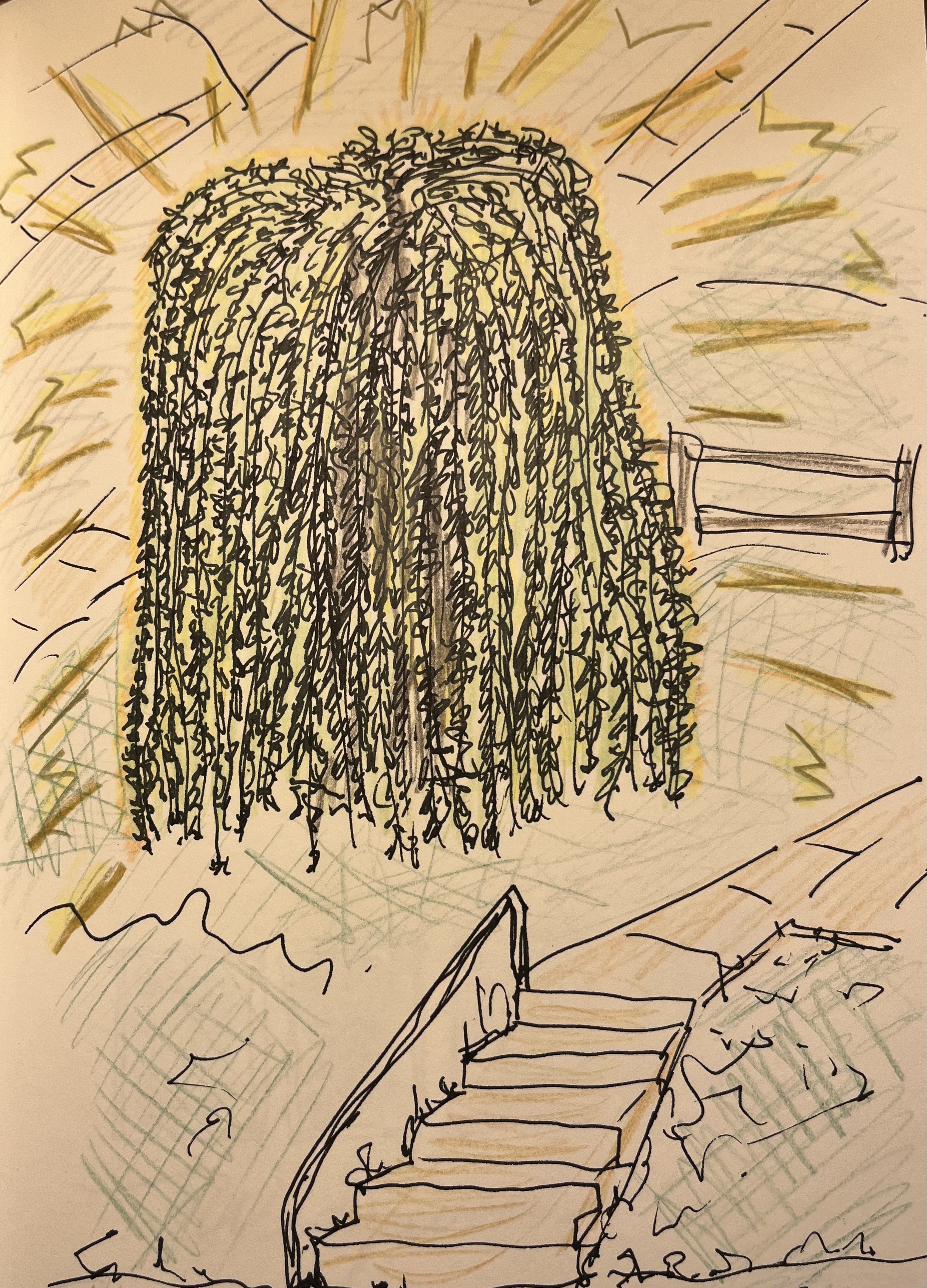
When I was 11 or 12, I think, my next-door neighbors, Mike and Diana, hired people to come and chop down a weeping willow tree on their property, a tree that had grown to be nearly as large as the house itself. The willow sapling was planted around 1965 in the front yard by the first owners, John and Barbara, who moved to another subdivision around 1970 and who hadn’t really understood that a weeping willow might not belong in a front yard. The weeping willow is a tree I used to see in backyards in the Midwest, often along small creeks. It’s really not a front yard tree. Anyone could see the truth of that, since no one could any longer see the house from the street.

Sitting on my bed beside a window that looked over to their yard, a view nearly blocked by a giant cedar (one of two that framed our house, and which would be cut down and hauled away when I was in my thirties), I sobbed. I’d been standing in the yard when I saw what was happening, and began to protest, wanted to scream, and my mother said, “Oh for heaven’s sake, Lisa, it’s a tree. It’s too big. Get over it.” Something like that. She wasn’t wrong. Still, I ran inside and upstairs to my little room and slammed the door. Even as I type this, I can smell the old paint around my window, the glazing, a metallic dust smell, and feel the texture where my fingers gripped the sill. My runny nose against the chill of the glass, I had to turn away. I couldn’t watch. Still, I sat holding all my concentration on the tree during the chopping process. I felt I owed it to my friend.

How do you explain being in love with a tree? I was in love with many trees in my own yard, sure, but that was puppy love compared to my feelings for the willow. I used to float underneath it, back when the Yanos lived in the house; swim as one might in the sea, though I’d never been to the sea. I remember that I spent most of my time under that tall grass skirt on “my” side, closer to my house, not all around it, like there was an invisible wall that prevented me from complete freedom inside the arch of branches that reached to the ground. But I remember the magic, how deeply scared and amazed I used to feel. I don’t know why. So cutting down that tree was like watching a friend being murdered, everyone telling you it’s just a life. Get over it? How?

Weeping Willow ca. 1976 by LO’H

There were certain trees, growing up, that I felt belonged to me. I was so lucky to have, and my parents worked so hard to buy, a home, one with a backyard, in a subdivision whose designer left big swaths of old-growth trees across backyards that abutted across two streets, over blocks. Different kinds of oaks in my own backyard are still there, and I visit them whenever I go back to Virginia (touch wood) to see Bernie and Lynne, now in their 89th years. There’s the holly tree by the horseshoe pit. And I still “see” a beech tree that is gone now. I loved climbing it—not very high. I regret that I never really got to know the cedars. I don’t know why, exactly, but I suspect it’s because they were planted for ornamental reasons, and not quite part of the forest that was as much my home as anything inside. And unlike the willow, the Flahertys’ monstrously huge crabapple tree that the Hunnicutts planted across the street survived (Mrs. F. loved the spring blossoms) for years longer; though the next owners, whom I’ve never met, finally had it chopped down, at least I had that tree all through my childhood. And the forest that was my backyard home.

It’s even more magical now. Bernie and Lynne hauled every rock.

City Trees

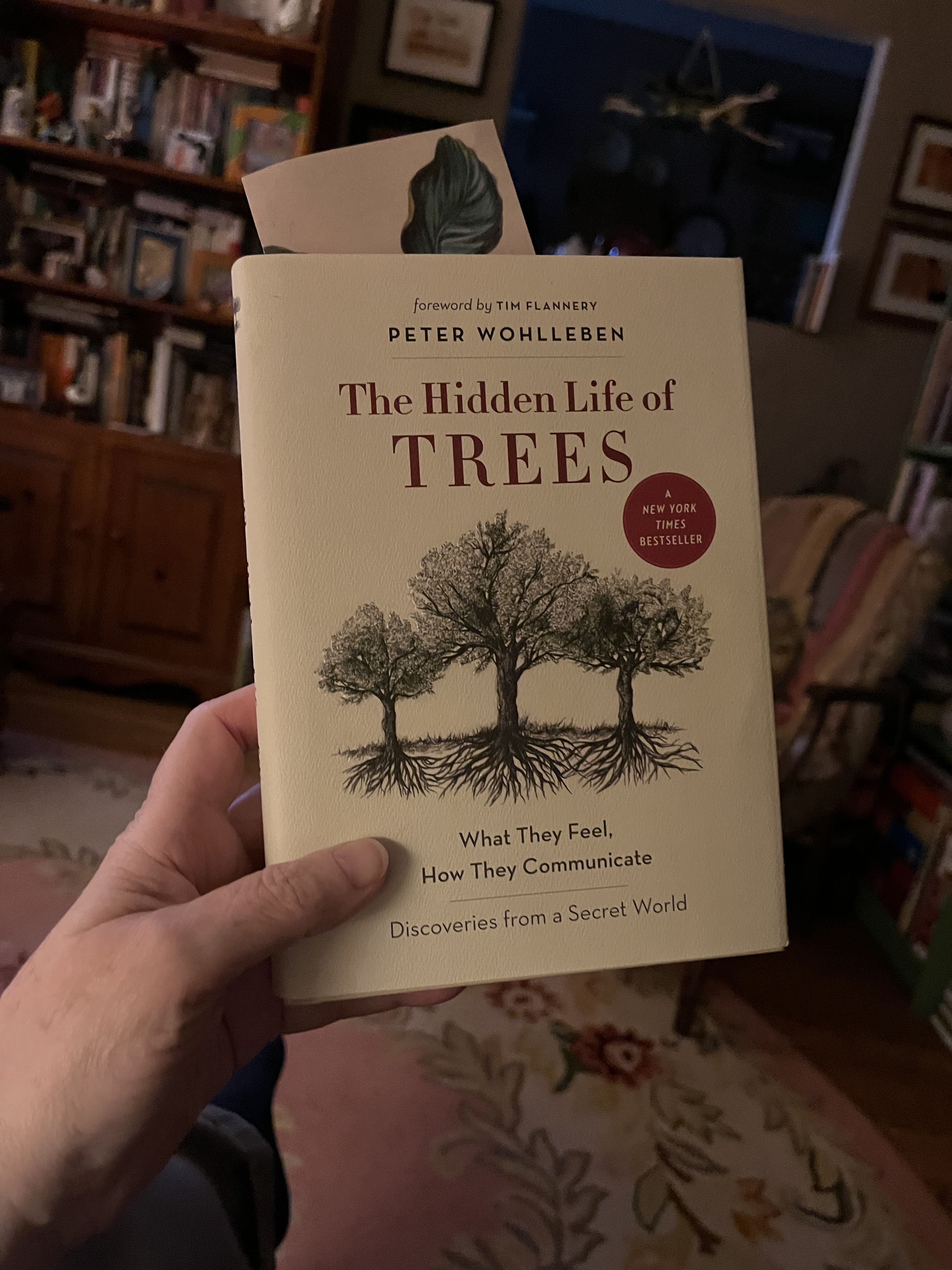
Several years ago now I was out in California visiting friends Anna and Michael, and one of the books in their guest room/office (pro tip: please have a library in any room where you have your guests sleep) was The Hidden Life of Trees: What They Feel, How They Communicate: Discoveries from a Secret World by Peter Wohllenben, a German forester. I recommend it.

“Trees can grow in many extreme environments. Can? Indeed, they must!”

~ The Hidden Life of Trees, “Specialists”

The upshot: Trees feel, they know, the connect, they have real lives. Any kid who has loved a tree the way I loved that willow could have told you that, but it’s better to have science to really drive it home, I guess. All of this is just to say the lost trees of my childhood aren’t the only ones I’ve grieved, and the older I get the more deeply I know there are connective threads among all these living things that only my heart understands. And it matters.

In my co-op apartment building in Queens, to take one example, the board has long neglected one side of the complex, the side I enter on, because no one else really sees it, as they enter on another street. A giant mulberry tree (that no one missed) had to be taken out of the fenced “garden” about fifteen years ago, before it compromised the foundation, though the seedlings and shoots keep coming up out of old the roots. (The struggle is constant and will be until we can afford a landscaper to dig it up properly, but you have to admire the tenacity, you know?) But it’s this one other little oddball tree, a blue spruce, on the edge of the iron fence that meant something. With the mulberry gone, it really took off, so I had to trim it a lot to keep the prickly branches from hitting people as they walked past. I did not trim it well, but I did the best I could. It looked like a giant bonsai tree. Okay? But it was our giant bonsai.

Last year, a neighbor in the complex thought he was giving me this great gift by chopping down that one remaining tree, that badly trimmed blue spruce that, it turns out, a few other folks in the neighborhood had also secretly called “the bonsai spruce.” I returned from a weekend visiting friends to see it gone, and I felt I had been punched in the chest. I choked back tears until I could get inside. I’d read an email from this (really very nice) neighbor which said he had “cleaned up the garden” but without mentioning this act of, frankly, vandalism (apparently he’d only cleaned up the garden because he personally hated that tree). People who regularly walk their dogs still ask me why we got rid of it. It’s sweet, though, isn’t it? I was amazed by how much of a touchstone that crazy little misshapen tree was for the residents of a Queens neighborhood. And you think New Yorkers don’t have hearts.

Illustration by LO’H

More City Trees

This past weekend I and two neighbors from the complex worked to remove an invasive tree near a cedar on the other side of my stoop, the smaller iron-fenced garden area along the sidewalk. Travis and Vaughn had taken a tree-pruning class when they lived in Brooklyn (!) and had the tools to properly prune a remaining tree (that someday really has to be removed) so the branches didn’t compromise our porch overhang and a couple of windows (should a big windstorm hit). They also trimmed the tall cedar (one we want to keep) way back away from the brick on one side and the sidewalk on the other. The city has been on everyone’s case to clear out anything remotely embowered in order to deter rats, so all this stuff had to go. (And now with all that low growth gone, maybe that weird old man with the red cart will stop pissing on the cedar as he pauses on his walks—at least I hope so.)

My upstairs neighbor, Debbie, who shares my entrance, came down to investigate after we’d finished up. Earlier in the week, Debbie had discovered a dead squirrel in full rigor sprawled out flat on the sidewalk. She texted me—I work from home and was on a Zoom call, but I couldn’t ignore her sad face emoji and “Our squirrel friend is dead.” This little guy has been around for years, digging in my herb pots and frolicking in the trees we’d just trimmed back. But I’d leave water out for him and the sparrows, in a plate on my little kitchen porch over the trash alley; once I left him a plum, which he took. The couple behind me also feeds him—he does get gaunt if we don’t help. The dead squirrel seemed bigger to me, but maybe it was the dead bloat thing. Because the kids were about to get out of school, we couldn’t just leave him there on the sidewalk. “Debbie,” I said, “can you get your snow shovel and sort of scoop him into the garden?” Good idea, she said. I went back to my meetings. A couple of hours later, I texted her and she came downstairs. We looked at his body there, exposed on top of weeds, and we couldn’t leave him like that. I remembered I had a real dirt shovel, left over from the old farm days, and I brought it up from the basement, dug a hole in our shitty old garden (or “garden”), into which hole Debbie scooped that stiff squirrel body. I covered him up with dirt, we said a few words (a shocked little boy saw what was happening as he walked with his dad; “You weren’t supposed to see that,” I said, and Debbie said, “He passed away, it was his time”). Ceremonies matter.

But while Travis and Vaughn and I were trimming on Sunday, Travis noticed there was a (live) squirrel watching our proceedings from all the way over at the other edge of the building. When Debbie came out later to check out our work, I saw that little squirrel again, but this time along the railing by the cedar. I’d noticed a huge nest in the cedar tree but thought it might belong to a family of house sparrows, so little do I know of nests. Debbie said, “He’s a friendly guy, isn’t he?” And then it hit me: That is his nest! This is our squirrel! He was still alive, after all. But man, had we fucked him over.

Illustration of existential moment by LO’H

I thought, suddenly, that maybe Vaughn had cut out the nest, but he hadn’t—there it was, up near the top. But it’s like if the back side of your condo was blown out, and you still had to sleep there. And I grieved that we’d ever trimmed that cedar. Trees are life, and how we measure all of nature in terms of human (in)convenience is really a testament to our planetary tragedy, isn’t it?

So let’s take a page or two out of Braiding Sweetgrass and The Hidden Life of Trees. Life is love, loss, grief. And nature. It’s all nature. Even in New York City.

Love to all.